12 Places to Find Cheap or Free Plants for Your Garden
Find cheap or free plants through swaps, seed libraries, sales, and clearance racks. Learn what to ask, when to shop, and how to avoid costly problem plants.
The best deal is usually the plant that is free, healthy, suited to your yard, and ready to grow when you can care for it. That can mean a neighbor’s perennial division, a seed packet from the library, or a slightly scuffed annual from a clearance bench. It does not mean every $2 pot is a bargain: a plant that is mislabeled, infested, badly rooted, or wrong for your light and soil can cost more in replacements than a sound specimen bought at full price.
If you want to stretch a garden budget, look in three directions: community sharing, small-start growing, and retail markdowns. The first two may cost little or nothing but require time and patience. The third gives you a more finished plant, but you need to inspect it and know what care it will need. Below are 12 places to check, plus a simple way to decide which source fits your project.
Start With the Plant You Need, Not the Lowest Sticker Price
Write down what you are filling before you search: a sunny vegetable bed, a shady border, a patio pot, a privacy screen, or one easy houseplant. Note the hours of sun, whether the soil drains after rain, the mature width of a shrub, and your local winter conditions. This prevents a common bargain mistake: buying an inexpensive plant that cannot thrive where you intend to put it.
Then choose the format you can actually use. Seeds are often the lowest cost per potential plant, but they need time and suitable conditions. A cutting or perennial division is a rooted-or-rootable start that may take a season to fill in. A small nursery pot costs more, but it is further along and can be the right choice when you need a specific cultivar, a quick container display, or a tree with known characteristics. Compare the cost of the plant plus soil, pot, shipping, transport, and replacement risk—not only the tag.
1. Your Own Garden and Friends’ Divisions
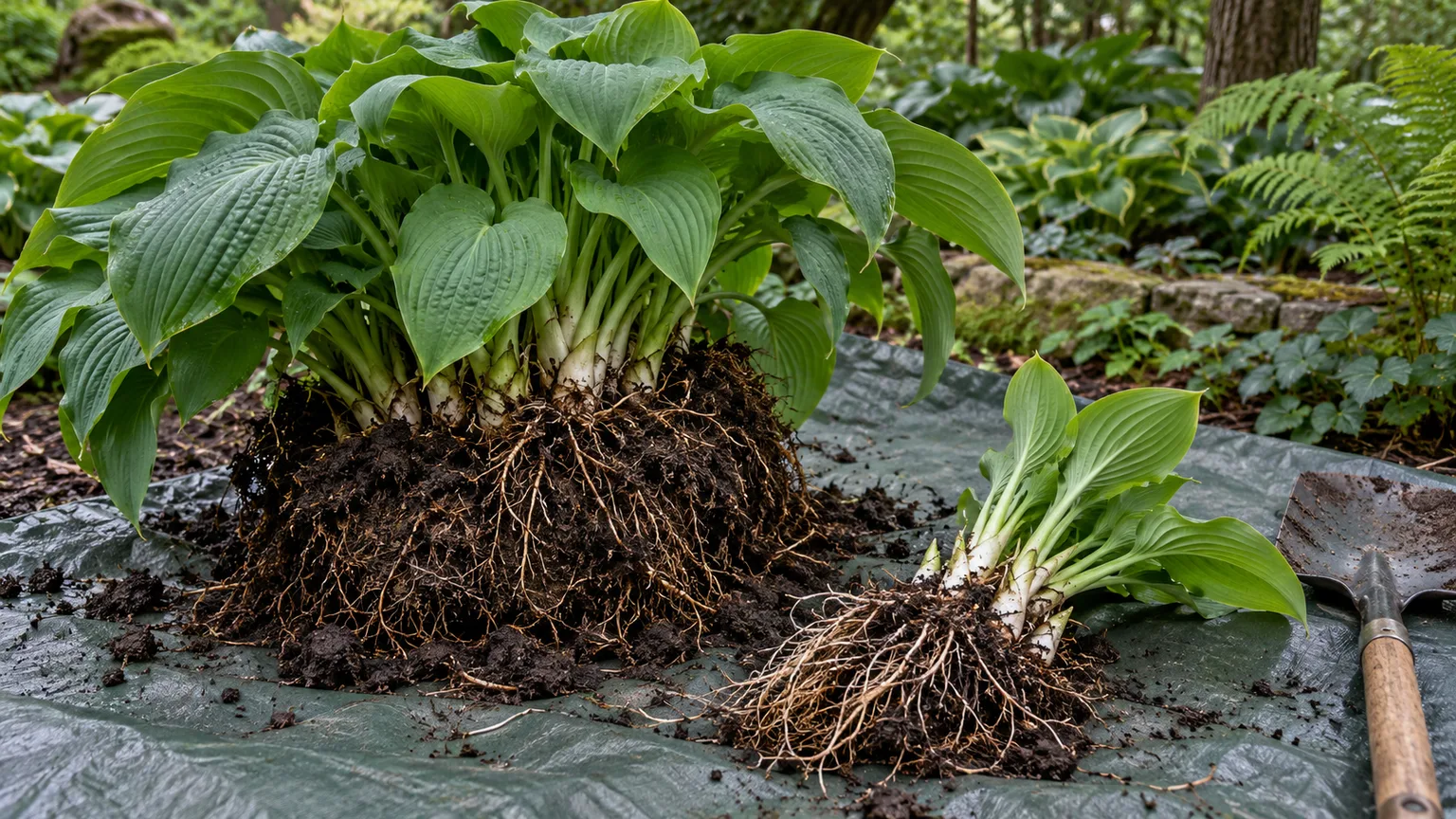
Before buying more plants, check whether something you already grow can be divided or propagated. A crowded clump of hosta, daylily, iris, or another division-friendly perennial may yield several new starts. Penn State Extension’s guide to dividing perennials explains that division can both renew a crowded plant and create additional plants, but it is not suitable for every perennial; plants with a single taproot or woody base may resent being split. The right timing depends on the species and local season, so identify the plant before digging.
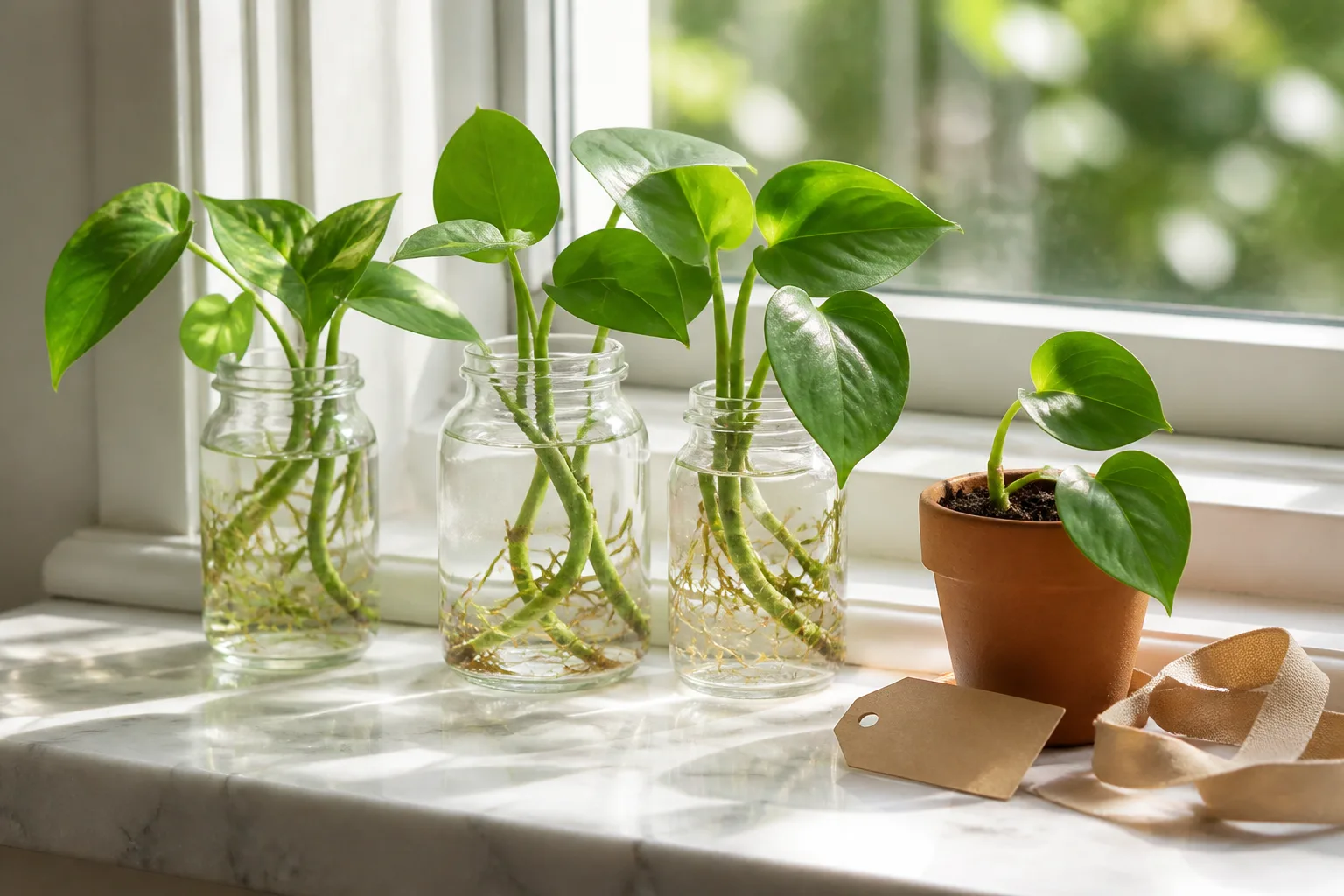
Ask a friend, relative, or neighbor who gardens whether they have extra divisions, seedlings, or cuttings. A polite request and an offer to help replant or share something in return work better than assuming every overgrown plant is available. If friends or family ask what you want for a birthday or holiday, suggest seed packets, a small plant from a local grower, or a garden-center gift card so you can choose a plant that fits your site. Never take a cutting from a private garden, public display, or nursery without permission. The Royal Horticultural Society’s guide to softwood cuttings explains why young, healthy material and appropriate timing matter; not every stem will root, so treat cuttings as an inexpensive experiment rather than a guaranteed finished plant.
2. Local Plant Swaps
Plant swaps turn surplus into variety: one gardener brings spider plant babies, extra vegetable starts, perennial divisions, or rooted cuttings and leaves with something new. Some swaps are free-for-all tables; others ask every attendee to bring a plant or limit how many items each person can take. Check the event’s rules before filling your car, and label anything you bring with its name, light needs, mature size, and any known quirks.
Find swaps by checking public library calendars, community-garden newsletters, garden-club pages, Master Gardener events, neighborhood associations, and local social-media event listings. A recent Frugal Gardening guide to legitimate free plants notes that local libraries and gardening groups often publicize exchanges; the host’s own listing is still the authority on current dates and rules. Call or email organizers if an event page is old; a recurring annual swap may have moved dates or changed its exchange rules. For a first event, take a few sturdy, common plants rather than rare or fragile material. A swap is also a chance to ask whether a plant has been grown outdoors locally and how it handled the area’s heat, rain, or winter.
3. Neighborhood Sharing Groups and Online Marketplaces
Search local Buy Nothing, Freecycle, Nextdoor, and community gardening groups for “plants,” “seedlings,” “division,” “cuttings,” and “curb alert.” Listings change quickly, so turn on alerts or check at a regular time instead of relying on one search. Be specific if you post a request: say what you are growing, what conditions you have, and whether you can pick up promptly. People are more likely to offer a suitable extra plant when they can picture where it will go.
Treat a marketplace plant like any other local pickup. Ask for a current photo, the plant’s name if known, whether it has been indoors or outside, and whether the seller has noticed pests. Agree on a pickup location and price before traveling; do not mistake a listing that says “free” for proof of health or correct identification. On a gift-based group, follow its rules: some prohibit selling or trading, while other plant groups welcome swaps. Participate and give back when you can rather than treating a sharing network as a store with no checkout.
4. Public Libraries and Seed Libraries
Many public libraries keep a seed library or host seasonal seed-sharing events. Depending on the program, you may take a few packets at no charge, borrow seeds with an invitation to save and return some, or simply use a small locally curated collection. Rules and inventory vary by branch, so check the library catalog or ask a librarian what is available and whether there are limits.
Seed libraries are useful when you want to try a few vegetables or flowers without buying a full commercial assortment. Start with crops whose growing season and sun requirements fit your area, then read the packet for sowing depth and spacing. Garden writer Linda Ly’s guide to free and cheap seeds describes seed libraries as a community source and suggests asking libraries, gardening groups, and extension offices about local exchanges. If a program asks you to return saved seed, follow its instructions and only return seed you can identify and that was saved appropriately; cross-pollination can make some varieties unpredictable.

5. Seed Exchanges and End-of-Season Seed Sales
Seed swaps may be organized by a library, a garden club, a community garden, or a local seed-saving group. They are especially helpful for finding varieties that other growers have already tried in a similar climate. Ask whether seed is labeled with crop, cultivar, year, and any special germination instructions. If a packet has no label or the seed’s age is unknown, treat the result as an experiment and sow a little extra rather than counting on it for your entire crop.
Retail seed racks are another low-cost option, particularly when stores clear seasonal inventory. Selection may be narrow late in the season, but that can work well for quick crops or flowers that can still finish before frost in your region. Check the packed-for or sell-by information and consider whether the seed needs a long growing season or chilling period you no longer have. A discounted packet is only useful if its planting window, quantity, and storage condition match your plan. Garden Betty’s practical guide includes examples of low-cost seed sources and explains why seeds saved from hybrid vegetables may not produce plants identical to the parent.
6. Garden Clubs and Native Plant Society Sales
Local garden clubs often hold spring or fall plant sales to support community projects, scholarships, or gardens. Native plant societies and conservation groups may offer locally appropriate species that are harder to find at a general retailer. These events are worth visiting early if you want a particular selection, then later if the organizers mark remaining inventory down. Do not assume either timing is guaranteed; ask the group how it handles unsold plants.
The extra value is advice. A seller who knows the plant may tell you whether it spreads, how large it becomes, whether it tolerates clay, or if it needs a dry winter. Confirm the plant’s full name and check that it is not invasive or restricted in your area before buying. A native label also does not automatically mean a plant suits every site: local provenance, sun, moisture, and mature size still matter. If the sale sells bare-root divisions, keep them cool and moist and plant them promptly according to the seller’s directions.
7. Botanical Gardens, Arboretums, Tours, and Tree Programs
Public gardens and arboretums sometimes host plant sales, propagation workshops, or seasonal fundraising events. Garden tours can also lead you to the names of plants that perform well locally; some organizers offer plant material or connect visitors with growers. Check the garden’s official event calendar and ask whether the sale is open to nonmembers, whether tickets are needed, and what payment methods it accepts.
Use a tour to make a list, not to take cuttings. Photograph labels when permitted, then look for the species at a sale or ask the garden’s staff where it is available. If you want a cutting from a private garden featured on a tour, ask the homeowner or event organizer first. Many woody plants and perennials are not best propagated by an arbitrary snapped stem, and some are patented cultivars whose propagation for sale may be restricted. A listed workshop or authorized sale is a safer route to both plant material and accurate instructions.
For a tree, check municipal shade-tree or conservation-district giveaways and current nonprofit programs such as Arbor Day Foundation membership offers. Benefits, eligible species, shipping, and regional availability can change, so read the current terms before paying dues for a tree you may not want. Compare the species with your hardiness and planting space; a “free” tree is a poor deal if it arrives at the wrong time or grows too large for the site.
8. Farmers Markets and Flea Markets
At farmers markets, small growers often sell vegetable starts, herbs, annuals, bulbs, or divisions at approachable prices. A local grower can also tell you when the seedling was started and whether it has been hardened off for outdoor conditions. Ask whether a vegetable start is ready to transplant or needs gradual acclimation; moving tender greenhouse plants directly into strong sun or a cold night can undo the apparent savings.
Flea markets, neighborhood plant fairs, and community garage-sale events may have houseplants or established perennials. Compare the plant’s condition with the price and ask the seller to identify it if possible. Avoid buying a mystery plant solely because the leaves look appealing, especially if it will go outdoors where it could spread or is near children or pets. If the seller cannot name a cultivar, that may be fine for a casual foliage plant, but it is a poor bet when you need a specific fruit, flower color, mature size, or winter hardiness.
9. Garden-Center Clearance Sections
Clearance plants are often marked down when new inventory arrives, a seasonal display is ending, or a specimen has minor cosmetic damage. Discounted does not automatically mean unhealthy. Virginia Tech’s greenhouse specialist says plants with limited damage can recover when cared for properly, and recommends looking at the roots as well as the foliage. For a container-grown plant, a root ball should hold together and show a healthy network of roots; a loose plug with almost no roots may struggle, while dense circling roots in woody stock deserve caution.
Look at both sides of the leaves, stems, crown, and potting mix. Decline plants with widespread webbing, sticky residue, active clusters of insects, soft or blackened stems, a sour smell, or weeds you cannot identify. A few torn leaves may be a cosmetic issue, but rot or a severe pest problem can spread to plants at home. Check the label for the plant’s mature width, light, water, and cold tolerance, then ask why it is discounted. Virginia Tech’s plant-selection guidance emphasizes roots, timing, and future size—useful checks at any price.

10. Big-Box and Grocery Store Markdown Racks
Hardware stores, supermarkets, and other retailers sometimes put seasonal plants or leftover holiday pots on a markdown rack. The display may be serviced by a local grower, or it may be left in conditions that are not ideal for the plant; judge the individual specimen rather than the chain’s name. Look for clear labels and check that the plant is not cold-sensitive if you plan to put it outside.
For a one-season container, a slightly tired annual might be a fine buy if it has sound roots and you can give it water and light immediately. For a tree, shrub, or long-lived perennial, be more selective about root structure and the exact cultivar. If you cannot identify the plant or get care information, the price should be low enough that you are comfortable with the risk—or you should leave it. Bring a small box or tray so a loose pot does not tip over on the drive home.
11. Yard, Estate, and Moving Sales
Plants are sometimes included in an estate sale, garage sale, or a homeowner’s move-out sale, especially when a person is downsizing or cannot take a container garden along. Arrive with a short list and ask which plants are actually for sale. A seller may be happy to part with an established houseplant, spare pot, or garden division, but do not dig from a yard or remove a plant just because it appears unattended.
If you are buying potted plants, check for drainage, pests, and whether the plant is simply wilting from a day without water or has been declining for weeks. Ask when it was last watered, whether it lived indoors or outdoors, and whether it has been exposed to cold. If the sale is near closing, ask whether the seller will accept a fair bundle price for several plants you can transport safely. Include the cost of pots, soil, and the time needed to nurse a stressed plant back to health.
12. Schools, Churches, Offices, and Authorized Salvage
Schools, churches, offices, hotels, and event venues may have potted plants left after a holiday display or special event. Ask the facilities manager or organizer whether the plants are being reused, donated, or discarded; never remove them from a lobby or dumpster area without explicit permission. A polite inquiry before the event ends is often more useful than arriving afterward when the plants may already have been assigned or disposed of.
Landscaping crews and construction managers may also know about plants scheduled for removal, but the site owner must authorize access and digging. Ask who is responsible, what can be taken, and when; do not enter a worksite or disturb equipment, utilities, or protected vegetation. Even a plant saved from demolition must be moved at an appropriate time and replanted promptly. Check local rules before relocating native, invasive, or regulated plants, and do not move soil that could carry pests or weeds.
How to Inspect a Bargain and Compare Its Real Cost
Use a quick five-point check before accepting a free plant or paying a reduced price:
- Identify it. Get a common or botanical name, or decide whether an unidentified plant is acceptable for your use.
- Match the site. Confirm light, moisture, mature size, and winter tolerance for the exact spot.
- Scan for pests and disease. Check leaf undersides, stem joints, crowns, and the soil surface.
- Assess roots and timing. Ask whether it is rooted, recently divided, hardened off, or ready to plant. Do not let bare roots dry out.
- Add the true costs. Include potting mix, transport, shipping, tools, space, care time, and the chance you will need a replacement.
This is why “free” and “cheap” are not identical to “good value.” A free cutting may need weeks of warm, bright conditions and may never root; a low-cost seed packet may produce many plants but requires a suitable season and room for seedlings. A sale perennial that fits your yard may be a stronger bargain than a free shrub that will outgrow its space or need expensive pruning. For a newly divided perennial, follow the plant-specific timing and aftercare advice; Penn State Extension recommends keeping divisions moist and replanting them promptly rather than leaving exposed roots to dry.
If you bring home a houseplant from a swap or sale, keep it separate from your collection while you inspect it and watch for pests. Clean reused pots and tools, discard suspect potting mix, and do not share a plant that appears diseased. For outdoor plants, choose reputable local sources and check your state or county guidance before moving soil or potentially invasive species. A bargain that introduces a pest or aggressive spreader to the garden can become the most expensive plant in the yard.
A 20-Minute Search Plan for Your Area
Start with your public library’s seed-library page and event calendar, then search for a local garden club, native plant society, community garden, and Master Gardener or Cooperative Extension events. Use the phrase “plant swap” with your town or county, and add “plant sale,” “seed exchange,” or “native plant sale.” For online listings, check one neighborhood sharing group and one marketplace; set a pickup radius you can manage rather than spending the savings on a long drive.
Before you leave, save the event rules and write down three plants that fit your site. Bring a reusable box, labels, and a little cash if the listing says sales are cash-only. Ask a seller about the plant’s name, conditions, and history. Then stop when you have enough plants for the space you prepared. Filling every empty patch with impulse bargains creates more watering and maintenance than a budget garden needs.
Conclusion
Cheap plants are easiest to find when you combine local relationships with a clear idea of what your garden can support. Start with swaps, libraries, clubs, community groups, and plants you can divide or propagate; use farmers markets and retail clearance when you need a more developed start. Keep estate sales, post-event giveaways, and salvage on your list, but get permission and inspect every plant before it joins your garden.
Choose the source that matches your timeline. Seeds and cuttings stretch a budget furthest when you have patience, while a sound discounted plant may be the better value when you need a specific specimen now. Check roots, leaves, labels, mature size, and local growing conditions—and remember that a good bargain is the one that survives in the place you intend to grow it.