Does Companion Planting Actually Work? A Honest Guide
Companion planting can attract pollinators and confuse pests—but only at scale and with matched care needs. Learn what works, what fails, and five proven pairings.

Companion planting is one of those garden ideas everyone repeats and few people measure. Pair tomatoes with basil. Drop marigolds between rows. Plant onions beside carrots because a chart said the smell helps. Sometimes harvests improve. Sometimes nothing changes except that you ran out of space faster.
The honest answer to “does companion planting actually work?” is yes—but not the way most Pinterest boards imply. It works when you treat it as biodiversity, spacing, and timing strategy inside a normal garden plan. It fails when you expect two token plants to repel every pest while you ignore rotation, airflow, and water mismatches. The sections below separate mechanisms that hold up in research and extension guidance from folklore that only works on paper.
What companion planting is—and what charts promise but cannot deliver
At its core, companion planting means growing two or more species close enough to interact—sharing root zones, attracting insects, shading soil, or occupying different niches in the same bed. The Royal Horticultural Society describes it as planting associations from which one or all partners benefit, potentially improving space use, reducing some pest pressure, and building mixed plant communities rather than single-crop strips. RHS companion planting overview
What charts rarely say is that benefits are real but not universal. RHS Chief Horticulturist Guy Barter notes that claimed advantages likely exist, but not for every crop in every garden every season. Whether to invest bed space in companions is a design choice—not a guarantee tied to a pairing name.
Charts also hide workload. A “companion” that needs different water, pH, or fertility than its neighbor becomes a competitor the moment both roots hit the same dry pocket. Folklore about scent repelling flies does not override a tomato shading a lettuce row by mid-June.
The four real mechanisms behind most successful pairings
Most pairings that hold up in home gardens map to four mechanisms—not magic affinity between plant personalities.
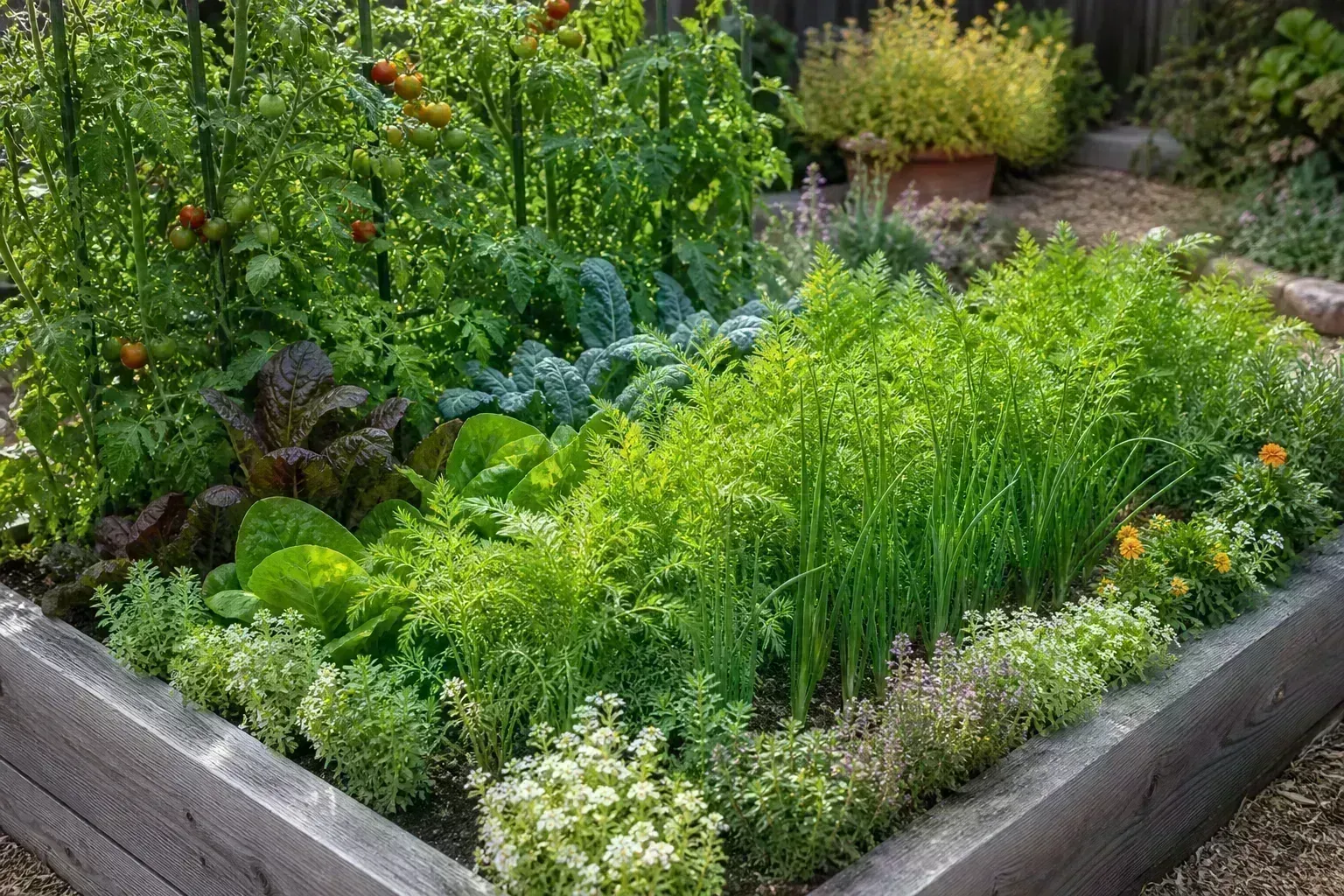
Space efficiency (intercropping) fills gaps in time and depth. Fast crops like lettuce or radish finish before slow crops such as Brussels sprouts or sweet corn expand. Deep-rooted carrots can share a bed with shallower onions when neither casts heavy shade. RHS documents this as one of the most reliable companion benefits because it is measurable: you harvest the small crop before the large one needs the space. RHS companion planting overview
Pest and disease disruption includes scent masking, visual confusion, trap crops, and simply mixing plant types so pests encounter fewer uniform targets. Research cited by RHS found that French marigolds (Tagetes) can reduce whitefly and thrips on tomatoes through limonene—but mixing tomatoes with other plants without marigolds also reduced pests compared with tomato monoculture. Diversity itself matters.
Beneficial insect support means nectar- and pollen-rich flowers feeding predators and parasitoids that eat aphids, caterpillars, and other pests. Alyssum (Lobularia maritima) with lettuce is a documented example: flowers attract natural enemies that lower aphid pressure. Calendula and nasturtiums near beans or tomatoes aim at the same outcome—if planted at meaningful density.
Physical support and microclimate covers structures like the Three Sisters (corn supporting beans, squash shading soil) or taller plants giving light shade to cool-season greens in late spring. These are layout decisions as much as “companion” chemistry.

When companion planting genuinely works in home gardens
Companion planting earns its space when you already meet basic culture—sun, drainage, fertility—and add diversity on purpose, not as decoration.
West Virginia University Extension frames positive relationships as crops that should sit within two or three rows of each other, while negative pairings need two or three rows of separation. That spacing rule alone prevents many chart disasters: “companions” jammed into the same square foot behave like competitors. WVU Extension companion planting
It works well when flowers run in strips or drifts along bed edges where pollinators and beneficial wasps travel repeatedly through vegetable rows. It works when root crops with different profiles share a row without fighting for the same soil layer. It works when you use a sacrificial trap crop you monitor and remove, not a pretty flower you never inspect.
Polyculture also builds resilience. RHS notes that mixed plantings—like roses in diverse borders versus rose-only beds—often show fewer severe pest and disease outbreaks, possibly because spores intercept on non-host plants or because mixed microbe communities suppress pathogens. Vegetables tucked among varied flowers may escape attention pests give to uniform blocks.
Scale and density matter more than the right two names
The most common reason companions “do not work” is scale. One marigold per twenty feet of tomatoes rarely changes thrips pressure. Two borage plants at the corner of a 12×20-foot plot will not feed enough beneficial insects to matter during a aphid spike.
Cut-flower growers and market gardeners who swear by companions usually plant blocks—continuous bloom, repeated rows, entire bed edges in flowers—not a single accent pot. If less than a noticeable fraction of your bed participates in the mix, treat the pairing as experimental, not structural.
Continuous bloom from spring through fall matters more than any one species token. A strip that peaks for two weeks then goes bare does not sustain predators through the pest season.
When companion planting fails or disappoints
Companion planting disappoints when it is used as a substitute for rotation, resistant varieties, soil testing, or hand-picking—not when the idea itself is worthless.
Allelopathy is real. Black walnut juglone kills or stunts many vegetables at a distance—tomatoes, peppers, and potatoes are among the sensitive crops extension guides warn about planting within a walnut’s drip line. Some sunflowers, rye, and fennel affect neighbors through root exudates or dense root competition. Fennel near most vegetables is a frequent mistake; its compounds inhibit growth and it hosts its own pest complex. A chart that lists fennel as a casual herb neighbor without warning is doing you a disservice.
Charts also treat mint and lemon balm as harmless edge herbs. In ground, both spread aggressively by rhizomes and can outcompete vegetables within a season. In containers they can work as companions; in open beds they often become the problem you were trying to solve.
Heavy feeders stacked together—corn, cabbage, and tomatoes in one tight square— exhaust nitrogen fast regardless of companion lore. Shade competition from sunflowers, tall trellised beans, or multiple vining crops in one row steals the light fruiting plants need.
Social media pairs also ignore shared pathogens. Planting tomato beside potato “because both like sun” can increase late blight spore load. Cucurbits overlapping in humid beds share powdery mildew pressure when leaves stack with no airflow.
Cultural mismatches that beat every chart
Before any scent or trap-crop story, run culture. Full-sun fruiting crops beside tall climbers without a north-side layout end with one plant winning and one etiolated. Mesic vs drought-tolerant pairings—basil beside deeply watered cabbage while basil roots stay soggy—produce weak herbs and bolting, not pest control.
Maturity timing breaks intercropping when the “fast” crop is not actually faster in your zone, or when you never harvest it before the slow crop closes the canopy. Container pairings fail when a “pizza garden” tomato, pepper, basil, and oregano share one pot without accounting for root volume; WVU notes container companions can work, but only when the vessel is large enough for the largest partner. WVU Extension companion planting
Run the placement checklist before you trust folklore
Use this table before you assign bed space to a chart pairing. Fail any row and fix spacing, timing, or rotation first—companions cannot compensate.
| Check | Question |
|---|---|
| Sun | Do both need the same light level at maturity? |
| Water | Will one partner need daily irrigation while the other prefers drying slightly? |
| Height | Will either plant cast permanent shade on fruiting crops? |
| Roots | Do they occupy different depths, or do you need wider spacing? |
| Rotation | Are they in the same disease family that should not repeat in soil? |
| Spacing | Are positive pairs within 2–3 rows and negatives 2–3 rows apart per WVU guidance? |
Passing the checklist does not prove a pairing works—it only means you are not fighting physics. For bed maps and row orientation, see our companion planting vegetable garden layout guide.
Disease families trump friendly pairings
Nightshades—tomato, pepper, potato, eggplant—share late blight, verticillium wilt, and many insect pests. Planting them as tight companions increases inoculum and makes scouting harder. Rotation intervals of three to four years between the same family in a spot do more for disease reduction than basil beside tomato.
Brassicas share clubroot and caterpillar complexes. Cucurbits share mildew and squash bugs when leaves pile up. Companion flowers can support beneficial insects against caterpillars, but they do not erase rotation rules.
When a chart says tomato loves pepper because both are Mediterranean crops, read it as same grocery aisle, not same hospital ward. Separate blocks beat friendly adjacency for disease-prone families.
Five vegetable pairings gardeners use with good reason
These five combinations appear often in extension tables and experienced growers’ beds because they combine cultural fit with at least plausible pest or pollinator benefits—not because any pairing is foolproof. Penn State Master Gardener material on good-neighbors companion planting describes companion planting as deliberate polyculture—several crop types sharing space efficiently—not a guarantee that every named pair repels every pest. Use the list below as starting points you verify with the checklist and split-bed test, not as commandments.
Carrots and onions. Carrots drill deep; onions and shallots occupy the upper soil profile.
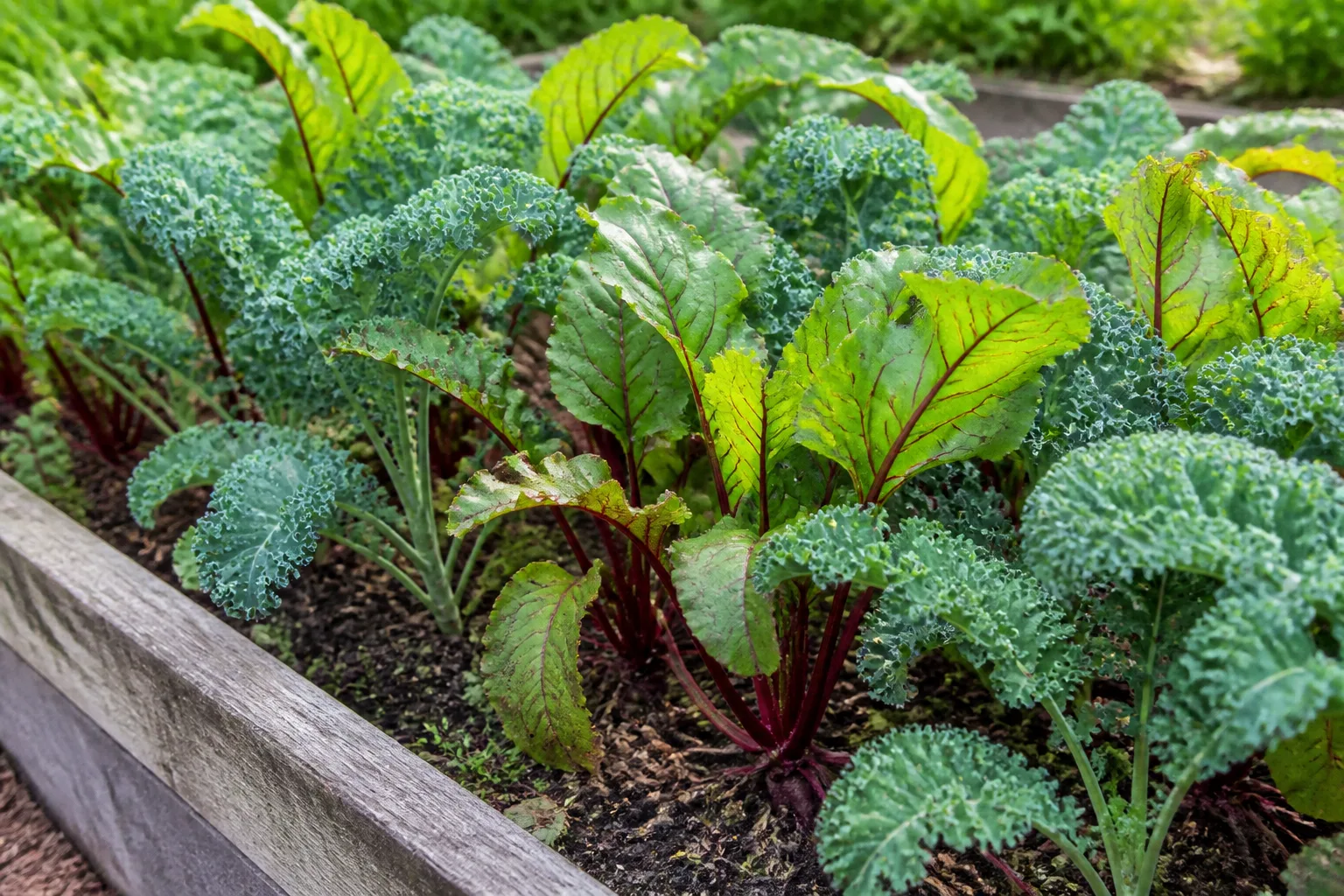
Neither casts heavy shade on the other when spaced normally. RHS notes this as a classic underground complement and adds that onion scent may make carrot fly harder to locate carrots while carrot foliage may confuse onion fly—results vary with pest pressure, but the root zoning benefit is sound. RHS companion planting overview
WVU lists both in compatible onion-family and lettuce pairings. Keep seeding times staggered so tiny carrot seedlings are not buried by aggressive onion tops.
Sweet alyssum with root crops. Low-growing sweet alyssum (Lobularia maritima) blooms continuously in many climates, feeding parasitic wasps and hoverflies. RHS documents reduced aphid pressure on lettuce when alyssum grows nearby through beneficial insect attraction—the mechanism is habitat, not perfume directed at one fly species.
Along carrot or beet rows, alyssum acts as a living edge predators traverse daily. Plant in bands, not isolated plugs.
Tomatoes with calendula or basil. Calendula (Calendula officinalis) supports pollinators and predatory insects;
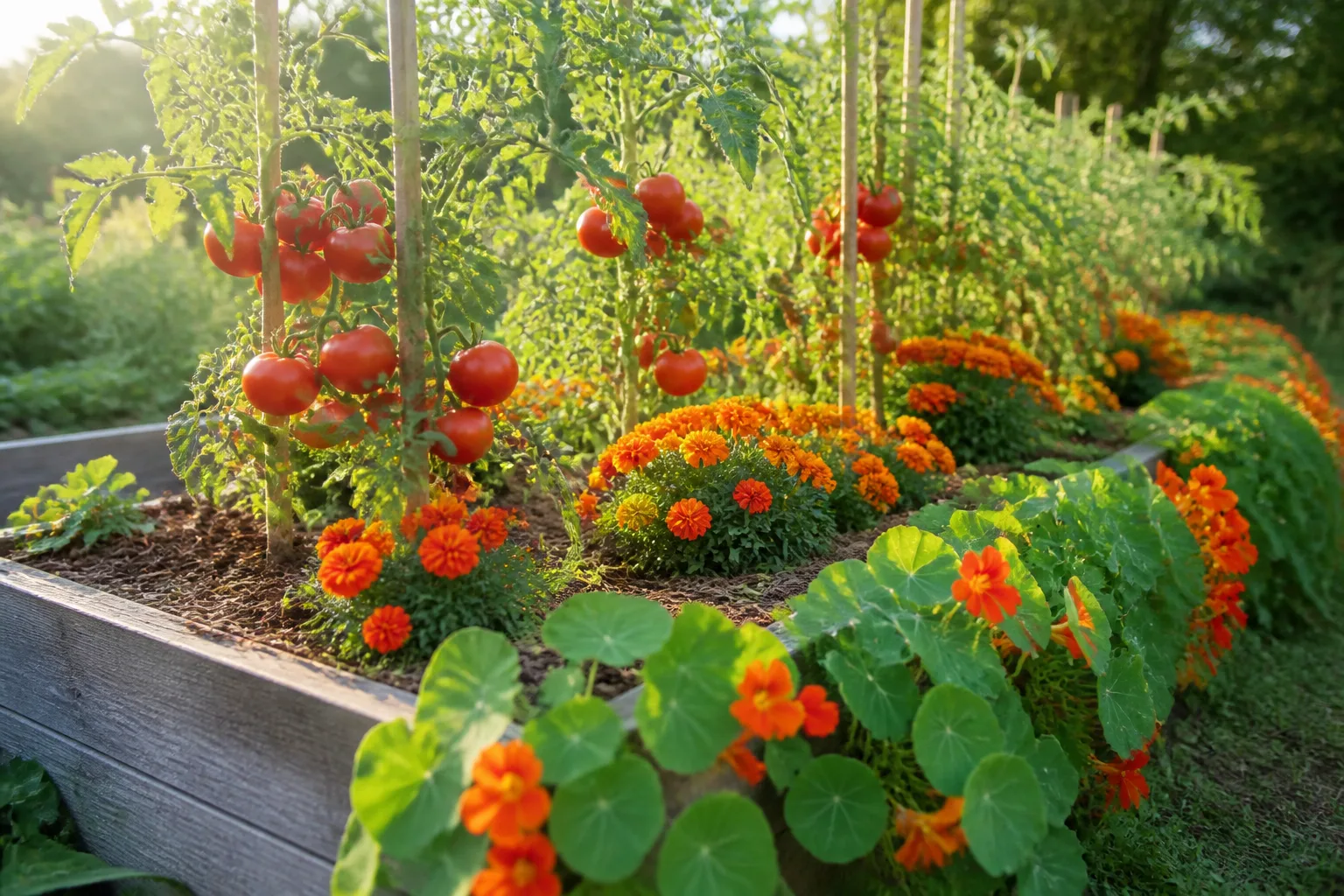
gardeners pair it with tomatoes and beans hoping for aphid and hornworm pressure relief. Scent claims for hornworms are anecdotal; the stronger case is increased beneficial traffic through the tomato zone. Our companion plants to protect tomatoes from whiteflies guide covers marigold and mix-planting research in more tomato-specific detail.
Basil beside tomato works when basil gets sun without being shaded by the tomato canopy—often on the south or west edge with harvest before the vine closes in. Basil that stays wet at tomato roots bolts and mildews; that is a culture failure misread as “bad companions.”
Cabbage with celery. Both prefer steady moisture and fertile soil. Celery’s shallow roots and upright habit differ from cabbage’s deeper anchor and spreading leaves. Celery’s strong aroma is traditionally linked to repelling whiteflies, flea beetles, and cabbage worms; evidence is mixed, but similar water needs make them workable neighbors when spaced for airflow.
Keep brassica caterpillar scouting on schedule—celery does not replace row covers or Bt on a bad year. For wider brassica neighbor lists, see companion plants for broccoli.
Cucumbers with nasturtium. Nasturtiums attract aphids and some cucumber beetles as trap crops while sprawling foliage shades soil and retains moisture cucumbers appreciate in hot weather. The trap only works if you inspect nasturtiums weekly and remove heavily infested plants before pests jump to cucumbers. Our kale companion plants guide walks through the same sacrifice logic for brassicas.
For cucumber-specific pairings and spacing, see companion plants for cucumbers.
Three pairings and spacing rules to avoid
Avoid does not always mean never—it means default to separation unless you have space and a reason to experiment.
Tall sun-lovers fighting for light. Do not stack multiple full-sun climbers—tomatoes, pole beans, cucumbers, tall peas—on the same trellis line without a plan. Add sunflowers only on the north side of the bed (south side in the Southern Hemisphere) where they will not shade fruiting crops all afternoon.
Corn and tomatoes together compete for nitrogen and light; WVU lists them as a poor adjacency. WVU Extension companion planting
Nightshades crowded together. Tomato, potato, pepper, and eggplant as “companions” share pests and diseases. If you grow them in one garden, use separate blocks and rotation years—not interplanted rows marketed as synergy.
Eggplant and potato specifically appear on WVU’s avoid lists for each other. Give each family block airflow; mulch and drip reduce splash-borne blight even when blocks are separate.
Beans and alliums in tight quarters. WVU and many Midwestern charts warn that onions, garlic, and gladiolus stunt beans when interplanted closely. Allium compounds can suppress bean growth; yields drop even when plants look merely “off.”
If you grow both, keep two to three rows between blocks per WVU spacing guidance—or separate beds entirely. Pole beans with garlic interplanted in the same row is the classic mistake.
Trap crops and pollinator strips that support vegetables
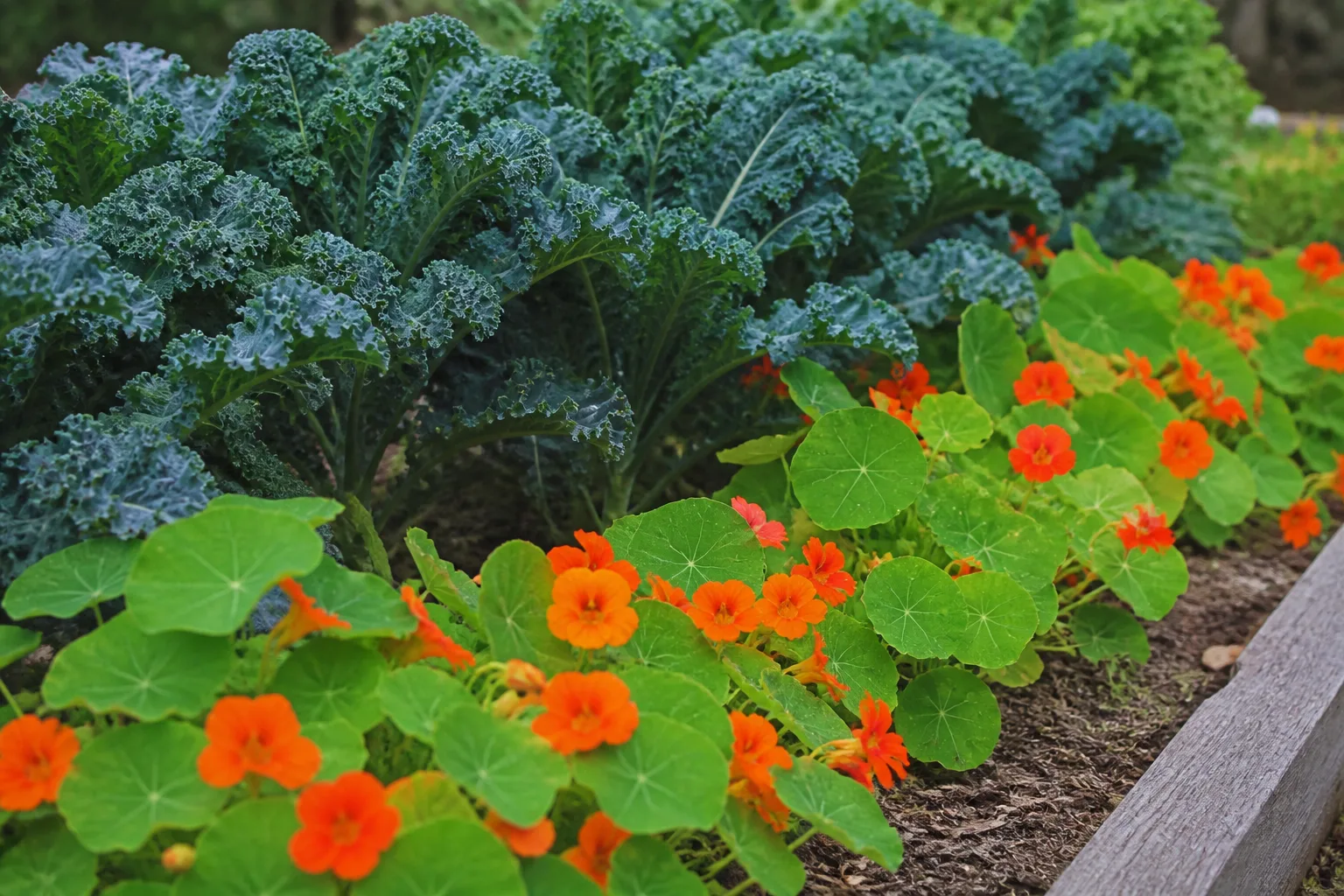
Trap cropping deliberately grows a plant pests prefer so you sacrifice it and protect the main crop. Nasturtiums for aphids, mustard for flea beetles, and hubbard squash for cucumber beetles are common examples discussed in University of Minnesota Extension trap-cropping work referenced by WVU. UMN companion planting and trap cropping
Trap crops fail silently when gardeners treat them as permanent ornamentals. Success requires weekly checks, removal or destruction of infested trap plants, and acceptance that you are losing some biomass on purpose.
Place trap crops between pest entry points and your main crop—often the bed edge nearest lawn or last year’s infested plot—not randomly in the center where insects may bypass them. UMN Extension trap-cropping guidance emphasizes timing: the trap must be at the right growth stage when the pest arrives, or it will not pull pressure off your harvest plants. UMN companion planting and trap cropping
Pollinator strips differ: they feed bees and beneficial insects across the season. Site them on bed long edges or perimeter paths insects already travel—not isolated dots mid-path where predators never intersect pest hotspots.
Under brassicas, low clover or trefoil cover crops can mask host plants from cabbage root fly by disrupting leaf visual cues—a mechanism RHS describes as “hide and seek,” with the added soil-health benefit of keeping ground covered. RHS companion planting overview
The Three Sisters—and why it needs more space than a meme suggests
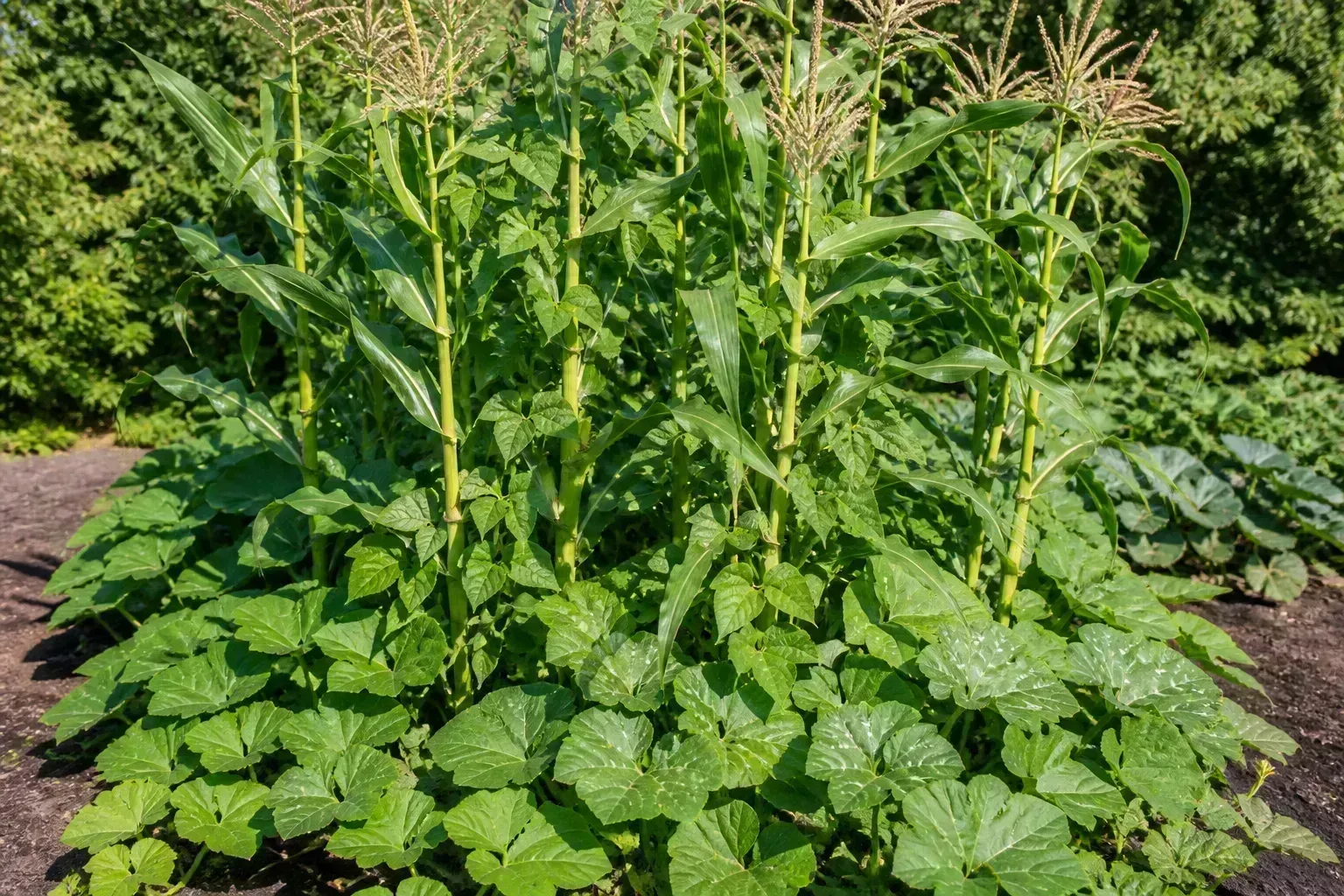
The Three Sisters—corn, beans, squash— is the most famous companion system: corn stalks support pole beans, beans fix nitrogen (partially available to neighbors), and squash leaves shade soil and suppress weeds. RHS describes it as an efficient use of space and support even if total yield may not exceed separate plots—the win is integration, not guaranteed bonus bushels. RHS Three Sisters guide
Home gardeners fail when they shrink the mound to a 4×4-foot raised bed. Corn needs block planting for pollination; beans need corn tall enough to climb; squash needs square yards to sprawl without smothering corn. A modest home plot often needs at least 10×10 feet for a functional Sisters planting—more on our companion planting vegetable garden layout page.
Fertility still matters. Beans do not eliminate the need for compost in a hungry corn-and-squash year. Treat Sisters as a layout system, not a low-input miracle.
How to test a companion plan in one bed
Garden science is local. Split one bed: half with your companion mix, half monocrop control. Match soil prep, irrigation, and variety choices. Record pest counts every week for six to eight weeks and weigh harvest at season end.
One season is anecdote; two seasons in similar weather starts to be evidence you can trust. Note failures honestly—many “bad companions” are actually bad irrigation or a bumper pest year region-wide.
Share results with your county extension office; WVU encourages recording combinations to build regional knowledge beyond generic charts. WVU Extension companion planting
Fit companions into an integrated pest management calendar
Companion planting belongs inside IPM, not instead of it. Order of operations for most vegetable gardens:
First, choose resistant varieties and correct spacing. Second, plan rotation blocks by family. Third, set irrigation and mulch to reduce splash and drought stress. Fourth, add flower strips and trap crops timed before historical pest peaks in your zip code. Fifth, scout weekly and hand-pick or use labeled controls when thresholds cross.
Companions support months when beneficial insects are active—they do not replace labeled organic or conventional controls on a bad hornworm or blight year. Marigold-specific tomato tactics belong in our marigold companion plants guide when you want cultivar-level detail.
Record planting dates, flower strip width, and pest counts in a simple notebook or spreadsheet. After two seasons you will know whether your calendula strip correlated with lower aphid peaks—or whether last year’s success was weather, not companions. That evidence beats any generic chart for your zip code.
Conclusion
Companion planting does work when you treat it as diversity at scale, matched culture, and deliberate trap-crop sacrifice—not as a guarantee from a two-column chart. Match sun, water, and roots first; keep disease families apart; plant flowers in strips that feed beneficial insects all season; and test pairings in your soil before preaching them to neighbors.
The best companions are often boring: they share your watering routine, occupy different niches, and keep the bed visually mixed enough that pests lose the monoculture signal. Rotation, resistant varieties, and scouting still carry most of the load. Companions earn their keep when they make those tools work better—not when they promise to replace them.