Broccoli Companion Plants: Good and Bad Neighbors
Learn which herbs, flowers, and vegetables grow well beside broccoli—and which neighbors steal nutrients, spread brassica pests, or overheat your crop.

Broccoli (Brassica oleracea var. italica) is a cool-season crop with shallow roots, steady moisture needs, and a long list of insect fans. The right neighbors can confuse pests, fill empty soil, and keep the bed productive while heads size up. The wrong ones compete for nitrogen and calcium, cast too much shade, or pull in the same cabbage worms that already love brassicas.
This guide groups good broccoli companion plants by the job they do, gives spacing you can apply in a raised bed, and explains which crops to keep at a distance—without treating companion planting like a guarantee.
What companion planting can—and cannot—do for broccoli
Companion planting means growing two or more crops near each other because they support one another in some way: repelling or distracting pests, attracting beneficial insects, shading soil, or using a different root zone so neither plant wastes space. Penn State Master Gardener material on good-neighbors companion planting frames it as polyculture that adds diversity—not a replacement for rotation, sanitation, or row cover.
For broccoli, companions help most when they address cabbage loopers, imported cabbageworms, flea beetles, and aphids while the crop is still small. University of Minnesota Extension’s overview of companion planting in home gardens notes that many pairings come from long gardener observation, with research backing some combinations more than others.
How broccoli actually uses neighboring plants
Broccoli pulls hard on nitrogen and calcium while building tight heads. It prefers cool air (roughly 60–70°F / 15–21°C) and starts slowing down when sustained heat arrives. Neighbors earn their spot when they do at least one of these jobs:
- Confuse or repel brassica pests with scent (herbs, alliums)
- Act as trap crops that caterpillars hit first (nasturtiums, some marigolds)
- Feed beneficial insects with pollen and nectar (flowering herbs, chamomile, dill in bloom)
- Cover soil with low, fast crops before broccoli leaves expand (lettuce, radish, spinach)
- Use a different root depth so harvest happens without root fights (carrots, beets)
No border of marigolds removes the need to rotate brassicas, scout weekly, or remove wormy leaves. Treat companions as one layer in an integrated plan.
When worm pressure spikes, walk the bed with a bucket of soapy water and drop green loopers you find on broccoli or trap plants. Flip leaves to check for velvety green imported cabbageworms and tiny round eggs laid by cabbage white butterflies. Catching larvae at ⅓-inch length is far easier than saving a head already tunneled with frass.
Set up the broccoli bed before you pick companions
Spacing, timing, and rotation rules
Give each broccoli plant 12–18 inches within the row and 24–36 inches between rows so mature leaves do not smother neighbors. In a raised bed, think in blocks rather than skinny lines: one broccoli every 15 inches on center, with herbs or flowers at the corners and low greens in the gaps until heads fill in.
Broccoli belongs in spring and fall slots in most climates. If you are lining up the whole vegetable calendar, our when to plant vegetables guide helps place cool-season crops before summer heat or after it breaks. Do not follow broccoli with cabbage, kale, cauliflower, or Brussels sprouts in the same bed the next season—shared pests and diseases build up when brassicas repeat in one place. A three-year gap is a practical minimum in small gardens.
Soil fertility, calcium, and moisture
Work compost or balanced organic fertilizer into the top 6–8 inches before transplanting. Broccoli is sensitive to calcium shortage (tip burn, loose heads), so liming acidic soil per a soil test beats guessing. Keep soil evenly moist; drought stress invites aphids and produces small, bitter heads.
Heavy feeders planted for summer—tomatoes, corn, melons—belong in a different bed with their own fertility plan. Mixing them beside spring broccoli usually means one crop gets too much shade, too little water, or the wrong temperature window.
Row cover is underrated beside companion planting. Lightweight fabric over transplants for the first 3–4 weeks blocks egg-laying moths while soil companions establish. Broccoli is harvested before it needs bee pollination, so you can leave cover on longer than you would for squash or cucumbers—just vent on hot afternoons so plants do not cook.

Best herb companions for broccoli pest control
Fragrant herbs are the first line most gardeners add because their oils and scents can mask the brassica smell pests use to find plants. An Iowa State study on companion planting for sustainable pest control found that thyme, onion, and nasturtium reduced cabbage looper and imported cabbageworm damage on broccoli—useful evidence that specific neighbors can matter, not just folklore.
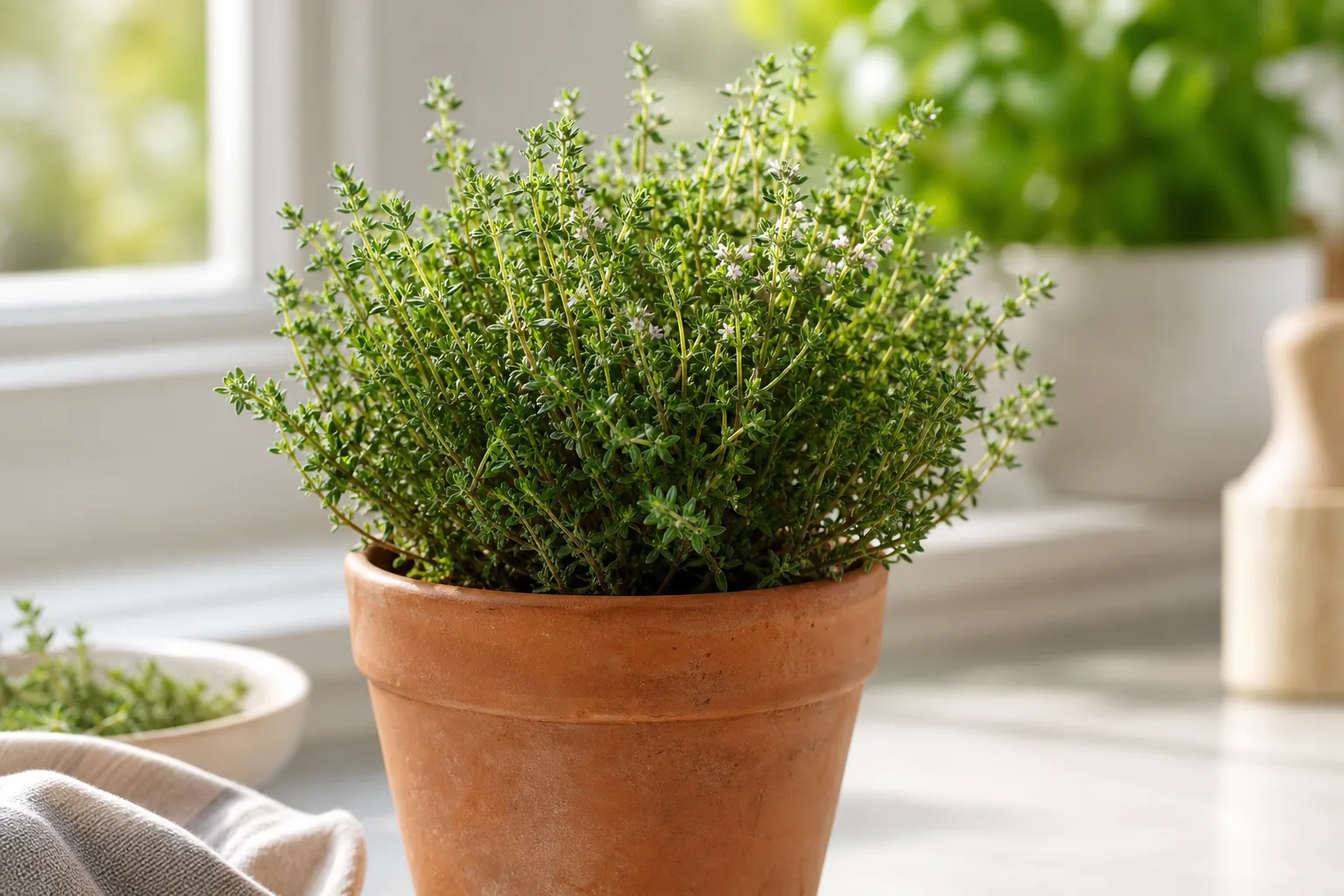
Strong herb choices include basil, chives, dill, mint, oregano, rosemary, sage, and thyme. Plant them at the bed edge or in pockets between broccoli plants, not directly on top of the crown where water and shade get uneven.
Which herbs to plant and where to put them
Rosemary and sage are woody perennials—give them the sunny corner of the bed where they will not be disturbed at broccoli harvest. Dill and basil are excellent when you let a few plants bolt and flower; umbel blooms feed parasitic wasps and hoverflies that hunt caterpillars. Chives and garlic chives add allium scent in a compact footprint.
Mint repels some pests but spreads aggressively by runners. Grow it in a buried pot or a separate container beside the bed, not loose in the row. Thyme stays low and can edge the planting like a scented border without competing for height.
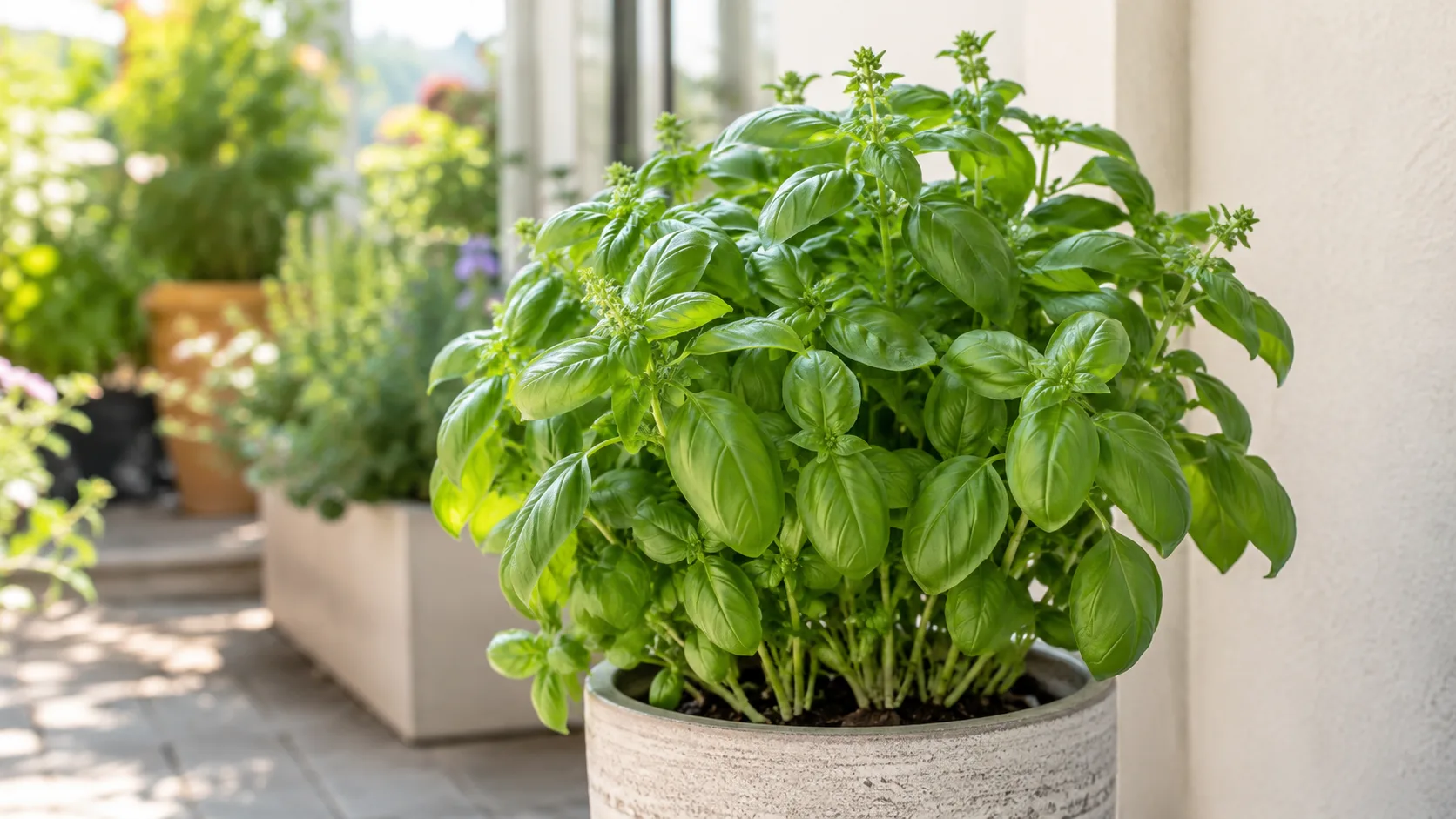
Leave part of each herb patch unharvested through bloom if your goal is beneficial insects, not just kitchen harvests. Cutting everything back before flowers open removes the nectar source just when predator populations need to build.
Chamomile deserves a mention even though it is not as famous as rosemary on brassica lists. Its small daisy flowers attract hoverflies and tiny parasitic wasps, and some gardeners report improved broccoli flavor nearby—an anecdote, not a lab result, but chamomile’s low stature and shallow roots make it easy to tuck at the corner of a bed without risk.
Flowers that protect broccoli: nasturtiums and marigolds
Nasturtiums are the classic trap crop for brassicas. Cabbage white butterflies and loopers often lay on nasturtium leaves first, giving you a single plant to inspect and pull rather than hunting through every broccoli leaf. Epic Gardening’s brassica pest coverage describes nasturtiums as a living mulch, too—their sprawled leaves shade soil and cut evaporation around shallow broccoli roots.
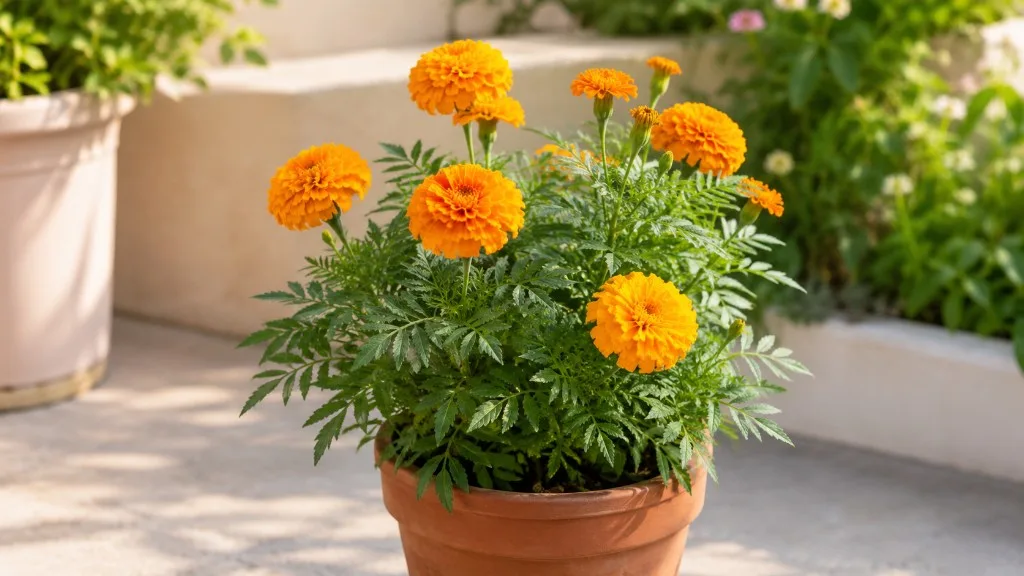
French marigolds (Tagetes patula) add color and resinous scent at the border. They may reduce some flying pests, but they are not reliable solo control when worm pressure is high. Pair marigolds with handpicking, Bt (Bacillus thuringiensis) on young larvae, or row cover removed only when plants need pollination (broccoli is harvested before bloom, so cover can stay longer than on fruiting crops).
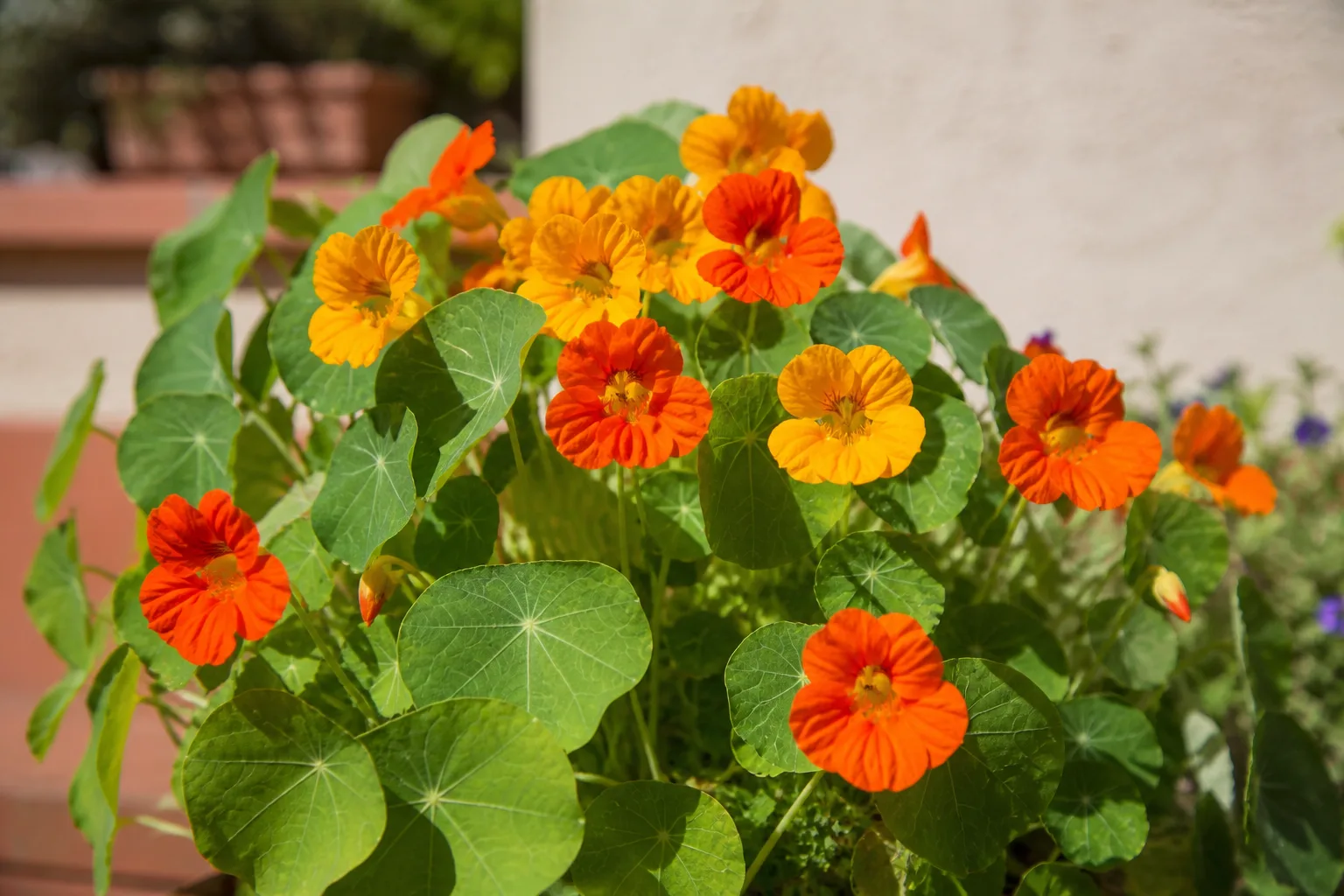
Plant nasturtiums 6–12 inches from broccoli stems on the south or west edge where they can sprawl outward without climbing the heads. Sow marigolds as a low strip along the path side of the bed for easy replacement if they get chewed to stubs.
Vegetables that save space beside broccoli
Broccoli is upright early, then expands into a wide rosette. The window before leaves touch is perfect for quick crops and shallow-rooted greens that finish before competition starts.
Leafy greens and fast root crops
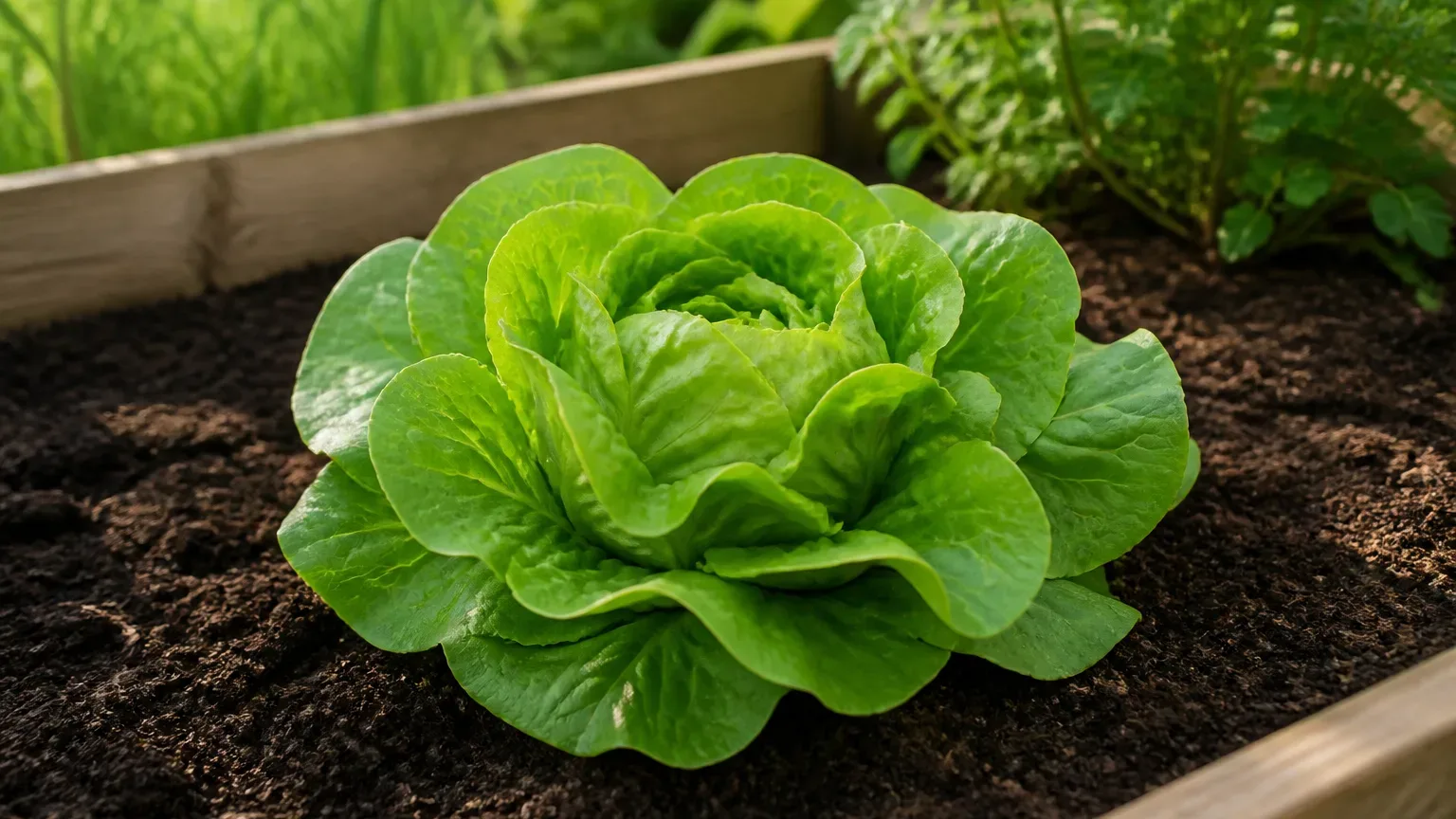
Lettuce, spinach, Swiss chard, and arugula fit between young broccoli plants and appreciate light shade once summer warmth builds. Harvest cut-and-come-again greens before broccoli leaves overlap their row.
Radishes mature in 25–35 days and use little root volume. Beets and carrots occupy deeper soil layers; carrots are widely listed as good broccoli neighbors because their taproots do not fight broccoli’s fibrous shallow mat. Sow radishes and carrots between transplants at planting time, not after heads are nearly full size.
Alliums and other low-profile neighbors
Onions, shallots, and garlic bring sulfur compounds that deter some chewing pests and fit the Iowa State evidence for onion as a protective neighbor. Set onion sets or garlic cloves at the row ends or in a line 8–10 inches from broccoli stems so bulbs swell without crowding crowns.
Celery and potatoes appear on some companion lists because gardeners report flavor benefits, but both need wide spacing and steady fertility. If you use them, place potatoes beyond the broccoli block—Epic Gardening notes different nutrient emphasis (potatoes favor phosphate/magnesium; broccoli wants calcium and nitrogen)—and treat celery as a season-long neighbor only in large beds.
Cucumbers can work as edge vines on a trellis north of broccoli so the vine does not shade the cool-season crop. This pairing is timing-sensitive: finish broccoli harvest before cucumber vines close the aisle.
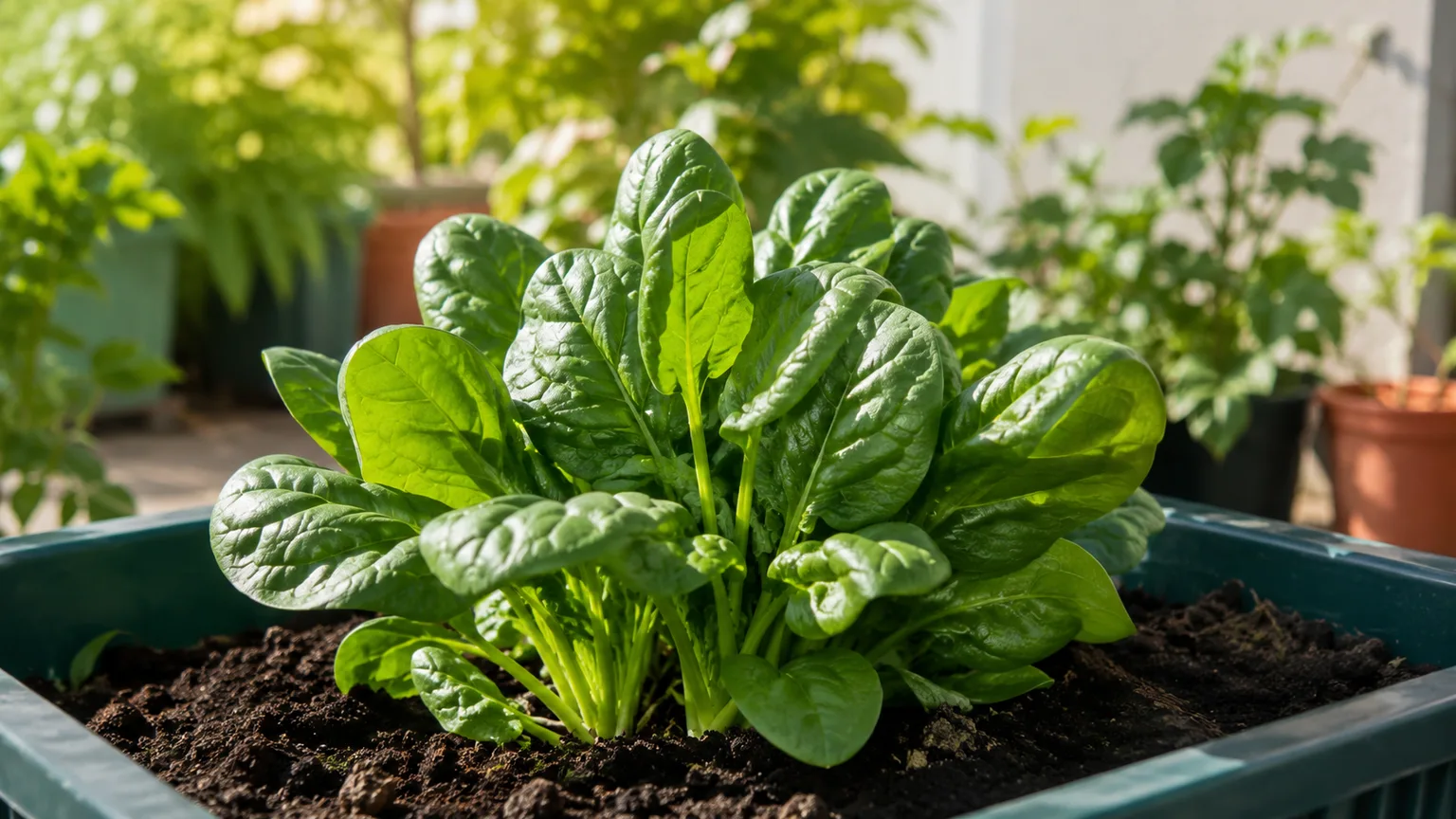
Spinach is an underused gap filler. Sow thickly between transplants in early spring; shear leaves for salads before broccoli canopies close. Spinach bolts in heat, which is fine—pull it when broccoli needs the space and let the brassica carry the bed through late spring.
Should you plant other brassicas near broccoli?
Opinions split because brassicas share culture (cool weather, rich soil) and pests (the same worms and aphids). Planting broccoli beside cabbage, kale, cauliflower, or Brussels sprouts makes one-stop shopping for insects and can speed disease spread in wet seasons.
The practical compromise:
- Separate blocks by at least 10–15 feet in large gardens, or one bed apart in small yards
- If space forces clustering, add trap flowers and scout twice weekly
- Stagger maturity so not every brassica is at the same vulnerable stage
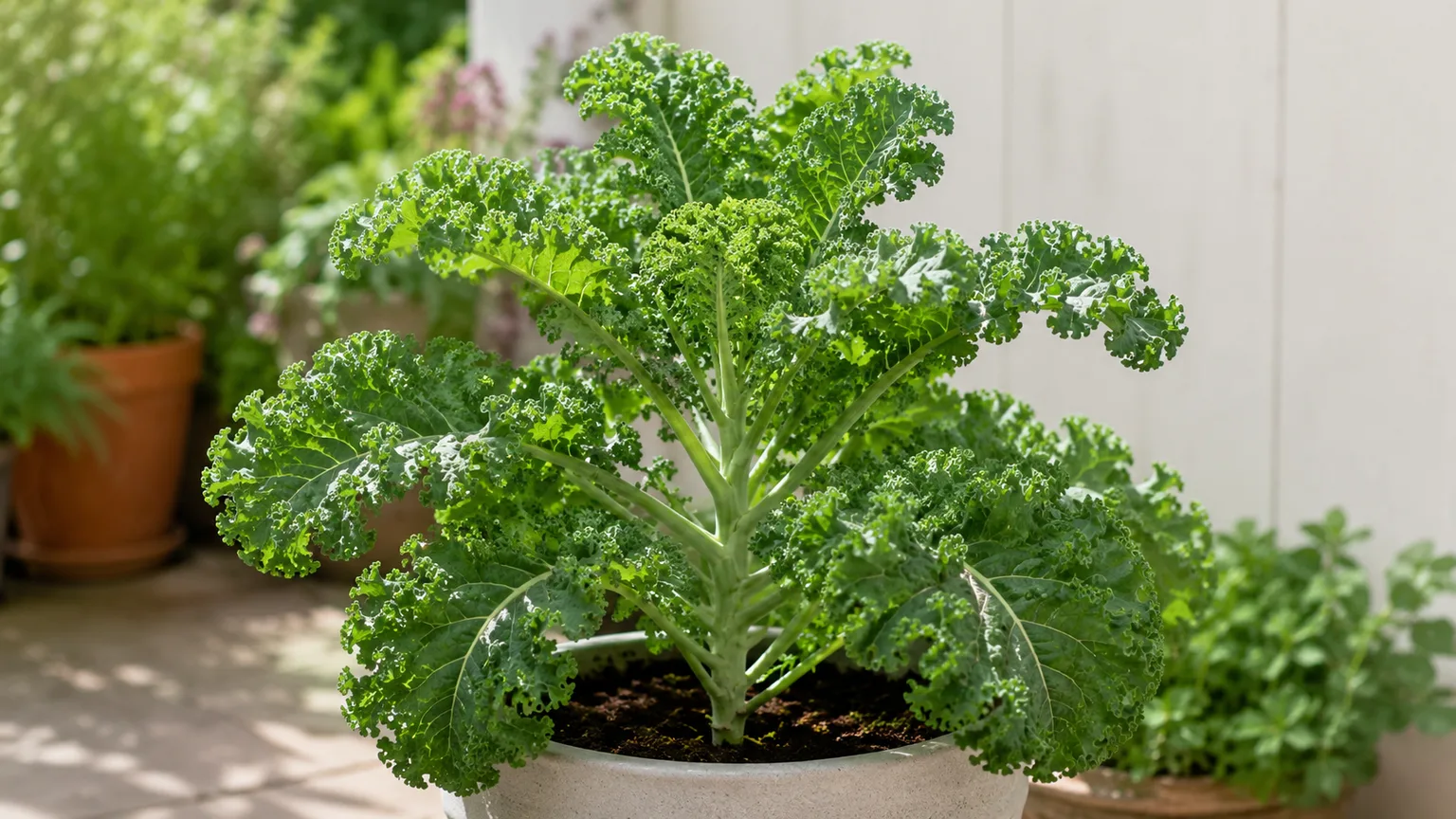
A small test patch—one broccoli next to one kale—can show your local pest pressure. If you see eggs and larvae on both within a week, split them next season.
Broccoli companions to avoid
Heat lovers, heavy feeders, and spreaders
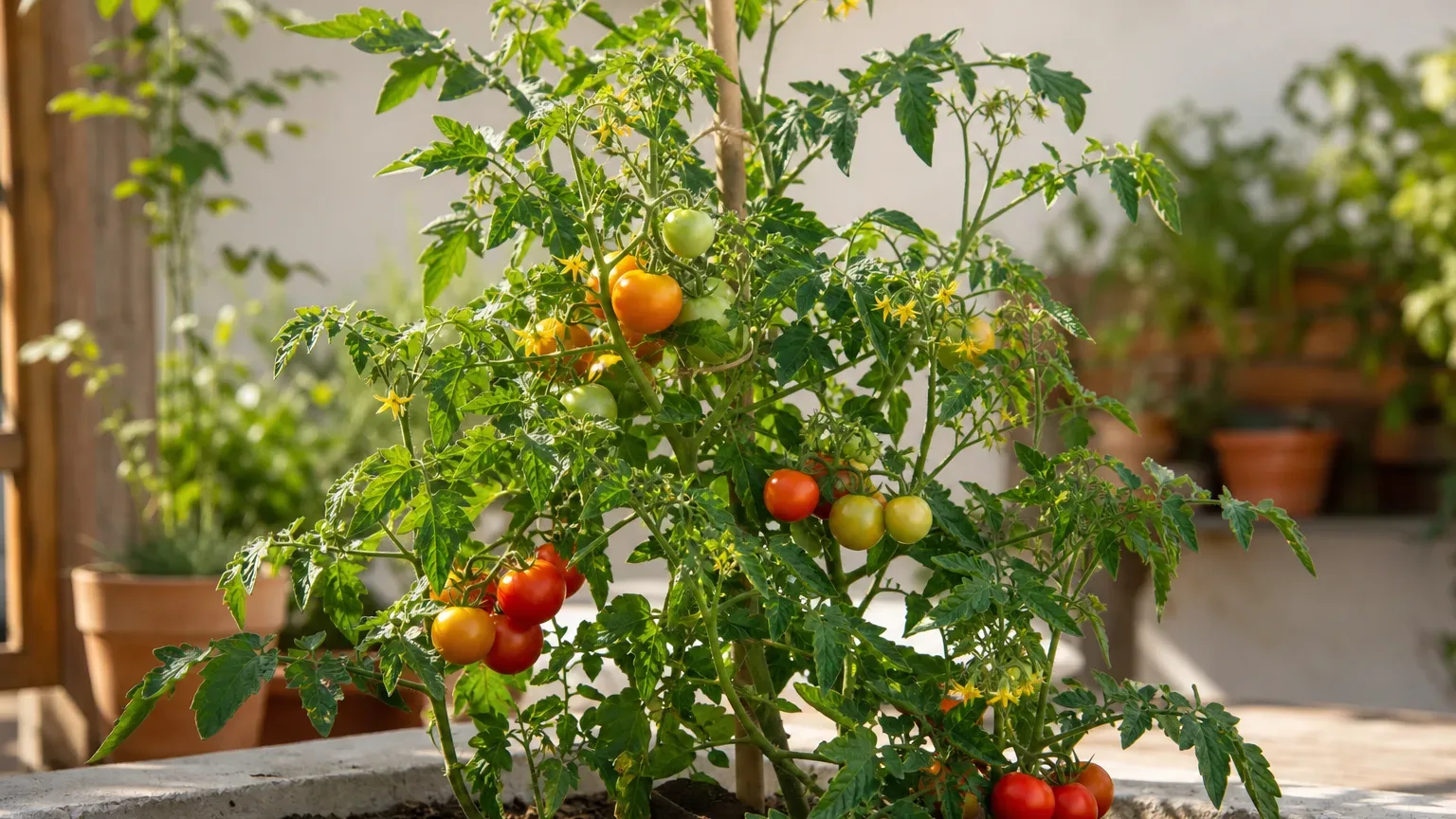
Tomatoes, peppers, and eggplant are nightshades that want summer heat and heavy feeding while broccoli wants cool spring or fall conditions. They also grow tall and bushy, stealing light from broccoli at the wrong season. Keep them in the summer block, not the spring brassica row.
Squash, pumpkins, melons, and sweet corn spread or climb, demand rich soil all season, and attract pests that do not help broccoli. Strawberries are perennial, hungry, and prone to slugs and botrytis in the same moist conditions broccoli prefers.
Asparagus is a long-term perennial bed crop—never sacrifice an asparagus trench for annual broccoli. Cantaloupe and watermelon need heat and space broccoli cannot spare.
Legumes, fennel, and allelopathic troublemakers
Snap beans, pole beans, and lima beans are often listed as poor broccoli neighbors. Beans partner with Rhizobia bacteria to fix nitrogen in root nodules for their own growth, as WVU Extension explains on legume nitrogen fixation—but that does not instantly feed every neighbor, and active legumes can shift soil fertility on a timeline that does not match broccoli’s spring hunger. Beans also sprawl or bush out, shading cool-season crops.
Fennel secretes compounds that inhibit many garden plants; keep it across the garden or in a pot. Strawberries and broccoli compete for the same moist, fertile niche and invite different pest headaches.
If you already mix beans and brassicas successfully, you are not wrong—companion rules are guidelines, not laws. The failure mode to avoid is crowding + shared stress: two hungry crops, one dry week, and pest explosions on both.
Sample bed layouts for spring and fall broccoli
4×8 foot spring bed (six broccoli plants):
- Center: broccoli transplants on 15-inch centers in two offset rows of three
- North edge: dill and chives in corners; low lettuce between broccoli while young
- South edge: nasturtium trail outward; French marigold every 18 inches
- East end: radish band sown at transplant day, harvested before heads widen
Fall bed after summer crops:
- Pull tired tomatoes or beans, add compost, then set broccoli where summer crops did not grow brassicas last year
- Edge with spinach and garlic; keep kale in the adjacent bed, not the same block
Container tip: One broccoli in a 5-gallon pot pairs with one herb (thyme or chives) and one trailing nasturtium in a side pocket. Skip second large crops in the same pot—root competition shows up fast as button heads.
Path-side strip: If bed space is tight, plant marigolds and chives in a 6-inch border along the walking path instead of between broccoli crowns. You still get scent and flowers for beneficials without disturbing roots at harvest.
Succession sowing: After you cut the main broccoli head, many varieties produce side shoots. Leave companions in place if they are not shading new growth, but pull spent lettuce and radishes so airflow stays good around the developing shoots.
Companions for broccoli rabe, Chinese broccoli, and Romanesco
Variants share brassica pests but differ in harvest timing and size.
Broccoli rabe (rapini) finishes faster and stays lower. Pair with beets, celery, dill, chamomile, lettuce, rosemary, and onions as you would with heading broccoli, but tighten spacing to 10–12 inches because plants are smaller.
Chinese broccoli (gai lan) benefits from beets, potatoes (at bed edge with wide spacing), celery, dill, lettuce, onions, radishes, sage, and garlic. Harvest leafy shoots repeatedly, so keep trap nasturtiums fresh—replace chewed trap plants so pests stay diverted.
Romanesco needs the same cool weather and calcium as broccoli but produces a single stunning head. Give it extra elbow room (18 inches) and companions that will not shade the fractal head: celery and nasturtium at the perimeter work well; skip tall summer vines entirely.
Conclusion
Broccoli rewards planning more than optimism. Herbs and alliums handle scent and beneficial-insect work, nasturtiums and marigolds buy time against worms, and lettuce, radishes, and carrots use the empty space before heads expand. Keep tomatoes, squash, corn, fennel, and sprawling beans in other beds, and treat other brassicas with caution unless trap crops and scouting are part of your routine.
Pick three companion roles for your bed—one pest plant, one flower, one quick crop—before you add more. Space broccoli 12–18 inches apart, rotate the brassica family, and measure success by cleaner leaves and fuller heads, not by how many species share one row. That is how companion planting pays off for broccoli without turning the garden into a crowded experiment.