24 Eggplant Companion Plants: Good and Bad Neighbors
Choose eggplant companion plants by light, spacing, pest habitat, water, mature size, and crop rotation—with good and bad neighbor guidance.
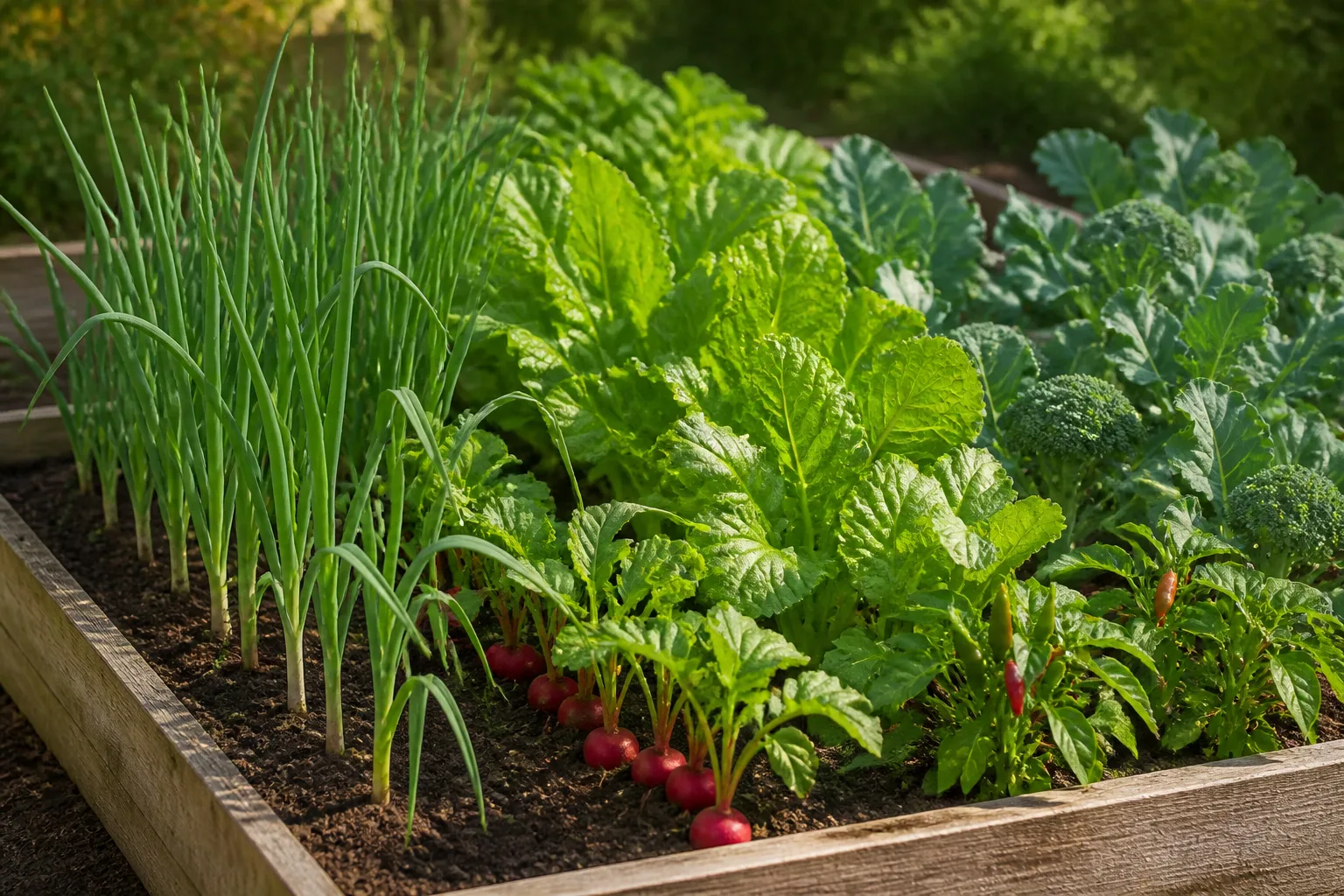
Eggplant benefits from a sunny, warm bed with good airflow and consistent moisture. Companion plants can add flowers, occupy unused space, support beneficial insects, or provide a different harvest window, but they cannot replace staking, watering, pest scouting, or crop rotation.
Choose companions that fit around the eggplant’s mature canopy rather than filling every gap on planting day. A small plant becomes a large shade source by midsummer.
What a useful eggplant companion does
A good companion has a practical job: bush beans add a lower crop, basil and thyme use the sunny edge, marigolds and calendula provide flowers, and radishes finish before the eggplant canopy closes. The pairing works because the plants share a site without competing at the same height and time.
Eggplant is a nightshade, as are tomatoes, peppers, and potatoes. Diversity is still useful, but the whole group shares some pests and diseases. Do not treat a mixed bed as a substitute for rotating crop families.
Eggplant companion plants at a glance
| Companion | Main benefit | Placement | Caution |
|---|---|---|---|
| Basil | Low herb and flower | Sunny front edge | Keep airflow open |
| Bush bean | Lower crop | Beside, not under canopy | Avoid excess crowding |
| Marigold | Flower and habitat | Bed edge | Not a pesticide |
| Calendula | Pollinator resource | Edge or corner | Remove spent plants |
| Thyme | Dry herb edge | Drier side | Less water than eggplant |
| Radish | Quick harvest | Before canopy closes | Pull on time |
| Dill | Beneficial insects | Outer edge | Can grow tall |
| Nasturtium | Flower or trap crop | Outside edge | Monitor pests |
Best vegetable companions
Bush beans fit beside eggplants when the bed is sunny and well drained. They occupy lower space and can be harvested while eggplants grow. Keep leaves from forming a solid wall around stems.
Peas can share early-season space in a cool climate, then finish as eggplant needs heat. In a hot climate, peas may decline before eggplants are transplanted. Radishes, lettuce, and beets can be interplanted for a quick harvest, but pull them before shade and humidity build.
Carrots use below-ground space and usually do not compete for the eggplant canopy. Onions and garlic can sit near eggplant as upright, low plants, but they share no magical pest shield; keep spacing and rotation in mind.
Spinach works in the cool season or in the lightly shaded edge of a hot garden. Cucumbers can be companions only when trellised away from the eggplant; two sprawling or climbing crops in the same small bed quickly become a humidity problem.
Herbs and flowers for the eggplant bed
Basil is a useful edible edge plant with similar warm-season timing. Thyme, oregano, and rosemary provide fragrant foliage and flowers, but rosemary prefers drier soil than eggplant; keep it in a separate pot or the dry outer edge.
Marigolds and calendula add color and insect habitat. Their presence may increase diversity, but do not claim that one marigold will repel every pest. Dill, parsley, cilantro, and fennel relatives can support beneficial insects when allowed to flower; fennel is a poor choice for a tightly mixed vegetable bed because it can be difficult to contain.
Nasturtiums can be used on the outer edge as a visual break or a trap crop in some gardens. Inspect them weekly and remove heavily infested material before pests move inward.
Four design groups that fit a small garden
Group 1 is the warm-season edible edge: eggplant, basil, bush beans, and a short row of radishes. Group 2 is the flower edge: eggplant backed by marigold, calendula, and dill, with enough space for air movement.
Group 3 is the succession bed: early peas and lettuce finish before eggplant reaches full size. Group 4 is the trellis bed: eggplant sits in front of a trellised cucumber, but the trellis is placed so it does not shade the eggplant during the afternoon.
What not to plant beside eggplant
Avoid crowding eggplant with full-size tomatoes, peppers, and potatoes in the same small bed. These crops share the nightshade family and can create a concentrated pest and disease zone. If you must grow them together, increase spacing, keep foliage dry, and rotate the family to a different bed next year.
Do not pair eggplant with a vigorous squash vine, an untrellised cucumber, or tall sunflowers that block light. Fennel and aggressive mint are better in containers or a separate border.
A simple eggplant companion layout
Set two eggplants 24 to 30 inches apart, adjusting for cultivar. Place basil or thyme on the sunny front edge and a short row of bush beans on the side where they will not shade the stems. Put calendula or marigolds at the outer corner, not packed between trunks.
If using a cucumber, install its trellis on the north side before planting and guide vines upward. Sow radishes between young eggplants, then harvest them before the canopy closes. Keep a clear path for checking leaf undersides and picking fruit.

Spacing, watering, and crop rotation
Water at the base when the upper soil begins to dry, keeping moisture consistent while fruit develops. Mulch lightly after the soil warms, leaving the stems clear. Avoid wetting leaves late in the day.
Rotate nightshades away from the bed for at least a season and follow local extension advice where soil-borne disease is a problem. A companion plan that returns eggplant, tomato, pepper, and potato to the same square every year is not diverse enough for good rotation.
Conclusion: protect the crop’s growing conditions
Basil, beans, herbs, flowers, radishes, greens, and carrots can fit around eggplant when they share light and water without creating a dense canopy. Trellises belong on the north side, vigorous vines need their own space, and flowers help most when they are planted in an edge strip and scouted.
Use the list to design a workable bed, not to promise pest immunity. Eggplant will reward the plan that protects sun, airflow, moisture, and access first.