Corn Gluten Meal for Weeds: What the Evidence Says
Corn gluten meal adds nitrogen, but weed control is uncertain. Compare evidence, timing limits, seed risks, and practical alternatives before spreading it.
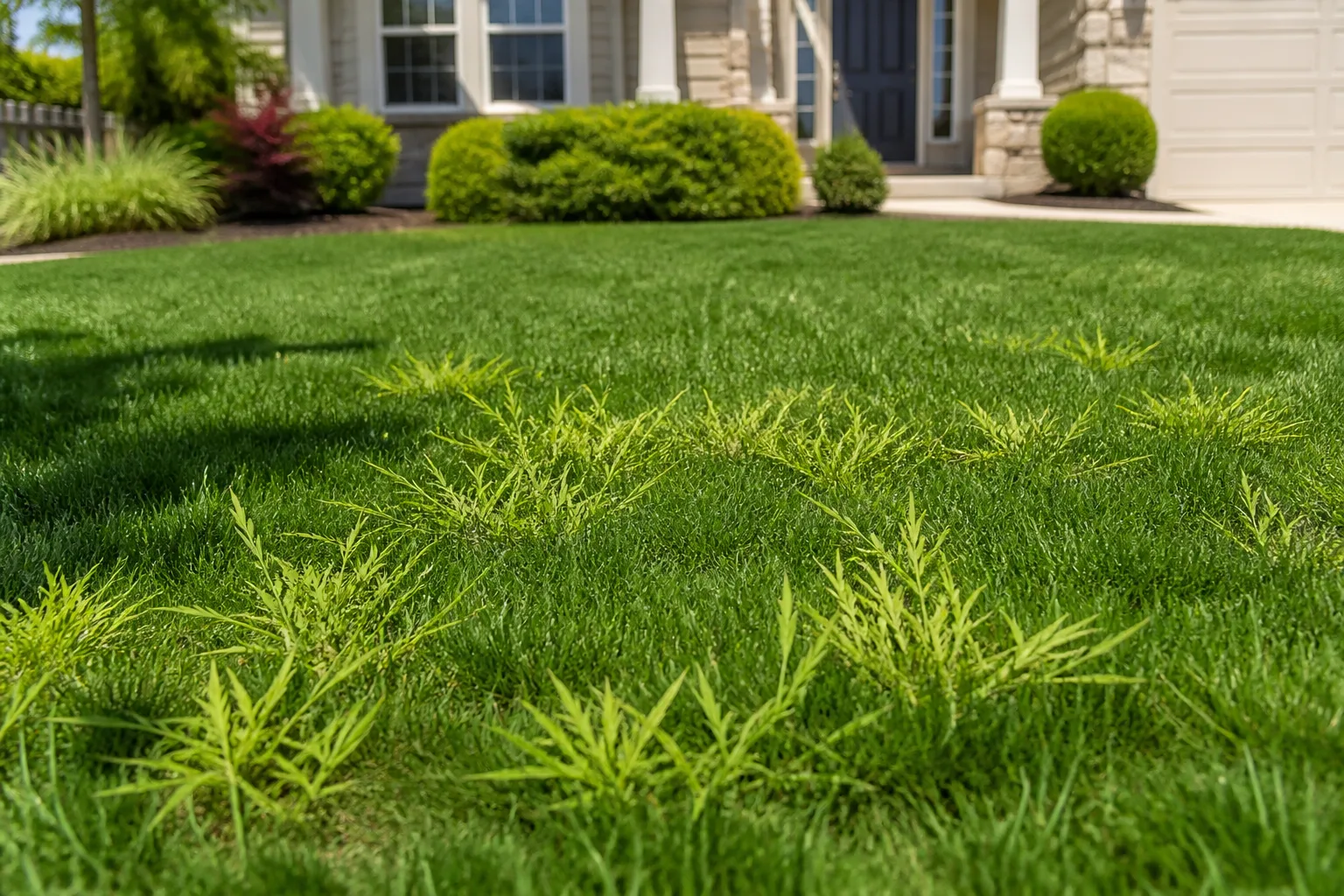
Corn gluten meal is often sold as a natural way to prevent crabgrass and other weeds before they emerge. The practical answer is more cautious: it has a plausible effect on some germinating seedlings, but dependable weed control in real lawns and gardens has not been established. Research results vary, field conditions are hard to control, and corn gluten is also a nitrogen fertilizer that can feed plants already growing in the treated area.
That distinction matters before you buy a bag. If you need a dependable way to stop a visible crabgrass plant, corn gluten is the wrong tool. If you are considering it for a bare lawn, seed bed, or area that needs fertilizer, the risk that it interferes with desirable seed—and the amount of nitrogen it adds—may outweigh any possible pre-emergent effect.
The short answer: possible effect, unreliable control
Corn gluten meal (CGM) is not a reliable stand-alone weed preventer for most home lawns. Early studies suggested that it could disrupt the first root growth of some seedlings, but later field results have been inconsistent. The University of Maine Cooperative Extension summarized the current university guidance in 2024 as inconclusive, noting mixed research and weak results against crabgrass in some studies (University of Maine Cooperative Extension).
Treat it as a fertilizer with uncertain weed-suppression potential, not as a guaranteed organic substitute for a conventional pre-emergent. Washington State University Extension’s review finds little to no control for most turf weeds in the studies it summarizes, while also noting that CGM can fertilize turf and weeds alike (WSU Extension’s review of cornmeal and corn gluten meal). If your main goal is a cleaner lawn, start with weed identification, turf density, and a treatment actually labeled for the target site.
What corn gluten meal is
CGM is a protein-rich fraction left over from wet-milling corn. It is used in animal feed and has a high nitrogen content; many products are close to a 10-0-0 fertilizer analysis, although you should use the guaranteed analysis on the specific bag rather than assuming every product is identical. Iowa State University’s research archive describes the original work that led to patents for its proposed pre-emergent use, while also distinguishing the meal from newer water-soluble derivatives that have their own stability and field-performance questions (Iowa State University Horticulture Research).
CGM is sometimes described as an “organic herbicide.” That label does not tell you whether the product will work in your weather, whether it is appropriate for your planting site, or whether it is certified for a particular organic production program. Product formulation, labeled use, and local requirements matter. Do not infer pesticide directions from a feed-grade bag or from a general garden article; use the current directions for the exact product and site.
Corn gluten meal is not ordinary cornmeal
The names sound alike, but the products are not interchangeable. Ordinary cornmeal is primarily the carbohydrate portion of the corn endosperm; corn gluten meal is the protein fraction. WSU Extension explains that CGM is a nitrogen source, while cornmeal has a different composition and is not a substitute for a CGM herbicide product. Sprinkling kitchen cornmeal around the garden is not the same treatment and does not reproduce research done with corn gluten meal.
Check the package closely before calculating how much to spread. A bag may say corn gluten meal but be sold primarily as feed, fertilizer, or a formulated weed-control product. Nitrogen percentage and directions can vary, and the intended use should be clear on the label. If the only advice is a loose rate on a retailer page or a social post, it is not enough to make a safe, site-specific application decision.
What the research actually says
The evidence is not a simple choice between “works” and “does nothing.” Laboratory and greenhouse experiments have found seedling effects under controlled conditions, but real outdoor sites combine changing rain, temperature, soil, weed species, and application coverage. A product can have a real biological mechanism and still perform too inconsistently to be a useful purchase for ordinary lawn care.
WSU Extension’s research review is particularly useful because it compares settings rather than quoting a single early result. It describes inconsistent field outcomes in lawns, roadsides, and garden crops; notes that CGM is more effective in some controlled or container conditions than in others; and emphasizes that the product’s nitrogen can stimulate established plants. The review also points out that some weed species are not affected, so a broad promise to prevent “weeds” hides important differences among species and sites.
Why greenhouse results do not settle field performance
The initial Iowa State work found that some corn-gluten proteins or their breakdown products could inhibit seedling root development. But a greenhouse study can control moisture, temperature, application rate, and the species being tested. A home lawn cannot. Seeds germinate at different times and depths, rainfall can be too heavy or too light, and soil may remain moist enough for a seedling to recover after a brief inhibition.
The distinction between a mechanism and an outcome is easy to miss in product claims. “Can inhibit root growth” describes what may happen to a susceptible seedling under a particular set of conditions; it does not mean a bag will prevent a fixed percentage of weeds in a yard. WSU Extension describes water availability as a major reason for inconsistent performance: the seed needs enough water to germinate, but continuing moisture can let the seedling resume root growth. That narrow sequence is difficult to time outdoors.
The university evidence is also not identical across crops and regions. A turf study, a vegetable field, and a greenhouse tray do not answer precisely the same question. When weighing a result, ask what was treated, which weeds were measured, whether the treatment was repeated, what the weather was, and what it was compared with. A compelling small study may justify further testing; it does not by itself establish a dependable consumer recommendation.
What a recent farm trial found
A 2025 Practical Farmers of Iowa trial offers a useful real-world counterpoint. Four cooperating farms used randomized, replicated plots and a standardized rate of 20 pounds per 1,000 square feet, comparing CGM with their usual cultivation or mulch practice. Two farms found significantly more weed biomass in CGM plots than in mulched controls; at farms that compared it with cultivation, CGM did not significantly improve weed control. The report’s statistical threshold was 90%, and the trials covered one season and several vegetable crops, not residential turf, so the findings should be read as a practical case study rather than a universal verdict (Practical Farmers of Iowa’s 2025 trial report).
The same report found higher yields in two crop comparisons, which the farmers attributed in part to the nitrogen in CGM. That is a different benefit from weed prevention. A grower might decide a nitrogen source is useful even when its weed control is weak; a homeowner should make the same distinction rather than counting a greener lawn as proof that weeds were suppressed. In this trial, the product performed worse than mulch at two sites, and the researchers also described difficulty spreading powder evenly and the tendency for rain or sprinkler irrigation to wash it away.
Why the proposed herbicide effect is difficult to deliver
CGM is meant to affect seeds as they germinate, before their roots become established. It is not a persistent barrier that blocks all future weeds, and it does not sterilize soil. Weed seeds can germinate in successive flushes through the season, so one application cannot be assumed to protect a lawn for a fixed number of weeks. The window must line up with the target weed’s germination, the product must reach the soil evenly, and conditions must allow an affected seedling to fail rather than recover.
This is why timing advice can sound contradictory. A treatment may need moisture to settle or contact the surface soil, yet the seedling effect described in the research is reduced when the soil stays wet enough to support renewed root growth. A generalized “water it in, then keep it dry” schedule is not a reliable plan for every formulation, soil, or climate. Follow the product label, and do not intentionally withhold needed water from turf or plants in an attempt to force a herbicide effect.
Timing and soil moisture create a narrow window
For a weed such as crabgrass, a pre-emergent needs to be present before the main germination flush. Calendar cues such as forsythia bloom can be used as rough regional reminders for crabgrass prevention generally, but they do not establish that CGM will work in a particular lawn. Soil warming, local rainfall, irrigation, exposure, and the product’s directions all affect whether an application is even well-timed.
If it rains heavily after application, product can move or wash away; if the surface remains wet, the proposed desiccating effect may be undermined. If no rain or irrigation occurs when a product requires activation, granules may stay in thatch rather than reach the target zone. This is a poor match for a homeowner who cannot manage the weather or who waters turf regularly. LawnStarter’s practical overview also describes the narrow timing, nonselective seed risk, and added nitrogen as central trade-offs, rather than easy advantages (LawnStarter’s corn gluten meal overview).
It does not kill established weeds and can feed them
Once crabgrass or another weed has emerged and established roots, CGM will not kill it. Applying more meal over visible weeds may add nitrogen that supports their growth, while leaving the established plant’s root system untouched. Remove existing annual weeds before they set seed, or choose a post-emergent method suited to the weed and site; do not use a pre-emergent product as a rescue treatment for a lawn already covered in weeds.
CGM is also not selective between unwanted and wanted seeds. A treatment that affects a germinating crabgrass seed may interfere with new grass, wildflowers, or vegetable seedlings in the same treated area. Established turf and rooted perennials are different from newly sown seed, but the product label—not an assumption based on the word “natural”—determines where the product can be used. If you plan to overseed, direct-sow, or establish a new bed, do not spread CGM until you have checked product directions and local extension advice about the seed interval.

Calculate the nitrogen before treating
The fertilizer side is measurable even when the weed-control effect is uncertain. Check the N-P-K analysis on your product. If it contains 10% nitrogen by weight, then every 10 pounds of product contains about 1 pound of nitrogen. At a commonly repeated example rate of 20 pounds per 1,000 square feet, that is about 2 pounds of nitrogen per 1,000 square feet. A product with 9% nitrogen at the same rate would add about 1.8 pounds.
Those figures are arithmetic examples, not a recommendation to use that rate. The Practical Farmers of Iowa trial selected 20 pounds per 1,000 square feet for its experiment; that does not make the rate right for every bag, turf species, region, or application. University of New Hampshire Extension notes that nitrogen limits can vary by state and that the amount associated with a weed-control rate may exceed what is allowed or appropriate in a single lawn application in some places (UNH Extension’s crabgrass guidance). The label and local fertilizer rules take precedence.
| If your product contains | Product applied per 1,000 sq. ft. | Approximate nitrogen added |
|---|---|---|
| 9% nitrogen | 10 lb | 0.9 lb N |
| 10% nitrogen | 10 lb | 1.0 lb N |
| 9% nitrogen | 20 lb | 1.8 lb N |
| 10% nitrogen | 20 lb | 2.0 lb N |
Before spreading, calculate the lawn area, read the guaranteed analysis, and add the CGM nitrogen to everything else you plan to apply that year. If you do not know the lawn’s fertilizer needs, use a soil test and local turf guidance rather than using a weed-control rate as a fertilizer target. Overfeeding can create excessive growth, increase mowing demand, and contribute to nutrient runoff; a product that greens the turf is not automatically a good weed treatment.
Is it appropriate for an established lawn?
An established lawn is the most plausible home use because it has a continuous turf cover and you are less likely to sow new grass immediately. Even there, the decision is conditional. If the lawn needs nitrogen anyway, the product label fits the site, the amount is within your annual nutrient plan, and you accept uncertain control, a small test strip can answer whether your particular conditions show a benefit. Do not treat the test as proof that the same outcome will occur across every season or weed species.
For most homeowners, the cost and application effort are hard to justify if weed prevention is the only goal. WSU Extension reports little to no effectiveness on most turf weed species in the studies it reviews and points out that CGM is expensive and has no residual activity. If crabgrass has already emerged, if your lawn is thin, or if your irrigation schedule keeps the soil moist, those are strong reasons to choose another plan.

If you want to trial it, leave an untreated comparison strip and record the product, date, rate, rainfall, irrigation, target weed, and fertilizer applied elsewhere. Compare new seedling counts—not just the lawn’s green color—after the relevant germination period. A simple side-by-side strip is more informative than relying on memory, but it remains a small home observation, not a controlled study. Stop if the label is unclear, the fertilizer math does not fit, or you need to seed that area.
Is it appropriate for beds, vegetables, or containers?
Do not assume a lawn direction transfers to a vegetable plot, flower bed, or container. Those sites are watered differently, have a mix of desirable plants and open soil, and may include seeds you want to germinate. WSU Extension summarizes research where CGM did not provide useful weed control in several garden settings; regular watering can reduce the proposed seedling effect, and the nitrogen can encourage weeds that remain.
Containers are especially poor candidates for a broad broadcast treatment. Potting mix is routinely watered to support the crop, and any meal on the surface sits close to the plant’s root zone. In a vegetable bed, an over-application can also complicate nitrogen management, while a nonselective effect can interfere with direct-sown carrots, greens, or flowers. Use only a product whose current label specifically allows the site and crop, and follow any harvest or planting restrictions.
For ornamental beds and vegetable rows, a weed-free mulch surface, careful hand removal, and drip or subsurface irrigation are often more controllable approaches. In newly planted beds, preserve open sowing pockets and keep mulch away from stems as appropriate for the plant. If a retailer recommends CGM for gardens without providing a label that matches your crop and site, choose another weed-management method.
How to decide whether a small trial is worth it
Use four questions before you buy. First, are you trying to prevent annual seedlings, or are established weeds already the problem? Second, is the target weed one that the exact product is intended to control? Third, can you avoid treating areas where you will sow desirable seed? Fourth, does the nitrogen amount fit your lawn’s remaining fertilizer budget and local rules? If any answer is no or unknown, skip the application until you have that information.
Then compare the likely benefit with the practical alternatives. If a dense lawn and a small patch of crabgrass are the issue, improving turf coverage may reduce future openings without adding an uncertain treatment. If the site is a bed, mulch provides a physical barrier and can be inspected and refreshed. If the weeds are already visible, removing them before seed production addresses the current plants more directly than adding a pre-emergent.
If you still want to test CGM, keep the trial small, label-compliant, and away from areas reserved for seeding. Take photos before and after, record weather, and compare an untreated strip. Make the next-year decision from actual new-weed counts and the nitrogen benefit you observed, not from the package’s broadest claim or a single patch that happened to stay clean.
If you decide to use it, protect your lawn and planting plan
Start with the exact product label. Confirm that the use site is allowed, identify the application rate and timing on that label, note watering and weather restrictions, and check any reseeding interval. A generic rate from an old lawn article is not a replacement for label directions. Do not substitute animal feed for a formulated product unless the intended use and local rules explicitly allow it.
Measure the area rather than guessing by bag size. Set up the spreader according to its instructions, test on a small known area, and apply evenly without overlapping at turns. Sweep granules off sidewalks and driveways so they do not wash into storm drains or planting beds. Do not apply before heavy rain, during runoff conditions, or when you cannot follow the label’s watering guidance.
Make a calendar note about overseeding and other nitrogen applications. If a new lawn or flower patch is planned, protect that seed by leaving the area untreated unless the label specifically gives a compatible schedule. Keep people and pets away according to the product directions, store unused material in its original closed container, and avoid treating a windy or wet surface where product can drift or move.
Better ways to prevent weeds
For a lawn, build a dense stand of grass adapted to the site. Repair bare patches during the correct seeding window, mow at a height appropriate for the grass species, avoid scalping, and irrigate deeply enough to support turf rather than giving the surface frequent shallow wettings. A thicker lawn shades some weed seeds and gives seedlings fewer open spaces. It is not instant control, but it improves the condition that lets crabgrass and other opportunistic weeds take hold.
If you do use a synthetic or other organic pre-emergent, choose one labeled for the target weed and site, and time it to the weed’s germination rather than using a calendar date alone. Respect reseeding intervals and avoid applying fertilizer and herbicide products simply because they are bundled together. A pre-emergent can be a useful tool, but the product label and local extension guidance should determine the selection and rate.
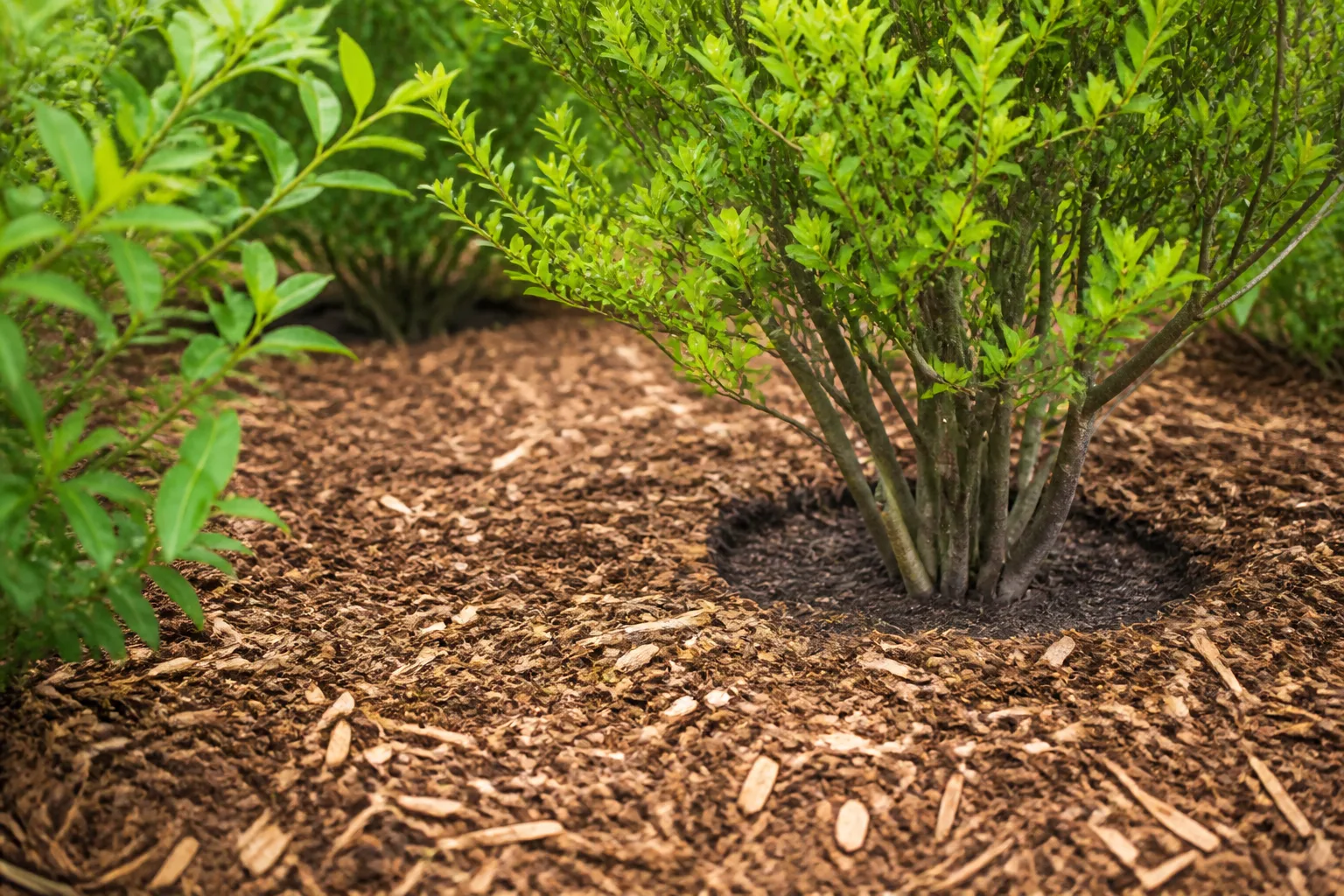
In beds, an appropriate mulch layer can block light and reduce new seedling establishment without depending on a narrow seedling-root window. Keep the layer suited to the plants and site, replenish it as it decomposes, and remove perennial weeds before covering so you do not hide a problem that will return through the mulch. University and horticulture guidance often favors mulch over corn gluten where weed suppression and soil protection are both goals; WSU Extension describes woody mulch as a more effective, moisture-conserving alternative for landscape beds.
For small outbreaks, hand-pull or hoe weeds while young and before they set seed. In lawns, identify whether a patch is annual crabgrass or a perennial grass before treating; the wrong control can injure the desired turf without solving the source. If the problem returns, ask why: thin turf, compacted soil, overwatering, seed brought in from edges, or missed germination timing may be the underlying cause.
If you already applied it at the wrong time
Do not panic or immediately apply another product. First, check the bag to confirm what was applied, how much, and whether the product was labeled for the site. Calculate the nitrogen amount from the product analysis and your treated area, then include that amount in the season’s fertilizer total. If you exceeded the label rate, contact your local cooperative extension or the product manufacturer for site-specific guidance rather than trying to wash the material away; unnecessary irrigation can move nutrients into drains or waterways.
If weeds were already established, remove or treat those plants using a method appropriate for their species and site. If you accidentally treated an area where you planned to seed, follow the product’s reseeding interval. Do not assume that applying extra grass seed immediately will overcome the treatment, and do not keep adding fertilizer because the weeds remain. Take notes on the application and wait to seed until the label and local guidance say the interval has passed.
For next season, map the area and keep a record of new seedlings, rainfall, and irrigation. If the treatment did not reduce weeds, use that result to reconsider the product rather than increasing the rate. A failed application can still give a clear answer: it may show that weather, weed type, or the basic method is not a good fit for your yard.
Conclusion
Corn gluten meal has a plausible seedling-root effect, but that does not make it a dependable lawn herbicide. Field performance is inconsistent, desirable seeds can be affected, established weeds will remain, and a weed-control application can add a substantial nitrogen dose. For most home lawns, build turf density or use a correctly labeled alternative matched to the weed; for beds, mulch and early removal are usually easier to control. Consider CGM only when the exact product is appropriate for the site, its nitrogen fits your plan, and you are willing to accept uncertain weed suppression.