Riding Mower vs. Lawn Tractor: Key Differences for Your Yard
Compare riding mowers and lawn tractors by frame, deck, steering, terrain, attachments, storage, and ownership costs before you choose a machine.
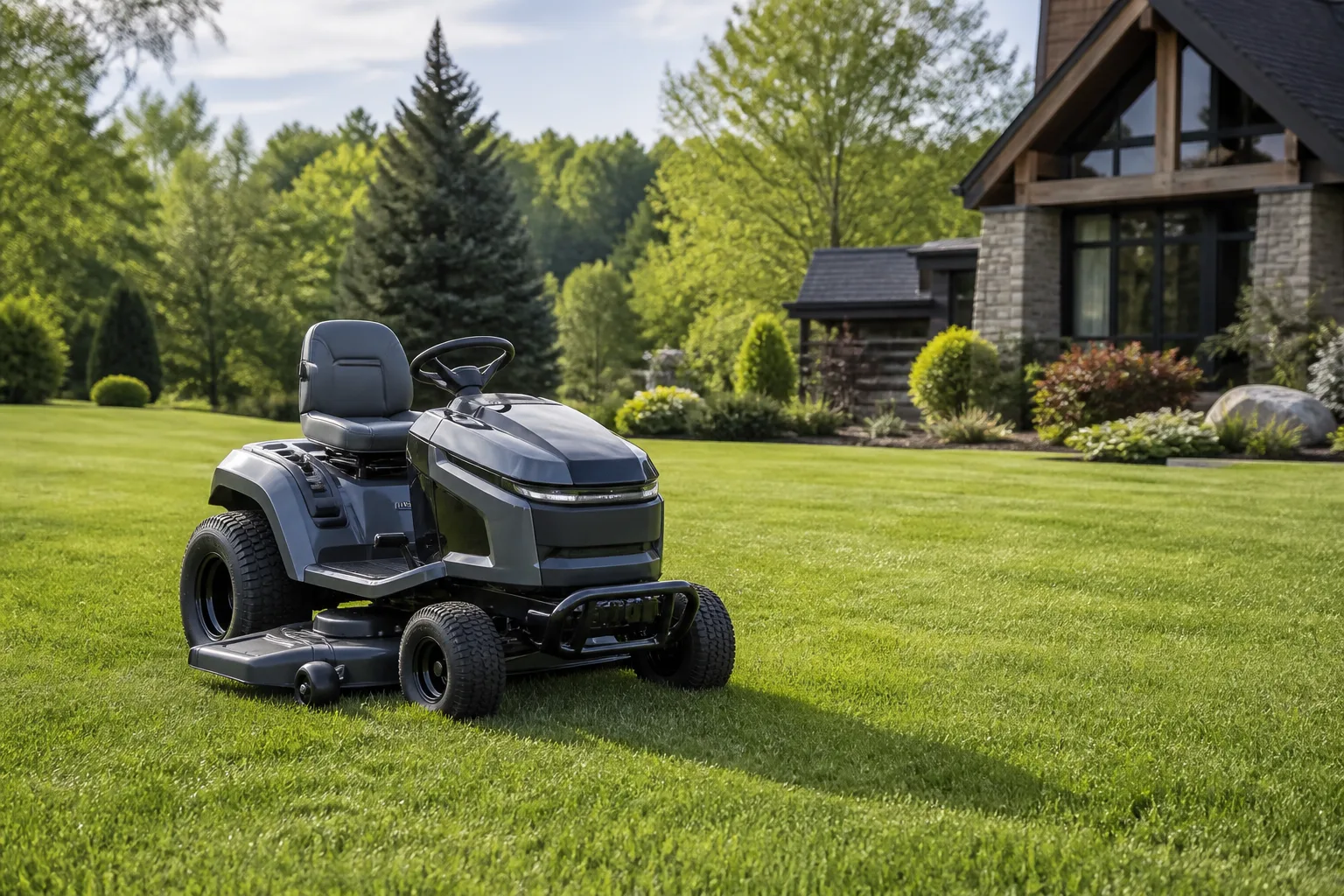
The biggest difference between a riding mower and a lawn tractor depends on how the words are being used. In everyday speech, riding mower can mean almost any mower you sit on, including a lawn tractor or zero-turn. In a narrower retail comparison, it often means a compact rear-engine rider designed mainly to cut grass, while a lawn tractor has a larger frame and is built around mowing plus compatible yard-work attachments.
That overlap explains why two product pages can call similar machines different things. The useful comparison is not the name on the hood; it is the machine’s steering, transmission, deck, turning path, terrain limits, attachment ratings, and storage footprint. If you first decide what your yard asks the machine to do, the category labels become easier to navigate.
First, decode the category names
Start by treating “riding mower” as an umbrella term unless a manufacturer is clearly using it as a specific class. Toro’s riding-mower overview groups zero-turn mowers, lawn tractors, and rear-engine riders as different kinds of riding equipment; other brands use “riding mower” more narrowly in model names or sales filters. That means a search result for a riding mower may show a lawn tractor, a rear-engine rider, or a zero-turn machine, even though those designs steer and work differently. (Toro’s riding-mower type guide; Consumer Reports’ lawn mower buying guide)
If a store listing is vague, open the owner’s manual or product specifications and look for the layout and intended use. Ask whether it has steering wheel or lap-bar control, where the engine and deck sit, whether it has a rated rear hitch, and which attachments the exact model accepts. Those details answer the practical question better than a category name that varies from one brand to another.
What “riding mower” can mean in a catalog
In the broad sense, a riding mower is a powered mower with a seat and controls that let the operator mow while riding on the machine. That category can include a compact rear-engine rider, a traditional lawn tractor, a zero-turn mower, and specialized front-mount machines. In casual conversation, a person may use “riding mower” to mean only the smaller, simpler machine, but that narrower usage is not consistent across catalogs.
A rear-engine rider is the compact style most often contrasted with a lawn tractor: the engine sits behind the seat, the deck is typically beneath the chassis, and the machine is intended primarily for mowing. It may suit a smaller property where a walk-behind mower feels tiring but a full-size tractor is too large. It is still a riding mower in the broad sense, and some models offer bagging or other accessories, so “mow-only” should be checked against the specific model rather than assumed.
A zero-turn mower is another rider, usually recognized by its independently driven rear wheels and dual steering levers or a joystick. That drive arrangement lets the machine pivot tightly and reduce uncut patches around trees, but it also means a different learning curve and slope behavior from a steering-wheel lawn tractor. Do not treat zero-turn as a synonym for lawn tractor or as the only alternative to a rear-engine rider.
How a lawn tractor is different
A typical lawn tractor uses a front engine, steering wheel, frame-mounted cutting deck, and rear transaxle that drives the rear wheels. Its tractor-like layout makes it familiar to many drivers, and its rear hitch can allow towing or use of compatible accessories. Manufacturers often position lawn tractors for mowing open turf and routine yard tasks, but available attachments and ratings vary substantially from model to model. (Toro; MachineFinder’s riding mower and lawn tractor comparison)
Do not confuse a lawn tractor with a garden tractor. Garden tractors are generally a heavier-duty category intended to support a broader or more demanding range of implements, but the terms are not used identically by every seller. A mower that looks robust or has a large engine is not automatically a garden tractor; check the manufacturer’s implement list, hitch rating, transmission specifications, and intended-use statements.
| Category label | Common layout | Typical strength | What to verify |
|---|---|---|---|
| Rear-engine rider | Engine behind seat, compact frame, underbody deck | Smaller footprint and simple mowing | Cut width, bagging options, hitch and attachment limits |
| Lawn tractor | Front engine, steering wheel, rear transaxle, mid-mounted deck | Mowing plus compatible tow-behind or seasonal tasks | Transmission, traction, implement list, and hitch rating |
| Zero-turn mower | Independent wheel drives, levers or joystick, usually mid-mounted deck | Tight turns and efficient mowing around obstacles | Learning curve, slope limits, deck clearance, and towing approval |
| Garden tractor | Heavier frame and driveline, configuration varies | Broader implement capability on models designed for it | Whether the exact tractor supports the implement and load |
Compare the frame, engine, and cutting deck
The lawn tractor’s frame and driveline are meant to handle more than the act of spinning mower blades, but “more powerful” is not a complete buying rule. Engine horsepower, deck construction, transmission type, machine weight, cooling, and hitch capacity all matter—and they are not interchangeable. A higher horsepower number cannot compensate for a transmission that is not rated for an attachment or a deck too wide for the gate.
For a mower used mainly to cut a lawn, compare the deck width with the narrowest space you need to mow, not just the open area. A wider deck can reduce the number of passes across a large, unobstructed lawn, but it can make narrow passages, tight turns, and storage harder. The LSU AgCenter’s comparison of mower deck configurations notes that front-mount and mid-mount decks trade maneuverability, under-obstacle access, transport length, and service access differently; even within zero-turn machines, deck position is not fixed. (LSU AgCenter)
Deck design also affects how well you mow under low branches, beside beds, and near fences. Measure the full machine width, including any discharge chute or protective guard, and check whether the deck can be adjusted or removed in a way you can manage. Ask about blade availability, belt replacement, deck cleaning, and whether the machine’s manual specifies a washout port or a particular maintenance method.
Why deck position does not define every rider
The common lawn tractor uses a deck mounted between the front and rear axles, underneath the operator. Many rear-engine riders also use an underbody deck, so “front deck versus mid deck” is not a reliable universal dividing line between a tractor and every other rider. Front-mount decks exist on specialized mowers, including some zero-turn and commercial configurations; those are a separate design choice, not a feature of all riding mowers.
This matters when you compare photos or read specifications. A seller might describe the deck as “mid-mount,” “front-mount,” or simply give its width and blade configuration. Ask what sits ahead of the deck, how much deck overhang the machine has, and whether the mower can reach beneath a low hedge or tree limb. LSU AgCenter notes that front-mount decks may reach under low obstacles more readily and can be easier to access for some service tasks, while more compact mid-mount designs can be easier to transport and maneuver in tight spaces. (LSU AgCenter)

Compare steering and transmission
A steering-wheel lawn tractor drives much like a small utility vehicle: the front wheels steer, and a pedal or lever controls forward speed. Depending on the model, it may have a gear transmission, an automatic drive, or a hydrostatic transmission. Hydrostatic drive changes speed smoothly without shifting through a fixed set of gears, but that does not mean every hydrostatic unit has the same durability or towing capacity; read the model specifications and warranty terms.
Rear-engine riders also vary. Some use a steering wheel and pedal controls, while others have control arrangements that differ by design. Zero-turn models commonly use twin levers or a joystick to vary wheel speeds independently. That steering can make a tight turn possible, but new operators often need a few practice sessions on a level, open area to learn how small control movements affect the machine. The controls should feel manageable from the seat, with the mower off, before you commit to buying.
Turning radius is a work-time issue, not just a spec-sheet number. A lawn tractor usually needs more space to turn and may leave an uncut triangle at the end of a pass, which means reversing or making a cleanup loop. A zero-turn can pivot in a smaller space, while a compact rear-engine rider may be easier to park and thread through narrower openings. But the actual turning path depends on wheelbase, deck overhang, front caster behavior, obstacles, and the skill of the operator. A tight turn does not help if the mower deck cannot fit through the gate.
Match the machine to yard size and layout
Acres are a useful starting point but a weak final decision rule. Consumer Reports’ buying guide generally places riding equipment in the category for lawns larger than about half an acre, while recognizing smaller rear-engine riders as a bridge from walk-behind machines. Those thresholds are broad buying guidance, not a guarantee that a rider saves time on every half-acre lot. A small irregular yard with many beds can take longer on a rider than a larger open rectangle, because much of the job becomes trimming and repositioning. (Consumer Reports)
Estimate your mowable area, not the total property. Subtract the house footprint, planting beds, woods, steep banks, patios, ponds, and other areas you do not mow. Then consider the shape of the turf: a half-acre of open lawn is different from a half-acre split into narrow strips around a house, trees, fences, and play equipment. The time saved comes from covering broad swaths without repeated turns; a wider deck may be a poor fit if the layout prevents you from using its full width.
Measure the real mowing route, not just the lot
Before choosing a model, walk the route from storage to the farthest grass and measure the narrowest gate, the tightest turn, and the lowest overhead clearance. Include the mower’s widest point, deck and discharge chute, and any bagger or attachment that stays installed. If you need to tow a cart, check the route with the cart behind the machine; a path that is easy to mow may be hard to reverse or turn while towing.
Map obstacles you have to trim around. Trees, raised beds, fence posts, play sets, landscape borders, and low branches change the number of stops and correction passes. A steering-wheel tractor tends to suit broad lanes and relatively uncomplicated mowing. A zero-turn can be attractive when much of your time goes to navigating around obstacles, but it still requires room for the deck and operator to approach each feature safely. A compact rider can make sense when storage and width matter more than maximum speed.
The simplest comparison is to test a full-width pass and a representative turn on the actual site. If possible, rent or demo a similar machine; otherwise mark the deck width with stakes or chalk and check where its corners would travel. This often reveals that a smaller deck, a different steering style, or even keeping a walk-behind mower for tight pockets is better than buying the largest machine your budget allows.
Treat slopes and rough ground as model-specific checks
Do not select a mower for hills based on a category label alone. A wider wheelbase, weight distribution, tire tread, drive wheels, center of gravity, rollover protection, and braking design all affect how a specific machine behaves. A lawn tractor is not automatically safe on a slope, and a zero-turn is not automatically unusable on every incline. The owner’s manual is the controlling source for each model’s slope limits and mowing direction.
Wet grass reduces traction and can make riding equipment slide. Extension safety guidance advises avoiding wet conditions, mowing up and down a slope with a riding mower rather than across it, and keeping people away from the work area. Those are general precautions; if the machine manual gives a stricter limit, follow it. Keep a walk-behind mower or trimmer for embankments, ditch edges, and slopes that exceed the riding mower’s stated capability. (Ag Safety and Health Community of Practice)
Rough ground adds another consideration: a rigid or low deck can scalp high spots, and a heavy machine can rut soft soil. If your lawn has bumps, tree roots, or uneven transitions, inspect deck clearance and front-axle or suspension design, and avoid mowing when the soil is soft. Test a short section at a conservative pace rather than assuming the machine will smooth out rough terrain.
Decide whether you will use attachments
If you only cut grass, a compact rider or zero-turn may deliver the features you will actually use without paying for tractor capability you do not need. If you want to haul mulch, move a yard cart, spread seed or fertilizer, tow a lawn roller, or use a seasonal snow accessory, a lawn tractor may offer a more suitable platform—provided the specific machine is rated for that work. A rear hitch alone does not tell you the safe towing load or which implements fit.
Make an attachment list before shopping. For each item, check its weight, hitch type, required lift or drive mechanism, working width, and whether the mower’s manual explicitly approves it. A light cart on level turf is not the same load as a filled cart on a slope. A snow blade or thrower may require a compatible mounting kit, tire chains, ballast, or a specific transmission; do not assume a deck can be swapped for any accessory simply because a retailer sells it for the same brand.
Remember that attachments add cost and storage requirements. A bagger can be bulky; a spreader or aerator needs dry storage; a snow attachment may occupy space for most of the year. If you will use an implement only once or twice, renting, hiring a service, or using a separate tool may cost less and simplify maintenance. Toro’s type guide and manufacturer manuals are useful starting points, but the exact model manual and attachment instructions decide compatibility. (Toro)
Measure storage and service access
Measure the storage bay before you choose the mower. Record door width and height, floor length, turning clearance, and space for the mower deck, discharge chute, hitch, and any attached bagger. A lawn tractor can be long and wide even when its deck width seems reasonable, while a zero-turn may be wider at the rear tires or control levers. Manufacturer dimensions often describe the machine without optional accessories, so verify the configuration you intend to keep installed.
Plan how you will get it in and out. A garage with a step, narrow ramp, or tight turn can change which model is usable. If a trailer is part of the plan, compare the mower’s weight with the trailer’s rated capacity and vehicle’s towing capacity, and confirm loading clearance. Consider ventilation and fuel storage rules for gas equipment; electric riders need a suitable charging location and access to the manufacturer’s recommended charging setup.
Leave enough room to clean and inspect the mower. You may need access to the blades, deck belt, air filter, battery, oil fill, and drain points. Some machines offer a deck washout port or service access that simplifies one task but does not eliminate regular blade and belt inspections. If you cannot safely reach the machine’s maintenance points, the low purchase price may be offset by the time or service cost of routine work. The site’s lawn mower storage guide covers general storage planning.
When you compare models, check local parts and repair support as well as the footprint. This Old House’s riding-mower selection guide likewise treats storage, maintenance, parts availability, deck width, and terrain as practical shopping factors rather than afterthoughts. (This Old House)
Compare total ownership costs
The purchase price is only one part of the cost. Compare what you will spend over several mowing seasons: fuel or electricity, oil and filters where applicable, blades, belts, tires, battery replacement, service labor, attachments, delivery, transport, and storage. A lawn tractor may have a higher initial cost than a compact rider but could replace separate yard equipment if you regularly use its rated hitch and attachments. If you never tow or use attachments, that versatility may stay unused.
Routine maintenance is also different by power source and design. Gas models need the maintenance listed in the engine and mower manuals, which can include oil, air filter, fuel, spark plug, and seasonal storage tasks. Battery models avoid engine oil and gasoline but still need blade care, deck cleaning, battery care, and eventual battery replacement; battery cost and warranty are model-specific. Hydrostatic systems, drive belts, and deck mechanisms have their own service requirements, so compare parts support and local repair options before you buy.
Ask a dealer or retailer for the total cost of the mower in the configuration you need. Add the bagger, mulch kit, hitch, cart, snow equipment, delivery, and any charger or spare battery, then compare warranty terms and service availability. Prices change, so treat online estimates as a snapshot; the more durable question is whether you will use the features enough to justify paying for and maintaining them.
Use a quick selection rule before shopping
Choose a compact rear-engine rider when you primarily need to mow a smaller, relatively simple lawn and want a seated machine that takes up less space than many tractors. Consider a lawn tractor when you mow broad stretches of grass and will use its steering-wheel layout, rear hitch, or manufacturer-approved attachments. Consider a zero-turn when obstacle navigation dominates your mowing time and you can practice its controls on safe, level ground. Step up to a garden tractor only when the machine’s rated implement capacity matches work beyond routine mowing.
Then check those assumptions against your yard: measure the gate and storage area, mark the deck width, inspect slopes and soft spots, and make a list of attachments you will actually use. If the decision is still close, compare the specific machine manuals and try a demo; category labels cannot tell you whether the controls, turning path, deck clearance, and seat fit your own route. For acreage and rider-versus-walk-behind questions, see the broader riding mower buying guide; for specific model shortlists, use the best riding lawn mower guide and zero-turn mower guide.
Conclusion
“Riding mower” is often the broad family name, while “lawn tractor” describes one common design within that family. In a narrower shopping comparison, people may use riding mower to mean a compact rear-engine rider, but that meaning is not consistent enough to make the label your only guide. Check the layout, steering, transmission, deck, hitch rating, terrain guidance, and model manual instead.
Match the machine to the grass you mow, the paths you take, the attachments you plan to use, and the space where you will store and service it. A measured route and a realistic ownership list usually reveal more than horsepower or acreage alone. Once the category is clear, use model buying guides to compare individual machines that meet your requirements.