Riding Lawn Mower: When You Actually Need One
Should you buy a riding lawn mower? Use yard size, time, terrain, storage, and budget to decide between push, self-propelled, zero-turn, and robotic options.

A riding lawn mower is not a status upgrade. It is a time-and-fatigue tool for open turf that takes too long or too much effort to cut with a walk-behind. The wrong buyer ends up with a machine that cannot fit through a gate, tears divots on slopes, or sits in the garage while a push mower still handles the real mowing work.
Before you shop, separate property size from mowable turf. A half-acre lot with a large home footprint, patio, native beds, and a wooded buffer may only leave 15,000 square feet of grass. That is a different decision than a half-acre of uninterrupted lawn.
The short answer: measure mowable turf, not just lot size
You should strongly consider a riding mower when most of these are true:
- You regularly mow more than about half an acre of turf in one session, or the walk-behind route takes longer than you will realistically finish.
- The lawn is mostly open with few tight islands, narrow passages, or steep slopes.
- You have storage and gate clearance for a 42- to 48-inch deck (or you accept a smaller rear-engine rider with trade-offs).
- You can maintain the machine—or budget for service—because riding mowers cost more to own than push models.
You should probably skip a rider when:
- Mowable grass stays under roughly half an acre, especially if it is broken into small patches.
- Gates, paths, or landscaping force constant tight turns where a walk-behind is faster.
- Steep hills dominate the property; slope safety limits matter more than deck width.
- Purchase price would strain the budget while a self-propelled walk-behind or robotic mower could cover the job.
Consumer Reports’ mower buying guide groups mower types by yard size in a way that matches field experience: battery walk-behinds fit about one-third acre or less, gas walk-behinds stretch to roughly a quarter to half acre, and riding tractors, zero-turns, and battery riders target lawns larger than half an acre—when the layout allows.
Why turf islands and gates change the math
Lot acreage on a deed is a poor shopping metric. Walk your route once with a tape measure at the narrowest gate, the tightest tree line, and the steepest bank you would actually drive over. If more than a third of your cutting time is edging, trimming, and repositioning around obstacles, a rider saves less than the price tag suggests.
Draw a simple map: full turf blocks, no-mow zones, and no-go zones (ponds, septic fields, wet swales). Add the turf blocks only. That number drives deck width and mower class—not the headline acreage on Zillow.
How much lawn you actually mow each week
Mowing time is the hidden cost of lawn ownership. Even a healthy cool-season lawn in active growth may need cutting every five to seven days during peak season. Penn State Extension and Colorado State Extension both stress that mowing frequency and height affect weed pressure and turf density more than any single machine upgrade. A rider does not fix scalping, dull blades, or mowing wet soil—but it can shrink a long route if the layout cooperates.
A simple mowable-area worksheet
- Measure or estimate each turf rectangle in feet (length × width).
- Subtract beds, hardscape, and wooded areas you never mow with a deck.
- Add the rectangles for total square feet of turf.
- Divide by 43,560 to convert to acres.
Example: three turf zones of 8,000, 12,000, and 6,000 square feet sum to 26,000 square feet—about 0.6 acre of mowable grass on a larger property. That is riding-mower territory if you can link the zones without hauling a machine through a 30-inch gate.
Time math: passes, pace, and sessions per season
Riding mowers with 42- to 48-inch decks can cut two to three times faster than a typical push mower on open ground, according to Consumer Reports’ mower category guidance—not because you should race at top speed, but because each pass covers more swath. Tractors and riders still perform best around 3.5 to 4 mph for an even cut; zero-turns can feel faster in open runs but lose advantage when you constantly spin around obstacles.
Rough planning formula for open turf:
- Walk-behind (21-inch deck): about 1 hour per 0.25 acre at a steady pace with overlap.
- Riding mower (42-inch deck): about 20–35 minutes per 0.5 acre on open lawn, plus trimming.
- Zero-turn on open acreage: similar time savings to tractors with faster repositioning between wide passes—until hills or tight corners intervene.
Multiply session time by weekly cuts in peak season (often 20–26 weeks in many climates). A rider that saves 45 minutes per cut for six months returns 15+ hours—plus less physical strain. Whether that justifies $2,500–$7,000+ in purchase price depends on your tolerance for walking, your body, and what else you would do with that time.
Yard size thresholds for each mower class
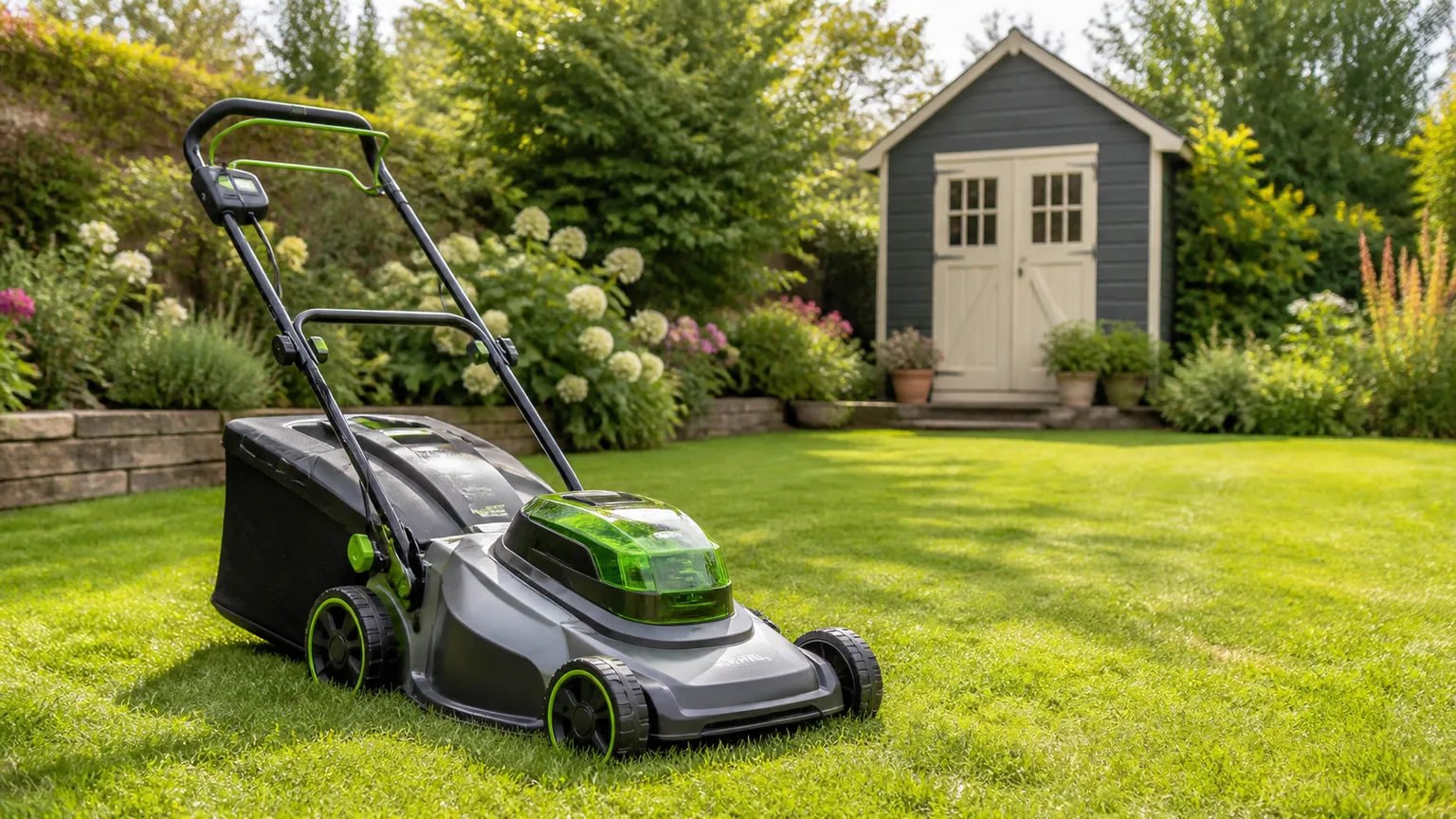
Think in mower classes, not brand hype. The right class is the one that finishes your route without fighting the machine.
Push and cordless mowers: up to about one-third acre
Battery walk-behinds suit yards up to about one-third acre, Consumer Reports notes, with runtime limits on a single charge unless you own spare batteries. They are quiet, easy to store vertically in many models, and need little maintenance beyond blade sharpening. For a small, flat suburban lawn, a rider would be storage-heavy overkill.
See our best battery lawn mowers and best electric lawn mowers guides when this class fits.
Self-propelled walk-behinds: quarter to half acre
Gas and battery self-propelled models bridge the gap. They help on slopes, long straightaways, and fatigue-heavy routes without the footprint of a rider. Consumer Reports positions gas walk-behinds for roughly a quarter-acre to half-acre yards—especially when grass is thick or sessions run long.
If your turf is near half an acre but broken up, a 21- or 22-inch self-propelled mower often beats a rider you constantly dismount to finish edges. Our best lawn mowers roundup compares push, self-propelled, and larger-yard options honestly.
When half an acre becomes the riding-mower line
Half an acre of contiguous, mowable turf is the usual threshold where riding mowers start making sense—matching common retail and extension guidance. Below that, riders struggle to earn their keep unless mobility, heart health, heat sensitivity, or chronic pain make walking the full route unrealistic.
Above half an acre on open lawn, the time savings compound. Above one acre, a rider becomes less a luxury and more a practical default—again, only if slopes and gates allow.
Riding mower types and who each one fits

Not all riders behave the same. Pick the control style and deck that match your property—not the YouTube video with the fastest zero-turn.
Lawn tractors and traditional riders
Lawn tractors use a steering wheel, familiar brakes, and a wider turning radius than zero-turns. Decks commonly run 42 to 48 inches, with some 54-inch wide-cut models for very open properties. They are easier for beginners, often less expensive than comparable zero-turns, and well suited to gentle slopes and long perimeter runs.
Trade-offs: harder to hug tight tree lines, slower repositioning around islands, and more turf tearing if you yank the wheel at speed. Bagging kits, when available, are often expensive—many owners side-discharge or mulch instead.
Zero-turn-radius (ZTR) mowers
Zero-turn mowers use lap bars (or similar levers) to drive the rear wheels independently. They pivot sharply around obstacles and carry higher top speeds than tractors on open ground. Decks often range 42 to 50 inches.
Trade-offs: steeper learning curve, higher price on many gas models, and poor hill manners compared with tractors—rear wheels can lose traction, and control on slopes takes practice. Consumer Reports warns that ZTRs are not well suited to hilly properties and that high speed does not automatically shorten job time because quality cutting still demands a moderate pace.
Electric zero-turns and battery riders are entering the market quickly; our best electric lawn mowers guide covers electric ZTR and tractor options where runtime and charging fit your acreage.
Rear-engine riders and wide-deck tractors
Rear-engine riders sit between walk-behinds and full tractors: smaller decks, lower prices, less storage demand. Consumer Reports finds their cutting less effective than full tractors or zero-turns on demanding turf—fine for modest open lots, not a substitute for a 54-inch deck on a true acreage lawn.
Wide-deck tractors (54 inches+) maximize passes on pasture-like lawns with few obstacles. They are wrong for gated suburban yards where the deck cannot clear posts and the turning radius cannot align with bed corners.
Deck width: matching swath to your layout
Deck width is a layout tool, not a trophy measurement.
| Deck width | Best for | Watch out for |
|---|---|---|
| 30–34 in. (rear-engine) | Small open lots, limited storage | Less cut quality on thick grass |
| 42 in. | Typical suburban acreage, standard gates | Still wide for some side yards |
| 48 in. | Faster half-acre to multi-acre open turf | Gate and shed clearance |
| 54 in.+ | Large, open fields with few obstacles | Turning radius and scalping on bumps |
Wider decks reduce passes but increase turning radius and scalping risk on uneven ground. Match deck to the narrowest path you must traverse, not the widest open stretch.
Terrain, slopes, and obstacles that veto a rider
A rider that cannot safely reach your turf is not an upgrade—it is a liability parked beside a walk-behind you still need.
Hills, pond banks, and traction limits
The CPSC’s mower safety guidance treats slopes as a primary hazard: loss of traction and rollover rise on inclines, especially with sharp turns or sideways travel. Practical rule many turf pros use: be extra cautious above 15 degrees, and treat steep embankments, pond banks, and ditch lines as no-go unless you have a mower rated for slopes and local experience on that bank.
Zero-turns can spin aggressively on flat turf but are not the default hill choice. Lawn tractors with proper ballast and slow uphill/downhill patterns often feel more predictable on moderate grades—still not a license to mow a ski slope.
If hills dominate, a self-propelled walk-behind with all-wheel or rear-wheel drive may be safer and faster than wrestling a rider.
Trees, beds, and tight corners
Count obstacles: individual trees, island beds, fence jog, utility boxes, and playground zones. Traditional tractors need extra passes around each object. Zero-turns reduce that pain but still cannot mow inside a 4-foot bed ring as cleanly as a walk-behind.
Plan string trimming and edging time. Riders rarely eliminate trim work; they shift where you spend minutes. If trim time stays high, reconsider deck width and class.
Physical limits and accessibility reasons to ride
Equipment choice is sometimes medical, not mathematical. Knee arthritis, back fatigue, heat intolerance, or balance concerns can make a 40-minute walk-behind session miserable or unsafe—even on turf that “should” be push-mower size.
In those cases, a rear-engine rider or compact tractor can preserve independence without forcing a full acreage purchase. Still verify gate width, step-off clearance, and seat ergonomics before buying. A machine you cannot comfortably mount, steer, or service helps nobody.
That said, do not use pain as an excuse to buy a 54-inch deck on a fragmented quarter-acre lot. Right-size the machine to the layout, not the dream yard.
Storage, gate width, and turning-radius checks
Run this checklist before you sign a loan or load a trailer:
- Gate opening: A 42-inch deck usually needs about 48–60 inches of clear width at the narrowest point—including post hardware. Measure twice at the tightest gate on your route.
- Shed or garage footprint: Riders need roughly 6 × 8 feet minimum floor space plus maneuvering room—often more for wide-deck models and baggers. Vertical storage is rarely an option.
- Turning test: Drive your current walk-behind route mentally with a wider arc. Where would a tractor miss a corner? Where would a zero-turn spin turf?
- Transport: If the mower lives off-site or at a second property, confirm trailer, ramp, and tie-down plans.
Failure on any line means a smaller rider, a walk-behind upgrade, or a robotic alternative—not forcing the big deck through a 36-inch gate every week.
Purchase price versus true ownership cost
Sticker price is the opening bid. Total cost of ownership decides whether this year is the right year.
Fuel, charging, blades, belts, and professional service
Consumer Reports places the mower market from about $300 gas push models to gas tractors and zero-turns that can exceed $5,000, with battery riding mowers often landing $4,300–$7,200 at retail for tested models—though electric ZTR pricing is narrowing against gas in some lines.
Annual costs riders often forget:
- Fuel or electricity for 20–30 cuts per season on large turf
- Engine oil, filters, spark plugs on gas models (or battery care and off-season charging discipline on electric riders)
- Blade sharpening or replacement one to three times per season on active lawns—dull blades stress turf regardless of mower class; see when to replace lawn mower blades
- Belts, tires, and hydro fluid on tractors and ZTRs as hours accumulate
- Professional tune-ups if you will not DIY—budget $100–$300+ per service visit
- Attachments (baggers, carts, snow blades) that can cost hundreds to thousands extra
Gas riders also mean fuel storage and disposal discipline. Stale gas causes hard starts and carburetor problems; our how to safely dispose of old gasoline from your lawn mower guide covers what to do with leftover fuel at season’s end.
If the purchase would drain savings while a used self-propelled or seasonal mowing service covers peak weeks, delay the rider. Machinery bought under pressure tends to be the wrong size.
Gas, battery, and robotic alternatives

A riding mower is one answer—not the only one.
Battery walk-behinds and self-propelled models keep noise and maintenance low for moderate lots. Runtime caps still matter above one-third acre unless you invest in larger battery platforms.
Battery riding mowers and electric tractors cut emissions and oil changes. Consumer Reports finds top battery riders match or beat some gas tractors in cut quality, with less routine engine service. Winter battery storage and upfront price remain real checks.
Robotic mowers trade purchase cost for automation. They fit frequently mowed, maintained lawns with clear boundaries—not tall-grass rescue or steep rough terrain. For the right layout, a robot can replace a rider entirely. Compare classes in our best robotic lawn mowers guide before assuming you need a seat.
Hiring a mowing service for peak season sometimes beats owning a rider on a half-acre lot you visit on weekends. Run the math: six months of service vs. depreciation, storage, and maintenance on a machine you use twice a week.
Signs you are ready to upgrade to a rider
- Your walk-behind sessions routinely exceed an hour on open turf and you still have trimming left.
- You finish mowing sore or overheated when grass is only mid-height.
- You have verified gate, shed, and slope clearance.
- Maintenance budget exists for blades, fluids, and occasional shop time.
- You understand basic safe mowing: dry grass, firm soil, sharp blades, and the one-third rule so the machine does not damage turf you are trying to save time on.
- Optional: you want year-round attachments (cart, spreader, snow equipment) that justify a tractor platform on a large property.
Signs you should skip the riding mower
- Mowable turf under half an acre split into small patches, side yards, or fenced zones.
- Gates under ~48 inches clear width with no realistic widening project.
- Steep slopes, pond banks, or wet swales where walk-behinds or hand string trimmers are safer.
- Tight urban lots where a zero-turn’s learning curve and turf tearing outweigh time savings.
- Budget pressure that would defer blade sharpening, oil changes, or safe storage.
- You want mowing as exercise and time is not the bottleneck.
- You have not fixed basic mowing errors (dull blades, scalping, mowing wet turf) that will persist with a bigger deck.
BBC Gardeners’ World and Fine Gardening both emphasize that healthy turf comes from mowing height, frequency, and sharp blades more than from equipment size. Buying a rider before you can mow a lawn properly often buys faster scalping.
Conclusion
This is the year to invest in a riding lawn mower when open mowable turf, weekly time cost, physical reality, and storage access all point the same direction—usually past half an acre of contiguous grass, or sooner when mobility limits make walking the route unsustainable. Match the machine to layout: tractors for familiar steering and moderate hills, zero-turns for open obstacle-rich acreage without steep grades, rear-engine riders for compact storage on smaller open lots.
Measure gates, sketch turf blocks, and price ownership—not just purchase. If the numbers or the map fail the checklist, a self-propelled walk-behind, electric rider, robotic mower, or seasonal service may deliver the relief you want without a four-foot deck you cannot turn. The right mower finishes your real route—not the lawn you wish you had.