Spider Mites on Neon Pothos: Causes, Checks & Fixes
Quick answer
Spider mites on Neon Pothos cause fine stippling on solid chartreuse leaves and webbing at trailing vine nodes, often near heating vents in dry winter air. First step: isolate the plant, rinse every leaf underside thoroughly, then treat with insecticidal soap or horticultural oil on repeat intervals.
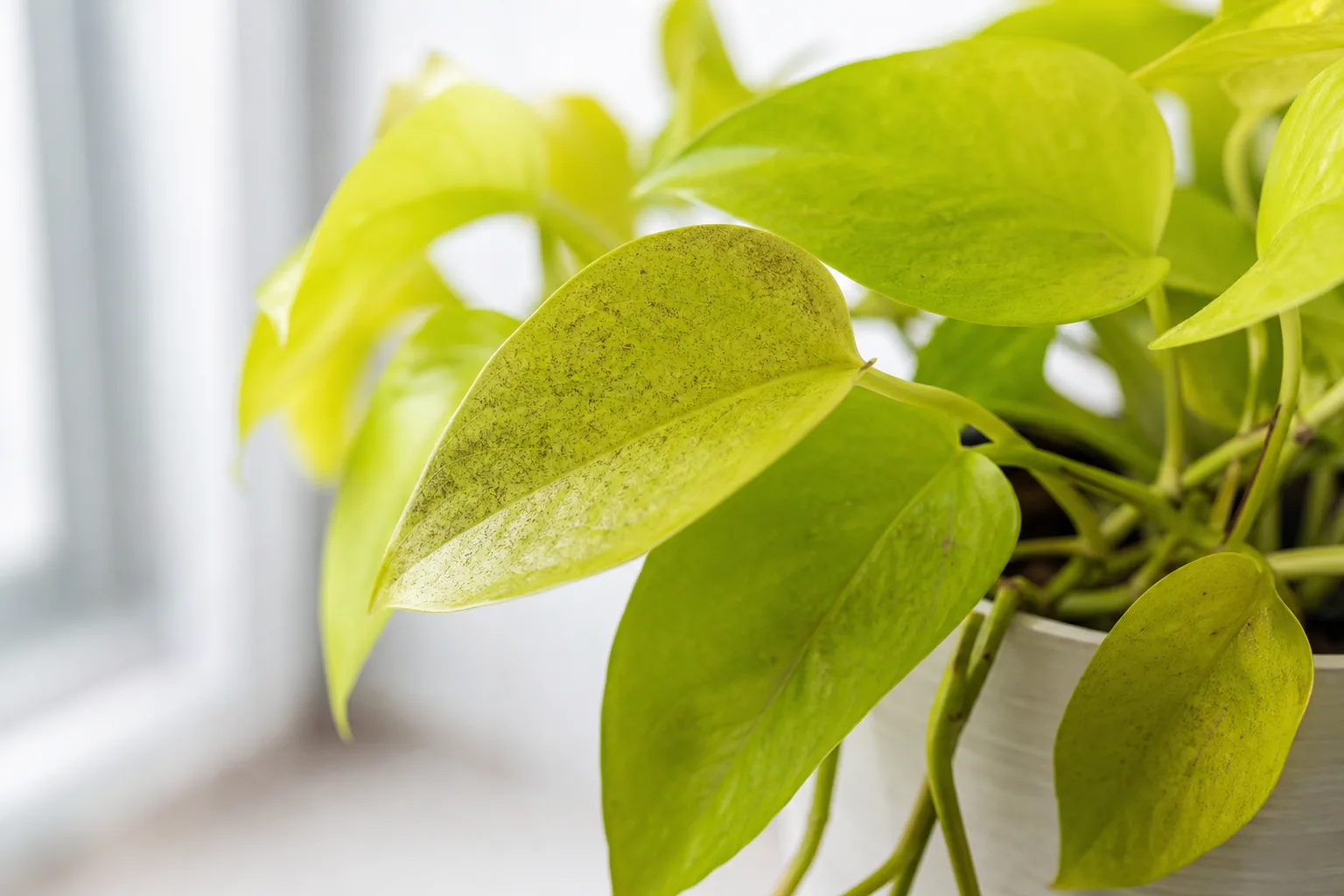
Spider Mites on Neon Pothos: Causes, Checks & Fixes
This guide covers spider mites on Neon Pothos. See also the general Spider Mites guide, watering, and light pages for this plant.
Spider Mites on Neon Pothos: Causes, Checks & Fixes
Quick answer
Spider mites on Neon Pothos cause fine stippling on solid chartreuse leaves and webbing at trailing vine nodes, often near heating vents in dry winter air. First step: isolate the plant, rinse every leaf underside thoroughly, then treat with insecticidal soap or horticultural oil on repeat intervals.
Epipremnum aureum ‘Neon’ is a chartreuse pothos cultivar with smooth, heart-shaped leaves on fast-growing trailing vines. Unlike variegated golden pothos, solid neon green offers little contrast-pale stippling on the upper surface can look like normal color variation until you flip a leaf and find webbing or moving specks underneath. Hanging pots near heat sources create exactly the hot, dry microclimate spider mites prefer. Our Neon Pothos overview covers baseline care; this page diagnoses mites on chartreuse trailing vines.
Why Neon Pothos gets spider mites
Low humidity is the primary indoor trigger. Penn State Extension notes that spider mites are tiny arachnids that thrive in hot, dry conditions-common when central heating runs in winter and relative humidity drops near radiators, heat vents, and sunny south windows. Neon Pothos often hangs in those same warm, dry spots, especially when grouped with other trailing plants without added moisture.
Clemson Extension lists spider mites among pests that can affect pothos even though the species is generally easy to grow. Neon tolerates average home humidity of 30 to 60%, but mites reproduce faster than you can spot stippling on uniform chartreuse blades when air stays dry for weeks.
Stressed plants invite heavier infestations. Overwatered Neon Pothos with soggy mix, or one kept in dim light with pale all-green new growth, is already under pressure. Mites are not caused by bad watering alone, but a weakened trailing vine has many leaf nodes where sap loss adds up quickly-see overwatering if soil stays wet.
New purchases and neighbors spread mites fast. Wisconsin Horticulture notes that spider mites occasionally infest pothos and can be controlled with thorough cleaning and repeated insecticidal soap. Mites walk across touching leaves and drift on silk threads, so a Neon vine beside an infested fiddle-leaf fig or calathea can pick them up within days.
Plants under heating vents are especially vulnerable. Mississippi State Extension reports that pothos growing in especially warm locations such as under a heating vent and plants not adequately watered are especially susceptible to spider mites-exactly the combination seen on winter hanging baskets. Low humidity on its own bronzes leaf edges without stippling dots; mites add speckling and webbing on undersides.
What spider mites look like on Neon Pothos
Early damage is easy to miss on solid chartreuse foliage. Watch for these patterns together:
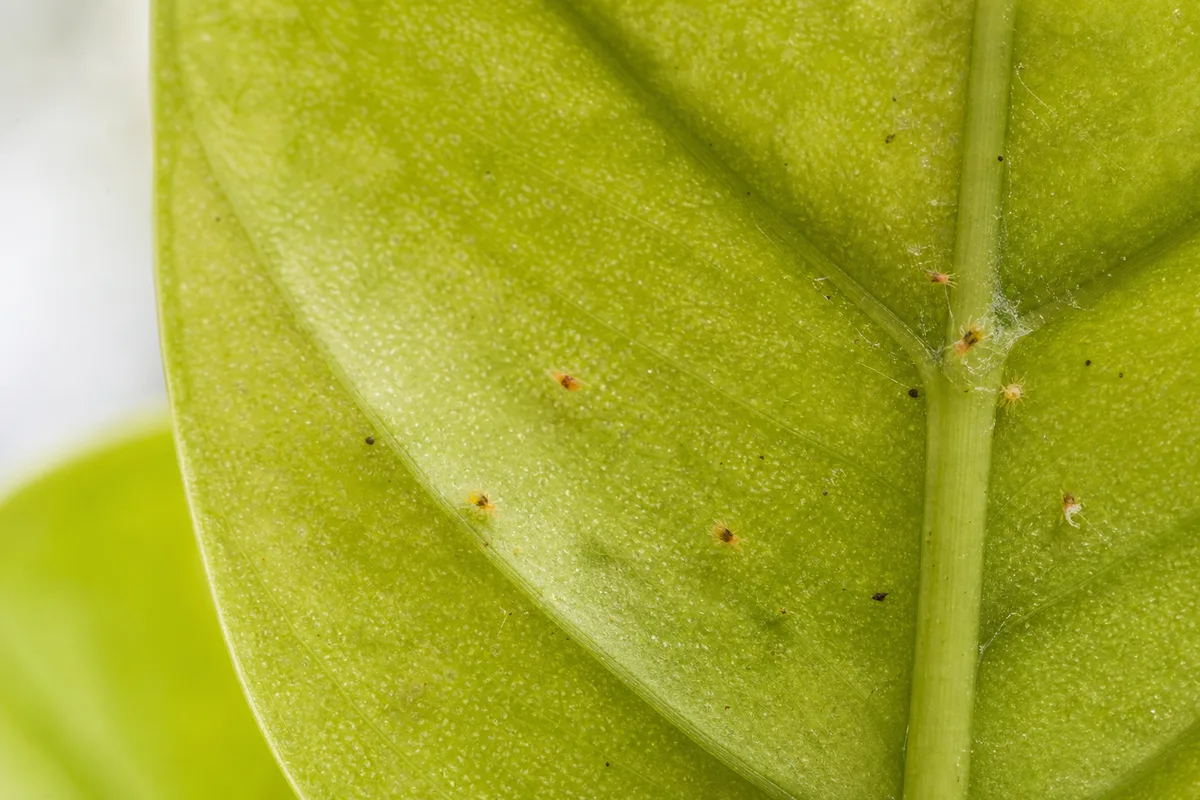
Spider Mites symptoms on Neon Pothos - compare with healthy tissue on the same plant.
- Fine pale speckling or stippling on the upper leaf surface-often yellow-white on bright chartreuse, harder to spot than on variegated golden pothos
- A dull, faded look on otherwise glossy heart-shaped leaves, especially along the midrib where mites cluster first
- Silky webbing at petiole joints and where vine nodes meet trailing stems
- New chartreuse leaves unfurling smaller, thinner, or already mottled before they fully open
- Lower mature leaves bronzing at the edges while pot weight and roots still feel normal
On Neon Pothos, do not mistake natural chartreuse color for mite damage. Healthy leaves show smooth, even lime-green tissue with firm petioles and no webbing. Mite stippling looks like someone pricked the surface with a pin-random pale dots that do not follow the plant’s uniform color.
Lookalike symptoms to rule out
Thrips cause silvery scarring and black varnish-like droplets, not dense webbing. Mealybugs show white wax clusters in leaf axils along trailing nodes. Low humidity alone can brown leaf tips on Neon Pothos, but without stippling dots or mites on the underside-see the low-humidity guide. Hard-water mineral deposits wipe off with a damp cloth; mite stippling is permanent tissue damage. Overwatering causes limp vines and yellow lower leaves with wet soil-roots stay firm and there is no silk at petiole joints.
How to confirm the cause
Do not treat from a single dull leaf. Use this inspection order:
- Full vine underside scan - Work from the soil line to the growing tip, lifting each heart-shaped leaf. Mites and webbing start on tender growth at trailing ends.
- White-paper tap test - Hold white paper under a leaf and tap the blade firmly. Specks that move confirm mites; static dust does not crawl.
- Magnifier check - Use a phone macro lens or 10× hand lens on the underside. Clemson Extension recommends tapping leaves onto white paper and examining dislodged creatures with magnification to identify mites.
- Webbing scan - Look for fine silk between petioles and along nodes, not just on leaf faces.
- Neighbor plants - Inspect plants within arm’s reach and any that share a shelf or window. Mites spread before symptoms show on every host.
Clemson HGIC describes mite damage as light-colored speckling on the upper surface of leaves with an overall faded look, progressing to bronzing if left unchecked-matching what you see on Neon’s smooth chartreuse blades once you know to check gloss and texture, not only leaf color.
First fix for Neon Pothos
Isolate the plant and rinse every leaf underside thoroughly with lukewarm water.
Move Neon Pothos away from your collection the same day you confirm mites. Delay lets silk-borne mites reach other pothos, philodendrons, and syngoniums nearby.
Once isolated:
- Rinse the entire vine in lukewarm water, directing the stream at every leaf underside and stem node. Penn State Extension recommends rinsing both upper and lower leaf surfaces with warm water and applying controls to undersides where pests feed.
- Wrap the pot in a plastic bag so soil stays in place during shower or sink rinsing.
- After rinsing, apply insecticidal soap or horticultural oil labeled for houseplants, covering undersides and petiole joints thoroughly. Clemson HGIC notes that insecticidal soaps are contact products effective against spider mites when they touch the pest directly.
- Repeat rinsing and treatment every five to seven days for at least three weeks. Mississippi State Extension advises treating two to three times at 5-day intervals to catch newly hatched mites.
- Raise local humidity toward 40–60% during treatment with a room humidifier or pebble tray (pot above the water line). Clemson Extension notes that in indoor settings, higher humidity levels can reduce spider mite populations and damage-though humidity alone will not cure an active infestation.
Make one correction at a time. Do not fertilize, repot, and spray pesticide on the same day.
Step-by-step recovery
After the initial rinse and spray, match treatment intensity to infestation severity:
Light - Stippling on a few leaves, no webbing yet: rinse and soap/oil once weekly for three weeks; raise humidity; inspect neighbors.
Moderate - Webbing at several petiole joints, stippling across multiple vines: rinse and treat every five to seven days; wipe webbing before each spray; keep in bright indirect light per our light guide.
Heavy - Webbing on most nodes, new leaves opening stippled, leaf drop: same rinse-and-spray cadence plus consider discarding if three diligent weekly cycles fail; protect the rest of your collection.
General recovery steps:
- Keep Neon Pothos in bright indirect light with good airflow-not direct sun, which can scorch rinsed chartreuse leaves.
- Re-treat every five to seven days; eggs hatch on a faster schedule in warm rooms, so skipping a week often restarts the cycle.
- Wipe or rinse webbing before each spray so contact products reach the mites.
- Watch for new chartreuse leaves unfurling clean over the next three to five weeks-Neon’s relatively fast growth often outpaces slow Manjula cultivars when treatment cadence stays consistent.
- Trim only leaves that are more than half bronzed if they block inspection; leave partially damaged foliage until new growth is established.
If webbing returns within three days of treatment, increase rinse pressure, check hidden node crevices on trailing stems, and confirm you are hitting undersides-not only the glossy upper surface of heart-shaped blades.
Recovery timeline
Light stippling on a few leaves often stabilizes within two to three weekly cycles once humidity rises and rinsing is consistent. Moderate infestations across several trailing vines may need four to six weeks before you trust new growth. Severe cases with webbing on most nodes and repeated leaf drop may not fully recover cosmetically; honest progress means no fresh stippling on new unfurling chartreuse leaves and no new silk after three treatment rounds.
Old stippled or bronzed leaves will not regain their original solid lime-green color. Use clean new leaves and absence of webbing as your markers-not cosmetic repair of damaged blades.
What not to do
- Do not only wipe the tops of glossy chartreuse leaves-mites feed underneath Neon’s heart-shaped blades.
- Do not rely on misting alone; brief mist evaporates quickly and does not sustain the humidity shift mites dislike.
- Do not fertilize a mite-stressed vine; tender new tissue attracts more feeding.
- Do not place rinsed plants in direct sun immediately; wet chartreuse leaves scorch easily in hot afternoon windows.
- Do not skip isolating new plants; quarantine breaks the most common introduction path.
- Do not assume chemical pesticides labeled for insects will kill mites-mites need miticides, horticultural oil, or insecticidal soap labeled for mites.
- Do not handle damaged tissue without gloves if pets share the room; Neon Pothos is toxic to cats and dogs via calcium oxalate crystals, and sap loss from mite wounds increases exposure.
How to prevent spider mites next time
Match humidity to how this cultivar grows best, not only to what it survives. For most indoor Neon Pothos plants, aim for 40–60% relative humidity in winter-especially near heat sources. Use a room humidifier, group humidity-loving plants, or pebble trays with the pot above the water line.
Inspect leaf undersides and vine tips weekly from October through March when heating dries indoor air. Quarantine new purchases for two weeks before placing them beside your Neon vine. Keep the plant in bright indirect light so chartreuse color stays strong without the extra stress of dim, stagnant corners where mites also go unnoticed.
Avoid over-fertilizing; lush soft growth is easier for mites to pierce. When you bring plants indoors for winter, rinse and inspect them before they touch your trailing pothos. Match watering to how fast the pot dries in your window-overwatered roots in dim corners add stress mites exploit. Wisconsin Extension recommends frequent applications of insecticidal soap as part of ongoing mite prevention on pothos when dry air persists.
When to worry
Treat spider mites as medium severity on Neon Pothos because heavy webbing can stall fast-growing vines before you notice stippling on solid chartreuse leaves. Escalate immediately if:
- Webbing covers multiple trailing nodes where new leaves emerge
- New chartreuse leaves open already stippled for two treatment cycles in a row despite rinsing
- Leaves bronze and drop while soil moisture is normal
- Mites reappear on neighboring plants after you treated only one pot
- The vine stalls with no new growth for more than three weeks in warm conditions
If treatment fails after three diligent weekly cycles, consider discarding a heavily webbed plant to protect the rest of your collection-severe indoor infestations may be beyond practical home control when webbing covers most foliage.
Conclusion
Spider mites on Neon Pothos are a dry-air pest problem on a fast-growing chartreuse trailing cultivar-not a mystery disease. Confirm with stippling on smooth heart-shaped leaves, webbing at petiole joints, and moving specks on undersides; act by isolating, rinsing thoroughly, treating undersides every five to seven days, and raising humidity while you break the cycle. Prevent them with winter humidity, quarantine, and weekly underside checks along the full vine length. Judge success by clean new chartreuse growth-not by old leaves returning to perfect color.
When to use this page vs other Neon Pothos guides
- Neon Pothos watering guide - Use for routine moisture checks before assuming spider mites is the main issue.
- Neon Pothos problems hub - Browse all 5 common issues on this species.