Aphids on Alocasia Dragon Scale: Causes, Checks & Fixes
Quick answer
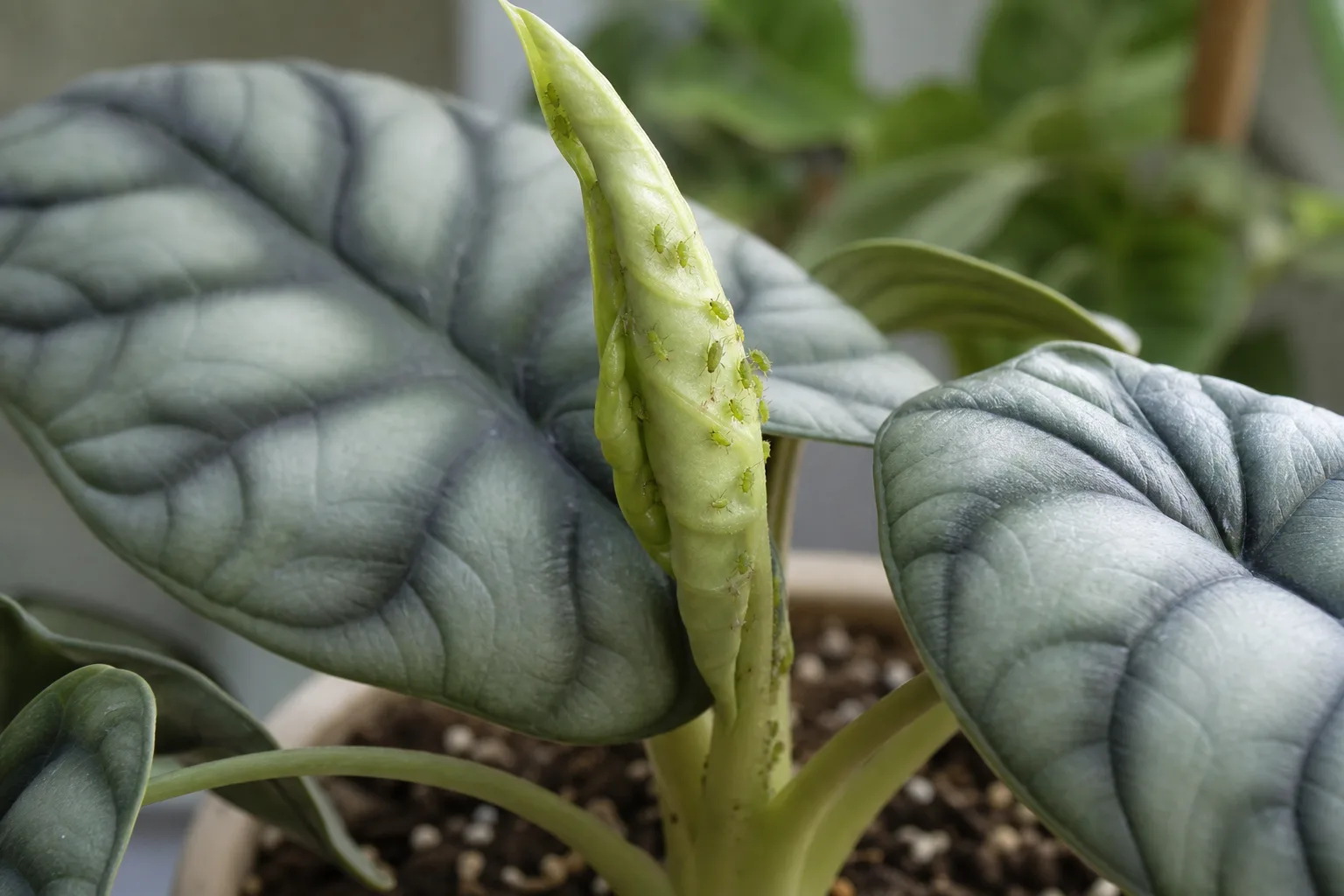
Aphids on Alocasia Dragon Scale cluster on unfurling leaves and petiole bases, leaving sticky honeydew in textured leaf valleys-not the fine stippling and webbing of spider mites on older scaled foliage. First step: isolate the plant and rinse colonies off with lukewarm water, working into leaf crevices before applying any spray.
Aphids on Alocasia Dragon Scale: Causes, Checks & Fixes
This guide covers aphids on Alocasia Dragon Scale. See also the general Aphids guide, watering, and light pages for this plant.
Aphids on Alocasia Dragon Scale: Causes, Checks & Fixes
Quick answer
Aphids on Alocasia Dragon Scale (Alocasia baginda ‘Dragon Scale’) are small sap-feeding insects that colonize the softest tissue-unfurling leaves, petiole bases, and fresh shoots. They leave sticky honeydew that pools in the textured “scale” valleys of mature foliage and can distort new growth before it hardens.
Not spider mites. Dragon Scale is more often troubled by spider mites in dry winter air-those show fine stippling and webbing on older scaled blades, not clustered soft insects on tender new growth. Sticky valleys plus moving pear-shaped bugs on an unfurling spear point to aphids; pinprick yellow spots with silk in vein crevices point to mites. When in doubt, check the newest leaf first.
First step: isolate the plant and rinse active colonies off with lukewarm water. Work into leaf crevices and along petioles where aphids hide on this textured species. Confirm live insects are gone-or still present-before reaching for soap or oil. Treating a misidentified pest or soaking stressed foliage unnecessarily makes recovery harder on an already finicky alocasia.
For baseline watering rhythm and light targets, see the Alocasia Dragon Scale overview and watering guide. This page focuses on diagnosing and clearing an active aphid infestation on textured new growth.
Why Alocasia Dragon Scale gets aphids
New growth is the feeding zone. Dragon Scale pushes soft leaves from a central crown during active warm-season growth. Aphids target that tissue because sap is easy to reach before the thick, ridged cuticle forms. Damage often appears only on the newest leaf while older scaled foliage looks otherwise healthy.
Humid collector setups spread pests fast. This cultivar is usually grown at 60–80% humidity among other aroids on shelves or in cabinets. High humidity keeps new leaves tender longer-and places many plants close enough that winged aphids disperse or hitchhikers on a new purchase can move quickly through a collection.
Entry routes are predictable. Aphids commonly arrive on nursery plants skipped through quarantine, on cut flowers near an open window, or from infested neighbors in a shared humid display. Spring and summer warm-up indoors accelerates reproduction when the plant is pushing fresh leaves after winter slow-down or dormancy.
Soft, over-fed shoots invite colonization. Dragon Scale needs only light feeding during active growth. Excess nitrogen produces soft new growth that aphids prefer. A plant already stressed by soggy soil or low light is easier to exploit-but aphids can also appear on an otherwise healthy specimen that simply has vulnerable new growth.
Ants signal established colonies. Honeydew on stems or leaf bases often draws ants, which protect aphids from predators. Ant trails up petioles usually mean a colony is above, not a root problem below.
What aphids look like on Alocasia Dragon Scale
On Dragon Scale, aphid damage shows up in stages:
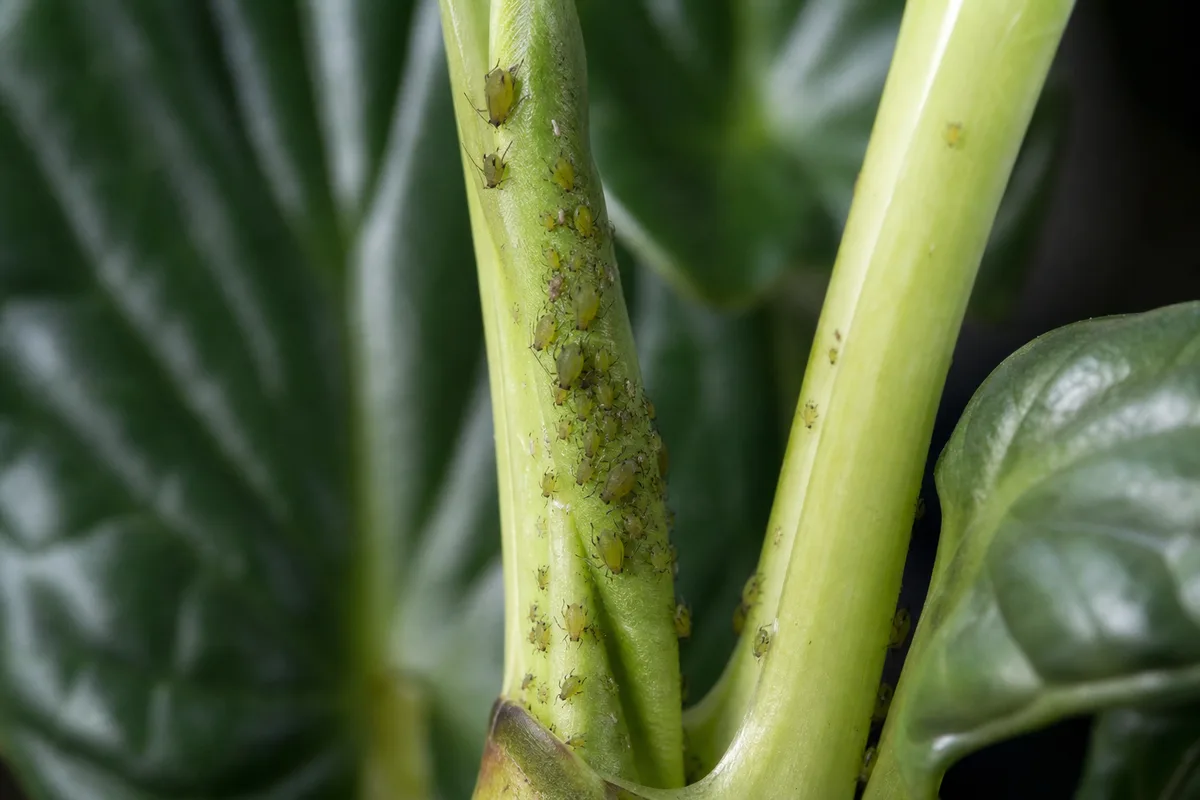
Aphids symptoms on Alocasia Dragon Scale - compare with healthy tissue on the same plant.
- Small pear-shaped insects-typically green, but also black, yellow, or white-clustered on unfurling leaves and petiole bases
- Colonies tucked into the ridged texture of leaf undersides and along the central vein of soft new foliage
- Sticky, shiny honeydew collecting in the scaled valleys of older leaves or on pot rims
- Ants traveling up stems toward the crown
- Curling, puckering, or failure to fully unfurl the newest leaf
- Yellowing or stunting limited to the freshest growth while the corm and older leaves stay firm
- Sooty mold growing on untreated honeydew
- White cast skins left after molting on leaf undersides
Unlike mealybugs, aphids are not cottony white. Unlike scale insects, they move when disturbed and lack hard shells. Unlike spider mites-the more common pest on this species in dry air-they do not produce fine webbing or yellow stippling across older textured leaves.
Aphids vs. mealybugs, scale, spider mites, thrips, edema, and overwatering on Alocasia Dragon Scale
Several Dragon Scale problems overlap on new growth. Use this table before committing to sprays:
| What you see | Likely cause | Key check |
|---|---|---|
| Soft pear-shaped insects on unfurling spear + sticky honeydew | Aphids | Insects move when disturbed; ants on petioles |
| White cottony clusters in leaf axils | Mealybugs | Crush smears pink; clusters stay put |
| Hard brown or tan bumps that do not move | Scale insects | Fixed when scraped; no honeydew drip |
| Fine stippling + webbing in vein crevices on older leaves | Spider mites | Paper tap shows moving specks; dry-air history |
| Silvery scarring + tiny black frass on new growth | Thrips | Shake leaf over paper; elongated insects |
| Water-soaked blisters on margins, firm corm | Edema / overwatering | No moving insects; soggy mix |
| Yellowing on oldest leaves + wet heavy pot + soft corm | Root rot | Sour soil smell; no insects on crown |
Getting the diagnosis right matters because humidity or watering fixes alone will not clear aphids, and pesticides wasted on edema or rot delay the real fix.
How to confirm aphids (five-step checklist)
Work through these checks in order-on Dragon Scale, start with the leaf still furled at the crown, not the showy scaled surfaces:
- New-leaf scan - Inspect the leaf still furled or just opening at the crown.
- Crevice check - Use a hand lens on the ridged undersides; aphids hide where the textured surface creates small pockets.
- Honeydew test - Wipe a leaf valley with a damp cloth; if stickiness returns within a day, sap feeders are still active.
- Disturbance test - Touch a cluster with a cotton swab; aphids move. Scale and mealybug patches do not.
- Corm firmness check - Firm corm tissue with pest damage only on foliage confirms insects, not crown rot from overwatering.
Confirmed aphids mean isolation and repeated treatment-not a single rinse.
First fix: isolate, rinse crevices, and treat on a schedule
Move Dragon Scale away from other aroids first. Winged migrants and ants carrying hitchhikers can spread colonies across a humid cabinet within days.
Then rinse colonies off with lukewarm water:
- Shower small plants or spray leaf undersides, petiole bases, and the crown with a firm stream, working into the textured leaf valleys where aphids shelter
- Rinse in Alocasia Dragon Scale light guide in the morning so thick leaves dry the same day-Dragon Scale’s bullate foliage holds water in crevices, and wet tissue sitting through a cool night raises fungal spot risk in humid rooms
- Keep rinse water off the crown center; Dragon Scale is rot-sensitive at the soil line when the base stays soggy
- Empty saucers within 30 minutes; do not let the pot sit in runoff
Repeat rinsing every two to three days to knock down nymphs that hatch between sessions. Wipe honeydew from scaled leaf surfaces with a damp cloth, changing cloths if you move between plants.
Wear gloves when handling heavily infested tissue. Dragon Scale contains insoluble calcium oxalate crystals typical of alocasias and can irritate skin on contact. Wash hands after treatment and keep the plant out of reach of pets. If a pet chews Dragon Scale foliage or licks sap from treated leaves, call ASPCA Animal Poison Control at 888-426-4435 (US) or your veterinarian immediately-do not wait for symptoms.
If live aphids remain after two or three rinses, apply commercial insecticidal soap or neem oil labeled for ornamental houseplants, covering all tender growth and reachable undersides thoroughly. Clemson Extension recommends a 1–2% insecticidal soap solution (follow your product label-typically 2½ to 5 tablespoons per gallon of water). Neem oil products require label-rate mixing; many labels suggest adding a few drops of mild dish soap as an emulsifier so oil blends with water.
Treatment cadence for indoor Dragon Scale:
- Rinse crevices + apply soap or neem - day 1
- Repeat rinse + spray - every 5–7 days for three cycles minimum
- Extend to a fourth cycle if live aphids reappear within a week of the third
- Keep the plant isolated until no live aphids for two weeks after the last treatment
Patch-test one leaf section for 24 hours before treating the whole plant-textured alocasia foliage can react to soaps and oils, especially when stressed, recently rinsed, or treated above 90°F. Apply in early morning or late day and ventilate the room during indoor sprays. Do not use homemade dish-soap sprays; commercial formulations reduce phytotoxicity risk on foliage.
Contact vs. systemic treatments. Insecticidal soaps and neem oil are contact insecticides-they work only while wet and must coat the aphids directly. Imidacloprid soil drenches or granules can control aphids systemically on some houseplants, but on finicky alocasias they add chemical stress to an already weakened root zone. Reserve systemics for chronic reinfestation after three failed contact cycles, and never combine a drench with Alocasia Dragon Scale repotting guide or heavy foliar spraying the same week.
Do not repot, prune heavily, or fertilize on the same day you start treatment. Do not increase watering because new leaves look limp-check soil moisture at 2–3 cm depth first per the watering guide. One clear correction at a time makes it easier to read the plant’s response.
Recovery timeline and what “clean new growth” looks like
Visible aphids should clear within one to two weeks of consistent rinsing or soap treatment. Expect a clean newly unfurling leaf within three to six weeks during active growth. Distorted or honeydew-stained young leaves will not fully flatten or regain their texture-judge success by the next clean flush, not by repairing old tissue.
Signs recovery is working:
- No fresh honeydew on leaf valleys or pot rims
- New spears unfurl without curling or distortion
- Ant trails stop appearing on petioles
- Firm corm and stable older leaves throughout treatment
Signs the problem is worsening:
- Colonies rebound after three full soap cycles
- Honeydew covers most of the crown
- Multiple plants in the same humid display show aphids within days
- Yellowing spreads to mature foliage while soil stays wet-see overwatering or root rot
A firm corm and stable older leaves throughout treatment are good signs. Overlapping pest damage and rot stress makes recovery unlikely without fixing culture first.
What not to do
- Misting instead of rinsing - Brief misting does not dislodge colonies in texture pockets and keeps scaled leaves wet too long in humid setups.
- Applying soap or oil to wilted, sun-stressed, or heat-shocked plants without a spot test - phytotoxicity risk rises on textured alocasia foliage.
- Using homemade dish-soap sprays - commercial insecticidal soaps are formulated to reduce foliage burn.
- Ignoring ants - they protect aphid colonies from natural predators.
- Returning the plant to a shared cabinet after one rinse - isolation should last until two aphid-free weeks after the last treatment.
- Stacking repot, fertilizer, and pesticide on day one - each stressor obscures whether the plant is responding to treatment.
Prevention in humid aroid collections
Prevention on Dragon Scale is mostly catching colonies on new spears before honeydew spreads through a cabinet:
- Quarantine every new Dragon Scale for two weeks before placing it in a humid collection
- Inspect unfurling leaves and petiole bases weekly during spring and summer active growth-not just the showy scaled upper surfaces
- Wipe leaf undersides during routine care so you catch colonies before honeydew spreads through a cabinet of aroids
- Feed lightly during active growth only per the fertilizer guide-avoid heavy nitrogen that produces soft, aphid-friendly shoots
- Space grouped aroids so scaled leaves from different pots do not touch
- Maintain airflow between plants even in high-humidity setups so foliage dries after rinsing or watering
When buying Dragon Scale, inspect the newest spear and petiole bases-cosmetic scaled foliage matters less than hidden aphids on tender growth.
When to escalate
Escalate treatment if colonies rebound after three full soap cycles, honeydew covers most of the crown, or multiple plants in the same humid display show aphids within days. That pattern suggests winged migrants or a shared source plant still infested.
A single distorted leaf with a few aphids rinsed off promptly is manageable. A crown where every new leaf fails to unfurl, combined with ants and black sooty mold across most foliage, needs aggressive isolation, repeated contact treatment, and inspection of every neighboring aroid-not another week of waiting.
If the corm softens, soil smells sour, or lower leaves yellow while the mix stays wet, stop foliar treatment and assess watering and drainage first. Pest damage on new growth does not cause root rot-but overlapping stress from both makes recovery unlikely without fixing culture.
For chronic cabinet-wide outbreaks that resist contact sprays, consult your local cooperative extension office before reaching for systemic drenches on rare aroids.
Conclusion
Aphids on Alocasia Dragon Scale are a new-growth problem on bullate foliage, not a mystery watering failure. The pests colonize where casual inspection fails-unfurling spears, petiole bases, and leaf crevices in warm humid collections. Isolate first, rinse texture pockets second, repeat soap or neem on a five-to-seven-day schedule third. Distinguish them from spider mites on older scaled blades before you treat. With three consistent cycles and weekly new-growth checks during active seasons, most Dragon Scale push clean spears and keep their scaled character.
Related guides: Alocasia Dragon Scale overview, watering, spider mites, mealybugs, overwatering, pruning.
When to use this page vs other Alocasia Dragon Scale guides
- Alocasia Dragon Scale watering guide - Use for routine moisture checks before assuming aphids is the main issue.
- Alocasia Dragon Scale problems hub - Browse all 16 common issues on this species.
- Mealybugs on Alocasia Dragon Scale - Different entry point when symptoms overlap with aphids.
- Spider Mites on Alocasia Dragon Scale - Different entry point when symptoms overlap with aphids.
- Yellow Leaves on Alocasia Dragon Scale - Different entry point when symptoms overlap with aphids.