Winterberry Holly Care: Planting, Pruning, and Berries
Plan a winterberry holly planting that fruits: compare cultivars, match bloom times, choose a moist site, and prune at the right time for winter berries.
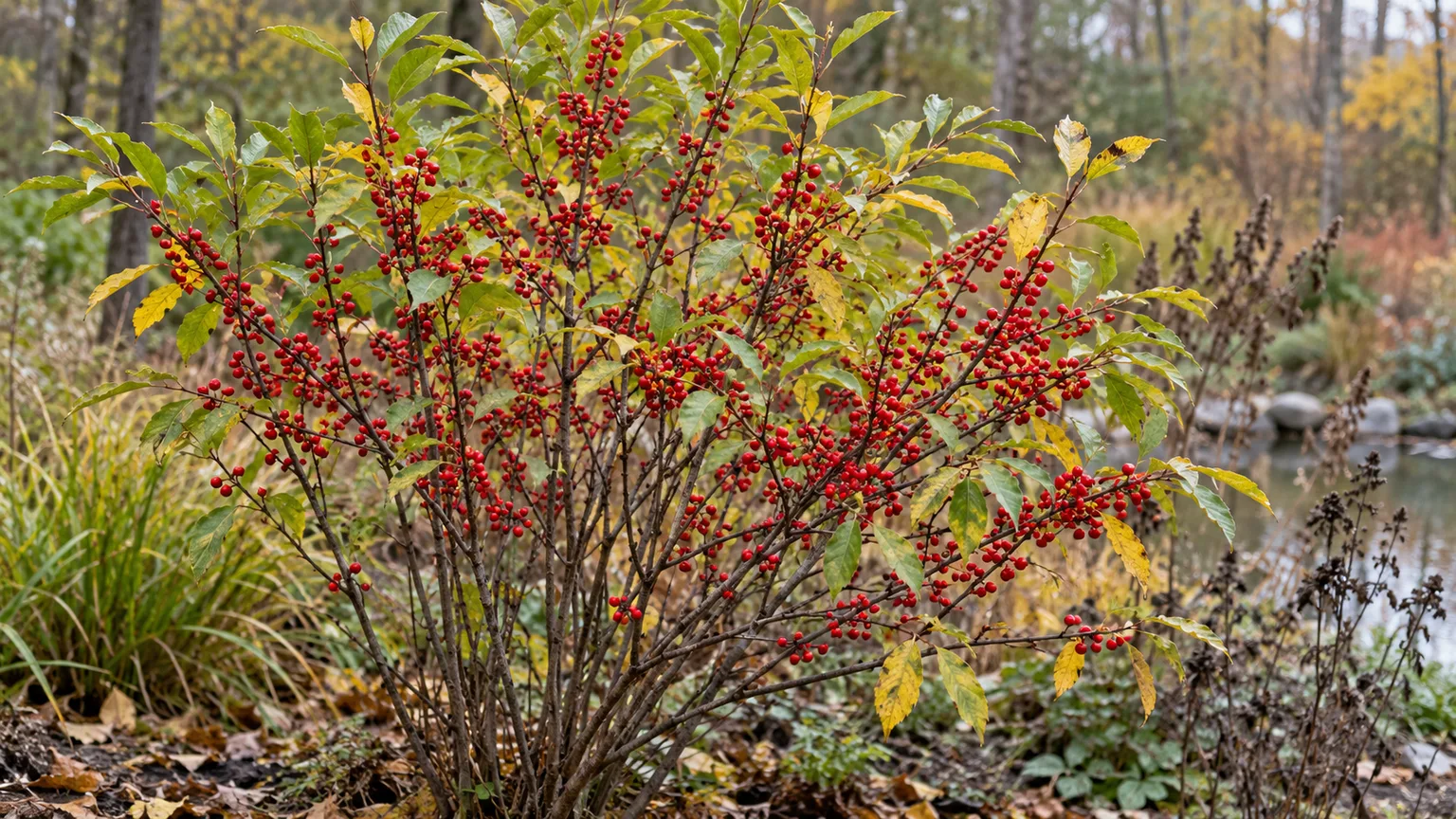
Winterberry holly (Ilex verticillata) is a deciduous native shrub: it drops its leaves in fall, leaving bright berries on bare stems through winter. Its most important care decisions happen before and soon after planting. Choose a naturally moist site, allow room for its suckering habit, and buy a female cultivar with a compatible male pollinator that blooms at the same time. Without that partner, a healthy female can grow for years without fruit.
Winterberry is hardy across a wide range of climates, but “tolerant” does not mean every site produces a good berry crop. Full sun generally brings heavier fruiting than deep shade, and a shrub that survives dry spells may still lose flowers or developing fruit when the root zone dries out. The key distinction is survival versus dependable flowering and fruiting.
Winterberry Holly at a Glance
| Feature | What to expect |
|---|---|
| Botanical name | Ilex verticillata |
| Growth habit | Multi-stemmed, deciduous shrub that may sucker into a clump |
| Mature size | Roughly 3 to 15 feet tall, depending on cultivar |
| Hardiness | Commonly listed for USDA zones 3–9 |
| Light | Full sun to partial shade; more sun usually supports heavier fruiting |
| Soil | Moist, acidic to neutral soil; tolerates wetter sites |
| Berries | Female plants only, after pollination by a compatible male |
Winterberry belongs in a planting plan where its bare winter branches are an asset, not a surprise. In summer it provides green foliage and a loose shrub shape; in fall its leaves turn yellow before dropping. The persistent red or orange fruit then becomes the main show. NC State Extension and Penn State Extension describe the shrub as a useful native for wet areas and wildlife plantings, but the exact mature height and spread vary enough that the cultivar label matters.
Choose a Site That Matches Its Size
Winterberry is often sold as a compact nursery shrub, yet many cultivars mature into broad, multi-stemmed plants. Check the plant tag for both height and spread, then leave enough room for its natural shape and the root suckers that can form a colony. If you want a clipped foundation shrub that stays narrow without regular pruning, choose a dwarf cultivar or a different plant rather than forcing a large winterberry into a tight spot.
Sunlight: More Light Usually Means More Berries
Plant winterberry in full sun or partial shade. It can grow in a woodland edge or a partly shaded garden, but a female plant is more likely to flower and fruit heavily with several hours of direct light. The University of Connecticut Plant Database notes that more sun generally means more fruit; NC State Extension also lists full sun through partial shade as suitable exposure.
In a hot summer climate, a site with morning sun and some afternoon protection can reduce heat stress, especially if the soil tends to dry quickly. Don’t compensate for deep shade with extra fertilizer: shade reduces the energy available for flowering, and feeding cannot replace light. If winter berries are the reason you are planting the shrub, favor the sunniest location that can still keep its roots consistently moist.
Soil: Moist, Acidic, and Not Bone-Dry
Winterberry prefers acidic soil rich in organic matter, but it adapts to clay and other heavier soils better than many ornamental shrubs. It is a strong candidate for a rain garden, pond margin, or low area that stays damp after rain. “Moist” is the useful target: the roots should not be left to dry for long stretches, but you do not need to submerge the crown or turn the planting hole into a permanent pond. UConn describes winterberry as tolerant of poorly drained soils, while the RHS plant profile recommends moist but well-drained soil.
The shrub can tolerate some drought once established, yet dry conditions may cause fruit to abort. That distinction explains why a winterberry can remain alive in a dry border but produce a disappointing crop. If your soil drains quickly or summers are dry, plant where irrigation is practical and mulch the root zone. In an area with alkaline soil, test before planting a large group; persistent high pH can lead to chlorosis, and changing an entire bed’s chemistry is harder than choosing a better site. NC State Extension notes both the species’ drought tolerance and the risk of fruit loss in dry soil.
Plant Winterberry Holly at the Correct Depth
Plant container-grown winterberry in spring or fall when the soil is workable and temperatures are mild. Dig a hole about as wide as the root ball or a little wider, but no deeper; set the top of the root ball level with the surrounding soil. Loosen circling roots gently so they can grow outward, then backfill with the soil you removed instead of burying the plant in a pocket of rich compost. The RHS growing profile likewise recommends a moist site and lists winterberry as a suckering shrub, so allow room for it to expand.
Water slowly after planting to settle soil around the roots. Add a two- to three-inch layer of shredded bark or leaf mulch over the root zone, keeping it a few inches away from the stems. A thick mulch “volcano” against the crown holds moisture where bark stays wet and makes it harder to see suckers and stem damage.
If you are planting for berries, plan the female and male positions before digging. Space them according to the cultivar’s mature dimensions, not just their small nursery-pot size, and keep the male close enough for pollinators to move between flowers. Include a label or map of which plant is which; several years later, leafless winter stems do not tell you which shrub is the pollinator.
Plan Pollination Before You Buy
Winterberry is dioecious: male and female flowers are produced on separate plants. A female produces berries only after pollen reaches its flowers from a compatible male winterberry that blooms at the same time. Two shrubs do not automatically make a pair if both are female, both are male, or their flowering periods do not overlap. Penn State Extension and Rutgers Cooperative Extension describe this separate-sex requirement.
Match Bloom Timing, Not Just the Species Name
Ask the nursery for a female cultivar and its recommended male pollinator. The pairing is cultivar-specific because early- and late-blooming selections may not flower together. For example, ‘Red Sprite’ is commonly paired with the early-blooming ‘Jim Dandy’; the later ‘Winter Red’ and ‘Winter Gold’ are often paired with a later male such as ‘Southern Gentleman’. The University of Connecticut Plant Database lists these cultivar pairings. Check the tag for the exact selection you are buying rather than relying on a generic label that says “male holly.”
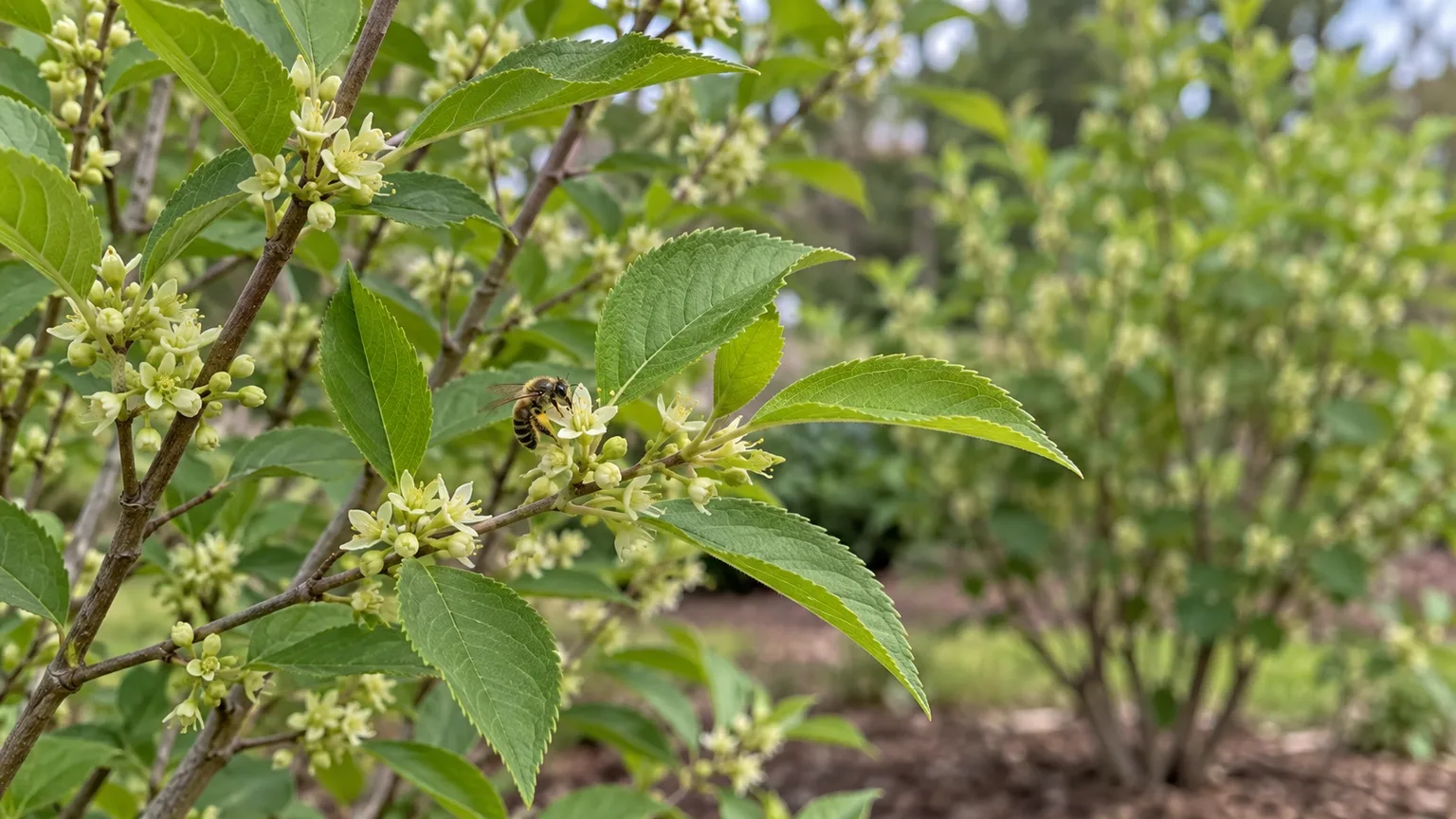
The flowers are small and not showy, so a shrub may bloom without drawing your attention. Male flowers typically carry pollen-bearing anthers; female flowers have a central ovary that can develop into fruit after pollination. If you inherited an unlabeled shrub, watch its flowers during late spring or early summer and ask a local nursery or extension office to help identify the sex and cultivar before buying a partner.
This matters most when the shrub flowers but produces no berries. A female plant can be vigorous and healthy, yet the missing piece is simply a compatible male nearby. If a neighbor grows winterberry, their shrub may serve as the pollen source, but only if it is close enough and its bloom overlaps.
Put the Male Within Pollinator Range
Place the male within about 50 feet of the female, a distance NC State Extension gives for winterberry pollination. Guidance differs on how many females one male can serve: NC State suggests one male for 10–20 females, while Rutgers Cooperative Extension says six to ten. Treat those as planning estimates, since cultivar choice, spacing, and bloom overlap affect the result. For one focal female shrub, the simplest dependable plan is to buy its specifically recommended male and plant both within the stated distance.
For a larger hedge or rain-garden grouping, ask the nursery to design the mix around the cultivars’ pollen compatibility. A male does not need to sit directly beside every female, and it does not need berries to do its job. Mark it clearly and avoid removing it as an “unproductive” shrub during winter pruning.
Water and Mulch While Roots Establish
For the first growing season, check soil moisture every few days during hot or rainless weather. Water deeply when the top few inches begin to dry rather than applying a small splash every day. In a heavy clay bed, a slow soak followed by time to drain is safer than frequent irrigation that keeps the root zone saturated; in sandy soil, smaller, more frequent watering may be needed.
A practical starting point is about an inch of water per week from rain and irrigation combined, then adjust to the soil, temperature, and plant response. Established winterberry tolerates some dryness, but it performs best when moisture is steady from spring flowering through fruit development. If leaves wilt in afternoon heat, check the soil before watering; a plant in wet soil may be stressed by poor drainage rather than thirst. Epic Gardening’s winterberry profile also recommends consistent moisture and cautions against letting the shrub dry out for extended periods.
Maintain a loose mulch layer over the root zone and refresh it as it thins. Mulch moderates soil temperature, limits evaporation, and suppresses weeds that compete with young roots. Keep the area around the stem bases visible so you can spot bark chewing, check for basal suckers, and avoid trapping moisture directly against the crown.
Check Soil pH Before Adding Fertilizer
Winterberry does not need routine feeding when it is growing normally. If shoots are weak or leaves are pale, first check light, soil moisture, drainage, and pH. High soil pH can make nutrients unavailable and cause yellowing between green veins; adding a general-purpose fertilizer may not correct that underlying problem.
Use a soil test before applying an acidifying product or fertilizer for acid-loving plants. Follow the test recommendation for the site rather than trying to change pH by guesswork. Overfertilizing can push soft leafy growth at the expense of a balanced shrub and can wash nutrients into nearby water. If a test finds suitable soil and the plant is growing steadily, leave the fertilizer bag closed.
Prune After the Winter Display
Winterberry flowers form on new growth, so the best time for structural pruning is late winter or early spring before new shoots begin. Waiting until the red berries have provided their winter interest lets you enjoy the display; pruning before spring growth avoids removing the season’s flowers and future fruit. Avoid routine clipping in fall, when the branches may be carrying the berries you planted the shrub to see. NC State Extension and Epic Gardening both identify new growth as the flowering wood and recommend pruning before spring growth.
Use hand pruners to remove dead, damaged, crossing, or poorly placed stems at their point of origin. To reduce an overgrown plant, remove some of the oldest canes at ground level over several seasons rather than shearing the outside into a tight ball. Removing no more than about one-third of the oldest growth in a year is a cautious renewal approach; a severe cut can leave the shrub bare and sacrifices much of its natural winter character.
If the shrub is too large for the site, pruning is a short-term correction, not a substitute for a cultivar that fits. Root suckers may continue to emerge beyond the original clump. Cut unwanted suckers at ground level while they are small, or move the shrub to a site where its mature spread is welcome. For holiday branches, take a modest number after the berries color, and remember that every cut branch removes part of the winter display.
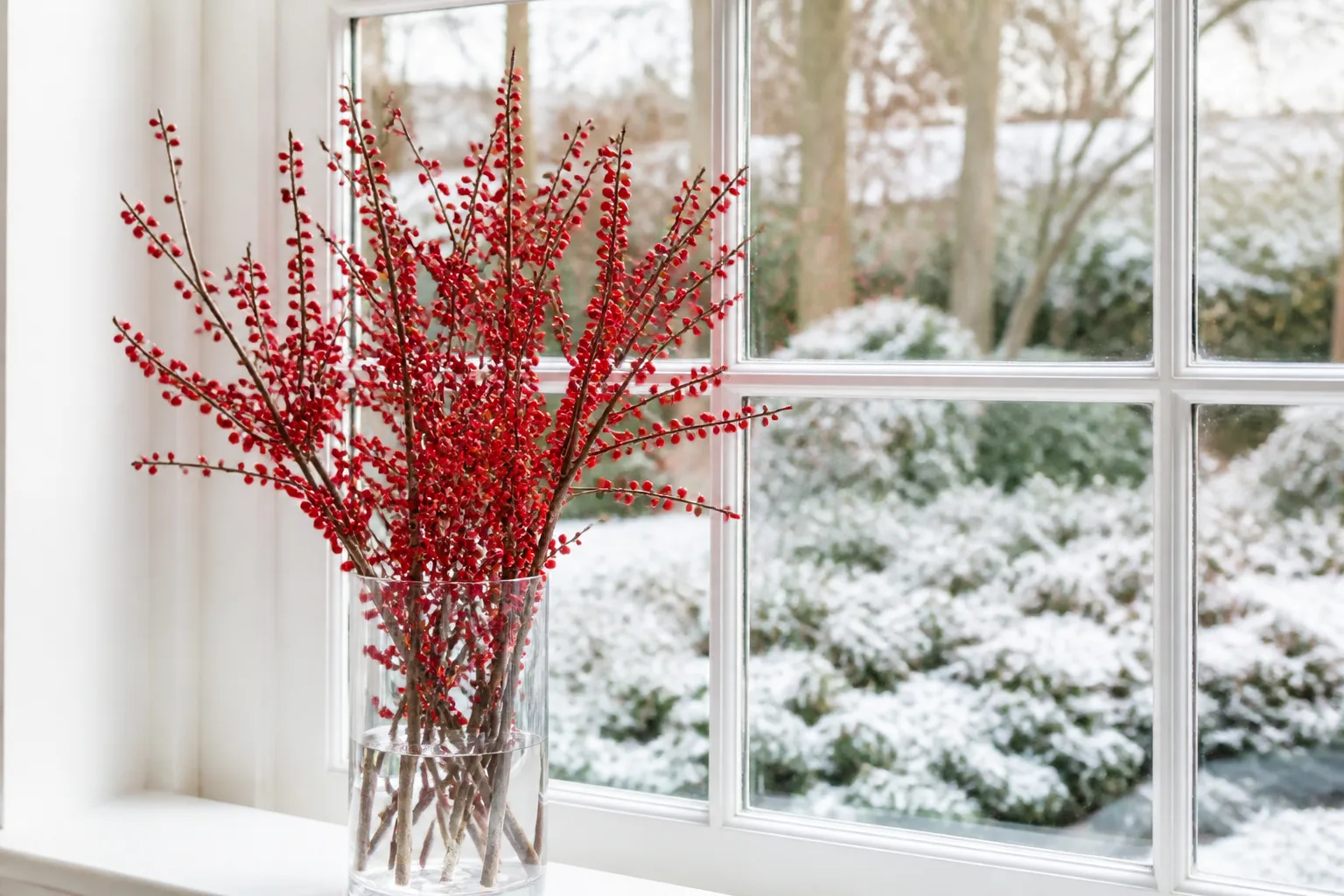
Compare Winterberry Cultivars by Size and Pollinator
Cultivar names are more useful than a generic “winterberry” tag because they tell you about size, fruit color, and the male needed for pollination. Mature dimensions vary with climate and growing conditions, so treat sizes as planning ranges and leave room for natural growth.
| Cultivar | Why gardeners choose it | Pollinator note |
|---|---|---|
| ‘Red Sprite’ | Compact, usually about 3–4 feet tall, with red berries | Pair with early-blooming ‘Jim Dandy’ |
| ‘Berry Poppins’ | Dwarf form for a small bed or large container | Commonly paired with ‘Mr. Poppins’ |
| ‘Winter Red’ | Larger shrub with abundant red fruit | Choose a compatible later-blooming male such as ‘Southern Gentleman’ |
| ‘Winter Gold’ | Larger shrub with yellow-orange berries | Pair with a male whose bloom overlaps, often ‘Southern Gentleman’ |
The University of Connecticut Plant Database and NC State Extension list cultivar-specific partners, but nursery inventories and labels can change. Verify the male selection at purchase, especially for newer varieties. Don’t buy two cultivars just because both have attractive photos; buy a known female–male combination that fits the available space and flowering window.
For a narrow border, prioritize mature width and suckering as much as height. For a rain garden or naturalized area, a larger selection can form an attractive colony, but leave space around it for maintenance. Berry color is a preference; the decisive factors for a full crop are compatible pollination, adequate light, and moisture during flowering and fruit development.
Propagate From Cuttings or Suckers
Winterberry can be propagated from semi-ripe stem cuttings in late summer or early fall. Take several short tips from healthy growth, remove the lower leaves, and insert the cut ends into a clean, moist propagation mix. A clear cover helps hold humidity while the cuttings root, but vent it if condensation stays heavy and keep the medium damp rather than waterlogged. Place the pot in bright, indirect light. The Royal Horticultural Society lists semi-ripe cuttings as a propagation method, and Epic Gardening offers a practical cutting sequence.
Rooting success is not guaranteed, so take more than one cutting and be patient. Once a cutting has rooted and started new growth, harden it gradually to outdoor conditions. A young plant may need a protected first winter before it is ready for a permanent garden position. Seed is slower and more difficult because germination can be inconsistent.
A rooted sucker is another option if you want a plant with the same traits as the parent. In early spring, trace a sucker back toward the mother plant and separate it only if it has developed its own roots. Replant it promptly, water it well, and keep it shaded from harsh afternoon sun while it recovers. Cuttings or suckers preserve the parent’s cultivar and sex; seedlings may not come true, and a seed-grown plant can take years to reveal whether it is male or female.
Troubleshoot a Winterberry That Looks Unwell
Winterberry is generally a low-maintenance shrub, but a poor fruit display often points to a mismatch between the plant and its site. Diagnose the growing conditions before pruning hard or applying fertilizer. A young transplant can take time to establish, while a mature shrub with flowers but no berries calls for a closer look at pollination.
When a Female Plant Has No Berries
Work through these checks in order:
- Confirm it is female. Male plants do not produce fruit. If the plant is unlabeled, identify the flowers during bloom or have a local expert check it.
- Confirm a compatible male is nearby. Verify the pollinator cultivar on both tags and keep it within about 50 feet. A male that blooms too early or too late may not pollinate the female.
- Check whether the female flowered. No flowers can point to a plant that is still establishing, too much shade, or pruning after new growth started. A recently planted shrub may need a few seasons before it fruits reliably.
- Review summer moisture and sun. Dry soil during flowering or fruit development can reduce fruit set even if the shrub survives. Deep shade can also mean fewer flowers.
- Review recent pruning. Cutting branches after the shrub begins spring growth can remove developing flowers. Wait to assess the next season after correcting the timing.
If the shrub flowers but berries stay sparse, consider whether pollination overlapped and whether drought occurred during the fruiting period. If it never flowers, start with the plant’s sex, age, light, and pruning history. These clues separate a missing-pollinator problem from a site problem.
Yellow Leaves, Leaf Spots, and Winter Stem Damage
Yellow foliage can indicate alkaline soil, but it can also follow root stress. Look for a pattern: yellow leaves with green veins point toward pH-related chlorosis; wilting or yellowing in persistently wet ground suggests drainage trouble; a shrub in dry soil may need a deeper soak. Test the soil before changing pH or feeding.
White powdery patches, curled leaves, or reddish-purple blotches can be signs of powdery mildew. University of Minnesota Extension notes that severe infections may cover leaves and young shoots. Improve air movement, avoid repeatedly wetting the foliage, and remove fallen diseased leaves. Do not apply a fungicide or oil automatically; identify the problem first and follow the product label if treatment is truly warranted.
In winter, inspect lower stems for bark stripped below the snowline. That pattern is consistent with vole feeding; University of Minnesota Extension distinguishes it from rabbit damage, which clips branches and small stems. Protect the base with a ventilated trunk guard or hardware cloth before snow arrives, keeping the barrier from rubbing tightly against the stems. Prune damaged branches back to healthy wood in spring and check whether the roots or crown were also injured.
Use Winterberry in a Landscape and Handle Berries Safely
Winterberry suits rain gardens, pond edges, damp borders, native plantings, and wildlife gardens. Its berries give a leafless winter garden strong color, while its flowers support pollinators and its fruit is eaten by birds and mammals. A mixed planting with evergreen shrubs or ornamental grasses can provide winter structure after the winterberry sheds its leaves.
Plan for suckers before planting. In a formal bed, use a compact cultivar and remove unwanted shoots while they are small; in a naturalized area, allow the clump to widen. Winterberry is not a dependable privacy screen in winter because it is deciduous, and it is not a good choice for a dry site where regular supplemental watering is impractical.
Do not eat the berries or leaves. NC State Extension rates the fruit and leaves as low-severity toxic to humans; ingestion may cause vomiting, diarrhea, or other illness. The fact that birds eat the fruit does not make it safe for people. Keep branches out of reach of small children and pets, and if someone or an animal chews the plant, contact a poison-control service or veterinarian with the plant name and an estimate of what was eaten.
Conclusion
For a reliable winterberry display, start with the right pair of plants: a female cultivar and a male pollinator whose bloom overlaps, planted within range of one another. Give them enough sun for flowering, moist acidic soil, and room for the shrub’s mature spread and suckers. These decisions usually matter more than fertilizer or frequent pruning.
Water new plants through their first growing season, keep mulch off the stems, and prune after the berries have had their winter show but before spring growth begins. If a shrub has no berries, check sex, cultivar compatibility, distance, light, water, and pruning history in that order. Once those basics are right, winterberry is a durable native shrub whose red or gold fruit can carry a damp garden through the barest part of the year.