8 Reasons Hydrangeas Are Not Blooming
Hydrangeas not blooming? Identify the type, inspect old-wood buds, and check pruning, frost, light, water, fertilizer, and establishment before changing care.
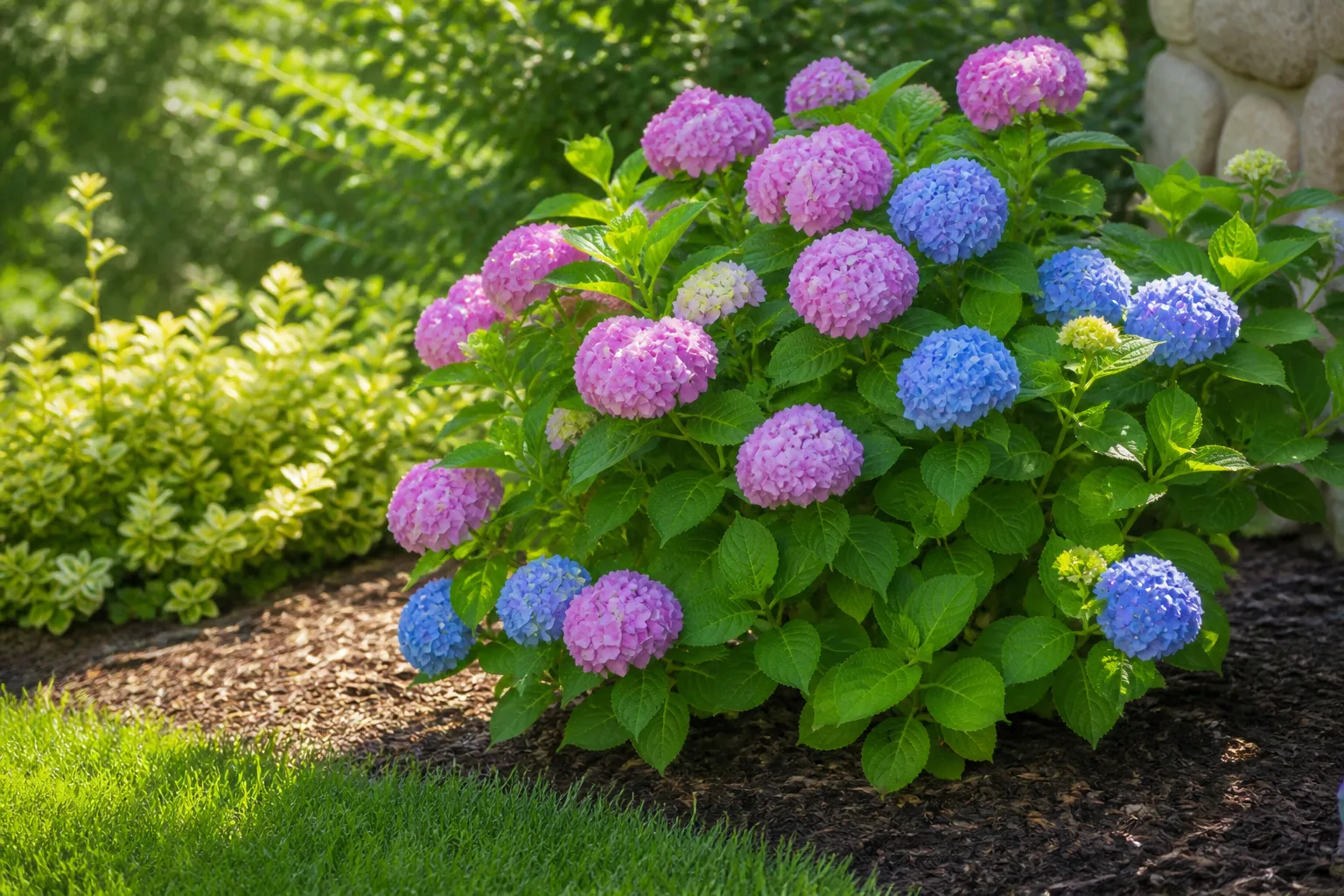
A hydrangea covered in healthy leaves but short on flowers is often responding to one event from the previous year: the plant lost its flower buds to pruning, winter cold, or a spring freeze. Other shrubs simply flower later than a neighbor’s, or they are growing in too much shade, too little water, or soil enriched with more nitrogen than they need. The first useful move is to identify which hydrangea you have and inspect its stems before reaching for fertilizer or pruning shears.
That distinction matters because hydrangeas do not all make flowers on the same growth. Bigleaf, mountain, oakleaf, and climbing types commonly carry at least some flower buds through winter on older stems, while panicle and smooth hydrangeas flower on new growth; some modern bigleaf cultivars can rebloom on both. If you prune or protect every type the same way, you can solve one plant’s problem while removing another plant’s next bloom.
Is your hydrangea late, or has it missed a flowering season?
A bloomless shrub in early spring has not necessarily failed. Hydrangea flowering dates vary with species, cultivar, latitude, spring temperatures, exposure, and the weather the previous season. A panicle hydrangea may not begin its show until later in summer, while a bigleaf cultivar can flower much earlier in a warm region and considerably later in a cool one. Compare the plant with its own past bloom window, not simply the hydrangea across the street.
The Royal Horticultural Society’s hydrangea growing guide describes many shrubby hydrangeas as flowering from mid- to late summer, but local conditions shift the calendar. If the stems are alive, leaves are emerging, and your local season is still early, wait before declaring a problem. By contrast, if the shrub normally blooms by now and has produced no flower heads, use the checks below to work out whether buds were never made, were cut off, or were damaged after they formed.
Diagnose the shrub before changing its care
Start with three pieces of evidence: the type or cultivar, the condition of last year’s stems, and the date of the last major pruning. A plant tag, nursery receipt, or a photo from last summer may identify a repeat-blooming selection or a type that needs a different pruning window. If the label is gone, flower shape and foliage can still narrow the options: mophead and lacecap flowers suggest bigleaf or mountain hydrangea, cone-shaped panicles point toward H. paniculata, and large rounded white clusters often indicate smooth hydrangea.
Do not identify a shrub from flower color alone. Bigleaf bloom color can shift with soil chemistry, but that does not tell you whether the plant is old-wood or new-wood flowering, and it does not explain a missing bloom count. The Connecticut Agricultural Experiment Station’s hydrangea guidance notes that winter injury in bigleaf hydrangeas can show up as a lack of flowers when the previous season’s stems die back. That pattern is more useful diagnostically than whether last year’s flowers were pink or blue.
Read the buds, stem tips, and new growth
Look from the tip of several stems downward. On an old-wood type, a live, intact stem can carry dormant buds that open into shoots and flowers; if the tips were cut off last fall or winter, the plant may leaf from lower buds and still have few or no flowers. If stem ends are brown and brittle while lower portions leaf out, cold damage or pruning may have removed the flowering tissue. If all stems were cut to the ground and the new shoots are vigorous, that history points toward a severe prune of an old-wood plant.
Buds that swell and then turn brown after a cold night suggest a different problem from stems that were shortened months earlier. In contrast, a healthy plant with no visible flower buds may have been pruned before flowering, may be too young, may have received excess nitrogen, or may not yet be at its normal bloom time. Take a few dated photos now and note what happened through winter and spring; that record is often more useful next year than trying several fixes at once.
Match the bloom pattern to the season and the plant label
Write down when the plant was pruned, when shoots began to grow, when frost occurred, and whether the shrub has flowered in earlier years. A plant that used to bloom reliably and suddenly stopped after a harsh winter points toward bud injury or a hardiness mismatch. A young hydrangea that has never flowered may simply need time to establish, especially if it was recently moved or is still recovering from a small nursery container.
If you cannot identify the cultivar, do not hard-prune it while you investigate. Leave healthy old stems in place until you can see where live buds are forming, then remove only clearly dead wood. A cautious year with fewer flowers is usually less costly than removing every dormant bud from a shrub that would otherwise have flowered.
Eight reasons a hydrangea may not flower
1. You are expecting blooms before this type’s season
Hydrangea species and cultivars do not all flower at the same time. Panicle hydrangeas often bloom later in summer, and a cool spring can delay growth even further. A shaded site also warms more slowly than a sunny, protected spot. If the shrub is otherwise vigorous and the season is still unfolding, a calendar mismatch may be the entire explanation.
Use the plant label or a cultivar search from the original nursery to learn its expected bloom period. When that information is unavailable, compare its timing over several years and with the same type in nearby gardens, not with a different hydrangea species. Do not force the plant with fertilizer because a neighbor’s earlier cultivar has opened; extra feeding will not make a late-season type bloom on demand.
2. Pruning removed dormant flowers on old wood
This is a common cause of a leafy bigleaf hydrangea without flowers. Many mophead and lacecap cultivars form next year’s buds on older stems during the previous growing season. Cutting those stems back in autumn, winter, or early spring can remove the buds before they have a chance to open. Oakleaf and climbing hydrangeas also generally flower on older growth and need restrained pruning.
The safest rule is to identify the type before pruning. The RHS hydrangea pruning guide recommends light, selective pruning for bigleaf and mountain hydrangeas rather than a hard annual cut; the exact timing can vary with cultivar and climate. Savvy Gardening’s horticultural guide to cutting back hydrangeas explains the old-wood/new-wood distinction and uses flower form as a practical identification clue. For an unknown plant, keep the sound stems, remove only dead wood, and wait until after flowering for shaping if it proves to be an old-wood type.
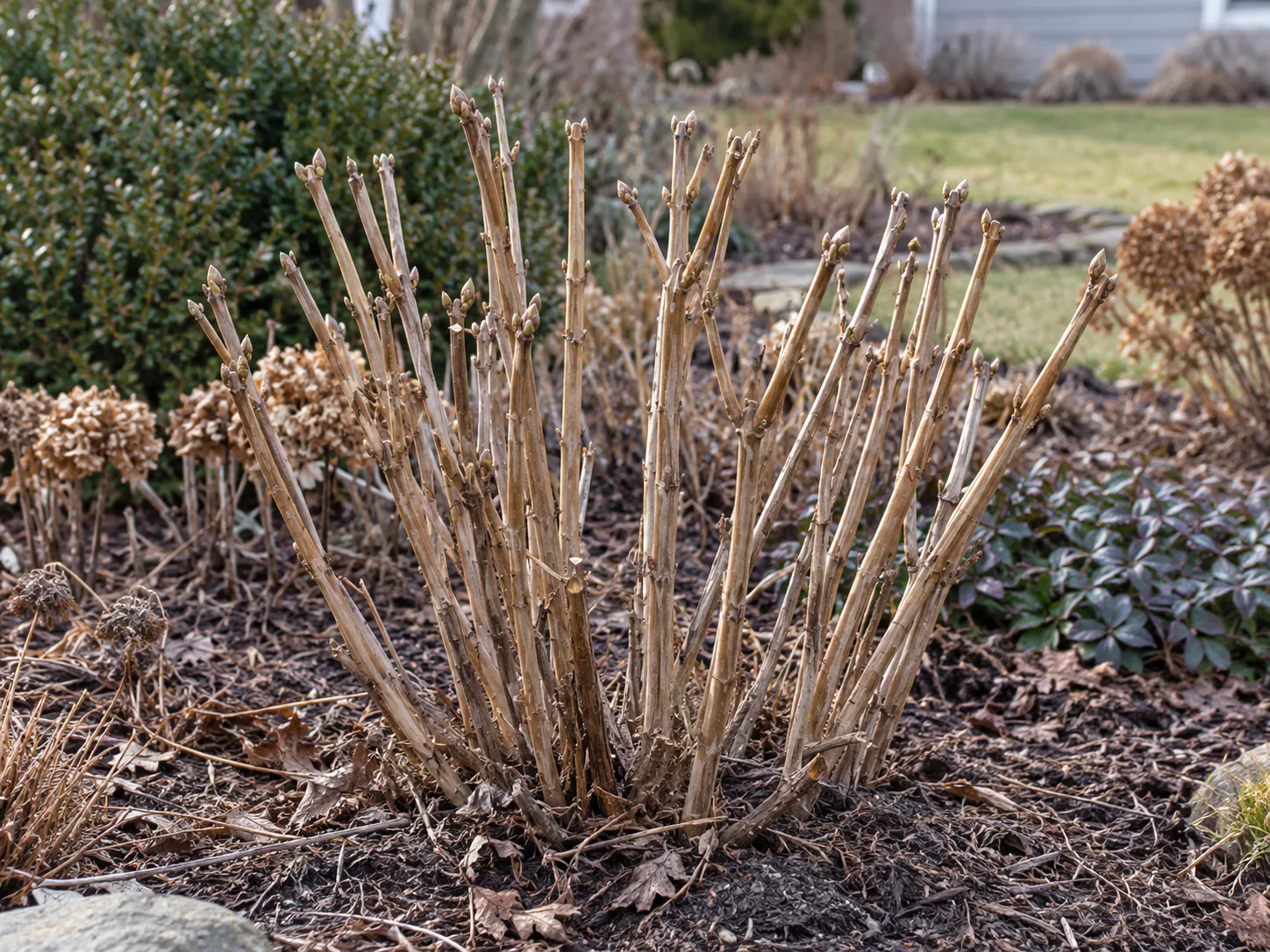
3. Winter cold damaged stems or flower buds
A hydrangea can survive winter as a root system and still lose its next flowering display. This is especially relevant for bigleaf types in colder or exposed sites: the roots and lower stems may live, while flower buds carried near the stem tips are killed. The Connecticut Agricultural Experiment Station describes lack of bloom as a visible result of winter injury to previous-season growth. A hardiness-zone rating helps you choose plants for average winter lows, but it cannot guarantee that every cultivar’s buds will survive a severe winter, dry wind, or sudden temperature swing.
Check whether stems died back only to the snow line or whether the whole shrub is affected. If new shoots emerge from the base, wait to see what they do before digging the plant out; a surviving old-wood cultivar may leaf out without flowering that year. For future winters, choose a cultivar suited to your region and site, avoid an exposed frost pocket, and use a breathable protective structure only when your local climate makes it worthwhile. Winter wrapping can reduce exposure, but it is not a promise of flowers.
4. A late spring frost injured emerging buds
Winter damage happens while the shrub is dormant; late frost hits tender growth after it begins waking up. A warm spell can coax leaves and old-wood flower buds to expand, then a freezing night damages those exposed tissues. You may see blackened tips, limp new leaves, or buds that dry and fail to open even though the lower stem remains alive.
Watch the forecast during spring growth, especially for a hydrangea in an open, low-lying spot where cold air settles. If a frost is forecast, cover a small shrub with breathable fabric that reaches the ground, then uncover it after temperatures rise; avoid leaving a cover on through warm sunny days. Do not prune damaged tips immediately if the extent of injury is unclear. Once new growth shows which buds remain alive, cut back only to healthy tissue above a sound bud. The RHS also advises removing frost-damaged hydrangea shoots to the first undamaged pair of buds on live wood.
5. The site is too shady, hot, or exposed
Dense shade can leave a hydrangea with plenty of leaves but too little energy for a strong flowering display. On the other hand, intense afternoon sun in a hot climate can dry the root zone and stress foliage, particularly for bigleaf types. The useful target is not a universal number of hours: many hydrangeas perform well in bright or dappled light with morning sun and afternoon protection, while panicle hydrangeas generally tolerate more sun if their soil stays moist.
Observe the site across a full day rather than estimating from a quick glance. Is the shrub under a dense evergreen canopy, shaded by a building after morning, or exposed to reflected heat from pavement? The RHS recommends light shade for shrubby hydrangeas but notes that sunnier sites can work when soil does not become too dry. If shade is the issue, first consider modest canopy thinning or moving the shrub during dormancy only if the root system and space allow; avoid transplanting a mature plant in the middle of heat or bloom season.

6. Excess nitrogen is driving leaves instead of flowers
A shrub that makes lush, dark green growth but few flowers may be getting more nitrogen than it needs. That can come from repeated fertilizer applications, a high-nitrogen lawn treatment nearby, or rich amendments placed around the root zone. Stacy Ling’s garden recap describes how lawn fertilizer washed toward a hydrangea bed after heavy rain, while the RHS growing guide cautions that overfeeding established shrubs can encourage soft leafy growth and make them more susceptible to frost injury.
Do not respond by applying a “bloom booster” automatically. Phosphorus is not a universal flowering switch, and excess nutrients can create other problems or run off into waterways. Check the product label and the fertilizer history, keep lawn treatments away from the shrub’s root zone, and use a soil test if you suspect a nutrient imbalance. Established hydrangeas generally do not need regular feeding when they are growing in reasonably fertile soil.
7. Drought or root-zone problems stressed the plant
Hydrangeas need an evenly moist root zone, especially while new roots are establishing and during prolonged hot, dry weather. If a plant wilted repeatedly last summer, grew in a small container that dried quickly, or competed with tree roots, it may have had less capacity to support strong new stems and flower buds. The following season’s bloom can also be reduced when drought stress stops growth before buds are fully developed.
Check soil several inches below the surface, not just the mulch or dry crust. Water deeply when the root zone is drying, then allow excess water to drain; frequent shallow splashes do little for deeper roots. A thick organic mulch can conserve moisture, but keep it off the crown and do not use it to hide waterlogged or compacted soil. If the shrub wilts while the soil is wet, investigate drainage and root health rather than adding more water. The RHS guide recommends watering newly planted hydrangeas through their first growing season and maintaining moisture during dry spells.
8. A new or gift hydrangea is still establishing
A recently planted shrub often spends its first season building roots and adjusting to its site. Transplanting can temporarily reduce flowering, particularly if the plant was moved during warm weather, its root ball dried out, or it was planted too deeply. The RHS notes that hydrangeas grown from cuttings may take two to three years to start flowering; nursery plants are not all the same age or production history, so use that as a realistic possibility rather than a strict deadline.
Gift hydrangeas deserve a little extra patience. Many are greenhouse-grown to flower for a particular retail season, and their label may not identify a cultivar suited to local winters. A finished potted plant can be planted outdoors if it is hardy for the region, but it may need to acclimate, establish, and experience a normal seasonal cycle before it flowers again. Check the cultivar and hardiness first, keep the root zone evenly moist while it settles, and avoid repeated feeding or severe pruning as a substitute for time.
Use hydrangea type to choose a safe pruning window
Flower shape is a useful first clue, but cultivar labels are better when available. The broad categories below help prevent the most damaging mistake: cutting off last year’s buds before you know whether they are needed. The RHS pruning guidance supports the old-wood/new-wood distinction, while Savvy Gardening offers a practical way to use bloom form when the exact species is unknown.
| Hydrangea group | Where flowers form | Safer general pruning approach |
|---|---|---|
| Bigleaf or mountain (H. macrophylla, H. serrata) | Commonly on older stems; some cultivars also rebloom on new growth | Prune lightly after flowering or wait until new spring growth shows which stems and buds survived; avoid a routine hard cut |
| Oakleaf or climbing (H. quercifolia, H. anomala subsp. petiolaris) | Generally on older wood | Shape sparingly after flowering; remove dead or damaged stems rather than cutting the whole plant back |
| Panicle (H. paniculata) | On current-season growth | If needed, prune in late winter or early spring before active growth; severe pruning is not required for bloom |
| Smooth (H. arborescens) | On current-season growth | Prune in late winter or early spring if shaping or renewing the framework; allow room for strong new shoots |
Repeat-blooming bigleaf hydrangeas can produce flowers from both overwintered buds and new growth, but “reblooming” does not mean pruning timing no longer matters. A late cut can still remove the first flush, and a cultivar may rebloom weakly after a severe winter or in a short growing season. If a plant label uses marketing language such as “continuous bloom,” look for the cultivar name and its specific care notes before treating it as a guaranteed flower supply.
A season-by-season recovery plan
Now, while the shrub is leafing out: identify the plant if possible, note the pruning and weather history, and inspect several stems. Wait until the normal local bloom window has passed before deciding that the year is lost. If frost has damaged tender tips, let living buds declare themselves before making selective cuts. Do not add fertilizer or prune healthy old wood just because flowers have not appeared yet.
During the growing season: keep the root zone consistently moist during dry periods, but correct drainage problems instead of watering into saturated soil. Observe how many hours of direct and dappled light reach the plant, and look for repeated wilt, very long soft shoots, or unusually lush foliage. Record when flowers appear, even if there are only a few; that timing will help you distinguish late bloom from a failed one next year.
After flowering and before winter: prune only according to the type. If the hydrangea flowers on old wood, remove spent flower heads carefully and leave sound stems through winter; many gardeners can skip deadheading altogether. For a new-wood type, use the dormant-season pruning window if shaping is needed. Mulch over the root area to slow moisture loss, and consider frost protection for a vulnerable cultivar in an exposed site rather than wrapping every hydrangea automatically.

What not to do when flowers fail
Do not cut every stem to the ground unless you have identified a type that tolerates that treatment and you have a specific reason for renovating it. A hard prune can reset or remove blooms on old-wood plants, and even a new-wood hydrangea usually does not need to be cut back severely to flower. If the plant is unknown, remove only clearly dead material and postpone shaping until after its flowering period.
Do not assume that blue flowers require a special fertilizer or that soil acidity determines whether the plant blooms at all. Soil pH can affect the color of certain bigleaf hydrangeas, but bloom count depends on bud survival and growing conditions. Avoid phosphorus-heavy fertilizer unless a soil test indicates a need, and do not overwater a shrub whose roots are already sitting in poorly drained soil. More inputs are not a shortcut around a lost bud cycle.
Also resist moving a mature hydrangea in midsummer simply because it did not bloom once. First rule out pruning and frost, then consider light, moisture, and cultivar fit. If the location is fundamentally wrong, transplant during a cool dormant period and accept that relocation may cost another season while the roots reestablish. A correctly placed shrub with preserved buds is a better long-term fix than a series of emergency treatments.
Conclusion
When hydrangeas do not bloom, the answer is usually visible in the plant’s type, stem history, or the weather it experienced—not in a need for a stronger fertilizer. Identify whether the cultivar flowers on old wood, new wood, or both; check whether last year’s buds survived; and compare the plant’s bloom timing with its own history and local season. Then make one measured change at a time.
For this year, lost old-wood buds cannot be put back, so protect any remaining growth and let the shrub recover. For next year, keep pruning type-specific, water through dry spells, reduce unnecessary nitrogen, and shield exposed stems or swelling buds when hard cold is forecast. A quiet season can be disappointing, but a careful diagnosis tells you whether to wait, change the site, or choose a better-adapted cultivar.



