When to Plant Iris Bulbs by Type and Climate
Not every iris is a bulb. Compare planting windows for bearded, Siberian, Japanese, Dutch, and reticulata irises, with practical advice for late or spring planting.
The right time to plant an iris depends first on what is in your hand. Bearded irises are usually sold as thick rhizomes, which are planted after flowering in midsummer or early fall; Dutch iris and dwarf reticulated iris are true bulbs, generally planted in fall. Potted irises can often go into the garden across a broader window, as long as the soil is workable and the plant has time to settle before severe weather.
For a bearded iris rhizome, July through September is a useful North American starting range, but your local first hard freeze matters more than the calendar. The American Iris Society recommends planting at least four to six weeks before the first hard freeze so new roots can anchor the plant. Bulbous irises also go in during autumn, while spring planting is an option for some irises and some situations—not a universal substitute for the recommended window. The label and growth form tell you which schedule applies.
The right planting window depends on what you bought
“Iris bulbs” is common garden-shop shorthand, not a reliable description of every iris. The genus includes plants with different underground structures and growth cycles, so a single instruction such as “plant in September” can be too late for one gardener, too early for another, and wrong for a particular kind of iris. Before choosing a date, check the plant name and whether it is sold as a bulb, bare-root rhizome, or growing plant in a pot.
| Iris type or stock | Usual planting window | What to check |
|---|---|---|
| Bearded iris sold as a bare rhizome | Midsummer to early fall, after flowering | Leave enough time for roots before hard freeze; keep the rhizome at the surface |
| Dutch or reticulata iris sold as a bulb | Fall, while soil is workable and before it freezes | Follow species and supplier depth instructions; ensure drainage |
| Siberian, Japanese, or other beardless iris | Species-specific; spring or fall planting may fit | A bare division and a potted plant do not have the same handling window |
| Established potted iris | Often spring through fall in workable weather | Avoid planting into frozen, waterlogged, or severely hot, dry soil |
These windows describe the broad pattern, not a promise that every cultivar follows an identical schedule. If a supplier gives a planting range for the exact species and climate, use it; if your area has a local extension iris guide, that is more useful than copying a month from a different region.
Bearded iris rhizomes go in after summer bloom
Bearded iris, often called German iris, grows from a thick horizontal rhizome. After flowering, the plant enters a period when it is commonly lifted, divided, and replanted; late summer gives a new division a chance to grow roots before winter and resume growth the next season. The American Iris Society names July, August, and September as the usual planting months and adds the practical frost buffer of four to six weeks before a hard freeze. Its growing guide also explains that roots formed after planting help hold rhizomes against winter freeze-and-thaw heaving.
Use that range as a starting point, not a rigid national calendar. University of Illinois Extension describes late summer through early fall as the preferred time to plant or divide bearded iris, while Clemson Cooperative Extension gives its South Carolina gardeners a window beginning about six weeks after bloom and extending through September—or into October near the coast. Those recommendations differ because summer heat, bloom dates, and the length of fall differ by region.
If you are dividing an established bearded iris, wait until it has finished flowering and allow the new rhizome growth time to mature. The planting window is not simply “as soon as blooms fade”: the old plant needs time to finish its seasonal growth, and the newly planted section needs a useful stretch of soil warmth. Gardeners’ World’s iris guide likewise distinguishes late-summer or autumn planting from spring planting and notes the bearded iris’s shallow, sun-exposed rhizome position.
Dutch and reticulata iris bulbs go in during fall
Dutch iris and dwarf reticulated iris, including Iris reticulata, grow from true bulbs rather than the fleshy horizontal rhizome of a bearded iris. Plant these bulbs in autumn so they can establish before the next flowering season. The Royal Horticultural Society’s guides place bulbous irises in fall and say bulbs are commonly available in September and October in the UK; those named months illustrate a regional retail window, while a North American gardener should also check local frost timing and the packet’s directions. The RHS bulb-iris guide covers autumn planting and species differences in bloom season.
Do not lay a Dutch iris bulb on the soil surface just because you have heard that “iris rhizomes like sun.” That shallow placement applies to bearded rhizomes; true bulbs need to be planted below the surface at the depth recommended for the species and bulb size. Dwarf reticulated irises also have their own depth and spacing guidance. Penn State Extension’s iris division guidance explicitly separates bulbous irises, such as Dutch iris, from rhizome-forming irises and notes that bulbous kinds are planted in fall with other bulbs.
There is a second seasonal detail with small reticulated iris: its foliage may disappear by summer, making the planting spot easy to forget. Mark the location after planting so you do not disturb the bulb bed while the plant is dormant. In a poorly drained bed, even correct fall timing cannot prevent problems; choose a raised or naturally free-draining location rather than leaving dormant bulbs in wet soil.
Beardless irises need their own planting calendar
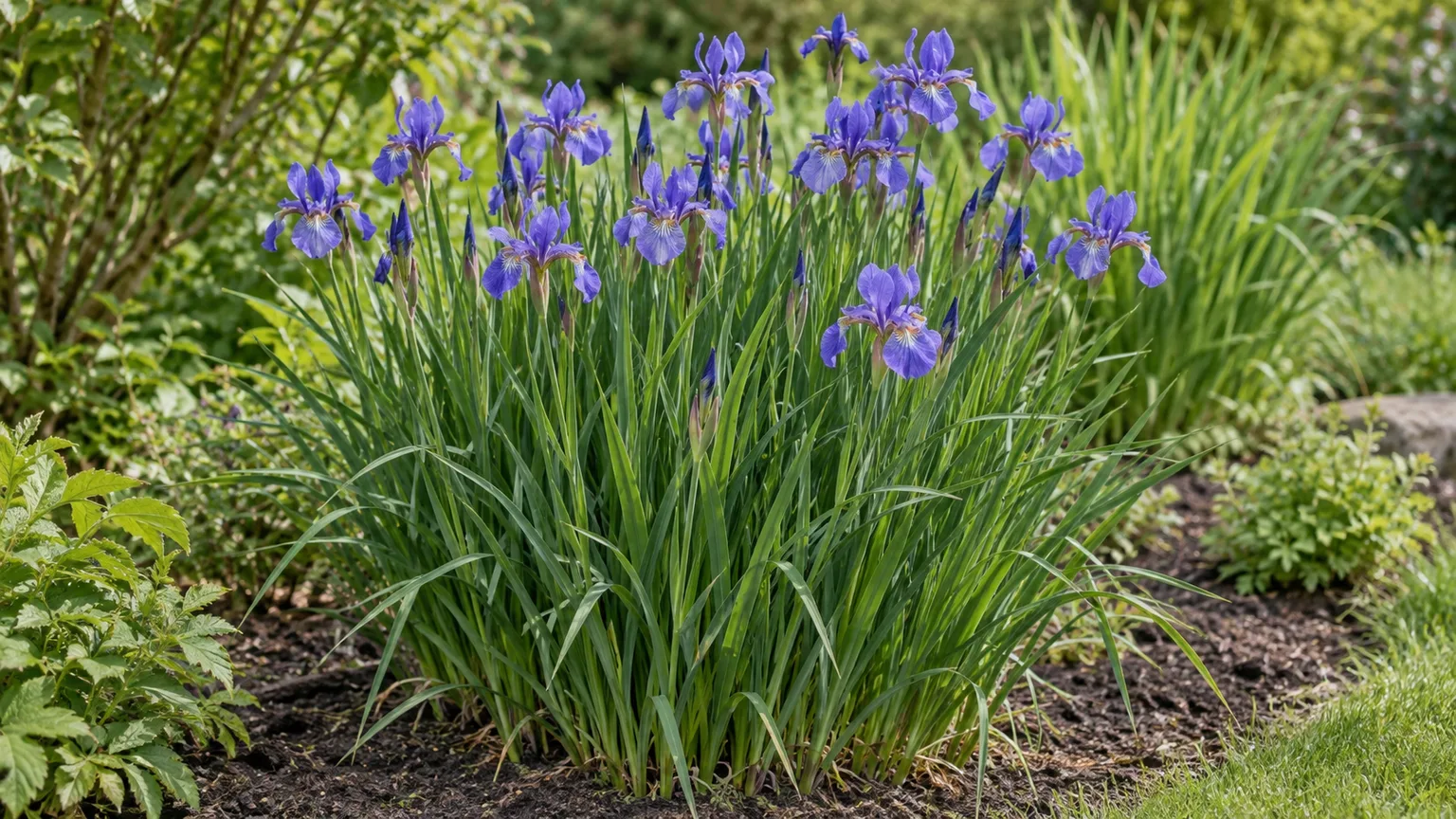
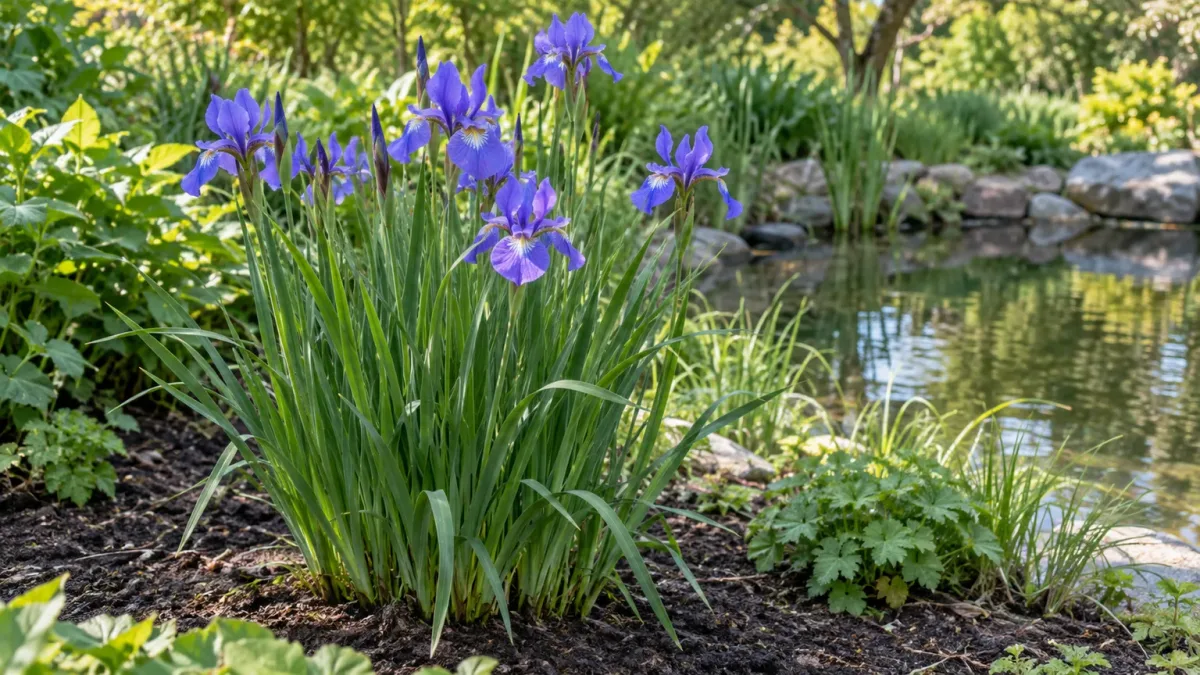
“Beardless” does not mean “bulb.” Siberian and Japanese irises are common beardless types that grow from rhizomes or clump-forming underground structures, but they are not planted exactly like a bearded iris. Their preferred moisture, planting depth, and division timing can differ. The University of Connecticut Extension iris guide describes beardless iris separately: Siberian types tolerate wetter conditions than bearded iris, while Japanese iris has its own soil preferences; its recommendations for beardless plants should not be replaced by the bearded-iris instruction to expose the rhizome.
For an established, potted Siberian or Japanese iris, plant when the soil is workable and the weather is mild enough for roots to establish—often in spring or early fall, depending on the plant and local climate. A bare-root division may be best moved during the type’s recommended dormant or post-bloom window. Some extension recommendations allow spring division for beardless clumps; others emphasize late-summer or fall. This is why a plant label, a regionally relevant extension guide, and whether the plant is actively growing matter more than a blanket rule for “all iris bulbs.”
Adjust the calendar to your local climate
After identifying the iris, use your seasonal conditions to narrow the window. A month can be a useful reminder, but the plant responds to root-zone temperature, moisture, and the remaining growing season—not to the name of the month. Your USDA hardiness zone gives a broad picture of winter lows; it does not tell you exactly when a local hard freeze arrives, whether your garden drains well, or how long an unusually hot summer will last.
Cold-winter regions need a root-building buffer
In a cold-winter climate, plant bearded iris rhizomes early enough that they can anchor before the ground freezes. Four to six weeks before the expected first hard freeze is a practical target from the American Iris Society. It is a buffer, not a guarantee: an early cold snap, unusually dry soil, a waterlogged bed, or a very late-delivered rhizome can reduce establishment time. If your local frost dates vary substantially from year to year, aim toward the earlier part of the recommended window rather than waiting for the final possible week.
For spring bulbs and newly shipped stock, remember that planting date is only one part of establishment. A healthy root system and undamaged planting material improve the odds, but late planting does not guarantee flowers the following season. When an iris arrives close to freeze-up, inspect it, follow the grower’s instructions for temporary storage, and plant as soon as the soil is workable if the stock is meant for fall planting. Do not leave bare roots exposed to drying wind or assume an unheated pot will protect them from deep freezing.
In regions with repeated freeze-thaw cycles, shallowly planted bearded rhizomes can heave upward before they have rooted. Firm the soil around the roots when planting and check the bed after winter weather. The American Iris Society notes that new roots help secure plants against heaving; a light, temporary winter cover may be useful in an exposed site, but do not pack damp mulch over bearded rhizomes throughout the growing season, when trapped moisture can promote rot.
Hot climates can push planting later
In a hot-summer climate, planting in the hottest, driest stretch can stress a newly divided rhizome. Wait for temperatures to ease if the plant can be held safely, or plant during the locally recommended post-bloom window and manage establishment moisture carefully. Clemson’s guidance extends its bearded iris planting window later near the South Carolina coast than inland, illustrating how milder autumn conditions can lengthen the season. It is not an instruction to plant at the same late date in a colder inland garden.
The goal is not to force growth during extreme heat or to keep the rhizome constantly wet. Choose a bright site with drainage, water to settle the roots, and then water as needed while the plant establishes. In very hot areas or very light soils, the American Iris Society says a small amount of soil can cover the rhizome, even though the usual bearded-iris practice is to leave the top visible. Follow the adjustment for your conditions instead of treating “exposed” as an absolute for every garden.
Spring planting is possible in specific situations
Spring is a reasonable planting time for some potted irises and for some types of beardless iris, especially when the plant is already actively growing and the ground is workable. The RHS notes that container-grown border irises can be planted across a broader season than bare rhizomes. Gardening Know How’s variety-by-variety overview also notes that some growers succeed with very early spring planting of Dutch iris bulbs, although fall remains the standard for most bulbous irises and midsummer to early fall is the usual range for bearded rhizomes.
Spring is not a magic repair for stock that has dried out, rotted, or been stored badly. Nor is it the best time to disturb a flowering clump simply because it is convenient. If a spring planting is unavoidable, select firm, healthy material, plant promptly, and accept that establishment or flowering may be slower or less predictable than for stock planted in its normal season. Potted plants that are already growing generally recover more readily than a bare-root division kept warm and dry for months.
Identify the underground structure before planting
Planting depth is where the word “bulb” causes the most expensive confusion. A gardener who plants a bearded iris rhizome several inches down like a tulip can end up with abundant leaves but weak flowering or a rotting base. Conversely, a true bulb left on the surface may dry out or fail to anchor. Take a moment to inspect the package, nursery tag, or plant itself before digging.
A bearded iris rhizome is a horizontal stem
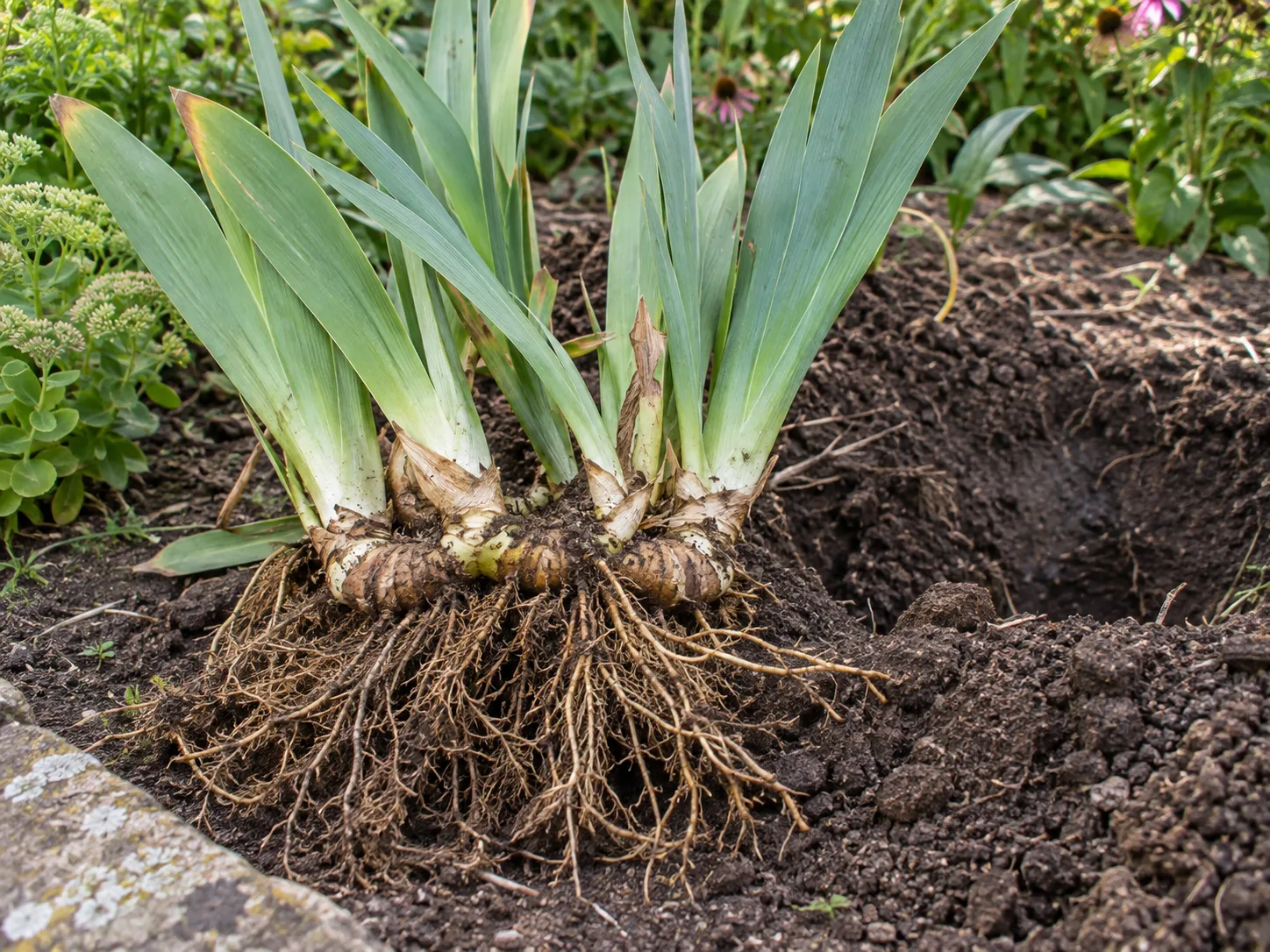
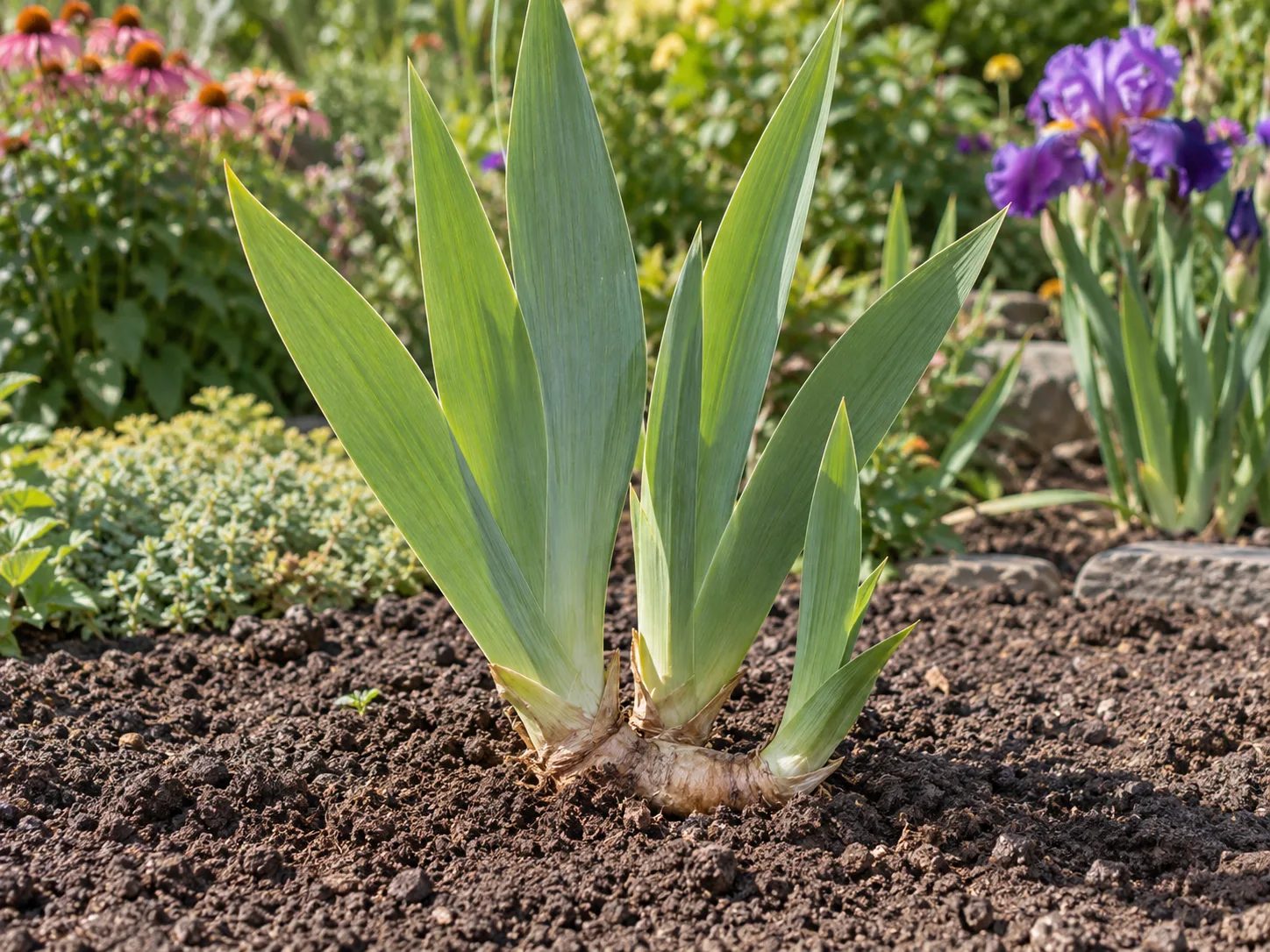
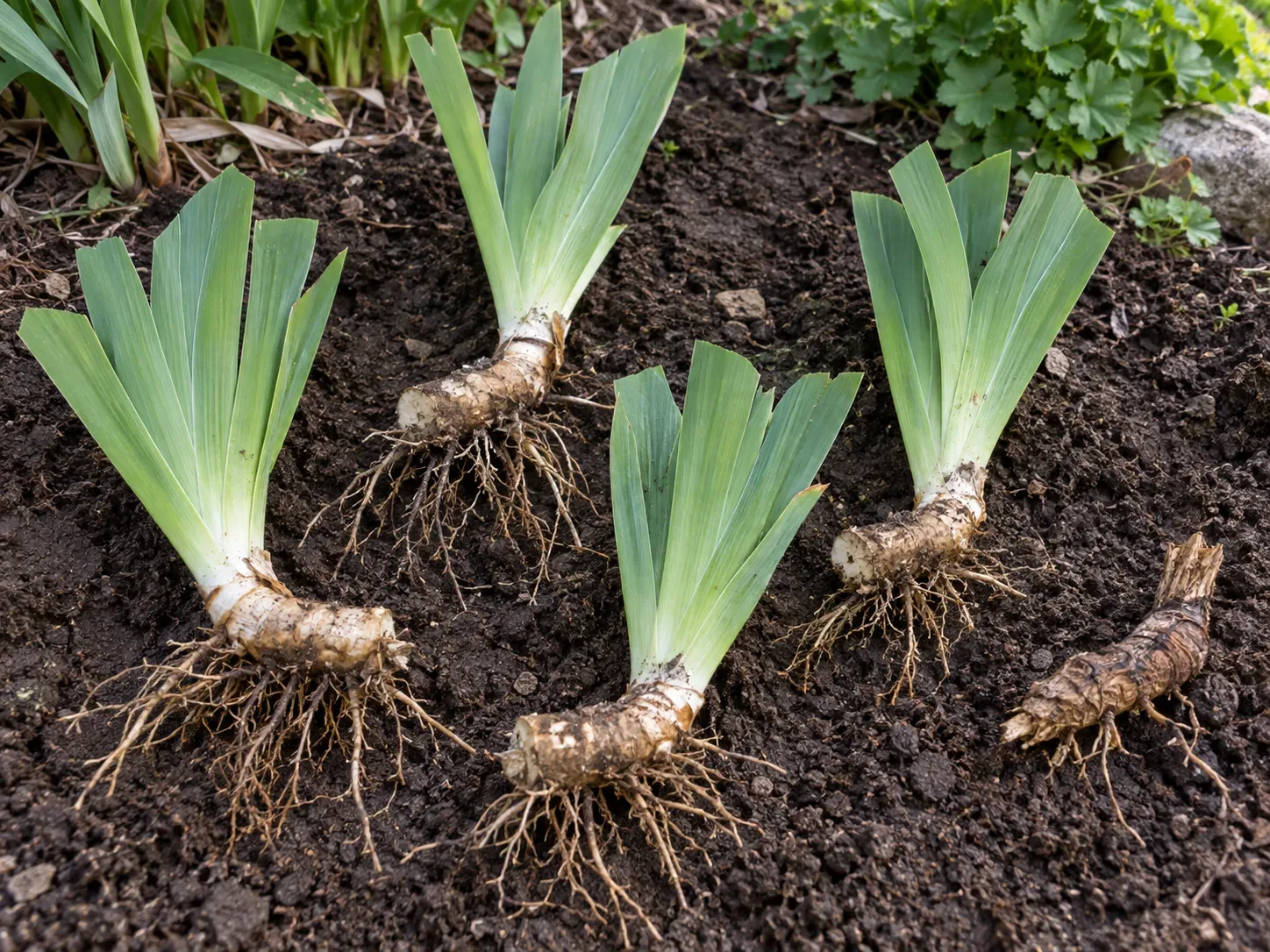
A bearded iris rhizome looks like a thick, knobby, elongated piece of stem with roots along its underside and a fan of leaves at one end. It grows horizontally and sends new growth outward. The American Iris Society and University of Illinois Extension both describe it as a modified underground stem, not a true bulb. That anatomy explains why the rhizome is positioned at or very near soil level, with its roots spread below it.
Many mail-order bare-root bearded irises arrive as a firm rhizome with trimmed leaves and roots. Look for a clear label naming a bearded iris or Iris germanica, and do not assume that every rhizome-like iris should be fully exposed: Siberian and Japanese irises are different garden groups. If a plant is unidentified, ask the nursery or a local extension service before deciding depth; leaf and flower shape can help, but the storage organ and species label are more dependable.
A bulbous iris has a true bulb
Dutch iris and Iris reticulata have compact, rounded bulbs rather than the elongated horizontal rhizome familiar from bearded iris. A healthy bulb feels firm and intact; its outer tunic may be papery or netted, especially in reticulated iris. Plant it according to the bulb’s size and cultivar instructions, with the pointed growing end oriented upward when it is clear which end is the top.
Some nursery descriptions use “bulb” casually for any underground iris stock. A seller may say “bearded iris bulb” even though the parcel contains a rhizome. If the item is a broad, fleshy horizontal section with a leaf fan, use bearded-rhizome guidance; if it is a small, rounded bulb sold in a fall packet, use bulbous-iris instructions. The RHS bulb guide also notes that “bulb” is sometimes used broadly for underground storage organs, including rhizomes, which explains the loose wording on labels.
Plant at the right depth once the date is chosen
Planting on schedule will not compensate for the wrong site. Most irises flower best with plenty of light and soil that suits their type. Bearded irises need especially good drainage around the rhizome, while Siberian, Japanese, and Louisiana irises tolerate or prefer more moisture than a typical bearded iris. Do not improve a heavy, wet bed by sprinkling grit into a small planting hole; change the bed structure, use a raised bed, or choose a naturally better-drained spot for the species.
Prepare a sunny site with drainage that fits the iris
For bearded irises, choose a place with at least six hours of direct sun and free-draining soil. Utah State University Extension recommends full sunshine and good drainage, noting that water held around bearded or crested iris rhizomes can lead to rot. A site can appear sunny in early spring yet turn shaded as a tree leafs out; assess the hours of light during the iris’s growing season, not just when the bed is empty.
Beardless types need a site matched to the species. Siberian iris is more tolerant of damp soil, while Japanese iris is commonly grown in moist but not stagnant conditions; other irises prefer a drier summer rest. Add compost to improve soil structure when appropriate, but avoid fresh manure and heavy fertilizer in direct contact with the planting material. Where tall iris flowers face strong wind, a sheltered position can help prevent stems from leaning, but do not sacrifice the light or drainage the plant needs.
Set rhizomes shallowly and spread roots downward
For a bearded rhizome, loosen the soil and make a low mound. Set the rhizome horizontally on it, point the leaf fan in the direction you want the plant to grow, and spread the roots down and outward on both sides. Backfill around the roots so the rhizome is at soil level or only lightly covered. In most conditions, the upper surface should remain visible; in extreme heat or very light soil, a thin cover may help keep the plant from drying.
Water after planting to settle soil around the roots, not to turn the bed into a soggy basin. If you are planting a group, leave enough room for each division to increase and for air to move around the foliage. A crowded, shaded clump can decline even if you choose the right planting month. Avoid burying the rhizome under thick mulch, which can keep it too damp and obscure the surface position you need to monitor.
Plant true bulbs at the depth on the species guidance
For a Dutch or reticulated iris bulb, make a hole or trench at the depth listed on the packet or a reliable species guide. The RHS recommends planting bulbs promptly after purchase and gives species-specific guidance for bulbous types; its reticulated iris guidance notes deeper planting can encourage more reliable reflowering in that UK context. In North America, follow the instructions supplied for the cultivar rather than importing an exact depth from a different climate and soil.
Space bulbs according to their mature size and the effect you want. A close group makes a stronger patch of color, while a wider spacing leaves room for surrounding perennials. Water once after planting if the soil is dry, then let drainage and rainfall guide subsequent care. The dormant period does not mean bulbs should sit in standing water; cold, wet soil is a common reason a fall-planted bulb fails.
If the ideal window has passed
First identify the stock and check the soil. If the ground is still workable and your region has several weeks before a hard freeze, plant the iris now using its correct depth and drainage requirements; a missed ideal week is not automatically a lost plant. The farther you are beyond the local planting window, the less certain establishment and next-season flowering become, especially for freshly divided bearded rhizomes.
If the ground is frozen or saturated, do not force a bulb or rhizome into a hole that will fill with water. Follow the supplier’s storage directions for dormant stock and plant when conditions permit; these directions differ by type, so avoid storing all iris material the same way. If you have a potted iris, protect the root ball from hard freezing while avoiding a warm indoor location that encourages weak growth. Ask the grower or local extension service for advice if the plant is actively growing or the stock has started to sprout.
When a healthy iris arrives in spring, it is often better to plant it than to keep it in packaging until fall, provided you can meet its growing needs. Expect the first season to be about establishment rather than a guaranteed full show. If you have missed the window for a bearded rhizome in a very cold area, holding it correctly until the next window may be safer than leaving it exposed in a pot through a harsh winter—but use supplier-specific instructions because dry-storage tolerance varies by stock.
What to expect after planting
A well-timed planting can still take time to settle. New roots may establish before much visible top growth, and a newly divided bearded iris may bloom lightly or not at all in its first season. The University of Illinois Extension notes that rhizomes need a period after flowering to mature before division; the American Iris Society explains that new roots help anchor late-summer plantings. Do not respond to a quiet first year by immediately digging the plant up again.
Keep the soil evenly moist while new roots establish, then adjust to the iris type and local rainfall. “Evenly moist” is not the same as saturated: the soil surface may dry between waterings, particularly around bearded rhizomes. Remove weeds that compete with young divisions, keep the label in place, and note the planting date. If an iris fails to flower later, reassess sun, planting depth, drainage, and crowding before adding fertilizer or dividing it again.
Conclusion
For the common bearded iris, plant the rhizome after summer bloom, usually from midsummer into early fall, and aim for at least four to six weeks before the first hard freeze. For true Dutch and reticulated iris bulbs, choose fall while the soil is still workable; for Siberian, Japanese, and other beardless types, use the schedule and depth for that particular iris. Identify the plant first, then let local weather and soil conditions set the date. That simple check prevents the most common mistake: treating every iris as the same kind of “bulb.”