When to Pick Spaghetti Squash: Is It Ready Right Now?
Learn when to pick spaghetti squash from ripe color, a hard rind, and days to maturity, plus what to do if frost or a fading vine changes your harvest plan.
The short answer: pick when fruit cues agree
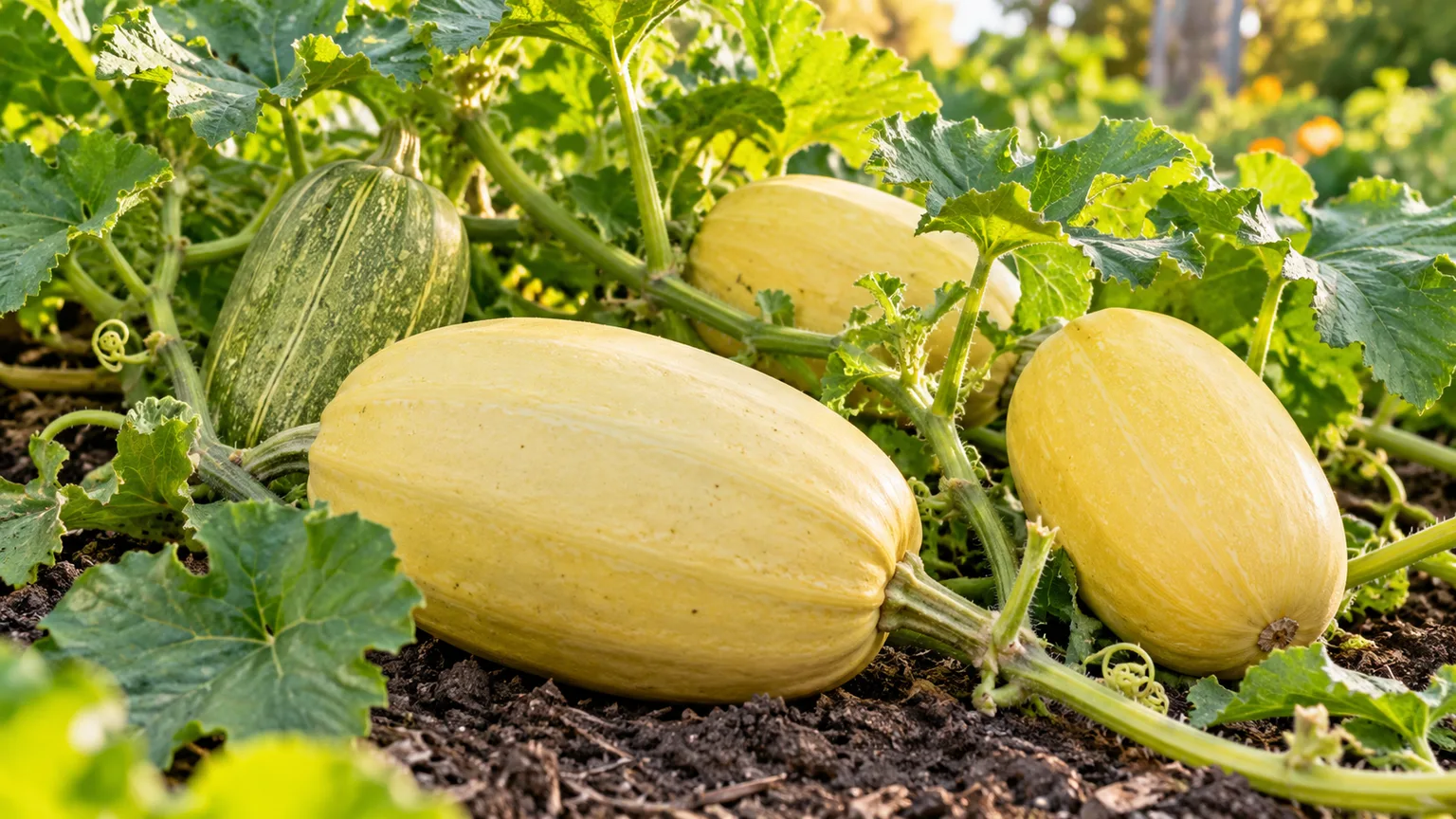
Pick spaghetti squash when the fruit has reached the mature color for its variety and its rind has become hard enough to resist a light thumbnail press. A drying stem and the crop’s expected maturity window support that judgment, but neither a brown vine nor a calendar date can prove a squash is ripe on its own. Harvest ripe fruit before a hard freeze, and handle it gently because bruises and a broken stem can shorten storage life.
Spaghetti squash is a winter squash, which means gardeners leave it on the plant until its rind and flesh mature rather than picking it tender like zucchini. The variety determines whether its mature rind is creamy yellow, deep yellow, or a different cultivar-specific shade, so compare the fruit with the packet or catalog description instead of expecting one exact color. Once you know the intended color, the fastest reliable decision is to look for agreement between that color and a firm rind; stem and timing are useful cross-checks.
A ripe squash does not have to be left outside until the whole plant looks dead. Nor does a yellow patch alone mean it is ready. If the fruit is still green or pale for its variety and the rind yields easily, leave it attached while the vine remains healthy and the forecast is safe. Check again in several days. If the fruit is already mature and a hard freeze is approaching, cut it rather than gambling on one more warm afternoon.
How to read spaghetti squash ripeness cues together
No single sign works equally well in every garden. The fruit itself tells you most: color reflects the cultivar’s maturity pattern and rind resistance shows that the protective outer layer has formed. Stems and vine condition can corroborate the fruit clues, while size and elapsed days mainly tell you when to start checking. Use the table as a hierarchy, not a checklist that every squash must pass perfectly.
| Cue | What to look for | How much weight to give it |
|---|---|---|
| Rind color | The variety’s mature yellow, cream, or tan shade across most of the fruit | High when matched to the cultivar; low if judged against a generic color rule |
| Rind firmness | A light thumbnail press does not leave a dent or puncture | High; do not gouge the fruit to test it |
| Stem and nearby tendril | The fruit stem is drying or becoming corky; the closest tendril may also brown | Supporting evidence; disease or drought can brown them early |
| Size and weight | Fruit looks full-sized for the cultivar and feels substantial | Supporting evidence only; fruit size varies with variety and growing conditions |
| Days to maturity | Seed-packet estimate or roughly seven to eight weeks after fruit set | A check-in reminder, not a harvest command |
| Vine appearance | The plant is naturally nearing the end of its season | Weak by itself; disease, heat, or water stress can kill vines before fruit matures |
Color and surface sheen
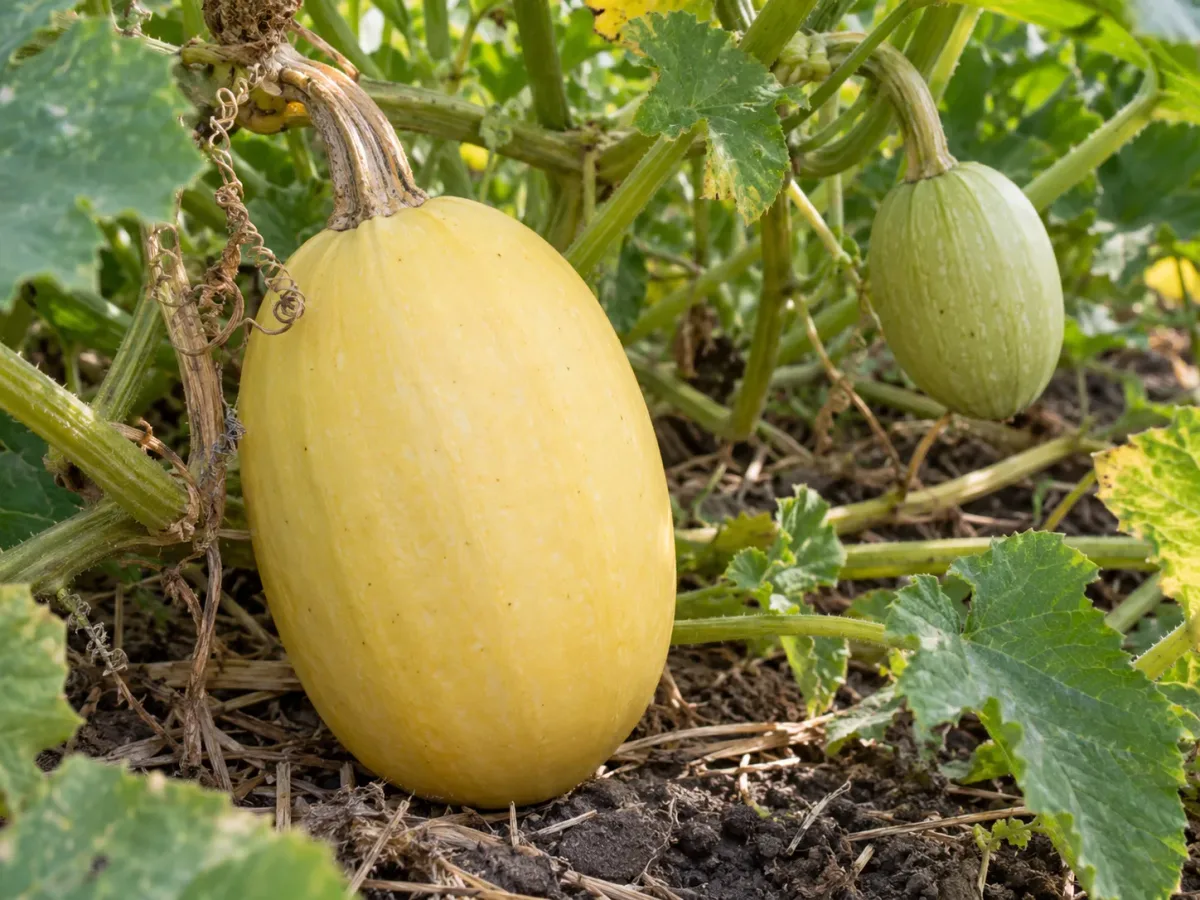
Most spaghetti squash changes from green to pale or ivory and then toward cream or yellow as it matures. A fruit that has developed the variety’s mature color over most of its skin is a stronger candidate than one that is still mostly green, but colors differ among cultivars and descriptions. Look up the particular variety if you still have the seed packet; photographs from that supplier can also help you distinguish its mature shade from a transitional stage.
Surface appearance adds context. A mature rind often looks less glossy and more matte or dry than the shiny skin of a rapidly growing young fruit. This mature-versus-shiny comparison also appears in practical guidance from Harvest to Table, but cultivar color still needs to be judged by variety. Do not treat sheen as a test by itself: dust, rain, shade, and cultivar differences change how reflective a squash looks. A dull fruit that is still green and easily marked is not ready just because it lacks shine, and one slightly glossy fruit may be close but should be checked for firmness and variety-appropriate color.
The side resting on soil can develop a lighter or differently colored “ground spot.” That area is useful for some squash types, but it is not a universal spaghetti-squash requirement. Do not roll a heavy fruit roughly to inspect its underside; support it and look only if the position allows. Cornell Cooperative Extension notes that ground-spot color is helpful for certain winter squash, while spaghetti squash readiness is more specifically associated with its yellow-tan color and careful handling (Cornell Cooperative Extension).
Rind firmness and the thumbnail check
A firm rind is one of the most useful direct clues because winter squash needs a hardened shell to protect the flesh after harvest. Press your thumbnail gently against an inconspicuous spot. If it slips without making a dent, the squash is closer to mature; if it sinks easily or punctures the skin, the fruit is immature and should stay on a healthy vine if weather permits. This is a light press, not an attempt to cut through the rind.
The fingernail check can leave a wound if you press too hard. Use one small test and do not repeat it in several places, especially if you intend to store the squash. A tiny puncture becomes an entry point for decay and cannot be undone by curing. If color and hardness disagree—for example, the rind is yellow but still soft—give the fruit more time when the vine is healthy and temperatures allow. If frost is near, harvest the most mature fruit first and accept that a less mature one may not store well.
University of Alaska Fairbanks Cooperative Extension describes a hard, tough rind as a sign of full maturity and warns that a tender rind indicates immaturity and poorer eating quality. That general winter-squash rule fits the practical test, but the visible target color still needs to match spaghetti squash rather than another variety (UAF Cooperative Extension).
Stem, tendril, and vine condition
The short fruit stem—also called the peduncle—often starts green and fleshy, then dries, toughens, or becomes corky as the fruit matures. A dry stem is a helpful supporting sign, particularly when the squash has also reached its expected color and the rind is firm. Do not wait for it to become brittle and detached: spaghetti squash can be vulnerable to storage decay, and leaving an already mature fruit exposed to wet weather does not improve it.
A tendril near the fruit may dry as the squash approaches maturity, but it is not a precise timer. Tendrils and vines can yellow or brown because of heat, drought, disease, or insects. Cornell’s crop guidance specifically cautions that a declining vine does not automatically mean the fruit is mature; if disease has killed the plant, an already reasonably mature squash may be better harvested than left among wet foliage and fruit-feeding pests. Read the fruit first and use vine condition to understand whether you still have a living plant that can finish the job.
The reverse is also true: a still-green stem does not always prove a fruit is immature. Different fruit on the same sprawling plant can mature at different rates, and stems can remain green while the rind color and firmness are already close. Inspect each squash separately instead of harvesting the whole vine in one pass. That small habit is especially valuable when one fruit is shaded under leaves and another is exposed to sun.
Size, weight, and the calendar
A full-sized squash that feels heavy for its size has usually developed more flesh than a small, newly set fruit, but size is a supporting clue rather than a finish line. Spaghetti squash varieties differ substantially in mature weight, and drought, crowding, pollination, and growing conditions can change fruit size. A smaller fruit can still be mature; a large fruit can be green and soft. Compare with the cultivar description, then check rind and color.
Gardeners often see a rough target of about 50 to 55 days after fruit set for winter squash, while seed-packet estimates for spaghetti squash can vary from around 85–100 days or more depending on the cultivar and how the seller counts. These estimates point to when you should begin frequent checks, not an automatic picking date. A newly pollinated fruit may stop growing if the vine is stressed, and a cool or cloudy season can slow the crop even if a date on the calendar has passed. Johnny’s Selected Seeds separates harvest indicators by squash type and recommends judging spaghetti squash by mature deep yellow color alongside broader timing guidance (Johnny’s Selected Seeds).
Why days to maturity is an estimate
Seed packets use “days to maturity” as a planning estimate, but check the packet’s wording: some crops count from direct sowing, while others describe days from transplanting. In either case, the number assumes a reasonably favorable growing season and does not account for every interruption. The variety, local temperatures, planting date, pollination date, water stress, disease, and whether the plant was transplanted can shift the real harvest window.
For a useful field record, write down when you sowed or transplanted, then mark when each fruit begins to enlarge after flowering. A tag or short note beside the plant helps you compare fruit without counting every day from memory. Start inspecting fruit as the expected window approaches, and repeat the check every few days once color begins to change. The combination of fruit set and a visible color transition is more useful than counting backward from a generic September date.
Sources do not always frame the timeline in the same way: one gardening guide may estimate days from seed, while another counts from fruit set or gives a cultivar range. Those numbers are not necessarily contradictory; they start at different points and describe different cultivars. Treat all of them as a window for attention, then let the actual rind decide. If you garden in a short-season region, checking the packet before planting helps you choose a variety with enough time to mature before your normal frost window.
When frost, disease, or a damaged vine changes the plan
Spaghetti squash benefits from ripening on a healthy vine, so harvest it before a hard freeze rather than routinely picking it while green. A hard freeze can damage the fruit, and frost can kill the leaves that would otherwise keep feeding it. Watch the local forecast instead of relying on a national harvest month: autumn arrives at different times by region, elevation, and year. If your fruit is mature, pick it ahead of freezing weather even if the stem has not completely dried.
A light frost forecast is not the same as a hard freeze, but it can still damage foliage and leave fruit more exposed. If the squash is already mature, do not postpone harvest simply to wait for the stem to turn brown. If it is still green and the vine is healthy, a brief delay may help it finish, but weigh that against the forecast and the ability to cover the plant. Do not assume a picked green fruit will become identical to a fully vine-ripened one indoors.
Disease or sudden vine collapse changes the calculation. A yellowing vine can indicate natural senescence, but angular lesions, powdery growth, insect feeding, or a sudden wilt can signal a problem rather than normal maturity. If the fruit is still substantially green and soft, it has not become mature just because its leaves died. Still, once the vine cannot support further ripening, leaving fruit on wet soil may expose it to rot and sunscald; harvest firm, nearly mature fruit carefully and plan to use it sooner rather than counting on long storage. Cornell Cooperative Extension also notes that fruit from dead vines will not continue to mature in the field without living leaves and may be more vulnerable to weather and pests.
If a fruit has a small, superficial blemish but otherwise looks mature, harvest it and set it aside for earlier use. A soft, sunken, wet, or moldy area is different: that fruit is a poor candidate for curing and long storage. Keep questionable fruit separate from sound squash, and do not store a wet fruit pressed against others. The goal under late-season pressure is to save the best fruit without pretending that every damaged or immature squash can be rescued.
How to cut and carry spaghetti squash without bruising it
Choose a dry part of the day if you can, especially after dew has lifted. Use sharp, clean bypass pruners or a sturdy harvest knife, and support the squash with one hand while making the cut with the other. Leave roughly 2 to 4 inches of stem attached when there is room; a short, intact handle protects the stem scar, but an excessively long stem can puncture neighboring fruit in a basket.
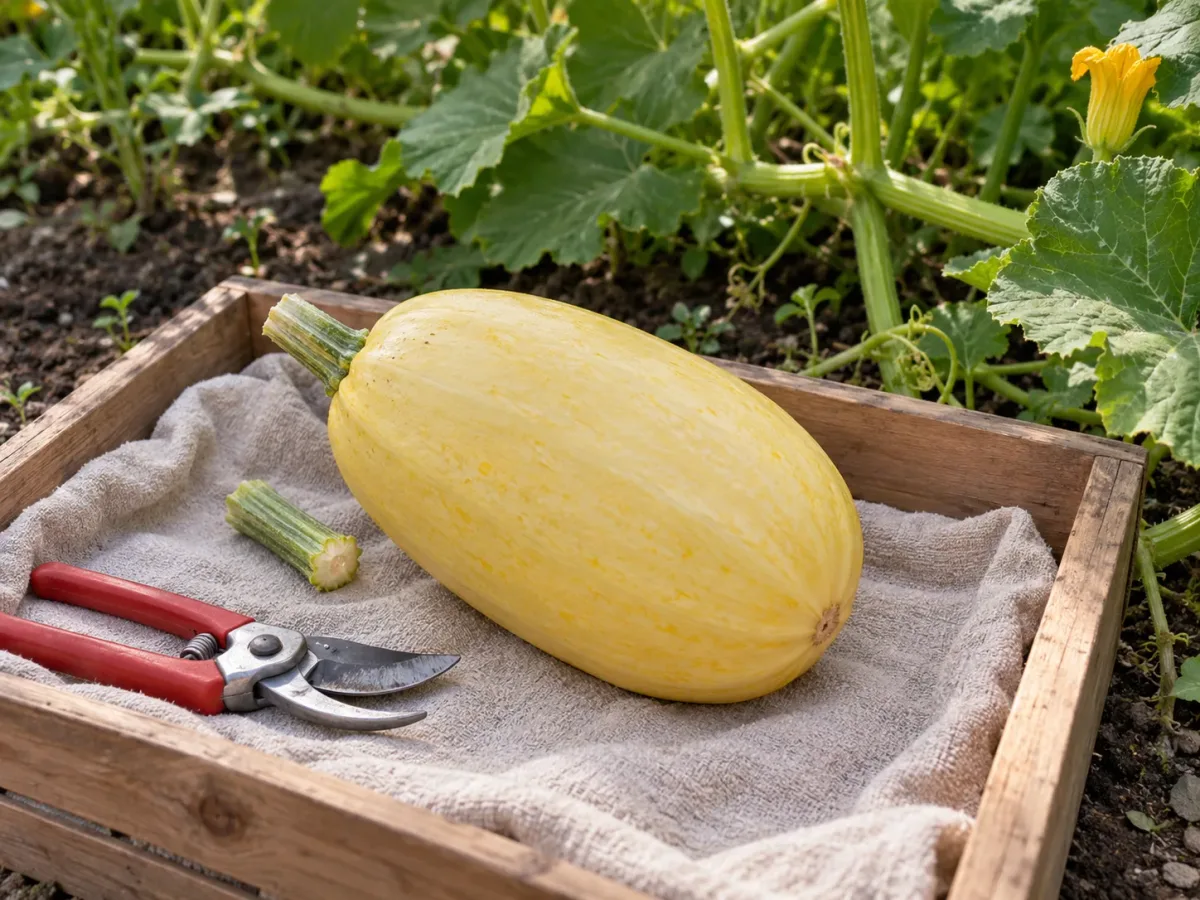
Never twist, yank, or pull the squash off the vine. The stem can tear away flush with the rind, and that open wound shortens storage life. Cut through the stem cleanly without slicing into the fruit, and place the squash in a padded basket or crate rather than dropping it. Carry it by supporting its body, not by the stem. Winter squash can bruise even when its rind feels tough; Cornell Cooperative Extension emphasizes gentle handling because bruising and small wounds encourage breakdown during storage.
If a fruit is dirty, brush away dry soil after harvest. Avoid washing it before curing or storage because water left around the stem scar or in a scratch creates unnecessary moisture. If you harvested a squash while wet, pat it dry with a clean towel and let the surface air-dry before it goes into a curing area. Do not scrub off the natural rind surface or apply a household cleaner; a clean cut, dry surface, and careful handling are more useful than aggressive washing.
A squash that has lost its stem is not automatically inedible, but it is more vulnerable where the stem broke. Mark it as “use first,” keep it apart from long-keeping fruit, and inspect the wound regularly. Likewise, fruit with a shallow scrape should be eaten earlier than a flawless squash. A good harvest is not only about choosing the right day; it is about keeping a ripe fruit intact from vine to shelf.
Cure spaghetti squash carefully before storage
Curing is a short, warm, well-ventilated holding period after harvest. For winter squash, it helps dry the stem end and toughen the rind, which can improve keeping quality; it cannot turn a truly immature fruit into a fully mature one or repair a deep cut. Recommendations vary by source and conditions. Johnny’s Selected Seeds and UAF Cooperative Extension give warm curing guidance around 80–85°F for roughly a week to 10 days, while trusted gardening advice also describes shorter warm, dry periods. For a home batch of spaghetti squash intended for storage, use the shorter end only if the surface is dry and conditions are warm with good airflow; otherwise allow about 7–10 days and watch the fruit.
Set each squash in a single layer on a dry shelf, rack, or cardboard with space around it. Choose a warm room or sheltered curing space that does not trap humidity; do not stack fruit, leave it on damp ground, or place it next to a heater that blows hot air directly onto the rind. In a warm climate, a shaded, airy porch may work if nights stay frost-free and rain cannot reach the fruit. In cool or wet weather, use a dry indoor area with ventilation instead of trying to cure it outdoors in direct sun.
Check the squash every day or two during curing. A firm, dry surface is what you want; if condensation, persistent dampness, or a new soft spot appears, move the fruit to a drier, better-aired place and use compromised squash first. Curing can help the stem area dry, but it is not a disinfectant and does not make a cut or rot harmless. Do not leave curing squash in a sealed plastic tub or a humid room with no air movement.
If you plan to cook the fruit within a few days, you do not need to create a perfect commercial curing room. Keep it dry and unbruised at room temperature, then cook it. Curing matters most when you want to store sound, mature squash for weeks or months. Different squash types have different curing needs, so do not blindly copy a schedule for a thick-skinned Hubbard or butternut to every crop; spaghetti squash is usually best used earlier in the winter-squash lineup.
Store spaghetti squash and inspect it regularly
After curing, move sound fruit to a cool, dry place with steady air circulation. A pantry, ventilated basement, or frost-free garage can work if its temperature stays fairly stable and the squash is not exposed to dampness or freezing. Extension and grower sources give somewhat different winter-squash temperature targets: UAF lists 45–50°F, while Cornell and Johnny’s recommend around 55–60°F and caution that prolonged temperatures below 50°F can cause chilling injury in some squash. A practical home target is a stable, cool space around 50–60°F, leaning toward the middle of that range rather than a refrigerator or an unheated space that may freeze.
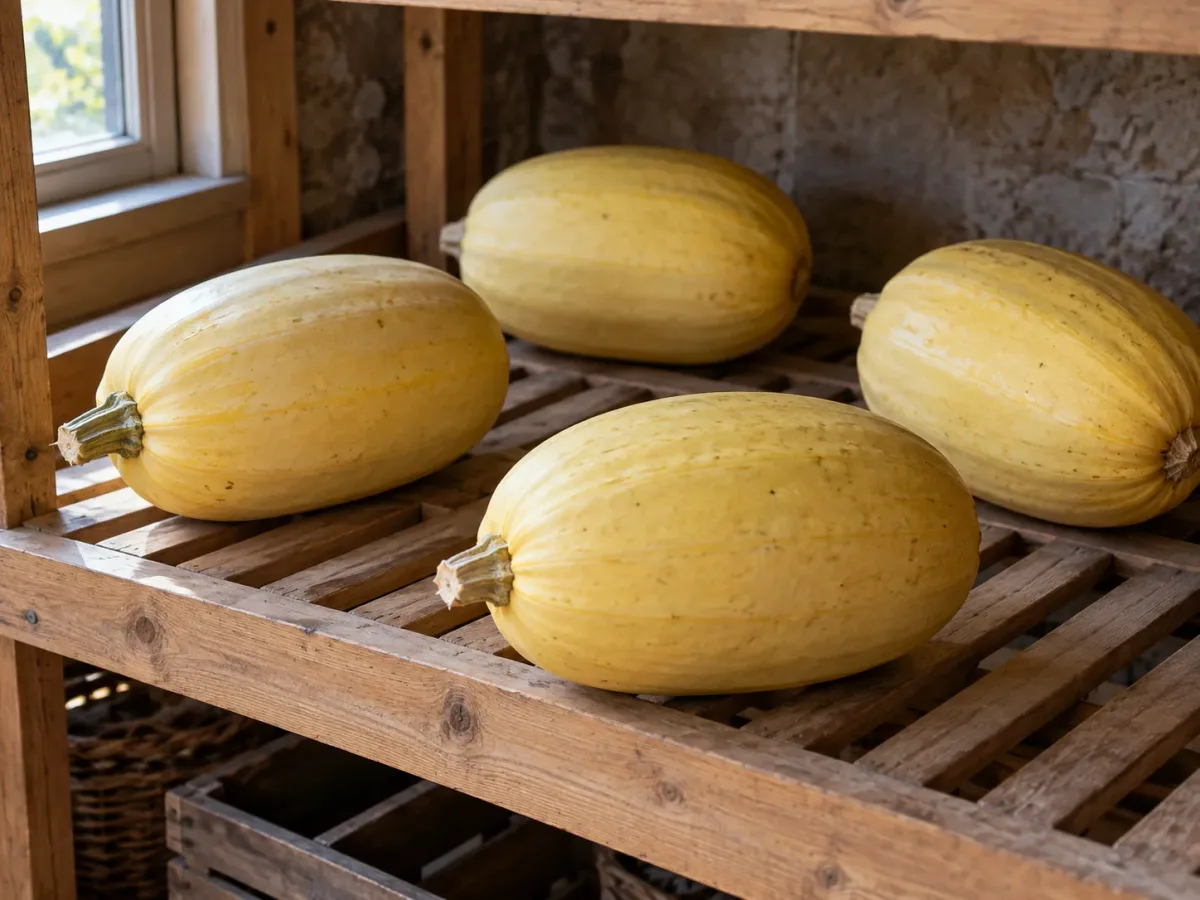
Lay fruit in a single layer on a shelf, slatted rack, or cardboard, with a little space between squash so air can move around each one. Keep the stem ends from pressing into neighboring rind. Do not put the whole harvest in a damp cellar corner, sealed bin, or pile on concrete. Very humid conditions encourage decay, while excessively dry storage can cause moisture loss and shriveling. If your house is warm, your squash may not last as long; use it sooner rather than forcing an unsuitable storage spot.
Under good conditions, spaghetti squash often keeps for roughly two to three months, but that is a range rather than a promise. Cultivar, maturity, stem damage, curing, and room conditions all affect storage life. A fully mature squash with an intact stem and rind has the best chance. Johnny’s Selected Seeds lists spaghetti squash among the types to use within about two months for peak eating quality, while other gardening guidance describes up to three months in suitable storage (Savvy Gardening; Johnny’s Selected Seeds). Plan meals around the shorter estimate if you do not have a consistently cool storage area.
Inspect stored squash weekly. Look for soft or sunken patches, leaking moisture, mold, or a stem scar that is beginning to collapse. Move a suspect fruit away from the others and use sound fruit first; discard fruit that is extensively rotted or smells spoiled. A single bad squash should not sit against the rest of the harvest for weeks. Keep a simple harvest date on a paper tag near the shelf, then use the oldest undamaged fruit first.
If you picked it early or a freeze caught it
A picked squash can change color somewhat in a warm, bright place, but detachment stops the vine’s supply of water and sugars. The more mature it was at harvest—the more yellow or tan the rind and the closer it was to becoming firm—the better its chance of finishing its appearance off the vine. It may still not develop the same flavor, texture, or storage life as a squash that matured on the plant. Homes & Gardens notes that a near-ripe squash may finish some color indoors, while green fruit is better treated as an immature crop rather than assumed to be winter-ready (Homes & Gardens).
For a nearly mature fruit harvested before frost, keep it dry and warm at ordinary indoor temperatures with the paler side exposed to light, turning it occasionally if needed. Avoid baking it in strong window sun or setting it on a hot radiator; warmth cannot replace the vine, and overheating can damage it. Check daily for soft spots or decay and cook it sooner if it begins to deteriorate. Do not put a very green, soft squash into long-term storage and expect curing to solve the maturity gap.
Can green spaghetti squash ripen indoors?
A green squash may yellow slightly indoors if it was already close to maturity, but indoor color change is not proof that its rind hardened or its flesh developed fully. If the fruit was picked early because a freeze was imminent, keep it in a warm, dry spot and reassess firmness; use it promptly if it stays soft or green. For future seasons, record the cultivar and planting date, then count forward only as a reminder to begin checking—do not wait until a forecast hard freeze to test the fruit.
Can you eat an immature squash?
A firm, sound but under-ripe spaghetti squash can be cooked, although its texture may be less stringy and its flavor less developed than mature fruit. Use it soon instead of curing it for long storage. Homes & Gardens describes green spaghetti squash as edible when cooked like other summer squash, but emphasizes that it will not taste like fully ripe fruit. If the squash is watery, badly bruised, cracked, or rotting, do not try to preserve it as a winter squash.
Common harvest mistakes that shorten storage life
The most common mistake is trusting one dramatic clue. Brown leaves may reflect disease; a tan stem can dry before the fruit reaches its best maturity; a large squash may still have a soft rind; and a seed-packet date may not account for the weather you actually had. Ask three questions about each fruit: has its variety-appropriate color arrived, does the rind resist a gentle press, and is there a weather or vine reason to pick it now? If the first two are yes, harvest. If they are no and the plant is healthy, wait and check again soon.
Another mistake is leaving mature squash on the ground through rain because the stem is not completely brown. Spaghetti squash can be susceptible to postharvest rot, and waiting for a perfect peduncle may add little once color and hardness agree. Lift it gently, avoid bruising, and keep it out of wet patches. Conversely, do not rush every green squash into a shed at the first cool night: cool weather is a cue to check the forecast and inspect the fruit, not proof that the harvest is ready.
Do not cut the stem flush with the rind, carry the fruit by its stem, or pile several squash in a deep bucket where their weight presses them together. Do not wash and store wet fruit, cure it in a closed plastic box, or assume that curing can repair freeze injury. Each choice creates a weak point—an open scar, bruise, trapped moisture, or damaged rind—that can reduce storage life even when the squash was picked at the right stage.
Conclusion
Pick spaghetti squash when the rind has reached its cultivar’s mature color and resists a gentle thumbnail press; use a drying stem, nearby tendril, full size, and days from planting or fruit set as supporting clues. Harvest mature fruit before a hard freeze, but do not mistake a diseased or dead vine for proof that every squash is ripe. Cut with a clean tool, leave a short stem, carry the fruit by its body, and cure only sound fruit in a warm, dry, ventilated place before storing it cool and checking it weekly.