When to Apply Crabgrass Preventer in Spring: Soil Cues
Find when to apply crabgrass preventer by tracking local soil temperature, regional timing, and seeding plans—and learn what to do if weeds are already up.
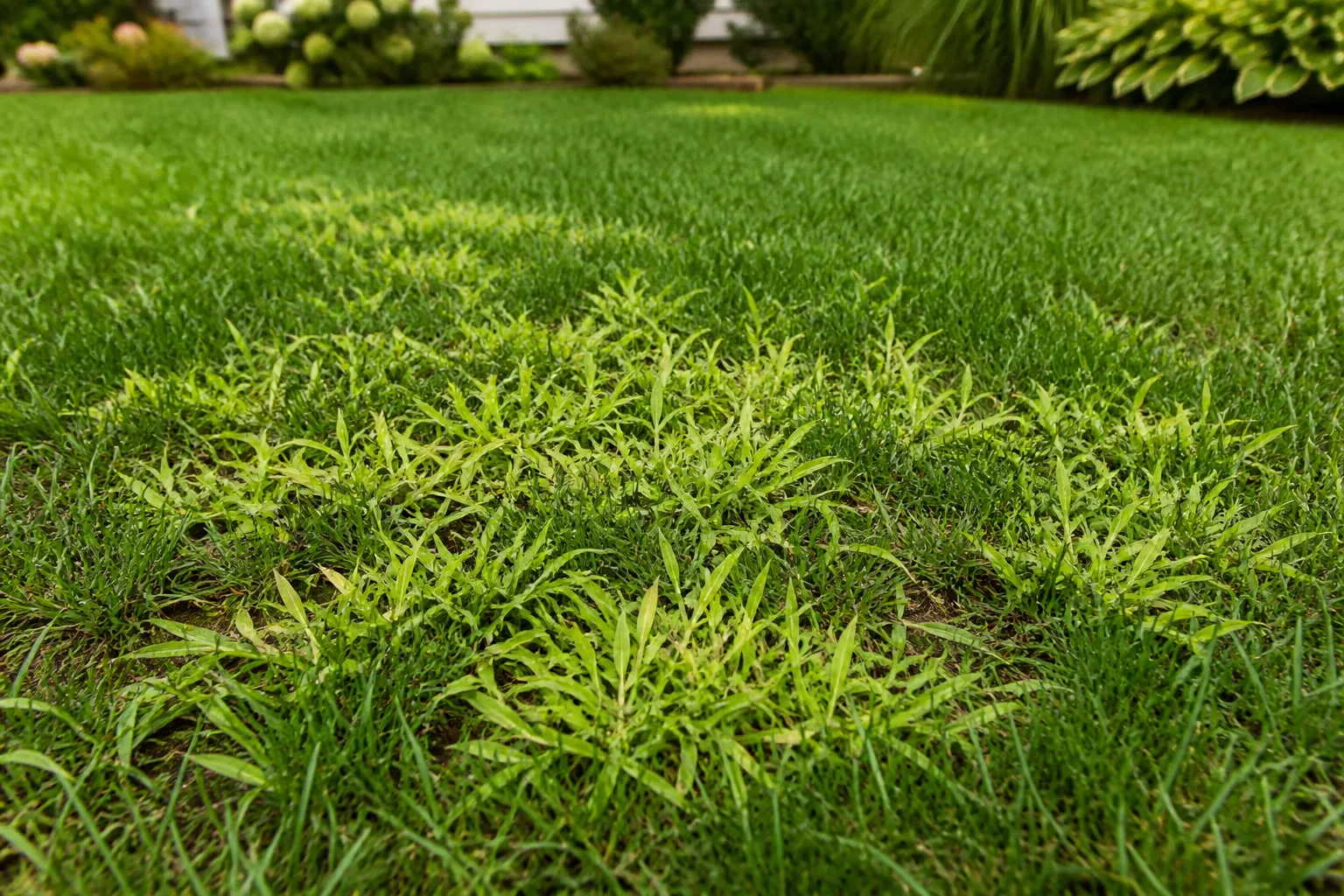
Apply crabgrass preventer before crabgrass seeds begin to germinate, using local soil temperature—not a date on the calendar—as your cue. Start monitoring when spring soil begins warming; aim to treat before the upper inch of soil stays in the mid-50s for several days. The precise threshold varies with measurement method and local conditions, so a single warm afternoon is not a reliable signal.
For a typical lawn, that means an earlier application in warmer southern areas and a later one in northern or high-elevation areas. The practical sequence is simple: check your local extension timing, take several consistent soil readings, confirm the product is safe for your turf and schedule, then apply and water it only as its label directs. If crabgrass is already green, a preventer may still block later seedlings, but it will not remove the plants you can see.
The right window: before crabgrass germinates
Crabgrass is a summer annual. Its seeds overwinter in the soil, then begin to germinate as spring soil warms and moisture is available. A pre-emergent herbicide creates a treated zone near the soil surface that interferes with susceptible seedlings as they develop; it does not erase the seed bank, and most products are not a cure for established plants. Penn State Extension identifies spring pre-emergence treatment as the most effective chemical control for established turf when timing is right, while also emphasizing that dense turf and good lawn management reduce the weed’s foothold (Penn State’s crabgrass guidance).
The useful target is before the first germination wave, not “early spring” in the abstract and not a particular mowing number. Penn State recommends applying roughly 10 to 14 days before the earliest expected germination period. In its regional guidance, seeds begin germinating when the upper inch of soil reaches about 55 to 58°F at daybreak for four to five days, provided moisture is adequate. NC State TurfFiles describes a similar trigger using a different measurement: a 24-hour mean soil temperature of about 54 to 55°F for three to four consecutive days (NC State Extension TurfFiles).
Those readings are close, but they are not interchangeable because one refers to a dawn reading and the other to a daily mean. For a homeowner, treat sustained soil temperatures in the mid-50s as a warning that germination may be starting—not as a signal to wait another week. If the product label and local extension calendar indicate that the window is near, apply before the threshold is sustained. Germination continues over a stretch of spring and early summer, so a single application cannot guarantee that no crabgrass will appear all season.
Use soil temperature, not a fixed calendar date
A calendar date is a planning prompt; it is not a reliable lawn-level measurement. The same metro area can have a sunny, south-facing strip that warms quickly and a shaded, north-facing section that stays cool. Soil moisture, shade, wind exposure, nearby pavement, and elevation all affect how quickly a particular patch warms. Lawn Phix also calls out the difference between warm pavement edges and cooler shaded turf in its practical timing guide, a useful reminder to check the lawn rather than assume every part of it has the same spring (Lawn Phix’s crabgrass timing guide).
How to measure the temperature that matters
Use a soil thermometer and take readings at a consistent depth and time. A practical home routine is to measure about one inch below the soil surface early in the morning, before direct sun heats the probe area, and repeat in a few representative places for several days. LawnStarter describes a similar method using readings one to two inches deep over successive days; the important part is to use a consistent depth and look at the trend instead of reacting to one spike (LawnStarter’s application guide).
Check at least one open, sunny area and one cooler or shaded area. If crabgrass has repeatedly started beside a driveway, walk that edge separately because pavement can warm the soil sooner than the center of the lawn. Record the readings rather than relying on memory. If a regional soil-temperature map or growing-degree-day tracker is available through your extension service, use it as a forecast for your area and confirm it against the soil where you plan to treat.
Forsythia is a handy seasonal reminder, but it is not a thermometer. Its bloom can signal that spring is advancing, yet unusual weather can separate flowering from the soil conditions that trigger crabgrass. Penn State Extension specifically cautions that plant-based cues such as full forsythia bloom are not always dependable in abnormal weather. Use the shrub as a prompt to start checking—not as the final go-ahead.
How local timing shifts across regions
The broad pattern is dependable: warmer regions reach the window earlier, while northern climates and high elevations reach it later. But fixed regional labels are too coarse for a specific lawn. Penn State’s 2025 Pennsylvania guidance ranges from March 15 to April 15 in southeastern counties to April 20 through May 10 in the northern tier and high-altitude counties; other areas fall between those ranges. Treat those dates as one state-specific example, not a national schedule, because local weather shifts the season from year to year.
| Lawn setting | Typical seasonal direction | Best next step |
|---|---|---|
| Warm southern or coastal lawn | Late winter to early spring | Check local extension dates early; sunny edges may warm first. |
| Mid-Atlantic, Midwest, or transition-zone lawn | Early to mid-spring | Begin measuring before the expected local germination period. |
| Northern or high-elevation lawn | Mid- to late spring | Use the later local extension window, but keep checking exposed areas. |
These are planning ranges, not application dates for every town. A cold, wet spring can delay the signal; an unusually warm spell can move it forward. Use a local extension lawn calendar where available, then let repeated on-site soil readings resolve the last-mile timing.
Decide whether to apply, wait, or switch tactics
The right answer depends on what the lawn is doing now, what your thermometer shows, and whether you need to establish grass seed. Use this three-way check before buying or spreading anything:
- Soil is still cool and stable: keep monitoring and follow your local extension calendar. An application far ahead of the local germination window can leave you with less useful residual protection later, depending on the active ingredient and conditions.
- Readings are approaching the mid-50s: if crabgrass is a recurring problem and the label permits the treatment on your turf, this is the time to act before germination is underway. Do not wait for a calendar month or for crabgrass seedlings to appear.
- Crabgrass is already visible: do not expect a standard pre-emergent application to kill it. Identify whether plants are tiny seedlings or established clumps, then use a labeled post-emergent approach, careful hand removal for small patches, or tolerate the plants until conditions are right for repair.
That decision avoids two common mistakes: treating so early that the protection period does not line up with germination, and treating after the preventer’s main job is already past. When a lawn has a history of early crabgrass along pavement, start checking those spots sooner than the rest of the yard rather than applying extra product everywhere by guesswork.
Soil is still cool and stable
If readings remain below the locally expected range and your area’s extension calendar says the germination window is still ahead, you usually have time to wait and monitor. “Too early” is not a universal number of weeks: active ingredients, soil conditions, product rates, and label instructions all affect how long protection lasts. Avoid adding a preventer simply because a bag is marketed for spring or because a warm afternoon arrived after a cold week.
Use the extra time to check the lawn’s plans. If you need to seed bare areas, renovate, or overseed thin turf, many common pre-emergent products will interfere with grass seed. It may be better to prioritize establishing turf and use a seeding-compatible strategy than to apply a standard preventer that makes the repair fail.
Temperatures are trending into the mid-50s
When repeated measurements show the soil approaching the germination range, make the application decision promptly. The goal is to have an effective treatment in place before susceptible crabgrass seedlings emerge, and many products also need rainfall or irrigation to move the active ingredient into the soil. Read the full label first: it names the target weeds, turf species, application rate, watering window, maximum annual amount, and any restrictions on seeding or reapplication.
Forsythia bloom, a local lawn calendar, or a soil-temperature map can help you notice the window, but none replaces the label or the lawn’s own readings. If the cool center and hot pavement border are giving different signals, focus on the earliest-risk area and the product’s permitted coverage rather than assuming a uniform lawn temperature.
Crabgrass is already visible
A preventer is not the same as a post-emergent weed killer. A few tiny seedlings may be manageable by hand, especially when the soil is moist enough to remove the roots without tearing up nearby turf. For a larger infestation, choose a product labeled for post-emergent crabgrass control on your specific grass type and follow its growth-stage, temperature, and repeat-treatment directions. Some active ingredients have limited early post-emergence activity, but that does not make every preventer an effective rescue treatment.
Penn State notes that post-emergent products work best when crabgrass is at the growth stage listed on the label and the lawn is not under conditions that compromise treatment. If most plants are already mature, suppressing seed production and improving the turf for next year may be more realistic than trying repeated late sprays. See ways to get rid of crabgrass for the options and their trade-offs.
What a crabgrass preventer can and cannot do
Pre-emergent herbicides target seedlings in the treated soil zone; they do not sterilize the lawn or remove every dormant seed. Crabgrass seeds can continue to germinate as conditions change, and new seed may arrive on soil, shoes, or equipment. Even a well-timed application can leave gaps if the product is spread unevenly, fails to receive the label-required activation, or does not match the grass and site.
Common active ingredients include prodiamine, pendimethalin, and dithiopyr, but the ingredient name alone does not tell you the correct rate, residual length, or timing for your lawn. UC IPM’s turf herbicide table describes product-specific differences, including dithiopyr’s limited early post-emergence activity and restrictions around reseeding; use it as background, then follow the label on the product you actually own (UC IPM herbicide treatment table). Granular and liquid describe how a product is applied, not how broadly it controls weeds or how long it lasts.
Some combination products also contain fertilizer. A weed-and-feed bag can be convenient, but the fertilizer component may not match your lawn’s nutrient needs or the best time to feed your grass. Do not add nitrogen just because it is bundled with a preventer; check the label, your lawn’s grass type, and local fertilizer recommendations before applying a combination product.
Plan around seeding and lawn renovation
This is the decision that should come before the application date. Many conventional crabgrass preventers also inhibit desirable turfgrass seed from establishing. Penn State Extension notes that seeding restrictions can last for months, depending on the ingredient and rate. If you plan to overseed or repair bare spots in spring, read the label’s reseeding interval before you apply anything; do not assume waiting a few weeks will be enough.
There are seeding-compatible options for some situations, including products labeled with active ingredients such as siduron or mesotrione for specific cool-season turf and seeding stages. Those options are not interchangeable, do not suit every grass species, and may not provide the same level of crabgrass control as a standard established-lawn program. Confirm the grass species, whether the seed has emerged, the number of mowings required, and the label’s directions before using one.

If the lawn needs broad repair, the choice is often between protecting established turf from crabgrass this spring and giving new grass seed the open germination window it needs. A thick, well-established lawn helps suppress future crabgrass, but a preventer can sabotage that long-term fix when used at the wrong time. Make the seeding plan first, then choose a control method that fits it.
Apply evenly and activate the product as directed
Correct timing only works if the product reaches the lawn at a consistent rate and is activated as its label requires. Measure the treatment area rather than guessing from the size of the lot; exclude the house, beds, driveway, patio, and other untreated surfaces. Confirm the bag or concentrate covers that exact area, and never use a higher rate to compensate for a missed window or severe crabgrass history.
Match application technique to formulation
For a granular product, use a spreader and the setting on the product label for that model, if provided. Walk at a steady pace and overlap passes as directed to reduce untreated strips. For a liquid product, measure and mix only as instructed; use the specified nozzle or sprayer and avoid drift onto ornamental beds, neighboring properties, or hard surfaces. LawnStarter’s application guide offers practical setup ideas such as using steady, even passes, but the label determines the correct product-specific method and rate.

Keep granules off sidewalks and driveways; sweep misplaced material back onto the lawn if the product label allows. Avoid applying before a forecast that could cause runoff into storm drains, ponds, or neighboring areas. Do not apply to frozen, saturated, or otherwise unsuitable ground if the label prohibits it. If the label calls for dry foliage or calm wind, follow that requirement; application conditions differ among products and formulations.
Water in without causing runoff
Many pre-emergent products need water to move from leaves or granules into the soil surface where weed seedlings develop. Others specify a different interval or application condition. Use the label’s stated amount and timing rather than a generic “water immediately” rule; Penn State, for example, advises watering certain products into the soil within two to three days, while the exact product label still controls.
A light, label-compliant irrigation or ordinary rain can activate a product, but a heavy downpour may wash material away or carry it off-site. If the forecast calls for intense rain, wait when the label allows and the germination window has not passed. Do not water more than directed: runoff wastes product and increases the chance it reaches places you did not intend to treat.
Should you make a second application?
Not automatically. Crabgrass emergence is spread over time, so some high-pressure lawns benefit from a split program, but the product, first-application rate, local germination period, and label’s maximum annual amount determine whether another treatment is permitted. Penn State describes second applications six to eight weeks after the first in some Pennsylvania situations with heavy crabgrass pressure or later-germinating weeds; that is an example, not a schedule for every home lawn.
Before applying again, check the active ingredient and total amount already used this year. A second application can exceed the annual maximum, injure desirable turf, or conflict with planned seeding. If an unusually wet spring or an extended germination period creates concern, scout for breakthrough and consult a local extension service or lawn-care professional rather than increasing the rate on your own. NC State turf researchers also note that prolonged saturated soil can shorten protection from some pre-emergents, which is another reason to monitor the lawn instead of assuming the first application will last for a fixed number of weeks.
Are organic preventers a reliable substitute?
Corn gluten meal is often marketed as an organic crabgrass preventer, but it is not a simple one-for-one substitute for a labeled synthetic pre-emergent. Results depend on the product, timing, application, and site conditions; a late or inconsistent treatment will not protect the lawn simply because the ingredient is natural. It also contributes nitrogen, so repeated or heavy use can add nutrients the lawn may not need.
If you prefer not to use a synthetic herbicide, combine realistic expectations with cultural control: keep turf dense, mow at the recommended height for your grass, reduce bare soil, and remove small crabgrass plants before they set seed. Consider an organic product only when its label and credible local guidance support its use for your lawn. Avoid vinegar or household weed-killer recipes on turf; nonselective contact treatments can injure the grass you are trying to preserve.
Reduce next year’s crabgrass pressure with turf care
A pre-emergent is one part of prevention, not the entire plan. Crabgrass takes advantage of thin turf and exposed, sunny soil. Penn State Extension recommends maintaining dense turf and mowing at about three inches where appropriate for the grass species; the exact height should match your lawn rather than a single national number. Water deeply enough to support the desired turf and correct compaction or drainage issues that keep grass from filling in.
After the crabgrass season, remove small plants before they produce seed, clean soil from tools that move between infested and clean areas, and use the locally recommended seeding season to repair thin patches. Do not aerate or dethatch through a treated area until the product label says it is safe, because soil disturbance can disrupt the treated zone. A fall renovation plan often gives cool-season turf a better chance to fill bare ground before next spring’s germination window.
If the lawn is mostly crabgrass or badly thinned, compare the cost and timing of repeated herbicide treatments with renovation. A preventer will not create healthy turf where grass is absent. Repairing the cause of the thin spots—shade, traffic, drought, compaction, mowing too short, or poor drainage—makes next year’s prevention program more durable.
Conclusion
Apply crabgrass preventer before sustained spring soil temperatures reach the mid-50s and before the first crabgrass seedlings emerge. Use the local extension calendar to know when to start watching, take consistent early-morning soil readings in sunny and shaded parts of the lawn, and let the product label decide rates, watering, reapplication, seeding intervals, and turf restrictions.
If crabgrass is already up, switch to a labeled post-emergent or manual-control plan for visible plants and focus on blocking later emergence only if the product label still supports it. If you need to seed, settle that plan before applying a standard preventer. That small sequence—measure, check your lawn plan, follow the label, and improve thin turf—gives you a more dependable spring response than choosing a month and hoping it fits.



