When to Cut Back Spring Bulb Leaves
See when daffodil, tulip, crocus, and other bulb leaves are ready to remove, why six weeks is only a guide, and what to do with lawn bulbs.
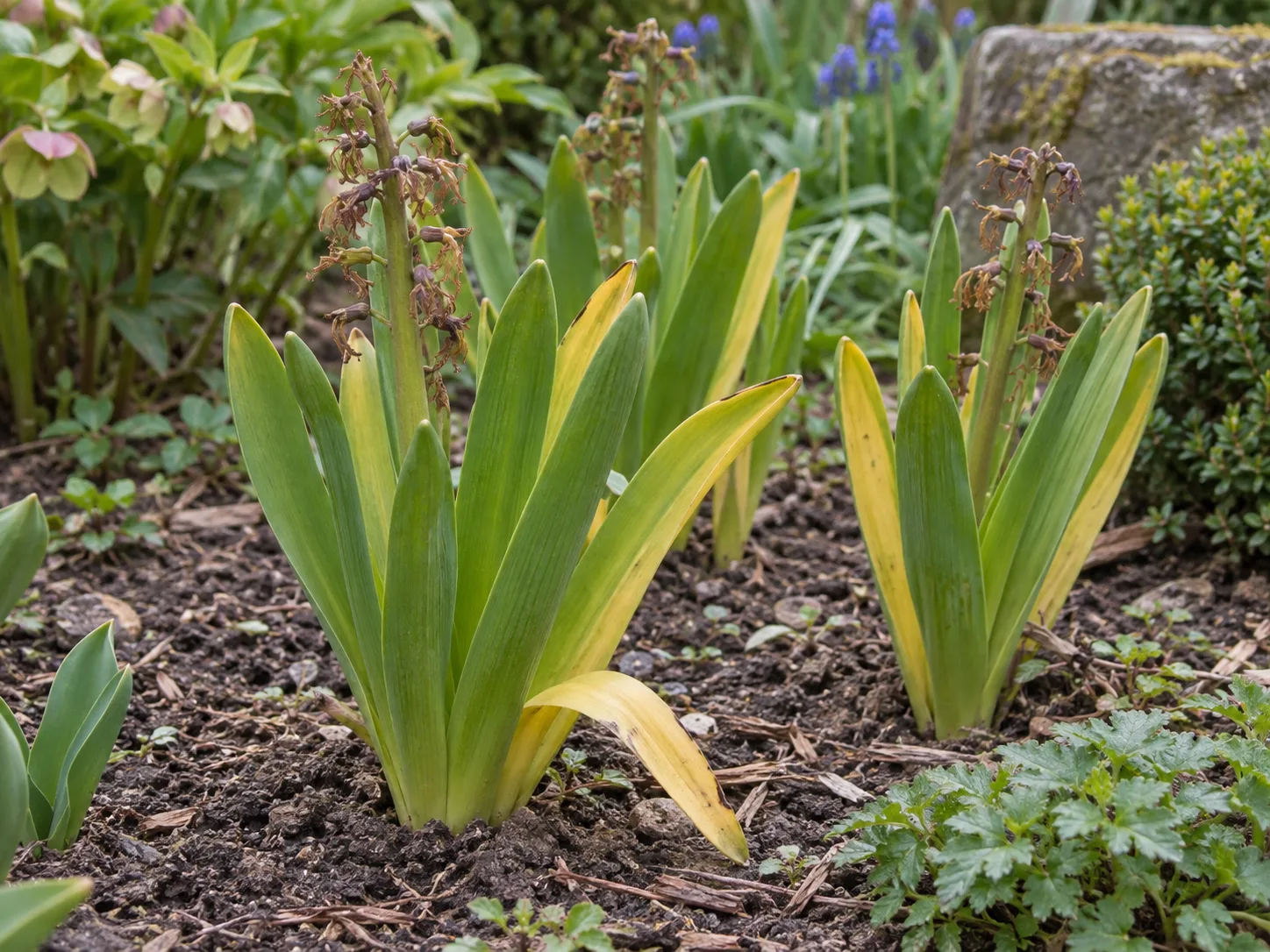
Cut back spring bulb leaves only after they have yellowed and are beginning to wither. While foliage is green, leave it in place—even after the flowers have disappeared—because the leaves are still making and sending food back to the bulb. A calendar can help you estimate the wait, but the plant’s condition is the better signal.
For many daffodils and tulips, that wait is roughly four to eight weeks after flowering. Some bulbs finish sooner, some stay green longer, and weather and cultivar affect the pace. If the leaves are still green and firm, keep them; if they are mostly yellow or brown, limp, and loosening at the base, they are close to done.
The short answer: wait until leaves turn yellow
Remove the spent flower head if you want to stop seed formation, but leave the leaves. Once the foliage has turned yellow or brown, withered, and no longer looks like active growth, cut it close to the ground with clean scissors or let it come away with a gentle tug. Do not pull hard on leaves that are still partly green, since that can damage or dislodge the bulb.
“About six weeks” is a useful checkpoint for many common spring bulbs, not a deadline. Clemson Cooperative Extension advises leaving the leaves for at least six weeks after bloom or until they turn brown; the North Carolina State Extension Gardener Plant Toolbox says daffodil foliage should not be cut back until it begins to yellow. These are two ways to express the same practical rule: let the plant finish its leafy stage rather than cutting on a date.
A late-April daffodil that is still green in June needs more time. A small crocus whose foliage has already yellowed may be ready earlier. Use the weeks to remind yourself to check, not to override what the leaves are telling you.
Why green leaves matter after flowering
A bulb is a storage organ, not a one-season flower. It spends reserves to produce roots, leaves, and blooms, then uses its active foliage to capture sunlight and replenish those reserves for survival and future growth. Clemson Cooperative Extension’s spring-flowering bulb guidance explains that bulbs continue growing and storing food after flowering before the tops die back and the bulbs become dormant.
That is why a green leaf still matters when the border looks untidy. The plant has finished its show, but the bulb’s annual cycle is not finished. Cutting the leaves removes photosynthetic surface before the plant has completed that work; bulbs cut back repeatedly while green may become smaller or produce fewer flowers in a later season.
The phrase “feeding the bulb” can make the process sound like the leaves are simply sending a fixed amount of stored food downhill. A more useful way to picture it is a recharge period: the living green tissue gathers energy, and the bulb rebuilds reserves for its next cycle. Once the leaves naturally yellow and collapse, that active work is ending, so removing them is safe.
Deadheading flowers is different from cutting leaves
A faded flower head and a green leaf do different jobs. If you do not want seed, pinch or snip off the flower head after its petals fade, taking care not to cut the foliage. On daffodils, remove the spent bloom or developing seed pod while leaving the leaves and any green stem intact; the NC State Extension daffodil profile specifically allows removal of the top of the flower stem to prevent seed formation while warning against cutting the leaves before yellowing.
Deadheading is optional for plant survival. It keeps the planting tidy and limits seed production, which is useful when you want existing bulbs to build up rather than spread by seed. But if you are naturalizing species tulips or another bulb planting where you want seedlings, leave some flowers to form seed; seed-grown bulbs can take years to flower, so this is a slow way to increase a display.
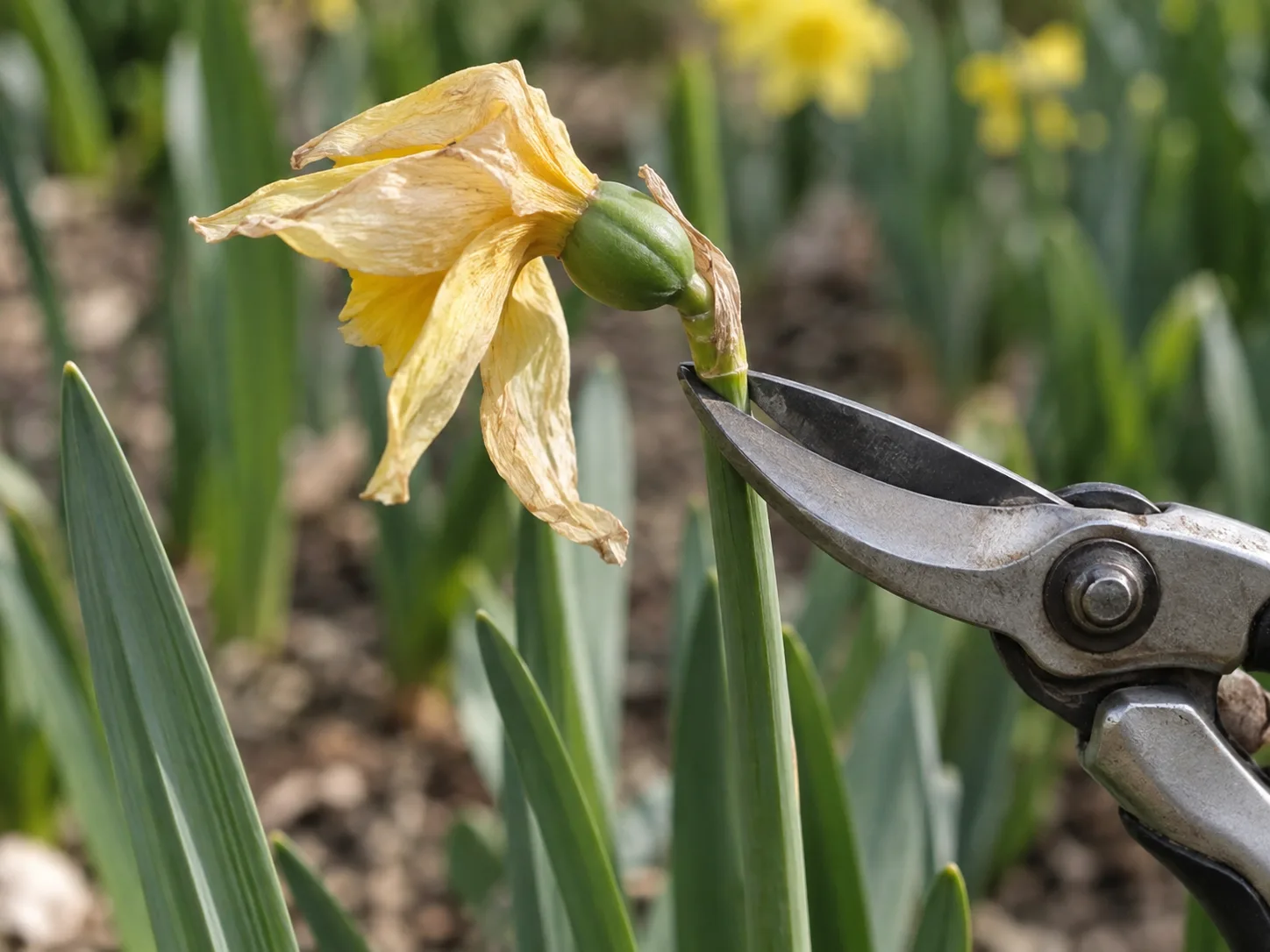
A clean cut at the flower head is enough. Do not shear the whole clump after bloom, and do not treat “deadhead” as another word for “cut back.” In a mixed bed, you can remove the flower heads as they fade and leave the leaves to grow until their color changes naturally.
Use the bulb’s condition, not a fixed date
The same month does not mean the same thing in every garden. Bulbs flower at different times, spring temperatures vary from year to year, and a sunny, dry spot may move through senescence differently from a cool, moist border. A fixed date such as “cut everything in June” can be too early for late tulips in one yard and unnecessarily late for early crocus in another.
For common daffodils and tulips, four to eight weeks after flowering is a reasonable planning range, not a rule that every species must meet. Some horticulture sources use a shorter interval for daffodils; others advise waiting at least six weeks or until foliage browns. The useful common ground is the visible endpoint: remove leaves only when they have yellowed and withered, not while they are actively green.
Climate changes the calendar, too. A warm spring may bring bloom and leaf dieback earlier than a cool spring, while a hot, dry spell can cause foliage to yellow from stress before the bulb has had ideal conditions. If leaves collapse unusually early while still green at the base, check soil moisture and drainage before assuming the bulb has finished; senescence is a gradual end-of-season change, not a sudden wilt from dry or waterlogged soil.
How to tell when foliage is ready to remove
Look at the whole leaf rather than one yellow tip. A leaf can begin to fade at its point while the lower section remains green and productive. Wait until the foliage is mostly yellow or straw-colored, limp rather than upright and firm, and clearly no longer functioning as a healthy green canopy.
Use this quick check:
- Mostly yellow or brown: little healthy green remains.
- Soft and collapsing: the leaves have lost their firm, active posture.
- Loose at the base: a light touch moves them easily without pulling the bulb.
- No new green growth: the plant is completing its seasonal dieback rather than replacing damaged leaves.
If the leaves meet most of these signs, cut them at soil level or let them detach naturally. If they are still firm and substantially green, give them more time even if the flowers have been gone for weeks. The Royal Horticultural Society’s daffodil growing guide likewise advises waiting for yellow foliage and warns against tying leaves while they photosynthesize.
For daffodils, a gentle tug can serve as one last check. Savvy Gardening’s practical guide describes foliage that releases easily after it has yellowed and browned; treat that as confirmation, not an invitation to pull on a leaf that still resists.
One leaf can remain green after its neighbors have faded. You do not have to keep a whole border untouched because of a single healthy leaf, but leave that leaf where it is if practical. In a large naturalized patch, waiting for most of the foliage to finish is easier than trimming plants one by one.
What changes by bulb type
There is no single number of weeks that fits every plant sold as a “spring bulb.” Common bulbs differ in flowering time, leaf shape, rate of senescence, and how reliably they return in a given climate. The cutback decision stays the same—wait for foliage to finish—but the likely wait and the value of keeping the bulbs vary.
| Bulb group | Practical cue after bloom | What to keep in mind |
|---|---|---|
| Daffodils and narcissus | Keep leaves until mostly yellow and withered; often several weeks | Established clumps can remain in the ground; divide after dieback if flowering declines. |
| Tulips | Leave leaves until yellow, often around six weeks or longer | Many showy hybrids return less reliably than species tulips; climate and cultivar matter. |
| Crocus and snowdrops | Let the foliage fade on its own | These smaller, early bulbs may finish sooner than late daffodils or tulips. |
| Hyacinths | Keep green leaves through the post-bloom period | Do not confuse the spent flower spike with the still-active leaves. |
| Alliums | Retain healthy foliage as long as it stays green | Some allium leaves begin to yellow near flowering; tolerate the natural cycle rather than stripping the plant early. |
Daffodils and narcissus
Daffodils are among the easiest bulbs to leave in place, provided the soil drains well and the planting suits the local climate. North Carolina State Extension notes that daffodil clumps can remain undisturbed for years and can be divided just after foliage dies if bloom quality or quantity declines. That makes the after-bloom period an especially poor time to dig or cut them while the leaves are still green.
The length of dieback can feel inconvenient in a neat front border. If you are unsure, leave a small marker beside the clump when the flowers finish and check it again in a few weeks. A daffodil leaf that is still green at the base is not ready just because the petals have fallen or a nearby perennial has started to grow.
Tulips: hybrids and species tulips
Tulips need their foliage left in place too, but expectations for next year’s flowers should be realistic. Many modern hybrid tulips are bred for a strong display and may not rebloom as reliably in a garden as naturalizing daffodils or botanical tulips; the BBC Gardeners’ World tulip guide notes that some tulips return with smaller flowers and that species tulips can naturalize when their seed heads are left.
For a hybrid tulip you hope to keep, deadhead the flower if you do not want seed, then leave the leaves until yellow. In regions with warm winters or hot, humid summers, a tulip may decline despite correct leaf care; that is a climate and cultivar fit issue, not proof that you pruned incorrectly. Species tulips and cultivars known to naturalize are better candidates for a long-term planting.
Crocus, hyacinths, snowdrops, and alliums
Crocus and snowdrops often flower earlier and may finish their leaf cycle earlier than late tulips. Do not hold every early bulb to the same date as a later-flowering daffodil; follow the leaves. When they are yellow and withered, you can clear them even if another bulb elsewhere in the bed remains green.
Hyacinths and alliums can leave a less tidy transition after their flower display. Hyacinth leaves should stay until they fade; alliums may have foliage that looks tired by the time their flower heads are prominent. Where an allium’s leaves are still green, leave them. Where they have already yellowed naturally, there is no benefit in forcing them to stand.

In a mixed planting, manage each clump according to its own condition. If crocus foliage is already brown while nearby daffodil leaves are green, remove only the finished crocus leaves; do not cut the daffodils at the same time for the sake of a uniform border.
Mowing a lawn with spring bulbs
If bulbs grow in grass, delay mowing over the planted area until their leaves have yellowed and withered. Mowing green foliage removes the same energy-making tissue as hand-cutting it. A lawn can look ready for its first close cut while the daffodils or crocus beneath it still need weeks to complete their cycle.
Mark the bulb patch before flowering ends, especially if it is a small island that is easy to forget. Mow around the marked area, use a path or an unplanted strip as your turning space, and return when the leaves have finished. In a large naturalized lawn, keep the bulbs to a clearly defined drift so you know which sections must wait.
A higher mower setting does not solve the main problem if the blades still cut the bulb leaves. If the area is small, hand-trimming the surrounding grass with shears can preserve the leaves, but avoid cutting the bulbs themselves or scalping the turf. Once foliage is fully yellow and limp, you can resume normal mowing; there is no reason to leave dead leaves standing for the rest of summer.
How to hide foliage while it fades
The simplest camouflage is to plan for the next wave of growth. Plant spring bulbs among later-emerging perennials, groundcovers, or shrubs that will fill in after the bulbs bloom. Hostas, hardy geraniums, daylilies, and other plants with substantial summer foliage can soften the view without requiring you to manipulate the bulb leaves.
Spacing and planting depth matter. Put companions close enough to screen the fading leaves but not so tightly over the bulbs that you shade them while they are green or dig through the bulbs during routine maintenance. If the bed is already planted, a portable pot, small garden ornament, or temporary edging can distract the eye without covering the foliage.
For a new planting, avoid placing a large solid block of bulbs in the most visible lawn strip unless you are willing to leave it unmown after flowering. Smaller drifts tucked among perennials are easier to manage. Interplanting is not only cosmetic: it lets each bulb retain its leaves while the surrounding garden takes over visually.
Why tying, braiding, or folding leaves backfires
Tying daffodil or tulip foliage into bundles, braiding it, knotting it, or folding it under another plant does not make the recovery period safer. It reduces the leaf area exposed to light and can crease or break the leaves. The Royal Horticultural Society’s advice on daffodil care recommends leaving foliage to photosynthesize and specifically cautions against tying it into a knot.
If leaves flop after rain, let them settle and dry. Do not bind them upright with rubber bands, string, or plant clips; that arrangement may look neater from a distance, but it does not help the bulb. If the planting looks too messy every spring, change the layout next season by using a less visible area or adding later-growing companions rather than forcing the current leaves out of sight.
Care for bulbs in containers
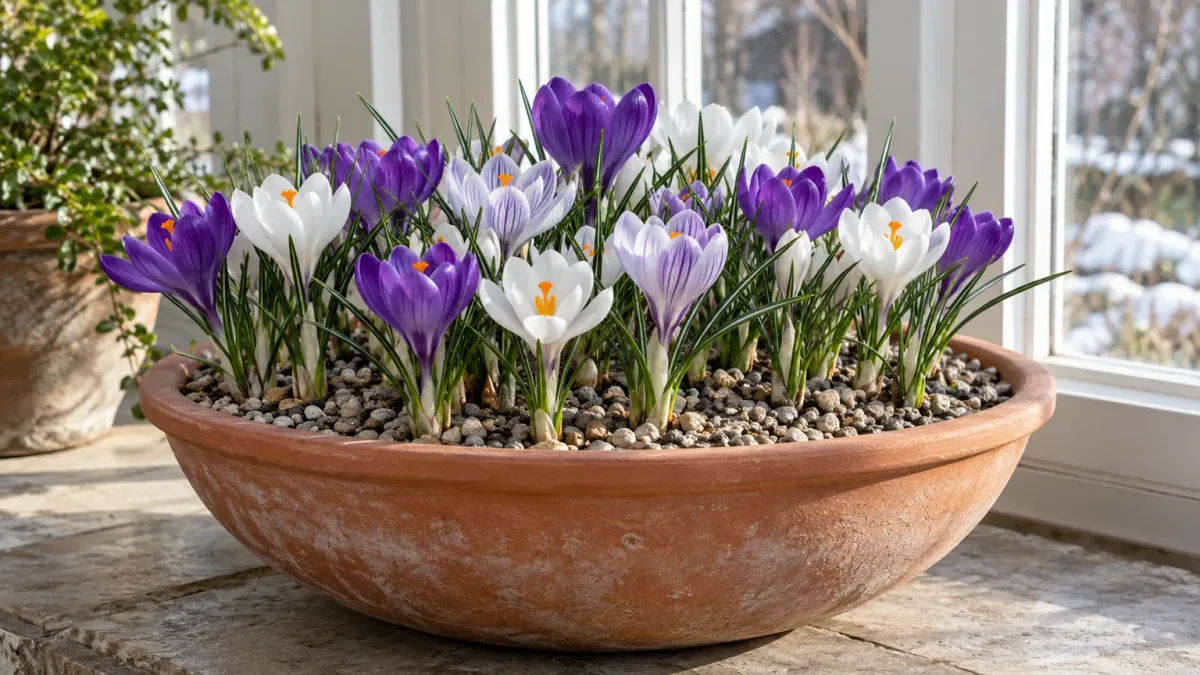
Potted bulbs have the same basic need for green leaves, but containers dry out faster and can be moved. Keep the pot outdoors or in a bright location while the foliage is green; moving it into a dark shed just because the blooms are gone stops the leaves from doing their job. Water when the mix is drying, then let excess water drain through the pot.
If the pot is part of a temporary spring display, move the whole container behind a shrub or to a less prominent sunny spot rather than cutting the leaves. Do not leave it in standing water, and do not let the mix become bone-dry while the leaves remain green. The RHS recommends watering bulbs in containers as needed through the growing season until their foliage dies down.
After the leaves have yellowed and withered, you can plant hardy bulbs into a suitable garden bed or follow the storage instructions for that species and climate. Many tulips grown in containers are treated as a one-season display, especially where summer heat or winter conditions make rebloom unreliable. If a bulb has been forced indoors, allow it to complete its leafy growth in light before deciding whether it is worth replanting; do not promise yourself that every forced bulb will flower strongly again.
Water and fertilizer while foliage is green
After flowering, do not switch abruptly from normal care to drought just because the flowers are gone. In a garden bed, ordinary rainfall is often enough; during a prolonged dry spell, water the root zone if the soil is dry. Aim for usable moisture without keeping the soil saturated, since bulbs in poorly drained ground or pots can rot.
Fertilizer advice depends on the soil and how permanent the planting is. Clemson Extension recommends using soil-test results to guide fertilizer and lime, and describes spring feeding for established plantings; the RHS gives container bulbs a liquid feed according to product directions while they are growing. Those approaches are more reliable than assuming every fading bulb needs a high-phosphorus product or a dose of bone meal after flowering.
If you already follow a suitable bulb-feeding plan, continue according to the product label and local extension advice. If you have not fertilized, do not try to compensate for green leaves being cut by applying extra fertilizer. Fertilizer cannot replace the lost leaf area, and excess nutrients are not a substitute for allowing foliage to finish naturally.
Exceptions: disease, damage, and planned bulb moves
Normal post-bloom yellowing is gradual and follows the plant’s season. If a leaf suddenly develops spreading spots, streaks, distorted growth, or soft, decaying tissue while the rest of the plant is still active, do not assume that the whole bulb clump is ready for cutback. Remove clearly damaged material if needed, use clean tools, and seek a reliable local diagnosis before treating an unidentified disease.
Storms, pets, or an accidental mower pass may tear some leaves. Leave the remaining green tissue attached; partial damage does not mean that every leaf should be removed. A frost-bent leaf may recover, so avoid cutting it while it is still green and firm.
If you need to relocate a bulb clump, wait until its foliage has died back when the project allows. Daffodils can be divided after the leaves wither, and they do not need to be dug up annually. If a plant must be moved sooner, move it with as much soil and root area intact as possible, keep the leaves attached, and expect some stress; cutting all the leaves before moving does not make the bulb safer.
Climate is another limit worth recognizing. Some spring bulbs do not reliably return in climates that lack the conditions they need, and Clemson Extension notes that many varieties may not flower a second year in southern climates. Keeping foliage is still sound care, but it cannot overcome a poor match between species, cultivar, and local climate.
If you already cut leaves too early
Do not panic or pull up the bulbs. If any green leaves remain, leave them in place and give the planting ordinary light, moisture, and drainage. Avoid cutting the rest of the foliage or adding fertilizer in an attempt to force a replacement bloom.
Early cutting reduces the time the bulb has to rebuild reserves, but it does not guarantee that the bulb will fail next year. Some established bulbs have enough stored energy to flower again; others may produce leaves with few or no flowers, then recover over a later season. If the lawn mower caught the leaves once, the practical response is to mark that patch and keep it unmown next spring until the foliage turns yellow.
If bloom becomes sparse over several seasons, check the whole growing situation rather than blaming one cut. Overcrowding, shade, poor drainage, a cultivar that does not perennialize well in your climate, or foliage removed too early year after year can all contribute. Wait until the foliage dies before dividing a crowded daffodil clump, and choose bulbs suited to your region when replacing a less persistent planting.
Conclusion
Let green spring bulb leaves stay until they turn yellow, wither, and loosen naturally. Deadhead the spent flower if you wish, but keep the foliage, avoid tying or mowing it, and use six weeks as a reminder to check rather than an automatic cut date. Once the leaves are truly finished, clear them away and let the dormant bulb rest.



