How to Prune Spirea: Timing and Cutting Guide
Spring- and summer-blooming spirea need different pruning windows. Identify yours, make clean cuts, preserve flowers, and renew a woody shrub safely.
Quick answer: prune by bloom time
First, remove only clearly dead, broken, or diseased wood; hold off on shortening healthy branches until you know which kind of spirea you have. Spring-flowering spirea usually blooms on stems that grew the previous year, so shape it just after its flowers fade. Summer-flowering Japanese spirea and its close hybrids flower on growth made in the current season, so do their main pruning in late winter or early spring before buds open.
That distinction matters more than the calendar month. A late-winter cut can remove the flower buds on bridal wreath spirea, while the same timing gives Japanese spirea room to push the stems that will bloom in summer. If you cannot identify the shrub yet, use deadwood cleanup as your only live-wood work and observe when it flowers.
Identify your spirea before making live cuts
“Spirea” is a common name for a group of deciduous shrubs, not a single plant with one pruning schedule. Many garden varieties fall into two practical groups: spring bloomers that flower on older wood and summer bloomers that flower on new growth. You can often sort them by the season and shape of the flowers, but the nursery tag or cultivar name is a better confirmation when you have it.
Look back at the shrub’s last display if it is not flowering now. Large white sprays cascading along arching branches in spring point toward a bridal-wreath type; compact mounds with pink or red clusters later in the season are more likely Japanese spirea or a related summer-flowering selection. University of Wisconsin Extension lists Japanese spirea among summer-flowering shrubs and explains that these bloom on new growth, while Colorado State University Extension identifies bridal wreath and Vanhoutte spireas as spring bloomers that carry buds on older wood.
Spring-flowering spirea blooms on older stems
Bridal wreath spirea (Spiraea prunifolia), Vanhoutte spirea (S. × vanhouttei), and some other early-flowering types make flower buds on growth from the previous season. The buds spend winter on the shrub and open the following spring. Cutting those stems in winter, early spring, or after the next set of buds has begun to form can remove the display you were waiting for.
Treat these shrubs much like forsythia: enjoy the flowers, then prune soon after the petals drop if the shrub needs shaping or renewal. A light reduction at that point gives the plant the rest of the growing season to make replacement shoots. Avoid turning “after bloom” into a late-summer haircut; as new flower buds begin forming, a later cut can trade next year’s flowers for a neater outline today. Colorado State Extension names bridal wreath and Vanhoutte spirea among spring-flowering shrubs that should be pruned after bloom to preserve the next display.
Summer-flowering spirea blooms on current-season growth
Japanese spirea (Spiraea japonica) and Bumald spirea (S. × bumalda) typically flower later on shoots produced during the same growing season. These are the types for which a late-winter or early-spring cut can encourage a fresh flush of branches and flowers. The Royal Horticultural Society lists S. japonica among shrubs pruned in spring; University of Wisconsin Extension likewise recommends pruning summer-flowering shrubs while dormant or before bud break. BBC Gardeners’ World Magazine also places summer-flowering spiraea in the spring-pruning group while calling out several spring-flowering spirea exceptions.
Do not assume that every cultivar is identical. Some compact selections flower repeatedly or hold their flowers for longer than others, and weather shifts bloom dates by region. When the label names a cultivar, use that name to check its particular habit; if not, use last year’s flower timing and shape as a useful first clue rather than relying on the generic word “spirea.”
Choose the right pruning window
For a spring bloomer, the practical window begins after the main flush of flowers fades. If you are removing just a broken branch, you do not need to wait for that window, but any cut to healthy flowering wood should be deliberate. A shrub that flowers in April in one climate may not flower until May or June in another, so follow the plant’s actual bloom rather than a date copied from a calendar.
For a summer bloomer, prune after the harshest winter weather has passed but before new shoots stretch or flower buds form. In cold regions, this often means late winter to early spring; in mild regions, the useful window may arrive earlier. RHS guidance notes that Japanese spirea produces flowers at the ends of current-season growth, which is why a spring cut can be followed by a summer display.
Fall is not the catch-all time to tidy every spirea. A late-season trim can remove old-wood flower buds on a spring bloomer, and heavy live pruning can stimulate tender growth before cold weather. If a shrub is simply untidy in autumn, mark it for its proper window and restrict immediate work to damaged or hazardous branches.
Inspect the shrub and set one goal
Before cutting, step back far enough to see the whole plant. Note whether it has a naturally arching fountain shape or a compact mound, whether the center is crowded, and whether the problem is truly height, a few dead stems, or weak flowering. One pruning session works best when it has one main aim; trying to reduce height, renew the base, deadhead, and sculpt every branch at once can remove far more than intended.
Start close to the base. Spirea is a multi-stemmed shrub, so look for canes that are dead, split, rubbing against another branch, crossing through the center, or lying on the ground. Healthy young shoots often emerge from the base; keep these in mind as replacements before you remove older stems. If most of the plant is leafless, scratch a small patch of bark on a suspect stem: green tissue just below the surface suggests it is alive, while dry brown tissue at several points suggests dieback.
Consider the shrub’s condition as well as its shape. A recently transplanted spirea, one stressed by drought, or one with weak new growth should not receive a cosmetic hard cut simply because it looks leggy. Pruning can improve structure and flowering, but it cannot correct chronic shade, waterlogged soil, root damage, or a cultivar that is too large for its location.
Use the right tools and cut at the right place
Clean bypass hand pruners are enough for most young spirea stems. Use loppers when a mature cane is too thick for a clean hand-pruner cut, and choose a pruning saw only for the occasional branch beyond the loppers’ capacity. A tool that crushes or tears the stem makes a rougher wound and is harder to control in the dense, twiggy center.
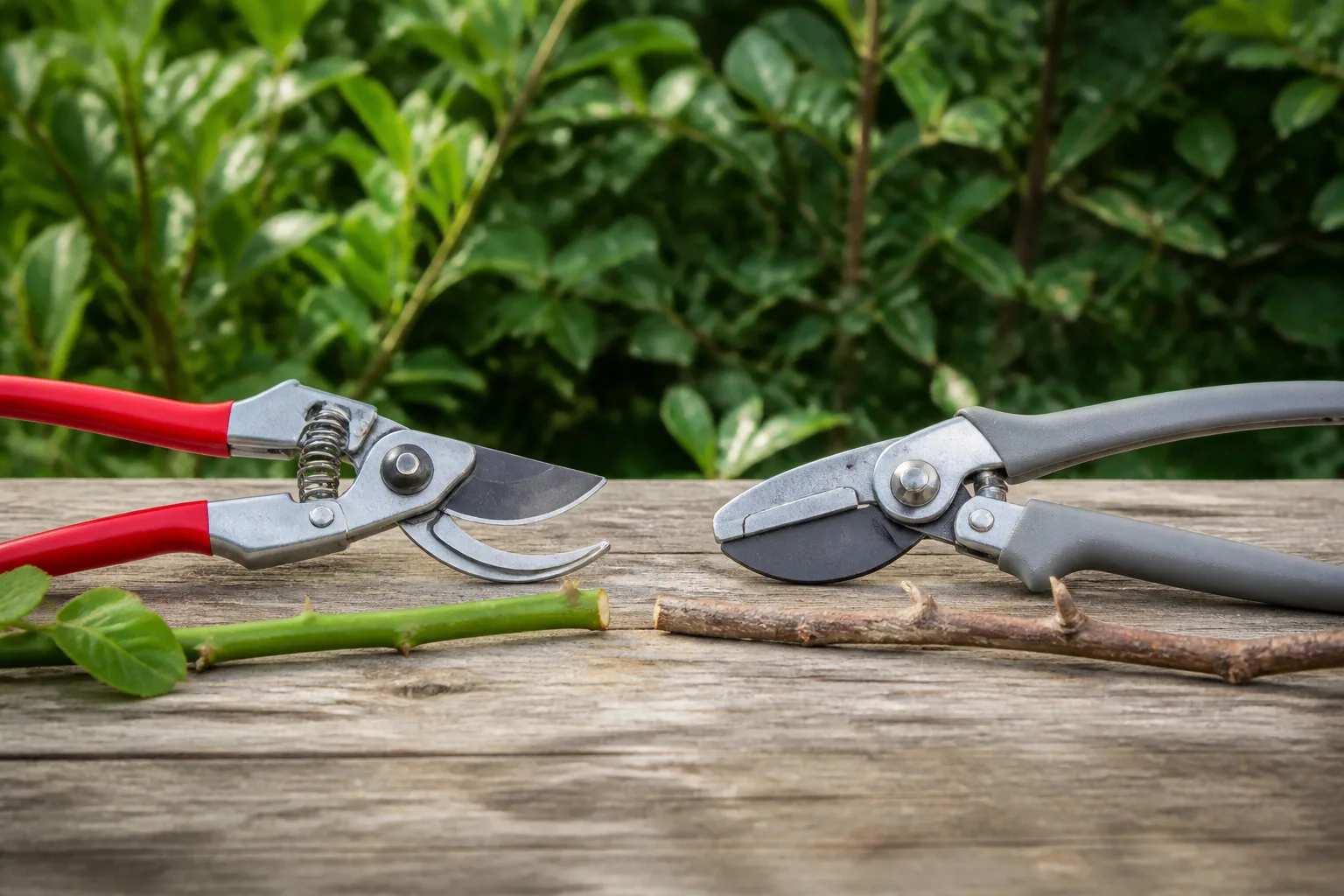
For a full stem you want gone, cut it near its point of origin at the base without gouging into the crown or leaving a tall stub. For a branch you are shortening, cut just above a healthy outward-facing bud or side branch so the next shoot grows into open space. A small angle is fine, but the important detail is that the cut is close enough to the bud to avoid leaving a drying stub and not so close that it injures the bud. University of Wisconsin Extension describes heading cuts as just above a bud and cautions against leaving stubs; Colorado State Extension’s pruning-cuts guide distinguishes these from removal cuts made back at a branch union.
Do not use hedge shears as the default for a flowering spirea. Repeatedly clipping only the outer surface makes a dense shell of new growth and can shade the inside, leaving bare or woody stems beneath. Colorado State Extension notes that frequent shearing can reduce flowers and create a woody interior in flowering shrubs. If you want a formal hedge, check that the cultivar and design actually suit that treatment; most free-form spireas look better with selective cuts that keep their natural outline.
Clean tools before beginning and whenever you move from diseased tissue to healthy stems. If you see suspicious lesions or dieback, remove affected branches in dry weather and wipe or disinfect the blades between cuts according to the product label. Do not make every cut more aggressively than needed; sharp, properly sized tools and a deliberate cut at the right junction matter more than a complicated tool collection.
Prune spring-blooming spirea after its flowers fade
When a spring-flowering spirea has finished its display, begin with the lightest work that will solve the problem. Remove dead, broken, or rubbing stems at their origin, then inspect whether a few long branches actually need shortening. If the shrub is healthy and only looks slightly unruly, selective cuts into the branch structure will preserve its arching form better than cutting every stem to the same height.
For a tall branch that disrupts the silhouette, follow it inward to a side branch or an outward-facing bud and shorten it there. Avoid topping the whole shrub across a flat plane: a row of blunt ends can produce a tight fringe of shoots while leaving the original woody framework untouched. If the plant has become crowded, remove a small number of the oldest or least productive stems at the base, then stop and reassess rather than continuing until the center is bare.
Timing affects the next year’s flowers. Colorado State Extension explains that spring-flowering shrubs form next season’s buds on growth made during the current season and recommends pruning after bloom; it also warns that winter or fall cuts remove wood carrying flower buds. Finish the main shaping while the shrub still has a meaningful growing season ahead, and do not try to compensate for a missed window by pruning harder.
Prune summer-blooming spirea before growth starts
For Japanese spirea and similar summer bloomers, late winter or early spring is the main time to remove old, weak, or overcrowded growth and reduce a mound that has spread beyond its space. Work from the base outward. Remove dead stems first, then take out one or a few of the oldest canes at ground level if the interior is packed and younger shoots are available to replace them.
If you need to reduce height, shorten individual stems to a lower side branch or a bud that points out from the shrub. Do not blindly cut every branch to the same height. The chosen cut should leave a balanced framework, not a collection of short sticks with all the healthy foliage removed. The RHS describes cutting previous year’s flowering stems back to one or two buds on the older framework for late-flowering shrubs; that broad approach is useful for Japanese spirea, but adapt the depth to the cultivar and the amount of growth you want.
The pruning window closes once the new season’s shoots have grown out. A late cut can remove the very stems on which the summer flowers would form. If you miss the window, do not panic: leave healthy growth alone, remove deadwood if needed, and shift your shaping to the next dormant period. One missed pruning season is usually less costly than removing a flush of new growth simply to meet an arbitrary schedule.
Deadhead Japanese spirea for a tidier display
Deadheading means removing spent flower clusters, not cutting back the entire shrub. On a Japanese spirea that has finished its first flush, you can snip the faded cluster and the short section of stem back to a leaf or side shoot. This tidies the plant and may encourage another round of flowers on cultivars that rebloom, though the result depends on cultivar, weather, and growing conditions.
The University of Wisconsin Extension notes that deadheading Japanese spirea can encourage a second flush. Treat that as a possibility rather than a guarantee, and do not turn deadheading into a deep summer haircut. If the shrub is large, the seed heads are not an issue, and you do not need another display, leaving the clusters alone is reasonable; the plant does not need every flower removed to remain healthy.
If Japanese spirea is invasive or restricted in your area, avoid allowing seed heads to mature and follow local disposal guidance for plant material. North Carolina State Extension reports that Japanese spirea escapes cultivation and can spread by seed and suckering in parts of the eastern United States. Pruning is not a reliable way to reverse that status or stop spread by itself, so check local guidance before propagating or moving cuttings.
Shape the shrub without shearing it into a shell
A spirea’s natural shape is often its best feature: spring types may arch outward like a fountain, while many Japanese cultivars form a low mound. Keep that form by making a handful of selective cuts where they branch rather than drawing an imaginary straight line around the outside. This leaves room for light and air to reach the interior and retains more flowering points than a haircut across the top.
If the top is too wide, shorten only the longest branches to lower side shoots that point in the direction you want new growth to go. If the shrub is too tall, reduce a few stems at their base or shorten them to suitable lateral growth rather than repeatedly cutting the top. When you prune every tip, branching becomes concentrated at the cut ends; that may create a denser surface but does not always make a healthier or more attractive plant.
Selective pruning cannot make a naturally broad or tall cultivar permanently fit a tiny space. If a spirea quickly outgrows its place every year, repeated severe cuts may keep it alive but will cost time and can interrupt its best flowering. Consider replacing it with a compact cultivar suited to the site if a sensible amount of pruning still cannot maintain the clearance you need.
Decide how much to remove
For routine cleanup, take only the branches that are dead, broken, crossing, or clearly out of place. If you are thinning a healthy shrub by removing live stems, a conservative ceiling is to remove no more than about one-third of the plant’s largest or oldest branches in a year, then allow it to respond before taking more. The fraction is a guardrail, not a quota: a small shrub that is already weak may need far less, while a vigorous Japanese spirea may tolerate a deliberate renewal cut.
Do not translate “one-third” into cutting every stem back by one-third. That turns a stem-removal guideline into a uniform heading cut and can flatten a naturally rounded or arching shrub. Count the branches you remove at the base, keep healthy younger growth, and pause when the shape looks balanced from several sides.
A healthy summer-flowering Japanese spirea is more tolerant of hard dormant pruning than a spring-flowering old-wood type, but tolerance does not mean it needs a severe cut each year. One or two thoughtful cuts often solve a size problem without resetting the whole plant. If you are unsure how much the shrub can spare, choose selective removal over a full cutback.
Rejuvenate a woody or overgrown spirea
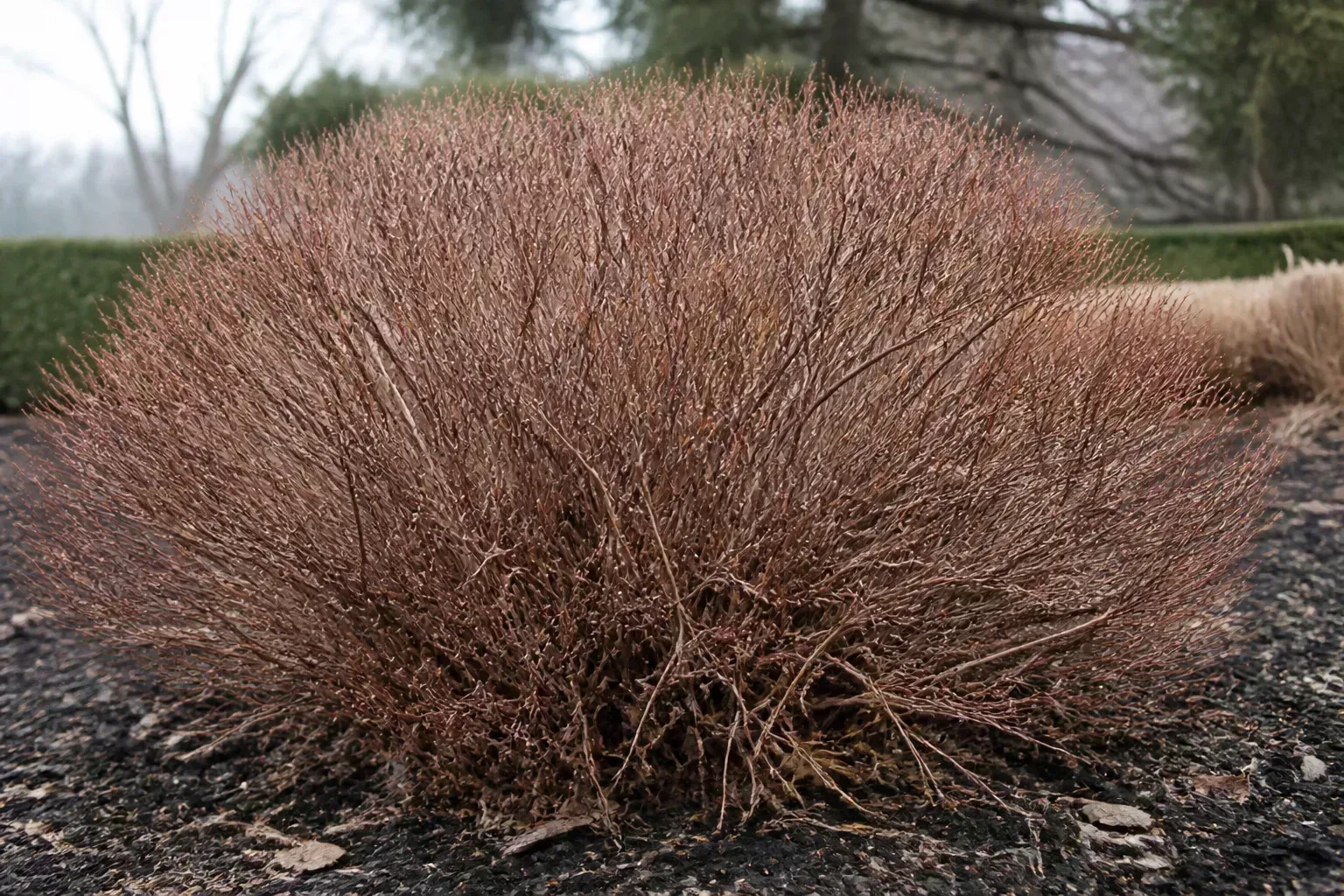
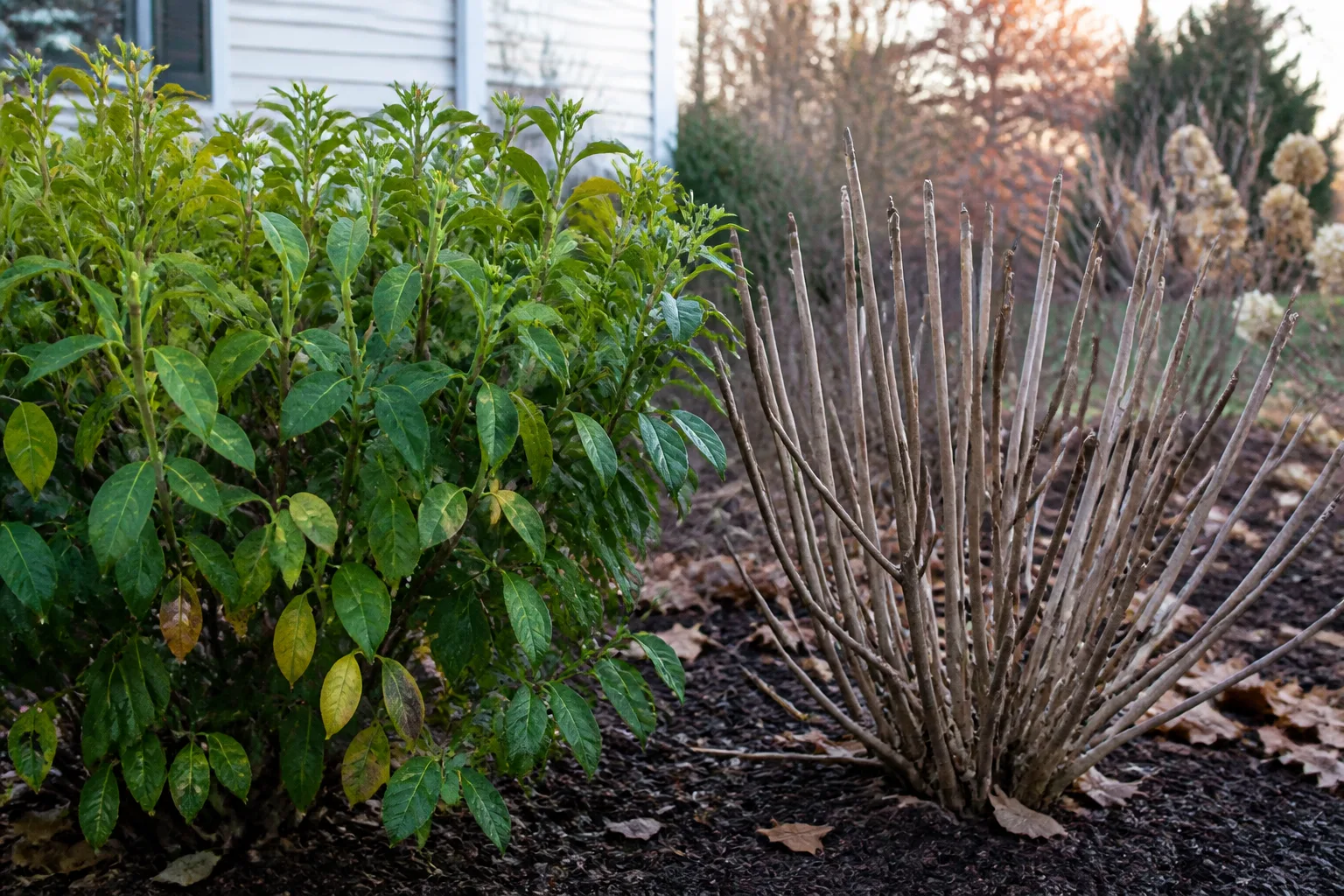
When a spirea has become a dense, woody tangle with sparse growth at the base, light tip-pruning may only preserve the problem. Rejuvenation pruning is a one-time reset: cut the shrub back hard while dormant so it can send up a new framework from its base. Extension guidance identifies spirea among multi-stemmed shrubs that can tolerate this approach, but the timing and flower cost depend on which spirea you own.
Japanese spirea and other summer bloomers are the better candidates for a late-winter or early-spring renovation because their flowers form on the new shoots that follow. University of Wisconsin Extension describes cutting tolerant shrubs, including Japanese spirea, to roughly 4 to 10 inches while dormant; Colorado State Extension describes ground-level rejuvenation for suitable multi-stem shrubs. These are different versions of a severe cut, not instructions to use both at once. Choose one based on how woody the plant is and how much healthy basal growth it has.
For spring-flowering spirea, full rejuvenation at dormancy removes the old stems carrying the coming spring display. If the shrub needs renovation, you can wait until just after it flowers and remove the oldest stems, but a complete cutback may still leave it sparse while replacement wood develops. Choose that reset only when rebuilding the plant matters more than uninterrupted bloom; expect reduced flowers during recovery. Fine Gardening’s Mark Dwyer describes Japanese spirea as capable of vigorous regrowth after severe pruning, but that observation is specific to Japanese spirea and Midwest growing conditions, not a promise for every species or stressed shrub.
Skip hard rejuvenation if the plant has extensive dead wood, weak roots, or a history of poor regrowth. Colorado State Extension cautions that shrubs with many dead branches or a large, woody base may not respond well. If an old spirea has mostly unproductive stems and fails to push healthy growth after ordinary care, replacing it may be a better long-term fix than repeating a drastic cut.
Remove damaged growth and respond to decline
Dead, broken, or storm-damaged wood can be removed when you notice it; it does not need to wait for the shrub’s routine pruning date. Cut back to a healthy side branch or remove a dead cane at its origin. If you are unsure whether a branch is dead, check farther down before cutting it out, and delay cosmetic shaping until the living tissue is easy to distinguish.
If a branch looks diseased, cut it back to healthy tissue and clear the debris rather than leaving infected material in the shrub. Wipe or disinfect tools before moving to another plant, especially if you suspect a contagious disease. Pruning can improve airflow when the interior is crowded, but it is not a stand-alone treatment for a root problem, a poorly drained site, or a persistent pest.
Yellow leaves or weak flowering are not automatic signals to prune. First look for a pattern: Is the whole shrub pale, or only one branch? Did leaves yellow after drought, waterlogging, or a sudden change in weather? If only one branch is failing, removing it may be useful; if symptoms are widespread, identify the underlying stress before taking away healthy foliage the plant needs to recover.
Help spirea recover after pruning
After pruning, gather and dispose of the cut branches so you can see the shrub’s final shape and watch for problems. Water during extended dry spells, especially if pruning has removed a large share of the canopy, but keep the soil from staying saturated. A modest layer of mulch can conserve moisture; leave an open ring around the stems rather than piling mulch against the crown.
Do not automatically feed a freshly pruned spirea to force fast growth. If the plant is in ordinary garden soil and growing normally, additional fertilizer is not a substitute for light, drainage, or a suitable pruning window. A hard-pruned shrub needs time and enough moisture to produce new shoots; avoid repeating the cut just because regrowth is not visible immediately.
Judge recovery by the quality of the new shoots, not only by how quickly the shrub fills out. A summer bloomer cut before growth should push shoots from buds along the remaining framework or from the base; a spring bloomer shaped after flowering should retain a strong set of new stems for next year’s display. If growth is thin, uneven, or absent through the plant’s normal growing season, revisit light, soil moisture, root health, and cultivar fit before pruning again.
Mistakes that cost flowers or weaken the shape
The most expensive mistake is pruning before you know the bloom type. A winter trim that is appropriate for a Japanese spirea can strip the spring flowers from bridal wreath or Vanhoutte spirea. When the cultivar is unknown, look up the label, review last year’s bloom, or wait through one season rather than making a large live cut on guesswork.
Another common mistake is shearing the shrub into a ball several times each season. This encourages a dense outer layer and shades the interior, while the flowers may end up at the surface instead of along well-spaced stems. Shears are fast, but selective hand cuts preserve the plant’s structure and let you choose which stems stay.
Avoid removing most of the healthy wood simply because a shrub looks untidy, pruning heavily just before winter, or repeating rejuvenation whenever new shoots appear. A hard cut is a renovation option for a suitable, established plant, not the annual maintenance plan for every spirea. Likewise, do not try to solve the wrong site with increasingly severe cuts: if the shrub is too large for its position, a better-sized replacement may save both the plant and your time.
Keep a simple spirea pruning schedule
Use the following rhythm as a reminder, then adjust to the cultivar and local weather:
| Spirea type or task | Best time | Main goal |
|---|---|---|
| Spring-flowering bridal wreath or Vanhoutte types | Soon after flowers fade | Shape or renew without removing next spring’s buds |
| Summer-flowering Japanese or Bumald types | Late winter to early spring, before growth starts | Remove old wood and shape new-flowering growth |
| Spent Japanese spirea flowers | After a flush fades, if desired | Tidy the shrub and possibly encourage another flush |
| Dead, broken, or hazardous stems | When noticed | Remove unsafe or nonfunctional wood |
| Full rejuvenation of a woody shrub | Dormant season, only for a suitable type | Replace a failing framework with vigorous basal shoots |
If you do not know which spirea you have, record the bloom month and flower color this year, then make the major shape cuts in the appropriate window next year. The record can be as simple as a note on the plant tag or a photo in your garden log. For broader seasonal choices, see our guides to shrubs to prune in fall and shrubs to prune in January.
Conclusion
Prune spirea according to when it flowers: trim spring bloomers after flowering and shape summer bloomers before their new growth begins. Start with dead or damaged stems, preserve the plant’s natural outline with selective cuts, and reserve hard rejuvenation for a healthy, overgrown shrub that can benefit from a reset. When you are unsure, identify the type and wait; keeping one season’s flowers is usually worth postponing an unnecessary cut.