59 Types of Succulents: ID and Care Guide
From jade and echeveria to string succulents and hardy sedums: identify 59 types and match each to the right light, soil, and watering.
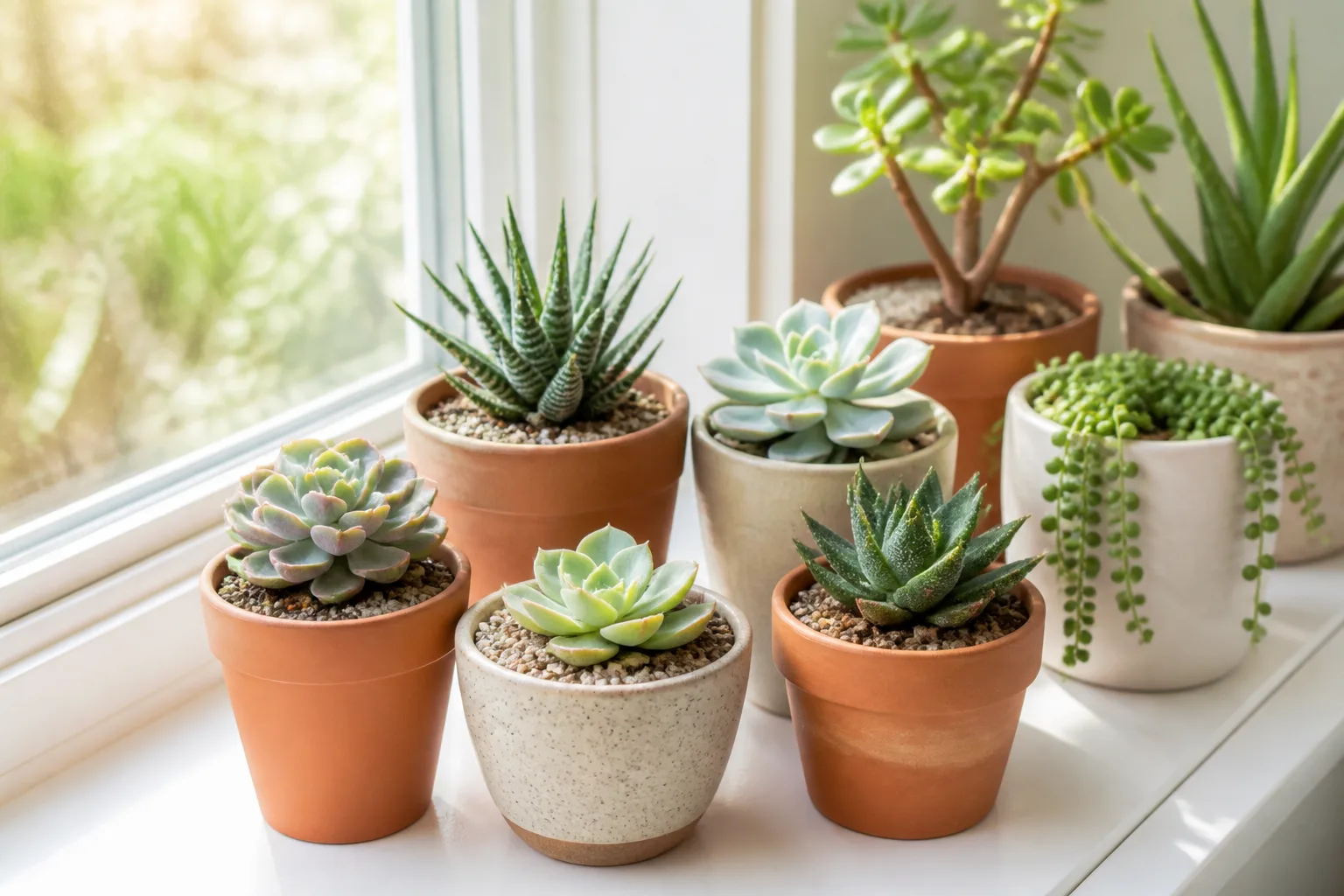
Walk into any garden center and you will see dozens of fleshy-leaved plants sold as succulents, yet they do not all want the same light, water, or winter treatment. The fastest way to stop killing them is not memorizing 59 care cards—it is learning how succulents store water, which growth habit yours has, and which family it belongs to. Once you can place a plant in the right group, the species name becomes a refinement, not a guess.
This guide covers 59 popular succulent types you are likely to encounter as houseplants or in outdoor containers, organized for identification first and care second. For deeper watering, soil, and troubleshooting routines, pair this page with our how to care for succulents and indoor succulent care guides.
What Makes a Plant a Succulent
A succulent is any plant that stores water in thickened leaves, stems, or roots to survive dry periods. That adaptation appears across many unrelated plant families—Crassulaceae, Asphodelaceae, Cactaceae, and others—so “succulent” describes a strategy, not a single botanical group. Cacti are succulents, but not all succulents are cacti; many euphorbias look cactus-like yet belong to an entirely different family with irritating sap.
The trait you can see at a glance is fleshy tissue. Leaves may be plump rosettes (echeveria), bead-like strings (string of pearls), or stiff swords (snake plant). Stems may be swollen (jade plant) or columnar (African milk tree). Roots of some desert types stay shallow and wide to grab brief rains. Understanding that water storage is the shared thread helps explain why most succulents want bright light, fast-draining soil, and dry-down periods between waterings—with real exceptions covered below.
How to Identify Succulents by Growth Habit
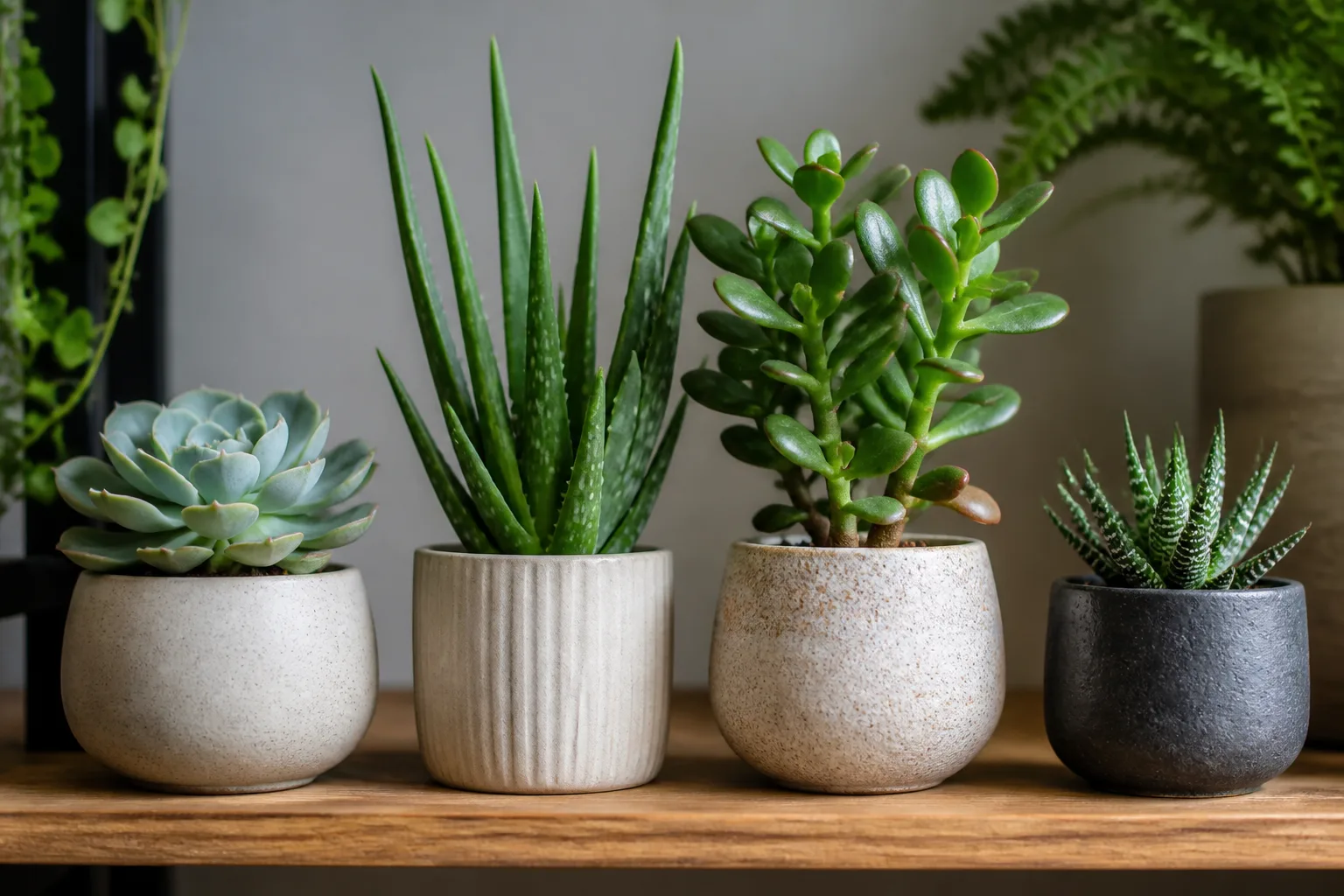
Before you chase a species name, look at shape and growth pattern. Three habits cover most of the 59 types in this guide.
Rosette-forming succulents
Rosette succulents grow leaves in a circular, often flat arrangement from a central point. Examples include echeveria, many kalanchoe, haworthia, sempervivum (hens and chicks), and agave. Identification clues: symmetrical leaf spirals, powdery farina on some echeveria, and offsets (“pups”) at the base. Color often shifts with light—echeveria may blush pink in sun and stay gray-green indoors.
Columnar and tree-like succulents
Columnar or tree-form succulents add height with upright stems. Jade plant develops woody trunks; African milk tree and candelabra euphorbia branch like cacti; ponytail palm (Beaucarnea) sends a fountain of leaves from a swollen base. Snake plant is columnar in spirit—thick leaves rising vertically from rhizomes. Look for woody stems, vertical emphasis, and slow height gain indoors.
Trailing and groundcover succulents
Trailing types spill from pots: string of pearls, donkey’s tail, string of hearts, burro’s tail. Groundcovers spread horizontally: sedum Angelina, hardy ice plant, two-row stonecrop, hens and chicks. Leaves are often small and densely packed. These groups need excellent drainage and careful watering because wet soil at the crown causes fast rot.
| Growth habit | What to look for | Examples from this list |
|---|---|---|
| Rosette | Circular leaf arrangement, often offsets | Echeveria, haworthia, sempervivum, agave |
| Columnar / tree | Upright stems, woody base over time | Jade plant, snake plant, euphorbia, ponytail palm |
| Trailing / mat | Cascading stems or spreading rosettes | String of pearls, sedums, hens and chicks |
Universal Care Rules Before You Pick a Species
Every succulent on this list still needs a draining pot, gritty mix, and light matched to the window you actually have. Water when the root zone has dried appropriately—not on a calendar—and soak until water exits the drainage hole. Desert types generally want more dry time than jungle cacti or mistletoe cactus.
Light: Most fleshy-leaved types need the brightest spot available. Increase direct sun gradually; pale bleaching or crisp brown patches mean too much too fast. Haworthia, gasteria, and holiday cacti tolerate less intense sun. See our succulent care guide for acclimation steps.
Soil: Use cactus/succulent mix or amend standard potting soil with coarse sand, pumice, or perlite. Heavy peat that stays wet causes root rot—the most common succulent failure.
Water: Feel the soil or lift the pot. Wrinkled leaves on desert types often mean thirst; yellow, translucent leaves with wet soil mean overwatering. Christmas and Thanksgiving cacti prefer more consistent moisture during growth.
Hardiness: USDA zone ratings in the table below matter only if you grow plants outdoors year-round. Most tender types move indoors before frost.
Crassula and Jade-Style Succulents
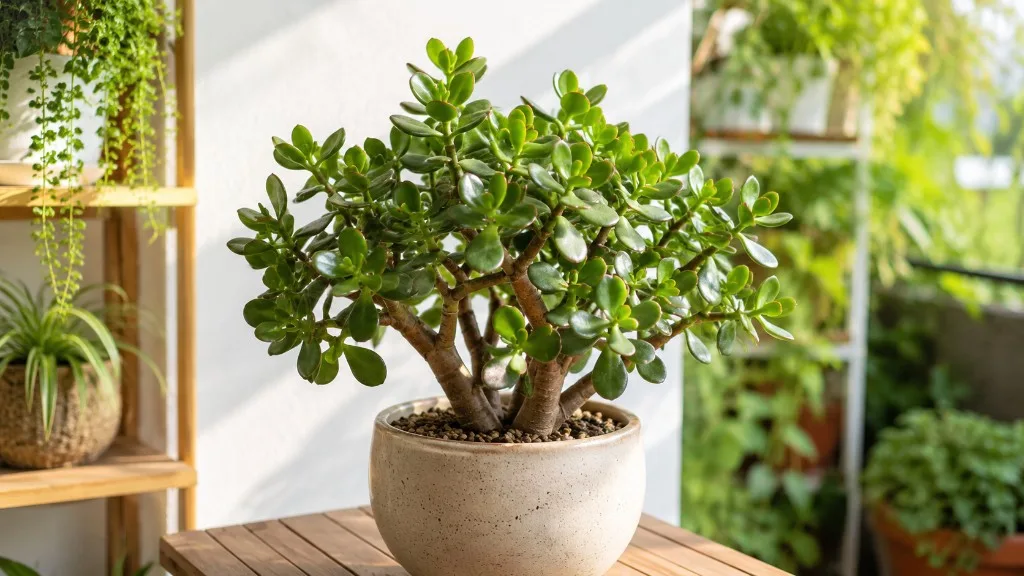
The Crassula genus includes some of the most recognizable indoor succulents. NC State Extension describes Crassula ovata (jade plant) as a slow-growing, tree-like shrub with oval, fleshy leaves—often called lucky plant or money plant, which confuses buyers with the unrelated money tree (Pachira aquatica).
Jade plant (Crassula ovata) — Zones 11–12; bright light; moderate water; toxic to pets (ASPCA). Woody stems and coin-shaped leaves. Grows 3–6 feet indoors over many years.
Silver dollar plant (Crassula arborescens) — Blue-gray rounded leaves with maroon edges; multi-stemmed shrub to 4 feet; toxic.
Dwarf jade (Portulacaria afra) — Smaller leaves than true jade; often used in bonsai; keep out of harsh direct sun to avoid leaf burn.
Rainbow elephant bush (Portulacaria afra ‘Variegata’) — Cream-and-green foliage; same care as dwarf jade; drought-tolerant once established.
Crassulas propagate easily from leaf or stem cuttings. If your plant is leggy, it usually needs more light—not more water. Full jade care: /plants/jade-plant/.
Echeveria and Other Powdery Rosette Types
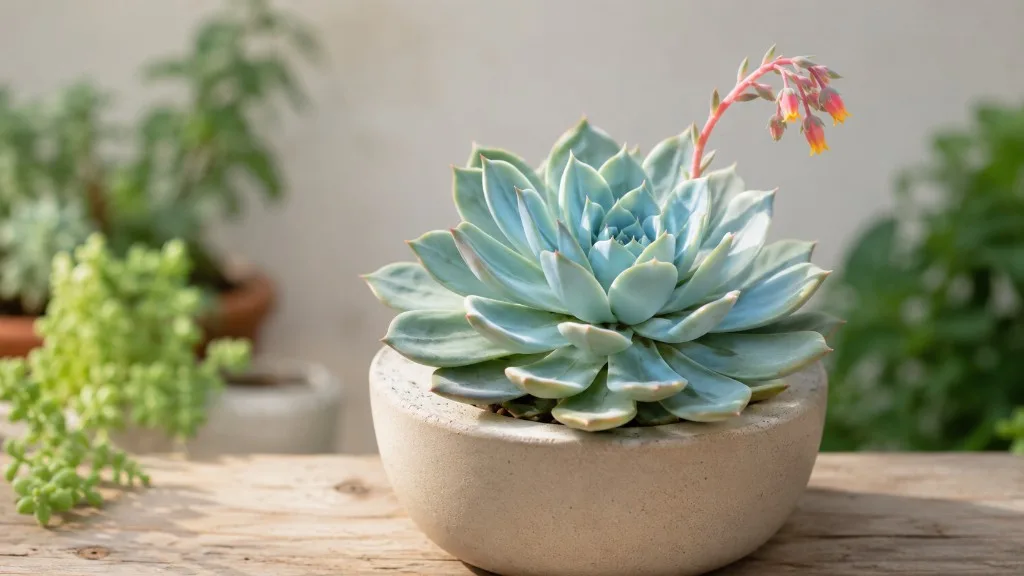
Echeveria rosettes are the poster children of succulent collections: plump leaves, often with a chalky coating (farina) that should not be wiped off. They need strong light to stay compact; weak light produces stretched “hen on a stick” stems.
Mexican snowball (Echeveria elegans) — Pale blue-green rosettes to 8 inches; full sun outdoors; offsets freely.
Echeveria ‘Perle von Nürnberg’ — Gray-pink leaves that intensify in direct sun; popular hybrid.
Ghost echeveria (Echeveria spp.) — Fast-growing pale rosettes; allow soil to dry fully between waterings.
Mexican firecracker (Echeveria setosa) — Hairy leaves; bright indirect light; relatively cat-safe among echeverias per ASPCA variegated wax plant listing.
Ghost plant (Graptopetalum paraguayense) — Trailing pale rosettes that blush pink-yellow in sun; not a true echeveria but cared for similarly.
Rosette types are ideal for leaf propagation; allow cut surfaces to callus before placing on dry soil.
Sedum, Stonecrop, and Hardy Groundcovers
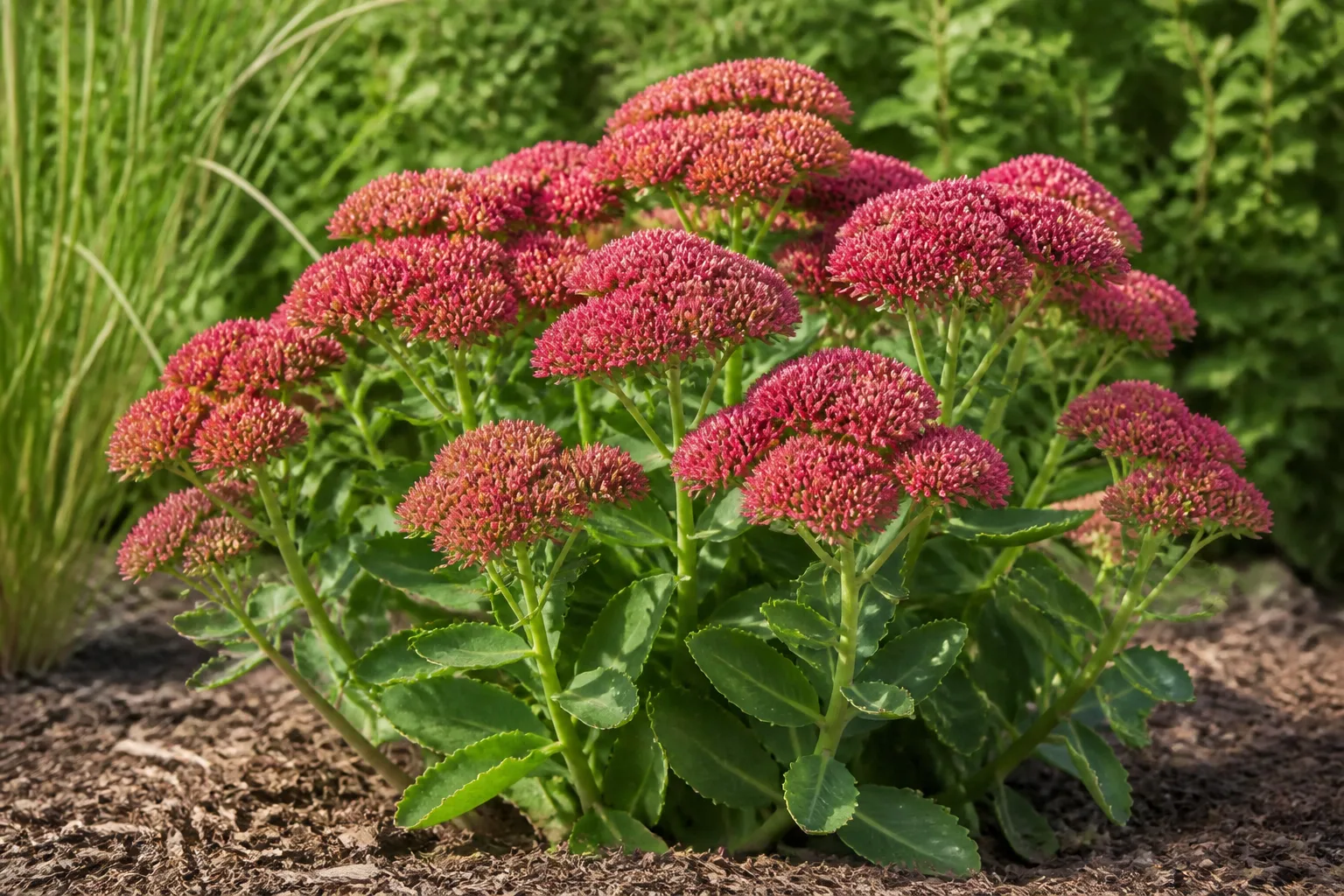
Sedum and related stonecrops range from tender trailers to cold-hardy groundcovers—one of the biggest care splits in the succulent world.
Donkey’s tail / burro’s tail (Sedum morganianum) — Same species, two common names; fragile trailing stems of blue-green leaves; handle minimally; bright light; low water.
Jelly bean plant (Sedum rubrotinctum) — Plump red-tipped leaves; full sun; sprawls outdoors as groundcover.
Autumn Joy stonecrop (Hylotelephium telephium ‘Autumn Joy’) — Upright perennial to 2 feet; pink fall flowers; Zones 3–9.
Angelina stonecrop (Sedum rupestre ‘Angelina’) — Golden mat; orange fall color; Zones 5–9; moderate water in summer.
Two-row stonecrop (Phedimus spurius) — Low spreader; Zones 3–9; mild toxicity (NC State).
Blue chalksticks (Curio serpens, syn. Senecio serpens) — Blue trailing stems; full sun; protect from hard frost.
Hardy sedums tolerate garden soil if drainage is sharp; tender trailers do better in pots with grit-heavy mix.
Aloe, Agave, and Spiky Leaf Succulents
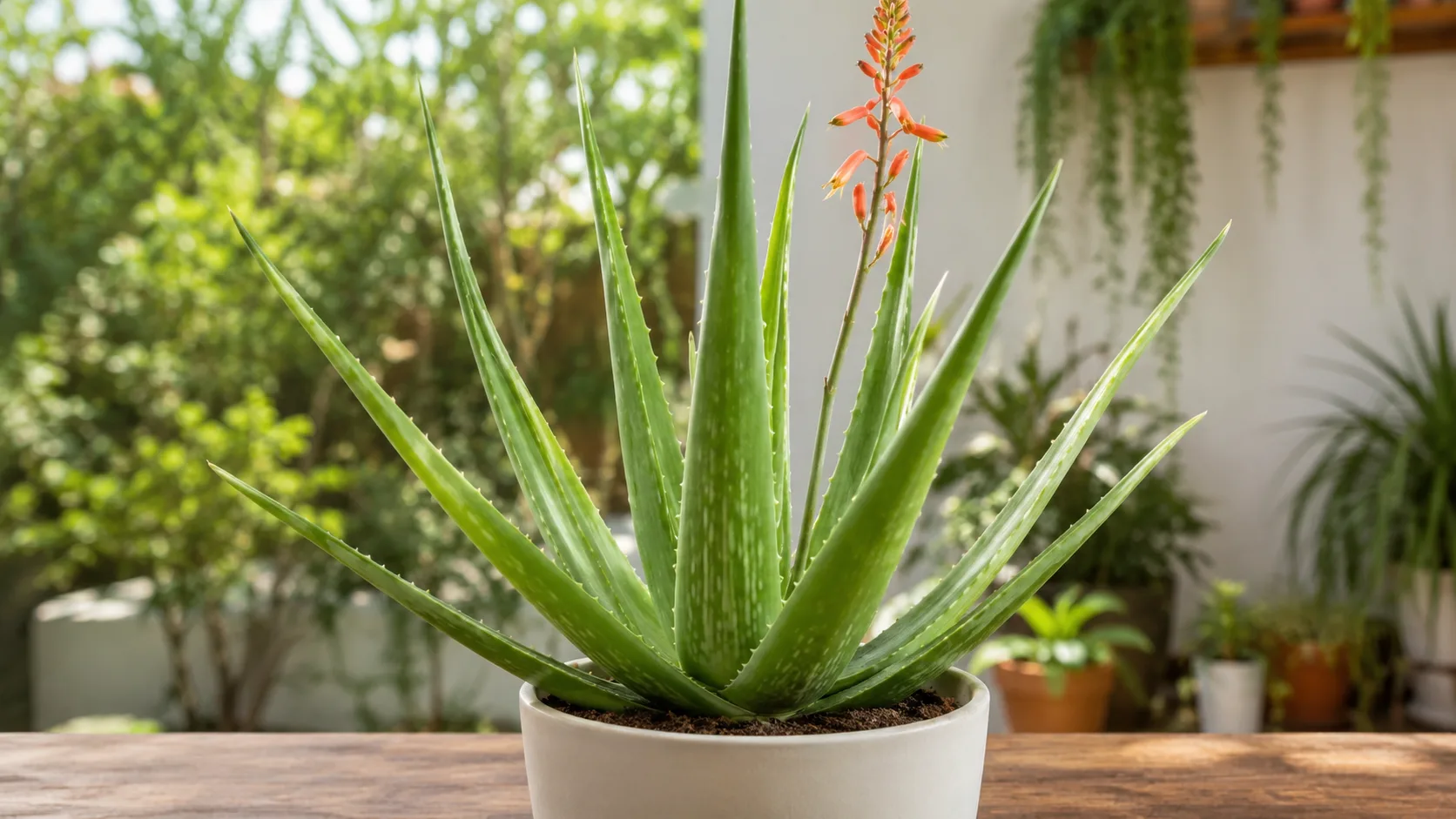
Aloe and agave share spiky leaves but differ in size and hardiness. Aloes are common houseplants; agaves are often landscape specimens in warm climates.
Aloe vera (Aloe barbadensis) — Lance-shaped toothed leaves; bright light; water regularly in summer, less in winter; toxic to pets (ASPCA).
Cape aloe (Aloe ferox) — Larger, architectural; full sun; orange flower spikes outdoors.
Parry’s agave (Agave parryi) — Blue-gray rosette to 3 feet; dramatic flower stalk; Zones 7–10; see our agave growing guide.
Eastern prickly pear (Opuntia humifusa) — Hardy pad cactus; Zones 4–9; yellow summer flowers; full sun and dry winter soil.
Twisted-leaf yucca (Yucca rupicola) and Arkansas yucca (Yucca arkansana) — Spiky evergreen rosettes; very low water; toxic to pets (ASPCA yucca).
Ponytail palm (Beaucarnea recurvata) — Bulbous caudex with grass-like leaves; not a true palm; bright light; low water.
Haworthia, Gasteria, and Low-Light Tolerant Types
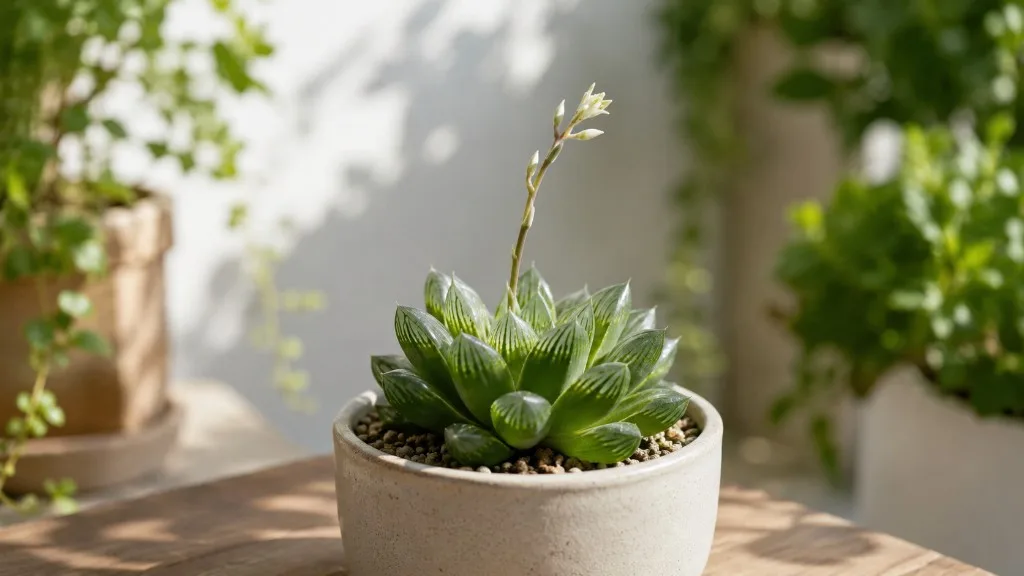
Not every succulent wants a south-facing sill. Haworthia and gasteria tolerate lower light and smaller pots—good apartment choices when echeveria would stretch.
Zebra haworthia (Haworthia fasciata) — White-striped dark green leaves; 5–8 inches; east or west window.
Gasteria (Gasteria spp.) — Tongue-shaped spotted leaves; slow; tubular flowers when mature; see growing gasteria indoors.
Tiger jaws (Faucaria tigrina) — Toothy leaf margins; moderate water in growing season; bright indirect light.
Living stones (Lithops spp.) — Mimic pebbles; extremely slow; water lightly and rarely; full sun; easy to overwater.
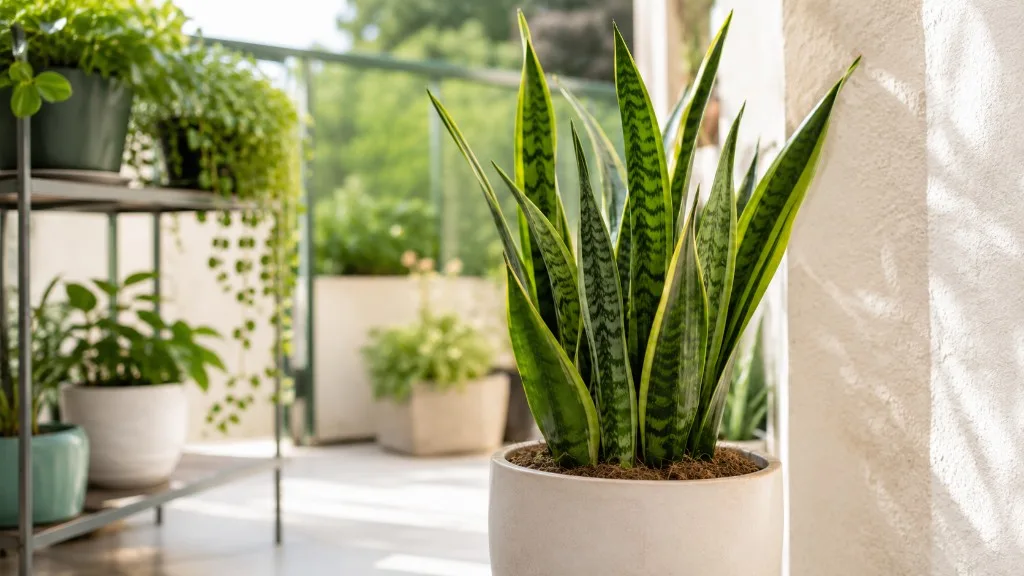
Snake plant (Dracaena trifasciata, formerly Sansevieria) — Stiff vertical leaves; among the most forgiving indoor “succulents”; low water; toxic to pets (ASPCA). Care hub: /plants/snake-plant/.
Kalanchoe and Kalanchoe-Lookalikes
Kalanchoe species often have scalloped or paddle-shaped leaves and showy flowers on some types. Most are toxic to pets (ASPCA kalanchoe).
Flaming Katy (Kalanchoe blossfeldiana) — Compact; long-lasting flower clusters; bright light.
Chocolate soldier (Kalanchoe tomentosa) — Fuzzy gray leaves with brown spots.
Flapjack / paddle plant (Kalanchoe luciae) — Wide red-edged leaves; full sun for best color.
Mother of thousands (Kalanchoe daigremontiana) — Plantlets along leaf edges; invasive potential outdoors; keep contained.
Desert rose (Adenium obesum) — Swollen caudex; trumpet flowers; warm conditions; sensitive to overwatering.
Trailing “String Of” Succulents
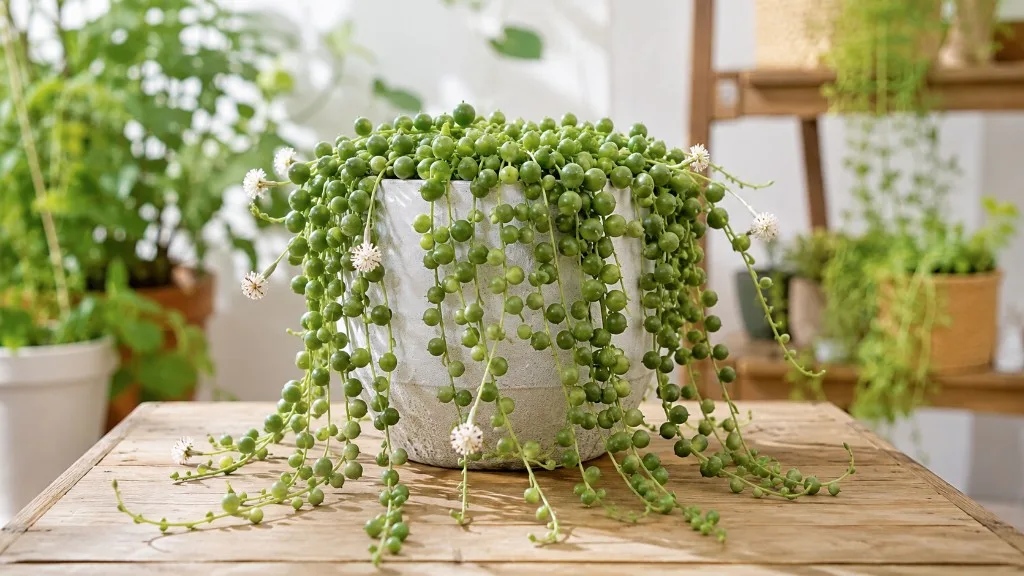
Trailing succulents are popular in hanging baskets but rot quickly if soil stays wet. University of Wisconsin Horticulture notes that string of pearls (Senecio rowleyanus, now often Curio rowleyanus) has pea-shaped leaves with an epidermal window for photosynthesis—an adaptation to arid South African cliffs.
String of pearls — Trailing stems to several feet; toxic to pets; shallow roots; clay pots dry faster than plastic.
String of bananas (Curio radicans) — Banana-shaped leaves; fast grower; full sun.
String of dolphins (Senecio peregrinus) — Curved leaves resembling dolphins; toxic; bright light.
String of hearts (Ceropegia woodii) — Heart-shaped marbled leaves; not a true Senecio but succulent-adjacent; trailing to 12 feet.
String of turtles (Peperomia prostrata) — Often sold with succulents; prefers more humidity and moisture; see misleading labels section below.
Hang these where stems get light, not just the pot rim, and water only when the mix is dry through the upper half.
Euphorbia Succulents That Are Not Cacti
Many spine-bearing plants in nurseries are Euphorbia, not cacti. Euphorbias bleed a milky latex sap that irritates skin and is dangerous if ingested or splashed in eyes.
Candelabra cactus (Euphorbia ingens) — Tree-like indoor specimen to 10+ feet; toxic.
Crown of thorns (Euphorbia milii) — Thorny stems; colorful bracts year-round; toxic (Pet Poison Helpline).
African milk tree (Euphorbia trigona) — Fast vertical growth outdoors; toxic sap.
Pencil cactus (Euphorbia tirucalli) — Pencil-thick stems; severe irritation from sap; avoid if you have pets or children (ASPCA).
Wear gloves when pruning euphorbias and wash tools after cuts.
Jungle Cacti and Holiday Schlumbergera
Jungle cacti are epiphytic succulents from tropical forests—not desert plants. They want more organic soil moisture and filtered light than echeveria.
Christmas cactus (Schlumbergera × buckleyi) — Flat segmented stems; winter blooms; moderate water; partial shade.
Thanksgiving cactus (Schlumbergera truncata) — Hooked stem segments; blooms slightly earlier; keep soil lightly moist in growth.
Mistletoe cactus (Rhipsalis baccifera) — Thin branching stems; regular water; indirect light.
Orchid cactus (Epiphyllum spp.) — Night-blooming large flowers; hanging basket culture; regular water in summer.
Do not treat these like desert cacti. Our pebble tray guide for succulents and cacti explains why extra humidity trays rarely help desert types but matters for some tropical groups.
Cold-Hardy Outdoor Succulents

Several types on the popular list survive freezing winters when drainage is excellent:
Hens and chicks (Sempervivum tectorum) — Rosettes with offsets; Zones 3–11; ASPCA lists as non-toxic.
Hardy ice plant (Delosperma cooperi) — Magenta flowers; low mat; Zones 6–10.
Autumn Joy, Angelina, and two-row stonecrop — Perennial border and rock garden staples in Zones 3–9.
Eastern prickly pear — Pad cactus hardy to Zone 4 with dry winter soil.
Parry’s agave and some yuccas — Southwest and mild-climate landscapes.
In cold regions, grow tender echeveria and string succulents in pots and move them inside before frost. The RHS hardy cacti and succulents guide emphasizes sharp drainage and shelter from winter wet.
Pet-Safe vs Toxic Succulent Choices
Pet owners should verify every plant against the scientific name, not the nursery tag. ASPCA guidance on succulents notes that “non-toxic” does not mean a pet should eat houseplants—mild stomach upset is still possible.
Generally safer options (still keep out of reach): hens and chicks (Sempervivum), many echeveria, bunny ear cactus (Opuntia microdasys), Chinese money plant (Pilea peperomioides).
High-risk indoors with pets: jade plant, aloe, kalanchoe, snake plant, string of pearls, euphorbias (especially pencil cactus), crown of thorns, yucca, ZZ plant ‘Raven’.
When in doubt, hang trailing plants high, keep toxic species in closed rooms, and call your veterinarian or ASPCA Animal Poison Control at (888) 426-4435 if ingestion occurs.
59 Succulent Quick-Reference Table
Use this table to narrow your ID, then read the family section above for care nuance. Water ratings: Low = dry well between drinks; Mod = slightly more frequent; Reg = jungle/type moisture during growth.
| Common name | Scientific name | Zone | Light | Water | Pet notes |
|---|---|---|---|---|---|
| Jade plant | Crassula ovata | 11–12 | Bright | Mod | Toxic |
| Silver dollar plant | Crassula arborescens | 10–12 | Bright | Low | Toxic |
| Donkey’s tail | Sedum morganianum | 10–11 | Sun/part | Low | — |
| Mexican snowball | Echeveria elegans | 9–11 | Full sun | Low | Safer |
| Perle von Nürnberg | Echeveria ‘Perle von Nürnberg’ | 9–12 | Bright | Low | Safer |
| String of pearls | Curio rowleyanus | 9–12 | Sun/part | Low | Toxic |
| Candelabra cactus | Euphorbia ingens | 10–11 | Full sun | Low | Toxic |
| Crown of thorns | Euphorbia milii | 9–11 | Sun/part | Low | Toxic |
| Aloe vera | Aloe barbadensis | 10–12 | Bright | Mod | Toxic |
| Christmas cactus | Schlumbergera × buckleyi | 10–12 | Part shade | Mod | — |
| Chocolate soldier | Kalanchoe tomentosa | 9–11 | Bright | Low | Toxic |
| Flapjack | Kalanchoe luciae | 9–11 | Sun/part | Low | Toxic |
| Flaming Katy | Kalanchoe blossfeldiana | 10–12 | Bright | Low | Toxic |
| Ponytail palm | Beaucarnea recurvata | 10–11 | Full sun | Low | — |
| Snake plant | Dracaena trifasciata | 9–11 | Indirect + some sun | Low | Toxic |
| Zebra haworthia | Haworthia fasciata | 9–11 | Bright | Low | — |
| Mother of thousands | Kalanchoe daigremontiana | 9–11 | Bright | Mod | Toxic |
| Pink quill | Tillandsia cyanea | 9–12 | Part sun | Low | Air plant |
| Ghost plant | Graptopetalum paraguayense | 9–11 | Sun/part | Low | — |
| Jelly bean sedum | Sedum rubrotinctum | 9–11 | Full sun | Low | — |
| Living stones | Lithops spp. | 10–11 | Full sun | Low | — |
| Hens and chicks | Sempervivum tectorum | 3–11 | Full sun | Low | Safer |
| Parry’s agave | Agave parryi | 7–10 | Full sun | Mod | Toxic |
| Propeller plant | Senecio crassissimus | 10–11 | Sun/part | Low | — |
| Autumn Joy | Hylotelephium ‘Autumn Joy’ | 3–9 | Full sun | Low | — |
| Angelina stonecrop | Sedum rupestre ‘Angelina’ | 5–9 | Sun/part | Mod | — |
| Hardy ice plant | Delosperma cooperi | 6–10 | Full sun | Low | — |
| Eastern prickly pear | Opuntia humifusa | 4–9 | Full sun | Low | — |
| Giant chalk dudleya | Dudleya brittonii | 9–10 | Full sun | Low | — |
| Tree aeonium | Aeonium arboreum | 9–11 | Sun/part | Mod | — |
| African milk tree | Euphorbia trigona | 9–11 | Part sun | Low | Toxic |
| Rainbow elephant bush | Portulacaria afra ‘Variegata’ | 10–11 | Sun/part | Low | — |
| Raven ZZ plant | Zamioculcas zamiifolia ‘Raven’ | 9–10 | Part shade | Low | Toxic |
| Kiwi aeonium | Aeonium haworthii ‘Kiwi’ | 9–11 | Full sun | Low | — |
| String of hearts | Ceropegia woodii | 9–12 | Filtered sun | Low | — |
| String of dolphins | Senecio peregrinus | 9–11 | Full sun | Low | Toxic |
| String of bananas | Curio radicans | 10–11 | Full sun | Low | — |
| Twisted-leaf yucca | Yucca rupicola | 7–11 | Sun/part | Low | Toxic |
| Arkansas yucca | Yucca arkansana | 6–9 | Sun/part | Low | Toxic |
| String of turtles | Peperomia prostrata | 10–12 | Bright indirect | Mod | Not true succulent |
| Chinese money plant | Pilea peperomioides | 9–11 | Part sun | Reg | Safer |
| Dragon fruit cactus | Hylocereus undatus | 10–11 | Sun/part | Reg | — |
| Hindu rope | Hoya compacta | 10–11 | Part | Mod | Hoya, not succulent |
| Ghost echeveria | Echeveria spp. | 9–12 | Full sun | Low | Safer |
| Mexican firecracker | Echeveria setosa | 10–12 | Bright | Low | Safer |
| Desert rose | Adenium obesum | 11–12 | Full sun | Low | Toxic |
| Dwarf jade | Portulacaria afra | 9–11 | Sun/part | Low | — |
| String bean hoya | Hoya shepherdii | 10–11 | Bright | Low | Hoya |
| Gasteria | Gasteria spp. | 9–11 | Part | Low | — |
| Mistletoe cactus | Rhipsalis baccifera | 9–10 | Part | Reg | — |
| Thanksgiving cactus | Schlumbergera truncata | 10–12 | Part | Mod | — |
| Cape aloe | Aloe ferox | 9–12 | Full sun | Low | Toxic |
| Hoya kerrii | Hoya kerrii | 11 | Full sun | Low | Hoya |
| Tiger jaws | Faucaria tigrina | 9–11 | Bright | Mod | — |
| Two-row stonecrop | Phedimus spurius | 3–9 | Full sun | Low | Mild toxicity |
| Orchid cactus | Epiphyllum spp. | 10–11 | Part | Reg | — |
| Blue chalksticks | Curio serpens | 10–11 | Full sun | Low | — |
When a “Succulent” Label Is Misleading
Nurseries group many drought-tolerant houseplants under “succulents” even when their care diverges. Chinese money plant (Pilea) and string of turtles (Peperomia) prefer steadier moisture and peatier mix than echeveria. Hoya species (Hindu rope, string bean hoya, Hoya kerrii) are succulent-leaved vines that often want more humidity and less blazing sun than desert types.
Raven ZZ plant stores water in rhizomes but is an aroid, not a Crassula relative—low light tolerant, toxic, and slow. Tillandsia (pink quill) is a bromeliad air plant with no soil at all. Treating these like desert rosettes in full sun and bone-dry soil is a common retail mistake.
If a plant wilts while the soil is still wet, suspect a non-desert succulent or root rot—not thirst. Match care to the family section, not the shelf sign.
Common Identification and Care Mistakes
Mistake 1: Watering on a schedule. Succulents need water when their mix is dry for their type—not every Tuesday. Lift the pot; check soil depth.
Mistake 2: Using regular potting soil alone. Without grit, peat holds water too long. Repot into cactus mix or add perlite and coarse sand.
Mistake 3: Assuming all succulents love full sun. Haworthia, gasteria, and holiday cacti scorch in harsh afternoon sun. Acclimate gradually per UC IPM’s cactus overview.
Mistake 4: Ignoring pet toxicity. Jade and aloe are common—and commonly chewed. Choose sempervivum or echeveria if pets nibble leaves.
Mistake 5: Confusing euphorbia sap with cactus spines. Milky latex is a chemical defense, not water storage. Keep pencil cactus away from curious pets.
Mistake 6: Leaving hardy sedums outdoors with soggy winter soil. Cold plus wet kills more hardy succulents than cold alone. Improve drainage or use raised beds.
When repotting or propagating, see how to repot succulents and propagate succulents for step-by-step timing.
Conclusion
The 59 succulent types in this guide share water-storing tissue but split into distinct care groups: desert rosettes, trailing curios, euphorbias with caustic sap, jungle cacti, and cold-hardy stonecrops. Identify your plant by growth habit first, confirm the family, then use the quick-reference table for light, water, and pet safety. With fast-draining soil, honest light, and watering driven by soil dryness—not habit—you can grow most of these plants well indoors or out. Keep exploring species-level care on our jade plant, echeveria, and snake plant hubs when you are ready to go deeper on a favorite.