23 Acacia Trees and Shrubs: Species and Uses
Explore 23 acacia trees and shrubs, from low groundcovers to large trees, with practical notes on leaves, bloom season, frost limits, pruning, and seed spread.
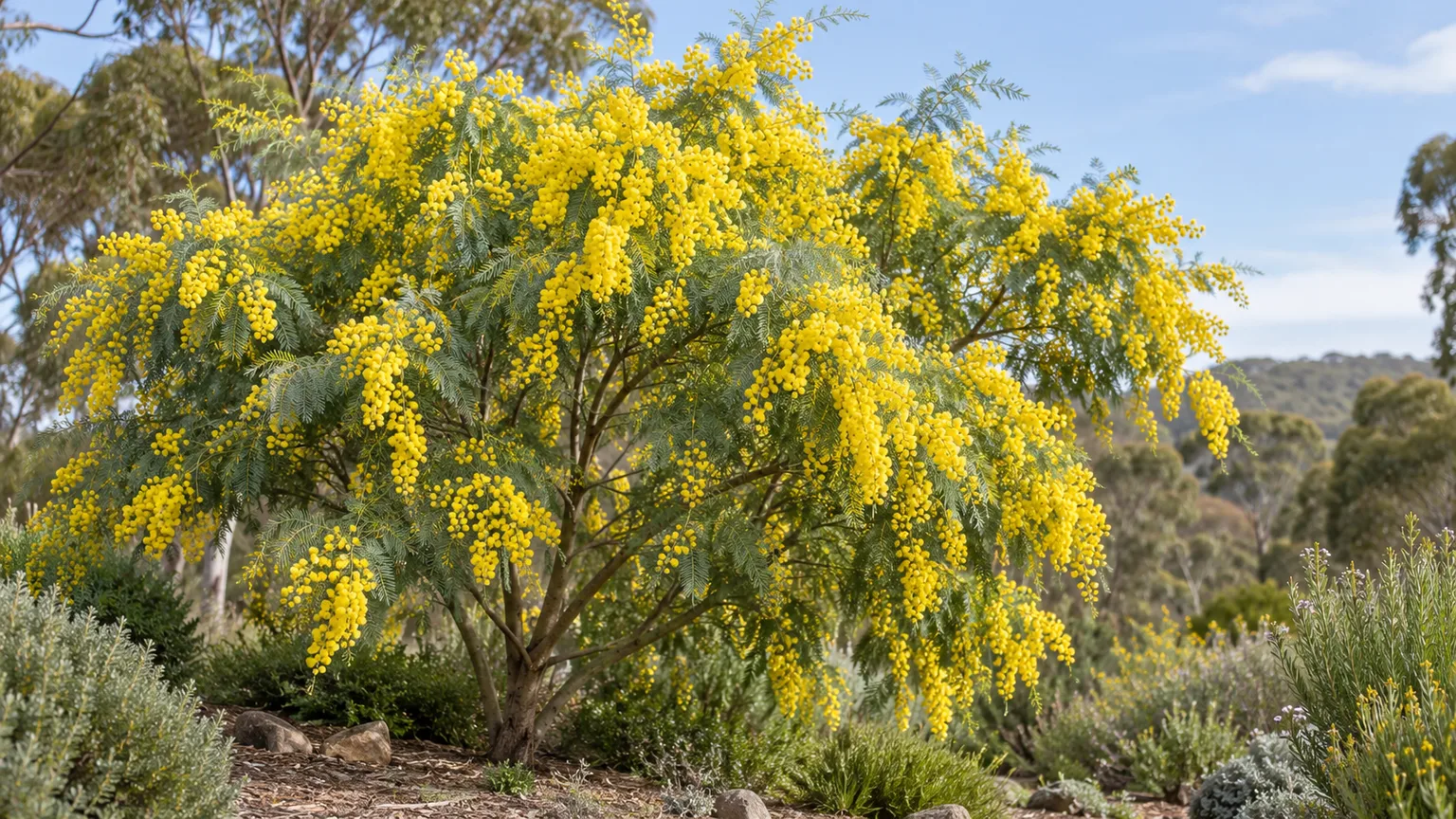
Acacia is not one look or one climate requirement. Some species are low, prickly shrubs; others spread as groundcovers or grow into substantial shade trees. The familiar yellow flower clusters and leaf-like foliage connect many of them, but a successful choice depends on a species’ mature size, native climate, and whether it spreads readily where you live.
The 23 species below give you a practical starting point. They include Australian wattles and the Hawaiian koa tree. A quick shortlist is useful, but it is not a substitute for checking the plant’s full botanical label and local status: common names shift between regions, and a plant that is native in one state or country can become a weed in another.
What Does “Acacia” Mean Today?
The name has a complicated history. Botanists once used Acacia broadly for trees and shrubs from Australia, Africa, Asia, and the Americas. As the groups were separated, the name Acacia was retained for the large Australian-led lineage; many African and some American species are now classified in genera such as Vachellia and Senegalia. The Australian Native Plants Society explains the nomenclatural decision and notes that most Australian species remain Acacia, while the International Dendrology Society’s Trees and Shrubs Online Acacia account describes the wider split and its horticultural implications.
That distinction matters when you shop. An older label may keep a historical name, while a catalog or botanical database may use the accepted one. The species in this guide are listed under their Acacia names, but the word “acacia” in a common name can also refer to a plant that is no longer classified in that genus. If a seller offers a “mimosa,” “wattle,” or “thorn tree,” use the scientific name to confirm what you are buying.
The word wattle is especially associated with Australian Acacia. Their tiny flowers are packed into spherical heads or cylindrical spikes, and their seed pods vary from flat to narrow and curved. Leaf shapes also vary, so two wattles can look almost unrelated until you notice their flowers and pods. The Australian Native Plants Society’s Acacia overview is useful background on these differences, Australian distribution, and the genus’ seed ecology.
Quick Fit Guide: Which Acacia Suits Your Site?
Start with the job the plant must do, then check the species’ climate and local invasive-plant status. This shortlist is not a promise of suitability: even two species with a similar shrub habit may differ in frost tolerance, moisture needs, or tendency to sucker.
| Garden need | Species to investigate | Check before buying |
|---|---|---|
| Low, compact flowering shrub | A. buxifolia, A. myrtifolia, A. suaveolens | Mature width, humidity, and local frost |
| Low groundcover | A. redolens | Whether a fast-spreading groundcover is safe in your region |
| Arching ornamental shrub | A. pravissima, A. boormanii | Suckering, final height, and winter wet |
| Dense thorny screen | A. ulicifolia, A. paradoxa, A. oxycedrus | Thorn exposure near paths, play areas, and property lines |
| Salt-exposed coastal planting | A. saligna, A. longifolia | Local weed restrictions and nearby dunes or bushland |
| Large shade or feature tree | A. koa, A. implexa, A. dealbata | Climate, rooting room, utilities, and seedling spread |
| Hot, dry inland site | A. aneura, A. pendula | Rainfall pattern, drainage, and local provenance |
Do not select from flower color alone. Many Acacias have yellow blooms, yet the height, branching habit, foliage, root behavior, and seed production determine whether the tree will actually suit the space.
Compact Species for Borders and Groundcover
These are the shorter or more shrub-like options in the list. “Compact” is relative: pruning can shape a plant, but it cannot turn a naturally spreading, thorny, or suckering species into a carefree path-edge shrub.
Box-leaf wattle (Acacia buxifolia) has small, box-like gray-green phyllodes and a rounded shrub form. It is worth investigating for a sunny border in a climate that matches its eastern Australian origins, especially where a small evergreen structure is more useful than a showy canopy. Confirm the expected mature size and cold tolerance for the form sold locally; nursery-grown plants can vary with provenance and conditions.
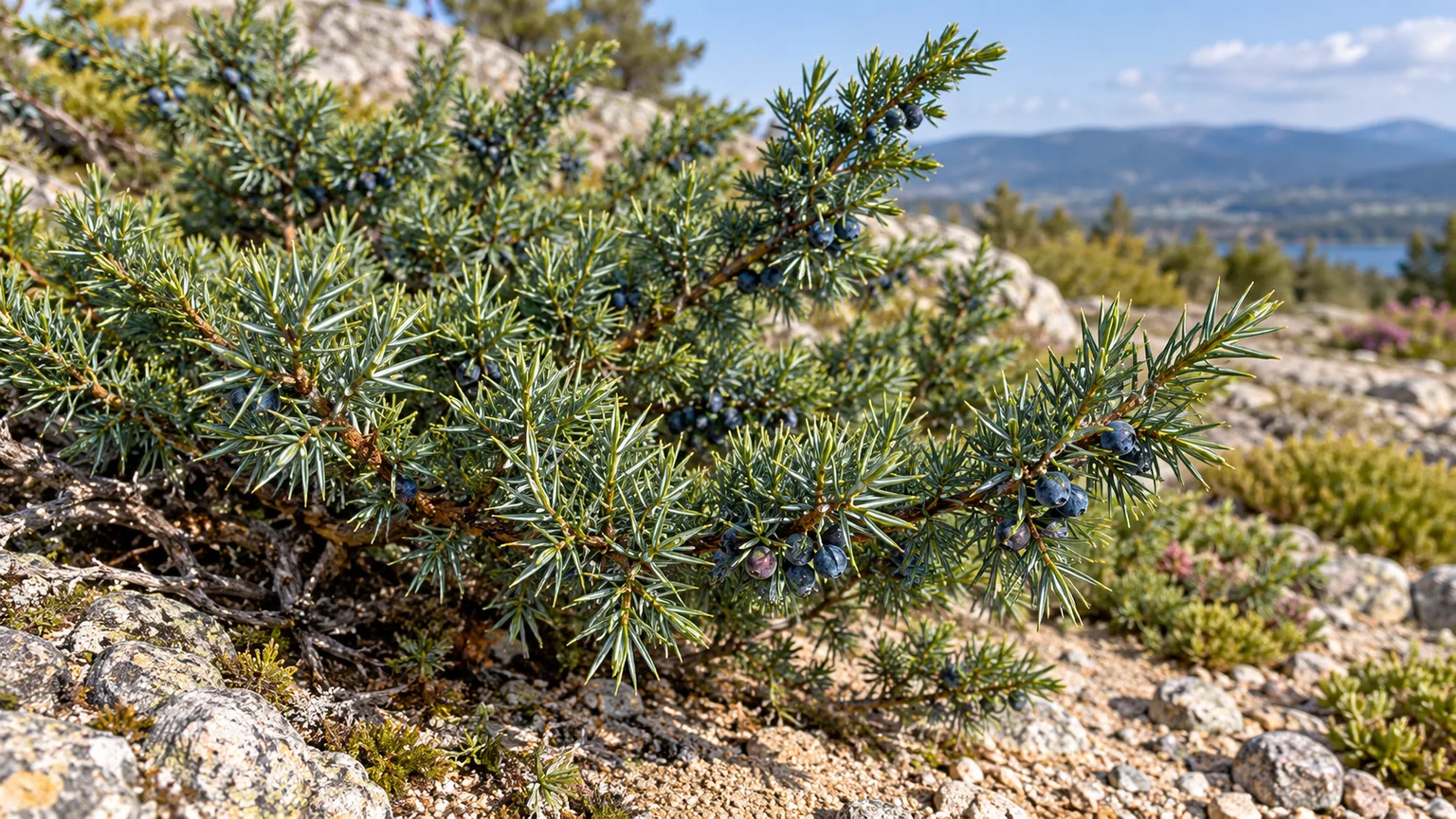
Juniper wattle (A. ulicifolia) is a fine-textured shrub with narrow, sharply pointed foliage and pale flowers. It can make a dense screen, but its prickly outline is a genuine placement issue, not a feature to overlook in a plant list. Set it away from gates, narrow paths, children’s play areas, and places where pets brush past it.
Myrtle wattle (A. myrtifolia) is a small shrub with myrtle-like phyllodes and reddish stems that show through the foliage. Its subtle cream-to-yellow flower clusters make it useful where the stems and leaf shape matter as much as the bloom. The Australian Native Plants Society describes it as a smaller wattle with contrasting red stems; size and flowering period still depend on local conditions.
Prickly Moses (A. verticillata) is named for its whorled, needle-like phyllodes. The foliage gives the shrub a distinctive silhouette, but it also makes this a poor choice beside a walkway or where routine pruning would put hands near sharp growth. Use the botanical spelling A. verticillata when checking a plant database.
Prostrate acacia (A. redolens) grows low and outward, making it a candidate for a slope or large groundcover area where mowing is impractical. That same vigor can become a liability if it overruns neighboring plants or crosses into unmanaged land. Before planting a substantial patch, verify that the species is not restricted or invasive locally and leave room for its actual spread rather than spacing it like a small shrub.
Spreading wattle (A. genistifolia) has stiff, broom-like phyllodes and a spreading shrub habit. It can contribute a naturalistic texture to a sunny, open planting, but it is not the right answer if you need a tidy narrow hedge. Check the width as well as the height on the local plant label, because the species name does not mean its outline will stay within a small footprint.
Spike wattle (A. oxycedrus) is another prickly shrub that can form a dense barrier. It offers a strong visual texture and protection from casual foot traffic, but should not be planted where someone must reach through it to open a gate, clear leaves, or maintain a fence. A thorny hedge also requires a safe route for pruning and disposal of cut branches.
Stiff-leaf wattle (A. obtusifolia) is a shrub or small tree with broad, blunt-tipped phyllodes. Its substantial foliage is quite different from the fine, fern-like leaves of silver wattle. It is a better candidate for mild coastal conditions than for a cold inland site; confirm its local frost range and allow the plant to reach its natural size instead of relying on repeated severe cuts.
Sweet wattle (A. suaveolens) is a coastal shrub grown for early, cream-colored flowers that can carry a noticeable fragrance. It is a good plant to investigate for a sheltered, mild garden, particularly where a smaller shrub is preferred to a large screen. Coastal origin does not mean it wants permanently wet soil, and a humid or cold-winter garden may not reproduce the conditions it handles in its native range.
Medium Shrubs for Flowers and Screens
These wattles can create more presence, but their speed and mature dimensions make placement important. A fast-growing screen may look useful in year one and become an expensive removal project if it seeds freely or outgrows the boundary.
Blue-leaf or golden wreath wattle (A. saligna) is a fast-growing large shrub or small tree with long gray-green phyllodes and conspicuous yellow flower heads. The Australian National Botanic Gardens describes it as adaptable, salt-spray resistant, and useful as a screen, but also documents it as a weed in northeastern New South Wales and South Africa. Treat those as regional records, not as proof that the plant is invasive everywhere; check your own official weed authority before planting.
Coastal wattle (A. longifolia) is a larger shrub or small tree with long, narrow foliage and conspicuous yellow flower spikes. It is sometimes used as a coastal screen because it tolerates exposed conditions, but it has spread invasively in parts of the Mediterranean region, including ecologically valuable Portuguese dunes documented in a remote-sensing study of Acacia longifolia. A dune, reserve, or native coastal planting is a poor place to experiment with a species that may spread beyond its bed; confirm local guidance first.
Flax-leaf wattle (A. linifolia) has narrow phyllodes that give the shrub a light, grassy outline. Cream or pale-yellow flowers add seasonal color without the dense canopy of a large tree. It is most useful when you want a smaller, airy plant and can match it to the right regional climate; a label giving only “full sun” will not tell you whether your winter moisture or frost is suitable.
Green wattle (A. decurrens) is a larger, quicker-growing tree with finely divided foliage and bright yellow clusters. It can shade a broad area faster than a slow-growing ornamental, but that speed also means it needs room and monitoring for seedlings. It has become a serious pest in parts of South Africa; the Australian Native Plants Society’s Acacia overview also lists it among wattles that cause problems outside their native range.
Kangaroo thorn (A. paradoxa) makes a dense, thorny shrub that can act as a barrier. Older horticultural references may list it under A. armata, so cross-check the scientific name rather than assuming a different label means a different plant. Its prickles make it unsuitable beside busy paths, and its spread has been a problem in some introduced regions; consult a local weed list before using it as a hedge.
Late-flowering black wattle (A. concurrens) is an eastern Australian shrub or small tree valued for long yellow flower spikes or heads. Catalogs may describe it as a compact screen or a small tree, so compare the nursery’s mature-size estimate with the room available rather than relying on a common-name promise. Choose it for a warm, well-drained site where its natural branching pattern can develop without harsh annual topping.
Red-leaf wattle (A. rubida) brings color beyond its flowers: young foliage and stems can show red tones, especially in cooler weather. It develops as a shrub or small tree with a branching silhouette, making it useful where an informal feature plant is wanted. Do not assume the same display in every climate; light, temperature, and the plant’s local source affect how strongly the reddish growth appears.
Ovens wattle (A. pravissima) is recognized by its arching branches and small, wedge-shaped phyllodes. It can be grown as a large shrub or trained into a small tree, and its draped outline is especially effective when you can view it from the side. Allow for that spread when siting it; the Australian Plants Society profile and RHS pruning guidance both favor shaping young plants thoughtfully rather than cutting mature Acacias back hard.
Snowy River wattle (A. boormanii) is a gray-green, narrow-leaved shrub or small tree with masses of yellow flowers. The Australian Plants Society profile describes a plant reaching about four meters and notes that some garden specimens sucker into clumps. That habit can make a useful informal screen, but a small border should be planned around the possible colony rather than the first stem.
Trees for Shade, Structure, and Dry Country
The tree species below deserve a full-size planting plan. Consider overhead wires, buildings, nearby pavement, the future shade pattern, and the cost of removing a mature tree before you choose one for a small lot.
Koa (A. koa) is a large tree endemic to the Hawaiian Islands. Its size, ecology, and cultural significance make it a special choice in its native landscape rather than a generic drought-tolerant tree for any warm garden. In Hawaii, favor locally appropriate sources and follow restoration or planting guidance for the island; outside that climate, a cold winter or dry container is not a substitute for its native conditions.
Lightwood (A. implexa) can become a long-lived shade tree with rough bark and twisted pods. It may form multiple trunks and spread by suckers, so the footprint can extend well beyond the trunk. That growth is attractive in a spacious planting but difficult beside paving, underground services, or a boundary where suckers would be unwelcome. It is not a true hickory despite the common name “hickory wattle.”
Silver wattle (A. dealbata) is one of the most recognizable species: fine, bipinnate foliage, a light airy canopy, and abundant round yellow flower clusters. In mild climates it can grow quickly into a large tree; its graceful appearance can therefore hide a serious scale mismatch in a small yard. Its quick growth can create a serious scale mismatch in a small yard; check regional weed information and whether you can manage seedlings before planting.
Mulga (A. aneura) is a highly variable shrub or tree from the dry inland of Australia. Its narrow gray-green phyllodes and rounded outline suit hot, low-rainfall landscapes better than humid, waterlogged gardens. Use a locally adapted form where available, and do not overwater a mature specimen simply because young nursery stock needs help through its establishment period.
Weeping myall (A. pendula) has drooping branches and silvery blue-gray foliage, which gives it a more sculptural shape than a typical upright shade tree. It comes from inland Australian conditions and is best considered for a site with room to spread and soil that drains between rains. Its mature canopy will change the light below it, so choose companions that can handle the shade rather than filling the space with sun lovers.
Phyllodes vs. True Leaves: What to Look For
Many Acacias appear to have simple leaves, but these structures are phyllodes: flattened leaf stalks that perform the work of a blade. Seedlings often begin with bipinnate, fern-like leaves before developing adult phyllodes. Other species retain compound foliage into maturity, so a single “acacia leaf” picture cannot represent the whole group. The Australian Native Plants Society explains that both foliage types occur among wattles and that phyllodes vary greatly in size and form.
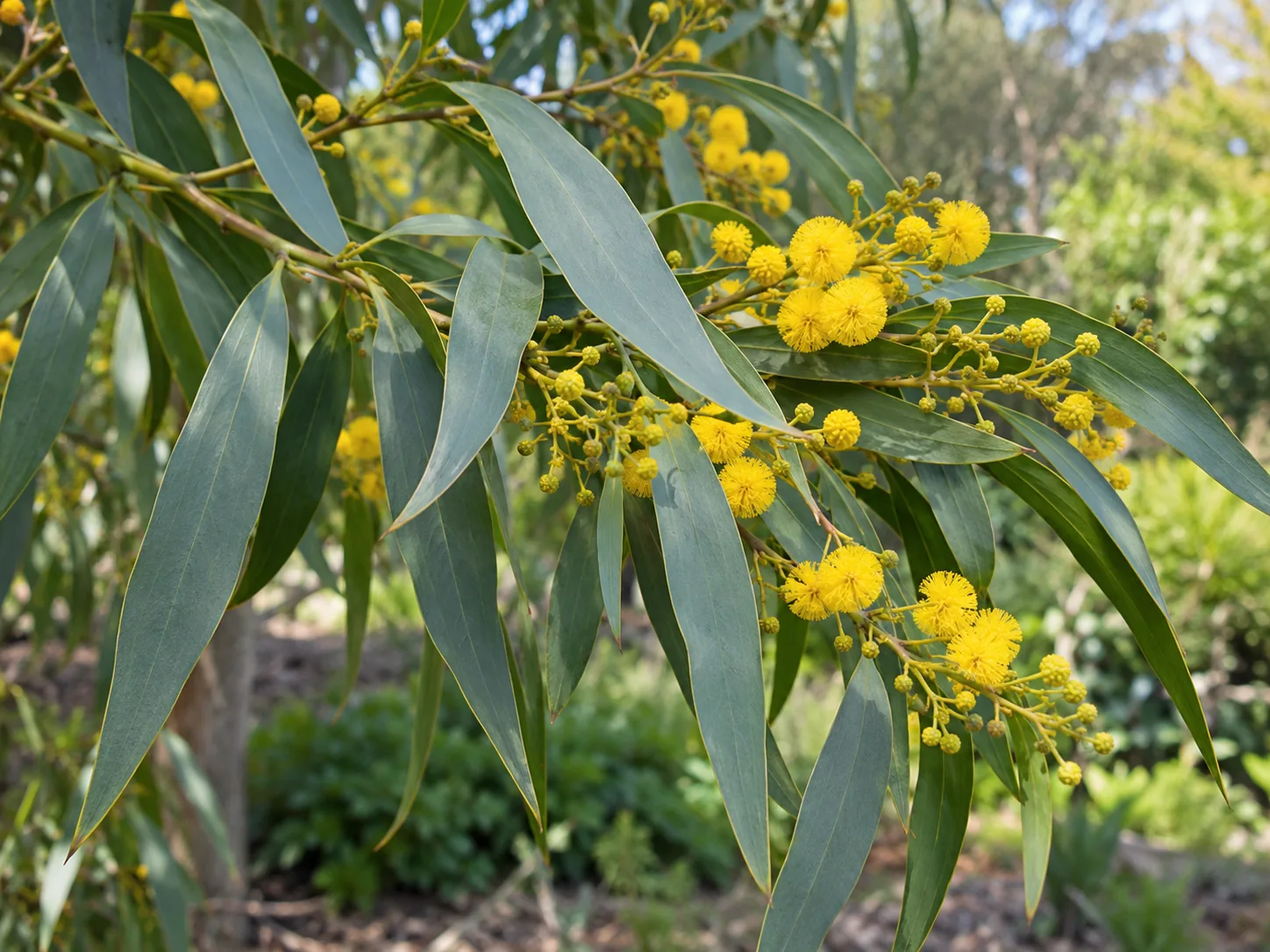
Use foliage as one clue, not the only one. Note whether phyllodes are broad, narrow, blunt, hooked, or arranged around the stem; then look at flower clusters, pod shape, and branching habit. A. saligna, for example, carries long flat phyllodes, while A. dealbata has much finer compound leaves. A. verticillata’s narrow phyllodes form whorls, a useful clue that also warns you to handle the plant carefully.
When Do Acacias Bloom?
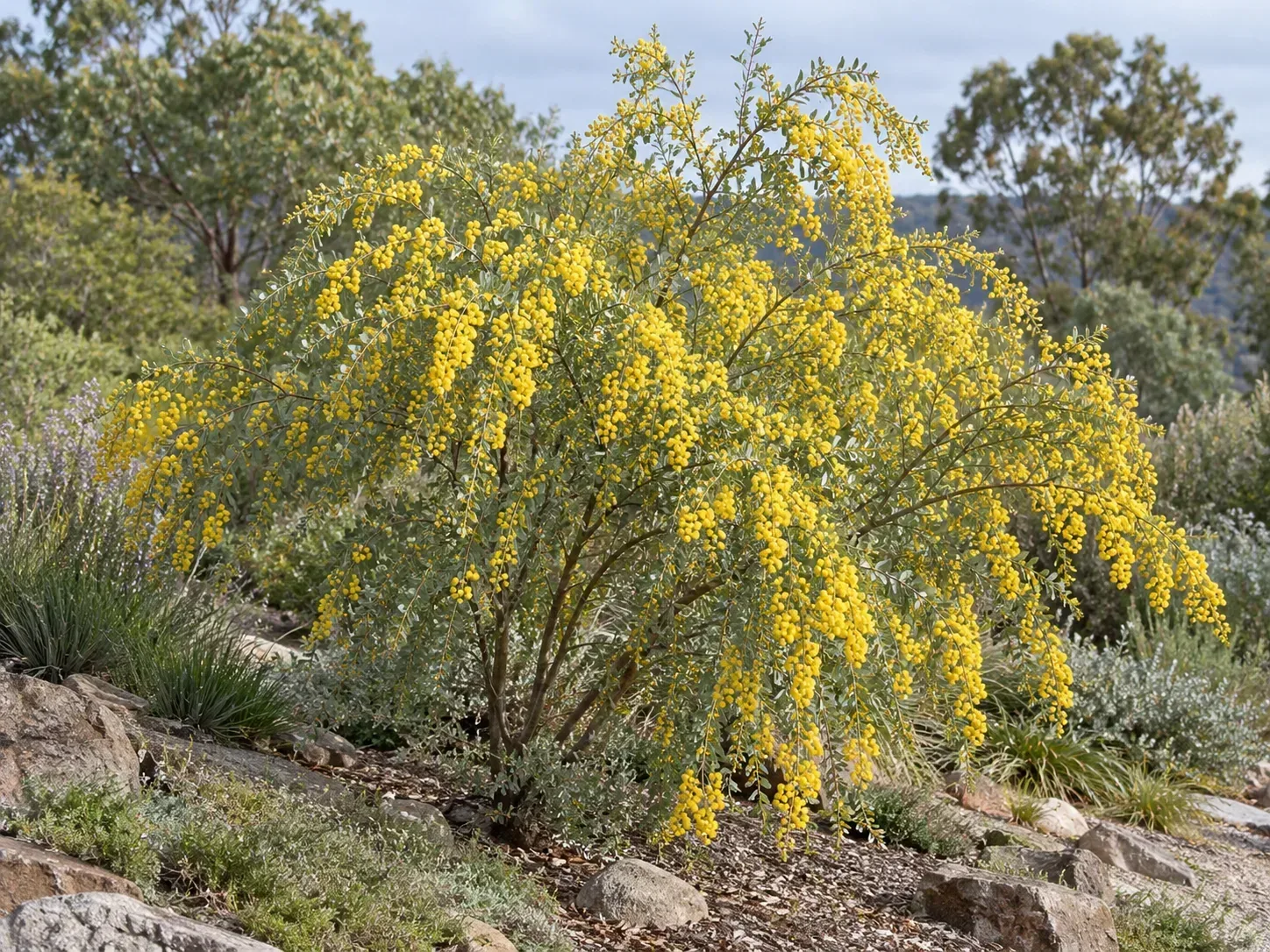
There is no one acacia flowering month. In Australia, many familiar wattles bloom in late winter or spring, but species flower at different times and some bloom at other points in the year. In the Northern Hemisphere, the visible season may fall in winter or early spring, depending on species and local weather. A plant’s native range, altitude, and rainfall pattern can shift flowering too, so use a local botanical profile for the species you are considering instead of converting a generic calendar date.
Most flowers are yellow or cream, arranged as fluffy spherical heads or slender spikes. After flowering, pods develop and mature at different rates. If your aim is winter color, choose a species whose bloom is recorded for your hemisphere and climate; if you need a hedge, prioritize evergreen density and mature width over a short floral display.
Choose by Climate, Not a Blanket Zone Number
A USDA zone describes a location’s average annual extreme minimum temperature. It does not tell you how long frost lasts, whether the soil stays wet in winter, how much wind a site receives, or whether humid summers suit a plant from an arid region. That is why a range such as “zones 7 to 11” can be a starting point for one species but a misleading rule for the genus as a whole.
The list spans very different climates. Koa is native to Hawaii’s islands; mulga and weeping myall are associated with dry inland Australia; coastal species such as A. saligna and A. longifolia may tolerate salt exposure but need a weed-risk check; and Snowy River wattle comes from cooler southeastern Australian habitats. These are clues, not universal guarantees. When possible, choose plants grown from seed collected in a climate similar to yours and consult a botanical garden, native plant society, or local extension service for a species-specific recommendation.
Cold plus wet soil can be harder on some wattles than a brief dry frost. Conversely, a cool-climate species can struggle in a humid subtropical garden even when the winter low is acceptable. Before purchasing, ask the nursery for the botanical name, mature size, source region, expected cold tolerance, and whether the plant suckers or self-seeds locally.
Soil, Water, and Establishment
Most of the species in this list need a sunny position and soil that drains reasonably well, but “drought tolerant” should not be read as “never water.” During the first growing season, check the root ball during dry spells and water deeply when it is drying below the surface. A young plant that is allowed to desiccate before its roots extend into surrounding soil may fail even if an established specimen would handle the same weather.
Once established, water according to species and climate. Dryland wattles such as mulga should not be kept in constantly moist soil, while a coastal species in a hot, wind-exposed site may need supplemental water in prolonged drought. If the soil remains saturated for hours after ordinary rain, improve drainage or choose a species adapted to that moisture; piling amendments into a small planting hole will not fix a wet site.
Avoid heavy routine feeding unless a soil test or local guidance identifies a need. Fast growth is not always a benefit: it can mean more pruning, a larger crown, and more pods or seedlings to manage. Plant young stock in its permanent position where possible. The International Dendrology Society’s Acacia account advises careful transplanting and establishing plants while they are still young, a sound rule for woody species with a strong root system.
Keep Size, Spines, and Pruning in Check
Use the plant’s natural growth habit as your first design tool. Low spreading A. redolens needs a broad, open area; an arching A. pravissima needs space for its branches to drape; and a tree such as A. dealbata needs a large enough crown zone. If the desired height requires repeated severe pruning, choose a smaller species instead of forcing the wrong plant into the space.
Thorns and sharp phyllodes deserve a measured safety margin. Keep A. paradoxa, A. ulicifolia, A. oxycedrus, and prickly forms of A. verticillata away from narrow paths, children’s areas, outdoor seating, and places where branches can snag clothing or skin. Plan how you will access the plant for inspection and pruning, and dispose of thorny prunings according to local yard-waste rules.
Prune young plants to establish a single trunk or a balanced multi-stem form, depending on the species and intended use. For older plants, remove dead, damaged, crossing, or badly placed branches and preserve the natural canopy. The RHS Acacia pruning guide recommends light, selective work for mature specimens and warns that most resent hard pruning. Its April timing is UK-specific; in the Southern Hemisphere, use the equivalent local season and avoid pruning into frost risk. A named horticulture writer at Gardening Know How also emphasizes formative pruning while a tree is young.
Invasiveness Is a Regional Question
Acacias are not universally invasive, and a blanket warning about the entire genus is not useful. The relevant question is whether a particular species can spread beyond cultivation in your region. A. saligna, for example, is native to Western Australia but the Australian National Botanic Gardens reports it naturalized elsewhere in Australia and a weed in northeastern New South Wales and South Africa. The Australian Native Plants Society also notes that several Australian wattles have become pests outside their native ranges.
Risk can cross state and national borders because seed moves, and different climates create different outcomes. A. longifolia has been documented spreading in Mediterranean coastal habitats; a species that is accepted in its home range may threaten dunes or bushland when introduced elsewhere. Fast growth, persistent seed, suckering, or dispersal by wildlife are reasons to check closely, not proof that every plant in the genus will escape.
Before planting, search your state or country’s official invasive-plant database by the scientific name, including older synonyms on the nursery tag. Check council or conservation-agency advice if the site is close to a creek, reserve, dune, or other natural area. If a species is flagged, choose a locally native substitute rather than relying on pruning to control seedlings beyond your fence. Do not dump pods or garden waste near bushland, and follow local rules for disposing of seed-bearing cuttings.
Can You Grow Acacia from Seed?
Yes, but hard seed coats make pretreatment species-dependent. In nature, heat can break dormancy, and many commonly grown wattles respond to boiling-water treatment or scarification. The Australian Native Plants Society’s propagation notes caution that some species need less heat or no treatment at all; for those, boiling can injure the seed. Follow instructions for the exact species rather than treating the whole genus as one seed lot.
A cautious method is to sort the seed by species, read a local grower or botanical profile, then test a small batch before treating everything. Some species need hot water followed by a soak; others are better nicked lightly or sown without pretreatment. Use a well-drained seed-raising mix, keep it evenly moist rather than waterlogged, and label each pot with the scientific name and treatment. Germination speed and success vary with seed age, storage, and temperature.
Seedlings may show juvenile compound leaves that differ from mature phyllodes, so do not reject a young plant because it looks unlike the parent. Protect seedlings from drying out while they establish, but do not leave their roots sitting in water. When they are large enough to transplant, harden them off and move them carefully into a permanent site before they become pot-bound.
Common Problems and What They Usually Mean
A declining acacia does not automatically need fertilizer or fungicide. Start with the site: is the root zone staying wet, has the plant recently experienced a hard frost, was it transplanted in hot weather, or has a vigorous shrub been cut back too far? Each clue points to a different response, and adding water or feeding without checking the soil can make root stress worse.
Yellowing or sparse foliage can follow root damage, poor drainage, drought during establishment, or a mismatch between the species and the site. Check soil moisture several inches down and inspect for waterlogging before changing the watering routine. Frost-damaged tips can be removed after the risk of further frost has passed; wait until the live/dead boundary is clear rather than cutting back healthy wood prematurely.
A spreading clump may be a normal trait in a suckering species such as A. boormanii or A. implexa. Remove unwanted suckers while small if the plant is appropriate to keep, but if seedling spread is the issue, collect pods before they split and review local disposal guidance. For ongoing decline, unexplained dieback, or suspected disease, bring a sample and photographs to a local extension service or botanical garden; there is no single disease or pest profile that applies to every Acacia.
Do not assume ornamental Acacia seeds, pods, bark, or foliage are safe to eat. Some wattles have traditional food uses, but the Australian Native Plants Society notes that nutritional potential and possible toxic effects are still being researched for some species. Treat unidentified plant material as non-food, and contact a local poison service if someone ingests it.
Conclusion
There is no single best acacia for every garden. Match a species to the space it will occupy, the cold and moisture pattern it will experience, and the regional rules that govern its spread. Compact wattles can give a small border structure, thorny types can form a barrier where they are safe to maintain, and large trees can make a durable canopy when they have enough room.
Use the scientific name on the label, verify the species with a local botanical or native-plant source, and check its invasive status before planting near natural areas. That short bit of homework is what turns a striking wattle into a well-matched landscape plant.