10 Trees That Attract Hummingbirds in Your Region
Compare 10 hummingbird-friendly trees by bloom time, native range, mature size, and site needs, then build a garden with nectar, insects, and shelter.
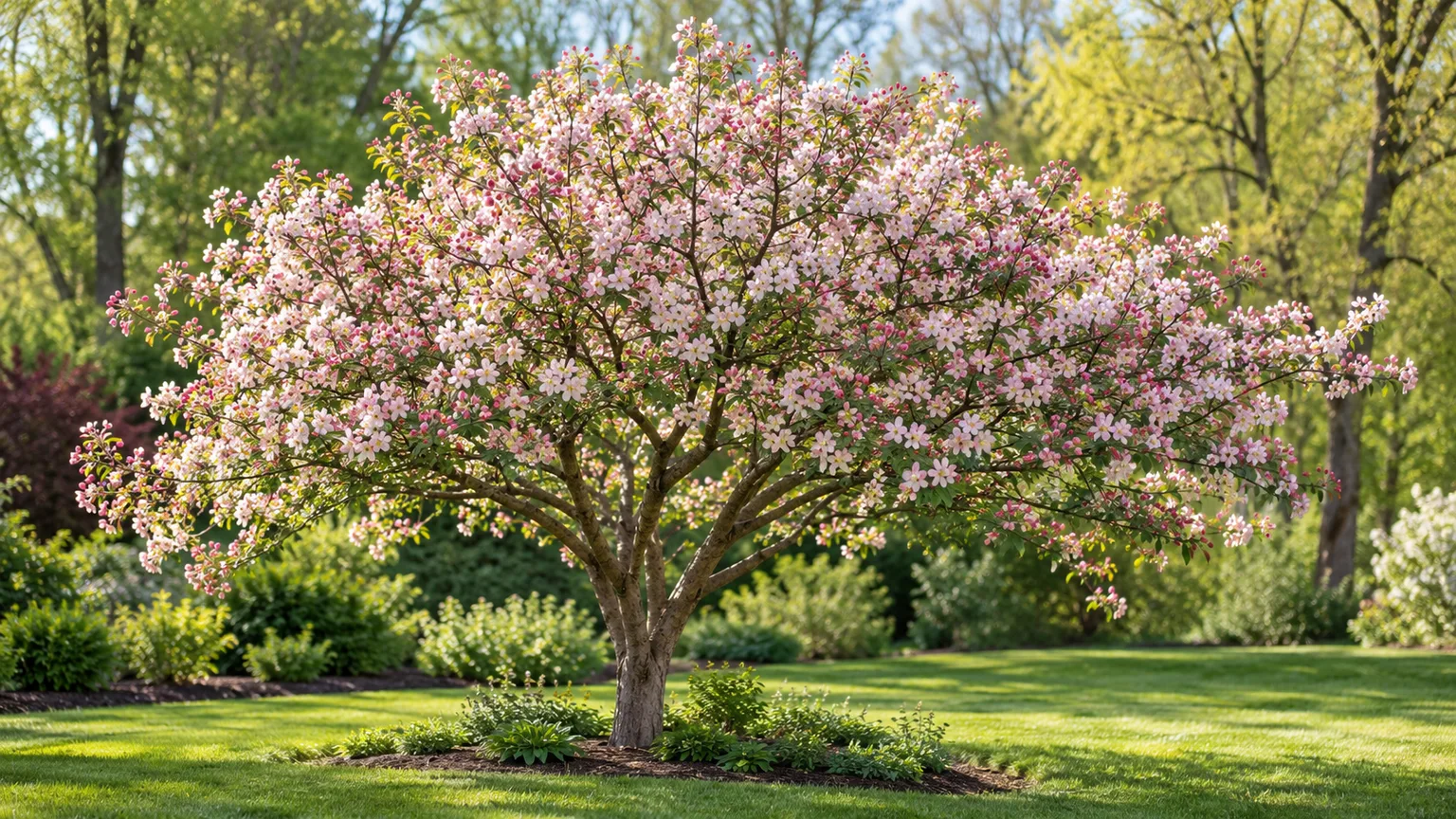
A flowering tree can make a yard easier for hummingbirds to find and more useful once they arrive, but no tree works everywhere. A good choice has blossoms open during the weeks hummingbirds pass through or breed in your area, fits the available space at maturity, and grows in a range where it can thrive without displacing local plants.
The most dependable plan is to pair a locally appropriate tree with smaller flowers that extend nectar through the season. Trees also add perches, shelter, and insect-rich branches, so the best hummingbird yard is not simply a menu of the brightest flowers. The National Park Service describes hummingbirds as nectar feeders that also catch insects for protein, while Penn State Extension notes that trees and shrubs provide nearby shelter and perching structure. (National Park Service; Penn State Extension)
The ten selections below are a regional menu, not a single ranking for every climate. Several are directly listed by extension educators as hummingbird trees; others are valuable native flowering trees or habitat partners whose usefulness depends on where you live. Confirm the species, cultivar, mature dimensions, and local native or invasive status with your county extension office or a reputable native plant nursery before planting.
What makes a tree useful to hummingbirds?
A hummingbird-friendly tree can offer one or more of four things: accessible nectar, insects and spiders, a safe perch, and branches or foliage that contribute to nesting cover. Red, orange, and pink flowers can help birds notice blooms, but color alone is not a reason to plant a tree. Flower shape, nectar, bloom timing, local bird species, and the plant’s fit to the site matter more. The National Park Service notes that hummingbirds use their bills and tongues to drink nectar from flowers, then take insects for protein; Penn State Extension adds that they forage on insects and spiders as well as plant nectar. (National Park Service; Penn State Extension)
A tree that flowers for a short burst may still be useful, but it cannot feed birds by itself for the full migration or breeding season. Audubon’s review of community-science observations found hummingbirds visiting gardens with a wide variety of plants and many plants native to the birds’ ranges. That supports a broader planting approach: select locally appropriate trees, then fill the gaps with shrubs, vines, and perennials that bloom before and after the tree’s main show. (Audubon)
Trees do not lure a specific hummingbird on demand. A tree’s value depends on whether the right birds occur in your region, whether flowers overlap their presence, and whether the surrounding yard supplies cover and prey. Even a well-chosen tree is one piece of habitat, not a guarantee of a visit.
Ten trees worth considering
Penn State Extension lists apple, flowering crabapple, eastern redbud, hawthorn, horse chestnut, northern catalpa, and tulip poplar among trees that attract hummingbirds in Pennsylvania. Its list is regional, not a national planting prescription. University of Georgia Extension adds local detail for southeastern native trees, including red buckeye, sourwood, crabapple, serviceberry, and tulip poplar; its examples show why choosing a species by region is more useful than treating a common name as a universal recommendation. (Penn State Extension; University of Georgia Extension)
1. Red buckeye: a strong early-season nectar tree
Red buckeye (Aesculus pavia) is one of the most compelling small-tree choices where it is native. Its scarlet, tubular flower clusters open in spring, close to the time eastern ruby-throated hummingbirds are returning north. Georgia Extension reports that ruby-throated hummingbirds pollinate its flowers and that the tree supports spring migration. It generally grows as a large shrub or small tree, so it can fit a woodland edge or smaller yard more easily than a full-size shade tree. (University of Georgia Extension)
Give red buckeye moist, well-drained soil and filtered shade or partial shade; it can also flower in heavier shade, according to the same Extension profile. Use it where its regional range fits, and plan for foliage to drop earlier than many deciduous trees. That early leaf drop is a normal trait, not a sign that the tree needs extra water or fertilizer.
2. Eastern redbud: spring bloom on a manageable tree
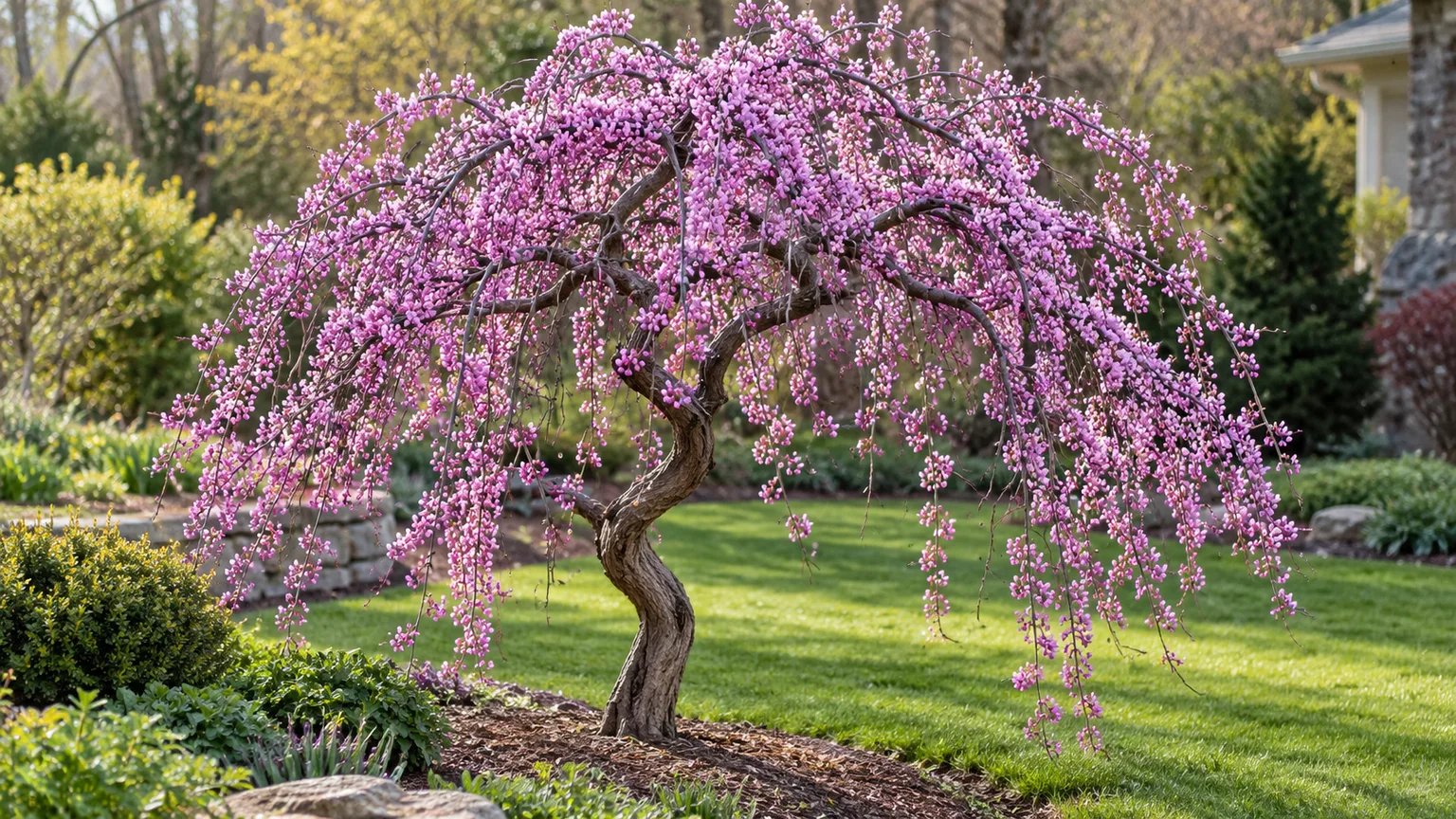
Eastern redbud (Cercis canadensis) is a good small-yard option across much of eastern North America. Its pink to rose flowers appear on branches in early spring, before the heart-shaped leaves fill out. Penn State includes redbud on its hummingbird tree list, and Georgia Extension describes it as a flowering specimen tree that tolerates a range of landscape sites. A typical mature size in the Georgia guide is roughly 20 to 25 feet tall, though climate, cultivar, and growing conditions change the final form. (Penn State Extension; University of Georgia Extension)
Choose a cultivar for structure and disease resistance as well as bloom color, and do not crowd it against a wall or under utility wires. Redbud flowers are a useful seasonal feature, but they do not replace a longer sequence of nectar plants. Keep a bed of early perennials or shrubs nearby so hummingbirds still have flowers after the redbud petals fall.
3. Native crabapple: flowers plus fruit and structure
Crabapple is a broad label covering many Malus species and cultivated selections, so check the botanical name before buying. Penn State lists flowering crabapple as an early-blooming tree that can attract hummingbirds. For a regional native choice, Georgia Extension profiles narrow-leaf crabapple (Malus angustifolia), which blooms from late winter to mid-spring in that state and produces wildlife food later in the year. Those dates are examples for Georgia, not a promise for every location. (Penn State Extension; University of Georgia Extension)
Select a disease-tolerant tree that fits your region and the space available; ornamental crabapples vary greatly in mature size, fruit drop, and disease susceptibility. A fruitless ornamental may still offer flowers, but a native or wildlife-friendly selection can extend value beyond the bloom period. Plant it in sun with adequate airflow, and avoid placing fallen fruit over a walkway or driveway if that cleanup would become a nuisance.
4. Native hawthorn: a regional spring-flowering choice
Hawthorn is not one tree but a large group of Crataegus species. Penn State includes hawthorn among hummingbird trees, while Georgia Extension lists native hawthorns such as Washington hawthorn and parsley hawthorn for southeastern landscapes. Choose the species native to your area rather than assuming English hawthorn is the right plant everywhere. White or pink spring flowers provide a short early-season opportunity; later fruit can feed other birds, and the branching crown adds structure. (Penn State Extension; University of Georgia Extension)
The trade-off is physical: some hawthorns carry sharp thorns, and fruit can drop beneath the canopy. Avoid them beside narrow paths, children’s play areas, or places where routine pruning would be difficult. They are better at an outer garden edge or wildlife border where thorny cover is acceptable and the plant can keep its natural form.
5. Northern catalpa: a large tree with showy flowers
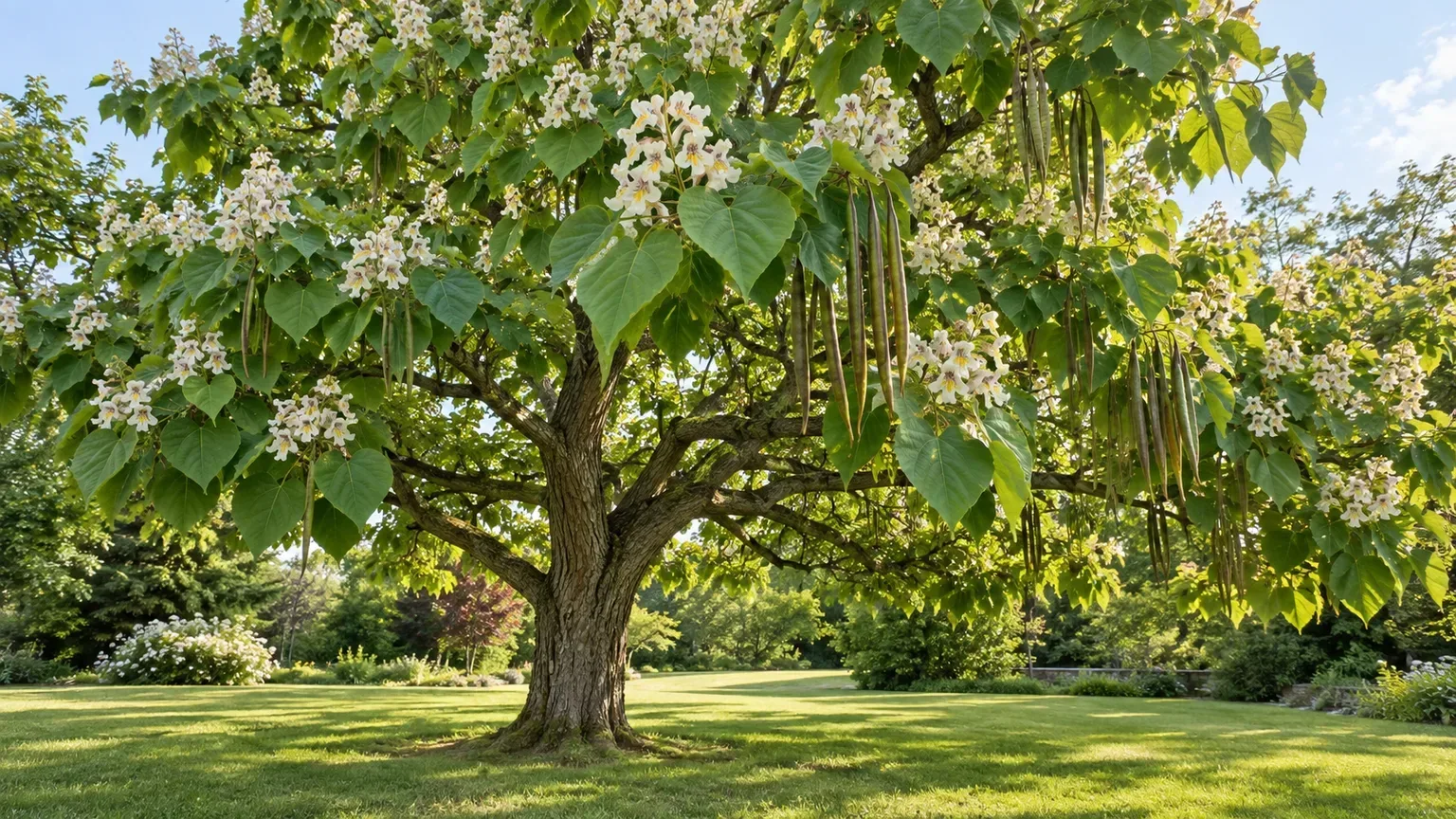
Northern catalpa (Catalpa speciosa) carries clusters of pale, orchid-like flowers in late spring or early summer, depending on location. Penn State lists it among hummingbird trees, but the Extension table also marks it as escaped from cultivation in Pennsylvania. That distinction matters: a tree can attract hummingbirds and still be a poor ecological choice outside its native range. Check your state’s native plant guidance and invasive-plant list before choosing it. (Penn State Extension)
Catalpa is a large, fast-growing tree that can reach about 75 feet, and its long seed pods and broad leaves make it a better fit for spacious yards than tight suburban lots. Do not plant it below overhead lines or close to a driveway simply because the flowers are attractive. If the tree is not native or recommended where you live, choose a local flowering species with a similar bloom window.
6. Tulip poplar: a canopy tree for a roomy site
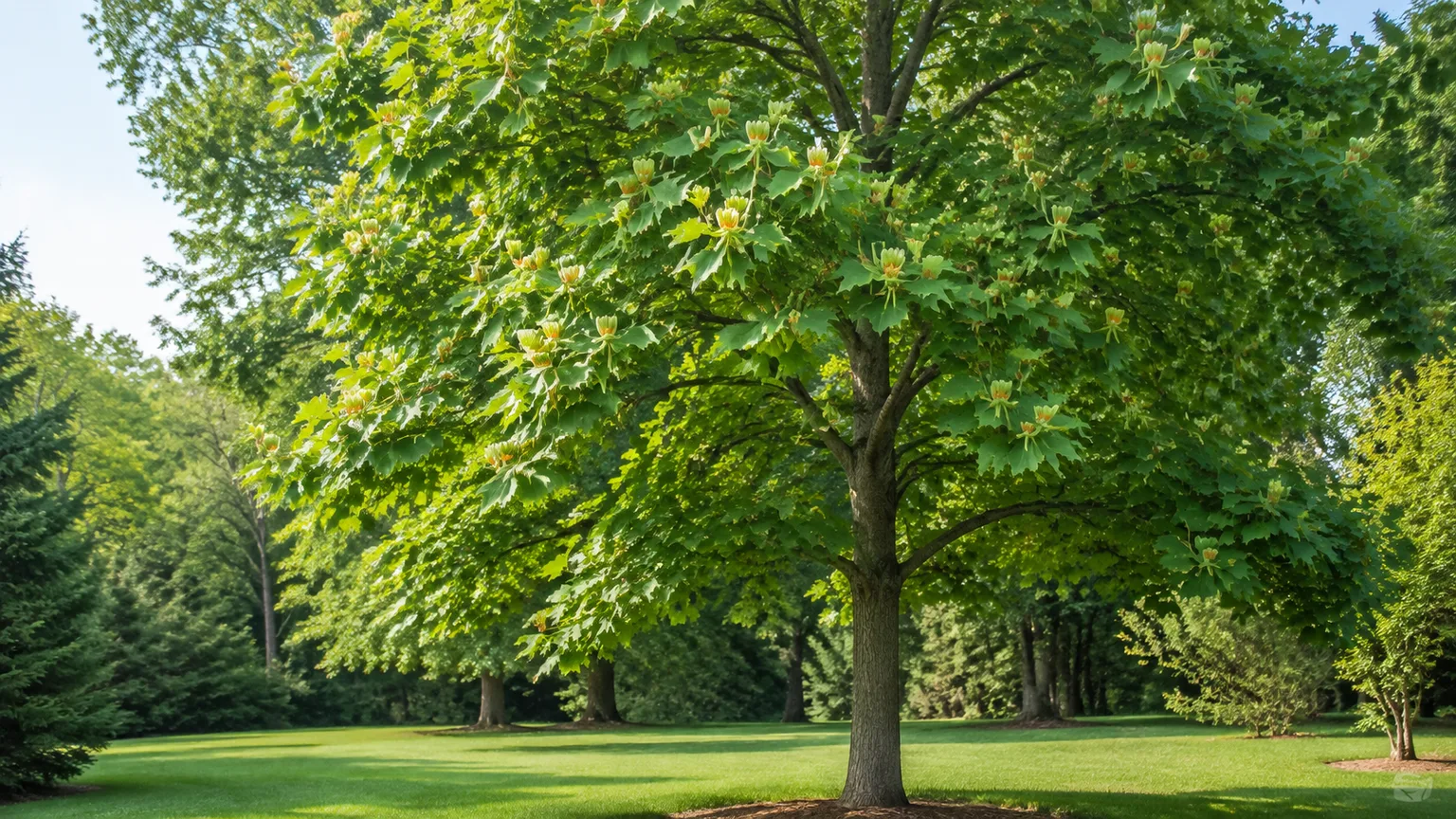
Tulip poplar or yellow poplar (Liriodendron tulipifera) is an eastern North American native and one of the larger choices on this list. Penn State Extension includes it as a hummingbird tree. Georgia Extension describes orange-yellow, tulip-shaped flowers in spring and gives a mature scale of roughly 80 to 100 feet tall. The flowers sit high in the canopy, so this tree suits a large yard or acreage, not a small foundation bed or a spot where you want eye-level viewing. (Penn State Extension; University of Georgia Extension)
Give it full sun and moist, well-drained soil, and leave room for its roots and canopy. A tulip poplar may deliver a meaningful spring flower crop, but its value for hummingbirds is partly at canopy height and partly in the habitat structure it creates. If your lot cannot accommodate a mature tree, a red buckeye, redbud, or local hawthorn is a more realistic scale.
7. Yellow buckeye: an Appalachian-region option
Yellow buckeye (Aesculus flava) is a large native tree of Appalachian and neighboring eastern regions. Its green-yellow flower panicles open in mid- to late spring in Georgia’s mountain areas, and Penn State includes yellow buckeye among its tree choices for hummingbirds. It is not a red-flowered version of red buckeye: it becomes much taller, needs deep moist soil, and is suited to cooler, richer woodland conditions. Georgia Extension lists a mature size around 60 feet with a spread near 30 feet. (NC State Extension; University of Georgia Extension)
Choose yellow buckeye only where it belongs in the local landscape and where a large shade tree fits. It is a better regional choice than planting a non-native horse chestnut simply because both are buckeyes. For a small yard, the native red buckeye offers similar seasonal relevance at a much smaller scale.
8. Sourwood: a native summer-blooming tree
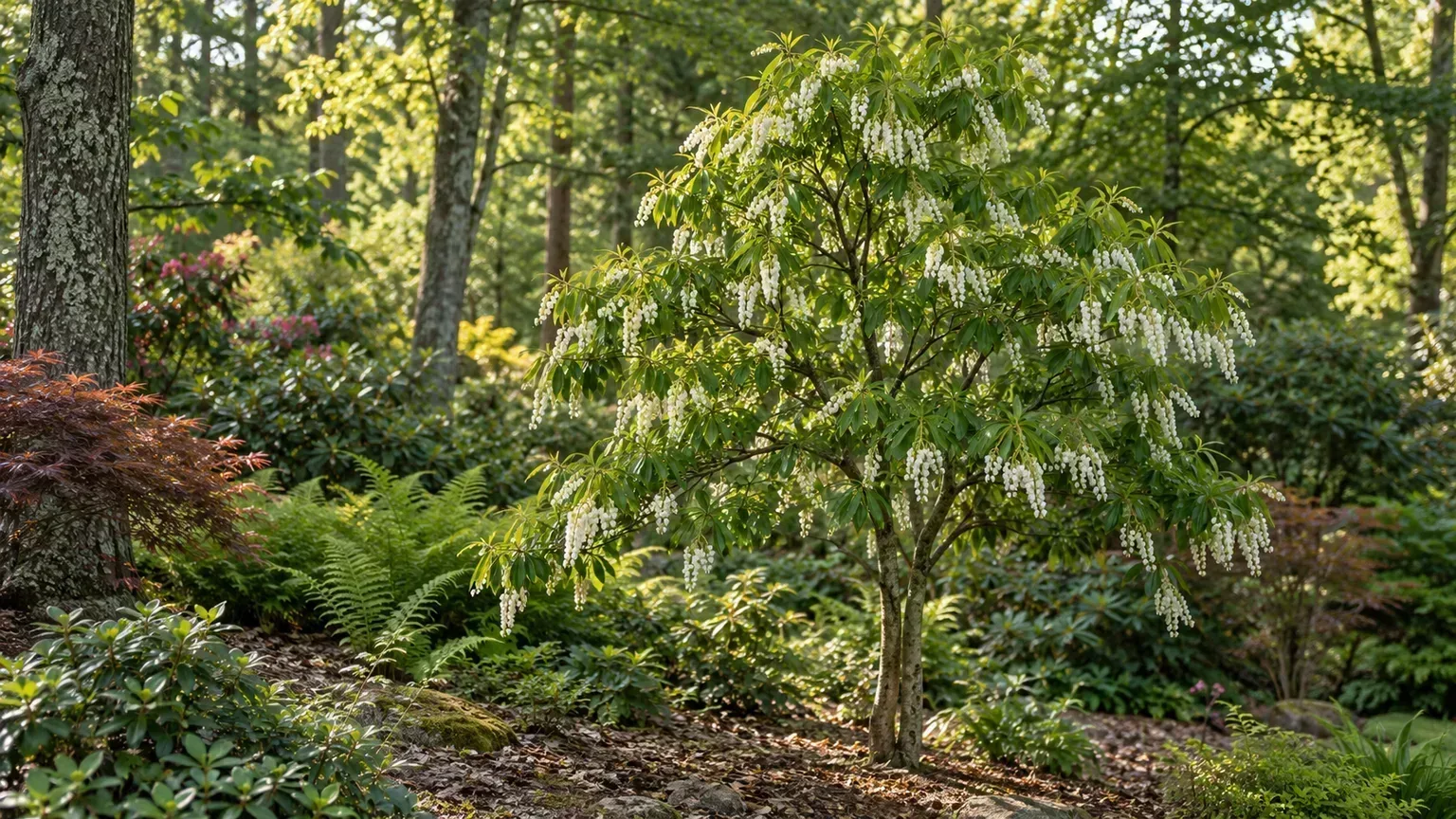
Sourwood (Oxydendrum arboreum) is a southeastern native that opens drooping white flower spikes in June and July in Georgia. That later bloom can help bridge the gap after many spring trees have finished. Its flowers are an important nectar source for bees and make sourwood honey; hummingbirds may visit flowering plants, but local bird use depends on the surrounding habitat and season. Georgia Extension recommends sourwood as a native alternative to invasive mimosa in the Southeast. (University of Georgia Extension; UGA Extension, Paulding County)
Sourwood grows at a moderate pace and appreciates moist, well-drained, acidic soil with sun to partial shade. It can be difficult to transplant once large, so choose a young tree and settle on the site before planting. If your region is outside its native range, find a local native tree or shrub that blooms in the same part of the year rather than importing it solely for a hummingbird list.
9. Serviceberry: a compact wildlife tree and habitat partner

Serviceberries (Amelanchier species) are useful small trees for yards that need spring flowers, manageable scale, and fruit for birds. Georgia Extension’s downy serviceberry profile describes early-April white flowers, a mature size around 15 to 25 feet, and summer berries eaten by birds. This is a habitat partner rather than a specialist hummingbird nectar tree: use it to add seasonal flowers, insect activity, and later fruit, then plant clear nectar sources nearby. (University of Georgia Extension)
Choose the serviceberry species native to your own region; the genus spans a broad area and names vary at nurseries. Full sun to light shade and well-drained soil suit the Georgia example. Birds may take much of the ripe fruit quickly, which is a benefit if your goal is wildlife and a drawback only if you expected a large harvest for yourself.
10. Desert willow: a nectar tree for the Southwest
Desert willow (Chilopsis linearis) is an airy shrub-to-small-tree native to the Southwest and parts of Mexico, where it is adapted to arid conditions. Its trumpet-shaped flowers can be purple, pink, or white, and the National Park Service says they attract pollinators including hummingbirds. Unlike true willows, desert willow is in a different plant family. It is one of the strongest choices here for a hot, dry western site, but it is not a cold-climate substitute for eastern trees. (National Park Service)
Use it where your local elevation, winter temperatures, and soil drainage fit the plant. Desert willow often grows as a large shrub in colder edges of its range and can be trained or sold as a small tree in warmer areas. Pair it with other local native bloomers instead of watering it like a thirsty riparian willow just because of its name.
Match the tree to your region and lot size
For much of the East, start with a native redbud, red buckeye, crabapple, or hawthorn that is suited to your local soils and climate. For an Appalachian or southeastern property with room for a mature canopy, tulip poplar, yellow buckeye, or sourwood may add a longer or later flowering window. For a dry Southwest yard, desert willow is a more natural fit than an eastern tree forced into heat and drought. These are starting points, not fixed regional borders; consult a local extension or native plant database to confirm your county’s best species.
Then measure the planting space by the tree’s mature crown and root zone, not the size of a nursery pot. A tree that will eventually be 60 to 100 feet tall belongs away from roofs, power lines, paving, and small gardens. A 12- to 25-foot red buckeye, redbud, or serviceberry is easier to place in a typical yard, although each still needs breathing room and access for watering while young.
Finally, ask what the tree contributes beyond nectar. Does it provide early bloom, summer bloom, insect-rich foliage, a safe perch, or shelter from wind? A good mix can include one small flowering tree, shrubs and vines below it, and perennials that fill the weeks before and after its bloom. NC State Extension recommends arranging taller woody plants toward the back of a habitat bed, using a variety of bloom times, and including trees or shrubs for perching and nesting. (NC State Extension)
Popular candidates that need a closer look
Silk tree or mimosa (Albizia julibrissin) produces flowers that may attract hummingbirds, but that benefit does not make it a good default. UGA Extension describes mimosa as invasive in the southeastern landscape and notes that it competes with native species; the same Extension article recommends sourwood as an alternative. If mimosa is already established, do not spread its seed or plant new trees where local guidance advises against it. (UGA Extension, Paulding County)
Horse chestnut can appear on regional hummingbird lists, but it is a large cultivated tree in Pennsylvania’s list, with a stated height up to 75 feet. That is a major site commitment, and it is not a native choice in every region where it is sold. Where it fits your climate and local landscape guidance, it may be an option; where it does not, choose native red buckeye or yellow buckeye instead. (Penn State Extension)
Eucalyptus is too broad a label to use as a general recommendation. Species differ in mature size, cold tolerance, flowering behavior, and local suitability. In a warm region where a specific species is adapted and locally recommended, its flowers may be useful; elsewhere, choose a native tree that feeds the hummingbirds and other wildlife already in your area. Check local fire and invasive-plant guidance before planting any large non-native tree.
English hawthorn and strawberry tree also need more context than a national list can provide. Choose a native hawthorn species when one fits your area. Strawberry tree (Arbutus unedo) is a climate-specific evergreen, not a reliable option for cold-winter regions; if considering it in a mild climate, verify cold tolerance and local ecological guidance for the exact cultivar. In general, common names such as “hawthorn” or “strawberry tree” do not tell you enough to buy a plant safely for your site.
Plant for a sequence of bloom, not a single show
Map your local hummingbird season before choosing a tree. Penn State documents ruby-throated hummingbirds moving north with early flowers and staying in the Northeast into early fall, while the National Park Service notes that species and arrival timing differ around the country. The useful question is not “Which tree is the best?” but “What is flowering in my yard during the weeks birds are here?” (Penn State Extension; National Park Service)
A simple sequence might begin with red buckeye, redbud, crabapple, or hawthorn; continue with late-spring shrubs, vines, and perennials; and finish with a locally appropriate summer or early-fall bloomer such as desert willow in the Southwest. Do not count on exact calendar dates from another state. A warm spring can shift bloom; altitude and coastal exposure can shift it further. Keep notes for a season or two, then fill the gaps you actually observe.
Clusters help make nectar sources easier to find, and overlap is more reliable than isolated bloom weeks. Savvy Gardening recommends combining a variety of plants and creating habitat rather than relying on one attractive flower; Birds & Blooms likewise advises pairing native nectar plants with shelter and insect prey. Their practical guidance aligns with the extension and conservation advice: build layers and continuity, not a single flowering moment. (Savvy Gardening; Birds & Blooms)
For a plant-by-plant plan to fill the lower layers and extend bloom, see this guide to plants that attract hummingbirds. Keep some unsprayed foliage and leaf litter where practical so small insects and spiders remain available. A neat garden can still support prey: avoid blanket pesticide treatments and identify a real plant problem before considering any targeted intervention. Do not spray blooming trees or the plants birds are actively using.
Establish trees and habitat with minimal disturbance
Plant in the season recommended by your local extension service, often fall or early spring when temperatures are moderate and the soil can be worked. Check the tree’s mature size and soil preferences before you dig. Set the root flare at soil level, water the root ball thoroughly, mulch broadly without piling mulch against the trunk, and keep a newly planted tree watered through dry spells while its roots establish. The exact planting depth, watering frequency, and pruning needs depend on species and local conditions, so use the nursery tag and regional advice rather than a one-size calendar.
Avoid routine pruning that removes flowers or destroys useful branching. Prune only to establish safe structure, remove dead or damaged wood, clear a necessary path, or address a diagnosed issue. If a tree is actively flowering and birds are using it, postpone non-urgent work. Keep the surrounding habitat pesticide-free when possible; trees host insects that hummingbirds catch, and broad-spectrum sprays can remove that food along with the target pest. National Park Service describes pesticide-free native plantings as food sources, while Audubon emphasizes native plants for both nectar and insect resources. (National Park Service; Audubon)
A tree alone does not make a garden complete. Add a clean, shallow water source or fine mist if you can maintain it, keep a safe distance from roaming cats, and leave open flight paths around feeding areas. If you already maintain a feeder, treat it as an optional supplement that requires regular cleaning, never as a replacement for flowers, insects, shelter, and regionally adapted plants. A natural planting can still be valuable without any feeder at all.
Conclusion
The best trees that attract hummingbirds are the ones that bloom while local birds are present and fit your region, soil, and available space. Red buckeye is a standout early nectar tree in the Southeast; redbud, crabapple, and native hawthorn offer spring bloom across suitable parts of the East; tulip poplar and yellow buckeye need room; sourwood can extend bloom later in the Southeast; and desert willow is a strong Southwest choice.
Choose a tree for its full habitat role, then fill its bloom gaps with locally native shrubs, vines, and flowers. That gives hummingbirds a more dependable mix of nectar, insects, perches, and cover than any single ornamental tree can provide.