Straw Mulch: Uses, Benefits, and How to Apply It
Use straw mulch for vegetables, new lawn seed, and winter protection with crop-specific timing, buying checks, depth guidance, and cleanup advice.
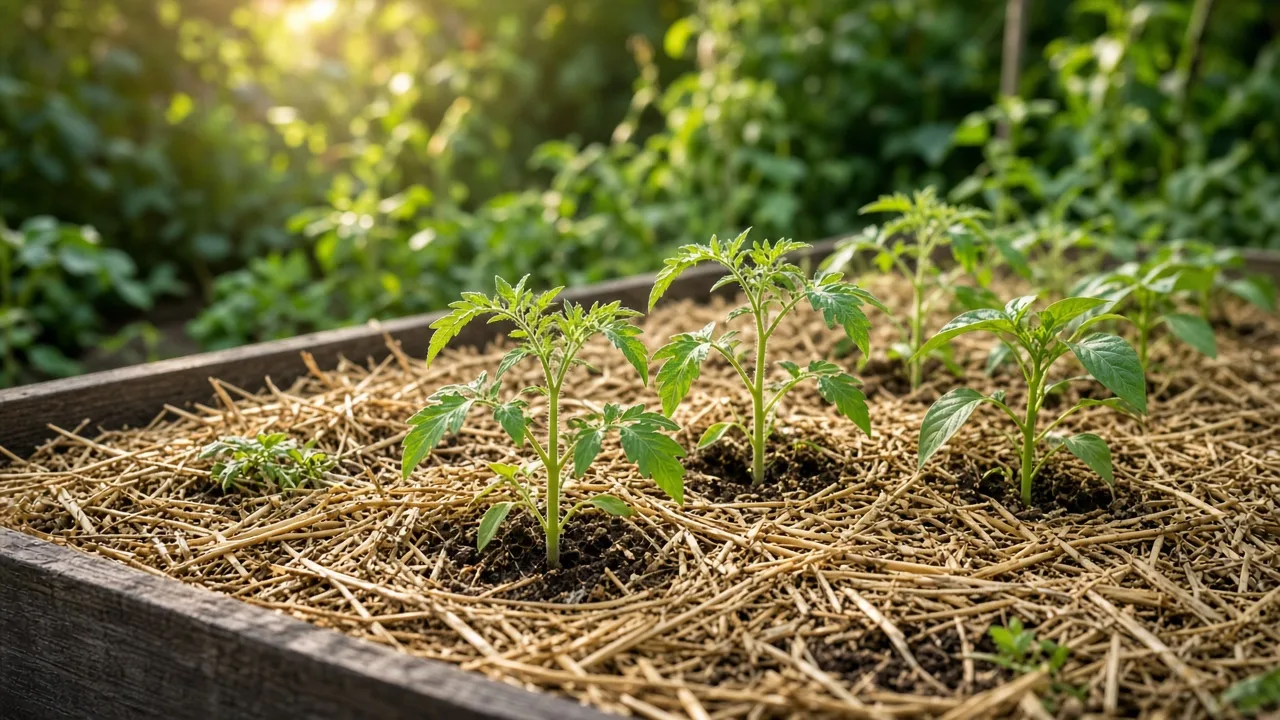
Straw mulch is most useful when you want a loose, temporary cover over soil: it can slow evaporation, soften the impact of rain, keep edible crops cleaner, and shield newly sown grass seed. It is especially practical in vegetable beds and strawberry rows, where an untidy appearance matters less than protecting the crop. The right depth and timing depend on the job; a layer that insulates a dormant strawberry bed can block light from a newly seeded vegetable row.
Before buying a bale, check that the material is actually straw, ask how it was grown and stored, and decide whether you need a thin seed cover or a deeper bed mulch. Straw is not weed-proof, sterile, or a substitute for watering and soil preparation. Used thoughtfully, though, it is a light, easy-to-spread mulch that can be moved or composted when the season changes.
What Straw Mulch Is—and What It Isn’t
Straw is the dry stem left after grain such as wheat, oats, barley, or rye has been harvested and the grain separated. It is sold loose or in compressed bales, often for garden mulch, animal bedding, or erosion control. The stalks form a springy, open layer over the soil rather than the dense, fine texture of compost or finely shredded leaves. University of Illinois Extension describes straw as a common vegetable-garden mulch and notes that flakes should be loosened before spreading so they do not form a tight mat.
Straw is not the same as hay. Hay is harvested as feed while the plants are still leafy and can include seed heads, leaves, and stems from grasses or legumes. Straw is mostly stalk, but some grain can escape threshing, so a bale may still sprout volunteer wheat, oats, or other grain. The name on the bale is a starting point, not proof that it contains no viable seeds or herbicide residues.
The other useful distinction is between straw used as a surface cover and straw mixed into soil. On the surface, it breaks down gradually while protecting the soil. Once incorporated, its carbon-rich material can temporarily tie up some available nitrogen as soil organisms decompose it; the University of Minnesota Extension overview of soil organic matter explains why high-carbon crop residues behave differently from a mulch left on top. For most home beds, leave straw on the surface or compost it rather than digging a thick layer into the root zone immediately before planting.
What Straw Mulch Does Well
A straw layer changes the soil’s exposure to sun, wind, and rain. It does not add water or fix poor drainage, but it can make moisture levels more even between irrigations and reduce the crust that forms when bare soil dries after a hard rain. That is why the same material can help vegetable beds, new lawns, and winter-protected berry rows, even though the application differs.
| Benefit | Where it helps | What it does not do |
|---|---|---|
| Slows evaporation | Vegetable beds and newly seeded areas | Replace irrigation or correct a leak |
| Softens rain impact | Sloped or bare soil | Stop runoff on every slope |
| Keeps produce off soil | Low-growing fruit and sprawling crops | Prevent every rot or fungal disease |
| Insulates the soil surface | Dormant strawberry beds and tender plants | Guarantee survival through any freeze |
| Adds organic matter over time | Beds where straw decomposes in place | Act like finished compost immediately |
The University of Minnesota Extension mulch guide summarizes the broader effects of mulch: reduced evaporation, weed suppression by blocking light, moderation of soil temperature, and protection from erosion or crusting. Straw does these jobs best as a loose, breathable blanket. If it is packed into a dense, wet sheet, it can intercept water instead of letting it reach the soil evenly.
Moisture, soil temperature, and erosion
A mulch layer shades the soil and slows the movement of water vapor from the surface. That can mean fewer abrupt dry-outs during warm weather, especially around established transplants whose roots already reach below the mulch. Check the soil beneath the straw before watering; the top may look dry while the bed is still moist, or rain may have wet only the straw and not the root zone.
Straw also cushions raindrops and irrigation, limiting soil splash onto low leaves and helping reduce surface crusting. It can be useful on bare soil during heavy rain, but it is not a structural erosion blanket for a steep bank or a fast-moving runoff channel. Secure or reduce the layer in windy locations, and use a purpose-made erosion-control method when the site needs stronger anchoring.
Light-colored straw generally reflects more sunlight than dark soil, so it may keep the surface cooler in hot weather. That can help some cool-season crops through warm spells, but the same cooling can slow germination or early growth when spring soil is still cold. Leave seed rows open until seedlings are established, then mulch between plants once the soil has warmed.
Weeds and soil contact
Straw can suppress some small weeds by blocking light, but it does not eliminate established perennial weeds or seeds buried beneath it. Weeds can emerge through gaps, and seeds carried in the mulch may germinate on top. Pull perennial weeds before laying straw, overlap flakes loosely enough to cover the soil, and expect to spot-weed during the season rather than treating the bed as maintenance-free.
The layer is valuable around sprawling crops because it separates leaves and fruit from damp soil. Cucumbers, squash, and melons can rest on straw instead of bare ground, and strawberries stay cleaner when berries ripen. Straw can also reduce splash from soil onto tomato or pepper leaves; it may lower one route of disease spread, but it does not prevent diseases caused by infected seed, poor airflow, or other sources.
Choose Straw for the Job
The best bale is dry, clean, and consistent enough to spread in a predictable layer. Choose the crop and timing first, then buy only as much as you can keep dry; a damp, moldy bale can be unpleasant to handle and difficult to distribute. A local farm or feed store may tell you which grain produced the straw and whether it was treated after harvest.
Straw versus hay
For most vegetable beds, straw is usually easier to manage than hay because it contains fewer leafy seed heads and tends to make a looser cover. Hay can mat more readily and may bring a larger load of viable seeds, but straw is not guaranteed seed-free. Fine Gardening’s comparison of organic vegetable-garden mulches discusses straw’s usefulness in beds and paths while noting that thin layers can blow away; material and local conditions matter more than a simple “good” or “bad” label.
Ask whether the bale is wheat, oat, barley, or rye straw, and ask if the supplier knows what herbicides were used in the field. Persistent broadleaf herbicides can remain active in some crop residues and damage sensitive garden plants. Colorado State University Extension’s vegetable-mulch guidance recommends weed- and seed-free mulch and raises the concern that treated straw can carry herbicide residues into a garden.
If the grower cannot confirm field history and you plan to use the straw around beans, peas, tomatoes, or other sensitive crops, do a small bioassay before spreading it widely. Mix a little straw with potting mix in a small container, plant a quick-growing sensitive seedling, and compare it with an untreated control for several weeks. Twisted, cupped, or unusually stunted new growth is a reason to keep that batch out of edible beds; a home test is a screening step, not a laboratory guarantee.
Quality checks before buying
A sound bale should feel dry and hold together when lifted, with flakes that separate without turning into dusty crumbs. Look for uniform stalks and a clean, mild grain smell. Reject bales that feel damp, have dark wet patches, visible mold, a sour or musty odor, or a large amount of soil and debris.
Check storage as well as the bale itself. Straw left uncovered on the ground can wick moisture and develop hidden mold at the bottom, while a tightly compressed bale stored under a leaky roof may be wet inside even when its surface feels dry. If you need several bales, open a small edge or ask to inspect a sample before loading the whole order.
For a small garden, bagged chopped straw is easier to handle but often costs more per area. A full bale may be economical if you have dry storage and room to separate flakes; otherwise buy a smaller amount or split a bale with a neighbor. Do not assume every “garden straw” package is free of grain seed or field treatments—read the label and ask the supplier the same questions you would ask about a farm bale.
How to Apply Straw Without Smothering Plants
Start with a weeded, watered bed and spread straw after irrigation so you can see that water reaches the soil below. Pull flakes apart into loose handfuls rather than dropping whole compressed slabs. Aim for even coverage with visible air spaces, then check the layer again after the first rain and after it settles.
Prepare the bed and spread an even layer
For established vegetable transplants, a loose layer about 2 to 3 inches deep is a reasonable starting point; add a little more only where the soil still shows through or the material has settled. General mulch guidance often uses a 2-to-4-inch range, but fine seed rows, small seedlings, and waterlogged sites need a lighter hand. Straw fluffs up, so measure the settled cover rather than the height of an airy pile.
Keep straw a few inches away from stems, crowns, and the base of young woody plants. A dry gap discourages persistent dampness against the plant and makes it easier to inspect for slugs, rot, or chewing damage. Never bury a strawberry crown or the growing point of a transplant; spread around it, not over it.
For direct-sown vegetables, leave a narrow unmulched strip over the seed row until the seedlings are visible and sturdy enough to emerge through a thin cover. Then mulch between rows, adding small amounts around plants as they grow. If seeds fail to emerge, a heavy straw layer may be one reason; pull it back before assuming the seed or soil is the only problem.
Estimate how much you need
Calculate area in square feet, choose a settled depth in inches, and use this simple volume rule: square feet × depth in inches ÷ 12 = cubic feet of mulch. For example, a 100-square-foot bed covered 2 inches deep needs about 16.7 cubic feet of loose material before settling. The calculation estimates volume, not bale count, because bale dimensions, compression, and flake density vary.
To turn that estimate into a purchase, spread one flake over a measured test patch and see how much area it covers at your chosen depth. If the flake covers 8 square feet, for example, a 100-square-foot bed would take about 13 flakes at that depth, with a little extra for settling and thin spots. Use the supplier’s bale size only as a second check, not a universal coverage promise.
Spread timing and water checks
Apply straw after rain or irrigation when the soil is moist but not saturated. A dry bed under fresh straw can stay dry longer than you expect, while straw placed over muddy soil may hold excess moisture around crowns. After spreading, water the bed and check a few spots by moving the straw aside; if the soil remains dry, adjust the irrigation rather than adding more mulch.
On windy sites, lay the flakes crosswise to the prevailing wind or lightly wet them after spreading so they settle. Avoid soaking the layer into a heavy mat. If repeated gusts lift it, use less straw at once, chop it more finely, or choose a heavier mulch for that exposed bed.
Use Straw in Vegetable and Fruit Beds
Straw suits crops where the soil should stay covered but stems need air and the harvest benefits from a clean landing surface. It works well under sprawling cucurbits, between rows of tomatoes and peppers, around established cabbage-family crops, and in strawberry beds. Put down only what the crop can grow through and what your irrigation can penetrate.
Match depth and timing to the crop
For cucumbers, squash, and melons, wait until vines begin to run and fruit is likely to touch soil, then make a cushion beneath the fruit without piling it against stems. The fruit stays cleaner and less likely to sit in a wet patch, but inspect underneath occasionally for slugs and insects. Move a fruit only if doing so will not break its stem or vine.
Tomatoes and peppers benefit from a soil cover that reduces splash, especially in beds where lower leaves are close to the ground. Wait until the soil has warmed and plants are growing steadily, then keep the stem base open and prune or remove leaves that rest on the mulch. Straw is one part of disease management alongside spacing, airflow, and careful watering.
Potatoes are a special case: as tubers push near the surface, light can turn exposed areas green. A thicker straw cover can shade shallow tubers and make harvest easier, but it should be replenished as it settles and gaps appear. Colorado State University Extension notes that straw can protect near-surface potato tubers from sunlight; check local growing advice for your variety and system rather than assuming mulch removes every need for soil coverage.
For broccoli, cabbage, and other cool-season crops, straw can keep soil from overheating during warm weather and reduce evaporation. In cool spring soil, hold it back until plants are established, because a cool, shaded root zone can slow early growth. Adjust the layer seasonally instead of leaving the same depth in place from planting through harvest.

Use Straw for New Lawn Seed
A very light straw cover can help new grass seed stay in place, reduce moisture loss, and limit soil movement during rain. Penn State Extension’s lawn-establishment guidance describes mulch as a way to retain moisture, prevent seed and soil movement, reduce crusting, and moderate surface conditions. Straw should remain sparse enough for light and water to reach the soil and for shoots to grow through it.
Rake and firm the seedbed according to the grass seed directions, sow evenly, and then shake a small amount of straw over the surface. The soil should remain visible through much of the cover; a thick blanket hides whether seed is contacting soil and can mat when wet. Do not use straw with obvious seed heads or field contamination when you can avoid it, because even mulch intended to help germination may introduce weeds.
Keep the seedbed consistently moist with gentle watering. If straw moves into piles, lift or redistribute it before seedlings are trapped underneath; if clumps remain after the lawn fills in, remove them rather than mowing over wet mats. A small patch repair needs less material than a full lawn, so spread a test amount first and add only where bare soil is still exposed.

Use Straw for Winter Protection
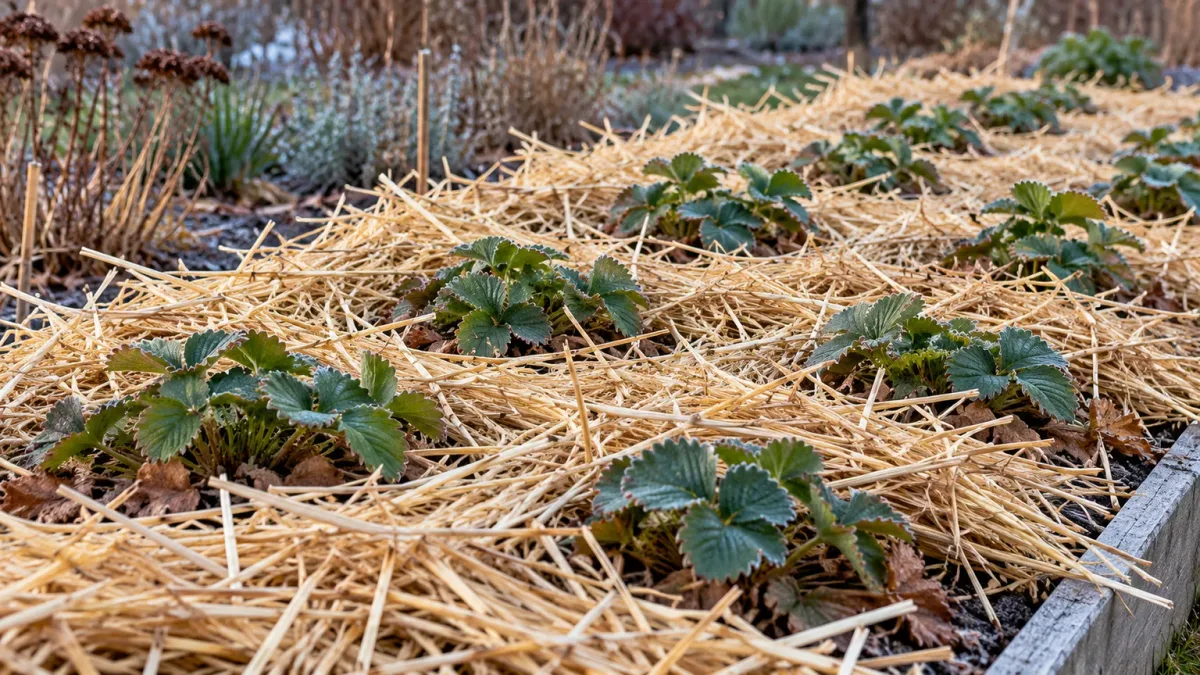
Straw can insulate dormant plants from sharp temperature swings and reduce frost heaving, but the timing matters as much as the material. For strawberries, wait until plants have acclimated and gone dormant after several frosts, then apply straw before the coldest sustained weather. Applying it too early can keep plants actively growing; applying it too late leaves roots exposed during a severe freeze.
The University of Illinois Extension strawberry guide describes clean, loose straw as a winter cover and gives a regional example of applying it after several frosts but before temperatures fall below about 20°F. That threshold is not universal: cultivar, snow cover, exposure, and local freeze patterns change the timing. Follow your state or local extension guidance and use plant dormancy—not a calendar date alone—as the cue.
Spread enough loose straw to cover the crowns and row evenly without compressing the plants into a wet mat. When growth resumes in spring, gradually rake most straw off the crowns as temperatures moderate; leave some between rows to keep developing berries off soil and reduce splash. Do not pull it all away during a brief warm spell if another hard freeze is likely.
For tender perennials or shrubs, straw can fill a temporary wire cage or protect a root zone, but it is not attractive as a permanent landscape mulch. Keep it clear of trunks and inspect for nesting activity. Iowa State University Extension warns that mice and other rodents can shelter in mulch and damage bark or crowns, so use trunk guards where rodent pressure is a concern.
Drawbacks: Weeds, Rodents, Slugs, and Herbicide Carryover
The most common disappointment is expecting straw to stop every weed. Volunteer grain may sprout from the bale, and perennial weeds can push through from below. Pull sprouts while they are small, and avoid letting them head and reseed; if a batch produces many weeds, remove the worst patches and do not spread the remaining material across another bed.
A deep, continually damp layer can shelter slugs and other small pests, especially in cool, shaded gardens. Check under the straw near vulnerable seedlings and remove it temporarily if you find repeated feeding or a wet, sour-smelling mat. In dry regions, the same layer may be a major moisture saver; in a humid garden, thinner coverage and more frequent inspection may be wiser.
Rodents may nest in straw used near shrubs, young trees, sheds, or house foundations. Keep unused bales dry and away from buildings, move winter mulch back from woody stems when severe cold has passed, and protect trunks with a physical guard if chewing is a known problem. A loose mulch layer near a plant crown is not a substitute for a rodent barrier.
Herbicide carryover deserves a direct question before a bale reaches an edible garden. Ask the seller whether the crop or field was treated with persistent broadleaf herbicides and whether the straw has been stored separately from treated hay or manure. Residues can cause distorted growth in susceptible broadleaf crops even when the straw looks clean; do not compost questionable material with the assumption that ordinary home composting will quickly neutralize it.
Also watch for mold, matting, and nitrogen issues. Do not apply a musty bale, and do not bury thick straw layers into soil immediately before planting nitrogen-hungry crops. Surface use is generally more predictable; if you plan to incorporate it, do so well before planting and consider a soil test or local extension recommendation rather than adding nitrogen blindly.
Straw, Wood Chips, and Other Mulches Compared
Choose mulch by the job, not by a blanket ranking. Straw is light, quick to spread, and easy to pull back; wood chips last longer and look more finished around shrubs and paths but can be awkward to move around annual vegetables. Compost feeds and levels a bed but is denser and does not create the same springy barrier beneath fruit.
| Material | Best fit | Main trade-off |
|---|---|---|
| Straw | Vegetable beds, strawberries, new seed, temporary winter cover | Can blow away, carry seeds, or shelter pests |
| Wood chips | Paths, shrubs, and long-lived landscape beds | Slower to move and may be too coarse around small seedlings |
| Shredded leaves | Low-cost seasonal beds and soil cover | Can mat if applied wet or too thick |
| Finished compost | Soil improvement and fine seedbeds | Less durable as a weed-blocking cover |
| Pine needles | Some acid-tolerant plantings and paths | Site-specific availability and appearance |
Fine Gardening’s mulch comparison notes that straw breaks down more quickly than wood chips and can also work as a dry path surface. That quick breakdown is an advantage when you want to change a bed next season, but a disadvantage if you want a polished, long-lasting landscape surface. For beds near a door or front walk, appearance and wind exposure may outweigh straw’s lower handling effort.
Do not worry that wood chips automatically “steal” nitrogen just because they sit on soil. The larger concern is mixing high-carbon material into the root zone, where decomposition and plant roots compete for available nitrogen. Use chips on the surface of permanent beds and keep them away from small annual seedlings; choose straw when you need a lighter, more temporary cover that is easy to remove.
What to Do With Straw at Season’s End
If the straw stayed clean and the crop was healthy, leave a thin, loose layer in place to protect the soil or move it to a compost pile. Pull it off planting rows before direct sowing small seeds, then return it after seedlings establish. Fluff or redistribute any compacted areas so water can still reach the soil.
If the material is full of seed heads, persistent weeds, diseased crop debris, or suspected herbicide residue, do not spread it around the yard as a shortcut. Bag it or use a disposal route appropriate to the problem, and keep questionable residues away from home compost used for sensitive vegetables. A clean bale’s leftovers can be composted with a balanced mix of greener material and turned or managed for the pile you have.
Before the next season, note where straw blew away, where the layer stayed wet, and which crops needed more or less coverage. That small record is more useful than buying the same bale quantity every year. Bale volume and crop layout change, so repeat the measured test patch and adjust your order.
Conclusion
Straw mulch is a practical choice when you need a breathable cover for vegetables, fruit, lawn seed, or dormant strawberry rows. Its strongest benefits—slower evaporation, less soil splash, cleaner fruit, and temporary insulation—come from matching depth and timing to the plant and climate. A loose, even layer is usually more useful than a thick blanket.
Buy dry, clean straw from a source that can answer questions about grain and field treatments. Keep it off plant crowns, check that water reaches the soil, and watch for volunteer grain, slugs, rodents, or matting. With those checks, straw can protect a bed during the season and be pulled back, composted, or reused when the job is done.



