How to Grow and Care for Rockrose (Cistus Shrubs)
Choose a Cistus rockrose for your climate and space, then get practical advice on soil, watering, pruning, cuttings, containers, and common problems.
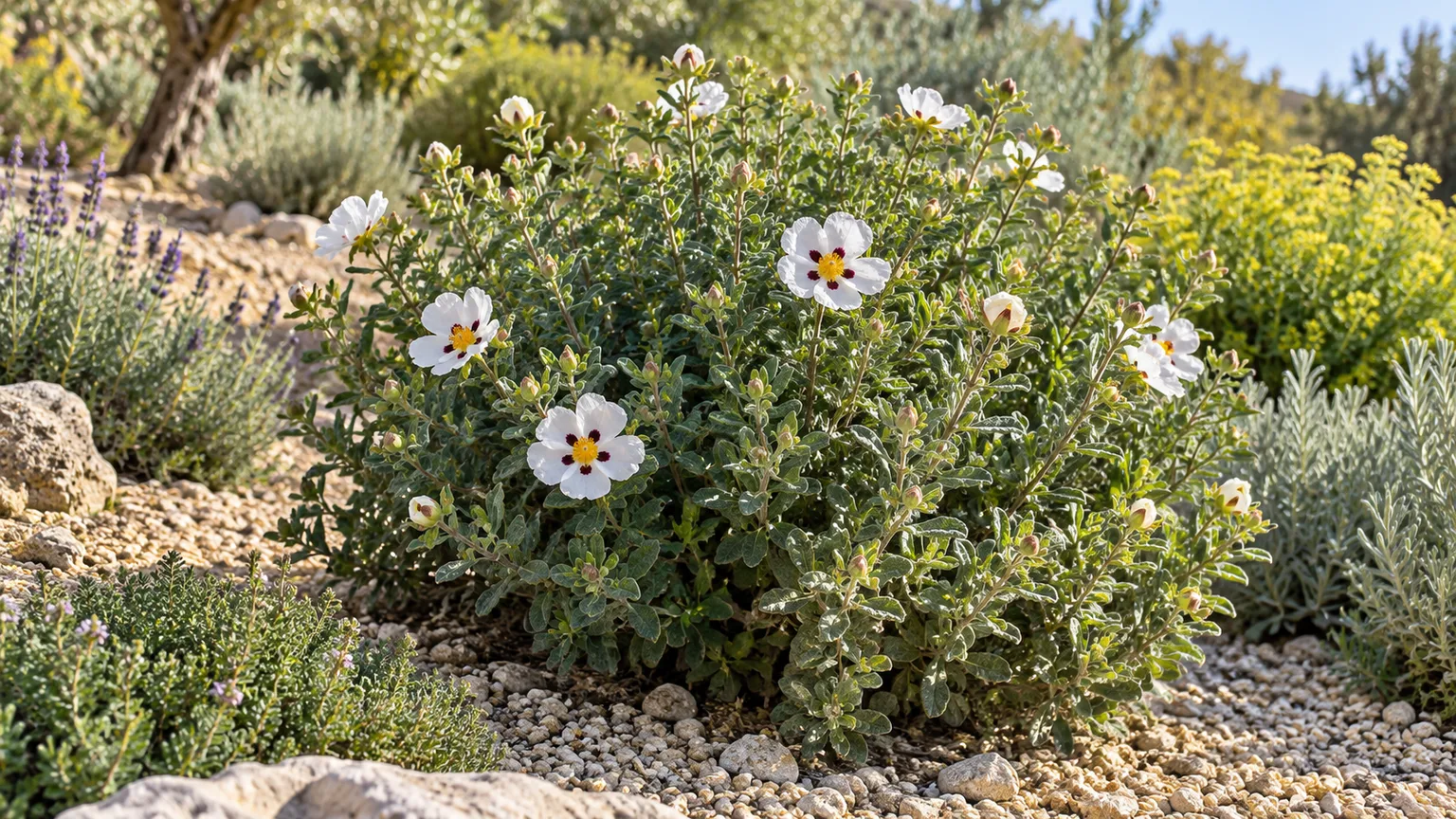
Rockrose is easiest to grow when you give it a sunny place where water drains away quickly, then resist the urge to pamper it. A newly planted Cistus needs consistent moisture while roots settle in; an established shrub usually handles dry weather far better than soggy soil, rich feeding, or a severe haircut.
The word rockrose can also refer to other plants, so check the botanical label before you choose a site or follow care advice. This guide focuses on shrubby Cistus from the Mediterranean region, whose evergreen foliage and short-lived, papery blooms make it a useful choice for sunny borders, gravel gardens, and dry slopes.
Is the rockrose you bought a Cistus?
Cistus belongs to the Cistaceae family. Its flowers can look like small, crumpled wild roses, but it is not a rose, and its care differs from that of a hybrid tea or landscape rose. Many Cistus have aromatic or sticky leaves, and each flower may last only a day; the shrub produces new blooms over a longer flowering spell.
The common name is not botanically precise. Helianthemum, often called sunrose or rock rose, is generally a much lower, herbaceous or subshrub plant; Pavonia lasiopetala, the Texas rock rose, is a different genus in the mallow family. University of Texas at Austin’s plant profile identifies Pavonia as a hibiscus relative, not a Cistus. If a nursery tag only says “rock rose,” look for the Latin name before applying this shrub guide.
Even within Cistus, size and tolerance vary. The RHS describes forms from low, spreading plants around a foot tall to upright shrubs reaching several feet, and NC State Extension’s profile for Cistus × hybridus lists a potential spread of five to six feet. That variation is why the label’s mature dimensions and hardiness notes matter more than a generic rockrose care card.
Choose a Cistus for your space and winter climate
Choose the plant for the space it will occupy when mature, not for the size of the pot at purchase. Some selections form a low, broad mound for a bank or front border; others become upright shrubs several feet high. Cistus is not a good candidate for a narrow slot beside a walkway if you expect to shear it tightly every year.
Flower color is only one difference. White, pink, and purplish flowers are common, and some cultivars have dark blotches near the base of each petal. Leaves can be gray-green, dark green, narrow, broad, or sticky with aromatic resin. Fine Gardening notes that species vary in foliage, flower size, and habit; its genus guide also describes Cistus as often relatively short-lived and best placed in full sun with well-drained soil.
Compare mature habit, flowers, and cultivar hardiness
Before buying, check four things on the plant label or with a knowledgeable nursery: botanical name, mature height and width, cold tolerance, and whether your soil stays wet in winter. A cold-hardy cultivar in a sheltered, dry site can perform differently from a tender selection planted in an exposed frost pocket. USDA hardiness zones are a useful first filter, but they describe average annual extreme winter minimums, not wind, soil moisture, sudden temperature swings, or summer humidity.
For one documented example, NC State Extension lists Cistus × hybridus as suitable for USDA zones 7a through 10b, with mature dimensions around five feet tall by five to six feet wide and tolerance to about 10°F. That is a profile for that hybrid, not a promise for every Cistus. The RHS advises avoiding frost pockets and exposed, windy sites, especially for more tender plants such as C. ladanifer.
Most Cistus perform best where summers are sunny and relatively dry and winters do not leave the root zone saturated. If you have humid summers, a cold exposed yard, or heavy clay that remains wet, choose the most locally proven cultivar or another shrub better matched to your conditions. A plant that technically survives your winter may still look ragged or fail to flower well.
Give rockrose sun and fast drainage
Aim for a position with at least six hours of direct sun; more sun generally means a denser shape and better flowering. Light shade can be tolerated in some gardens, but a site shaded for much of the day often produces thin growth and fewer flowers. If the shrub blooms weakly, check light and crowding before reaching for fertilizer.
Drainage is the other non-negotiable. Cistus grows in dry, stony habitats and tolerates low-fertility soil, but “poor soil” does not mean compacted soil where rain sits for days. The RHS recommends full sun and very free-draining soil, while UC IPM describes rockrose as suited to dry banks and rock gardens and cautions against overpruning.
A simple site check is to watch the area after a hard rain. If water pools around the proposed planting spot or the soil stays slick and saturated, choose a raised mound, a sloped edge, or a different location rather than placing the root ball in a hole that behaves like a bowl. In clay, improving a tiny planting hole alone can create a pocket that collects water; broad drainage problems call for a broader fix, such as a raised bed or a plant better suited to the site.
Plant Cistus without creating a wet root pocket
Spring is a dependable planting time in many climates because the shrub has a full growing season to establish before winter. In mild-winter regions, early fall can also work if the soil is still warm and there is time for roots to grow before cold weather. Avoid planting into hot, dry ground if you cannot keep the root ball watered through establishment.
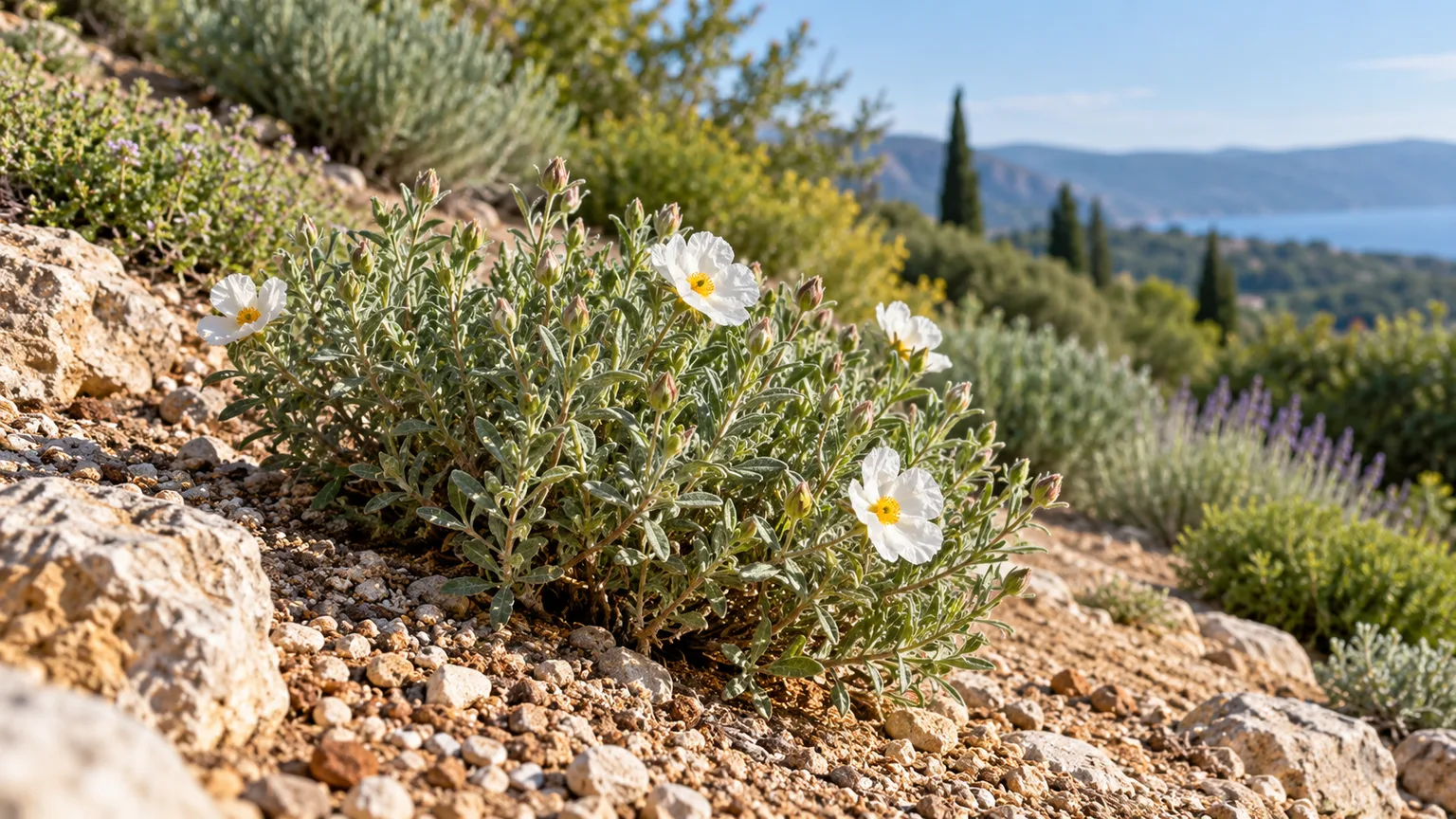
Choose a location with room for the plant’s full spread, then loosen the soil across the planting area. Slide the shrub from its nursery pot and inspect the roots; tease only circling roots that are easy to release, because established Cistus dislike unnecessary disturbance. Dig a hole no deeper than the root ball and about twice as wide, set the crown level with the surrounding grade, and backfill with the soil you removed rather than a rich pocket of compost.
Water slowly after planting so the whole root ball is wetted and soil settles around the roots. A thin gravel mulch can keep the crown clear and reduce splash, but do not mound stone, bark, or soil against woody stems. Keep the first few weeks simple: check moisture at root-ball depth, remove weeds competing close to the plant, and do not add fertilizer just because the shrub is settling in slowly.
If a bank is the goal, plant across the slope with spacing based on the cultivar’s mature width. The shrub can help cover bare ground after roots establish, but it is not an instant erosion fix: young plants still need watering and soil on a very steep or unstable slope may need structural stabilization as well.
Water deeply while roots establish, then taper
The most useful rule is to water by root-zone moisture, not by a permanent weekly calendar. During the first growing season, water new plants thoroughly when the root ball is beginning to dry; hot weather, wind, sandy soil, and a small nursery root ball may mean more frequent checks. The RHS advises regular, thorough watering during roughly the first year while roots establish, then only during prolonged dry spells once the shrub is settled.
Push a finger or narrow trowel into the soil near the root ball. If it is cool and damp below the surface, wait. If it is dry several inches down, soak slowly and let excess water drain. A quick splash wets the surface but may not reach the roots; repeated daily watering can keep the crown and surrounding soil too wet.
After establishment, Cistus is drought tolerant, not drought-proof in every setting. A mature plant in a mild climate and open ground may need little supplemental water, while a new transplant, container specimen, or shrub in exceptional heat can still suffer. Water during a long dry spell if leaves lose firmness or the plant shows sustained stress, but do not respond to every warm day by irrigating.
If leaves yellow and the soil is wet, pause irrigation and investigate drainage before adding water-soluble feed. Root injury can make a plant look thirsty even while its soil is saturated. Correcting the site may matter more than changing the watering interval.
Skip routine fertilizer and heavy mulch
Cistus generally does not need routine fertilizer in ordinary garden soil. Rich feeding can push soft, leafy growth instead of flowers, and tender growth is more vulnerable to cold damage. If a soil test shows a genuine deficiency, address that specific issue conservatively; do not use a high-phosphorus “bloom booster” as a default fix for a shrub with poor light or waterlogged roots.
Avoid building a deep layer of moisture-holding mulch around the base. In cold-wet climates, organic mulch can keep the root collar and surrounding soil damp longer than the plant prefers. A modest gravel dressing may suit the plant’s dry-garden setting, though mulch choice cannot compensate for a site with persistent standing water.
The RHS notes that Cistus dislikes overly fertile soil and that annual feeding or enrichment is unnecessary. That can seem counterintuitive if you are used to roses or hungry flowering shrubs, but for this plant, restraint helps preserve its compact, weather-tolerant growth.
Understand the flower cycle before deadheading
Cistus flowers are delicate and brief: a bloom may open in the morning and drop by evening or the next day. That does not mean the shrub’s flowering period is over. Buds open in succession, creating a display that can continue for weeks, often from late spring into summer depending on species, climate, and cultivar.
There is usually no need to deadhead every flower. Petals drop on their own, and constant removal is impractical on a shrub covered in buds. If the plant is in a prominent spot and you dislike spent flowers on the ground, rake them up after a flush rather than cutting back the whole branch.
A plant that produces foliage but few flowers is often getting too much shade, growing in overly rich soil, or being pruned at the wrong time. Check whether nearby shrubs have begun to shade it, whether the site drains well, and whether you have been feeding it heavily. Correct the cause first; more fertilizer rarely solves a light problem.
Prune young plants differently from old shrubs
Cistus is not a boxwood hedge. Its natural form is often airy, rounded, and slightly irregular, and repeated close shearing can leave bare wood that does not readily produce new shoots. The safest approach is light, selective pruning rather than annual shaping to a hard outline.
Young plants can be pinched or lightly trimmed after frost danger has passed to encourage branching and a fuller shape. Once a shrub is established, remove dead, broken, or frost-damaged tips in spring, cutting back only to live growth. In mild, sheltered climates, a light trim after flowering can tidy the outline, but avoid turning that into a severe cutback.
Replace a leggy plant instead of cutting into old wood
If the middle is bare and the stems are woody, resist the urge to cut the entire shrub to a low stump. Cistus often does not regenerate reliably from old wood, so a drastic reduction can leave you with a permanently bare or dying plant. The RHS recommends limiting established-plant pruning and notes that older shrubs may be better replaced than rejuvenated by hard pruning.
If size has become a problem, take several cuttings from healthy young shoots before removing the old plant. That gives you a chance to grow a replacement of the same cultivar, assuming the plant is not protected by propagation rights; check the label or local rules before propagating for sale. For a shrub that only needs a small correction, shorten a few outward branches individually and preserve green foliage below every cut.
Propagate with cuttings for a true-to-type plant
Cuttings are the most reliable home method when you want a new shrub that matches a named cultivar. Take softwood cuttings in late spring or early summer from healthy, non-flowering shoots; semi-ripe cuttings from later in summer may also work. The RHS reports that softwood cuttings can root in around four weeks under suitable conditions, though timing varies with warmth and the cutting.
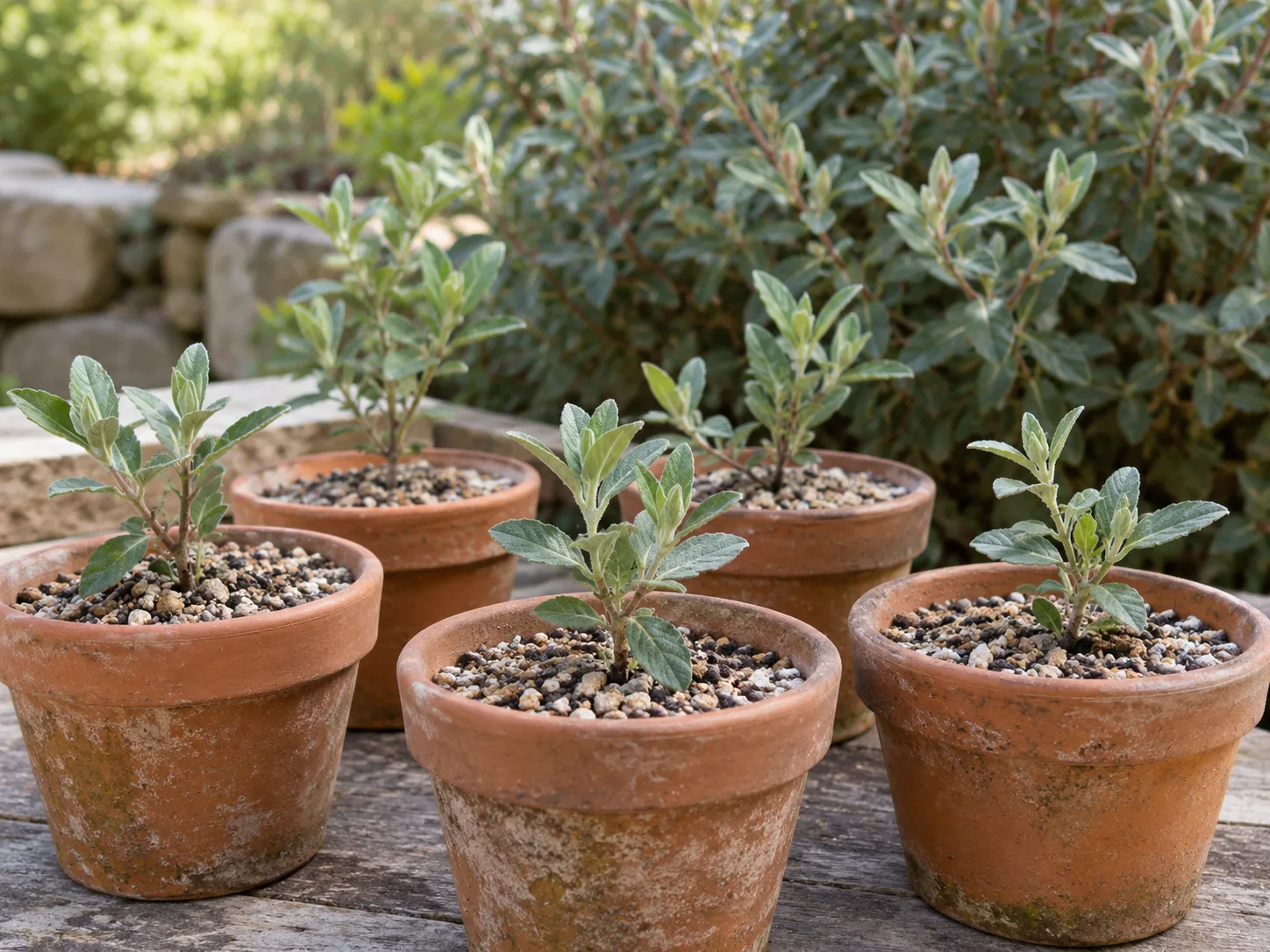
Use a clean blade and take several cuttings in case some fail. Remove the lower leaves, insert the cut end into a small pot of clean, free-draining propagation mix, and firm the medium lightly so the stem stands upright. Keep the mix barely moist rather than saturated, place the pot in bright shade out of harsh afternoon sun, and ventilate any cover so condensation does not stay trapped around the leaves.
Check for roots after a few weeks by looking at drainage holes or giving the stem a very gentle tug. Do not keep pulling to test every few days; fragile new roots break easily. Once roots hold the cutting, pot it on carefully, grow it on in a protected spot, and acclimate it gradually to outdoor sun before planting. Cistus cuttings can rot if kept too wet, so drainage and ventilation matter more than constant misting.
Use seed when variation is acceptable
You can also grow Cistus from seed, but seedlings from a named hybrid or cultivar may not come true to the parent. Seed is a better choice if you are curious about variation or growing a species plant, not if you need a clone of a particular flower color or compact form. The RHS describes sowing fresh seed in late summer or dried seed between late winter and early spring; follow the seed source’s directions because requirements can differ.
Grow compact rockrose in a container
Cistus can grow in a pot, especially a compact or low-spreading selection, but container culture makes watering and winter protection more demanding. Choose a large, heavy pot with several drainage holes and a free-draining mix intended for shrubs, amended with coarse grit or pumice if the mix holds water for too long. Fine Gardening and Homes & Gardens both recommend well-drained, relatively lean conditions for these shrubs.
Set the pot in full sun and water thoroughly when the root zone dries, allowing water to drain completely. Do not leave the container standing in a filled saucer. A terracotta pot can help the mix dry, but it also dries faster during hot, windy weather; check more often during establishment and heat waves.
A potted root ball is more exposed to freezing than roots in the ground. Use a cultivar suited to your climate, move the pot to a sheltered outdoor position during cold spells, and protect the container if severe frost is forecast. In regions outside the cultivar’s reliable range, a bright, cool, frost-free shelter may be safer than a warm indoor room, where low light and stale air encourage weak growth. Repot only when the root ball is crowded or the mix has deteriorated, and avoid repeated disturbance.
Diagnose yellow leaves, poor bloom, and pests
Most Cistus problems trace back to site conditions rather than a long list of serious pests. UC IPM lists aphids among the pests associated with Cistus and identifies excess or deficient nutrients and water imbalance as possible disorders. Start by checking soil moisture, drainage, sunlight, and recent cold exposure before applying a pesticide or fertilizer.
A few aphids on tender shoots often do little harm to an established shrub. Check whether natural predators are already reducing them; if numbers keep rising, dislodge small colonies with a firm stream of water and avoid spraying flowers where pollinators are foraging. Powdery mildew may appear in humid weather or crowded conditions; improve airflow and avoid keeping the plant wet overnight rather than reaching first for a fungicide.
Tell waterlogging from frost or nutrient stress
Yellow leaves are a symptom, not a diagnosis. If they appear alongside soft growth and damp soil, suspect poor drainage or overwatering. If yellowing develops gradually on a cultivar known to prefer acidic soil planted in alkaline ground, species-specific chlorosis is possible; test soil pH and check the plant’s requirements before changing the soil. Not every Cistus shares the same pH preference.
Brown or blackened tips after a cold snap point toward frost injury, especially on exposed growth. Wait until spring growth clarifies which stems are dead, then remove only the damaged portions. Brown, crispy foliage after a hot dry period can indicate drought stress, while a shrub that stays thin and flowerless in summer shade may simply need a sunnier site.
If a plant keeps declining despite corrected watering and exposure, inspect the root ball and stem bases for persistent rot or physical damage. A shrub in the wrong microclimate may never become low-maintenance; replacing it with a locally adapted evergreen can be more practical than repeatedly treating symptoms.
Is rockrose deer resistant or fire safe?
Many Cistus are relatively unappealing to deer because of aromatic or sticky foliage, but deer resistance is not immunity. Hungry deer may browse plants they usually avoid, and preferences vary by species and local pressure. If browsing is costly, use temporary protection while a young shrub establishes rather than relying on its scent alone.
Drought tolerance should not be confused with fire resistance. Some landscape lists have recommended particular rockroses in dry or fire-prone gardens, but fire performance depends on species, plant condition, moisture, and placement. UC IPM notes that any plant can burn under suitable conditions; controlled research on Cistus monspeliensis likewise found that fuel moisture changes ignition and flame spread. In a wildfire-prone area, follow local defensible-space guidance and do not use a generic Cistus label as evidence that a shrub is a safe barrier near a home.
Conclusion
Rockrose succeeds when the site matches the shrub: generous sun, soil that drains freely, and enough room for the cultivar’s real mature width. Water new plants deeply as the root system establishes, then scale back; avoid routine feeding and protect the shrub from prolonged winter wet and severe cold outside its cultivar range.
The most important long-term care decision is knowing when to leave it alone. Lightly shape young plants, remove dead or frost-damaged growth, and avoid cutting an old Cistus into bare wood. If a mature shrub has become leggy, take cuttings while healthy growth remains and plan a replacement instead of expecting a hard prune to restore it.



