Philodendron Florida Beauty Care: Light, Water & Support
Learn Philodendron Florida Beauty care with practical guidance on light, water, an airy mix, climbing support, pruning, propagation, and pet safety.
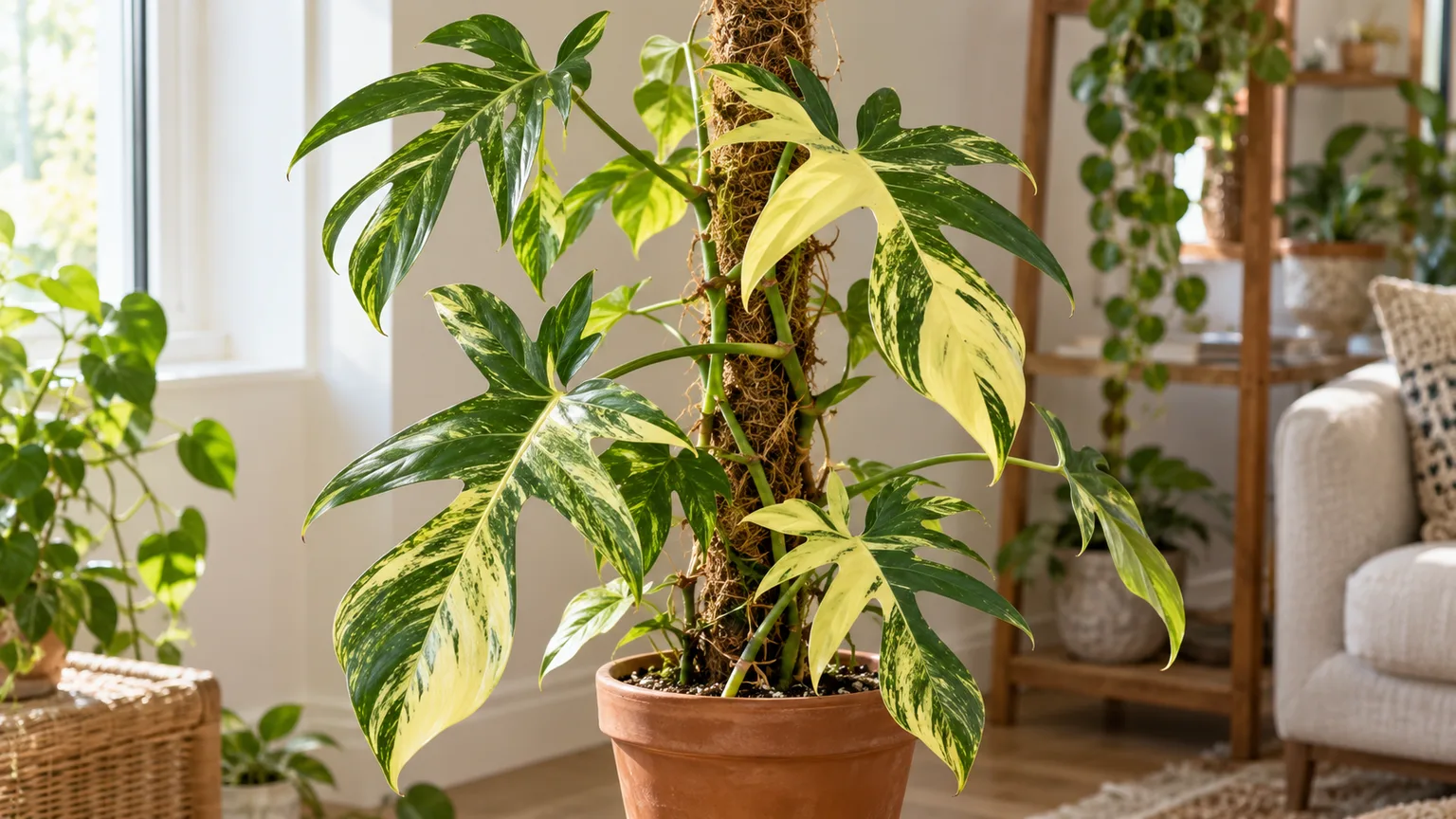
Philodendron ‘Florida Beauty’ is a climbing hybrid with deeply lobed leaves marked in cream, yellow, or white. Give it bright filtered light, a mix that drains freely, and something sturdy to climb; then water when the upper mix has begun to dry rather than following a weekly calendar. Those choices support healthy roots and mature foliage without trying to force a variegation pattern the plant cannot reliably promise.
Meet Philodendron Florida Beauty and Avoid the Name Mix-Up
The Royal Horticultural Society’s cultivar profile identifies Florida Beauty as a hybrid of Philodendron pedatum and Philodendron squamiferum. Both parents climb, and the hybrid inherits that habit. Young leaves can look narrow and spear-shaped; as the plant matures, they develop the dramatic indentations that make the foliage look almost hand-cut. The RHS lists a mature height of about 1.5 to 2.5 meters under suitable conditions, but a houseplant’s actual size depends on light, support, pot, and how much space you allow it.
The pale patches are part of the cultivar’s appeal, but each leaf does not have to match the last. A new leaf may emerge with a broad cream sector, fine yellow flecks, or more green. That variation is normal. Bright filtered light protects strong growth, while no fertilizer or special watering trick can guarantee that every new leaf will carry more cream.
There is a second plant-name trap: “Florida Beauty” is also a common name for Dracaena surculosa ‘Florida Beauty’, an unrelated African houseplant with small spotted leaves on upright branching stems. If the plant you have has tall canes and dotted oval leaves rather than a climbing vine with lobed leaves, use the Dracaena surculosa profile from NC State Extension instead. The genus also includes several growth forms: UF/IFAS’s Philodendron production overview discusses vining, self-heading, and upright types. Because it addresses commercial interiorscape culture, it is useful context rather than a household care schedule; this guide follows the RHS cultivar profile for Florida Beauty.
Quick Care Snapshot
| Need | Starting point | What to observe |
|---|---|---|
| Light | Bright, filtered or indirect light | New leaves stay firm and develop the cultivar’s usual color pattern |
| Water | Water thoroughly after the upper mix begins to dry | Pot gets lighter between waterings; no water remains in the saucer |
| Mix | Open, moisture-retentive, well-drained aroid mix | Water moves through, while the root ball does not dry in a day |
| Support | Moss pole, plank, or trellis for climbing growth | Stems can attach without being bent or crushed |
| Temperature | Warm, stable indoor conditions | Avoid cold glass, open winter windows, and AC or heater drafts |
| Feeding | Balanced liquid houseplant fertilizer during active growth | No crusty buildup or worsening leaf-edge burn |
| Safety | Keep away from pets and children who chew plants | Wear gloves for pruning; plant sap can irritate |
Treat this as a starting framework, not a formula. Room temperature, season, pot material, mix, and window exposure all change how quickly a plant uses water, so inspect the plant and its container before you repeat a care task.
Give Variegated Leaves Bright, Filtered Light
Place Florida Beauty where it receives strong light for much of the day without hot direct sun sitting on the leaves. An east-facing window is often easy to work with; a north-facing one may be suitable in a very bright room, while a west or south window usually needs distance, a sheer curtain, or another way to soften afternoon rays. Move the plant in small steps if it has been growing in a dim corner. A sudden jump from shade to direct sun can scorch leaves before the plant has adjusted.
The pale portions of a variegated leaf contribute less green photosynthetic tissue than the green portions, so this cultivar generally benefits from a brighter position than a solid-green vine. The general Philodendron guidance from NC State Extension also favors bright indirect light and warns that direct sun can scorch leaves. If you rely on a grow light, position it according to the fixture’s instructions and watch for leaf bleaching or curling rather than assuming that the brightest setting is best.
Look at the newest growth, not only the oldest leaf, when judging the spot. Long gaps between leaves, small new blades, and a vine leaning hard toward the glass suggest the plant may need more usable light, but a climbing Philodendron can also stay small without support. If new leaves are mostly green, first make the location brighter gradually and check that the plant is actively growing; do not move it into harsh sun or add fertilizer as a substitute for light.
Train the Climbing Stems
A moss pole is useful when you want Florida Beauty to climb and develop larger, more mature-looking leaves. The RHS describes the hybrid as a climber, while practical guidance from Rare Plant Fairy’s Florida Beauty care guide notes that vertical support helps the vine produce larger foliage over time. A plank or sturdy trellis can work too; the choice depends on whether you want the aerial roots to attach to a damp surface or simply want the vine held upright.

Install the support when the plant is young or during repotting so you can position it without forcing established stems through the canopy. Anchor the pole into the pot without pushing it through a dense root mass, then guide the stem toward it with soft ties or plant clips. Secure the stem, not the leaf stalk, and leave room for the vine to thicken as it grows.
A support is not essential for survival. Without one, the plant can trail or sprawl, but it may keep a more juvenile form and take up more horizontal space. If you do not want to maintain a moss pole, a trellis or a simple stake is a reasonable compromise; do not mist or soak a pole on a schedule unless the plant’s roots are actually using it.
Build an Airy Root Zone
Florida Beauty likes moisture around its roots but needs air spaces after watering. The RHS recommends an open, well-drained, peat-free mix that can combine loam with materials such as pumice or lava rock, fine bark, and leaf mold or sustainably sourced chopped sphagnum. For a home pot, use a good-quality houseplant mix as the base and add coarse bark plus pumice or perlite if the mix packs tightly or stays wet too long.
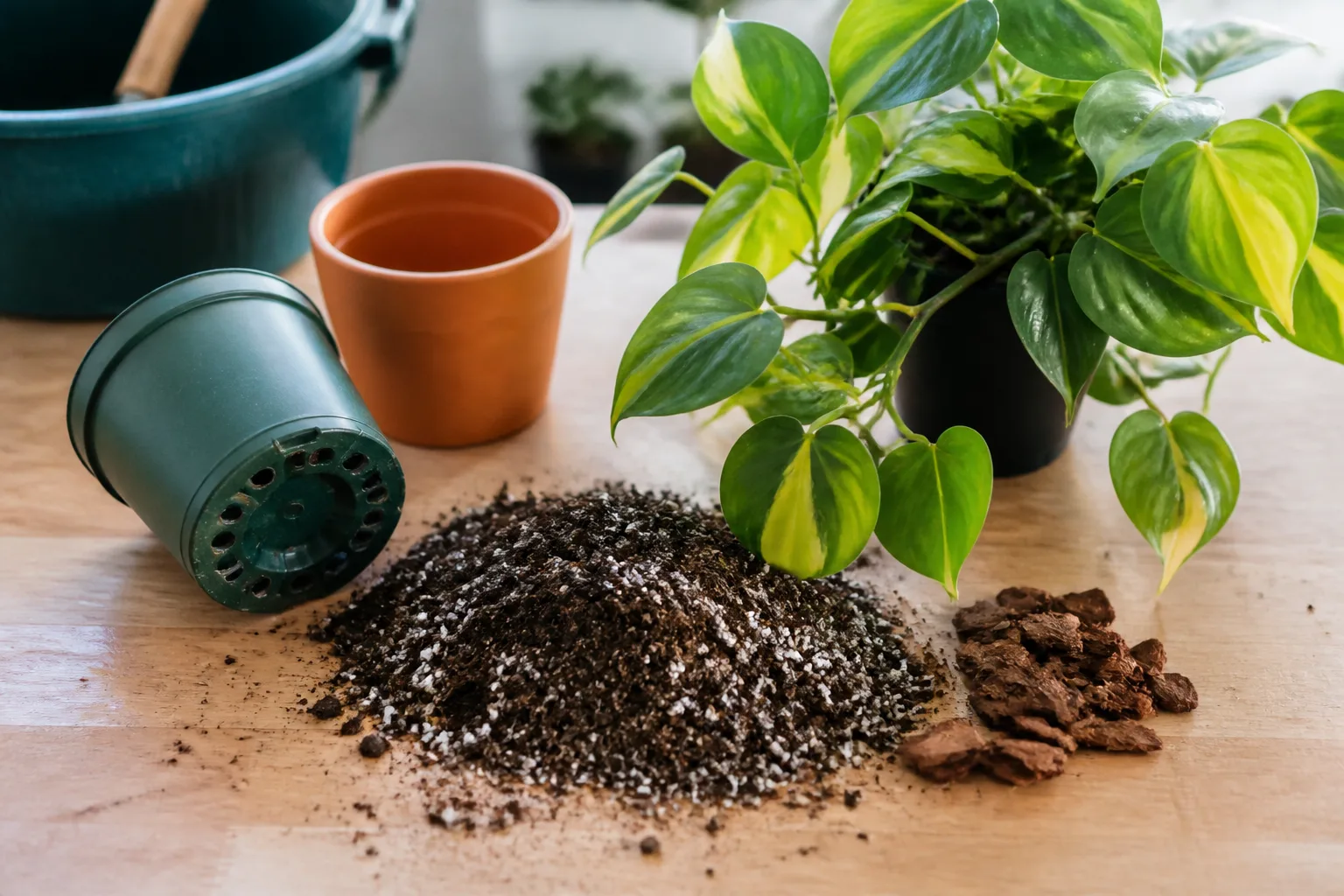
There is no universal recipe because a warm, bright room dries a pot differently from a cool, shaded one. A practical mix should take up water evenly, let excess drain from the bottom, and gradually become lighter as it dries. If water races down the pot’s sides while the center remains dry, rehydrate the mix slowly and consider refreshing a degraded or hydrophobic medium instead of simply watering more often.
Use a container with an unobstructed drainage hole. A decorative cachepot is fine as an outer cover, but pour away any runoff after watering so the nursery pot does not sit in a pool. A layer of gravel at the bottom does not replace a drainage hole or correct a dense mix; the whole root zone needs access to both water and air.
Choose a Pot That Drains and Fits
Choose a pot only a little wider than the current root ball when repotting. An oversized container holds a large volume of wet mix around a small root system, which can make the center stay damp long after the surface looks dry. Terracotta tends to dry faster than plastic, so adjust your checks rather than assuming one pot material is always right.
Water After the Mix Begins to Dry
The RHS recommends letting the compost surface become just dry before watering Florida Beauty thoroughly during the growing season. Use that as a better guide than “once a week”: check the top inch or two, and if the pot is deep or the mix is coarse, use a wooden skewer or your finger to check a little below the surface too. When the upper layer has dried and the root ball is no longer uniformly wet, water slowly until it drains freely.
Empty the saucer or cachepot after the pot has finished draining. Do not give frequent small sips that wet only the surface; they can leave the middle and lower root zone dry while salts accumulate in the mix. In winter, lower light and slower growth usually mean the plant uses water more slowly, so let the mix dry farther between waterings instead of preserving a summer routine.
Your interval will depend on the actual setup. A small plastic pot near a bright window may dry in a few days, while a large pot in a cool room may remain wet much longer. If the container is still heavy and the skewer comes out cool and damp, wait; if it is much lighter and the upper root zone is dry, water. This simple check prevents both calendar overwatering and the repeated neglect that leaves the root ball bone-dry.
Separate Thirst From Root Trouble
Drooping leaves can follow both dry mix and waterlogged roots, so check the pot before adding more water. A light container with dry mix and limp leaves points toward thirst; a heavy pot that stays wet, yellowing lower leaves, a sour smell, or soft stems points toward oxygen-starved roots. A single yellow older leaf is not enough to diagnose a disease, especially if the rest of the plant is pushing healthy growth.
If the mix remains wet for many days, first confirm that the drainage hole is open and the pot is not standing in water. If the plant continues to decline, slide out the root ball and inspect it. Firm pale roots are a good sign; brown, mushy roots that smell unpleasant should be trimmed with clean shears before the plant goes into fresh, airy mix. Avoid watering again until the new mix has begun to dry.
Keep Conditions Warm and Moderately Humid
Keep Florida Beauty in a warm room away from cold drafts, open winter windows, air-conditioning vents, and heating appliances. NC State’s general Philodendron guidance gives 65 to 85°F as a suitable temperature range for the genus; use that as a practical indoor range, not a precision target for every cultivar. If the plant spends summer outdoors, put it in sheltered shade and bring it inside before nights turn cold, checking it for pests during the move.
Average household humidity may be workable if new leaves open cleanly and the plant is growing well. If the edges of new leaves repeatedly dry or a leaf sticks while unfurling, measure the room with a hygrometer before changing the whole setup. A room humidifier can raise ambient humidity more reliably than misting; keep it clean, direct the moisture around the plant rather than onto foliage, and maintain airflow.
A pebble tray may slightly change humidity close to the tray, but it cannot turn a dry room into a greenhouse. If you use one, rest the pot above the waterline rather than letting its base sit in standing water. Avoid misting as a cure for brown edges: it rarely changes the room’s humidity for long, and wet foliage in stagnant air can create a new problem.
Feed During Active Growth
Feed a growing Florida Beauty with a balanced liquid houseplant fertilizer at the label rate, usually about once a month from spring through early fall. The RHS recommends monthly liquid feeding from April to September. A named-grower care guide from Simplify Gardening also emphasizes feeding during active growth and stopping in winter; use the product label rather than copying a high-production nursery schedule into a small home pot.
Do not use fertilizer to force extra cream or yellow on the leaves. Variegation is a cultivar trait and can vary from leaf to leaf, while overfeeding can build salts and burn roots. Skip feeding if the plant is dormant, stressed, newly repotted into fresh mix, or suffering from root damage; first fix the light, water, and drainage conditions that determine whether roots can use nutrients.
If you see a pale crust on the soil, burned margins, or fertilizer runoff leaving residue, stop feeding and flush the mix with plain water if it drains freely. A plant that is not growing in winter does not need a stronger dose. Resume a modest routine only when brighter days and new growth return.
Prune for Shape Without Chasing Variegation
Pruning is optional unless the vine has outgrown its support, developed a damaged section, or become awkward for its space. The RHS says Florida Beauty needs no routine pruning beyond trimming stems as required. When you do cut, use clean, sharp pruners and cut just above a node or branch point; that is where the remaining stem can produce new growth.
Spring or early summer is usually the easiest time for a substantial trim because the plant is entering active growth. Remove dead or badly damaged leaves at the base of their stalks, but avoid stripping every healthy leaf from the vine at once. A green stem can be removed for appearance, yet pruning cannot promise that the next shoot will be more variegated; first check that the plant has enough filtered light and a healthy root system.
The sap can irritate skin and eyes. Wear gloves if you are sensitive, keep cut pieces away from pets and children, and clean the blade before moving to another plant. Save a healthy stem section with a node if you want to propagate rather than discard the entire pruning.
Propagate From a Healthy Node
Stem cuttings are the simplest home method for multiplying Florida Beauty. The RHS lists stem-tip or leaf-bud cuttings; a useful cutting needs a node, the point on the stem where a leaf and aerial root or bud emerge. Choose a firm, healthy section that has recently produced a leaf with the pattern you like, but understand that no cutting can guarantee the same amount of variegation in its next leaves.
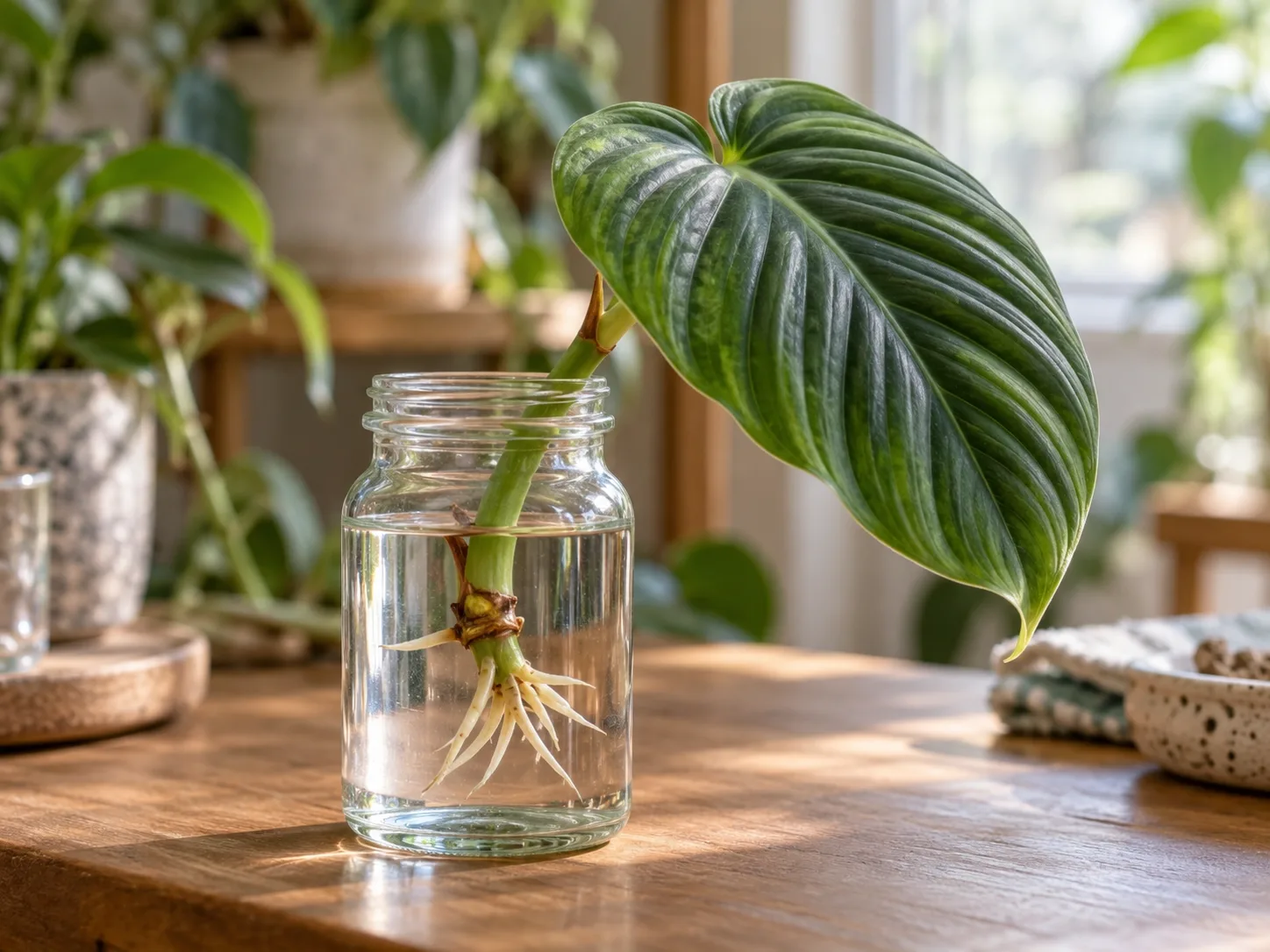
Use clean pruners and make a cut just below the node so the node stays on the cutting. Remove any leaf that would sit below the water or potting medium, then choose a jar of clean water or a small pot of moist, airy propagation mix. Water rooting makes it easy to see roots; soil or moss avoids a later transition from water-grown roots to potting mix. Either method can work if the cutting stays warm and does not sit in stagnant water or saturated medium.
Set the Cutting Up to Root
Place the cutting in bright indirect light, away from hot sun, and keep the medium lightly moist rather than soaked. If rooting in water, keep the node submerged but the leaf above the water; refresh the water when it becomes cloudy, not automatically every day. If rooting in mix, cover the pot loosely to reduce moisture loss only if the air is very dry, and open it regularly to prevent stale, wet conditions.
Rooting time varies with warmth, light, cutting condition, and method, so do not pot up just because a certain number of days has passed. Wait until the cutting has several visible roots or begins pushing new growth, then move it into a small draining pot. Keep the young plant in stable light and avoid fertilizer until it is established and actively growing.
Repot When the Root Ball Needs More Room
Inspect roots when they repeatedly emerge from drainage holes, circle densely around the pot, or the mix has broken down and no longer dries evenly. The RHS gives repotting every two to three years as a general interval; treat that as a reminder to check, not a deadline. If the plant is healthy and dries at a predictable pace, it may not need a new pot just because a date has arrived.
Repot in spring or early summer when possible. Slide out the plant, loosen only tightly circling roots, trim clearly dead or mushy tissue, and set it at the same soil depth in fresh airy mix. Choose a container only one size larger and anchor the climbing support before filling the pot if the pole needs to sit close to the main stem.
Water once to settle the mix, drain fully, then keep the plant in bright filtered light while it adjusts. Hold fertilizer until you see resumed growth, particularly if the new medium is fresh or already contains nutrients. If the plant is merely too tall, pruning or extending its pole may be less disruptive than an unnecessary repot.
Troubleshoot Leaves and Pests
Florida Beauty’s leaves are sensitive indicators, but no single color change identifies one cause by itself. Check the pot’s weight and moisture, the newest growth, recent changes in sun or temperature, and the undersides of leaves before making a correction. Change one condition at a time and judge the next leaf; old scorch, yellowing, or brown tissue will not turn green again.
NC State Extension lists mealybugs, aphids, scale, thrips, and spider mites among common Philodendron pests; the RHS profile also flags scale, red spider mites, and mealybugs for Florida Beauty. Inspect leaf undersides, stem joints, and the point where petioles meet the stem. Cottony white clusters suggest mealybugs, fixed shell-like bumps suggest scale, and fine pale stippling or webbing can signal spider mites.
Isolate an infested plant so pests do not spread to nearby foliage. For a small infestation, wipe or rinse the leaves and stems, remove badly affected material, and repeat inspection over the following weeks because eggs and hidden insects can remain. If you use a labeled insecticidal soap or other product, follow its directions for indoor plants and test a small area first; do not apply an improvised mixture or spray under direct sun.
Read the Pattern Before You Treat
| What you notice | Check first | A sensible next step |
|---|---|---|
| New leaves are smaller or the gaps between them widen | Light, climbing support, and root health | Improve filtered light gradually and secure the vine before adding fertilizer |
| New leaves are mostly green | Light level and whether the plant is actively growing | Improve usable light; accept that variegation can vary and is not fully controllable |
| Brown edges on cream patches | Direct sun, dry root ball, humidity, and fertilizer residue | Correct the most obvious stress; do not assume humidity is the only cause |
| Yellow older leaves | How wet the root zone stays and whether the leaf is simply aging | Let the mix dry appropriately; inspect roots if several leaves yellow together |
| Soft stems or a sour-smelling pot | Persistent wetness and drainage | Check the root ball and remove rotted tissue if present |
If the plant shows rapid spreading leaf lesions, isolate it and keep the foliage dry while you identify the cause. “Black” or brown color alone is not enough to diagnose a bacterial disease; sun scorch, cold damage, pests, and root stress can all leave dark tissue. Remove only badly damaged leaves, clean tools between cuts, and avoid treating with a pesticide or fungicide unless the product label fits the problem.
Florida Beauty vs Florida Green
Florida Beauty and Florida Green share a climbing, lobed-leaf look, but Florida Beauty is valued for its cream, yellow, or white variegation while Florida Green is grown for green foliage. A grower’s overview from Simplify Gardening describes Florida Beauty as the variegated form associated with the Florida hybrid family. Their basic needs are similar: filtered light, an airy root zone, warm conditions, and climbing support if you want mature foliage.
The name Florida Beauty also belongs to Dracaena surculosa ‘Florida Beauty’. That plant has narrow upright branches and dotted oval leaves, not the climbing, deeply lobed foliage of Philodendron Florida Beauty. Confirming which one you own matters because the plants have different growth forms and care needs.
Keep It Away From Pets and Children
Treat Philodendron Florida Beauty as unsafe for chewing pets and children. The ASPCA’s Philodendron entry identifies Philodendron spp. as toxic to dogs, cats, and horses because of insoluble calcium oxalates; possible signs include oral irritation, pain or swelling of the mouth, tongue, or lips, drooling, vomiting, and difficulty swallowing. The entry covers the genus rather than naming this cultivar individually, so keep the plant out of reach instead of waiting for a cultivar-specific listing.
Place the pot where a climbing stem cannot trail into a pet’s path, and collect fallen leaves and pruning scraps promptly. Wear gloves if handling the sap irritates your skin, and wash exposed skin after pruning. If an animal may have chewed the plant, contact a veterinarian or the ASPCA Animal Poison Control Center promptly and keep the plant label available.
Conclusion
Florida Beauty is easiest to manage when you treat it as a climbing, variegated Philodendron rather than a plant that needs a fixed weekly routine. Give it bright filtered light, an airy mix, a pot that drains, and support if you want a more upright plant with mature lobed leaves. Water after the upper mix begins to dry, reduce feeding when growth slows, and use new leaves and pot weight to decide what to change.
Variegation will vary, roots need air as well as moisture, and no care adjustment can guarantee a particular leaf pattern. Start with the simplest correction that fits what you see, then wait for the next growth cycle before changing several conditions at once.