How to Grow and Care for Nellie R. Stevens Holly Shrubs
Nellie R. Stevens holly can reach 25 feet. Learn how much room it needs, when to water and prune, how berries form, and how to spot common problems early.
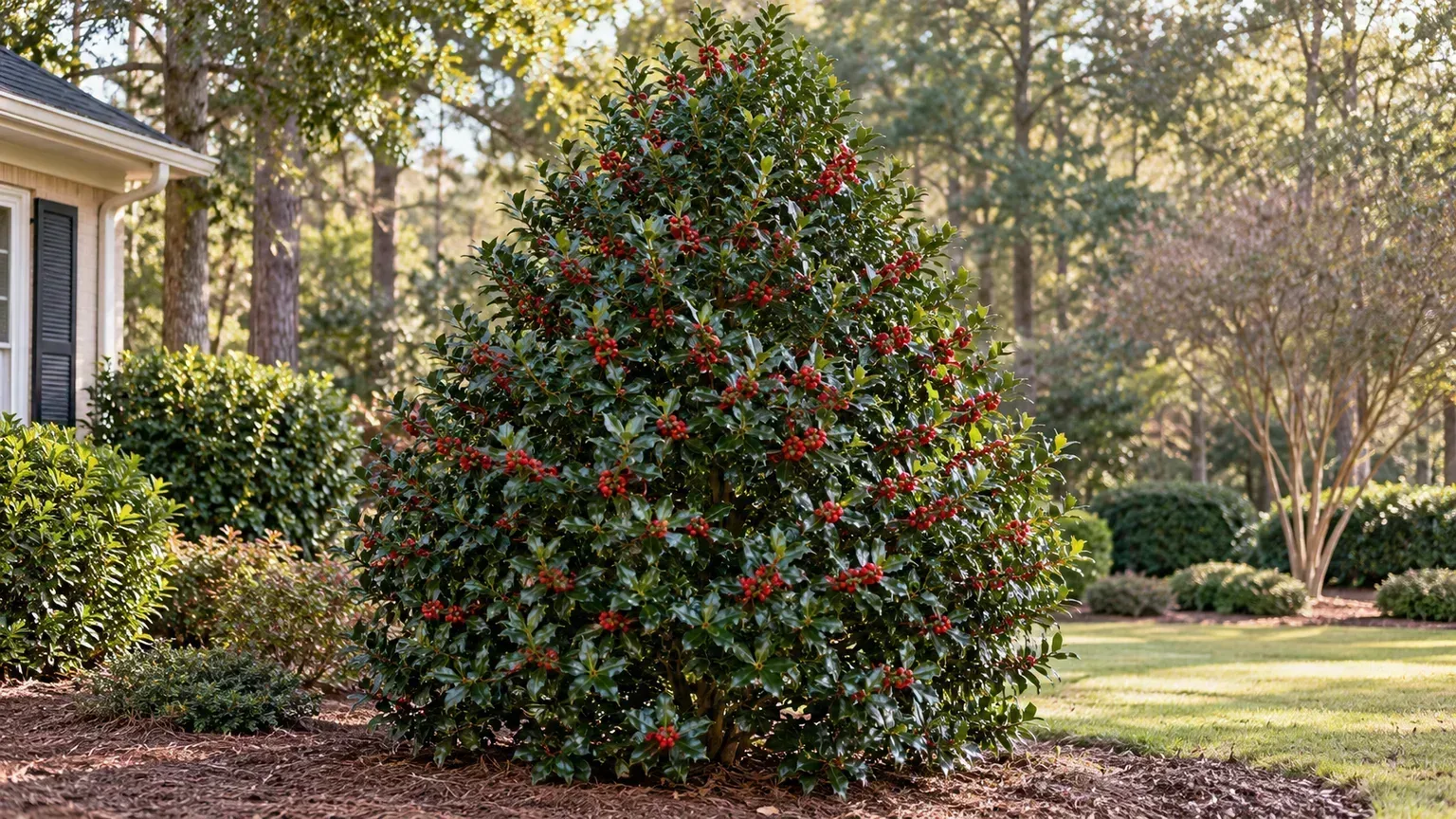
Nellie R. Stevens holly is a substantial evergreen, not a small foundation shrub: a mature plant commonly reaches 15 to 25 feet tall and 8 to 12 feet wide. Give it enough room to keep its naturally pyramidal shape, and it can become a year-round screen or a striking specimen with glossy foliage and red berries. The most important care decisions happen before planting: choose a site with good drainage, plan for adult size, and water the root ball consistently while it establishes.
Size, Shape, and Growth
This cultivar is a broadleaf evergreen hybrid of English holly (Ilex aquifolium) and Chinese holly (Ilex cornuta). It grows vigorously into a dense, upright pyramid, with dark green, glossy leaves that have a few pointed spines along each edge. Small greenish-white flowers appear in spring; the bright red, berry-like fruit ripens in fall and often persists into winter. The Missouri Botanical Garden lists a mature range of about 15 to 25 feet tall and 8 to 12 feet wide, so the eventual footprint matters more than the size of the nursery plant.
That mature range is a planning estimate, not a promise that every shrub stops at 25 feet. Growth depends on climate, soil, water during establishment, and how often you shear it. The University of Arkansas describes a large pyramidal plant that may reach 25 feet, while its campus example was about 8 feet tall after eight years; that contrast is a useful reminder that one annual growth-rate claim cannot predict your yard. Leave room for the canopy and for a person to reach the plant for inspection and pruning.
Nellie R. Stevens is commonly used as a specimen, a privacy screen, or a clipped hedge. Those uses are not interchangeable: an unpruned specimen keeps its natural conical outline, a screen can be a loose row of individual shrubs, and a formal hedge requires regular shaping that can reduce flower and berry display. Its size and prickly leaves also make it a poor fit for a narrow walkway, a small foundation bed, or a place where children brush past the branches.
Plan the Site Around Mature Spread
Light for dense growth and berries
Choose a spot with full sun or light afternoon shade. The cultivar tolerates partial shade, but brighter light generally supports denser growth and better flowering and fruiting; in deeper shade, expect a looser crown and potentially fewer berries. If the site is already shaded by a building or large trees, plant for the actual light there rather than assuming the plant’s tolerance means it will grow equally densely in every exposure.
Think about the light across the whole year. A position that gets morning sun and some afternoon shade can be a good compromise in a hot inland garden, while a site that is shaded most of the day may be better suited to a smaller shade-tolerant shrub. Before digging, watch the area at several times of day and account for future shade from nearby trees.
Soil that drains instead of staying wet
The plant prefers organically rich, slightly acidic soil with medium moisture and good drainage, according to the Missouri Botanical Garden. Drainage is the non-negotiable part. Nellie R. Stevens can tolerate dry periods after establishment, but roots sitting in saturated ground are vulnerable to decline and root disease; a low spot that stays soggy after rain is a poor planting site even if the light is ideal.
A simple pre-plant check can prevent years of frustration: after a soaking rain, see whether water remains around the proposed spot, and dig a small test hole to observe how quickly the soil drains. If the area stays wet, choose a raised, naturally better-drained location or select a plant adapted to those conditions. Do not try to “fix” a waterlogged site by putting gravel in the bottom of the planting hole; that does not correct the soil profile around the roots.
Nellie R. Stevens is more adaptable than a fussy specimen, but adaptability does not mean every soil is equally suitable. Slightly acidic soil helps avoid iron chlorosis, a nutrient-availability problem that can make leaves yellow while veins remain greener. If you do not know your soil pH and yellowing appears, test before adding sulfur, iron products, or acid-loving-plant fertilizer; the cause may instead be overly wet roots.
Planting Correctly
Plant in fall or early spring when the soil is workable and weather is mild. In warm regions, fall planting gives roots time to settle before summer heat; in colder parts of the plant’s range, spring can reduce exposure to a severe first winter. Avoid planting during a heat wave or when the ground is waterlogged or frozen.
Dig a hole about two to three times wider than the root ball but no deeper than its height. Loosen circling roots on a container-grown plant, then set the top of the root ball level with or slightly above the surrounding grade so water does not collect against the stem. Backfill with the soil you removed, firm gently to remove large air pockets, and water slowly so the entire root ball and surrounding soil are moist. Do not bury the trunk flare under extra soil or mulch.
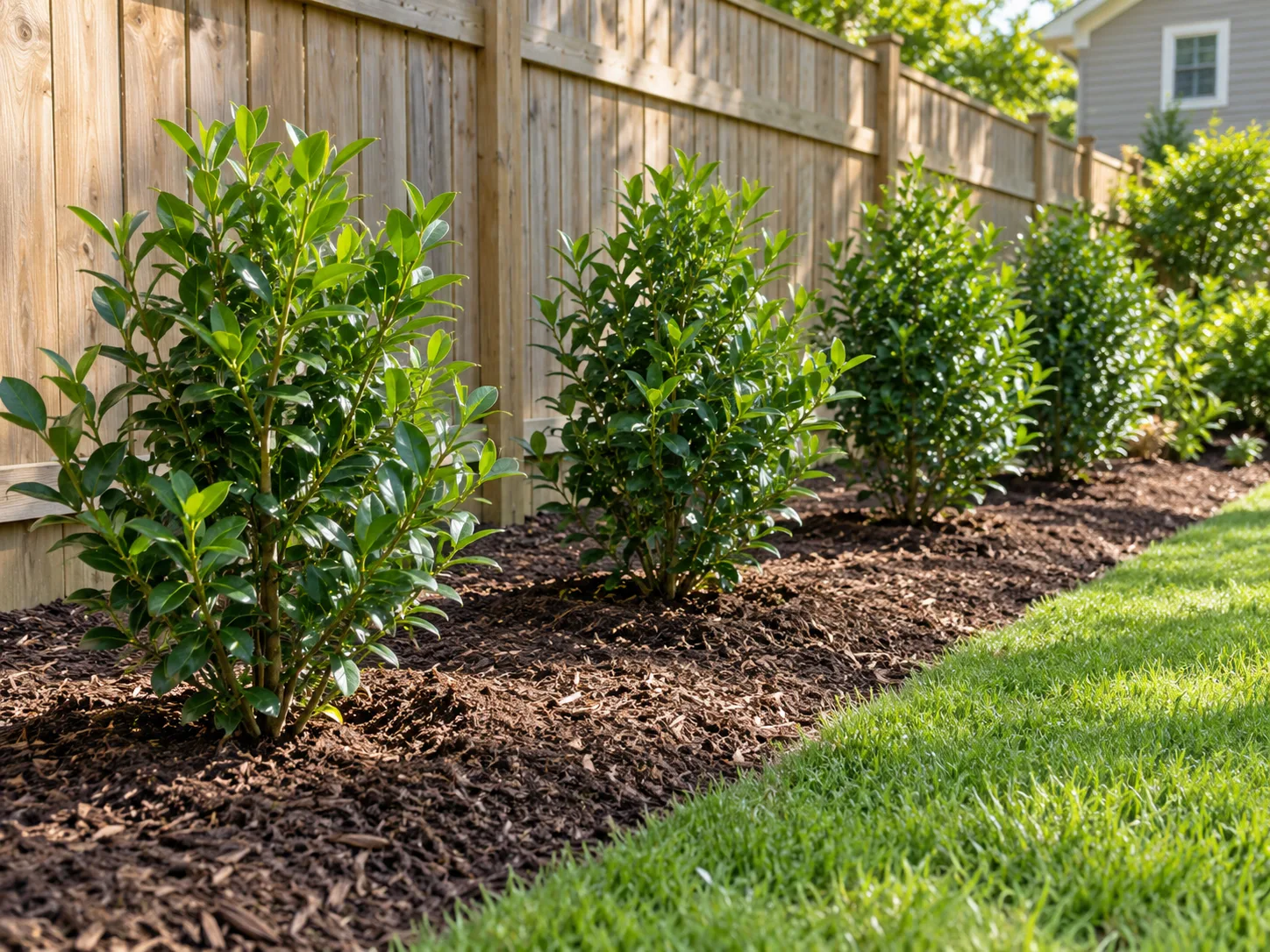
Set the root ball at the right height
The root ball should sit on firm soil, not in a hole dug deeper and then loosely refilled. If it settles below grade, water can funnel toward the crown and keep the trunk base wet; that is especially risky in heavy clay. When the planting hole is wider than the root ball, roots can move into the adjacent soil more easily than if the sides are left hard and slick.
For a balled-and-burlapped plant, remove twine and synthetic wrapping from around the trunk and the upper portion of the root ball after positioning it. Follow the nursery’s handling instructions if the root ball is fragile, but do not leave a tight cord around the stem. A newly planted holly may lean before its roots anchor; stake only if the root ball shifts in wind, and remove the support when it is stable rather than leaving it on indefinitely.
Space plants for a specimen or a screen
For a standalone specimen, reserve a space about 8 to 12 feet across for the crown. That usually means keeping the trunk roughly 4 to 6 feet from a wall or path edge, then adding a maintenance margin so branches do not press against the structure and you can reach the plant. If planting two large shrubs in a natural screen, centers spaced near the cultivar’s mature width help preserve individual pyramids; tighter spacing closes the view sooner but increases crowding and pruning. Check overhead wires, doors, windows, gutters, driveways, septic components, and property boundaries before committing to a spot.
For a loose privacy screen, plant centers can be closer than a specimen layout, but a tight row closes faster at the cost of airflow, maintenance access, and the plant’s natural pyramidal outline. Use the nursery’s expected cultivar size and the width of your planting strip to choose spacing; if you want a clipped, continuous hedge, accept that you will prune it repeatedly and that the lower branches need light to stay full. Leave a working margin on both sides of the row instead of planting directly against a fence or neighbor’s boundary.
Water by root-zone condition
During the first growing season, the root ball can dry out before the surrounding soil does, so check both. Feel the soil a few inches down at the edge of the original root ball; if it is dry, water slowly at the base until the root zone is moist, then wait and recheck rather than giving a brief surface sprinkle every day. Rainfall, soil texture, temperature, wind, and plant size all change how often this is needed.
As roots spread, the shrub becomes more drought tolerant, but “established” does not mean it never needs water. During a long hot or dry spell, give a deep soak when the root zone is drying, especially if the leaves are dulling or new growth is wilting. Sandy soil may need more frequent checks than clay, while clay that remains wet should not receive extra irrigation simply because a calendar says it is watering day.
The practical target is evenly moist soil around the active roots, not a permanently wet planting hole. A soaker hose or a slow trickle at the base is more useful than frequent overhead sprays because it reaches the root zone with less evaporation and keeps foliage drier. If leaves yellow after repeated irrigation, stop and check drainage before adding more water or fertilizer.
Mulch and fertilizer: less is usually more
Spread a 2- to 3-inch layer of organic mulch over the root zone to slow evaporation and moderate soil temperature. Keep the mulch a few inches away from the stems so the base stays airy; piling mulch against the trunk traps moisture and hides the root flare. Refresh the layer as it thins, but do not bury the plant deeper each year.
Do not automatically feed a healthy holly every spring with a fixed 10-10-10 dose. Fertilizer cannot compensate for waterlogged soil, a root ball that dries out, or high-pH soil that makes iron harder to absorb. If growth is unusually weak after the plant is established, test the soil and review drainage, sunlight, and watering first; apply a fertilizer only if the test or a local extension recommendation points to a real need.
A yellow plant is especially likely to tempt gardeners into adding iron or acidifying products immediately. Resist that shortcut: iron deficiency can occur in alkaline soil, but roots damaged by poor drainage can also produce yellow foliage. Correct the underlying site or watering issue before adding nutrients, and follow product labels if a test supports treatment.
Pruning for shape without sacrificing berries
Nellie R. Stevens naturally forms a pyramidal outline, so a specimen usually needs only selective pruning. Start by removing dead, broken, crossing, or badly misplaced branches; then step back and decide whether the plant truly needs a shape correction. Repeatedly shearing every surface can make a crisp hedge, but it creates a maintenance commitment and may cut off the growth that would flower and fruit.
Wear sturdy gloves, long sleeves, and eye protection when handling the spiny foliage. Use sharp bypass pruners for small branches and loppers or a pruning saw for thicker wood; clean tools between plants if you are removing diseased growth. Make cuts just outside the branch collar rather than leaving stubs, and avoid cutting a broadleaf evergreen back to bare old wood unless a reliable local source confirms it will recover from that treatment.
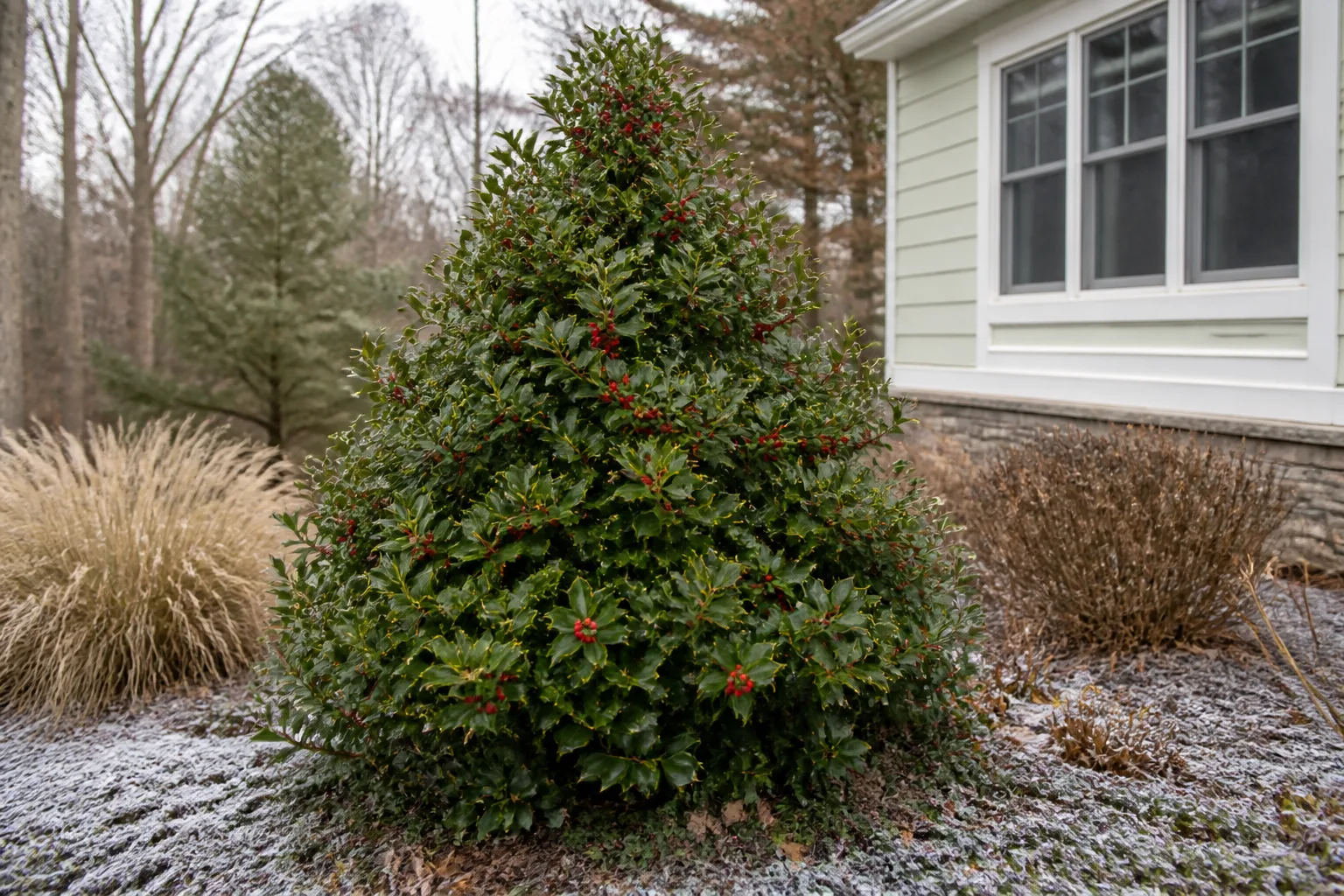
Choose timing by the job
For light shaping or removal of winter injury, late winter to early spring, just before new growth begins, is a practical window. The University of Arkansas Extension recommends postponing severe renovation until early spring, and the Missouri Botanical Garden notes that the plant can be pruned in winter if needed. If the shrub is a formal hedge, the Gardeners’ World holly guide recommends trimming holly hedges in late summer; that timing suits a hedge’s outline but can remove developing berries.
If you want winter fruit to remain on the plant, avoid late-season shearing and make only the cuts that are necessary. A light trim after the berry display has passed can preserve the current crop, while a major reduction before spring flowering may also remove potential flower-bearing shoots. Timing is a tradeoff between size, clean shape, and fruit; there is no pruning date that maximizes all three.
If a healthy shrub has simply outgrown its space, do not solve a poor site choice by cutting it into a small ball every few weeks. Reduce the canopy gradually over more than one season, removing selected branches rather than shaving only the outside. The Arkansas guidance says the plant can tolerate severe pruning, but renewal will take time and the screen may look open until new growth fills in; replacing an oversized shrub may be the more realistic option in a narrow yard.
Berries and Pollination
The red fruits are a major reason gardeners choose this holly, but the berry story is more nuanced than “every female holly needs a male.” Nellie R. Stevens is a female clone that can set at least some fruit without fertilization, a process called parthenocarpy. The Missouri Botanical Garden and the University of Arkansas System Division of Agriculture both note that it can bear fruit without a male pollinator.
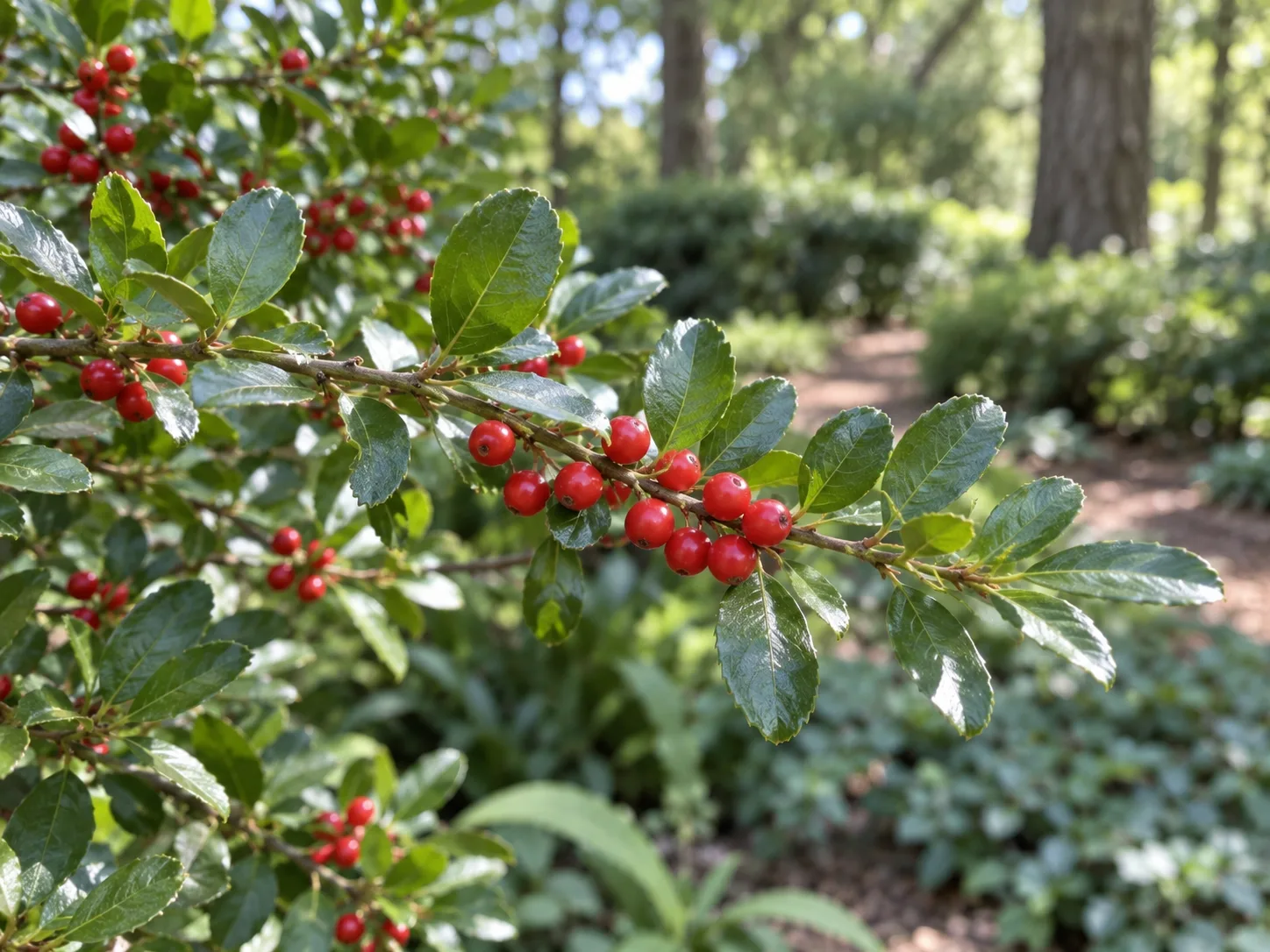
That means a solitary plant can still carry berries; it does not mean every plant will produce an equally heavy crop in every garden. A compatible male holly such as ‘Edward J. Stevens’ may be used when a gardener wants to encourage fruit set, but it is not required for this cultivar’s ability to fruit. The male form is not widely available in every nursery, so do not buy a second plant without confirming its identity and considering whether the expected benefit fits your landscape.
A useful troubleshooting sequence for a plant with few berries is: confirm it is actually Nellie R. Stevens, check whether it gets adequate light, avoid heavy pruning around flowering and fruit development, and give it time to mature. Poor drainage and drought stress can weaken a shrub even when it survives, and a young plant may not yet give the display you expect. The flowers are small and easy to miss, so a lack of obvious blossoms does not necessarily mean the shrub is failing.
Treat the berries as ornamental, not food. ASPCA lists holly as toxic to dogs, cats, and horses and identifies vomiting, diarrhea, and depression as possible signs; it describes the leaves and berries as low toxicity, not harmless. Keep cut branches and fallen fruit away from pets, and if a child or pet may have swallowed berries, contact Poison Control or a veterinarian for case-specific advice instead of guessing from the number eaten.
Diagnose Common Problems
Yellow leaves and poor growth
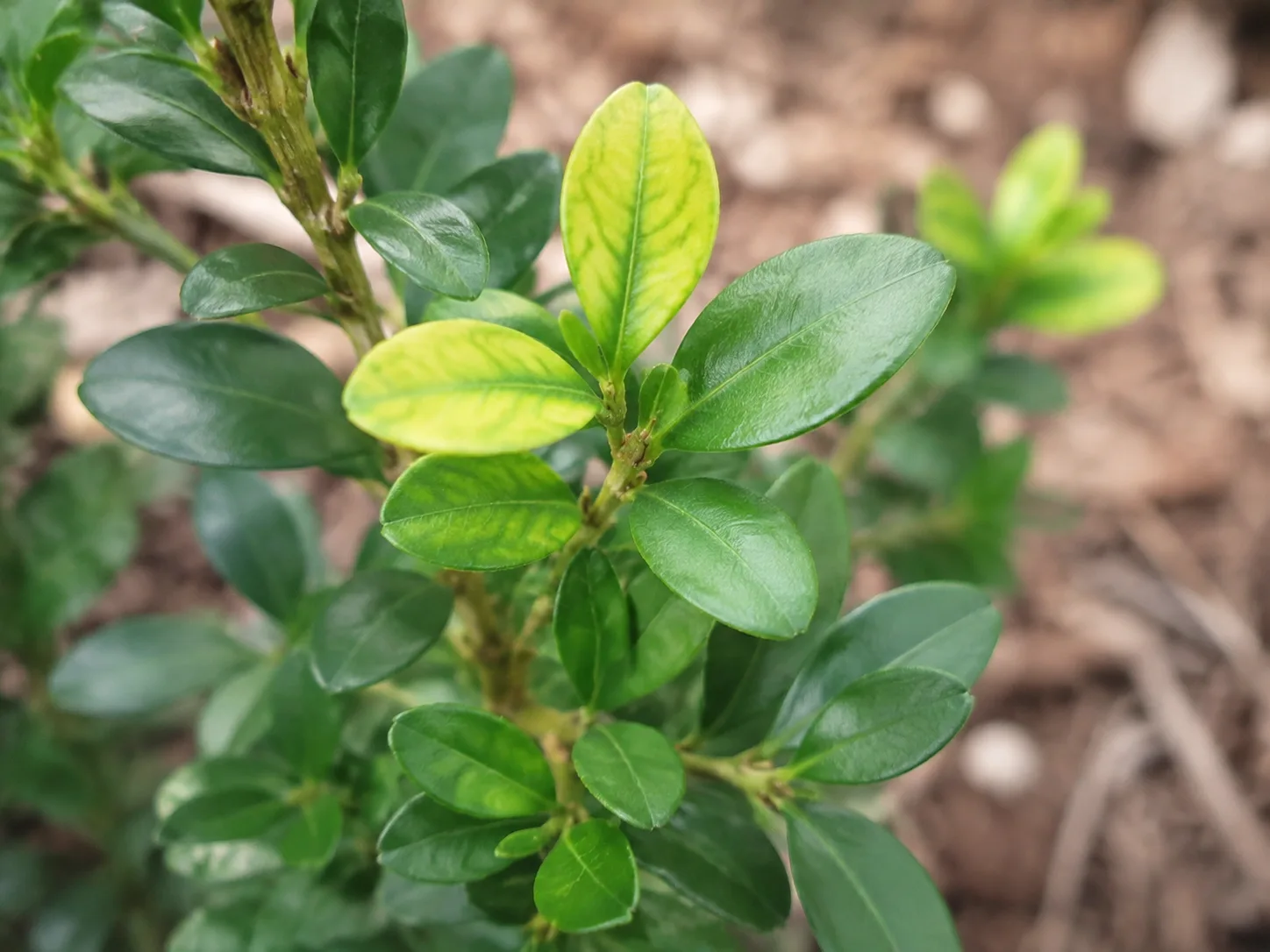
Yellow leaves are a symptom, not a diagnosis. First check soil moisture around the root ball: if it is persistently wet or the plant sits in standing water, poor drainage and root stress move to the top of the list; if it is dry several inches down during hot weather, drought stress is more likely. Next consider soil pH, because high-pH soil can cause chlorosis in hollies even when nutrients are present.
Look closely at the pattern. Yellowing between veins while veins stay greener is consistent with iron chlorosis; whole leaves turning pale, wilting, and dropping after wet weather points more toward root trouble; scattered older leaves may be part of normal evergreen turnover. A soil test is a better next step than applying iron at random, and if the soil remains saturated, correcting drainage is more important than changing pH.
Spots, dieback, and insect signs
The Missouri Botanical Garden lists holly leaf miner, spider mites, whitefly, and scale among potential insect problems, as well as leaf spot, leaf rot, tar spot, powdery mildew, scorch, and chlorosis. Inspect the underside of leaves and the stems before treating: fine stippling and webbing can indicate mites, small insects that flutter when disturbed may be whiteflies, and fixed bumps or scale-like coverings can be scale insects. Holly leaf miners leave trails or blotches inside leaves rather than a uniform yellow cast.
Remove a few badly affected leaves or dead twigs and discard them; do not strip a large portion of a stressed evergreen. Improve airflow by avoiding a crowded planting, water at soil level when possible, and identify the organism before choosing a pesticide. If using any pesticide or horticultural oil, follow the product label for the plant, pest, weather, protective equipment, and pollinator precautions; a broad spray on a plant with minor cosmetic damage can create more problems than it solves.
Winter Protection and Climate Limits
The Missouri Botanical Garden lists Nellie R. Stevens for USDA zones 6 to 9 but cautions that it is not reliably winter hardy throughout the St. Louis area, where a protected site is advised. That caveat matters: a zone number does not capture exposed winds, sudden temperature drops, drainage, or whether a plant was established before winter. In the colder edge of its range, choose a sheltered location and avoid planting where winter wind strips moisture from the leaves.
Water thoroughly before the ground freezes if autumn has been dry, then maintain the mulch ring without piling it against the trunk. Newly planted hollies and plants exposed to wind can benefit from a temporary burlap screen on the windward side during severe cold; keep material supported away from foliage rather than wrapping the plant tightly for the entire winter. Wait until spring growth resumes before deciding that bronzed or browned leaves mean the whole shrub is dead, then scratch a small twig to check whether living green tissue remains beneath the bark.
Propagating Nellie R. Stevens Holly
A cutting can produce a plant that retains the cultivar’s traits, unlike seed from a hybrid, which may not come true to type. Semi-ripe cuttings taken in late summer or early fall are a common home-gardening route, but rooting can be slow and success is not guaranteed; buying a named plant is the reliable choice if you need a particular screen on a schedule.
Take a healthy, nonflowering shoot about 4 to 6 inches long, remove the lower leaves, and make a clean cut just below a leaf node with a sanitized tool. Dip the base in rooting hormone if using it, place the cutting in a moist, free-draining propagation mix, and cover it loosely with a clear bag or propagator to hold humidity while keeping the leaves from touching the plastic. Set it in bright indirect light, not hot direct sun, and keep the medium lightly moist rather than waterlogged.
Check for roots only after the cutting has had time to establish; tugging repeatedly can break new roots. Once it resists a gentle pull and begins producing new growth, acclimate it gradually to less humidity and pot it on; wait until it is well rooted before planting outdoors. Because cuttings can take a season or longer to become robust landscape plants, use them for patient propagation rather than quick privacy coverage.
Conclusion
Nellie R. Stevens holly is a good fit when you want a large, evergreen, naturally pyramidal shrub and have room for its 15- to 25-foot height and 8- to 12-foot spread. Plant it where roots can drain, water the root ball by condition while it establishes, and let the shape develop before reaching for hedge shears. If the leaves yellow, check moisture and soil pH before feeding; if berries matter, remember that this cultivar can fruit without a male but heavy pruning can still reduce the display. Plan the mature footprint first, then the care becomes straightforward.