How to Grow and Care for a Nutmeg Tree
A nutmeg tree needs tropical warmth, steady moisture, and room to grow. Learn how to choose a tree, care for it in a pot, and understand fruiting limits.
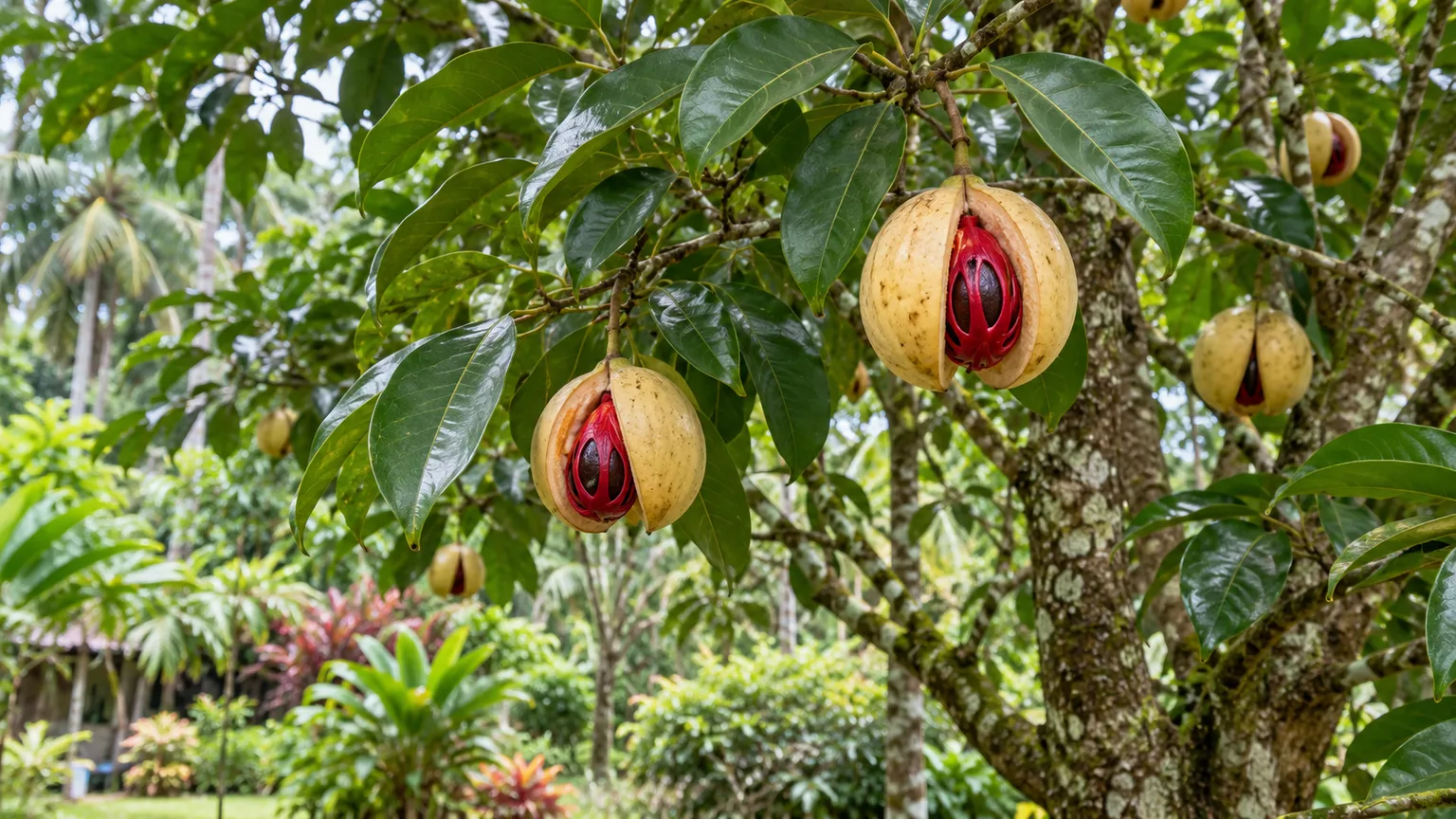
A nutmeg tree is a tropical evergreen, not a small indoor spice plant. Myristica fragrans can become a broad tree in a warm, humid landscape, and it may take years to flower. In a cool climate, a potted specimen is possible, but keeping it alive is a more realistic first goal than harvesting your own spice.
The key is to plan around climate and pollination before buying. Nutmeg needs warm roots, moist but freely draining soil, protection from cold and drying wind, and enough light to grow without scorching a young tree. Fruit production adds another layer: seedlings may not reveal their flower sex for years, and a tree with only female flowers needs pollen from a male flower.
Can You Grow a Nutmeg Tree Where You Live?
You can grow nutmeg outdoors year-round only where winters are reliably warm and frost-free. The Missouri Botanical Garden lists the tree for tropical USDA Zones 11–12 and describes it as a plant for hot, humid conditions; it may be grown in a greenhouse where the outdoor climate is too cold (Missouri Botanical Garden). A brief dip toward chilly temperatures can stall growth or damage a young tree, so do not use a broad “tropical plant” label as proof that it will tolerate your winter.
If your winter regularly brings cold nights, the practical route is a container that can move into a warm greenhouse, sunroom, or conservatory before temperatures fall. A heated, bright indoor space can keep a small specimen growing; an ordinary dim room beside a cold window is not an equivalent substitute. If you cannot offer warmth and strong light in winter, consider nutmeg a short-term foliage experiment rather than a dependable long-term tree.
In a truly tropical garden, also consider mature size before planting. A tree may grow roughly 30 feet tall with a wide crown, so it needs overhead clearance and room away from buildings, paths, utilities, and smaller light-sensitive plants. Container culture controls the root space and makes seasonal protection possible, but it does not turn a large tree into a compact houseplant.
Nutmeg Tree Biology: Flowers, Fruit, Mace, and Seed
One nutmeg fruit yields two familiar spices, but neither is a root nor a conventional nut. The ripe fruit is a fleshy drupe; when it splits, it exposes a dark seed wrapped in a bright red, lacy aril. The dried aril is mace, while nutmeg is the kernel inside the hard seed coat. Gardens by the Bay documents this split-fruit stage and the separate uses of the red aril and seed (Gardens by the Bay).
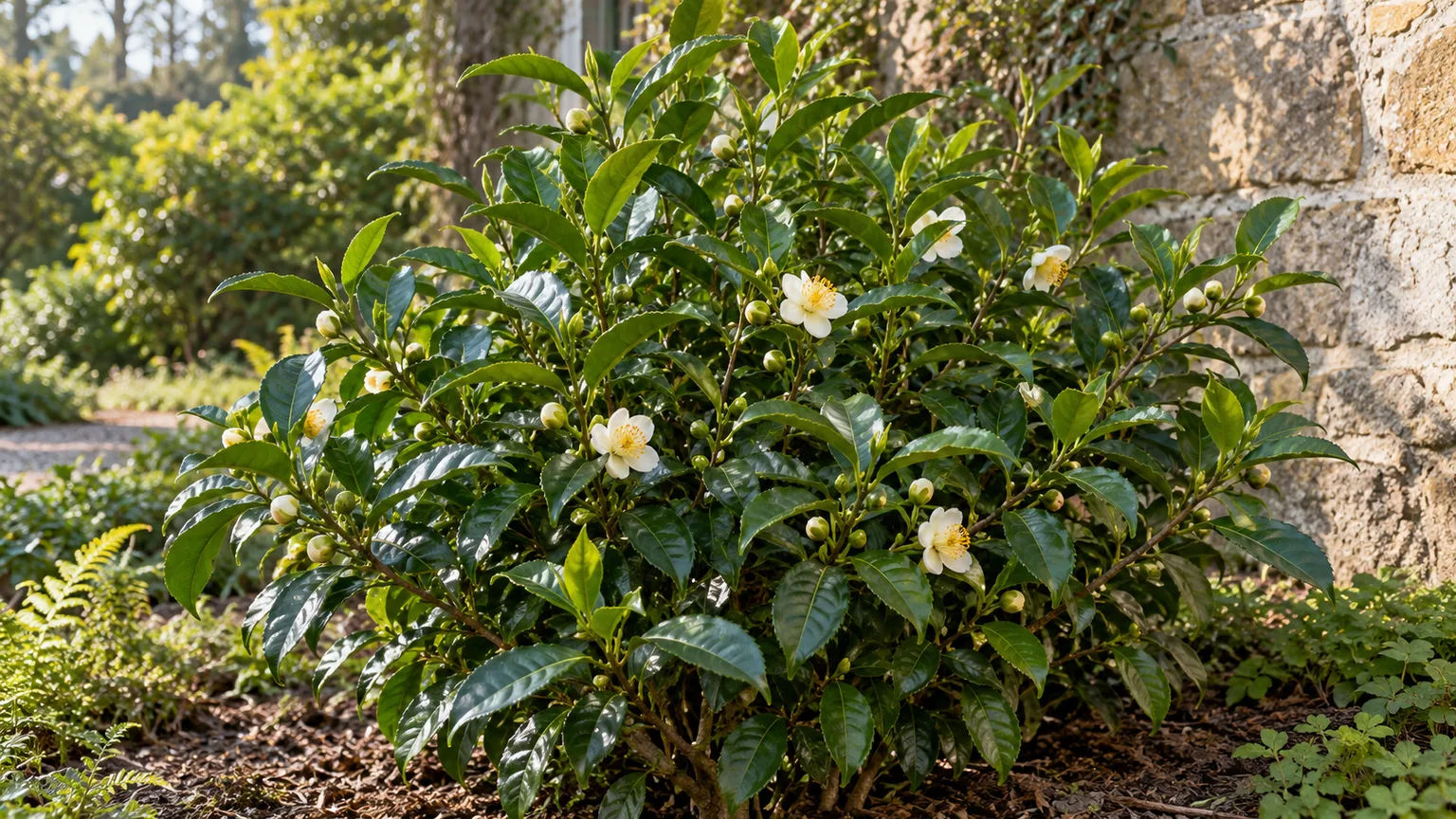
Flower sex is more nuanced than a simple “male tree or female tree” label. Nutmeg is incompletely dioecious: male and female flowers are usually on separate trees, but the Missouri Botanical Garden notes that some individual plants can bear both. Male flowers commonly appear in clusters; female flowers are often solitary. The small, pale blooms can be easy to miss among evergreen leaves, so a young plant’s sex is not something you can reliably determine from its foliage or nursery pot.
This biology explains why fruiting is uncertain in a single seedling. A female-flowering tree generally needs pollen from a male flower, while a plant that produces both flower types may have a different pollination opportunity. Even when flowers are present, fruit set depends on compatible pollen and conditions during flowering. Buying a tree for attractive foliage is a clearer proposition than buying an unidentified seedling with the expectation of a spice harvest.
Nutmeg Growing Requirements at a Glance
| Need | Practical target | What to avoid |
|---|---|---|
| Climate | Warm, frost-free tropical conditions; protected warmth in cool regions | Cold drafts, frost, and abrupt indoor-to-outdoor changes |
| Light | Bright filtered light for a young tree; more sun after gradual acclimation | Harsh afternoon sun on tender foliage or deep shade |
| Soil | Rich, organic, moist, and freely draining | A waterlogged pot or compacted planting hole |
| Water | Thorough watering when the upper mix starts to dry; drain the saucer | Repeated small sips or roots sitting in water |
| Air | Humid surroundings with gentle air movement | Hot, stagnant, very dry indoor air |
| Fruiting | A mature, flowering plant with pollination opportunity | Expecting a young, unknown-sex seedling to fruit quickly |
Use the table as a starting point, then adjust to your actual site. A small pot on a warm balcony dries faster than a mature tree rooted in an organically rich tropical bed, and the same watering calendar cannot serve both. Watch the plant and the soil rather than following a fixed number of days.
Choose a Healthy, Known-Source Plant
Buy from a nursery that can tell you how the tree was propagated, how long it has been in its container, and what temperatures it has experienced. A healthy young plant should have firm stems, evenly colored leaves, and no persistent wilting, scale bumps, webbing, or sour-smelling potting mix. Avoid a pot that is much larger than the rootball if it is saturated; oversized wet media can stay oxygen-poor around a small root system.
Ask whether the plant is seed-grown, grafted, or otherwise vegetatively propagated. A seedling is genetically variable and its sex usually remains unknown until it flowers, which may be many years later. A grafted plant can preserve a known parent’s traits and may shorten the wait for flowering, but confirm what the seller means by “female” and whether pollination is addressed. A label alone does not make fruit set certain.
Inspect leaves for a glossy, dark-green surface and regular shape rather than using leaf fragrance as your only test. Nutmeg foliage is aromatic, but smell varies with handling and may not be noticeable on a recently shipped plant. If a plant arrives stressed, keep it warm, sheltered, and evenly moist while it acclimates; postpone pruning, repotting, and heavy fertilizing until it resumes active growth.
Site the Tree for Filtered Light and Wind Shelter
Give a young nutmeg tree bright light with protection from the strongest afternoon sun. In a tropical garden, a position beneath high, light shade or on the bright edge of a canopy can buffer heat while still providing useful daylight. The Missouri Botanical Garden describes young plants as benefiting from shade that can be reduced gradually as they mature, with mature plants tolerating full sun to part shade.
Acclimate rather than moving a shaded nursery plant straight into exposed sun. Start with morning sun or bright filtered light, then increase exposure over several weeks while checking the newest leaves. Pale, scorched patches on the sun-facing side indicate that the transition was too abrupt or the site is too intense; deep shade and weak growth suggest the opposite problem.
Protect the tree from persistent wind and drying air. Wind tears tender leaves, rocks a newly planted rootball, and increases water loss even when the soil is damp. In a container, a sheltered patio or bright conservatory is usually easier to manage than a narrow balcony with reflected heat, gusts, and no way to control afternoon exposure.
Plant in Rich Soil That Drains Freely
Nutmeg grows best in deep, fertile soil with plenty of organic matter, but “moist” must not mean stagnant. The Missouri Botanical Garden recommends evenly moist, well-drained, rich sandy loam and warns against waterlogged conditions. If garden soil holds water after rain, improve the planting area broadly or use a raised mound rather than setting the rootball into a small pocket of amended soil surrounded by dense clay.
Before planting, loosen a wide area and mix in mature compost if the native soil is poor. Do not bury the trunk flare or pack amendments into a slick, rich layer beneath the roots; that can create a basin that holds water. Set the plant at approximately the same depth it grew in its nursery container, backfill without hard tamping, and water to settle the soil.
For pots, choose a stable container with several open drainage holes and a coarse, moisture-retentive potting mix that still drains freely. A quality tropical or indoor tree mix amended modestly with bark or another aerating component can help balance moisture and air. Do not add gravel to the bottom as a drainage “fix”; a blocked or undersized drain hole and dense mix are the problems to solve.
A soil test is useful if a tree is struggling in the ground or you are preparing a long-term planting. Nutmeg generally suits slightly acidic to near-neutral conditions, but no pH adjustment is worthwhile without a test and a clear need. For a container, replace old, compacted mix during repotting rather than trying to correct an unknown pH with repeated additives.
Water Deeply, Then Let Excess Drain
Aim for steady moisture with oxygen around the roots. Check the upper inch or two of potting mix with a finger; when that layer begins to dry, water slowly until water exits the drainage holes, then empty the saucer. Epic Gardening gives the same practical topsoil check for container-grown nutmeg and notes that pots dry faster than in-ground soil (Epic Gardening). In hot weather, the tree may need checks more often; during cool, low-light periods, it may use water more slowly.
For a planted tree, water the root zone deeply during dry spells rather than wetting only the trunk. A two- to three-inch organic mulch layer can reduce evaporation, but keep mulch several inches away from the trunk so bark stays exposed and air can circulate. Rainfall, soil texture, root depth, and heat all change how often irrigation is needed, so use soil moisture and leaf condition as your cues.
If the mix stays wet for days, do not add more water because leaves droop. Drooping can occur when damaged, waterlogged roots cannot supply the canopy. Check for blocked drainage, a saucer full of water, and a container that is too large for the rootball; allow the medium to approach lightly moist before watering again. Conversely, a very light pot and dry mix, especially with curling or limp leaves, point toward under-watering.
Maintain Tropical Warmth and Humidity
Warmth is not an optional boost for this species; it is part of its basic growing environment. The botanical profile places it in tropical Zones 11–12, and Gardenia describes consistently warm conditions and frost sensitivity. In cool regions, bring a container under protection before nights become cold instead of waiting until leaves blacken or growth stops. Keep it away from door drafts, air-conditioning vents, and cold glass.
Indoors, place the tree in the brightest warm location available, ideally with several hours of filtered or gentle direct light. If natural light is weak, a grow light can supplement it, but keep the plant warm and avoid placing it against a heat source that dries the leaves. Rotate the pot occasionally so one side does not become permanently stretched toward a window.
Nutmeg also prefers humid air. A humidifier near the plant is more reliable than repeated misting, which briefly wets leaves without changing room humidity for long. Keep enough space around the canopy for air movement; warm, wet, stagnant foliage is a favorable setting for fungal problems. If the indoor air is dry, group tropical plants or use a room humidifier while still watering according to soil, not humidity alone.
Fertilize Without Overfeeding
Start with healthy roots and fertile soil, not a strong fertilizer dose. A young or recently repotted tree should establish before it receives regular feeding. Once it is actively making new growth, apply a balanced fertilizer suitable for container-grown trees or tropical ornamentals at the label rate and frequency. Reduce or pause feeding when growth slows in cool or dim conditions.
Compost can improve organic matter in an in-ground planting, but it is not a substitute for a measured fertilizer program if a nutrient deficiency is confirmed. Do not pile fresh manure against the trunk or add fertilizer every time leaves look pale. Yellowing can also come from waterlogged roots, cold stress, low light, or pests, and adding salts to a damaged root zone can make the problem worse.
Use new growth and the potting mix as feedback. A steady flush of firm leaves usually means the current routine is adequate; very soft, elongated growth can signal low light or excess nitrogen. If growth is stalled despite warmth and a healthy root system, consider light, pot restriction, and moisture before increasing fertilizer. Soil and water problems are more common causes of decline than a need for aggressive feeding.
Prune Only to Shape a Manageable Canopy
Nutmeg naturally develops a dense evergreen crown, so routine hard pruning is unnecessary. On a young tree, remove dead, damaged, crossing, or inward-facing shoots with clean, sharp tools. Make cuts just outside the branch collar rather than leaving long stubs or cutting flush against the trunk.
For an in-ground tree, preserve a balanced framework and avoid stripping the center to force airflow. If a mature tree becomes too tall for safe access or threatens a roof or utility, consult a qualified arborist; topping it can leave weak regrowth and a permanently poor structure. In a container, light tip pruning can control shape, but repeated severe cuts reduce the foliage that supports root growth.
Prune in warm, active growth when the tree can recover, and avoid combining heavy pruning with repotting or cold exposure. Remove only what has a clear purpose. A tidy shape is useful, but the goal is a healthy canopy that captures light and does not trap persistent wetness against crowded branches.
Grow Nutmeg in a Pot in Cold Climates
A pot is the best option if your winter is too cold for an outdoor nutmeg tree, but container culture is a compromise. It lets you move a young tree to warmth and gives control over drainage; it also dries quickly, limits root volume, and creates an indoor light-and-humidity challenge. Epic Gardening and Gardenia both describe container growing as possible while emphasizing that tropical conditions remain necessary (Epic Gardening; Gardenia).
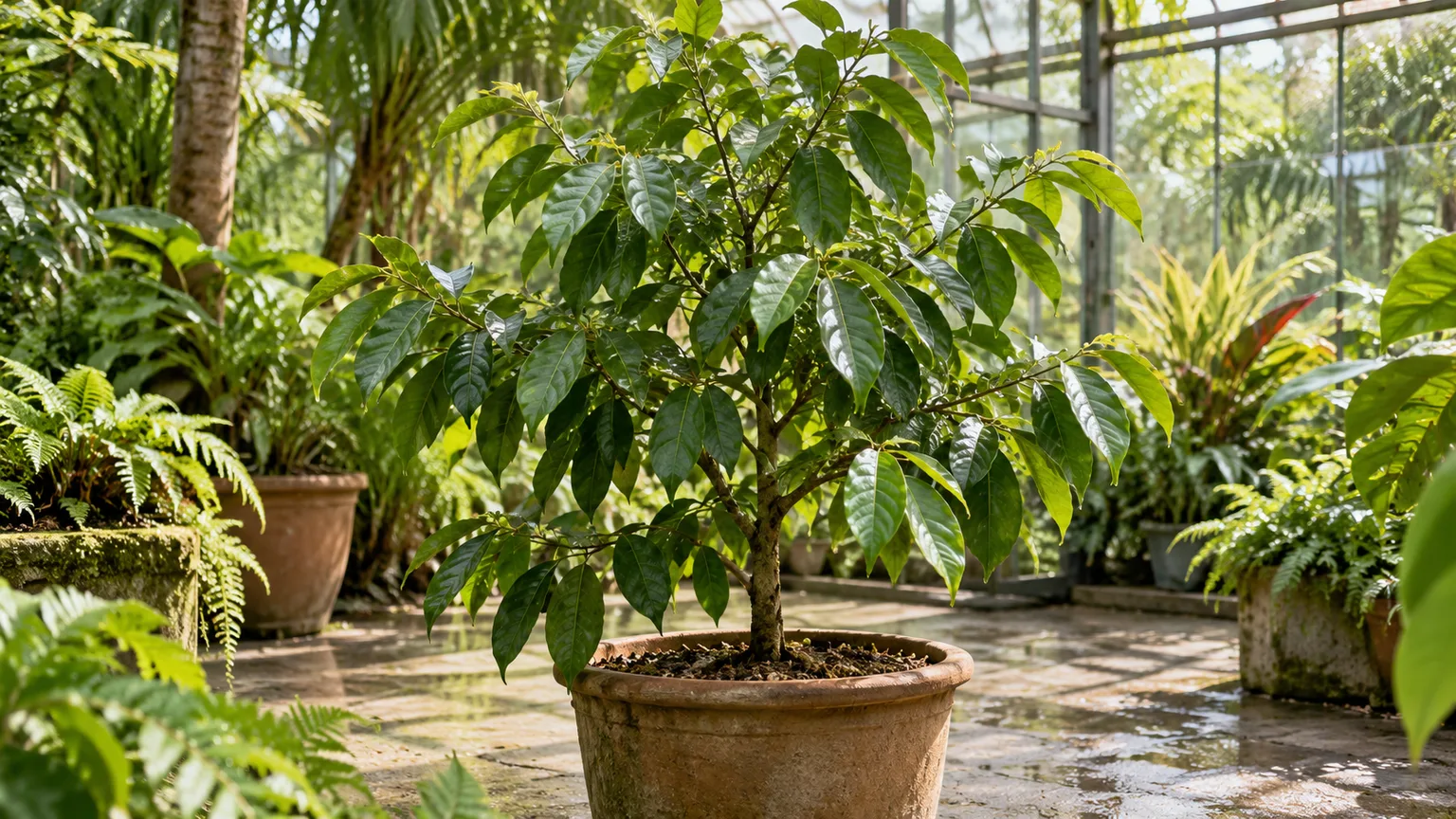
Start in a pot only slightly larger than the rootball, with ample drainage. When roots circle the inside or emerge from drainage holes, move up one container size rather than placing a small root system into a much larger volume of wet mix. Choose a heavy, stable pot with a saucer that can be emptied. Do not let roots remain tightly bound for years, but do not repot on a calendar if the plant has not filled its current container.
When warm weather returns, acclimate the tree outdoors gradually. Begin in full shade in a wind-protected spot, then expose it to morning light over several days to weeks. Before moving it back inside, inspect leaf undersides and stems for scale or other hitchhikers, and make the transition before nighttime temperatures drop. A simple temperature log near the plant can catch cold windowsill conditions that a room thermostat misses.
Plan for Pollination Before Expecting Fruit
A nutmeg tree can grow attractively for years without producing fruit. First, it must reach flowering maturity; seed-grown plants commonly take many years, and published horticultural references do not give one universal age. UF/IFAS Extension notes that seed-grown trees may flower at about eight years, while grafted female trees can begin production earlier under suitable conditions (UF/IFAS Extension). The timeline varies with propagation, climate, and care, so treat any exact age as an estimate rather than a guarantee.
Next, identify the flowers. If your plant produces only male blooms, it will not bear fruit. If it produces only female blooms, it needs pollen from a male flower; that may mean a compatible tree within reach or a correctly timed pollen source. Botanical references record occasional trees with both flower sexes, but that is not a characteristic to assume for an unlabelled seedling.
Watch for tiny blooms and note when they open before trying to hand pollinate. If flowering appears but no fruit develops, record whether the plant had both flower types, whether bloom times overlapped, and whether cold, drought, or heavy rain occurred at flowering. Poor fruit set is not automatically a fertilizer problem. A nearby tree’s presence is helpful only if it flowers compatibly and pollen can reach the female flower.
Propagate Fresh Seed—and Understand the Gamble
Seed is a poor way to produce a predictable fruiting tree, but it is a reasonable way to experiment if you can obtain a fresh seed from a ripe fruit. Nutmeg seed loses viability quickly, so plant it soon after harvest rather than storing it for months. The Missouri Botanical Garden specifically notes the short viability window; UF/IFAS also cautions that fresh seeds must be planted promptly.
Use a warm, clean, well-draining medium and keep it evenly moist, not saturated. Plant the seed at a shallow depth, keep it warm, and be patient: germination can take several weeks and may be uneven. A seed that fails after prolonged storage is not evidence that your watering technique is wrong; it may simply no longer be viable.
The trade-off is sex and time. A seedling may eventually become a male-flowering, female-flowering, or occasionally both-flowered plant, and the distinction may not be visible for years. If fruit production is the goal, ask a reputable tropical-fruit nursery for a grafted or otherwise identified plant and ask directly about pollination requirements. Do not buy a random seedling expecting a quick harvest just because it is sold as “nutmeg.”
Diagnose Slow Growth, Leaf Damage, and Fruit Drop
A new nutmeg tree may pause after shipping or repotting. If stems remain firm and there are no spreading lesions, give it stable warmth, bright filtered light, and careful moisture rather than repeatedly moving, feeding, or pruning it. Tropical evergreens can take time to re-establish roots; a single week without visible new leaves is not a useful diagnosis.
Brown, crisp patches on the sun-exposed leaves often indicate too much direct sun or a rapid change in light. Move the plant to bright filtered conditions and acclimate it back slowly. Whole-plant limpness with dry mix suggests water shortage; limpness with wet, sour-smelling soil suggests root stress and poor drainage. Check the root zone before choosing a fix, because adding water to a waterlogged pot makes the second problem worse.
Yellow leaves can reflect cold, water stress, low light, nutrient imbalance, or sap-feeding pests. Inspect stems and leaf undersides with a bright light before fertilizing. If new growth is distorted or sticky residue appears, isolate the pot and check for scale or other insects. Remove only leaves that are fully dead; damaged green tissue still contributes energy.
Fruit drop can follow stress during flowering or fruit development. Review cold nights, abrupt drying, standing water, severe pruning, and whether pollination was actually possible. A young tree with no flowers cannot be coaxed into fruiting by extra fertilizer, and a flowered tree may still shed fruit naturally or after environmental stress.
Identify and Manage Pests and Fungal Disease
Scale insects are among the pests reported on nutmeg. Look for small, fixed bumps on stems or leaf veins, sticky honeydew, and a decline in vigor. Isolate a container plant, inspect adjacent plants, and confirm that the bumps are insects before treating. For a small infestation, remove affected material or carefully wipe accessible scale from leaves and stems; repeat inspections because young crawlers may be difficult to see.
The Missouri Botanical Garden also lists fruit rot, diplodia tip blight, and fungal shot-hole problems. In a home setting, treat persistent leaf spotting, twig dieback, or rotting fruit as a reason to improve air circulation, avoid overhead watering late in the day, and remove badly affected fallen material. Disinfect pruning tools between cuts on diseased tissue, and avoid moving wet cuttings or leaves among plants.
Do not spray a pesticide or fungicide based only on a symptom photo. The cause of leaf spots can differ, and products labeled for one disease or region may not be permitted or appropriate elsewhere. If the problem continues to spread, photograph the whole plant and close-ups, note recent weather and watering, and ask a local extension service or qualified nursery for a diagnosis before treatment.
Harvest Nutmeg and Mace After the Fruit Splits
Ripe nutmeg fruit changes from greenish or pale yellow to yellow-orange and splits naturally while still on the tree. The opening exposes the seed and vivid red aril; this is the easiest visual sign that the crop is mature. Gardens by the Bay describes the fruit as opening to reveal the seed wrapped in the aril, while the Missouri Botanical Garden identifies the aril as the source of mace and the kernel as nutmeg.
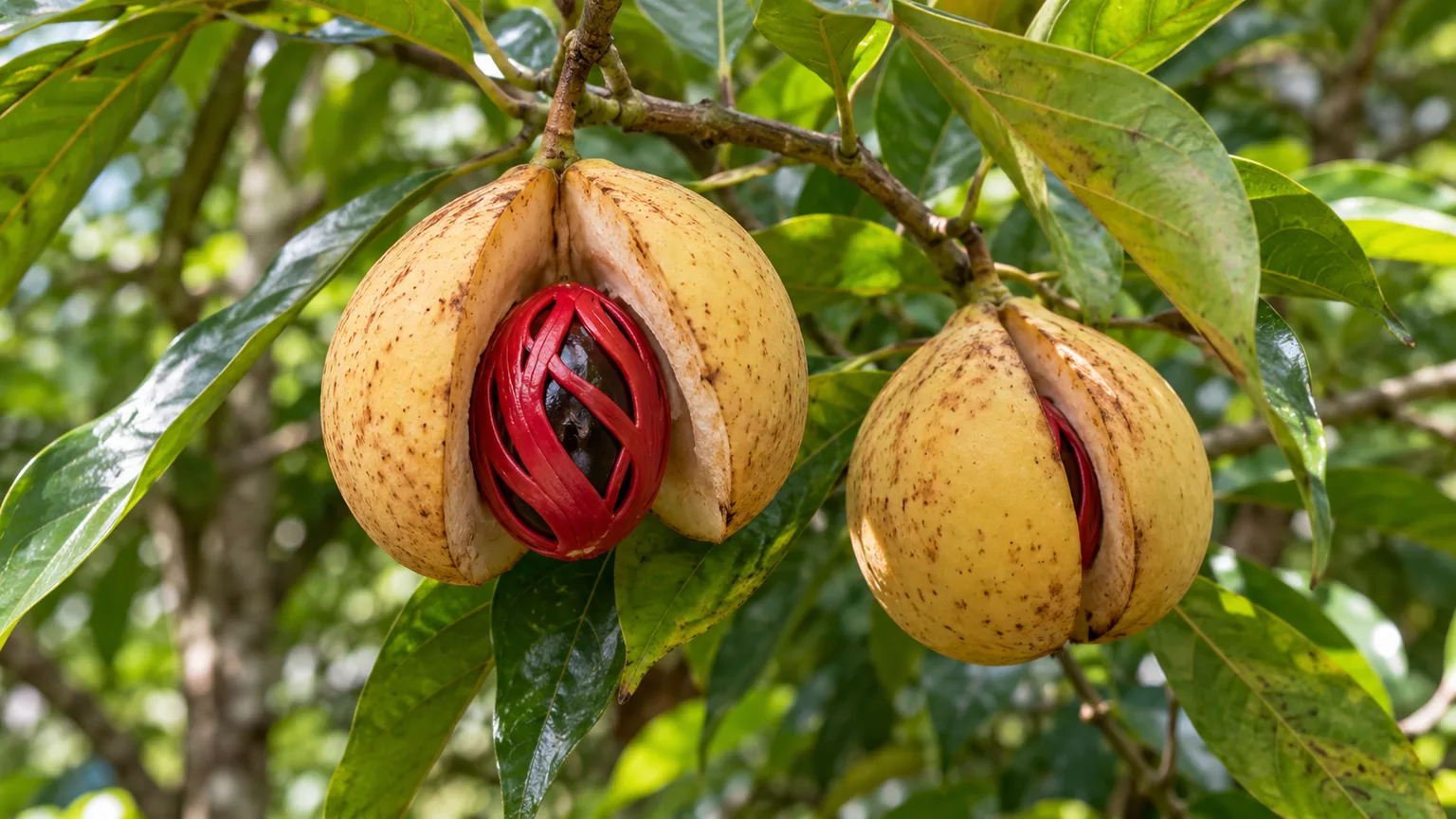
Collect split fruits from the tree or ground promptly so they do not rot or attract pests. Separate the red aril from the seed, keeping them as two harvests. Dry the aril until it becomes brittle; dry the seed in its hard shell until it is thoroughly shrunken and the kernel rattles inside. Horticultural accounts give different drying estimates, so use the texture and rattle test rather than relying on a date alone (Epic Gardening; Gardenia).
Drying takes weeks, not hours. Keep the seed and mace in a warm, dry, well-ventilated place and turn them periodically; do not seal them while damp. Once the seed shell is dry and the kernel has separated, crack the hard shell to remove the inner nutmeg. Store fully dry whole kernels and mace in separate airtight containers away from heat and light. If any piece smells musty or shows mold, discard it rather than trying to salvage it.
What a Potted Nutmeg Tree Can—and Cannot—Produce
A container-grown plant can be a rewarding tropical specimen even if it never fruits. It offers glossy evergreen foliage and lets you protect the roots from winter cold, but it usually has less room to become a mature tree and may have weaker light, humidity, and pollination conditions than an outdoor specimen in the tropics. Keeping it alive for several years is a meaningful success; producing spice is a much higher bar.
If you want fruit, look for a healthy grafted plant with clear information about flower sex and pollination, maintain a warm and bright environment through every season, and be prepared to wait. A second tree may be necessary if your plant bears only female flowers, yet two trees in small pots do not guarantee compatible bloom timing or enough vigor to set a crop. Ask the nursery about its specific stock rather than relying on a generic claim that the tree is “self-fertile.”
Set your goal before investing in equipment. For foliage, a warm bright greenhouse or conservatory may be enough; for reliable fruit, a tropical garden with space for mature growth and suitable pollination is far more realistic. If your home cannot provide consistent warmth, light, humidity, and root space, enjoy nutmeg as a spice and choose a tree suited to your climate instead.
Conclusion
Grow nutmeg only if you can provide tropical warmth, steady moisture with excellent drainage, and a protected, bright site. In a cold climate, a pot can preserve a young tree, but indoor growing does not erase its need for light, humidity, room, maturity, and pollination.
Choose a known-source plant, keep care conservative, and judge progress by healthy roots and leaves before expecting fruit. If it eventually flowers and pollinates, the naturally split fruit reveals both mace and the seed that becomes nutmeg. Treat that harvest as a long-term possibility, not a promise attached to every seedling.