How to Mulch Grass Clippings Back Into Your Lawn
Mulch grass clippings back into your lawn without smothering turf. Learn the one-third mowing rule, mower setup, exceptions, and safe ways to use extra clippings.

Quick rule: mulch routine cuts, collect problem clippings
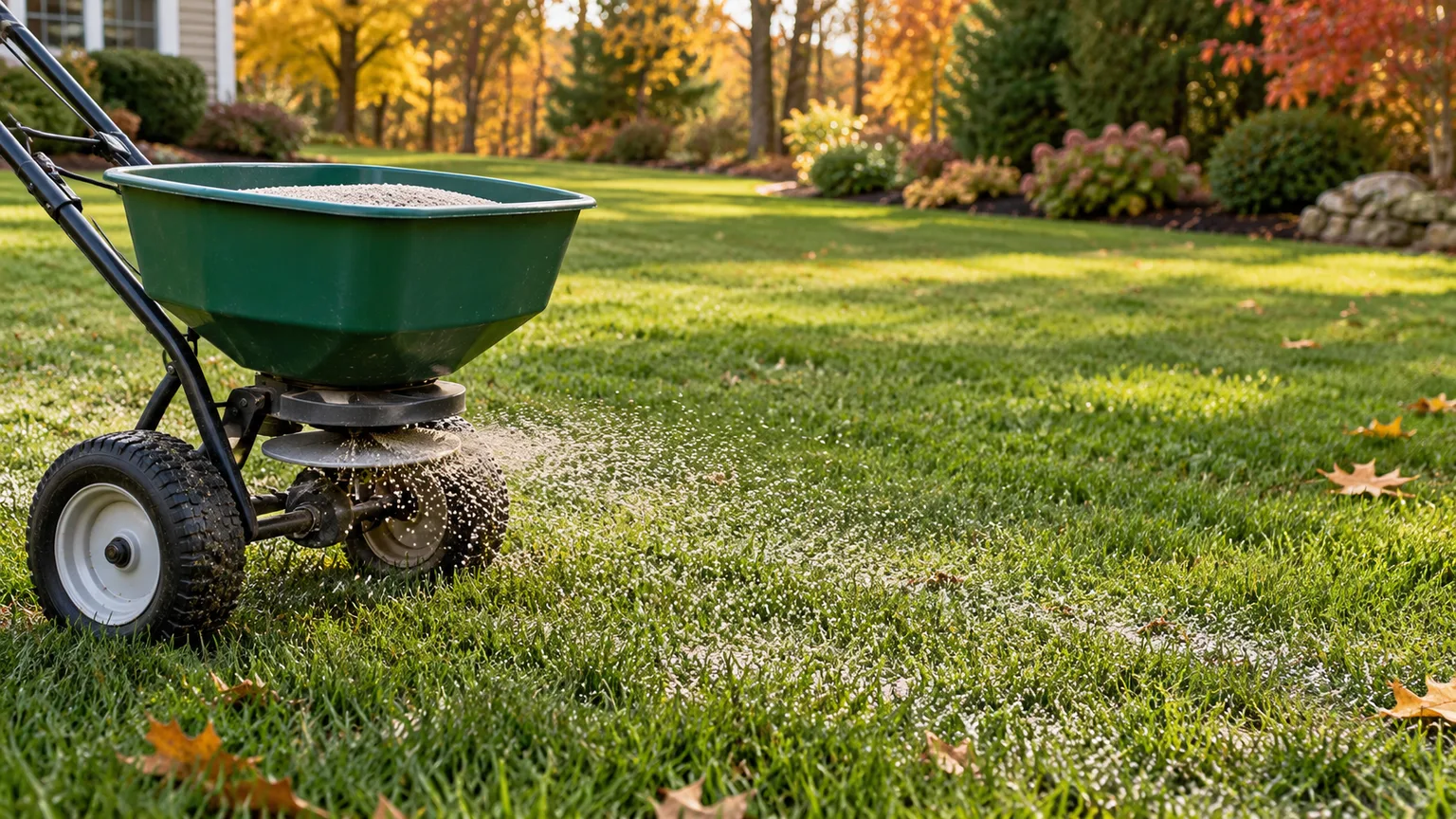
For a healthy lawn that you mow regularly, leave short, evenly distributed clippings on the turf. This practice—often called grasscycling—returns nutrients to the lawn and saves you from collecting and hauling away material. The key is the cut: fine pieces that fall between grass blades behave very differently from thick, wet ropes of clippings lying on top.
Switch to collecting when the lawn is wet, badly overgrown, covered with clumps, or affected by a problem that should not be spread by the mower. Mature weed seedheads, newly emerging seedlings under a heavy cut, and some recent pesticide treatments also change the decision. You do not need to commit to mulching or bagging for an entire season; choose again each time you mow based on growth and conditions.
| Lawn condition | Practical choice | Why |
|---|---|---|
| Dry lawn, regular cut, short clippings | Mulch | Pieces disperse and return nutrients |
| Tall grass or more than a third of the blade to remove | Raise the deck, mow in stages, and collect heavy excess | Large loads can mat over the turf |
| Wet, flattened grass or visible clumps | Wait for it to dry; collect if mowing cannot wait | Wet material tends to stick and pile |
| New seedlings, mature seedheads, or diagnosed disease | Use a targeted collection pass when needed | Avoid covering young turf or redistributing a known problem |
What grasscycling gives back to your lawn
Grass leaves contain water and nutrients that the lawn produced while growing. When fine clippings remain on the surface, they dry and decompose, returning some of that material to the soil and turf system. They are not a complete fertilizer, but removing every clipping also removes nutrients that could have been recycled in place.
Penn State Extension reports that, in a three-year study of Kentucky bluegrass, leaf clippings contained 46 to 59 percent of the nitrogen applied as fertilizer. That describes nitrogen captured in the clippings in that research, not a guaranteed percentage of every homeowner’s annual lawn needs. Grass species, growth, soil, climate, and mowing frequency all affect the result, so use the finding to understand the value of recycling rather than to calculate a fertilizer rate. Penn State Extension’s turfgrass clipping guidance discusses the research and practical mowing practices.
Returning clippings also reduces the work of emptying bags and moving yard waste. For a large lawn during spring growth, avoiding repeated stops can make mowing noticeably quicker. The benefit is greatest when the mower can cut and distribute the material cleanly; a bag is still useful when it solves an actual problem rather than serving as a default.
Clippings return nitrogen, but are not a fertilizer schedule
A lawn’s nutrient needs depend on its grass type, how it is used, soil test results, and local conditions. Clippings recycle nutrients already taken up by the grass; they do not create phosphorus or potassium that the soil lacks, correct a pH problem, or guarantee that the lawn receives the right amount of nitrogen at the right time. If turf is pale, thin, or growing unevenly, diagnose the cause instead of simply increasing fertilizer or assuming the clippings will fix it.
Better Homes & Gardens summarizes grasscycling research as a meaningful contribution to turf nitrogen needs, while extension sources describe results that vary with species and management. Those figures are not necessarily contradictory: they come from different research contexts and describe different ways of expressing nutrient return. The useful homeowner takeaway is consistent—leave fine clippings when conditions allow, but base fertilizer amounts on local guidance and a soil test rather than converting a national percentage into a personal application rate. BHG’s comparison of mulching and bagging provides a practical overview of the trade-offs.
Why grass clippings do not create thatch
The clippings visible after mowing are mostly leaf tissue. Thatch is a layer of living and dead stems, roots, and other material that builds between green grass and the soil; it is not simply a pile of cut leaf blades. Fine clippings normally break down before they can become thatch, so routine grasscycling is not the cause of a thatch layer.
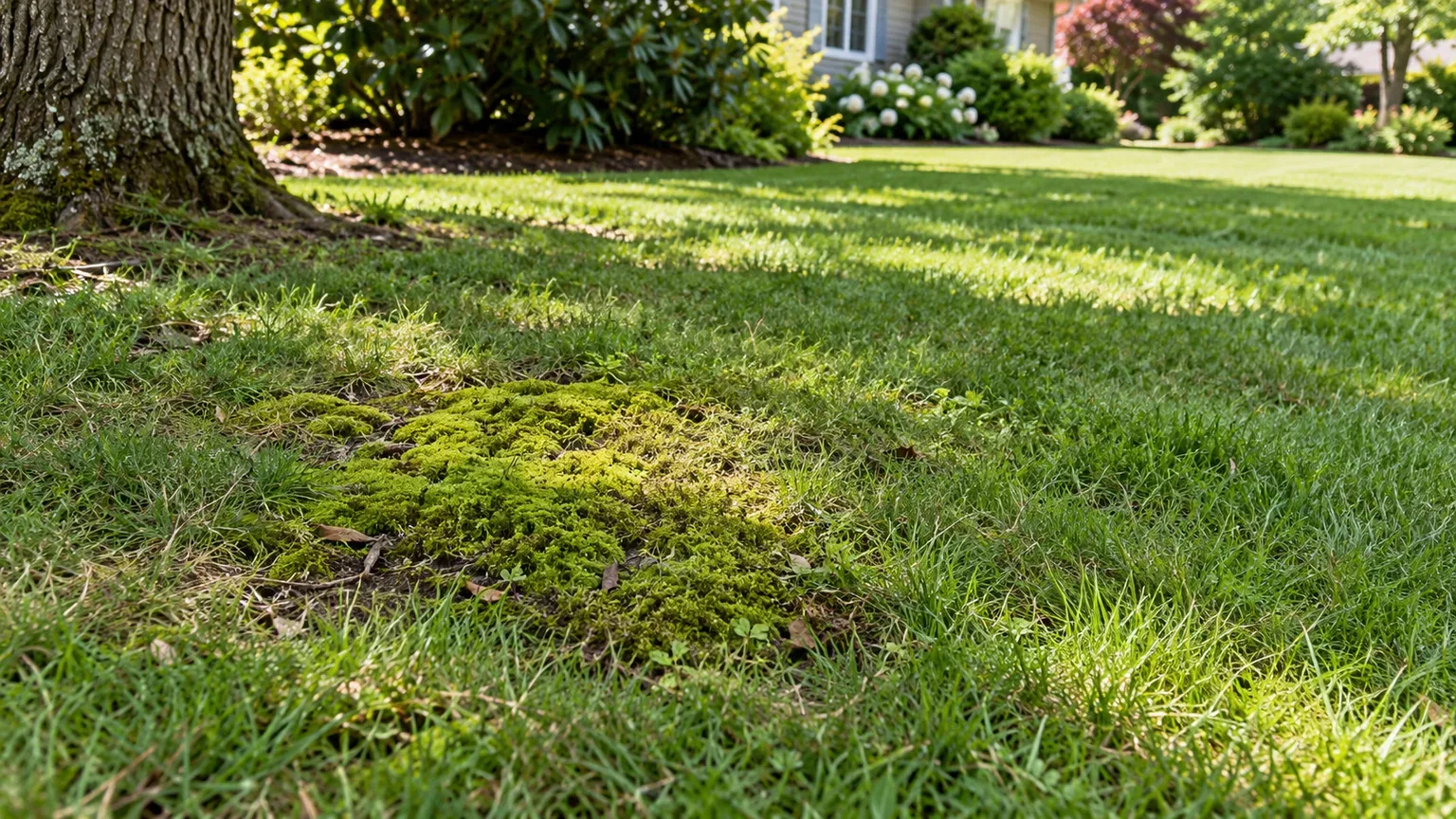
A thick surface mat is still a problem, but it is a different problem. It can shade the living grass underneath until it dries and decomposes or is moved. If the lawn feels spongy or a brown layer persists below the green blades, inspect the turf rather than blaming every clipping: mowing height, grass type, soil compaction, fertilizer practices, and thatch accumulation need separate assessment. Penn State notes that soil conditions, including surface pH, can affect the microorganisms that decompose clippings; a soil test is more useful than applying lime by guesswork.
Set up your mower for clean grasscycling
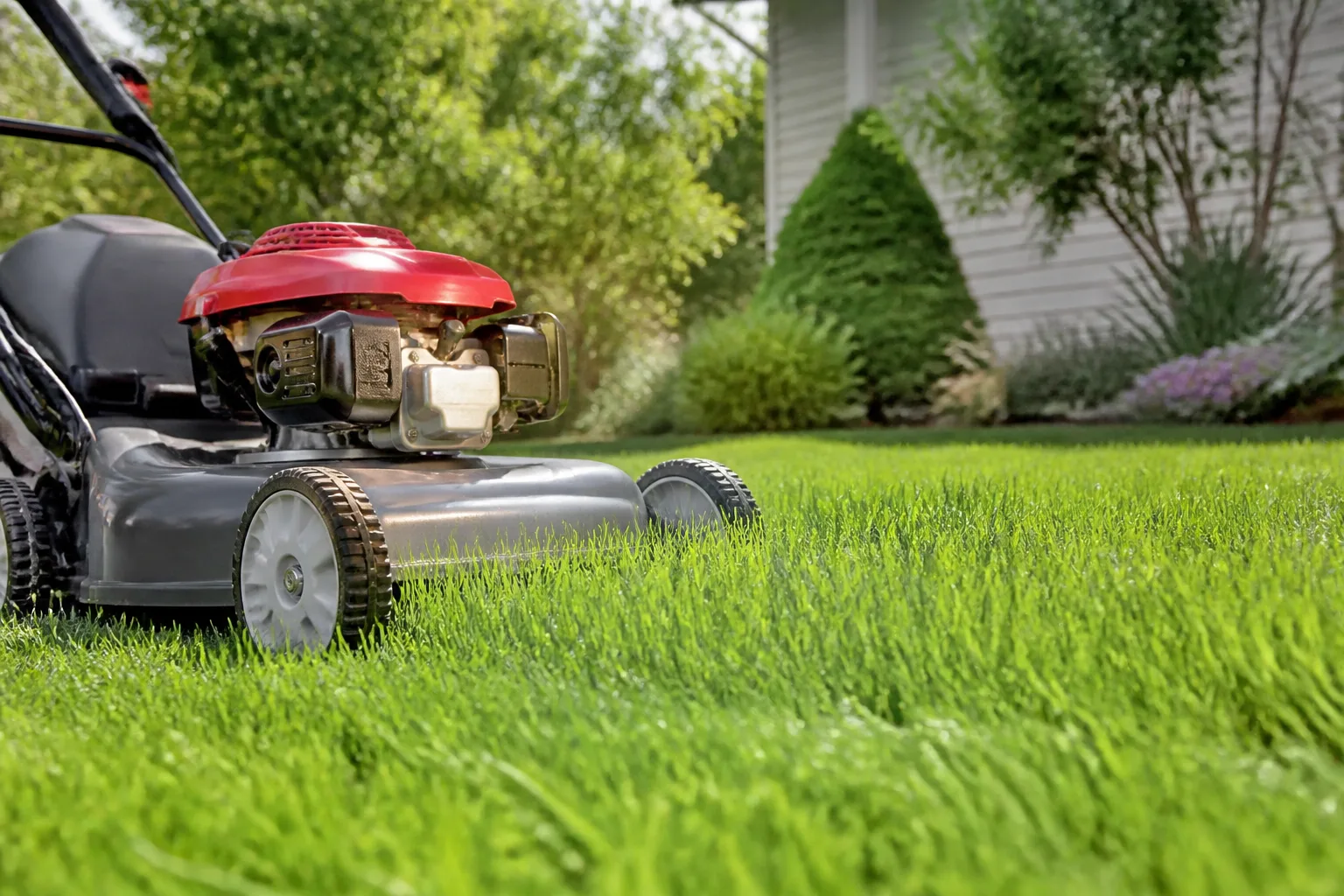
You can grasscycle with many ordinary rotary mowers, provided they cut cleanly and distribute clippings instead of leaving a windrow. A mulching mower or a compatible mulching plug helps keep material under the deck for additional cutting, but the label “mulching mower” cannot compensate for wet turf, a dull blade, or a lawn that has grown far beyond its normal height. Start with conditions, then adjust the mower.
Before mowing, clear sticks and other debris, check that the blade is sharp, and set the deck for the grass type and season. If you install a plug or change a blade, use the mower manufacturer’s instructions. Never reach under a mower deck to clear packed clippings while the machine is powered; shut it down and disconnect the spark plug or battery according to the manual before inspection.
Mow to match the lawn’s growth rate
There is no universal “every seven days” schedule. A lawn may need frequent mowing during a warm, rainy growth spurt and much less during drought, cool weather, or dormancy. Check the lawn rather than the calendar: if it will take an unusually heavy cut to restore your preferred height, you waited too long for easy grasscycling.
That seasonal adjustment matters because the lawn, not the mower, sets the workload. In a fast spring flush, a shorter interval between cuts can keep clippings small; during heat or drought, grass may grow slowly and should not be cut simply because the usual mowing day arrived. Keep the grass at a suitable height for its type and the local season, and avoid stressing turf that has stopped growing actively.
The Royal Horticultural Society recommends regular mowing for conventional lawns during the growing season and says frequency should follow weather, growth, and the lawn style. Its mowing guide also advises avoiding wet, soft, or frozen ground. Local grass types and climate vary, but that principle travels well: mow when the lawn is dry enough to cut cleanly and often enough that each session removes a modest amount. The RHS lawn mowing guide explains how mowing frequency and height change with season and lawn type.
Follow the one-third rule and suit the height to your grass
A useful starting point is the one-third rule: remove no more than about one-third of the grass blade in one mowing. If the lawn is 3 inches tall and your intended height is 2 inches, that cut removes roughly a third. If the grass is 5 inches tall, forcing it straight down to 2 inches would remove too much; raise the mower and make the correction over more than one cut.
The proper finished height is not identical for every species or region. Cool-season and warm-season grasses have different recommended ranges, and even the same species may be maintained differently depending on heat, shade, and use. Follow a local extension recommendation for the grass you actually have. University of Nevada, Reno Extension gives the one-third rule as part of its lawn-mowing advice, while Penn State lists separate suggested heights for common cool-season turfgrasses. The UNR Extension lawn-care guide and Penn State’s mowing table show why a height should be species-aware rather than copied from a generic national number.
Help the mower spread clippings evenly
Walk or drive at a steady pace so the deck has time to process the cut material. Overlapping passes modestly can help prevent uncut strips, but repeatedly driving over the same patch on wet or soft soil can compact it. If your mower discharges from the side, direct the chute away from sidewalks, beds, drains, and areas you have already finished so it does not build a ridge of clippings at the edge.
After the first pass, look behind you. A light scattering that settles between blades is the target; long strings or dense clumps mean the mower is not handling the load. Stop and correct the cause by waiting for the grass to dry, raising the deck, slowing down, or collecting excess. A dedicated mulching blade can help with a normal cut, but sharpness and the amount removed matter more than buying a new mower just to leave clippings in place.
Try a test strip before changing equipment. If your existing rotary mower spreads short pieces across a dry, regularly cut lawn, it is already doing the job; a mulching attachment is not a prerequisite. If the machine leaves a continuous row despite a modest cut, check the blade, deck, and discharge setting, then use a model-compatible mulching plug or collect the excess rather than improvising a cover that the manufacturer does not recommend.
Plan the mowing path so the discharge lands on uncut turf instead of a sidewalk, planting bed, storm drain, or section you have already finished. A small edge pass can keep clippings from collecting along pavement, and changing the direction on the next mowing helps avoid repeatedly laying material in the same stripes. Sweep or rake clippings off hard surfaces instead of washing them into a drain.
When to collect instead of mulch
Bagging is a tool for conditions, not a lawn-care failure. Collect only the material that is creating a problem, then return to mulching at the next routine cut. If a small corner has overgrown, you may need to bag there while leaving the rest of a dry, well-mown lawn to grasscycle.
Wet or overgrown grass
Wet blades bend, stick together, and can clog the mower deck. The cut is often uneven, and clippings may fall in heavy patches instead of dispersing. If you can wait, postpone mowing until the turf and soil surface dry. The RHS warns that mowing wet or frosty grass can damage turf and compact soil; if you must mow in damp conditions, raise the deck and collect any heavy clumps rather than spreading them.
When grass has become tall after rain or a missed week, do not try to restore it in one low pass. First set the deck high enough to remove no more than about a third of the blade; bag the thick excess if it forms ropes or covers the grass. Let the lawn recover and dry, then make a later cut at a suitable height. A two-stage reset may look less polished for a few days, but it avoids a single severe cut and gives you smaller clippings to handle on the next pass.
If rain has left a few loose clumps rather than an entire mat, let them dry and rake them thinly across the lawn or collect them for compost. Do not leave a damp pile in place just because the mower was in mulching mode. The surface tells you whether the method worked: if you cannot see grass blades through the residue, redistribute or remove it.
Active disease and mature weed seedheads
Brown or yellow patches are not proof of a fungal disease. Drought, scalping, urine, chemical injury, insects, and soil issues can resemble disease, so identify the cause before changing routine care. UF/IFAS Extension emphasizes diagnosis and cultural conditions in turf disease management; if a disease has been confirmed, follow its local management advice about mowing, equipment cleaning, and clipping disposal rather than spreading material from the affected area across healthy turf. UF/IFAS Extension’s turfgrass disease guidance explains why symptoms need diagnosis before treatment.
Likewise, grasscycling is not a weed-control method. If the mower is cutting mature seedheads from weeds, collect that pass or remove the seedheads separately; do not assume that finely chopping them will destroy every seed. If weeds are present but have not set seed, the mere sight of a broadleaf plant does not automatically require bagging the whole lawn. Aim the decision at the seed-bearing area and avoid turning one patch into a yard-wide cleanup.
New seedlings and recent chemical treatments
Newly seeded or overseeded areas need room for seedlings to emerge and establish. Once the grass is ready for its first mow, follow the seed supplier’s and local extension’s height guidance; bag or collect only if the cut leaves a heavy cover that would shade or mat over the young plants. This is more precise than automatically bagging every first cut or mulching a thick load across fragile seedlings.
For herbicides, insecticides, or fungicides, follow the product label’s mowing and clipping directions. Penn State specifically cautions against using clippings from turf treated with certain broadleaf herbicides as mulch around trees, shrubs, or garden plants. That does not mean every treated lawn must be bagged forever; the label and treatment timing determine what to do. If the direction is unclear, keep the clippings on the treated lawn until the label or product manufacturer answers the question, and do not put them into a vegetable bed or compost used around sensitive plants by guesswork.
What to do with a heavy load of clippings
Collected clippings can still be useful. Keep them separate from trash when local yard-waste rules allow, and choose a destination based on their condition and treatment history. Clean, dry clippings are easiest to manage; wet clippings packed into a bag or heap can become slimy and unpleasant quickly.
Compost grass clippings without creating a wet mass
Grass clippings are a nitrogen-rich “green” material. In a compost pile, combine them with dry, carbon-rich browns such as dry leaves or shredded untreated paper, and mix or layer them so air can move through the pile. Add a thin batch at a time rather than tipping in a solid mat. If the pile smells sour or turns into a slick layer, it is too wet or too densely packed; turn it and add dry browns until the texture loosens.
Do not add clippings if their herbicide history makes them unsuitable for the intended compost use. Some products can persist long enough to harm sensitive plants, and disposal directions vary by active ingredient. Follow the label and local guidance, especially before using finished compost in a vegetable garden or around broadleaf ornamentals. If you do not know what was applied, do not treat the clippings as automatically safe for every garden use.
Use extra clippings as garden mulch with care
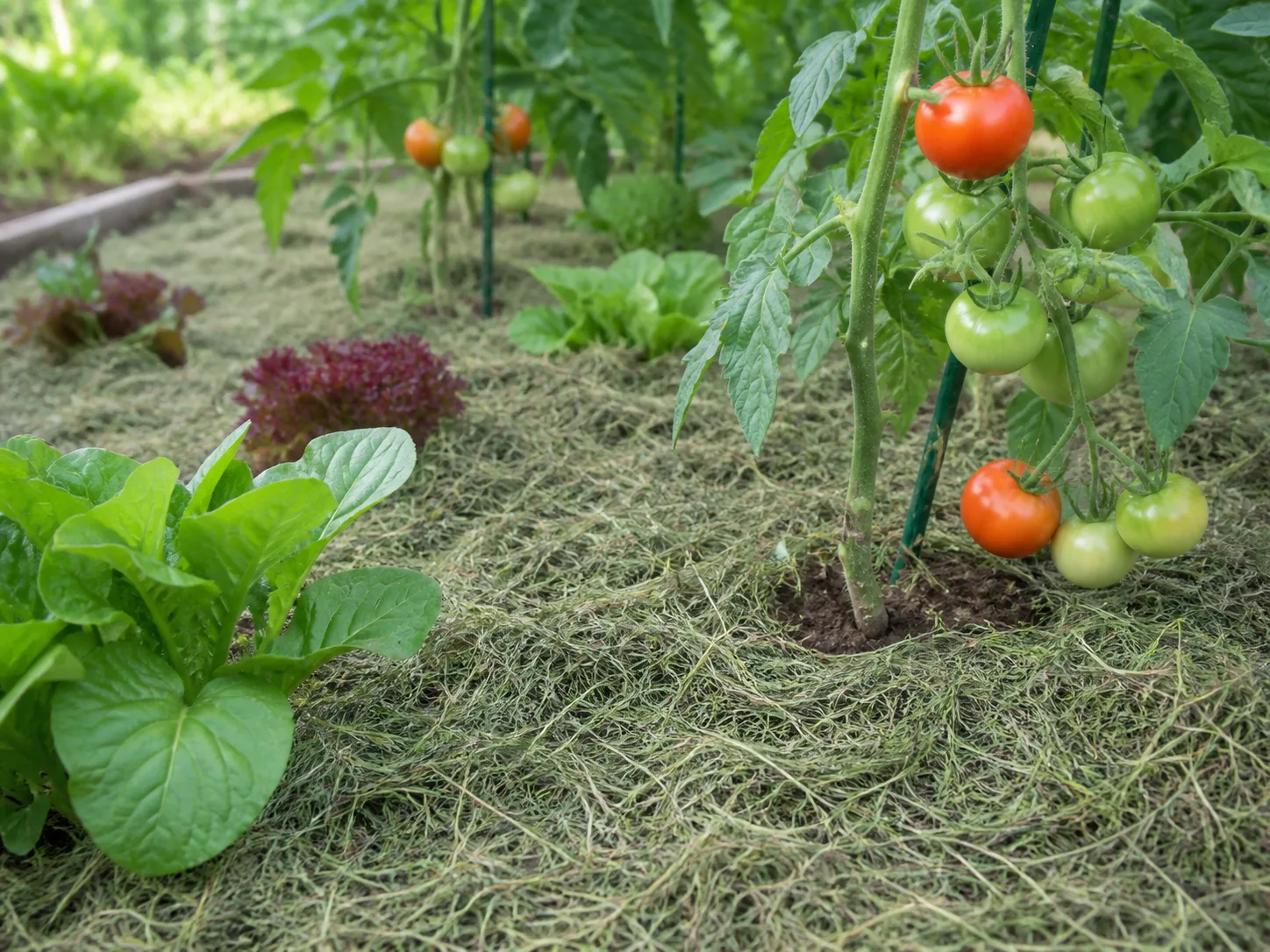
Clean clippings can be spread around established trees, shrubs, and garden crops, but thick fresh piles tend to knit together and block water and air. Let excess clippings dry first, then apply a loose, thin layer rather than a wet blanket. Keep material away from plant stems and trunks, and top it up in modest amounts as it settles.
Penn State notes that clumps from an overgrown lawn can be removed after drying, composted, or air-dried for use around trees, shrubs, and gardens—with a pesticide caveat for treated turf. This is a useful second destination for a one-time heavy cut, not a reason to treat grass clippings like bark mulch in unlimited layers. For a large volume, mix dried clippings with other organic materials or use a municipal yard-waste program if available.
Troubleshoot visible clumps and slow breakdown
If you see clippings after mowing, first decide whether they are a harmless light scattering or a dense mat. Short fragments that sit among the leaf blades can remain visible briefly and then disappear as they dry and decompose. Long ropes and opaque patches should be spread thinly or removed, especially if the underlying turf is yellowing.
Use the symptom to choose the fix. A ridge along the mower’s discharge side points to an uneven pattern or too much growth for one pass. Clumps that stick to the deck point toward damp turf, a clogged underside, or a blade that needs attention; turn the mower off and follow the manual before cleaning. A lawn that repeatedly holds residue despite short, dry cuts may have a soil or growth problem, so check drainage, compaction, mowing height, and soil-test results before adding fertilizer or lime.
If you missed a mowing during a rainy spell, wait for a dry window and cut in stages. Bag the bulky first load, then resume normal grasscycling once the lawn is back in range. This approach prevents a one-time weather delay from turning into repeated heavy clumps on every pass.
Does grasscycling replace fertilizer or dethatching?
Grasscycling can reduce the amount of nutrient-rich material removed from the lawn, but it is not a promise that you can skip fertilizer altogether. Use a soil test and local turf recommendations to decide whether fertilizer is needed, what nutrient is short, and how much to apply. If you do fertilize, avoid using returned clippings as a reason to overapply nitrogen: excess leaf growth means more mowing and can make it harder to keep clippings short enough to mulch cleanly.
It also does not replace dethatching when a genuine thatch layer is present. Since clippings and thatch are not the same material, changing from mulching to bagging will not correct a spongy layer made of stems and roots. Identify the depth and cause first; for many lawns, correcting mowing, watering, soil, or fertilizer practices is more important than removing material without a diagnosis.
Conclusion
For a lawn that is dry and mowed on time, mulch the clippings back into the turf. It is a simple way to recycle nutrients and avoid needless collection, and ordinary fine clippings do not cause thatch. Watch the cut rather than following an absolute rule: when clippings are long, wet, seeded, tied to a diagnosed disease, or likely to bury new grass, collect the problem material or wait for better conditions.
If you remember one operating test, look at the surface after the mower passes. Grass blades should remain visible through a light scatter of short pieces. When a mat hides the turf, change the method—raise the deck, mow in stages, let it dry, rake, compost, or use safe excess as garden mulch. That judgment keeps grasscycling useful without forcing it when the lawn is telling you to do something else.