Best Time of Day to Mow Your Lawn: A Practical Guide
Find the best time of day to mow by checking dew, soil firmness, heat, and daylight. Use a simple decision guide for mornings, afternoons, and wet weather.

The best time to mow your lawn is when the grass blades are dry, the ground is firm, and the temperature is comfortable enough for safe work. For many yards, that makes late morning a reliable choice after dew has dried. On a hot day, a cooler late-afternoon window may work better, provided the lawn is dry and you can finish before darkness or evening moisture returns.
Treat those as useful patterns, not fixed appointments. A lawn in full sun can dry hours before a shaded lawn; a breezy morning differs from a still, humid one; and a recent shower can leave the soil soft after the blades look dry. Decide from the conditions underfoot and on the grass, then use the clock as a tie-breaker.
Short answer: choose a dry, moderate window
If you need a simple default, aim for midmorning on a dry day. The dew has often evaporated by then, the turf is easier to cut cleanly, and you are less likely to be working in peak afternoon heat. If the weather is mild and the lawn stays dry, mowing around midday is not automatically harmful; the bigger concern is intense heat, not the number on the clock.
A late-afternoon cut is a sensible second choice when the hottest part of the day has passed. Leave enough daylight to finish safely, and avoid cutting wet grass just because the air feels cooler. In a humid location, heavy shade, or after a storm, a morning lawn may remain damp well past the usual mowing window.
The Royal Horticultural Society (RHS) ties the decision to lawn and soil conditions: grass should be dry, and very wet ground can compact underfoot or develop wheel ruts. It advises waiting until later in the day for the lawn to dry or defrost, or postponing the job altogether (RHS guide to mowing a lawn). That is more dependable than copying a schedule built around another region’s sunrise.
A quick decision guide for today’s mow
Use this short check before you wheel out a mower. It prevents a familiar mistake: choosing a supposedly ideal hour while ignoring wet grass, soft soil, or dangerous heat.
| What you find | Better choice |
|---|---|
| Dew is visible or blades feel slick | Wait for the foliage to dry, then check the soil again |
| Grass is dry but footprints remain or wheels sink | Postpone until the soil firms up |
| Turf and soil are dry, temperatures are moderate, and daylight is ample | Mow now at the appropriate height |
| The lawn is dry but an extreme-heat advisory is active | Reschedule or use a cooler window; reduce exertion and follow local safety guidance |
| The day is hot, but late afternoon is cooler and still bright | Mow only if the lawn is dry and you can finish before dusk |
| Frost, standing water, or a thunderstorm is present | Wait |
The table is a decision aid, not a substitute for your mower’s manual or local rules. Your grass species, mower type, slope, and physical ability all matter. A steep wet lawn, for example, is a no-go even if the forecast is mild.
The three conditions that matter more than the clock
Think of mowing readiness as a three-part check: dry leaves, load-bearing soil, and manageable weather. A “yes” on only one or two is not enough. Dry blades on saturated soil can still leave ruts, while firm soil during dangerous heat can make mowing a poor choice for the person operating the machine.
Wait until dew is gone
Look across the lawn before you start. Dew glints on leaf tips, but a hand check is more reliable: sweep your palm through several parts of the turf, including a shady patch. If the grass leaves your hand wet or slick, give it more time. A sunny edge may be dry while the north side of a house or the area beneath a tree remains damp.
The drying rate depends on more than sunrise. Direct sun and moving air speed evaporation; cloud cover, humidity, dense growth, shade, and a recent shower slow it. That is why “wait four hours” can be too long on a breezy exposed lawn and too short in a damp, shaded yard.
Mow after the grass itself is dry, not merely after the morning feels warmer. Dry leaves stand more upright and are easier to cut evenly. If you have to mow regularly at a fixed time, adjust your route or schedule for the slowest-drying part of the lawn rather than judging only the sunny center.
Check whether the ground can support the mower
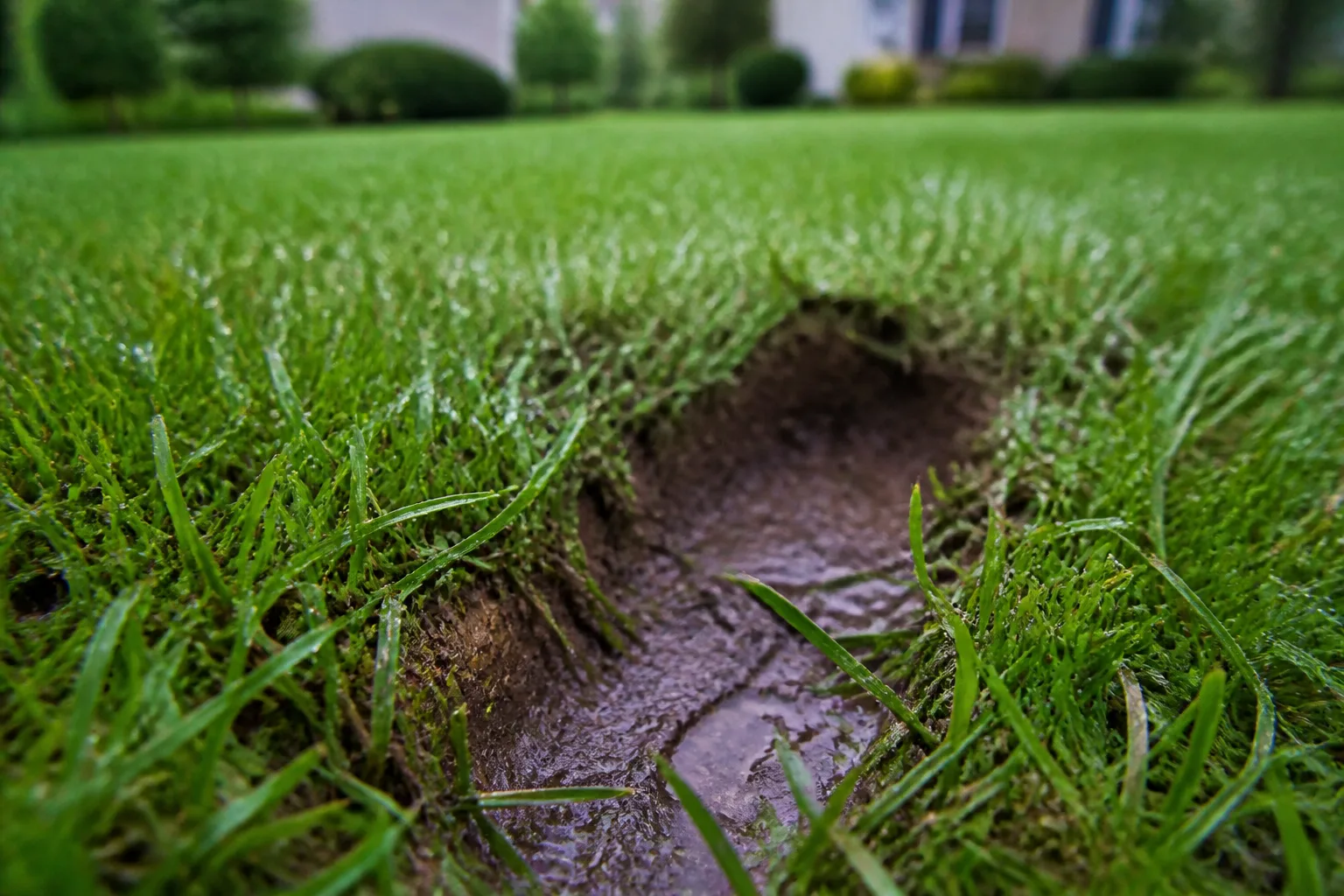
Dry leaf blades do not prove the soil is ready. Walk the route you plan to mow and notice whether your shoes sink, soil sticks to the tread, or a footprint stays sharply pressed into the surface. If so, wait. A mower’s repeated wheel passes can rut soft ground, and turning at the end of each stripe concentrates pressure in the same spots.
This matters especially after sustained rain, irrigation, or snowmelt, and on compacted clay or low areas that drain slowly. RHS guidance warns against mowing very wet ground because the wheels can leave ruts and the soil can compact. If only one corner is soggy, skip that section instead of driving the whole mower through it; you can finish it when it firms up.
Morning is a good option after the lawn dries
Morning mowing is convenient because temperatures are often lower and there is a full day of daylight ahead. It works well when dew has lifted, the soil supports your weight, and the forecast is not calling for a rapid jump into dangerous heat. In that combination, the lawn is dry enough for a clean pass without asking you to mow through the hottest hours.
The trap is treating “morning” as an instruction to begin at dawn. Overnight cooling encourages moisture on grass, while shaded or humid lawns can stay wet long after sunrise. Start when your lawn passes the hand and footing checks, even if that is later than your neighbor’s schedule.
A morning mow can also be a better fit for households with afternoon commitments, but consider people nearby. Gas-powered equipment can be loud, and quiet-hour rules vary by town, lease, and homeowners association. A time that suits the grass may still be too early for the block.
Midday works in mild weather, but heat changes the answer
There is no turf rule that makes every midday cut damaging. On a cool, overcast day with dry blades and firm ground, a midday mow may be perfectly practical. The concern is a hot, sunny stretch when you, the mower, and the grass are already dealing with heat or drought stress.
On a hot day, mowing increases your physical workload at exactly the time you may be least able to tolerate it. A walk-behind mower requires sustained movement and attention; pushing it uphill, bagging clippings, or working in humid conditions makes the job harder. If an official heat alert is in effect or you feel unwell, postpone the task rather than trying to finish a “quick” mow.
The lawn also deserves a conservative cut during heat. Do not scalp it to make the yard look tidy before a heat wave. Rutgers New Jersey Agricultural Experiment Station recommends a typical mowing height of 2½ to 3½ inches, particularly during summer, and says frequent cuts at 2 inches or lower tend to weaken turf and increase stress problems (Rutgers lawn-care guidance). Grass height is not identical for every species or lawn style, but raising the deck during hot, dry periods is usually safer than taking off a large amount of leaf at once. Follow heat alerts from the National Weather Service, take a break in shade, and stop work if you develop heat-illness symptoms.
Afternoon and early evening can be useful alternatives
Late afternoon can solve the two problems that make early morning and midday inconvenient: the dew has had time to dry, and the sun may be less punishing than at its peak. It is a practical choice in hot weather if the turf is dry, the ground is not waterlogged, and you still have adequate light to see toys, holes, roots, slopes, and debris.
Don’t let the promise of a cooler hour override the lawn check. A sprinkler that ran in the afternoon or a passing shower may have re-wet the blades. If the turf still feels damp, move the job to another day or cut only a dry, accessible section.
A 2026 field-oriented checklist from the nonprofit I Want To Mow Your Lawn considers turf moisture, heat, and neighbor courtesy together rather than as separate afterthoughts (I Want To Mow Your Lawn’s mowing-timing guide). The practical point is useful even if the suggested clock ranges in any article do not fit your climate: a good window has to work for the lawn, the operator, and the people who live nearby.
Finish before dew and darkness
Avoid pushing a mow so late that you finish in poor light. Low visibility makes it harder to spot branches, toys, uneven ground, and pets, and it becomes harder to judge a straight line or an obstacle on a slope. A mower should never be operated in darkness simply to meet a weekly schedule.
Evening dew is not guaranteed at a particular hour, but humidity, cloud cover, and local conditions can bring surface moisture back. If the grass starts to feel damp as you work, stop and leave the remaining strip for the next suitable window. That is better than forcing a messy finish across the whole lawn.
Noise is another reason to finish earlier. The quietest hour for the grass may not be the quietest hour for your neighbors, so check applicable noise restrictions and pick a respectful time. If a contractor maintains the property, share the property’s early-morning or evening constraints before setting a recurring appointment.
Why wet grass creates avoidable problems
Wet grass tends to bend under the mower instead of presenting upright blades to the cutting edge. The result can look uneven, with some leaves missed and others torn; damp clippings also stick to the deck and wheels, clog the discharge path, or fall in heavy clumps. LawnStarter’s practical review of wet mowing details these problems and recommends waiting when possible (LawnStarter: how to mow wet grass).
The soil is part of the problem too. When it is saturated, mower tires can press tracks into the lawn, particularly at turns and on repeated routes. Wet slopes can be slippery, and stopping or changing direction on them can be harder. A mower may still cut when the operator can force it through, but the visible cut is not the only measure of whether it was a good idea.
If a short shower has passed and the blades appear dry, test the lawn rather than assuming it is still too wet. Conversely, a surface that looks green and dry from the patio may conceal damp soil underneath. You are looking for a lawn that is dry enough to cut and firm enough to carry the mower without the wheels sinking or smearing the turf.
Adjust your schedule for rain, heat, drought, and frost
A weather-first mowing schedule is more useful than a fixed monthly chart because the lawn’s growth and surface conditions change from week to week. The RHS notes that seasonal weather patterns make it less straightforward to predict mowing and recommends watching grass growth and checking that grass and soil are not overly wet (RHS step-by-step mowing guidance). That approach prevents unnecessary cuts when the turf is not growing and avoids forcing equipment onto soft ground.
During hot or drought-stressed weather
When grass growth slows in dry weather, reduce mowing frequency. Brown or straw-colored turf is not always dead; some established lawns go dormant and recover when rainfall returns. If the lawn is no longer growing, there may be no reason to mow until it resumes active growth. If it does need a light cut, raise the deck so more leaf remains to shade the soil and protect the plant.
Choose a cooler time only if it is also a safe time for you. Shade, water, and breaks help, but they do not cancel an extreme-heat warning or a person’s medical limitations. The National Weather Service explains heat-related illness symptoms: weakness, dizziness, and nausea can signal heat exhaustion, while confusion or fainting can signal heat stroke. Follow current local heat alerts and stop at the first symptom; suspected heat stroke needs immediate emergency help. A postponed mow is a small cost compared with a heat illness or a damaged lawn.
When conditions are hot and dry, resist the urge to cut lower because brown tips or uneven growth look untidy. Low mowing exposes more soil and can add stress. Rutgers notes that lawns can lose color and slow down during prolonged dry spells; it also describes footprinting as a drought-stress symptom in its New Jersey care guidance. Use growth, not color alone, to decide whether another cut is needed.
In cooler spring and fall weather
Cooler air can make the middle of the day comfortable for both mowing and turf, but cold seasons bring their own reasons to wait. Frosted grass is brittle; walking or mowing over it can injure leaf tissue. The RHS advises against mowing frosty grass and recommends waiting until the lawn has defrosted or postponing the cut.
Spring growth may accelerate after rain and warmer nights, so the lawn can need a cut more often than it did in winter. Fall growth usually slows as temperatures drop, and the last cut should follow growth and ground conditions rather than a calendar date. If the ground remains wet, skipping one scheduled cut is better than making ruts for the sake of routine.
Grass type changes the season, not the dry-grass rule
Warm-season grasses such as bermudagrass and zoysiagrass grow most actively in warm weather. Cool-season grasses such as Kentucky bluegrass and tall fescue tend to grow most strongly in cooler parts of the year. Those different growth cycles affect how often the lawn needs mowing and when growth slows, but they do not make wet blades or saturated ground suitable for cutting.
Your local climate and the way you use the lawn matter as much as the label on the seed bag. A shaded tall-fescue lawn may dry more slowly than a sunny bermuda lawn in the same neighborhood. A coastal yard, a high-elevation yard, and a hot inland yard may have very different dew, wind, and heat patterns even on the same date.
Use the grass-type recommendation to set a reasonable mowing height and seasonal frequency; use the hand test, footing, heat, and daylight to choose that day’s time. The RHS advises adapting mowing frequency to growth, weather, and the type of lawn, and recommends cutting less often in drought. A once-a-week schedule is only a starting point if the grass is growing quickly; it is not a reason to mow a stressed lawn that has stopped growing.
Good mowing technique matters more than a perfect hour
Timing cannot compensate for a dull blade or an overly aggressive cut. Rutgers guidance says to mow as needed to remove no more than one-third of the leaf height at a time. The RHS gives the same one-third ceiling and notes that excessively close mowing can weaken grass, encourage shallow rooting, and make turf more vulnerable to drought, weeds, and moss (RHS lawn-mowing guide).
If the lawn has grown too tall while wet weather kept you from mowing, do not lower the deck and remove the entire excess at once. Raise the cutting height, take off a modest amount, and return for another gradual cut after the turf has recovered and conditions are dry. This may require two passes on different days; it is the simplest way to avoid scalping and thick windrows of clippings.
A sharp, correctly adjusted blade gives a cleaner finish than chasing a narrow window on the clock. Rutgers warns that dull blades shred leaf tips, weaken turf, and can make the lawn look brown after mowing. Keep the underside of the deck clear according to the mower manual, and disconnect the power source or spark plug as directed before cleaning or inspecting the blade.
Mower safety and neighborhood courtesy
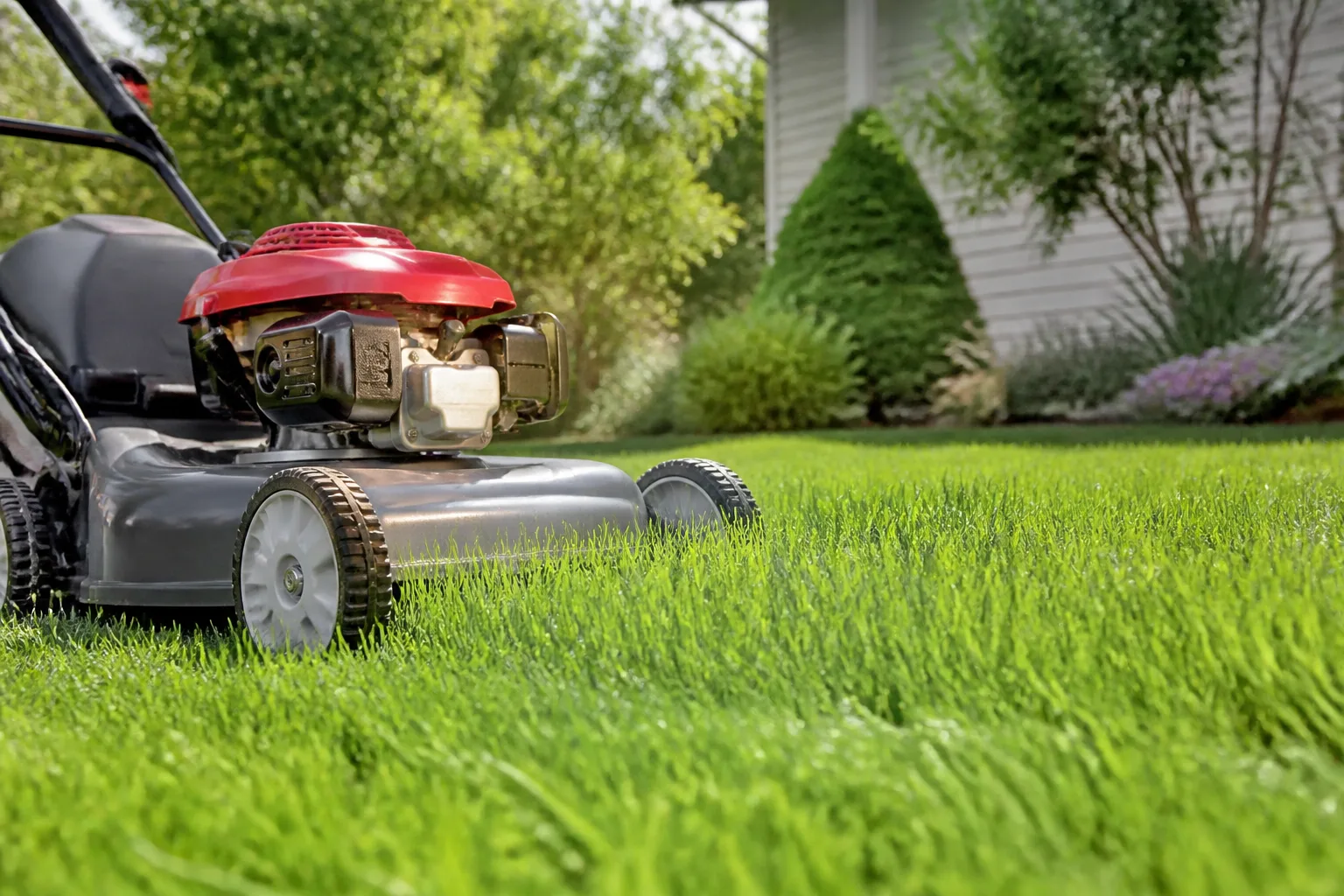
A mower is powered equipment, not just a lawn tool. Wear sturdy, closed-toe footwear and eye protection, clear branches and toys before starting, keep children and pets away from the work area, and follow the operator’s manual for slopes, wet-weather restrictions, and electric equipment. Never refuel a hot gasoline engine, and do not reach under the deck until the blade is fully stopped and the machine is made safe as the manual directs.
Wet turf deserves extra caution on slopes because traction can change under your feet and under mower tires. If the mower manual says not to use it in wet conditions, follow that restriction even when grass looks almost dry. With corded equipment, postpone any mowing in wet conditions and keep electrical connections away from water; do not improvise a shortcut around the manual.
Finally, mow when your neighborhood can reasonably tolerate the sound. There may be local quiet hours, and early weekend mowing can be disruptive even when the lawn is dry. A courteous schedule is especially straightforward if you mow on a different day, use quieter equipment, or let neighbors know about an unusually early one-time job.
If the lawn is overgrown but stays wet
Persistent rain can create a frustrating choice: wait for the lawn to dry while it grows longer, or mow under less-than-ideal conditions. The first option is usually better when the soil is soft, the slope is slippery, or the mower maker prohibits wet use. A few days of extra height is easier to correct than deep ruts, a clogged mower, or an unsafe loss of footing.
If the grass is long but the ground is finally firm and the blades are only slightly damp, first ask whether you can postpone until the surface dries further. If a cut is genuinely necessary, use the mower only within its manual’s limits, raise the deck, proceed slowly, and stop if clippings clog, the turf smears, or the mower begins to slide. Do not bag heavy, wet clumps and leave them scattered across the lawn; remove or disperse clumps only when the equipment is off and the blade is safely stopped.
For a long lawn, a staged cut is usually kinder than one low pass. Set a higher height and cut a modest amount, then return after the grass dries and stands back up. The RHS recommends using the highest setting for the first cut of the year or long grass and avoiding removal of more than one-third at once. If the lawn is waterlogged or the forecast offers no safe window, hire a professional who has suitable equipment or wait for the ground to recover.
Conclusion
The best time of day to cut grass is the first safe window when the blades are dry, the soil is firm, and temperatures are manageable. Midmorning often works because dew has had time to evaporate; late afternoon can be a good backup when heat has eased and daylight remains. Neither time is a rule if your actual lawn is wet, your soil is soft, frost is present, or local heat conditions make outdoor work unsafe.
Before each mow, touch the grass, check your footing, look at the forecast, and make sure you have enough daylight. If those checks pass, mow at the right height and avoid taking off more than one-third of the leaf in a single cut. If they do not, wait — a flexible schedule produces a cleaner lawn and a safer job than mowing by the clock.