How to Control and Prevent Leafminer Damage
Leafminer damage varies by plant. Get a practical plan for vegetables, citrus, houseplants, and ornamentals, with clear advice on timing and natural enemies.
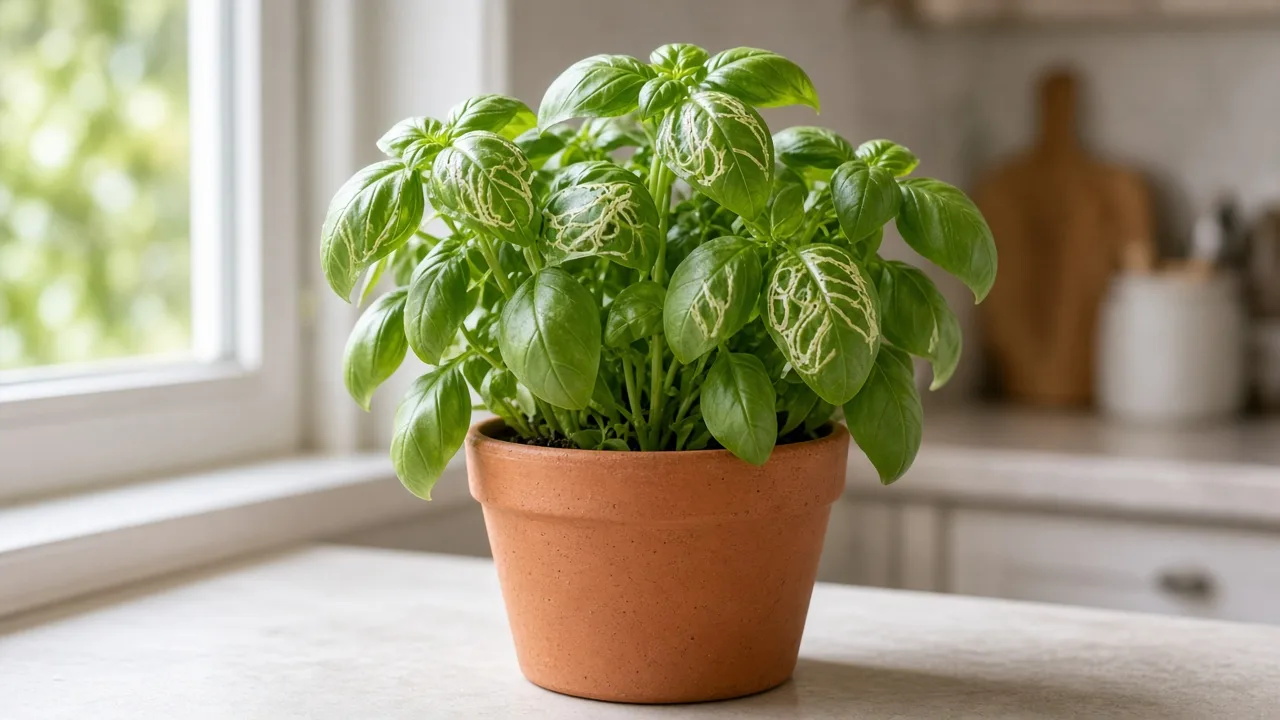
Leafminer damage usually looks worse than it is: pale winding trails or translucent patches cut through leaves, but the larva is often already hidden inside the tissue by the time you notice them. On a mature ornamental, that may be a cosmetic problem best left alone. On spinach, chard, or another crop grown for its leaves, the same mine can make the harvest unusable. Your first job is to decide which case you have—not reach for a spray.
“Leafminer” describes a feeding habit shared by many insects, including flies, moths, beetles, and sawflies. Different species favor different host plants and have different life cycles, so removal, row covers, and pesticide timing do not work identically across the garden. The most reliable home-garden plan is to identify the affected plant and damage, remove active mines where crop quality matters, protect clean new growth before adults lay eggs, and preserve the tiny parasitoid wasps that already help keep many leafminers in check.
Quick Answer: Match the Response to the Plant
For an established shrub, houseplant, or mature tree with a few mines, leave the leaves if the plant is otherwise healthy. The larvae rarely kill an established plant, and broad-spectrum spraying can eliminate beneficial insects and make later outbreaks worse. If the leaf is badly damaged and unsightly, remove only the affected foliage that the plant can spare.
For spinach, chard, lettuce, or another leafy crop, inspect the mines and remove leaves that contain active larvae when the damage is still limited; bag and discard them so larvae do not finish feeding and pupate nearby. Protect the next clean planting with a fine-mesh row cover installed before adult flies arrive—but not over a bed where leafminers may already be emerging from pupae. If the leaves belong to citrus, do not strip them just because they look mined; damaged areas can still photosynthesize, and removing a flush may prompt more vulnerable new growth.
What a Leafminer Is—and Why the Name Covers Many Pests
A leafminer is an insect larva that feeds inside a leaf, between its upper and lower surfaces. It leaves a tunnel or blotch of damaged tissue called a mine; the pale window is often bounded by intact leaf skin, with a fine dark line of frass (insect waste) or a larva visible inside. The adult may be a tiny fly or moth, but seeing a small insect nearby does not prove that it caused the marks.
Several leafminer species attack vegetables, and ornamental plants have their own miners. University of Minnesota Extension distinguishes the winding trails of vegetable leafminers from the irregular blotches of spinach leafminers, while UC IPM notes that many woody-plant foliage miners are host-specific to one or a few related plants (UMN Extension, UC IPM: Foliage Miners). That distinction matters: the advice for a spinach fly does not automatically apply to a citrus moth, a birch leafminer, or a boxwood leafminer.
Different miners use different host plants
Common vegetable examples include the serpentine vegetable leafminer (Liriomyza sativae), whose narrow track winds through leaves, and the spinach leafminer (Pegomya hyoscyami), which often expands into a pale, irregular blotch on spinach, chard, beets, and related crops. Citrus leafminer (Phyllocnistis citrella) attacks tender new citrus leaves and often leaves them curled or distorted. Boxwood, birch, columbine, and other ornamentals have different leaf-mining insects with their own seasonal patterns.
Knowing the plant often gets you closer to the right identification than trying to identify a fly by eye. If a distinctive mine appears on a high-value plant or keeps returning despite basic cultural controls, photograph the top and underside of the leaf, include the whole plant and location, and ask a local extension diagnostic service to identify it. A precise ID can change whether you leave it alone, remove plant material, use a barrier, or consider a labeled treatment.
Identify Leafminer Damage Before Treating
The classic sign is a thin, pale tunnel that gradually widens as the larva feeds. Some miners make long serpentine lines; others create expanding blotches, translucent windows, or patches that later turn tan or brown. Adult feeding punctures can appear as small white specks around the mines, but these punctures alone are not enough to diagnose a damaging larval infestation.
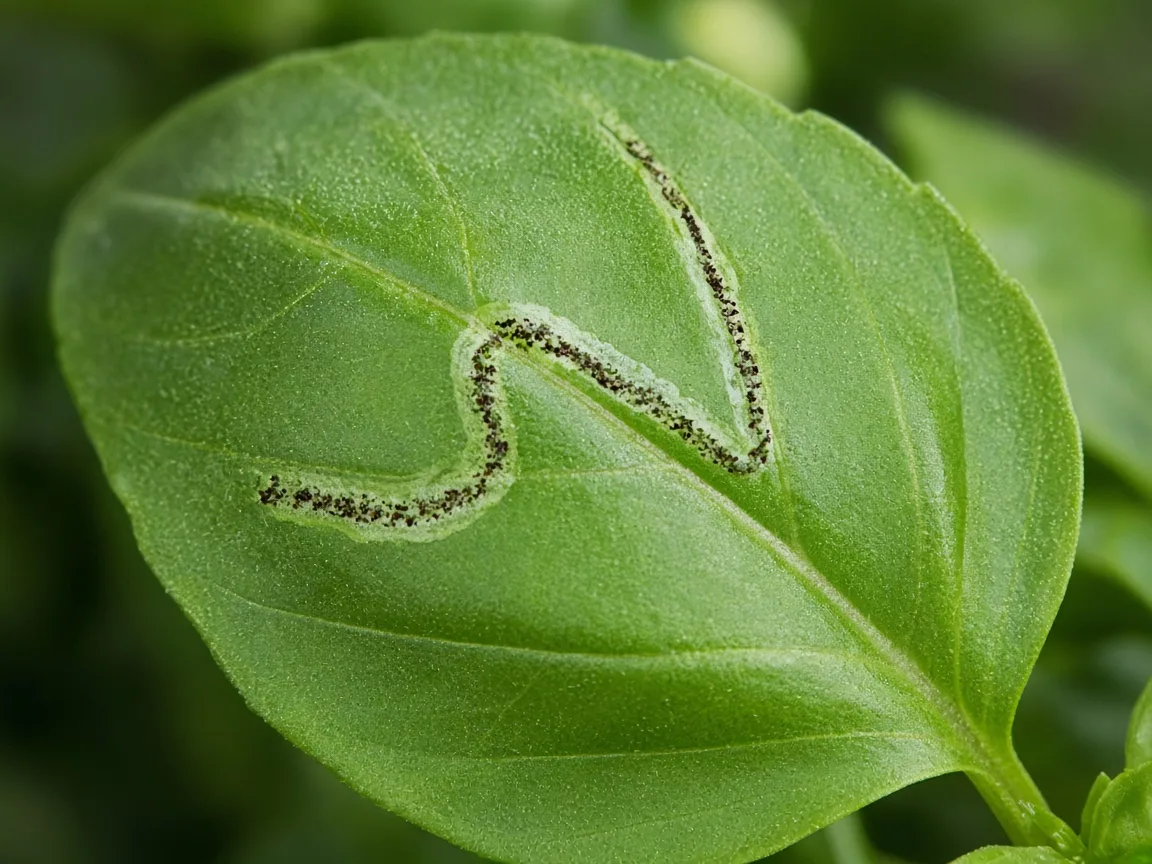
An expanding pale mine with frass is a stronger clue than a small fly simply resting on the plant.
Serpentine trails, blotches, and other clues
Hold a mined leaf toward the light. The mine may look like a translucent tunnel with a narrow trail of dark frass near the advancing end; the shape is often more diagnostic than the adult insect. Blotch miners begin with a smaller track and widen into an irregular patch, especially on spinach and chard. Citrus mines are shallow, winding lines on soft new growth, and the leaf may curl around the larva or pupal chamber.
Not every white or tan line is a leafminer. Leaf spots, sunscald, thrips feeding, and mechanical scratches can also discolor leaf tissue, but they do not normally form a continuous winding tunnel with frass or a larva inside. If a mine has no visible larva and is dry or brown, the insect may already have exited; treating at that point cannot restore the leaf. Save a sample in a sealed bag or photograph the pattern if identification is uncertain, and avoid applying an insecticide just because damage looks squiggly.
Check whether a larva is still active
Look near the fresh, pale end of a mine. A live larva may appear as a tiny cream, yellow, or greenish maggot; in some species it is easiest to see with the leaf backlit. If the trail is entirely brown and empty, the larva may have finished feeding and dropped to the soil to pupate. The leaf still carries the old damage, but the useful control window for that individual has passed.
On tougher leaves, gently pinch the leaf tissue at the mine’s leading end to crush a visible larva; this can stop that larva but does not erase the scar or prevent other adults from laying eggs. A delicate leaf, a broad blotch, or many mines is easier to manage by removing the whole affected leaf if the plant can spare it. Do not squeeze every mark blindly—misdiagnosis can injure healthy foliage without affecting the actual pest. This targeted pinch approach is also described in Gardener’s Path’s leafminer guide.
Decide How Much Damage Matters
Before removing leaves, ask what the plant is expected to do. A leafy crop is valuable because of its foliage, while an ornamental may still flower and grow despite a few visible mines. Seedlings and new transplants have less leaf area to spare than mature plants, so the same number of mines can matter more early in establishment. On many mature plants, cosmetic damage alone is not a reason to defoliate or spray.
Established ornamentals and woody plants
A few mines on an established shrub, perennial, or mature tree rarely justify treatment. UC IPM says established woody plants can tolerate extensive foliage mining and are rarely killed; pruning affected leaves can restore appearance and provide some control, but repeated pruning may remove more useful foliage than the miner would. Remove individual leaves or shoots when the infestation is severe enough to affect appearance or plant growth, and avoid cutting back a whole shrub or tree just to make the canopy look perfect.
For birch, boxwood, azalea, columbine, and other known hosts, identify the exact miner before choosing a response. Some larvae remain in leaves through winter, while others leave the leaf and pupate in soil; one cleanup schedule will not fit all. If the damage is recurring but the plant remains vigorous, note the season and affected growth, then consult a local extension guide for that host instead of applying a generic “leafminer” treatment.
Seedlings and edible leafy crops
Young seedlings need more attention because they have fewer leaves to keep photosynthesizing. In a bed of beets, some damage may affect appearance without threatening the root harvest; in spinach, lettuce, or chard, mined leaves may be unpleasant to eat or too damaged to use. University of Minnesota Extension notes that vegetable leafminers are often kept in check by natural enemies, but leafy greens can warrant action because the damaged part is the crop (UMN Extension).
Harvest unaffected leaves first and remove badly mined leaves that still contain active larvae. If the plants are small and most leaves are mined, replacement or resowing may be more practical than repeatedly stripping the plant. For a mature tomato or bean plant, a few mines are usually less consequential than on a market-quality leafy green; monitor new growth rather than treating every blemished leaf as an emergency.
Remove Active Mines When Removal Helps
Leaf removal is most useful when the mine still contains a larva, when the crop is grown for edible leaves, or when a small number of affected leaves can be taken off without weakening the plant. Clip the leaf at its stem, collect it directly into a bag, and discard it according to local waste guidance. Do not leave active mined leaves on the ground beside the crop, where larvae from some species can exit and pupate in soil. Avoid cool compost unless local guidance confirms it will heat enough to kill the pest.
If you see one narrow active mine on a sturdy leaf, pinching the larva at the advancing end may preserve the rest of the leaf. If several mines cover a leaf, removing the whole leaf is simpler and less likely to leave a larva behind. Sanitize pruners between plants when working through a mixed bed—not because the leafminer itself spreads like a virus, but to avoid moving other pests or pathogens on dirty tools.
There is an important exception: citrus leaves with leafminer trails can still contribute food to the tree. UC IPM advises leaving damaged citrus leaves on the plant because they remain functional, and pruning them may stimulate new flush growth that attracts more egg-laying moths (UC IPM: Citrus Leafminer). The practical rule is not “remove every mined leaf”; it is “remove foliage only when the benefit exceeds the leaf area the plant loses.”
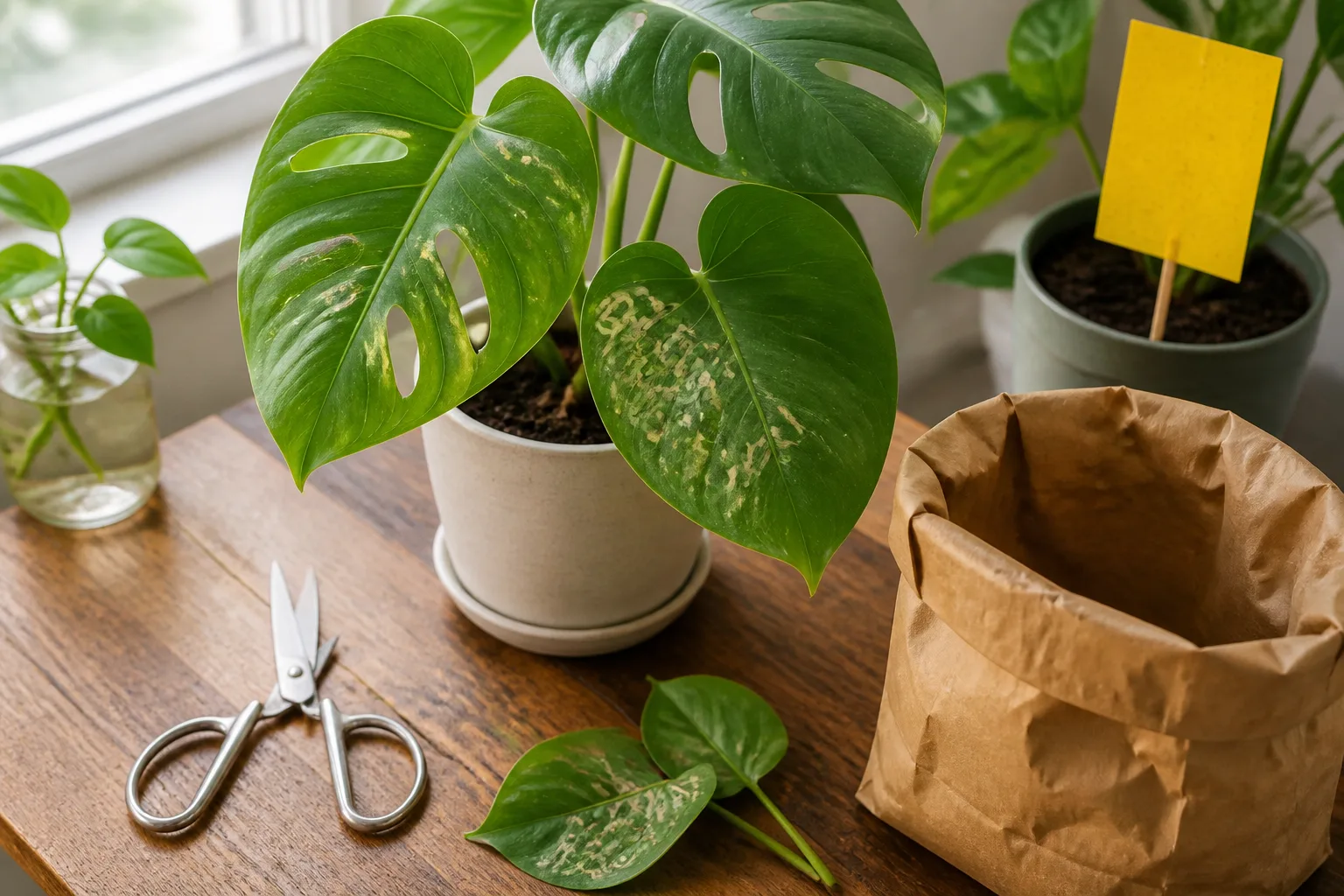
When a houseplant has only a few mined leaves, remove the affected foliage selectively and keep the rest of the canopy intact.
Prevent the Next Generation
Prevention means interrupting the local life cycle before a new larva enters a leaf. For many vegetable leafminer flies, females insert eggs into leaves, larvae feed inside the leaf, and mature larvae drop to the nearby ground to pupate; some species can produce multiple generations in a season. Other miners have a different overwintering stage, so use host-specific timing where available rather than assuming every pest pupates in the soil.
Use row covers before adult flies arrive
A fine-mesh floating row cover can keep egg-laying adults away from clean plants. Install it immediately after planting or before the locally expected adult flight, secure the edges, and leave enough room for the crop to grow. A cover is an exclusion barrier, not a cure for insects already inside leaves.
The overlooked exception is the bed’s history. If leafminers pupated in the soil there last season, adults may emerge under a newly installed cover and become trapped beside the plants. UMN Extension recommends using row covers where leafminers have not been present for at least a year; if the bed was infested, move susceptible crops to a clean area and cover that planting instead (UMN Extension). For crops that need insect pollination, remove the cover when flowers require access or choose a different protection plan; leafy greens do not have that pollination constraint.
Manage crop residue and host weeds selectively
After harvesting a crop that had active miners, remove and discard the remaining infested foliage so larvae do not continue through their life cycle in the bed. Rotate susceptible crops to a different area when the species pupates nearby, and use a nonhost crop in the old bed for a season if practical. Rotation is less useful when a miner feeds on many nearby species or when the next host is a common weed, so it works best alongside identification and sanitation.
Some leafminers use lambsquarters, pigweed, nightshade, or other weeds as alternate hosts. Remove known host weeds near a susceptible crop when they are contributing to the problem, but do not clear every flowering weed in the yard on the assumption that all weeds harbor the same pest. Different miners use different plants, and many wild plants support beneficial insects. Focus cleanup on the infested bed and confirmed host species.
Protect Parasitoid Wasps and Other Natural Enemies
Tiny parasitoid wasps can locate larvae inside mines and lay eggs in or on them. They are easy to overlook because they are much smaller than the pest, but they help suppress populations without damaging the leaf. UC IPM identifies parasitic wasps among the main natural enemies of vegetable leafminers and warns that insecticides applied for other pests can kill these helpers and contribute to secondary outbreaks (UC IPM: Vegetable Leafminers).
Give natural enemies time to work when the plant can tolerate the damage. Avoid routine broad-spectrum insecticide use, including sprays for unrelated pests, and use a targeted product only when the pest is identified and the crop loss justifies it. Keeping plants appropriately watered and avoiding unnecessary excess nitrogen can help hosts stay vigorous, but fertilizer does not kill leafminers and should not be used as a treatment.
Why Insecticide Sprays Often Disappoint
A larva feeding between leaf surfaces is physically shielded from many contact sprays. Spraying after the winding mines are obvious may coat the outside of the leaf while missing the insect, and it cannot repair tissue that has already died. UC IPM says insecticides are not very effective for leafminer control in home gardens; Utah State and Minnesota Extension describe more limited cases in which a labeled treatment may help if timed before or around egg hatch on a susceptible crop (UC IPM, Utah State University Extension, UMN Extension).
That difference is a reason to identify the pest and read local guidance, not to pick the most aggressive source. Any pesticide must be labeled for the plant or crop and target pest, applied at the right life stage, and used according to its full label, including protective equipment, pollinator precautions, and the preharvest interval for edible crops. “Organic” does not mean harmless: some products can injure beneficial insects or pollinators, and a product that is legal for one crop may not be allowed on another.
For small gardens, hand removal and exclusion usually carry fewer tradeoffs. Sticky cards can help monitor some flying adults, but a card catching flies does not prove which species is present, and ordinary yellow or blue traps do not prevent larvae already mining leaves. Do not use a trap count by itself as a reason to spray; verify the host, active damage, and plant value first.
Special Case: Citrus and Other Woody Plants
Citrus leafminer targets tender new leaves, not the older, hardened foliage that makes up most of a mature canopy. The mines can make a flush look twisted and unattractive, but mature backyard citrus usually tolerates the injury and keeps producing. Removing damaged citrus leaves or pruning repeatedly can encourage another tender flush, giving the moth more suitable tissue to attack; protecting natural enemies is often the better home-garden choice.
Young citrus trees are more vulnerable because a larger share of their foliage is new growth, but visible mines still do not automatically call for a spray. Monitor the tree’s overall growth, protect beneficial insects, and avoid forcing repeated flushes with pruning or unnecessary nitrogen during periods of high leafminer activity. If the tree is very young, repeatedly losing growth, or part of a commercial planting, follow the local citrus extension program for species-specific thresholds and timing.
On other woody ornamentals, prune out only the infested leaves or shoots needed to restore appearance or limit a serious infestation. Do not remove large amounts of canopy from a tree because of a few mines. When the pest is a recurring issue on birch, boxwood, or another high-value shrub, local extension resources can explain the miner’s exact overwintering stage and the narrow window—if any—when intervention works.
Houseplants and Indoor Growing
Leafminers can appear on houseplants, though their treatment is still about the life stage and host rather than the room. Isolate a newly affected plant while you inspect nearby foliage, remove leaves with active mines if the plant can spare them, and clean up fallen leaves. Check new plants before bringing them into a collection; do not spray every plant in the room because one leaf shows a tunnel.
A sticky card can help you notice flying adults, but it is a monitoring aid rather than a cure for larvae inside leaves. Keep the plant’s ordinary care steady—adequate light and watering help it replace lost foliage—and avoid heavy pruning that removes more healthy leaf area than the miner has damaged. If new mines keep appearing, photograph the plant and ask a local extension office or plant clinic to confirm the pest; some leaf spots and feeding scars resemble mines at first glance.
Common Leafminer Control Mistakes
- Spraying after the larva is enclosed: A contact insecticide usually cannot reach a larva safely tunneling within the leaf, and the damage already made will remain visible.
- Removing every marked leaf: This can weaken the plant, and it is especially unhelpful for citrus leaves that still photosynthesize.
- Installing a cover over an infested bed: Adults emerging from local pupae may end up trapped under the barrier with the crop.
- Treating any small fly as the culprit: Identify the mine pattern and host; adult leafminers are difficult to identify by casual observation.
- Assuming every “natural” product is harmless: Pesticide timing, crop label, pollinator exposure, and the preharvest interval all matter.
- Clearing all weeds or tilling every bed: Sanitation should target the pest’s known host plants and life cycle; unnecessary disturbance can harm soil and beneficial habitat.
Conclusion
Leafminer damage is a sign to investigate, not an automatic signal to spray. Most established ornamentals and woody plants can tolerate a light infestation, while seedlings and leafy crops deserve closer attention because damaged leaves are also the harvest. Identify the plant and likely miner, check whether the larva is still active, and remove only foliage whose loss makes sense for that plant.
To prevent repeat damage, cover clean susceptible crops before adult insects arrive, avoid covers over beds where leafminers may already be emerging, clean up infested crop residue, and protect parasitoid wasps. Keep citrus leaves that still function, use pesticides only for a confirmed pest and a label-approved crop at the right timing, and ask your local extension office when repeated losses make the diagnosis or control choice uncertain.



