How to Grow and Care for Lavender Cotton (Santolina)
Learn lavender cotton care, from soil and watering to safe pruning, containers, propagation, climate limits and yellow summer flowers in USDA zones 6–9.
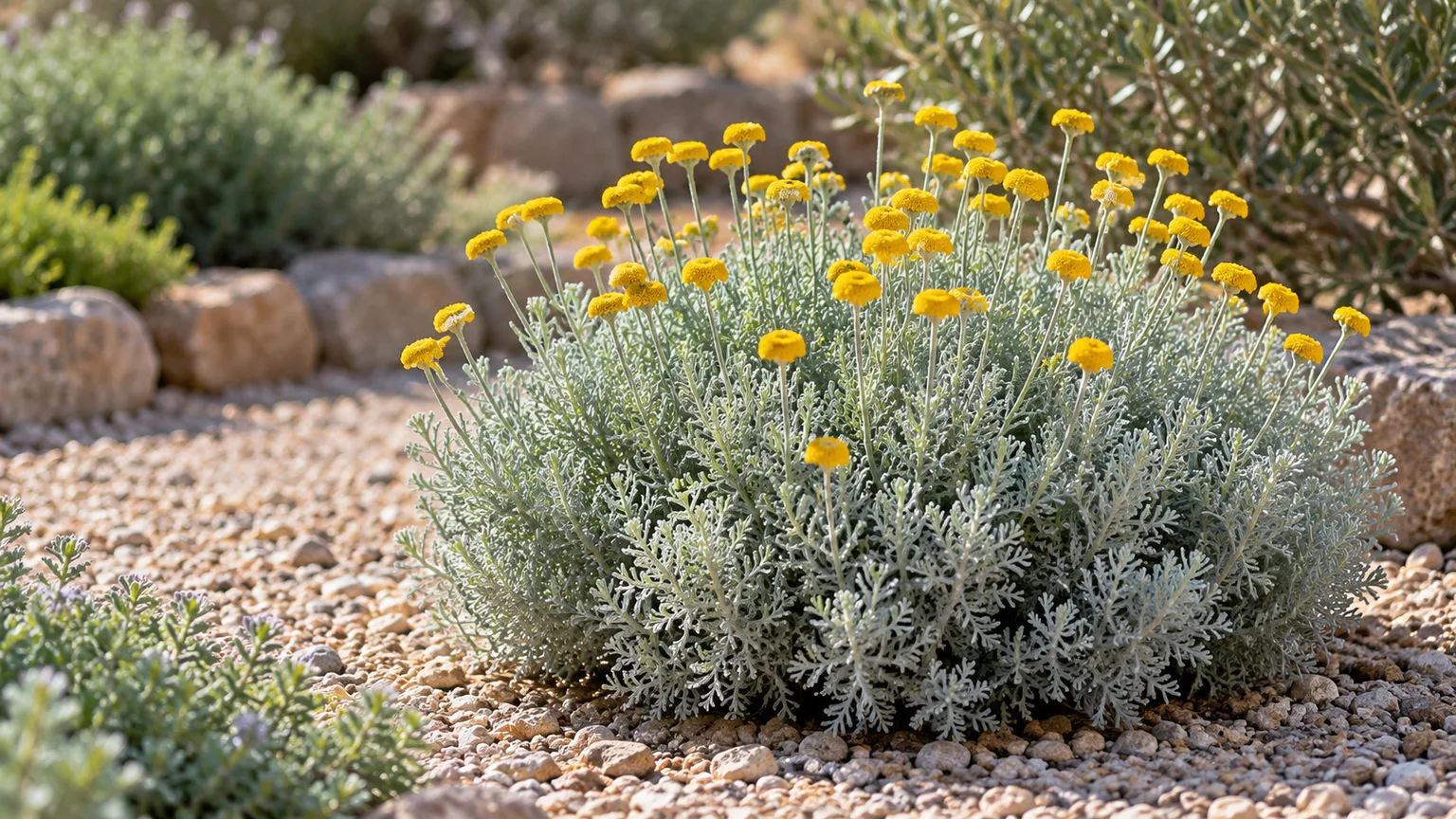
Lavender cotton (Santolina chamaecyparissus) is a low, evergreen Mediterranean subshrub grown for its finely cut silver-gray foliage and small yellow summer flowers. Give it full sun, lean soil, and excellent drainage; water newly planted shrubs while roots establish, then reduce irrigation. The main maintenance challenge is pruning: shape the leafy growth, but do not assume a bare old-wood framework will resprout after a severe cut.
The common name is misleading. Lavender cotton is not a lavender (Lavandula) and it does not produce cotton; it is a santolina in the daisy family. Its finely textured foliage smells herbal when brushed, and its rounded mound works well in sunny borders, gravel gardens, low edging, and outdoor containers. NC State Extension describes its distinctive three-dimensional leaves and summer button flowers; the Royal Horticultural Society’s plant profile likewise identifies an aromatic, silvery, evergreen shrub.
| Growing detail | Lavender cotton |
|---|---|
| Botanical name | Santolina chamaecyparissus |
| Habit | Compact evergreen subshrub |
| Typical size | About 1–2 feet tall and 2–3 feet wide |
| Light | Full sun; at least six hours of direct sun |
| Soil | Lean, well-drained to sharply drained |
| Water | Regular checks while establishing; low needs after roots settle |
| Flowers | Yellow button-shaped heads in summer |
| Common U.S. hardiness listing | USDA zones 6–9; local winter wetness matters |
The size and hardiness figures are planning ranges, not guarantees: the Missouri Botanical Garden lists a 1–2-foot height, a 2–3-foot spread, and zones 6–9. A sunny, airy site with dry winter soil often matters as much as the zone number.
What Lavender Cotton Is—and What It Is Not
The species forms a woody-based mound with soft-looking, finely divided foliage. Leaves are often silver or gray-green, while slender flower stalks rise above the mound with rounded yellow heads in summer. It is a foliage shrub first and a flower plant second: choose it for year-round texture and structure, then treat the blooms as seasonal color.
“Lavender cotton” and “cotton lavender” are common names shared across several Santolina species and cultivars. That can make tags confusing. For the classic silver-gray plant, check for S. chamaecyparissus on the label instead of relying on the common name alone. A green-leaved santolina, for example, may be S. rosmarinifolia or S. virens, which are related but not interchangeable in appearance.
This distinction also prevents a care mismatch. Lavender cotton needs less moisture than true lavender once established, but its winter performance can be worse in heavy, persistently wet soil than a zone label suggests. It is not a houseplant: a pot can work outdoors, but an indoor window usually cannot supply the combination of strong light, airflow, and quick drainage this shrub prefers.
Check Your Climate and Plan for the Mature Mound
Most North American references place lavender cotton in USDA zones 6–9. That range is useful for screening, but it does not promise success in every zone 6 or 9 garden. Cold tolerance depends on drainage, wind exposure, and how long the roots stay wet; warm, humid summers can also encourage loose growth and fungal problems. The Missouri Botanical Garden cautions that plants may be unreliable in its area without a protected site, while the UC Master Gardener Program of Sonoma County notes that excess summer watering can promote damaging fungal growth.
In a cold-winter garden, choose the sunniest, most sheltered place with the fastest-draining soil. If winters are wet, a raised bed or slope is safer than a low pocket where meltwater collects. In a hot, humid region, favor an open site with airflow and avoid routine summer irrigation after establishment. If your local climate is far outside the listed range, ask a nearby extension service or nursery whether santolina persists through the specific combination of winter lows and summer humidity where you live.
NC State Extension also lists the species as highly salt tolerant, which can make it useful near the coast. Salt tolerance does not cancel its need for drainage: a coastal bed that stays waterlogged is still a poor match.
Allow room for a broad mound. Mature plants commonly spread 2–3 feet, and crowded clumps trap humidity at the center, shade lower foliage, and become harder to shape. For separate rounded plants, space them around the expected spread; for low edging, a closer row can knit together, but leave air between the foliage and keep the base accessible for pruning.
Age also changes the planting plan. NC State Extension describes lavender cotton as useful for shorter-term landscape planting because the center eventually opens; it gives a 10–15-year landscape window, not a guaranteed individual lifespan. Treat that as a reminder to propagate young replacements while the parent is still healthy, rather than waiting for a hollow, woody center to become impossible to reshape.
Give It Full Sun and Drainage Before You Adjust Soil
Aim for at least six hours of direct sun each day. Full sun keeps the mound tighter, strengthens its silver color, and supports better flowering. It may tolerate light shade, but shaded shrubs often stretch outward, flower less, and lose the rounded form that makes them useful as edging. If a plant is already loose, move it to a brighter site if practical before trying fertilizer or harder pruning.
Drainage is the more important soil decision. The RHS lists chalk, loam, and sand, and accepts acid, neutral, or alkaline pH as long as soil is well drained. That flexibility means most gardeners do not need to lime or acidify soil based on a generic pH target. Rich soil is not a benefit here: heavy feeding or adding large amounts of compost can produce soft, lanky growth that holds more moisture.
A sandy or gravelly bed is close to ideal, but you do not need to replace an entire garden with gravel. In heavier soil, plant on a broad mound or raised bed and amend a wide area with coarse mineral material so water can move away from the roots. Avoid making a small pocket of very loose mix inside dense clay; that can behave like a bowl and hold water around the root ball.
A practical drainage check
After a soaking rain, look at the proposed spot. If water remains pooled around the planting area or the soil stays sticky and saturated for a day or more, select a higher site or build a raised bed instead of trying to compensate with less watering. A thin gravel dressing can keep soil splash off the crown, but do not pile it against the stems or treat gravel mulch as a substitute for drainage below the roots.
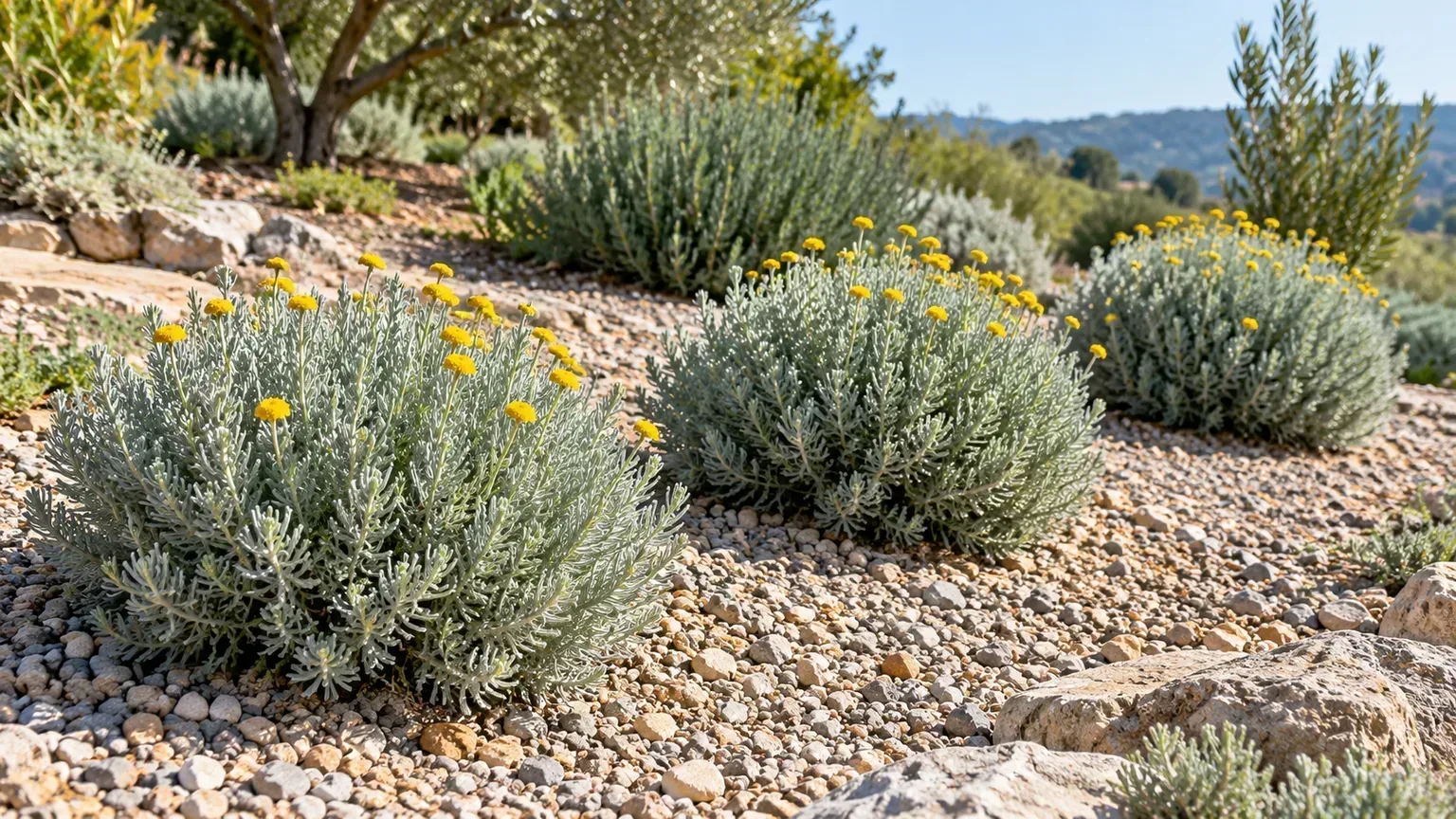
Plant Lavender Cotton in the Right Place
Plant in spring in colder regions so the shrub can establish before winter. In mild climates, early fall is also reasonable if roots have time to settle before cold, wet weather. Avoid transplanting during a heat wave: a new plant still needs moisture while its roots expand, and extreme heat makes it harder to keep the root ball evenly hydrated without leaving surrounding soil wet.
Before planting, water the nursery pot and let it drain. Dig a hole about as deep as the root ball and wider than it. Set the plant so the top of the root ball sits level with the surrounding soil, then backfill with the native soil you improved across the whole bed. Keep the crown at grade; burying the woody stems invites moisture to linger where the plant is least tolerant of it.
Water once to settle soil around the roots, then apply a light layer of gravel or small stone over the surface if you want a mineral finish. Leave a clear gap around the crown. Skip a thick layer of moisture-holding bark or compost mulch, especially in a rainy or cool climate. Where plants are in a row, check the actual cultivar’s mature width before setting spacing—the species form can become a wider mound than a small nursery pot suggests.
Water During Establishment, Then Let Soil Dry
New plants need more attention than established ones. For the first growing season, check the root ball every few days during warm, dry weather and water deeply when it is beginning to dry; reduce that frequency after rain or in cool weather. The exact interval depends on soil texture, rainfall, wind, and pot size, so a fixed weekly schedule can either keep roots too wet or let a fresh transplant dry out.
Water at the base so moisture reaches the root zone, then allow the soil to dry between waterings. Frequent shallow sprinkles encourage roots to remain near the surface and keep the crown damp. The Missouri Botanical Garden’s care notes distinguish regular moisture during the first year from the dry-to-medium conditions established shrubs tolerate; the Sonoma County Master Gardeners similarly recommend infrequent watering after establishment.
Once a shrub is established, irrigate only during a prolonged hot, dry spell or when the plant shows genuine drought stress and the surrounding soil is dry. Gray foliage alone is not a sign of thirst; it is the normal leaf color. A dry, crumbly root zone and limp or crisp tips point toward water stress, while a wilted plant in wet soil calls for a drainage check, not another drink.
Do not fertilize routinely. This species naturally suits low-fertility ground, and excess nutrients can push growth that is too soft and open. If neighboring plants need feeding, keep fertilizer away from the santolina’s root zone. A soil test is a better reason to add nutrients than a slow first season; poor drainage, shade, or establishment stress are more likely causes to inspect first.
Prune for a Dense Mound Without Cutting Into Old Wood
Pruning keeps lavender cotton from becoming ragged, but the cut must match the plant’s growth. Santolina is a subshrub: it has a woody base and leafy growth above it. The safe everyday approach is to shorten leafy stems and spent flower stalks while leaving living nodes and foliage on each branch. A bare, gray-brown stem is not the same as green growth, and a severe cut through the entire plant can leave it with too few places to regrow.
Timing varies with climate. The RHS recommends trimming after flowering to keep the shrub compact; in a region with winter dieback, wait until new growth begins in spring before deciding what is dead. Do not make a late-season hard cut that forces tender shoots just before frost. A Fine Gardening plant profile notes that plants can become long and woody without cutback, while its guide to pruning subshrubs explains why cutting into old wood or removing all above-ground growth is risky for this group.
A safe annual trim
After the yellow flowers fade, use clean hand shears to remove the flower stems and lightly round the green canopy. Make cuts just above leafy growth; step back often so the top does not become a flat, dense cap over an open center. A little shaping each year is easier to recover from than waiting several seasons and removing a large share of the plant at once.
If the shrub needs more than a light trim, spread the work across two seasons. Shorten the longest leafy shoots first and keep several visible green nodes on each stem. In spring, wait for new growth to reveal which stems survived winter before removing dead tips. The goal is not to expose the central framework but to keep light reaching the lower foliage.
What to do with a leggy or woody plant
If the plant is open at the middle but still has vigorous leafy shoots around the outside, take cuttings before attempting a major renovation. Then shorten one side or a few stems modestly and watch for regrowth. If the cut would leave large areas of bare wood, replacement is usually more reliable than a hard reset; do not assume santolina will sprout from a leafless stump.
A light shear after bloom is different from cutting the shrub nearly to the ground. Some regional advice describes severe pruning, but how well that works depends on the plant, climate, and amount of living growth left behind. When the boundary between leafy and woody stems is unclear, prune conservatively and propagate a backup rather than testing the entire plant at once.
Grow Lavender Cotton in an Outdoor Container
Lavender cotton can live in a pot, but it remains an outdoor shrub. Choose a container with open drainage holes and place it where the plant receives full sun and moving air. Unglazed terracotta can help the mix dry between waterings, but it also dries quickly in heat and wind, so the plant may need closer checks than one in the ground.
Use a free-draining container mix amended with mineral grit or perlite if the mix holds water. Do not fill the pot with garden soil, and do not leave it standing in a saucer of water after rain. A pot that is only slightly larger than the root ball is easier to manage than an oversized container with a large volume of persistently damp mix. Refresh or move up a size when roots densely circle the pot or water runs straight through without wetting the root ball.
The container is less winter-protected than soil in a bed. In colder zones, set it in a sheltered place out of winter rain and wind; raise it slightly so drainage holes stay clear. A large pot and an appropriately hardy cultivar improve the odds, but a container cannot make a marginally hardy plant reliably hardy. If your winter conditions are severe or very wet, treat the plant as a seasonal container accent or keep a propagated replacement under protection.
Indoors is usually a poor compromise. A bright room may still provide less direct sun and airflow than an exposed patio, while warmth encourages growth when light is weak. Use a sunny outdoor balcony, terrace, or doorstep instead of treating santolina as a long-term windowsill plant.
Propagate Lavender Cotton From Cuttings
Semi-hardwood cuttings are the most direct way to reproduce a healthy parent plant with similar foliage and form. Take them in late summer, when the current season’s stems have begun to firm but are not fully woody. The RHS recommends semi-ripe cuttings, and Fine Gardening also lists late summer as the propagation window for lavender cotton.
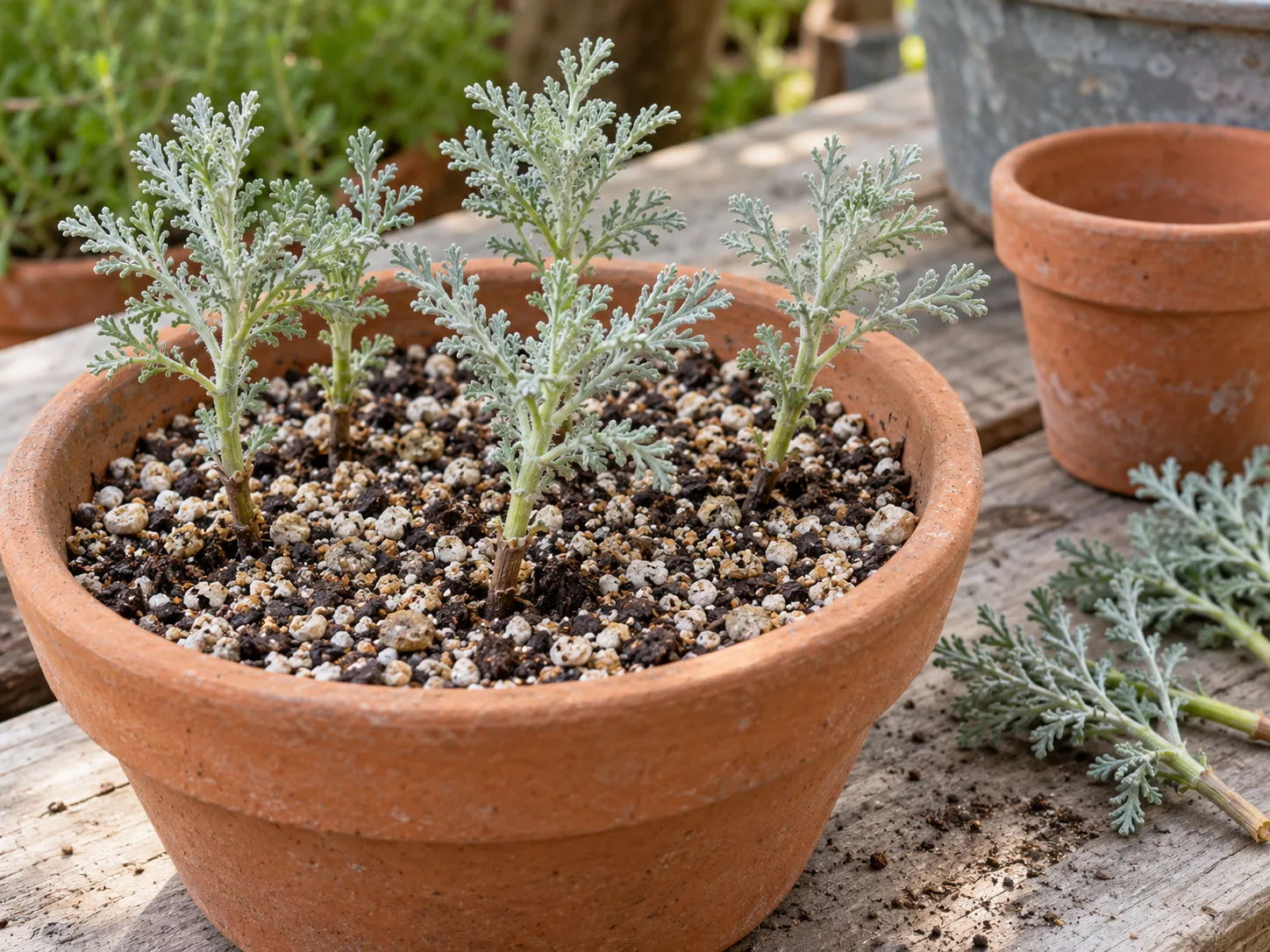
Take and root semi-hardwood cuttings
Start with a well-watered, healthy parent and a clean, sharp pruner. Prepare a small pot with drainage holes and a lightly moist, airy propagation mix. Avoid taking material from a plant that is wilting, diseased, or stressed by drought; a weak cutting has fewer reserves to form roots.
Cut several non-flowering shoots about 3–4 inches long. Remove the leaves from the lower portion so they will not be buried, and keep a small tuft of foliage at the tip. Insert the bare lower section into the mix, firm it gently, then water just enough to settle the medium. Fine Gardening’s stem-cutting guide also recommends using healthy shoot tips and removing leaves from the buried portion. Rooting hormone is optional; clean cuts and a medium that stays slightly moist but never waterlogged matter more.
Place the pot in bright light out of harsh midday sun and protect it from drying wind. A loose clear cover can slow moisture loss, but vent it regularly and remove it if condensation stays heavy or leaves begin to spot. Check the medium with a finger rather than watering by calendar. Once a cutting resists a gentle tug and produces new growth, acclimate it gradually to outdoor conditions before planting it permanently.
Do not pull a cutting up every few days to inspect roots. That breaks fragile new roots and sets the plant back. If some cuttings fail, adjust the moisture and airflow before changing several things at once; persistent sogginess is a more common problem than a lack of fertilizer for this species.
When layering or seed makes sense
Layering works when a low, flexible branch can be held against gritty soil without bending sharply or being buried at the woody crown. Pin a section of stem against the surface, keep that small rooting spot lightly moist, and leave the tip exposed. Once the stem has rooted, sever it from the parent and pot or plant the new shrub. In a very dry garden, the layer may need occasional water even while the parent stays on the dry side.
Seed is also possible, but it is slower and may not preserve the exact look of a named cultivar. Follow the seed supplier’s directions for sowing and any pretreatment rather than applying a universal cold-stratification rule. If you want a particular silver tone, dwarf habit, or flower color, a cutting from a correctly identified parent is the more dependable route.
Choose Flowers or a Tighter Foliage Shape
Lavender cotton usually produces small yellow, button-like flowers in summer, often on stalks held above the foliage. Bloom timing shifts with climate, and heat or a strong pruning schedule can change how many flowers appear. If flowers are the goal, let the stalks develop and wait until the display fades before shaping. If you prefer a uniform silver mound, clip the flower stalks as they rise.
The choice is aesthetic, not a health requirement. Removing every bud can keep an edging line tidy, while leaving some flowers softens a formal border. To hold both flowers and shape, deadhead selectively rather than shearing the whole plant during active bud formation. Pair its gray foliage with green herbs, dark-leaved perennials, or true lavender for contrast; Homes & Gardens highlights santolina as a structural silver-and-yellow alternative in dry-climate planting, not as a botanical type of lavender.
Expect foliage to remain the main attraction through seasons when flowers are absent. Brush a leaf to release its aromatic scent, but do not use the common name as a reason to treat the plant as culinary lavender. Grow it as an ornamental unless you have a reliable food-use reference for the exact species and preparation.
Troubleshoot Rot, Flopping, and a Bare Center
Most decline traces back to a mismatch between the plant and its site: too much moisture, inadequate sun, fertile soil, or pruning that removed too much leafy growth. The symptom alone is not enough to diagnose it. Check the soil and the base of the plant before changing the watering routine.
Wilting or yellowing in wet soil
If leaves yellow or wilt while soil is wet, stop watering and inspect drainage. Persistent moisture can cause crown and root rot; affected roots may be brown and soft, while shoots can wilt or die back. The University of Wisconsin Plant Disease Diagnostics Clinic describes soft, brown root tissue as a common sign, but a plant symptom alone cannot identify the pathogen. Improve the site, lift the plant if necessary, and remove clearly dead material with clean tools. A plant with extensive root loss may not recover, so take healthy cuttings before discarding it if any firm, vigorous shoots remain.
Do not respond to wet-soil wilt by adding fertilizer or more water. If the soil is heavy, moving the plant to a raised bed is more effective than adding a handful of grit only to the planting hole. Water on the soil rather than over the foliage, particularly in humid weather, and leave enough space around neighboring shrubs for air to move.
If the soil is genuinely dry and roots are firm, water the root zone deeply and then wait for it to dry again. A plant can look stressed after a heat wave even when it needs only a thorough soak; frequent small drinks keep the surface damp without solving a dry root ball below.
Flopping, sparse bloom, and an open center
Soft, floppy shoots usually point to shade, overly rich soil, or frequent watering. Give the plant more sun, stop routine feeding, and let the root zone dry between waterings. More pruning alone will not fix a site that keeps producing weak growth.
Sparse flowers can follow shade, regular clipping, or a season when the plant is establishing roots. Let some shoots complete a full flowering cycle before trimming, and check whether nearby plants or structures have reduced the available sun. For a bare center, first see whether any lower nodes are still leafy; if the center is all old wood, propagate a young plant and replace the aging mound rather than cutting it to a stump.
Choose a Cultivar by Botanical Name and Size
Common names can hide real differences. The Cornell Woody Plants Database lists dwarf forms such as ‘Nana’ and ‘Small-Ness’ alongside ‘Lemon Queen’ and other selections. Check the mature dimensions on the supplier’s label rather than assuming every plant sold as lavender cotton stays the same compact size.
Some trade names also move between species. The RHS profile for ‘Lemon Queen’ lists synonyms associated with S. rosmarinifolia and S. virens, while Cambridge University Botanic Garden identifies ‘Edward Bowles’ as Santolina pinnata subsp. neapolitana, a different santolina with gray-green leaves and creamy flowers. If a specific flower color or leaf color matters, compare the botanical name and a mature-plant photo before buying. In a small bed, choose a verified dwarf selection; in an edging row, choose for width and willingness to prune, not just silver color.
Conclusion
Lavender cotton is easiest to grow when its site does most of the work: direct sun, lean soil, and drainage that keeps roots from staying wet. Water through establishment, then irrigate only when a mature plant faces a prolonged dry spell. Skip routine fertilizer and shape the leafy growth after flowering.
The decision that saves the most plants is knowing where to stop pruning. Remove flower stalks and trim green shoots, but do not cut a woody, leafless mound down to the base and expect a dependable flush. If the center is already bare, take cuttings from healthy outer stems and start a replacement while the parent still has vigorous growth.



