How to Tell If a Tree Is Dead: Six Signs to Check First
Six clues can reveal decline, but no single sign proves death. Read the season, canopy, trunk, fungi, and lean, then choose a safe next step for your yard.
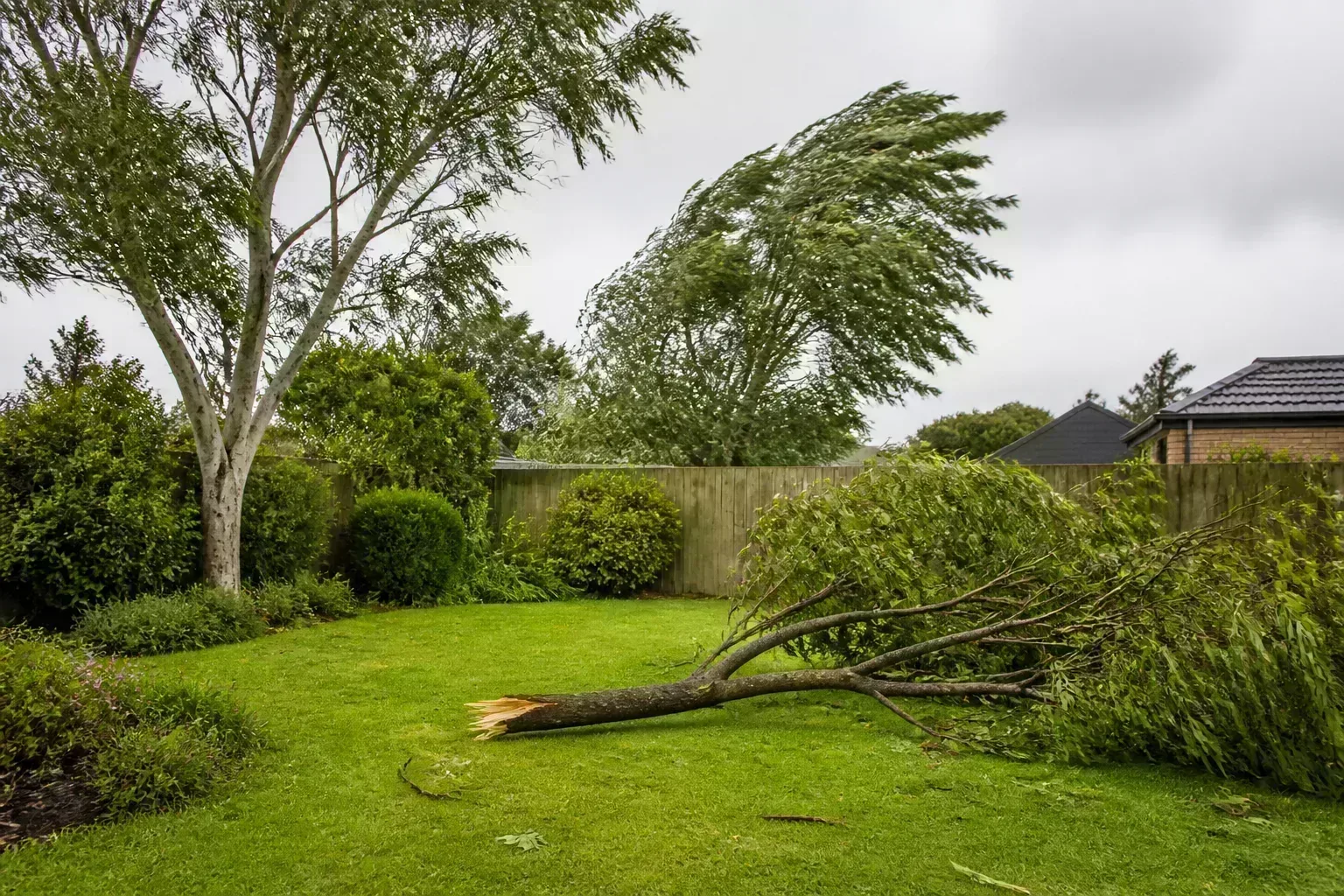
A bare tree is not automatically a dead tree, and a green canopy does not guarantee a sound trunk. To tell whether a tree is dead, compare its behavior with the season and species, then look for several signs together: widespread twig and branch death, a canopy that fails to leaf out when comparable trees do, severe trunk injury, decay indicators, or a new lean with soil movement. No single visual clue is a reliable diagnosis for every tree.
The distinction matters because tree health and tree safety are separate questions. A declining tree may still recover if its roots are stressed by drought or compaction, while a living tree with a crack or internal decay may still need prompt attention. Use the checks below to decide whether to monitor, seek a diagnosis, or keep people away and call a qualified arborist.
Dormant, stressed, dying, or dead: start with the season
Deciduous trees normally lose their leaves in fall and remain leafless through winter. Buds may look small and closed for months, and some species break dormancy later than their neighbors. A bare crown in winter tells you little by itself; even in spring, compare the tree with the same species in a similar setting rather than with the first tree on the block to leaf out.
Evergreens need a different baseline. Pines, spruces, and other conifers may shed older inner needles while retaining healthy growth at the tips, and broadleaf evergreens can also lose some older leaves. Seasonal needle drop is not the same as an entire crown turning brown or the newest growth dying back. A few brown interior needles are a weak clue; broad, progressive browning is more concerning.
Decline is a pattern, not a single bad leaf. Stunted growth, sparse or late leafing, premature fall color, yellowing, and branch dieback can indicate stress. Drought, waterlogged or compacted soil, deep planting, root injury, insects, and disease can all produce symptoms that look like “dying,” and some are manageable. The Royal Horticultural Society’s guide to declining trees and shrubs describes these symptoms and stresses that may contribute to them.
Ask what changed before deciding the tree is finished. Did construction trench through the root zone? Was the lawn repeatedly dry during a hot summer, or is soil staying saturated? Did one side of the crown lose leaves after a branch broke? A useful diagnosis starts with timing and site history, because a symptom can be the tree’s response to a problem rather than proof that all living tissue has died.
Six signs of tree death or serious decline
These clues help you prioritize what to inspect; they do not add up to a home test that can certify a tree as dead. The number, distribution, and progression of symptoms matter. A single dead branch can coexist with a vigorous canopy, while a tree with a thinning crown, dry twigs throughout, major bark injury, and root movement deserves professional attention.
No leaves or a thin, shrinking canopy
If a deciduous tree remains bare after nearby trees of the same kind have leafed out and its buds are dry or absent, the concern rises. Sparse leaves, unusually small leaves, or early leaf drop can signal stress, especially when the change is spreading through the crown over successive seasons. Look at the whole canopy from several directions and note whether the loss is on one branch, one side, the top, or everywhere.
A one-sided change may point toward a localized branch injury, shading, root damage on one side, or a disease that affects only certain limbs. Progressive thinning across the crown is more consistent with a broad stress problem, but it still does not identify the cause. Photograph the same view every few weeks during the normal leaf-out period; that record is more useful than trying to remember whether the tree looked fuller last year.
Dead twigs and branches across the crown
Small amounts of deadwood are normal in mature trees. A tree may shed shaded interior twigs, and some species retain dead branches while living for years. Large dead limbs, many brittle twigs scattered throughout the crown, or dieback beginning at the tips and moving inward deserve closer assessment. Deadwood high in the canopy can also be a falling-branch hazard even when the trunk and lower crown remain alive.
Check for buds and flexible tissue only on reachable, small twigs. A living twig often bends more readily and may have plump buds; a dead one is commonly dry and brittle, with buds that crumble or are missing. These are tendencies, not universal rules—wood texture and buds vary by species and season. Do not climb, use a ladder, or pull down a hanging branch to investigate.
Bark loss, girdling, and trunk damage
Bark differs by species and age. Some trees naturally shed or peel outer bark in patches, while old bark may be deeply furrowed or flaky; color and texture alone do not establish death. A scar from a wound can persist on a living tree as new tissue gradually grows around the edges. The more serious pattern is extensive bark loss or injury that encircles the trunk, because continuous damage can interrupt the tissues that move sugars between crown and roots.
Look for fresh damage, a sunken or open wound, a long crack that enters the wood, or bark missing around much of the trunk. A vertical crack is a reason to ask an arborist about structure, not a verdict that the tree is dead. A crack that is widening, a split where two stems meet, or damage accompanied by a new lean moves the issue from “health check” toward “hazard check.” Keep distance rather than probing the wound with a tool.
Conks, mushrooms, cavities, and decay
Shelf-shaped conks, mushrooms on the trunk, open cavities, and soft or crumbling wood can indicate decay. Some fungi colonize dead wood or a dead limb on a still-living tree; others can decay living sapwood or structural wood. Mushrooms appearing in the lawn may also feed on buried roots, old stump wood, or other organic matter, so a cluster several feet from a trunk does not by itself prove the tree is infected.
The important point is that decay can reduce strength without killing the crown, and it is not always visible from outside. UC IPM’s guide to wood decay fungi in landscape trees explains that decay fungi may affect living tissues, that fruiting bodies can be associated with advanced decay, and that rot may be hidden. Colorado State University Extension’s tree-growth and decay guide describes how a tree can continue functioning around decayed central wood, so a green tree is not automatically structurally sound. Treat fungal growth on the trunk or root flare, a cavity near the base, or several decay signs around a valuable or target-adjacent tree as a prompt for an expert inspection, not a do-it-yourself diagnosis.
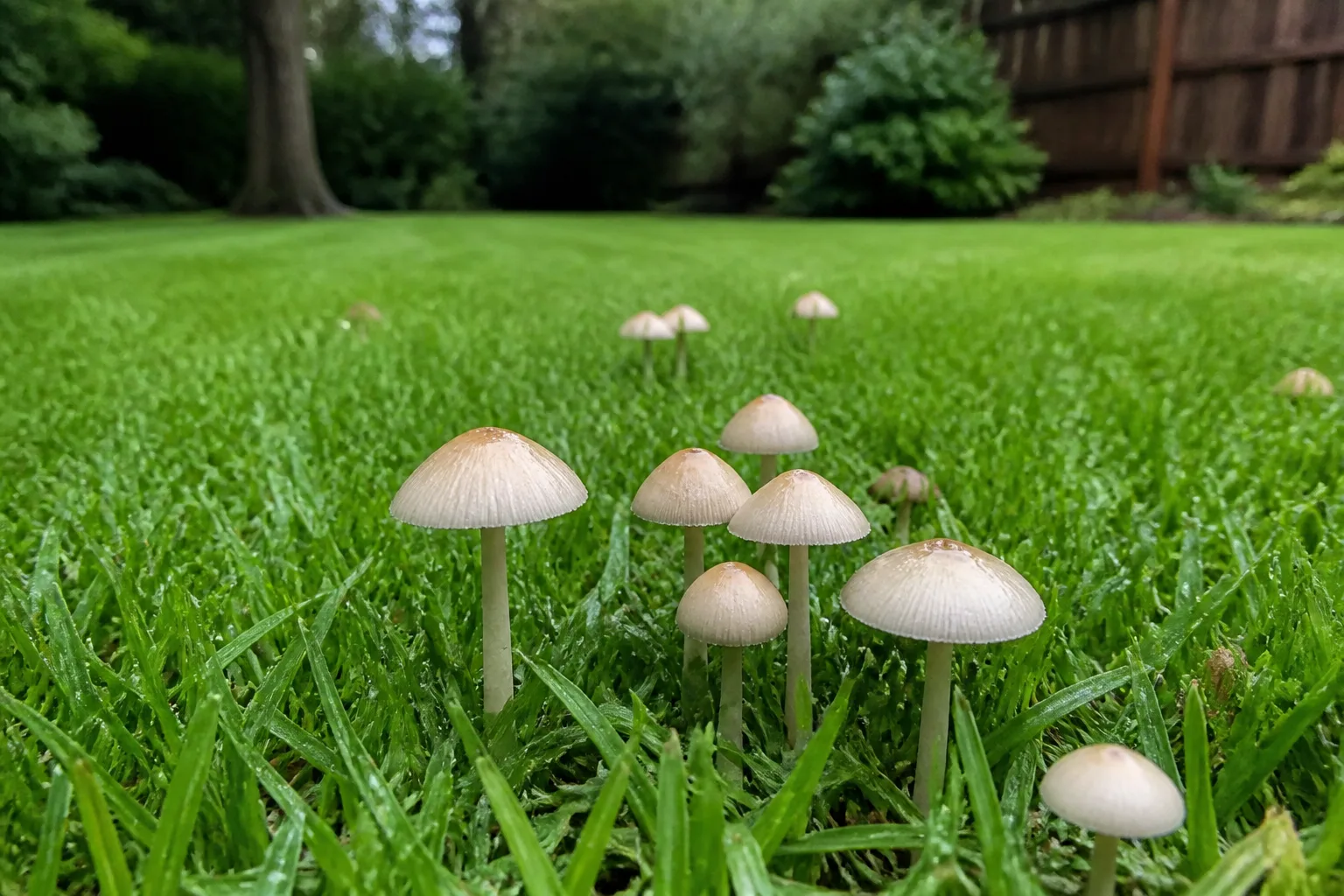
Do not chop off a conk to “stop” decay, pour a chemical into a cavity, or fill a hollow with concrete. Those actions do not rebuild missing wood, and they can obscure evidence an arborist needs. A homeowner can photograph the growth and where it occurs; identifying the fungus and estimating structural risk are separate professional tasks.
A new lean or lifting soil at the base
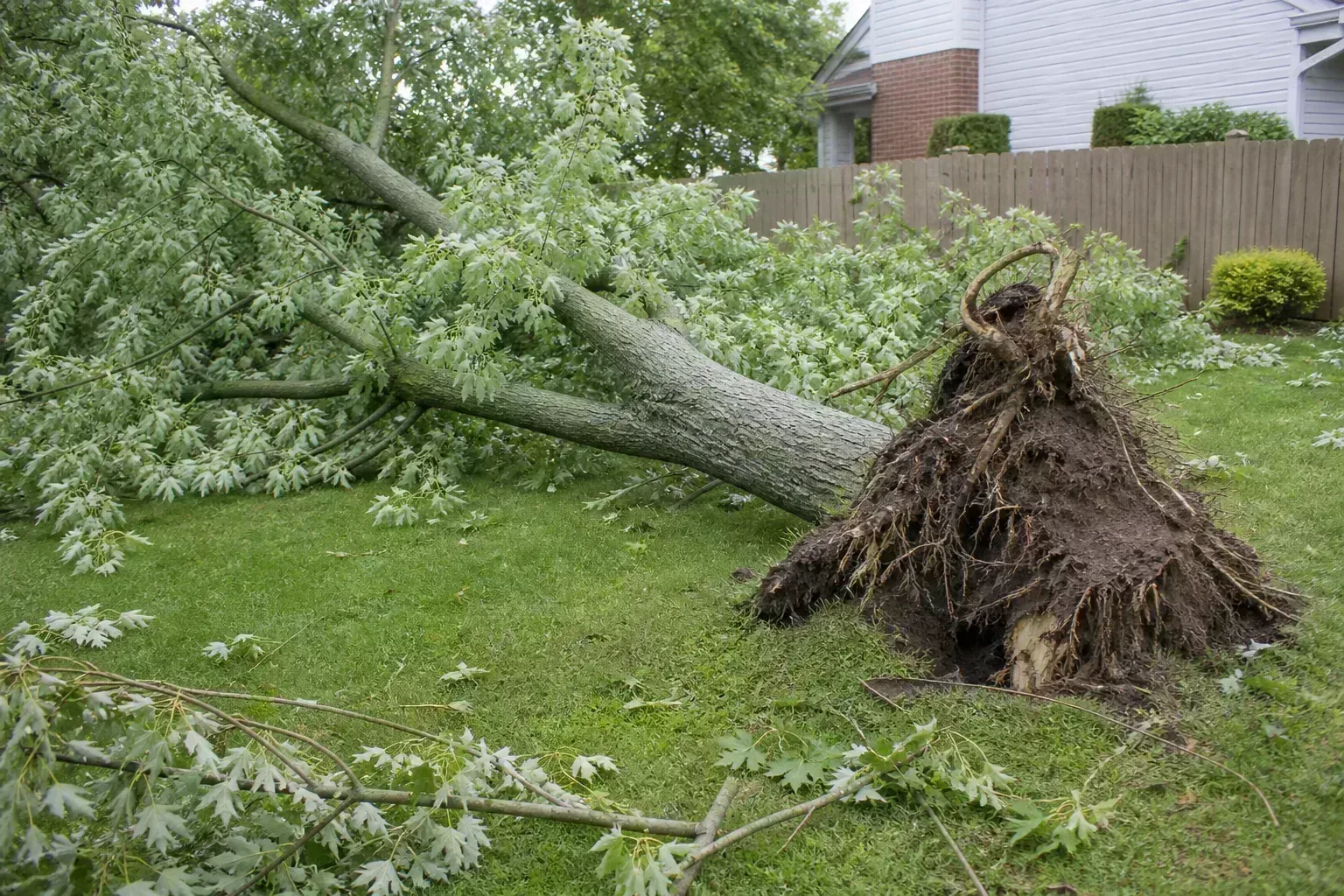
Many trees grow at an angle for years because they are reaching toward light, responding to a slope, or shaped by prevailing wind. An old, stable lean is not proof of death. A recent change is different: the trunk suddenly tilts after wind or saturated soil, the ground cracks or lifts on one side, or the root plate appears to have shifted.
These signs can indicate that anchoring roots have broken or pulled loose, even if leaves remain green. A crown that is suddenly lower, a fresh mound or gap at the base, or a new lean toward a home, road, or play area calls for immediate distance and a prompt call to a qualified arborist. Do not stand beneath the crown to take measurements, try to push the trunk upright, or dig around the roots.
Dry cambium on multiple small twigs
The cambium is a thin living layer under the bark that produces new growth. A tiny scrape on a small twig may reveal moist green tissue when that section is alive; dry, brown tissue suggests that particular twig or branch may be dead. A small twig check is most useful when compared across several parts of the canopy during the growing season.
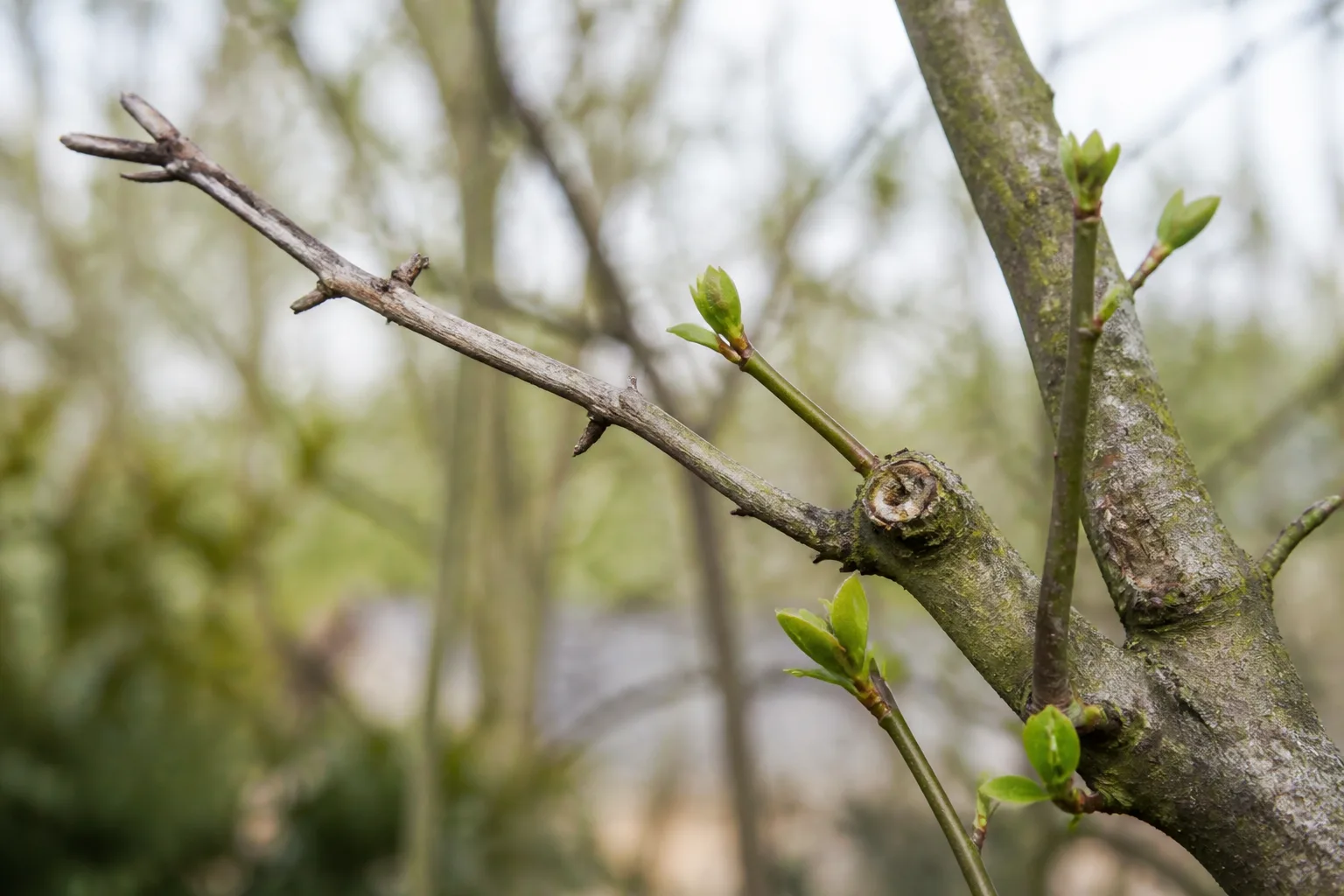
One green scrape does not prove the entire tree is healthy, and one brown scrape does not prove the whole tree is dead. The branch may be dead while the trunk and roots remain alive; in dormancy, color may also be muted. Avoid cutting into the trunk or large limbs. A bark scratch creates a wound, so take only a small sample on a reachable pencil-thin twig if needed, then stop when the evidence points toward a larger structural problem.
A safer homeowner check you can do from the ground
Start with the least invasive observations. Stand far enough back to see the entire crown, then look at the trunk base and the soil around it from more than one side. Record the date, recent weather, when nearby trees leafed out, visible construction or lawn damage, and where symptoms occur. Take photos from the same spots each time; change over time is often more informative than a one-day snapshot.
Avoid tests that create danger or damage: do not climb into the crown, walk beneath hanging limbs, cut a large branch, drill a hole, hammer around the trunk, or scrape a wide patch of bark. A mallet, probe, resistance drill, or sonic device may be part of an arborist’s assessment, but these tools require interpretation and are not a substitute for considering the whole tree and the site. The Alabama Cooperative Extension hazard-tree guide describes risk assessment as more than identifying a defect: professionals also consider the likelihood of failure and what could be hit.
Compare trees of the same species
Compare the suspect tree with nearby trees of the same species, similar size, and similar exposure. Differences in sunlight, soil moisture, pruning, age, and planting conditions can make a nearby comparison imperfect, so treat it as a baseline rather than a controlled test. A maple that leafs later than a birch may be normal; a maple that remains bare while other maples nearby open buds warrants follow-up.
If you do not know the species, take photos of leaves, buds, bark, and the overall form from a safe distance. An extension office or arborist may help identify it. Identification helps set expectations for leaf-out, natural bark shedding, evergreen needle drop, and typical growth habit—details a generic “dead tree” checklist cannot account for.
Inspect only reachable twigs and visible structure
If the canopy is bare in the normal growing period, examine two or three small twigs within easy reach on different sides of the tree. Look first for buds: plump, attached buds may be alive even before leaves appear, while dried or missing buds combined with brittle twigs are more concerning. If you make a tiny scrape, use a clean, sharp blade and expose only a narrow sliver of a pencil-thin twig; do not do this on the trunk.
Next, note the location of deadwood, cracks, cavities, conks, and any recent soil movement without touching or climbing to them. Photograph a visible defect with a safe scale nearby only if you can do so without approaching a suspended branch or unstable tree. These observations are not a risk rating; they give an arborist useful information about what changed and what area may need a closer look.
Read the combination, not one clue
Use this table to choose a next step, not to declare a tree dead from a distance. “Monitor” means document normal seasonal development and changes; it does not mean ignore an obvious structural defect.
| What you observe | What it may mean | Practical next step |
|---|---|---|
| Leafless in winter, firm buds, no recent damage | Normal dormancy is plausible | Recheck around the usual leaf-out period for that species and area |
| One or a few dead twigs, rest of crown vigorous | Local branch death or ordinary deadwood | Photograph and monitor; do not assume whole-tree death |
| Sparse crown, widespread dieback, and decline over time | Broad stress or disease is possible | Seek local diagnosis and review drought, drainage, soil disturbance, and pests |
| Trunk conk, cavity, major crack, or large dead limb above a target | Structural weakness may be present | Keep people clear and arrange a qualified arborist inspection |
| Fresh lean, lifted soil, or a split trunk after a storm | Root or trunk failure may be developing | Stay away; contact an arborist promptly, and call the utility if wires are involved |
The RHS lists late or sparse leafing, premature leaf fall, yellowing, and branch dieback as symptoms of decline, but the cause can be environmental or biological. That distinction changes what is useful: extra water may help a drought-stressed tree, but it will not restore a dead root system or repair a split trunk. Avoid blanket “tree revival” treatments until someone has identified the likely cause.
When possible death is an immediate hazard
Do not wait for a definitive mortality diagnosis if a part of the tree could strike people, a home, a driveway, or a place where people gather. Large dead limbs, a hanging or partly attached branch, a fresh trunk split, a leaning tree with newly disturbed soil, or a cavity combined with other defects deserves professional attention. Fine Gardening’s guide to warning signs in mature trees likewise treats cracks, mushrooms, hollows, deadwood, hangers, and tilting as reasons to seek an arborist’s assessment, not as stand-alone proof that a tree is dead.
If there are overhead power lines, stay well away and contact the utility; do not approach, prune, or move branches touching wires.
Risk depends on both a possible failure and a target—something that could be hit. Alabama Cooperative Extension and UF/IFAS Extension explain that tree-risk assessment considers structural condition, site conditions, and potential targets; a tree in an unused, remote corner does not present the same immediate exposure as the same tree over a bedroom or sidewalk. That does not make a remote tree indestructible, but it helps an arborist recommend a proportionate response.
If a fresh lean or crack appears during a storm, keep children and pets out of the area until it has been checked. Do not try to judge the fall direction from the trunk angle, because branch weight, root failure, and wind can change how a tree moves. For an actively failing tree that threatens people or blocks an emergency route, contact local emergency services as appropriate.
What an arborist can determine
An ISA Certified Arborist can inspect the crown, trunk, root flare, surrounding soil, and targets, then explain whether the concern is tree health, structural condition, or both. A visual assessment may be enough for some decisions; complex decay questions can require specialized tools. Colorado State University Extension notes that decay evaluation is challenging and belongs with a qualified professional, and Alabama Extension outlines levels of assessment from a limited visual screen to more detailed or advanced evaluation. Virginia Cooperative Extension’s Tree Steward guide also separates likelihood of failure from the chance and consequence of hitting a target.
Ask the arborist to identify the observed defect, explain what is known and uncertain, and distinguish mitigation from removal. Depending on the tree, site, and defect, options can include monitoring, correcting a site stress, pruning a specific dead limb, restricting access, or removal. If someone recommends immediate removal, ask how the defect and target exposure support that conclusion; if the tree is over a structure and visibly unstable, do not delay necessary precautions while collecting a second opinion.
UF/IFAS Extension explains that an apparently green tree may still have internal decay, and that a hollow does not by itself show how much load-bearing strength remains. The same article cautions that filling a cavity does not restore lost structure. For a professional, the useful question is not simply “Is there rot?” but “Where is it, how does it affect the tree part that could fail, what could be hit, and what mitigation is reasonable?”
To find a qualified professional in the United States, use the International Society of Arboriculture’s arborist directory. Ask whether the person who will assess the tree holds the relevant credential, whether the visit includes the whole tree and site, and whether you will receive written findings. Be wary of a diagnosis made from a photo alone or a sales pitch that calls for topping; tree topping is not a reliable repair for decay or instability.
When a standing dead tree can stay
A dead tree does not always need to be removed immediately. If it is well away from homes, paths, play areas, vehicles, and neighboring property, it may be possible to leave it as a standing deadwood habitat, often called a snag. Dead trees can provide food and shelter for wildlife, but they also decay and can shed limbs or fall, so the decision depends on location, species, size, condition, and access.
If you want to retain habitat near a frequently used space, ask an arborist whether the tree can be reduced to a shorter, stable snag or whether a safer portion can remain. Do not attempt to create one yourself by cutting an elevated trunk or dropping a tree. Check local ordinances, utility rules, and any applicable disease-control or conservation requirements before deciding; rules differ by location.
Alabama Cooperative Extension notes that a dead tree that poses no danger may be retained as a wildlife snag. That is a deliberate management choice, not an argument for leaving a hazardous tree over a target. The same visual signs that help diagnose decline should prompt a separate question: if this part fails, who or what is in its path?
Misreads that lead to unnecessary cutting
Calling a tree dead because it is leafless in winter. Seasonal dormancy is expected for deciduous species. Wait for the normal local leaf-out window and compare with the same species, unless a structural warning sign requires immediate help.
Treating one dead limb as proof the whole tree is dead. A tree can have living roots, trunk, and most of its canopy while one limb dies. But large deadwood can still fall, so separate the health question from the hazard question.
Assuming mushrooms prove root death—or mean nothing. Fungi may use a dead stump, dead root, wounded area, or living wood. Their location and type matter, and a fruiting body on the trunk or root flare should be recorded and reviewed rather than scraped away.
Trusting one scratch test. Green tissue proves that a small patch is alive; it does not establish that the tree is vigorous or safe. Brown tissue on one twig may describe that twig alone. A repeated pattern across the crown is more meaningful, but a professional assessment is still the right call for a large tree near targets.
Assuming a hollow or peeling trunk is a death sentence. Trees can continue to grow around internal decay, and some bark naturally exfoliates. Neither condition guarantees safety; neither alone proves the tree has died. Avoid cutting, filling, or sealing a cavity before a qualified person has evaluated it.
Conclusion
To tell whether a tree is dead, begin with its species and season, then look for a pattern: a canopy that fails to emerge when comparable trees do, dry twigs throughout, major bark injury, decay indicators, or a recent lean with root-zone movement. A small twig scrape can show whether that spot is alive, but it cannot certify the whole tree’s health or stability.
If the tree is declining without an immediate hazard, document the symptoms and seek a local diagnosis before applying treatments or arranging removal. If a crack, cavity, hanging limb, or fresh root movement places people or property at risk, keep the area clear and contact a qualified arborist promptly. Some low-risk dead trees can remain as wildlife habitat; the right decision depends on both condition and what lies within reach of a failure.