How to Grow and Care for Jicama
Grow jicama in a bed or large pot with practical advice on seed starting, soil, water, vines, harvest timing, storage, and poisonous aboveground parts.
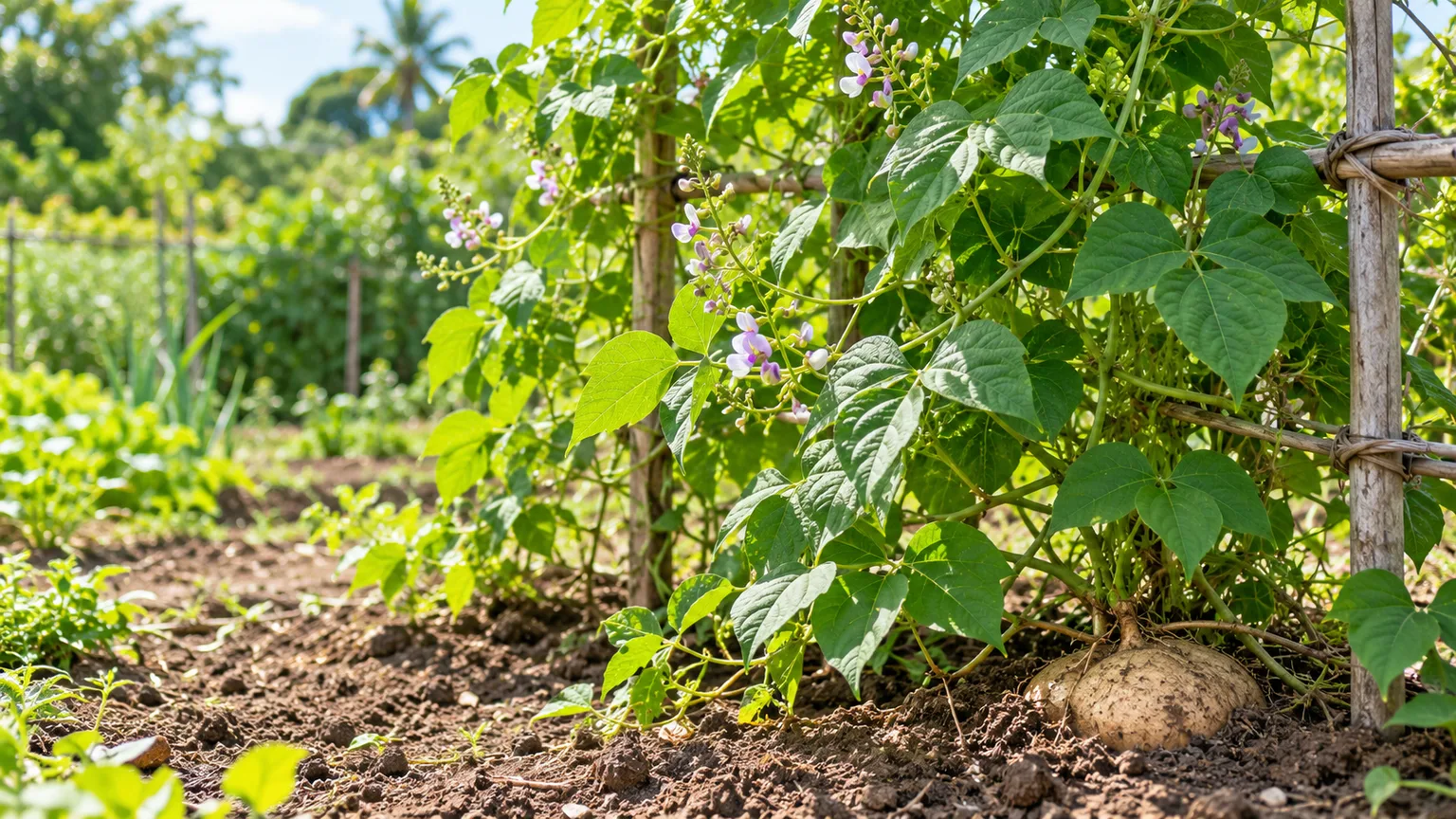
Jicama (Pachyrhizus erosus) is a warm-season climbing legume grown for its crisp underground root. The vine is often straightforward to keep alive; getting a useful root harvest is harder because the crop needs warmth, loose soil, time, and the right day-length sequence. If you plan around those constraints before sowing, you can judge whether your garden can produce roots or whether jicama is better treated as an experiment.
The edible portion is the peeled root. Treat the leaves, stems, flowers, pods, and seeds as inedible and potentially toxic; Cleveland Clinic notes that jicama vines and seed-bearing beans contain rotenone, which can harm people if swallowed in sufficient amounts, and garden guidance cautions against eating the other aboveground parts. Keep the plant and any seed pods away from children and pets. Cleveland Clinic Bonnie Plants
Start with the season, not just the seed packet
Before buying seed, compare your frost-free window with the crop’s likely time to harvest. Jicama is sensitive to cold and takes months rather than weeks to form a substantial root. Garden guides commonly describe a six-to-nine-month crop, while one grower guide uses about 150 days as a practical benchmark; neither number is a promise for every cultivar or latitude. Homes & Gardens Bonnie Plants
The reason estimates vary is more than inconsistent seed packets. In a sowing-date study of yam bean, researchers found that plants grown through short-day conditions completed a cycle in about five months, while plants that first built foliage under long days could take eight to nine months before the roots matured. Zinsou and Venthou-Dumaine These are results from particular growing conditions, not a calendar to copy directly, but they show why planting date and local day length matter as much as the number printed beside a cultivar.
Use a simple go/no-go test: can you set plants out after frost, give them a long stretch of warm weather to build a vine, and still keep them protected while roots bulk later in the season? If the answer is no, start a small trial rather than devoting an entire bed. A warm greenhouse can protect foliage from cold, but it does not automatically change natural day length; extra heat alone cannot guarantee early tubers.
Choose a sunny site with loose, draining soil
Give jicama the sunniest practical part of the vegetable garden, with enough open ground for roots and enough vertical or horizontal room for a long vine. Full sun supports vigorous foliage, while a nearby fence, arch, or trellis helps keep the plant from smothering lower crops. Avoid a narrow corner where the vine will have to be cut back repeatedly just to reach a path.
Root shape and harvest effort depend on what lies below the crown. A loose sandy loam or friable raised bed lets the root swell and makes it easier to lift without slicing it; dense clay, buried rubble, and compacted paths can cause misshapen roots or turn harvest into excavation. If your native soil stays sticky after rain, loosen a broad bed and mix in mature compost to improve structure, or use a raised bed rather than planting into an isolated pocket of amended soil.
Prioritize drainage over a precise pH target unless a soil test identifies a correction. Jicama needs consistent moisture, but saturated soil reduces oxygen around the roots and raises the risk of rot. Keep the bed free of perennial weeds before planting, since frequent deep hoeing later can cut the developing crop.
Start seeds early without letting roots stall
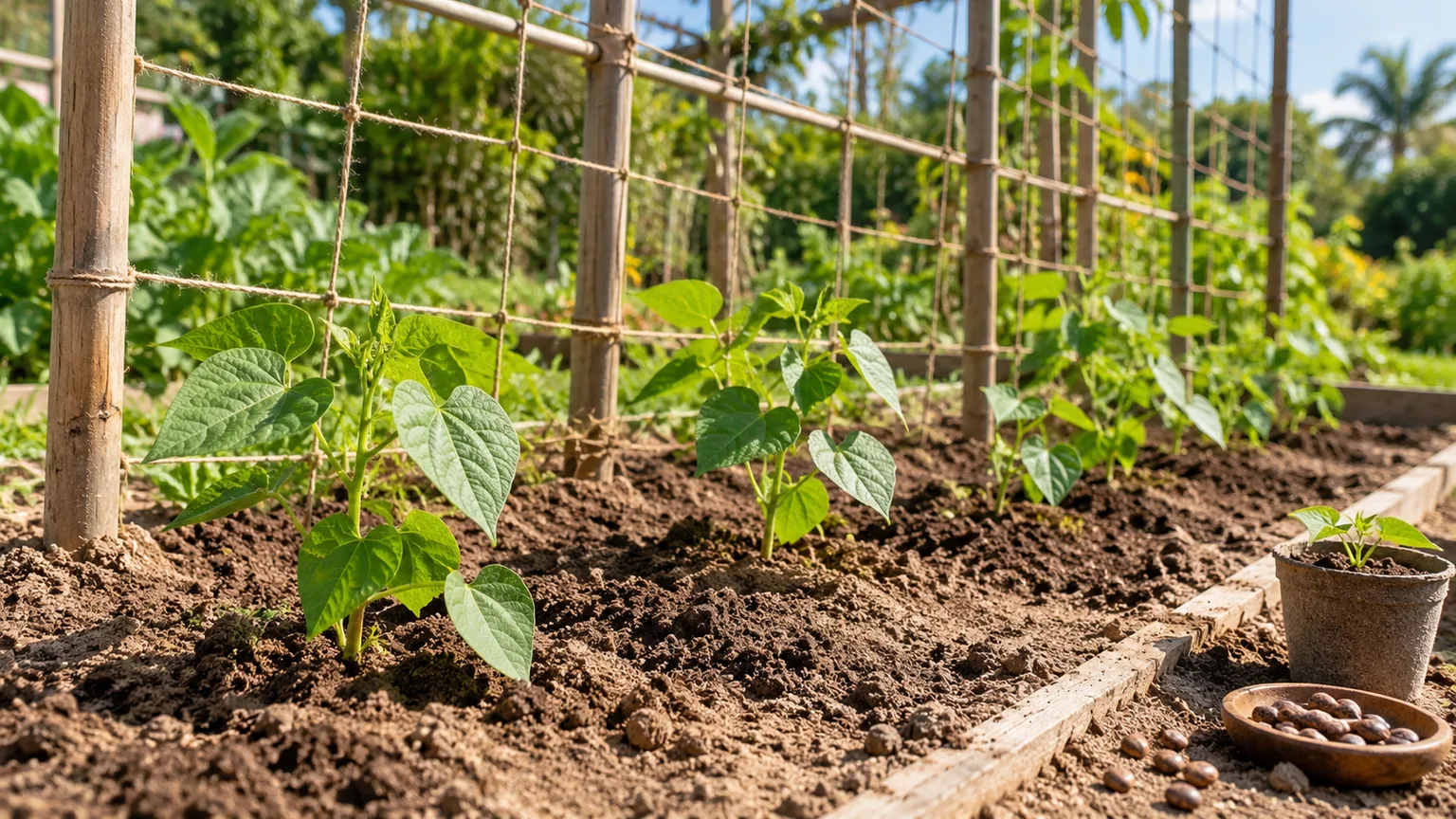
In cooler regions, sow indoors about eight to ten weeks before the expected last spring frost, then transplant only after frost risk has passed and the soil has warmed. That head start matters because seedlings planted late can enter the long-day vegetative phase with too little time to establish before autumn conditions arrive. In frost-free tropical or subtropical places, direct sowing after the soil is warm can be simpler. Homes & Gardens Gardening Channel
Use individual cells or pots with drainage rather than a shared flat. Jicama seedlings develop a strong root system, so a deep pot and an early transplant reduce the chance of tangled, bent roots. Sow according to the seed packet’s depth; keep the mix evenly moist and warm, not waterlogged, and provide bright light as soon as seedlings emerge so they do not stretch.
Some growers soak the large seeds overnight to soften the seed coat, but check the supplier’s directions and use fresh, viable seed rather than leaving it in water for days. If germination is uneven, sow a few extra seeds in separate cells and keep the strongest seedling from each group. Crowding several seedlings together and separating them later creates unnecessary root disturbance.
Transplant carefully and give the crop room
Harden seedlings outdoors over about a week, beginning with a short period in bright shade and gradually increasing sun and exposure. Transplant on a mild, calm day after the soil is warm and the forecast shows no frost. Water the pots beforehand, slide out the root ball intact, and avoid teasing or pulling on the main root.
Set each plant at approximately the depth it grew in its pot and space plants about 12 to 18 inches apart as a starting point. A tighter spacing can work where the vines will be trained vertically, but crowded foliage is harder to inspect and can shade neighboring vegetables. Give the row enough aisle width for a trellis and for a late-season test dig; the crop needs access at harvest, not only space on planting day. Bonnie Plants Homes & Gardens
If you direct sow, wait until nights are reliably mild, sow into prepared soil at the packet depth, and thin rather than pulling out extra seedlings. Keep the strongest plant in each position and cut unwanted seedlings at soil level. Pulling them can tug at the roots of the keeper plant just as it is establishing.
Decide how to manage the long climbing vine
Jicama is a climber, not a compact root vegetable with a few leaves above the soil. Its vines can reach roughly 15 feet or longer in favorable conditions, so plan where they will go before they begin to weave through neighboring crops. Bonnie Plants Homes & Gardens
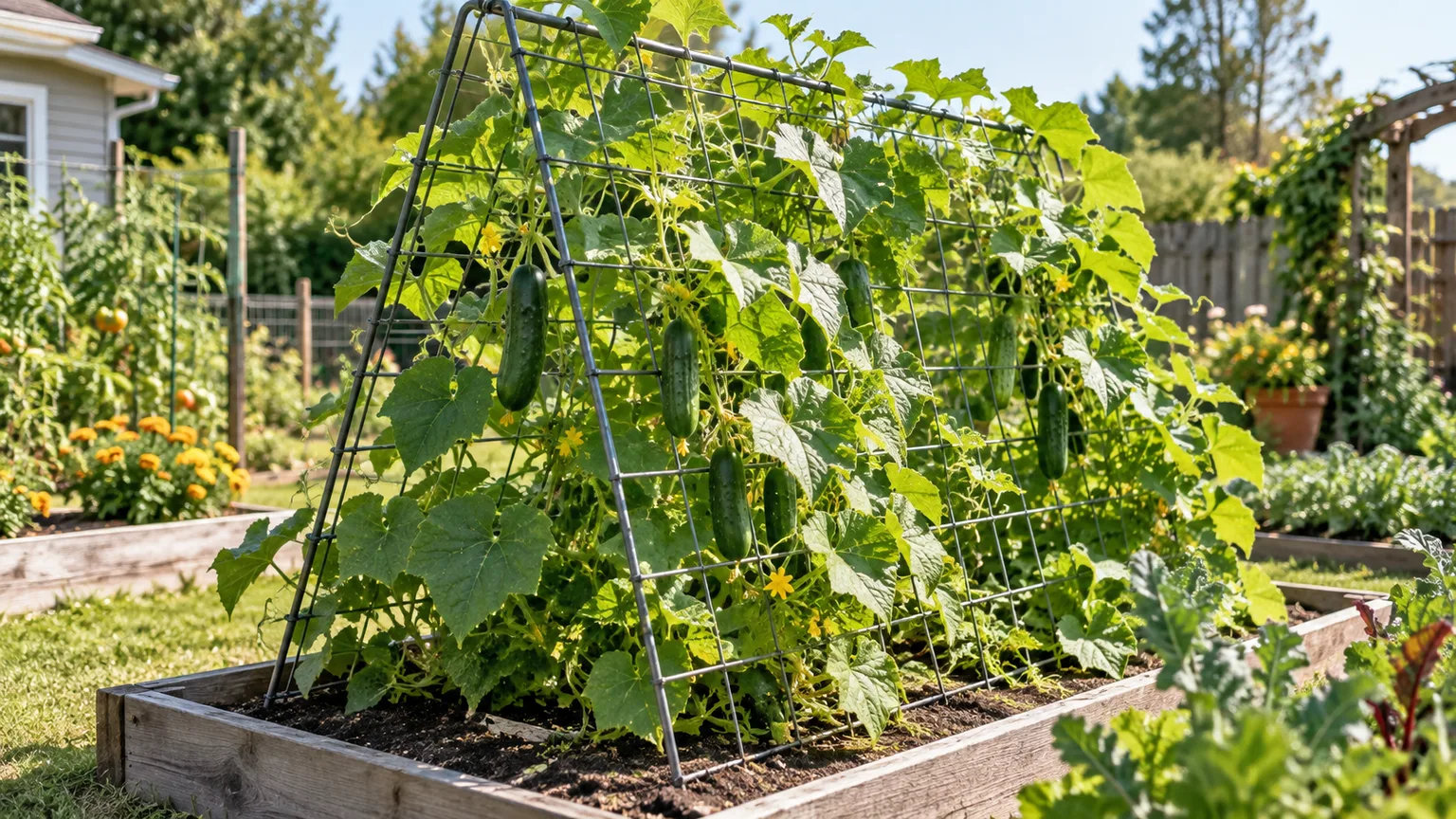
A strong trellis, fence, or garden arch is useful when bed space is limited and when you want airflow under dense foliage. Anchor it before planting; a lightweight support can lean or collapse once a vigorous vine covers it. Guide young stems gently toward the support and use soft ties only when needed, leaving room for the stem to thicken.
Letting the vine run over a mulched bed is a reasonable alternative if you have space and can keep the crop accessible. A ground-running vine is less exposed to wind and may be easier to protect from cold than a tall trellis, but it can hide weeds and make it difficult to find the crown when harvesting. Choose one system and keep a visible marker at each plant base.
Understand why day length controls root growth
Jicama’s crop clock is tied to changing day length. Research on yam bean found that short-day conditions induce flowering and tuberization, while a long vegetative period can delay root bulking until after the plant has built a large canopy. Zinsou and Venthou-Dumaine This is why an impressive vine is not proof that the underground crop is ready.
For a home gardener in a temperate region, the practical sequence is to start early enough for the vine to establish during warm weather, then keep it healthy as days shorten. A north–south difference matters: a sowing date that gives a good root crop in one region may produce mostly foliage in another. Published advice also varies on total time to harvest, and research on root development records different maturity stages across several months, rather than one universal “ready” date. Polysaccharides of Nutritional Interest in Jicama
Do not read the often repeated “nine-hour day” as a precise switch that guarantees a root. The study above supports a short-day response, but its observed cycles depend on the tested planting dates and location. Treat the falling day length as one signal in a larger plan that includes warm soil, healthy leaves, and enough frost-free time.
Water consistently and fertilize conservatively
Aim for soil that stays evenly moist but drains between waterings. Check beneath the surface mulch every few days in hot or windy weather; if the upper inch or two has dried and the soil below is only slightly damp, water deeply at the base. A short sprinkle that wets only the surface encourages shallow roots, while repeated saturation can suffocate roots or promote rot.
Mulch lightly after the soil has warmed to slow evaporation and reduce weeds, keeping mulch away from the stem base. Containers dry faster than garden beds, so check them more often rather than following a fixed weekly amount. Rainfall, heat, wind, soil texture, and pot size all change how frequently you need to water. Homes & Gardens
Start with a soil test and a modest layer of finished compost rather than a high-nitrogen feeding schedule. Jicama is a legume, but that does not mean every garden soil supplies all the nutrients the crop needs; fertilizer should respond to soil conditions. If growth is pale or slow after the plant is established, check moisture, drainage, root disturbance, and sun exposure before adding fertilizer. Avoid heavy nitrogen applications that push leafy growth when the crop already has vigorous vines.
Grow jicama in a container only when root space is adequate
A container can isolate jicama from children or pets, give a gardener control over heavy soil, and keep the vine on a patio trellis. It does not make a short season longer, and the pot still needs enough depth and volume for an enlarging root. Some published home-garden guidance suggests pots around 12 to 16 inches wide; for a crop grown specifically for roots, a substantially larger, deep container is a safer rule of thumb than the smallest workable pot. Homes & Gardens
Choose one plant for a large pot with several drainage holes and a loose, fertile potting mix. A deep grow bag or tub at least about 18 inches across gives more usable soil volume and room to test-dig; that dimension is a practical starting point, not a measured guarantee of yield. More soil also buffers moisture swings, while a small pot heats and dries rapidly and can restrict root expansion.
Set the pot near its permanent support before the vine grows through other plants. Water when the mix begins to dry below the surface, letting excess drain freely; never leave the pot standing in a saucer of water. If your only option is a small decorative pot, grow jicama as a foliage experiment and do not count on a large edible root.
Treat flowers as a safety and seed-set decision
Jicama may flower as the season changes, and those flowers can develop into pods with seeds. The guidance to pinch flowers is common in home-garden articles, but a simple claim that removing every bloom will reliably produce a bigger root is stronger than the available home-growing evidence. The plant’s day-length response and the length of its warm growing period are more important to understand first.
If you do not need seed, pinch accessible flowers before pods form, mainly to reduce the chance of toxic seeds developing or dropping where children or pets could reach them. Do not use chemical flower-removal products on a food crop. Flowering should prompt you to review the calendar and protect the crop from cold, not to assume that a few snips can correct a late sowing or unsuitable day-length cycle.
Prevent problems before reaching for sprays
Inspect leaves and growing tips weekly, especially beneath the canopy, but do not assume the plant is pest-proof. Jicama’s natural compounds can deter some pests, yet aphids, chewing insects, and leaf damage can still occur. First identify what is present; a few holes on an otherwise vigorous vine do not justify treating an entire crop.
For a small aphid cluster, rinse the foliage or remove badly infested tips and monitor new growth. Keep water at the soil line when possible, space plants for airflow, and correct poor drainage before blaming a fungus for yellowing or collapse. If a disease or insect problem spreads, identify it before choosing a treatment and follow the label for any product used around edible crops.
Avoid home pesticide recipes made from jicama leaves, stems, seeds, or pods. Rotenone-containing plant parts are not safe substitutes for garden spray, and homemade extracts offer no dependable way to control dose or exposure. Handle plant material so it cannot be eaten by people or pets, and dispose of it under local yard-waste rules.
Adjust the plan for a short or cool season
In a cold-winter climate, jicama is a warm-season annual, not a crop to leave outdoors through frost. Start seeds indoors to gain early growth, choose the warmest sunny bed, use black plastic or another safe soil-warming method only if appropriate for your garden, and consider a greenhouse or low tunnel to protect foliage at the beginning and end of the season. Covering plants may extend the warm period, but it will not turn a short summer into a guaranteed root crop.
In regions with very hot summers, avoid transplanting tiny seedlings into dry, exposed soil without an establishment plan. Water the root zone well, use temporary light shade during an exceptional heat wave if leaves wilt despite moist soil, and remove the shade once plants recover. Heat helps this tropical crop, but scorching sun, dry soil, and transplant shock can still stall a young vine.
Use your local calendar rather than USDA hardiness zone alone. Hardiness zones describe winter lows for perennial plants; for a frost-sensitive annual with day-length-sensitive tuber formation, the useful questions are how soon the soil warms, how long frost-free weather lasts, and when autumn cooling arrives. In marginal regions, grow a few plants and record sowing, transplant, flowering, and harvest dates so next season’s decision uses your own evidence.
Troubleshoot a vigorous vine with disappointing roots
When the top grows well but the root stays small, check the season before changing fertilizer. Jicama may have spent its early growth under long days, may have been planted late, or may simply need more time after day length begins to shorten. Digging early because the vine looks mature can sacrifice a root that has not yet bulked.
No tuber or a very late tuber
First check whether the plant had enough warm growing time before autumn. Then consider whether the plant was shaded, transplanted with a damaged root, or kept in waterlogged soil. If the foliage is still healthy and frost is not near, keep moisture steady and wait; there is no safe foliar product that can force a tuber on demand.
If cold weather is approaching, protect the vine when conditions allow and test-dig one plant rather than disturbing the entire bed. A small root is useful information: the remaining crop may gain from additional warm days, but forecast risk should decide whether to wait. If frost is imminent, harvest what has formed rather than gambling the whole crop on another week.
Small, forked, or woody roots
Forked roots often point to obstacles, compacted ground, stones, or root injury early in the season. Prepare a broad, stone-free bed and use individual seedling pots next time, since loosening soil only in a tiny planting hole does not remove a hard layer below it. A misshapen root can still be usable after trimming if it is firm and sound.
Small roots may reflect a short season, shade, crowding, dry spells, or insufficient root room rather than a single nutrient deficiency. Oversized roots can also become fibrous or less crisp, so “bigger” is not always a better harvest goal. Dig a test root at the expected maturity stage and decide based on texture and condition instead of waiting for every root to reach a particular diameter.
Harvest carefully before cold weather
Use the seed-packet maturity range and your local calendar as a starting estimate, then adjust for how the crop actually grew. A dying vine can signal that the season is ending, but it can also reflect cold, drought, or root disease, so do not use foliage decline as the only harvest test. If you are unsure, test-dig one plant near the outer edge of the bed.
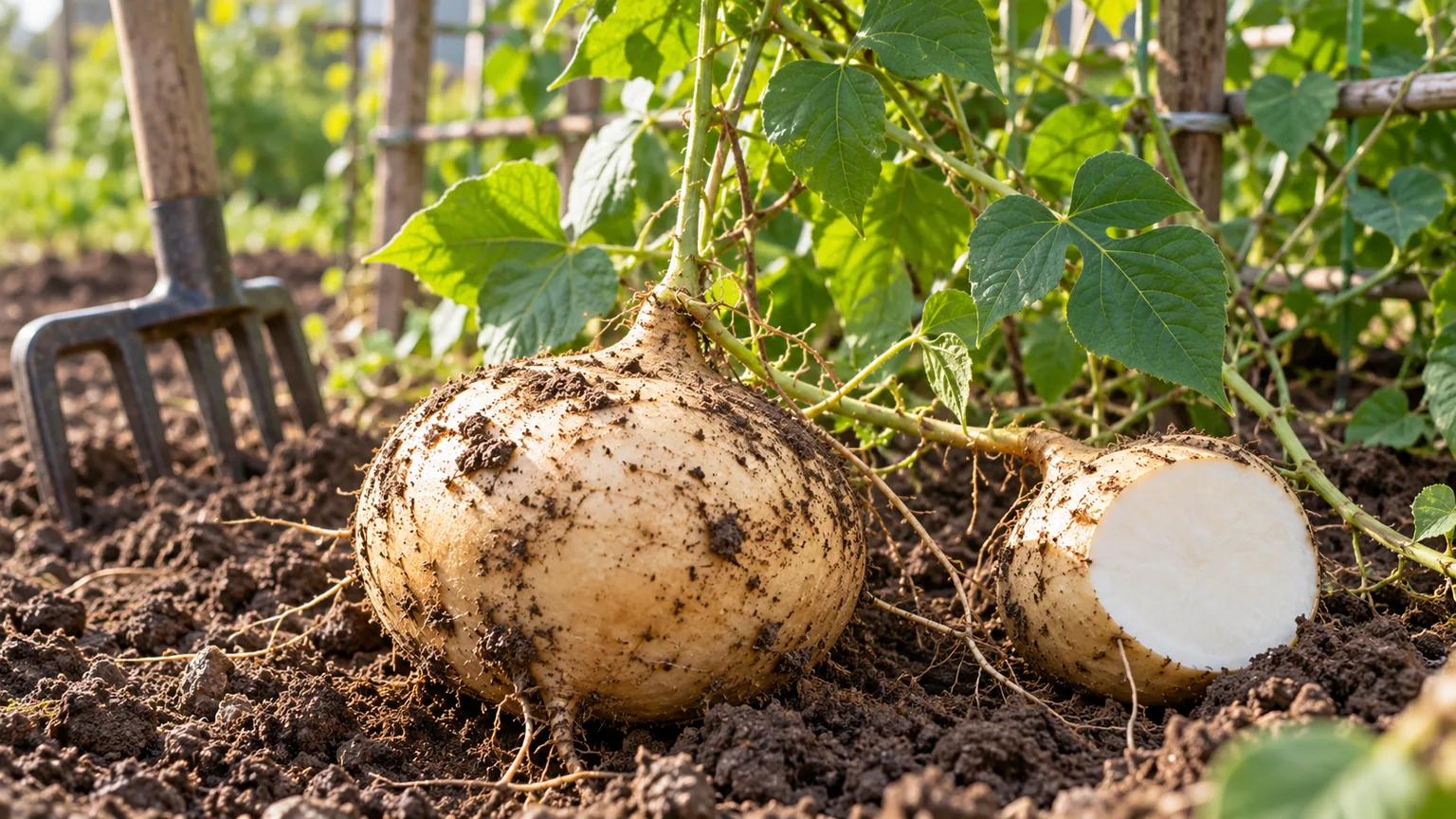
Loosen the soil in a wide circle around the crown with a garden fork, keeping the tines away from the likely root. Lift the root ball gently from below instead of pulling hard on the vine, which can snap the stem and leave the tuber buried. Brush off loose soil and inspect the root for cuts, softness, or rot before bringing it indoors.
Harvest before frost damages the plant and root, especially in regions where the crop is unlikely to keep growing after a cold night. If roots are still small but the first frost is close, a light cover may buy limited time, but it cannot guarantee protection from a hard freeze. Record the size and texture of the test root so you can choose whether to wait or harvest the rest.
Store the root and keep the plant parts separate
Keep freshly dug roots dry and out of direct sun. University of Georgia’s National Center for Home Food Preservation recommends cool storage around 55 to 59°F for the best keeping quality; cold household refrigerators may be colder than that and can damage jicama over time. If you do not have a suitably cool storage area, use the root sooner and check it frequently for soft spots or decay. National Center for Home Food Preservation
When preparing jicama, wash the root, peel away the brown skin and any fibrous layer beneath it, and use only the clean inner flesh. The vine, leaves, flowers, pods, and seeds are not edible, and the pods should never be left where a child or pet can chew them. Cleveland Clinic National Center for Home Food Preservation Wash tools and work surfaces after harvest, and do not treat the plant’s poisonous parts as food scraps for animals.
A sound, uncut root stores better than a bruised one, so handle it gently during digging and cleaning. Store it in a dry, cool, dark place with some airflow rather than sealing a damp root in plastic. If you are saving seed for another year, keep seed pods entirely separate from kitchen produce and clearly label them as poisonous planting material.
Conclusion
Jicama rewards gardeners who plan for its biology instead of expecting a quick root crop. Start with fresh seed and a long warm window, give the plant loose soil and room for its vine, keep moisture steady, and remember that shortening days help determine when root bulking begins.
A protected bed or a large container can make the crop possible in a marginal climate, but neither guarantees a harvest before frost. Test-dig one plant, store the peeled-root crop correctly, and keep every aboveground part and seed pod away from people and pets. If the season proves too short, that first small trial will tell you whether to sow earlier, improve root conditions, or choose another crop next year.