How to Grow Flax Plants for Flowers, Seeds, or Fiber
Learn how to grow flax plants from seed, choose a sowing window, care for the stand, and harvest capsules or stems for seed, flowers, or fiber at home.
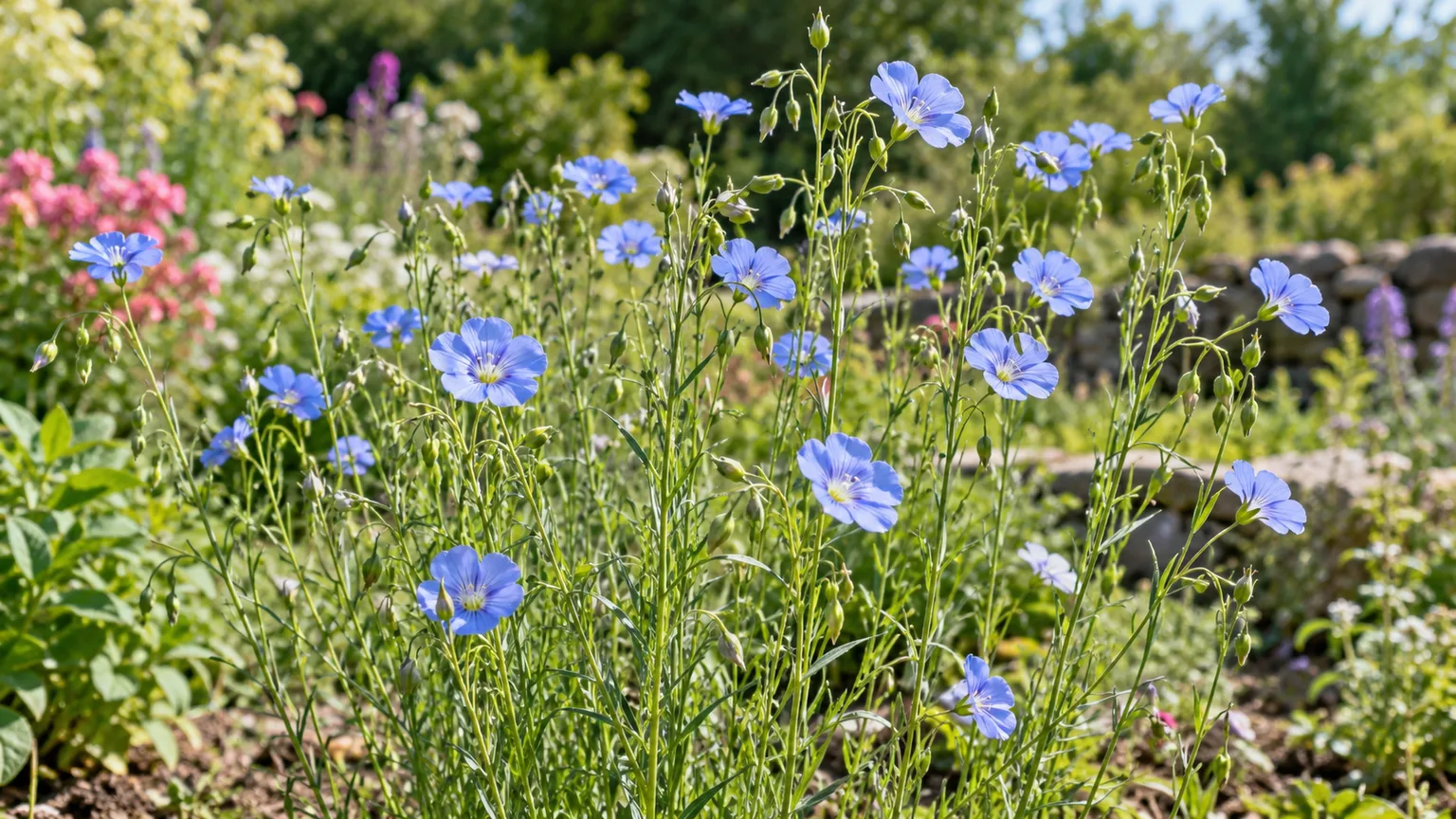
Common flax is an annual that can give you delicate blue flowers, usable seed, or stems for fiber, but those goals do not call for exactly the same planting. A patch grown for a loose garden display can be thinly scattered and enjoyed in bloom; a stand grown for straight fiber stems is intentionally crowded; a seed crop needs enough time to form and dry its capsules before fall weather. Decide what you want first, then sow Linum usitatissimum in a sunny, well-drained place and keep the seedbed evenly moist while it establishes.
The name matters. Common flax or linseed is Linum usitatissimum, an annual crop in the family Linaceae. It is not flax lily (Dianella), and it is not the same plant as perennial blue flax (Linum perenne). The Royal Horticultural Society’s common-flax profile identifies the accepted species; check the botanical name on a packet if you want seed or fiber from common flax rather than a different ornamental plant.
Decide What You Want From Flax
Flax has a rare advantage in the garden: the same annual can play an ornamental and a useful-crop role. The trade-off is that cultivar choice and harvest timing affect what you get. Breeders and growers select some forms for seed production and others for long, fine stems, and a general packet of ornamental flax may not be the best choice for either a large seed yield or textile processing. A review of flax production describes the crop’s main uses as fiber and seed, while experienced grower Flaxland distinguishes shorter seed-oriented linseed from taller fiber types (review in Plants; Flaxland’s growing guide).
For a flower patch, choose a packet that names L. usitatissimum and gives a mature height and color you like. For seed, buy viable seed sold for planting, ideally a named food or oil type, and let the capsules mature fully. For linen fiber, source a variety specifically intended for fiber; growing a random handful of flax seed may produce plants, but it does not guarantee long, uniform stems suited to spinning. A small home patch is still worthwhile as an experiment, but fiber processing is a separate project after the plants are grown.
Common flax is not an evergreen perennial that survives winter and returns as the same plant. It completes its life cycle in one growing season; volunteers the following year come from seed that fell and germinated. That distinction helps set expectations: if you want a predictable display, collect or remove the capsules; if you want a self-renewing patch, leave a portion to dry and shed seed.
When to Sow Flax
Sow flax during a cool part of the growing season, when the soil is workable and no longer saturated. In many temperate gardens, that means spring; in places with mild winters and scorching summers, an autumn or winter sowing may be more practical if the crop has enough mild weather to establish and finish. Treat the seed packet’s maturity estimate as a planning aid, not a guarantee, because cultivar and local temperatures shift flowering and seed ripening.
Use a Spring Window, Not a Fixed Date
Do not use a hardiness-zone number as a planting calendar for this annual. Instead, check three things: whether the bed crumbles rather than smears when handled, whether the forecast offers a stretch of mild weather, and whether there is enough season left for the harvest you want. If your goal is flowers, a stand can still be valuable when a late sowing will not finish seed; if your goal is seed, count backward from the likely onset of prolonged summer heat or fall frost and use the packet’s days-to-maturity range.
Guides disagree on how early to sow because seedling tolerance, regional climate, soil moisture, and the chosen variety differ. Some home-growing advice suggests sowing several weeks before the last frost, while other practical guides recommend waiting until cold, wet soil has warmed. A two-year field study in Greece likewise shows why crop timings are location-dependent: the researchers’ sowing and harvest dates were specific to their climate and experimental conditions, not universal home-garden dates (field study in Plants). For a first planting, a small early-spring row plus a later backup sowing is safer than putting all your seed into cold, waterlogged ground.
Choose a Sunny, Drained Site
Give common flax an open position with full sun for most of the day. Shade tends to make a stand lanky and less floriferous, while a crowded neighboring plant can shade flax just as effectively as a tree. Pick a place where rain can drain away and where you can keep new seedlings visible for weeding; flax is easy to mistake for a fine grass when it is small.
A sandy loam or ordinary garden loam that drains freely is a dependable starting point. If water remains pooled after rain, fix the drainage or choose a raised bed rather than trying to water around a soggy root zone. If the soil surface crusts, rake it lightly before sowing and keep the top layer from drying until emergence. For pots, use fresh potting mix and unobstructed drainage holes, not dense garden soil.
How Fertile Should the Soil Be?
Flax does not need a heavily enriched bed. If your soil is poor or compacted, incorporate a modest amount of finished compost into the top layer before sowing; if the bed is already productive, skip the extra amendment. Too much readily available nitrogen can encourage soft, leafy growth and taller stems that are more likely to lean, especially when plants are shaded or wet. A soil test is a better reason to adjust pH or nutrients than a generic recipe, and there is no need to lime or acidify a bed just because flax is being planted.
The difference between “fertile enough” and “overfed” is useful here. Fiber flax is often grown at high density in fields, while a home border has different soil, spacing, and expectations. Do not apply a commercial fertilizer rate from a research trial or crop guide to a small garden patch. Epic Gardening’s growing guide describes common flax as suited to a well-drained bed and notes that mature plants need little routine fertilizer (Epic Gardening’s flax growing guide); use compost as a light preparation, not a reason to keep feeding all season.
Sow Flax Outdoors for an Even Stand
Direct sowing is usually easier than raising transplants because the small seedlings have delicate roots and quickly become awkward to move. Prepare the bed by removing large weeds, loosening the surface, and raking it level. Break up clods so seeds land at a consistent depth; tiny seeds buried too deeply or washed into a furrow can emerge in patches.
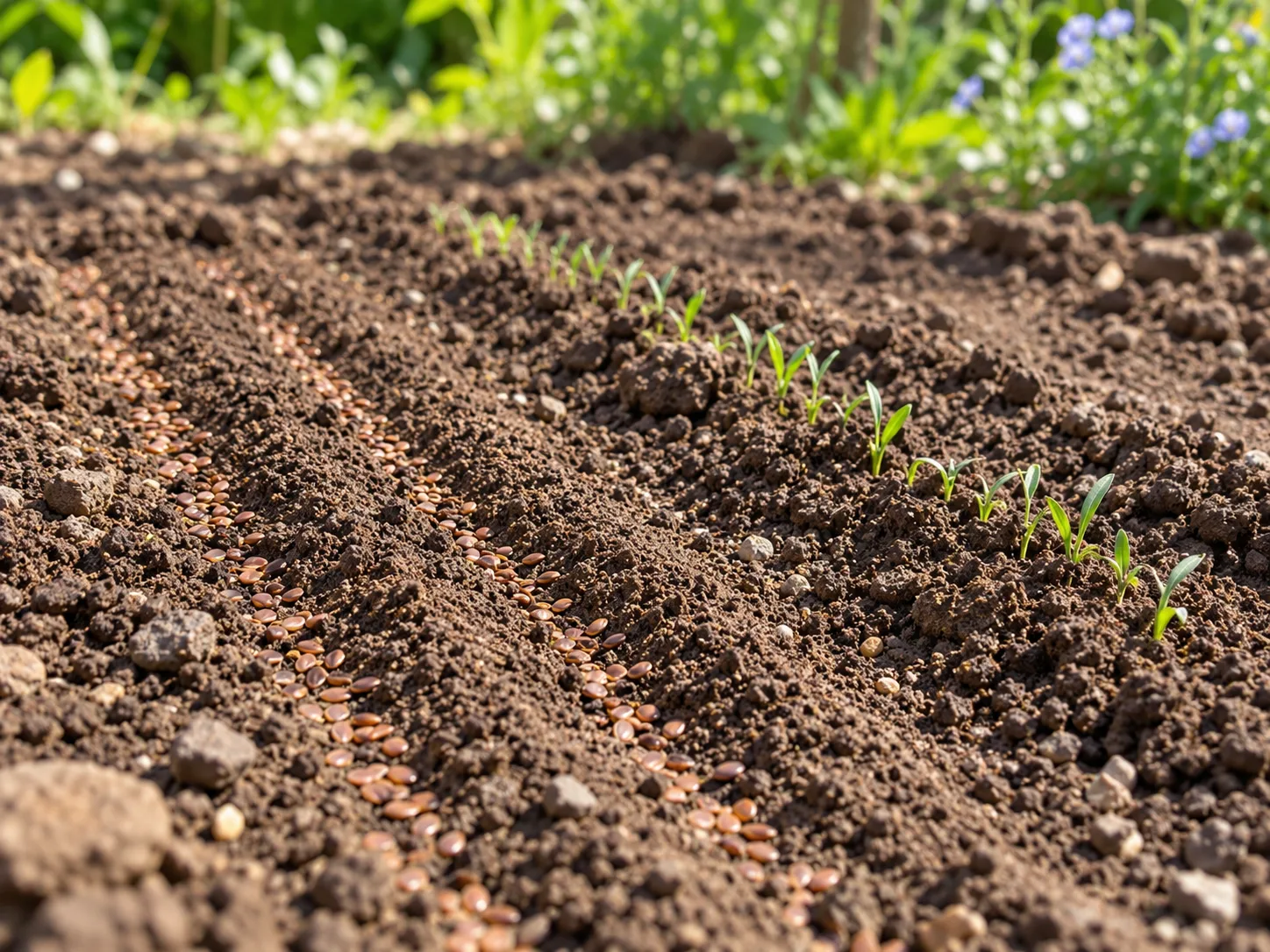
Sow dry seed over the bed or in shallow rows, then cover it lightly with fine soil or compost. Press the surface gently so seed contacts the soil, and water with a soft spray rather than a forceful stream. Keep the top layer damp—but not puddled—until seedlings appear. Flax seed produces a mucilage when wet, so soaking can make it sticky and difficult to scatter evenly; dry seed is easier to distribute before watering.
Broadcast a Flower Patch
For an informal drift, scatter seed in two passes: first lengthwise, then across the same area. That crisscross approach reduces bare spots without requiring you to count every seed. A light dusting of fine compost helps you see where you have already sown, but do not bury the seed under a thick mulch. A small plot can be sown at the rate on the packet; if no rate is supplied, begin conservatively, since overcrowding makes it harder to weed and can produce weak, tangled stems.
After germination, look for thin clusters and seedlings that are pressed tightly together. Remove the weakest extras by snipping at soil level rather than tugging near the plants you are keeping. The final spacing depends on the variety and purpose: a decorative patch can remain fairly close for a soft, meadow-like effect, while plants intended for seed benefit from room for air and access to drying capsules. For long, straight fiber stems, deliberate dense sowing is common, but use guidance supplied for the fiber variety rather than assuming that any dense seeding rate will work in a garden.
The textile artist and home grower Amanda Haran’s guide to sowing flax at home emphasizes clearing established weeds, making an even scatter, and pressing seed into a lightly prepared surface. Those practical steps are especially useful in a small patch, where a perfectly tilled field is neither possible nor necessary.
Plant Rows for Easier Weeding or Seed Harvest
Rows make sense if you want to distinguish seedlings from weeds, check for pests, or harvest capsules without stepping into the stand. Mark shallow furrows, sow thinly, and cover with about ¼ inch of loose soil; follow the packet if it specifies another depth. Leave enough room between rows to reach in comfortably. Once the seedlings are a few inches tall, thin dense patches so air moves through the foliage and stems do not lean over one another.
Do not pull all the extra seedlings at once if you are uncertain about emergence. Wait until the stand is established, then thin gradually. Flax can look sparse early, but a missed bare spot is easier to reseed than an overly dense row is to untangle later. Keep a short note of sowing date and weather; next year, that local record will be more useful than a general calendar date.
Water for Establishment, Then Follow the Weather
The highest-priority watering window is from sowing until seedlings are rooted and growing steadily. Water gently whenever the upper surface starts to dry, especially during a sunny or windy spell. A daily check is sensible in hot weather, but it does not mean watering every day: rain, soil texture, and the bed’s drainage determine whether the soil actually needs water.
Once plants are established, flax generally needs less intervention than a vegetable crop in a small pot. Water deeply during a prolonged dry spell if the soil is drying down through the root zone, then allow excess water to drain. Do not keep the bed constantly wet to imitate the damp seedbed; persistent saturation can weaken roots and favor disease. A thin, loose mulch between rows can slow evaporation, but keep it away from tiny seedlings until they are easy to distinguish and do not blanket the sowing surface.
Containers dry faster than beds, so check them more often. Insert a finger into the mix: if the top inch is dry and the soil beneath is only faintly cool, water until a little drains from the bottom. If it still feels wet, wait. This simple check avoids both the shallow sprinkles that wet only the surface and the reflex watering that leaves roots without air.
Weed, Feed, and Support the Stems
Weeds are most competitive while flax is small. Remove large weeds before sowing, then hand-pull or snip any that overtop the seedlings during their first weeks. Work carefully around the shallow young plants; loosening the entire row can uproot flax along with the weed. Once the stand fills in, it often shades some new weed growth, but check rather than assuming the bed is weed-free.
Skip routine fertilizer unless a soil test or clear deficiency gives you a reason to feed. Pale leaves alone are not a diagnosis; waterlogged roots, crowding, poor light, and normal lower-leaf aging can all make a stand look yellow. Excess nitrogen can also produce lush stems that lodge, so adding fertilizer to every slow patch is not a reliable fix. If you prepared the bed with compost and growth is steady, leave it alone.
Staking is rarely needed for a dense stand, but isolated plants grown in rich soil, shade, or strong wind can bend. The first response is to correct the conditions: improve light, avoid excess water and feed, and thin a congested clump. If a single stem leans after a storm, a small unobtrusive support can save it, but do not force several stems upright while their bases are soft or damaged.
Grow Flax in Containers
A container works for a small flowering display or a modest seed experiment, but a crowded windowsill tray is not a substitute for a sunny outdoor bed. Choose the broadest, deepest stable pot you can manage, with several clear drainage holes. Fill it with potting mix, sow directly, and thin to a handful of vigorous plants rather than raising a dense mat of seedlings and attempting to transplant them later.
Place the pot where it receives strong direct sun and good airflow. Rotate it if the stems begin to lean toward one direction, and check moisture more often than you would in the ground. Water at the soil line and let excess drain; never leave the pot sitting in a saucer of water. If the container is small enough to dry between morning and evening during hot weather, move to a larger vessel or accept that the plants may need more frequent checks.
Container-grown flax can flower and form seed capsules, but yield is naturally limited by the number of plants and the available root space. It is also harder to maintain the dense, upright stems desired for fiber when there are only a few plants. Use a pot for blooms, learning, or a small seed harvest rather than expecting enough fiber for a substantial linen project. Avoid starting in a tiny cell and moving a large plant; direct sowing in its final pot avoids root disturbance.
What to Expect From Flowering
Common flax grows upright with narrow leaves and delicate, five-petaled flowers, most often blue in cultivated forms. A flower may open for only a short time, but additional buds on the plant can open in succession, so the stand can remain decorative beyond the life of any single bloom. After flowering, each pollinated bloom can form a rounded seed capsule; watch the capsules as closely as the flowers if seed is your goal.
Bloom time depends on sowing date, cultivar, and local weather. A spring-sown crop in a temperate region may flower in late spring or summer, but do not count on a universal calendar or on cutting the plants back to trigger another flush. If you want to prolong the display, sow a small second patch a few weeks after the first while the season remains suitable. Deadhead only the portion you do not want to set seed; leave selected stems to mature if you plan to collect seed.
Flax is an annual, so there is no winter pruning routine. Remove spent stems after seed collection, or leave a few capsules in place if you are comfortable with self-sowing. In a formal border, removing seed heads before they split gives you more control. In a naturalistic patch, allow a few to dry and then thin volunteers where they emerge next year.
Diagnose Problems Before Treating
Most home-garden flax problems begin with growing conditions or early competition rather than a need for a spray. Check light, soil moisture, drainage, and seedling spacing before changing the fertilizer or reaching for pesticide. Flax-related crop studies often address commercial field pests and disease, but a few damaged stems in a garden rarely justify treating an entire patch; identify the cause and consider the scale first.
| What you notice | First check | Useful next step |
|---|---|---|
| Few seedlings or uneven rows | Was the seed buried too deep, washed away, or allowed to dry? | Scratch a small section gently; re-sow thinly where the seedbed is bare. |
| Tall, weak, leaning stems | Is the patch shaded, overfed, or excessively dense? | Improve light, thin a congested area, and stop unnecessary feeding. |
| Yellowing across young plants | Is the soil saturated, compacted, or drying repeatedly? | Check drainage and moisture below the surface before adding nutrients. |
| Lower leaves yellowing as capsules mature | Are most stems near the end of their annual cycle? | This can accompany maturity; assess the seed capsules rather than treating yellow leaves alone. |
| Chewed leaves or cut stems | Look for caterpillars, grasshoppers, or cutworms at dusk and near the soil | Hand-remove visible pests and protect new sowings with a physical barrier where appropriate. |
| Rusty or spreading leaf spots | Are marks increasing across multiple plants after damp weather? | Remove affected material, avoid wetting foliage late in the day, and ask a local extension service to identify persistent disease. |
A seedling that collapses at the soil line may have been cut by a cutworm, while a chewed leaf may point to a mobile insect; these are different problems and need different responses. Inspect both leaf surfaces and the stem base, and look for fresh frass or insects before acting. If damage is minor and the plant is close to flowering or harvest, monitoring and removing the worst material may be more proportionate than treating.
Avoid broad-spectrum insecticides around flowering plants without first confirming the pest and reading the product label. A product intended for another crop may not be labeled for flax, and a pesticide label governs its legal use. For a serious or spreading issue, contact a local extension office with a clear photograph and details about weather, watering, and when symptoms began.
Harvest Flax for the Result You Want
Harvesting for flowers, seeds, and fiber happens at different stages. Cut flowering stems for a vase while blooms are open and use them promptly; leave seed-producing stems in place until capsules mature. If your objective is fiber, choose a fiber variety and understand that processing—not just growing—is what turns straw into usable linen fiber.
Harvest Seed Capsules
Do not judge seed maturity by days alone. A common home-garden target is roughly three months after sowing, but cultivar and weather can shift that substantially. Instead, wait until most capsules have turned dry, tawny to brown, and papery; a gentle shake should make mature seeds rattle inside. If many capsules are still green and soft, give the stand more time, unless an incoming frost or prolonged wet spell threatens the crop.
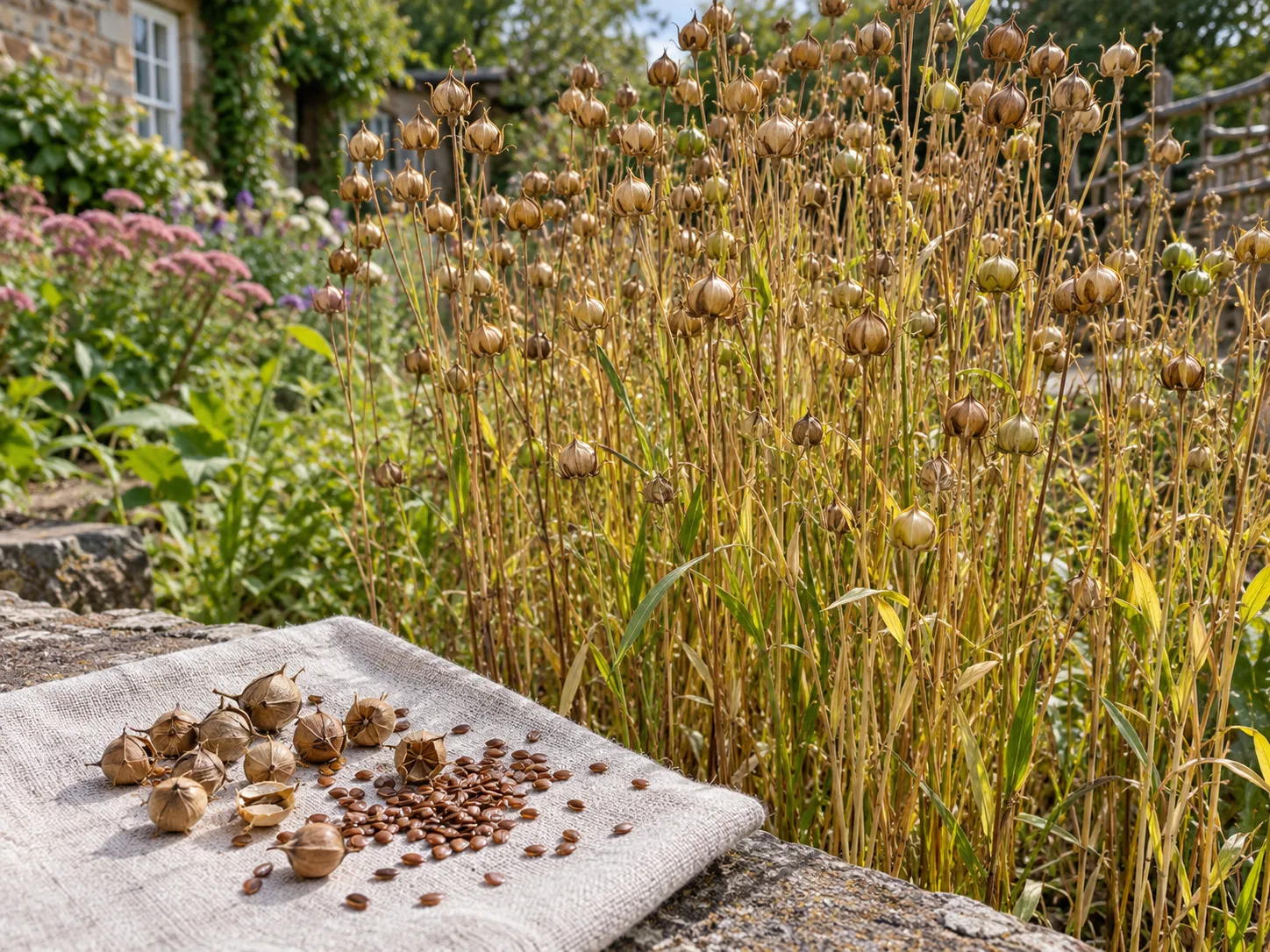
Cut the stems at the base on a dry day and place them in a paper bag, tray, or cloth-lined box where air can circulate. Keep bundles small so the capsules do not stay damp in the center. Let them dry fully, then thresh by rubbing or tapping the heads over a clean cloth; winnow away the lightweight chaff and remove any immature, discolored, or damaged seed. Epic Gardening’s harvest guide describes the same visual and sound cues—brown capsules and a rattle—and recommends finishing the drying in an airy place (Epic Gardening on harvesting flaxseed).
Store clean seed only when it is thoroughly dry. Put it in a labeled airtight container in a cool, dark cupboard, and check the jar later for condensation or a musty smell. If the seed is damp, spread it out again rather than sealing it in. Keep planting seed separate from food seed, and only plan to eat a harvest if you know the species and seed source and grew it without seed treatments or garden chemicals that are not intended for food crops.
Grow for Fiber With Realistic Expectations
Fiber flax is typically sown more densely than seed flax to encourage longer, straighter stems with fewer branches. That is why seed variety and planting density matter: a seed-oriented linseed can produce a useful crop, but the stems may not be as long or fine as a fiber-selected variety. Flaxland’s grower guide explains this crop distinction and the later processing steps, including pulling, drying, and retting the stems (Flaxland’s fiber-flax guide).
For fiber, plants are commonly pulled rather than cut so the full stem length is retained. Growers time the pull around the desired fiber quality, often before seed capsules are fully mature; if you let the crop finish for mature seed, some fiber qualities change. This is a trade-off, not a pruning decision. Decide whether seed or fiber is the main harvest before sowing, or divide the bed into two small sections and harvest each at its appropriate stage.
After harvest comes retting: controlled damp conditions loosen the fibers from the woody stem. Traditional dew retting can take weeks and depends on weather, surface, and turning; too little retting leaves fiber difficult to separate, while too much can weaken it. If you want to try linen, start with a small bundle and follow a specialist fiber-flax guide rather than soaking an entire crop without a plan for drying and processing it. For many gardeners, flowers plus a small seed harvest are the more achievable first season.
Save Seed and Manage Self-Sowing
To save seed, reserve healthy plants from a known variety and let their capsules dry fully on the stems. Harvest before the capsules split if you want to control where the next generation grows. Dry the capsules further indoors, thresh them over a shallow tray, and label the seed with its variety and harvest year. Do not save seed from diseased or poorly performing plants if you want a reliable next crop.
If you want flax to reseed naturally, leave only a few mature stems standing and check the patch the next spring. Thin volunteers while they are small, because seedlings become harder to distinguish from weeds once they crowd together. Flax can spread beyond the exact row if dry capsules shed seed, so remove seed heads before they open where you need strict control. A simple compromise is to collect most capsules for seed and leave one small marked corner to self-sow.
There is no need to propagate this annual from cuttings. Seed is the practical route: store it dry, sow it in the next suitable season, and start with a small trial if you do not know how the variety behaves in your soil. If a plant label uses only the word “flax,” verify the botanical name before saving seed; a different Linum species or flax lily will not necessarily give the same flower, crop, or harvest.
Conclusion
Growing flax is straightforward once the planting matches the harvest you want. Use Linum usitatissimum for common flax, choose a sunny bed with good drainage, sow shallowly during a suitable cool-season window, and keep the seedbed damp until seedlings establish. After that, remove early weeds, avoid unnecessary fertilizer, and water according to actual soil moisture rather than a fixed schedule.
For flowers, let the successive buds open and remove only the capsules you do not want. For seed, wait for dry brown capsules that rattle, then dry and thresh them carefully. For fiber, start with seed selected for long stems and plan the additional work of retting and separation. A small patch is enough to learn which use suits your climate—and to adjust the next sowing from what your own garden shows.