How to Grow and Care for Firespike Plants
Learn how to grow firespike plants with the right light, water, soil, pruning, and frost protection, plus fixes for weak blooms and leggy growth each season.
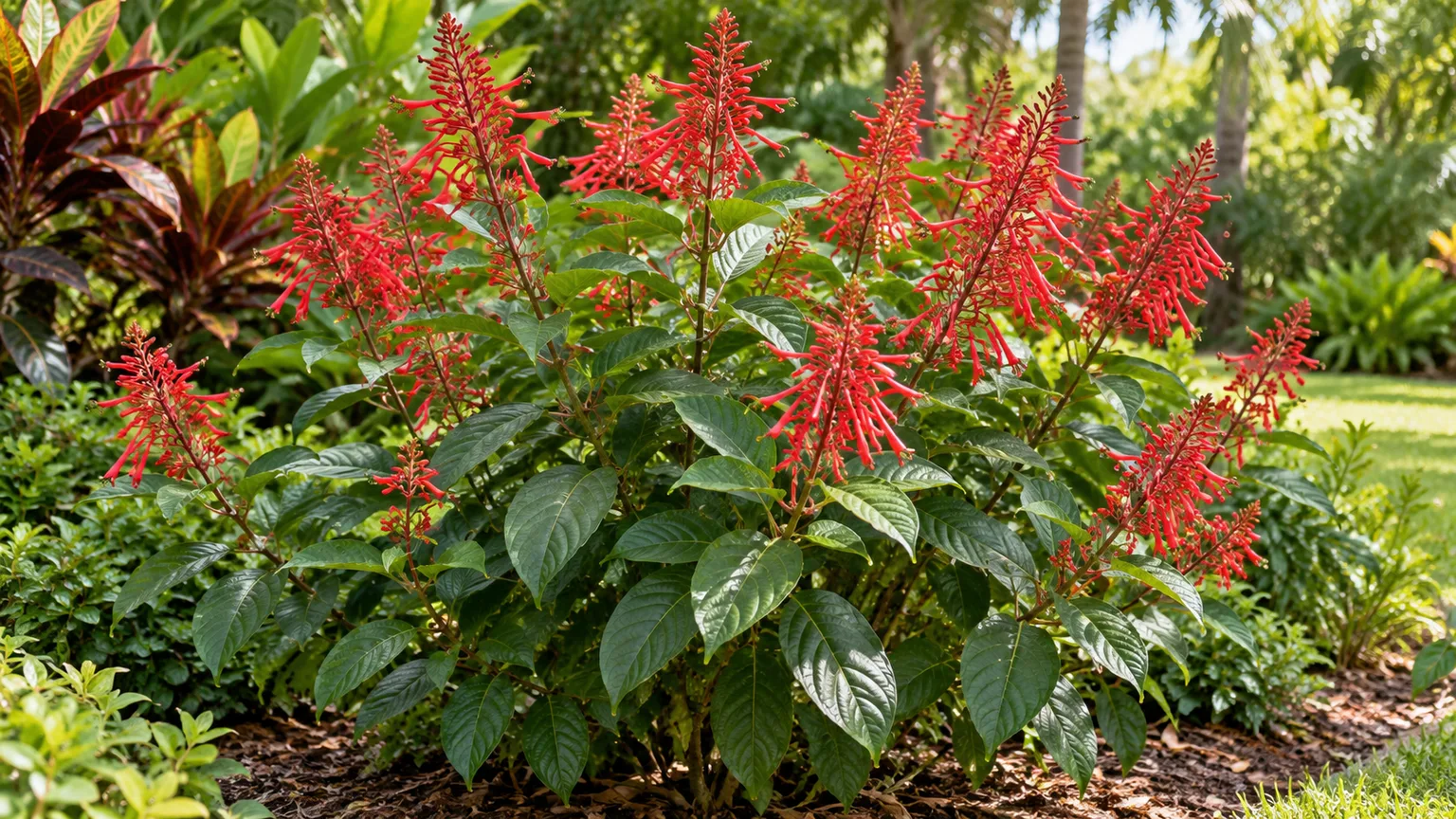
Firespike is a tropical-looking perennial shrub with glossy, opposite leaves and upright clusters of scarlet tubular flowers. It is often sold as Odontonema tubaeforme; some references and nursery labels use O. strictum, a name North Carolina State Extension lists as an earlier name. In warm gardens it can make a tall flowering clump and draw hummingbirds and butterflies. In a colder garden, it may lose its top growth or fail to overwinter, so the first decision is whether your climate suits it as a permanent shrub or only as a seasonal plant.
The care is straightforward when you match the plant to its limits: give it bright light, moisture that drains away, room to spread, and a pruning schedule that does not remove developing flower stems. Below, you’ll find practical guidance for beds and containers, along with a way to troubleshoot a plant that grows leaves but produces few flowers.
Is Firespike a Fit for Your Climate?
Firespike is native to southern Mexico and Central America and behaves as a warm-climate perennial. Hardiness references do not give one uniform cutoff: UF/IFAS Extension lists zones 8B through 11, while NC State’s plant profile lists zones 9a through 12b. That difference is a reason to treat zone labels as a starting point, not a promise that every plant will survive every winter in a listed zone. Both references describe it as cold tender; top growth can die back after freezes, and recovery depends on how much cold reaches the crown and roots.
If your garden rarely freezes, plant firespike in the ground and expect a long season of foliage and flowers. Where freezes are occasional, decide whether you are comfortable with a plant that may return from its base, or grow it in a container that you can move under cover. In climates with repeated hard freezes, use it as a warm-season accent or choose a reliably hardy shrub instead of relying on a blanket to preserve a tropical plant outdoors.
Flower timing shifts with climate too. NC State describes summer and autumn flowering, while UF/IFAS notes fall and winter flowers; a Florida-focused guide from Gardening Know How also describes a fall-to-winter display. A warm frost-free site can extend flowering, but a northern garden usually has a shorter window that ends with cold weather. If the plant is healthy but not flowering in the month a neighbor’s plant does, compare local temperatures and pruning timing before assuming the plant is failing.
Choose a Site With Light, Warmth, and Room
Firespike grows in full sun or partial shade. More direct light generally supports a denser habit and heavier flowering, while some afternoon shade can make a hot site easier on foliage. In a humid, hot garden, bright filtered light or morning sun with afternoon shade is a reasonable compromise; in a cooler climate, favor the sunniest sheltered position available. Deep shade is the poor bet: stems tend to stretch toward light and bloom less freely.
Give the plant a wind-sheltered place where its tall stems will not be battered or forced into a walkway. Leave space for a multi-stemmed clump rather than treating it like a narrow edging plant. Extension profiles vary in the size they report, but firespike can become several feet tall and broad in a favorable climate. For a single specimen, plan for at least a few feet of clear space around it; for a mass planting, begin around 3 feet between plants and widen that gap if your plants grow vigorously or you want each clump to remain distinct.
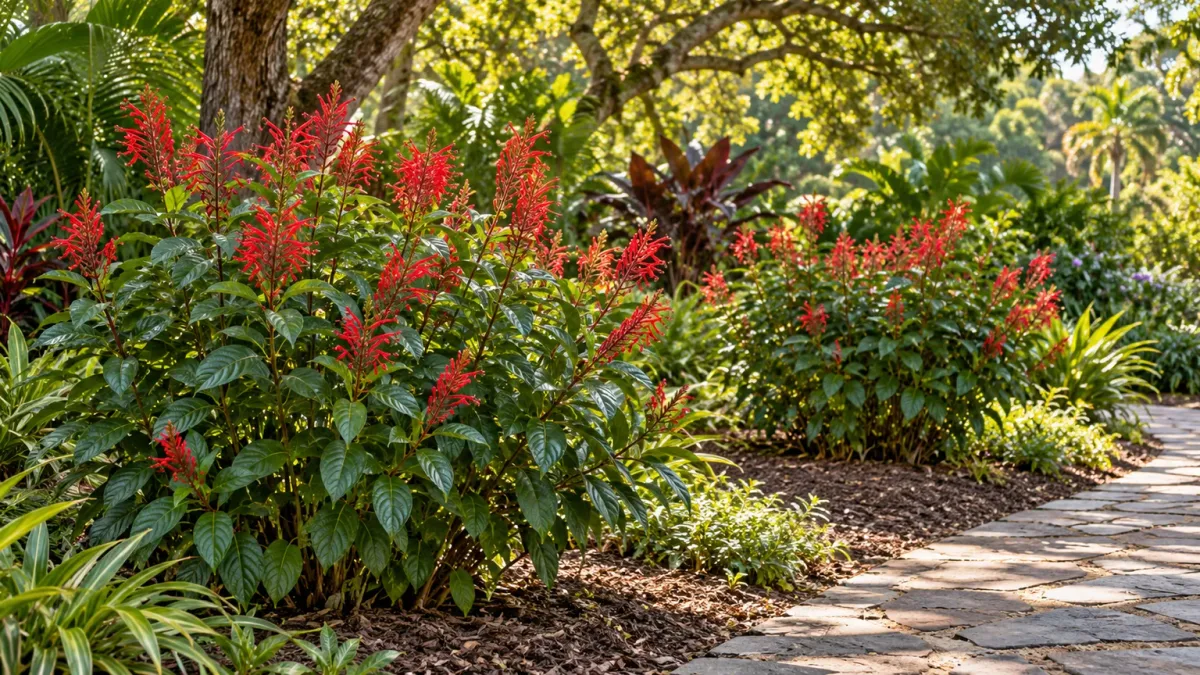
Place firespike where you can see the late-season flowers from a patio or window, but do not crowd it against a wall or foundation. A little breathing room improves access for pruning and makes it easier to inspect the leaf undersides for insects. UF/IFAS notes that firespike can flower in partial shade and is used in mass plantings, while also recommending full sun for the best habit and heavy bloom; that gives gardeners a useful trade-off rather than a strict all-or-nothing rule.
Prepare Moist, Well-Drained Soil
The main soil requirement is drainage. Firespike tolerates sand, loam, and other ordinary garden soils, and extension references describe a broad pH tolerance, so you usually do not need to acidify the bed or buy a special mix. What it will not appreciate is a root zone that stays waterlogged after rain. If water puddles for hours where you plan to plant, choose a raised bed or another site rather than trying to fix a persistently wet planting hole with a pocket of potting soil.
Before planting, loosen the bed across a wider area than the root ball and blend in a modest layer of finished compost if the soil is poor or sandy. Compost improves the planting area without creating an abrupt boundary between amended and native soil. Avoid filling only the hole with a very rich, fine mix; water may move differently through that pocket, and roots have less incentive to grow outward into the surrounding soil.
A 2- to 3-inch mulch layer can slow evaporation and reduce weeds during hot weather. Keep mulch a few inches away from the stems and crown, where constant dampness can encourage decay. In a humid region, drainage and air movement matter more than stacking on additional organic matter.
Water Deeply, Then Let Drainage Catch Up
Keep the root ball and nearby soil evenly moist while a new plant establishes, especially through hot, rainless weather. Water at the soil surface so moisture reaches the root zone; then wait until the top layer begins to dry before watering again. Firespike has moderate drought tolerance once established, but that does not mean it prefers to wilt repeatedly. Leaves that droop during a dry spell often recover after a thorough watering, though repeated stress can interrupt growth and flowering.
Do not water by calendar alone. Check the soil with a finger or trowel a few inches below the surface, and account for rainfall, temperature, soil texture, and whether the plant is in a pot. Sandy beds and containers dry faster than heavier ground soil; a shaded plant dries more slowly than one in full afternoon sun. In winter, a dormant or frost-damaged plant uses less water, so reduce irrigation rather than keeping cold soil constantly wet.
If a firespike wilts while the soil is damp, pause before adding more water. Confirm that the bed drains and check whether the plant is in a low spot or a container with blocked holes. Persistent wetness can damage roots and produce symptoms that look like thirst; improving drainage is more useful than adding another watering.
Plant Firespike in the Ground
Plant during warm weather after the chance of frost has passed, giving roots time to establish before the hottest or coldest stretch. Dig a hole about as deep as the root ball and wider than it, loosen circling roots gently, and set the plant so the top of the root ball sits level with the surrounding soil. Backfill with the excavated soil, firm lightly, and water slowly to settle the root zone. Avoid burying the stem base or packing the soil hard around it.
For a row or mass planting, spacing depends on whether you want a quick screen or separate upright clumps. UF/IFAS gives 24 to 36 inches as a planting interval; NC State identifies 3 to 6 feet of available space, reflecting how plant size and garden use can vary. As a practical starting point, use about 3 feet between young plants for a continuous bed and more room for specimen plants or vigorous sites. Wider spacing improves access and airflow; closer spacing fills gaps sooner but may require more thinning later.
Water consistently during establishment, then adjust to the soil rather than continuing a nursery-style schedule. Keep a note of where the crown sits and how quickly the soil dries during the first hot month. Those two observations make later troubleshooting much easier than guessing from leaf color alone.
Use Fertilizer Sparingly
Start with healthy soil and compost rather than a heavy feeding program. UF/IFAS describes firespike as able to grow in moderately fertile soil, and it lists no serious pest or disease problems under normal conditions. NC State recommends a balanced liquid fertilizer during active growth, but gardeners should follow the product label and local conditions rather than assume every plant needs weekly feeding.
If the plant is growing slowly in poor soil, a light application of a balanced, complete fertilizer in spring can support new growth. Do not combine a strong slow-release dose with repeated liquid feeding, and avoid putting fertilizer against the stems or directly on a dry root ball. Excess fertilizer can create lush leafy growth that still does not flower well, and salts can injure roots in containers.
Before feeding a plant with few blooms, check its light, recent pruning, and seasonal timing first. Fertilizer cannot make a deeply shaded plant bloom heavily, and extra nitrogen will not replace flower stems cut off just before bud formation. If the foliage is a healthy deep green and the plant is expanding, leave it alone and spend effort on placement and pruning instead.
Prune for Shape Without Sacrificing Flowers
Firespike flowers on new growth, so pruning is useful for size and renewal, but timing determines whether you keep the next display. In a frost-free garden, do most shaping after the main flowering flush or in early spring before vigorous growth begins. If flowering continues for much of the year, remove only crossing or damaged stems as needed and accept that each cut may remove a future flower spike.
In a climate where frost kills the top growth, do not rush to cut the plant down immediately after a cold night. Wait until the extent of the damage is clear and severe cold has passed, then remove dead stems close to the base without injuring the crown. If the stems are still alive, a hard cut can discard healthy buds; if the entire stem is brown and brittle, leaving it until spring does not restore it. Use clean, sharp pruners and remove debris from around the crown.
For a plant that has become leggy, shorten a few long stems in early spring to encourage branching rather than shearing the entire shrub into a tight ball. Avoid heavy late-summer or early-fall pruning where firespike flowers in autumn, because the plant may need those growing tips to form its display. Gardening Know How recommends pruning unruly branches periodically; pairing that size control with local bloom timing prevents routine trimming from becoming a bloom-killing schedule.
Propagate Firespike From Cuttings or Division
Stem cuttings are a practical way to make a plant that matches the parent. Take them in spring or early summer from healthy, non-flowering soft growth, when the plant is actively growing and there is time for roots to develop in warmth. UF/IFAS also lists division as a propagation option; division is best when you already have a mature clump with several rooted shoots and can replant it promptly.
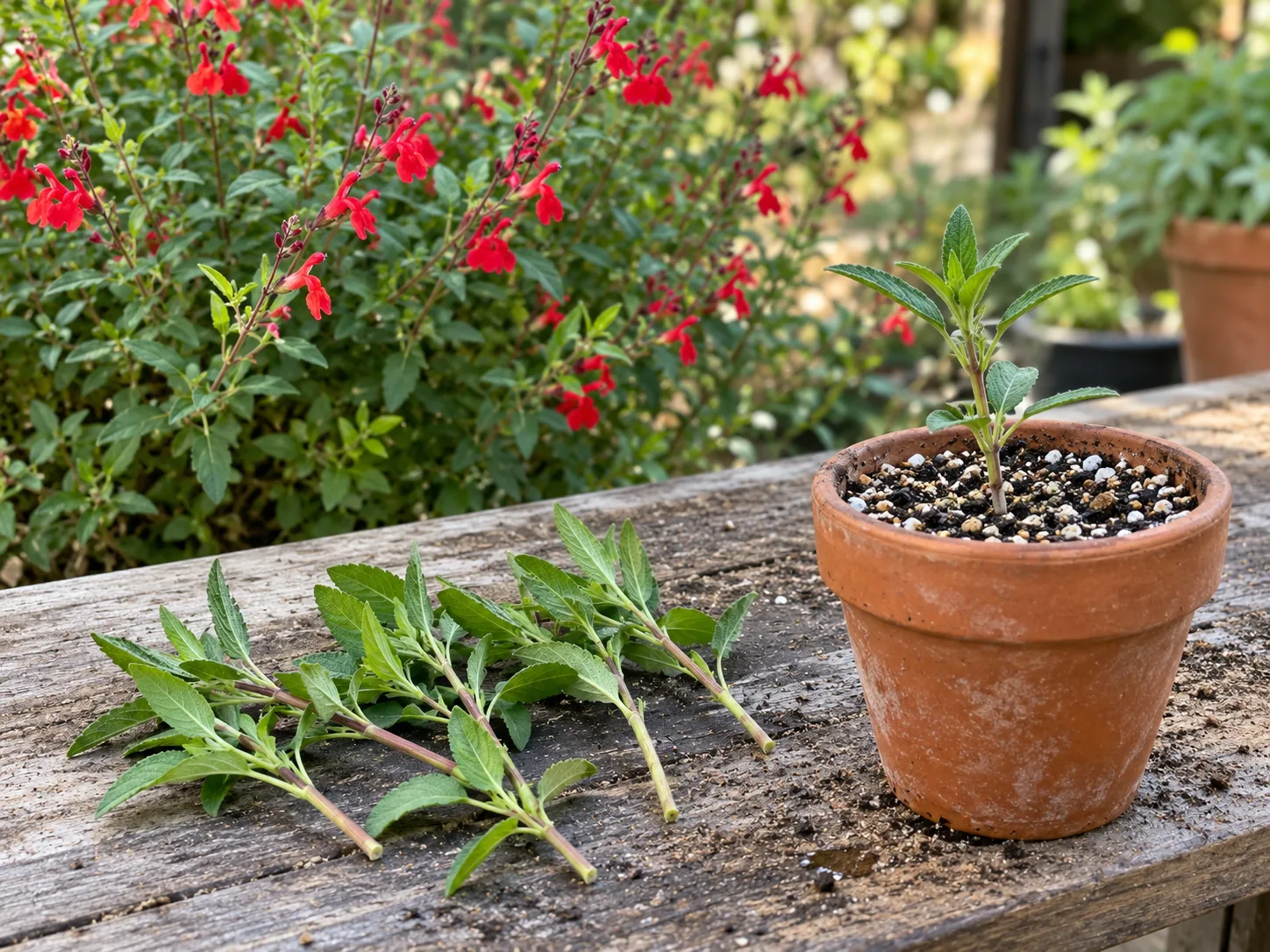
This shows the general softwood-cutting setup; take the cutting from a healthy firespike stem.
For a stem cutting, use a clean blade to take a 4- to 6-inch tip with several nodes. Remove leaves from the lower half, keep one or two leaf pairs at the top, and trim away any flower buds so energy goes toward rooting. Insert at least one bare node into a small pot of clean, airy propagation mix, then water enough to settle the medium without leaving the pot standing in water.
Set the pot in bright indirect light and warmth, away from harsh midday sun. Keep the mix lightly and evenly moist, not sodden; a clear cover can slow drying, but open or vent it daily so stale, wet air does not linger around the leaves. New leaf growth can suggest a cutting has rooted, but give it time and check gently before tugging. Once roots hold the mix together, pot it on and acclimate it gradually to stronger outdoor light.
Rooting hormone is optional, not a substitute for healthy material and good drainage. Discard cuttings that turn soft or black at the base, and clean the blade between plants if you suspect disease. If the parent clump has rooted shoots at its edge, division may be quicker than waiting for cuttings; water the division after planting and keep it shaded from intense sun while it re-establishes.
Grow It in a Container Only If You Can Move It
A container makes firespike easier to protect from a cold snap and gives you more control over drainage. It also dries faster than a garden bed, and a mature plant can become top-heavy. Choose a sturdy pot with several open drainage holes and enough room for the root ball to expand; for a long-term shrub, a large container is more practical than a small nursery pot that needs daily watering in summer.
Use a free-draining potting mix and set the plant at the same depth it grew in its previous pot. Do not add rocks to the bottom as a drainage fix; a blocked hole or dense mix is the real problem. Water until excess flows from the base, empty any saucer, and check the mix regularly during heat. If roots circle tightly or the plant wilts again soon after watering, move it up one pot size or divide the clump rather than simply adding more fertilizer.
In a freeze-prone area, move the pot into a bright, sheltered, frost-free place before cold weather arrives. Indoors, lower light and cooler growth mean slower water use, so let the upper mix dry somewhat between drinks and avoid feeding until growth resumes. A container only solves the winter problem if you have a spot bright and warm enough to keep the plant alive; a dark garage may protect it from frost but can still be too dim for an evergreen plant.
Protect the Crown Through Cool Winters
In mild climates, firespike may keep foliage through winter and continue flowering. In colder areas, leaves and stems can blacken after frost while the crown survives underground and sends up fresh shoots when warmth returns. NC State and UF/IFAS differ in the zone range they report, so use your local winter history and the plant’s actual condition rather than reading the broadest published zone as a guarantee.
Before a predicted light frost, cover an in-ground plant with breathable frost cloth that reaches the ground, and remove it when temperatures rise. A cover can reduce exposure during a brief event but cannot make a tropical plant reliably hardy through prolonged freezing weather. A layer of mulch over the root zone can moderate temperature swings; keep it away from the crown and stems.
After a freeze, resist the urge to prune immediately. Wait until the weather settles and look for green tissue or flexible stems; cut back only what is clearly dead. If new shoots appear from the base in spring, protect them from late cold and resume normal watering as growth starts. If no shoots emerge after the soil has warmed and the crown is dry or mushy, the plant may not have survived; replace it or move the next one into a container you can shelter.
Get More Flower Spikes
When a firespike has plenty of leaves but few flowers, start with sunlight and pruning rather than fertilizer. A plant in deep shade often grows tall, soft stems and blooms less than one in bright light. Recent hard pruning can also delay the display because the shrub needs time to replace cut stems and form new flower-bearing growth.
Next, consider age and season. A newly planted or recently divided specimen may spend its first stretch building roots before producing a large show, and bloom months vary by climate. In Florida, flowers may continue into cooler months; in a cooler garden, frost can end the display early. Compare the plant’s bloom cycle with nearby plants in the same region instead of expecting a fixed calendar date.
Keep the root zone evenly moist during active growth, but avoid saturated soil and heavy feeding. If the plant is mature, receives several hours of sun, and has not been cut back recently, a light spring feeding may help where soil is poor. Deadheading spent spikes is optional: it can tidy the clump, but it is not a reliable way to force continuous flowering. Leave a few seed structures only if you want to observe fruiting and can manage any seedlings where self-seeding is a concern.
Diagnose Drooping, Leggy Growth, and Pest Damage
Use the combination of soil, light, and new growth to diagnose a symptom. One wilted afternoon after dry weather points to a different first step than drooping leaves in a soggy bed. A plant that remains green but sprawls or flowers sparsely is more likely to need brighter light or more careful pruning than a dose of fertilizer.
Drooping Leaves
Check moisture below the surface before watering. If the soil is dry several inches down, soak the root zone slowly and check again later; if it is wet, improve drainage and pause irrigation. Container plants can wilt from a root-bound pot as well as from dryness, so look for roots circling through the drain holes and for mix that dries unusually quickly.
Tall, Sparse Growth or Few Flowers
Long gaps between leaves and a leaning shape often indicate too little light, especially when the plant has not been pruned recently. Move a container gradually toward a sunnier spot, or improve light around an in-ground plant if that can be done safely. If light is already good, consider whether routine trimming removed flowering stems or whether the plant was hit by frost and is still rebuilding.
Whiteflies and Other Occasional Pests
Firespike is not usually plagued by severe pest problems, but NC State notes that whiteflies can occur. Inspect the undersides of leaves for small pale insects, sticky residue, or speckled yellowing, and distinguish these signs from simple drought stress. A small infestation may be managed by rinsing leaf undersides with water and removing badly affected growth; avoid spraying open flowers when pollinators are visiting, and use any pest-control product only according to its label and local rules.
Use Firespike Responsibly in the Landscape
The red tubular flowers make firespike a useful late-season nectar source for hummingbirds, bees, and butterflies, and the upright habit can add height behind lower shade-tolerant plants. UF/IFAS lists mass planting and pollinator attraction among its landscape uses; NC State also records wildlife value. Leave a clear approach to the flowers and keep pruning access open so the clump remains easy to manage.
At the same time, do not assume a plant is harmless to the local landscape simply because it is sold as an ornamental. UF/IFAS reports that firespike has naturalized in Florida and may self-seed; NC State records introduction in Florida and several Pacific and Caribbean locations and notes invasive behavior on some islands. Before planting, check your local extension or invasive-plant list, especially near natural areas. Remove unwanted seedlings, do not dump garden waste where it can root or set seed, and contain the plant if local guidance recommends doing so.
If you want a controlled clump, remove outer rooted shoots when they begin to spread and share or compost them only where local guidance permits. In a region where firespike is listed as invasive or prohibited, choose a native or non-invasive pollinator shrub instead. That small check preserves the late-season color without shifting the cost of an ornamental escape onto nearby habitat.
Conclusion
Firespike is easiest to grow where winters are mild, the planting site is bright but not exposed to damaging wind, and soil stays moist without remaining saturated. Give it room, water by checking the root zone, and prune after bloom or in early spring rather than trimming away the stems that would carry the next display. In a frost-prone garden, grow it in a container you can move or treat it as a tender perennial whose crown may—but is not guaranteed to—return after cold.
When flowers are scarce, check light, pruning history, season, and moisture before reaching for fertilizer. Propagate healthy growth from cuttings, inspect leaves for whiteflies, and check local invasive guidance before planting. Those few decisions let firespike become a showy, manageable part of the garden instead of a plant that is either overwatered, cut back at the wrong time, or lost to a winter it was never equipped to handle.