How to Control House Centipedes: A Safe, Practical Guide
Control house centipedes with a practical room-by-room plan: identify them, use traps to find activity, fix damp conditions, and know when to call a pro.

A house centipede racing across the bathroom floor can look like a reason to spray immediately. Usually, a better first move is to remove that individual safely, then check why it found your home comfortable.
House centipedes hunt other small arthropods, often shelter in dark, damp places by day, and become more visible while hunting at night. A lone visitor does not tell you where it entered or whether another pest is present.
For lasting control, ask whether it is a house centipede, whether sightings repeat, whether moisture, prey, or clutter support it, and which openings could let it in. Use those answers to reduce favorable conditions without treating every room or harming useful outdoor predators.
Start by confirming it is a house centipede
The common house centipede (Scutigera coleoptrata) has a flattened yellow-gray body with darker stripes, long antennae, and 15 pairs of very long, banded legs. Its last pair can look like an extra set of antennae as it runs.
That many legs and its fast, delicate appearance distinguish it from a millipede, which has a more cylindrical body and usually moves more slowly. Minnesota Extension describes the house centipede’s striped body and long legs in its identification guide.
The distinction matters because “centipede” covers different animals with different habits. House centipedes are predators; they capture other arthropods with modified front legs near the head.
They are not insects, and the presence of one does not identify which prey it found. It may be hunting a small insect, spider, or other arthropod, or it may have wandered in from a sheltered area.
You may see one in a basement, bathroom, laundry room, or near a sink or tub. These rooms offer cracks and shadowed edges where an animal can hide. A centipede in a tub does not prove it climbed up the drain: the smooth basin can simply trap an animal that entered from the room and could not climb back out.
If identification is uncertain, take a photo from a distance and compare the body and leg pattern with a university extension reference. Do not pick it up to check.
Many kinds of centipedes avoid people, but any wild arthropod is best left unhandled; a rare defensive bite can be painful. A clear photograph is more useful than a crushed specimen if you later ask an extension office or pest professional for help.
One sighting rarely requires a whole-house treatment
House centipedes are predators, so their presence can reflect the availability of prey as well as shelter. Penn State Extension notes that they often live in dark, damp places and feed on other insects and arthropods in its house-centipede management guidance.
Still, a single sighting is not proof of a hidden infestation, a plumbing defect, or poor housekeeping. A door left open, a dry hiding place in a foundation wall, or ordinary seasonal movement could account for one visitor.
Look for a pattern before choosing a treatment. Keep a simple log for a week or two: date, room, time, whether the area was damp, and whether the centipede was alive or caught in a monitor.
Note whether sightings repeat in one basement corner or appear in several unrelated rooms. This record will not identify the source by itself, but it can show where an inspection should start.
Repeated sightings in the same damp area point toward a local route or harborage. Activity in different rooms, plus evidence of other insects in traps or cupboards, suggests you should inspect for prey as well.
If you see one every few months and find no other signs, monitoring and basic sealing may be enough. The goal is to match the response to the evidence rather than infer an emergency from a startling appearance.
Remove an individual without handling it
If you want it out now, use a method that keeps your hands away. Place a glass or container over the centipede, slide a stiff card underneath, and carry it outside to a sheltered spot away from the foundation. Do this only if you can move slowly and comfortably; a centipede can dart, so chasing it around a cluttered room is not worth the stress.
A vacuum with a hose is another practical option for someone who does not want to get close. Empty the canister or replace the bag outside promptly, following the vacuum maker’s directions, so the captured animal does not remain in the home.
You can also leave an individual alone if it is moving away from people and pets. Avoid bare-handed capture, and do not use a shoe or improvised spray if a safer removal will solve the immediate problem.
After removal, note the exact location instead of treating the whole room. Check the nearest baseboard gap, pipe penetration, floor drain, sump cover, or damp storage area. A single animal can enter by chance, but the spot where you found it gives you a useful first place to look for a route or favorable hiding place.
Repeated sightings point to food, moisture, or a route
Think in terms of three conditions: prey, shelter, and access. Centipedes need other small arthropods to hunt and a place to hide; moisture can make basements and bathrooms especially suitable.
A route may be a crack in a foundation or block wall, an unsealed gap around a pipe, or an opening around a door. Penn State Extension identifies areas such as crawlspaces, block walls, floor drains, and dry sumps as places worth checking.
That framework is more useful than asking only what repels centipedes. A strong fragrance or a pesticide residue cannot correct a leaking pipe, an open sump, or an insect population in a wall void. Start with the easiest visible evidence.
Are there water stains, condensation, damp cardboard, or a musty smell? Do sticky monitors catch small insects? Is there a gap that leads from the basement or garage outdoors?
The evidence also helps prioritize work. If the room is damp, fix the moisture source before buying a trap or pesticide. If monitors catch other arthropods but not centipedes, identify the prey and address that issue.
If the room is dry and clean but sightings cluster beside an opening, seal or screen that route. Several causes can coexist, so reassess after each practical change.
Make the indoor environment less inviting
You do not need to make a home sterile to discourage house centipedes. Focus on reducing persistent dampness, limiting prey insects, and removing convenient hiding places in the rooms where sightings occur. Work from the most likely source rather than cleaning or treating every room equally.
Dry the dampest rooms and fix leaks
Check for plumbing drips, condensation on cold-water pipes, wet laundry, standing water, and water entering around the foundation. Repair leaks and improve ventilation where moisture is produced.
If a basement stays humid, a dehumidifier may help; use its drain or empty its reservoir regularly, and follow the unit’s safety and maintenance instructions. A dehumidifier will not fix water seeping through a wall or a leak hidden inside it, so correct those sources first.
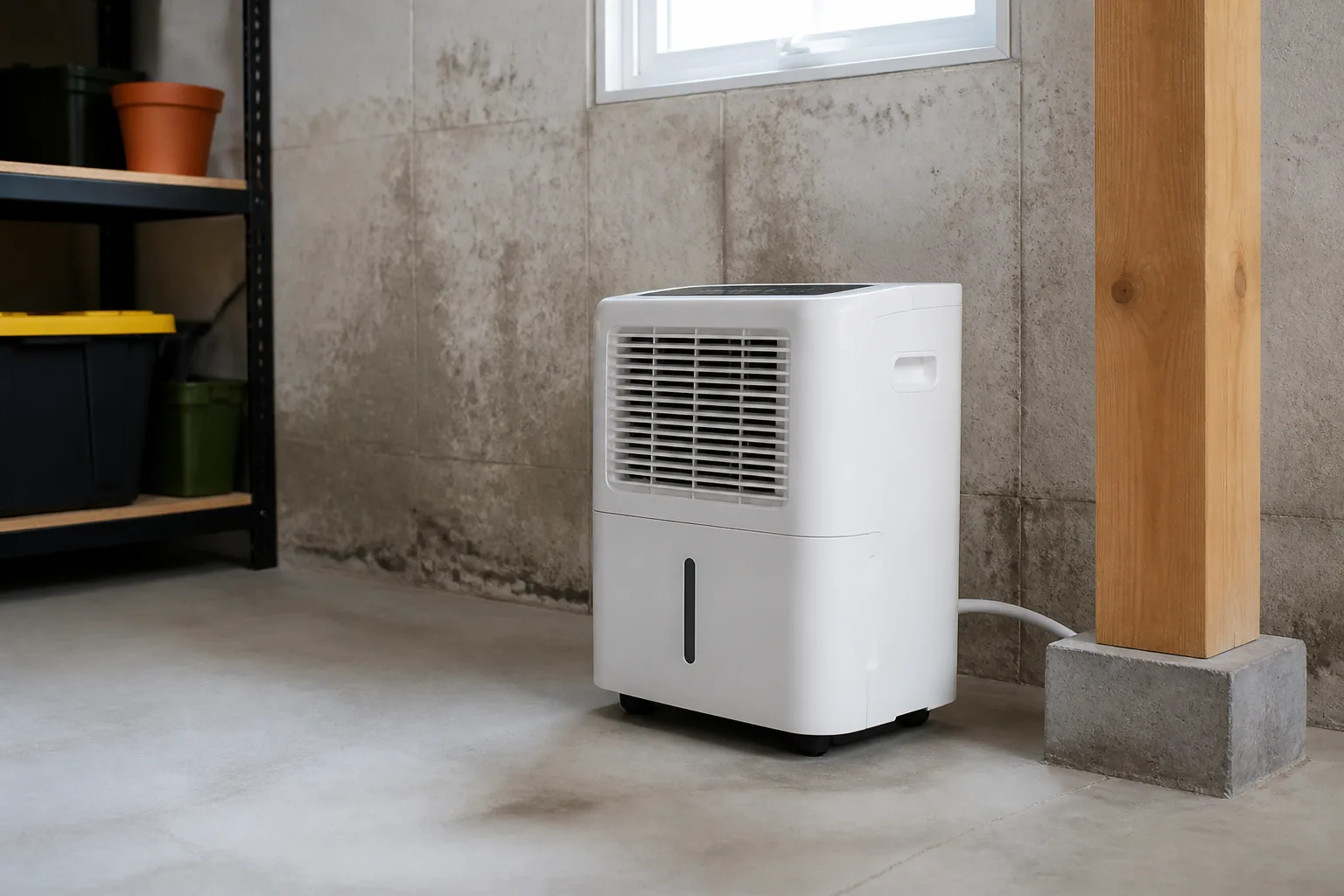
Penn State Extension recommends reducing moisture and addressing damp harborage as part of house-centipede management. The practical target is a room that dries out rather than one that stays wet around a floor drain, sump, or stored material.
Where moisture is persistent, check whether the gutter downspout and soil grading direct water away from the foundation. If water intrusion continues after simple repairs, a qualified contractor can help find the building problem.
Drying a room has limits: centipedes can still wander through a dry space, and lowering humidity does not remove a route or prey population. Treat moisture reduction as one part of the plan. Recheck the original sighting area after repairs and note whether activity changes over the next couple of weeks.
Look for the insects centipedes hunt
If centipedes keep appearing, look for the prey rather than assuming there is a particular pest. Check sticky monitors near basement walls and utility penetrations for small insects, and inspect pantry goods, stored cardboard, window wells, and damp corners according to what the trap catches. A trap identifies only the arthropods that crossed its surface; it does not measure every pest in the room or prove that a hidden infestation exists.
When monitors reveal an identifiable insect, use an appropriate guide or extension office to confirm it before choosing control. Different pests call for different steps.
For example, sealed food storage helps with pantry pests, while repairing a screen gap may be the most direct response to occasional insects entering at a window. If you cannot identify what a trap contains, take a clear photo beside a ruler and ask a local extension service or licensed pest professional.
Do not spray an unidentified cluster just because centipedes are predators. Broad treatment may miss the prey’s source and adds pesticide exposure without a clear target. Penn State’s guidance puts reduction of prey ahead of routine pesticide use for house centipedes; targeted control should follow an actual identification and a label that permits the site and pest.
Clear shelter close to the foundation
Move damp cardboard, paper bags, and rarely used boxes off basement floors, especially near outside walls. Store items on shelves or in lidded plastic bins, and leave a small inspection gap between stored goods and the wall.
This makes it easier to spot dampness, insect activity, or a crack that would otherwise stay hidden. Remove clutter gradually if moving heavy storage would create a lifting hazard.
Outside, reduce direct contact between foundation walls and piles of wet leaves, boards, or other persistent debris. Centipedes belong in outdoor food webs and eat other arthropods; the goal is not to eliminate them from the garden.
The Royal Horticultural Society describes centipedes as predators that contribute to garden biodiversity, and Gardening Know How likewise explains their role as beneficial outdoor hunters. Keep useful habitat in the garden while avoiding a damp, sheltered bridge right against the house.
Close the routes they use to get inside
Exclusion works best after you identify plausible openings. Inspect the area where a centipede appeared, then follow the wall toward the nearest exterior door, foundation crack, pipe, utility line, crawlspace, or sump.
Use a flashlight and look from both sides where accessible. A gap is a possible route, not proof that an animal used it, so prioritize openings near repeated sightings and seal materials according to the building surface.
Check slab cracks, pipe gaps, screens, and doors
Seal small, stable gaps around pipes and cables with a suitable material for that location. Repair torn window screens and fit door sweeps or weatherstripping where daylight shows beneath an exterior door. For cracks in concrete or a block wall, use a repair product intended for that surface and follow the manufacturer’s instructions; ask a masonry or foundation professional about wide, growing, or water-leaking cracks rather than covering a structural problem.
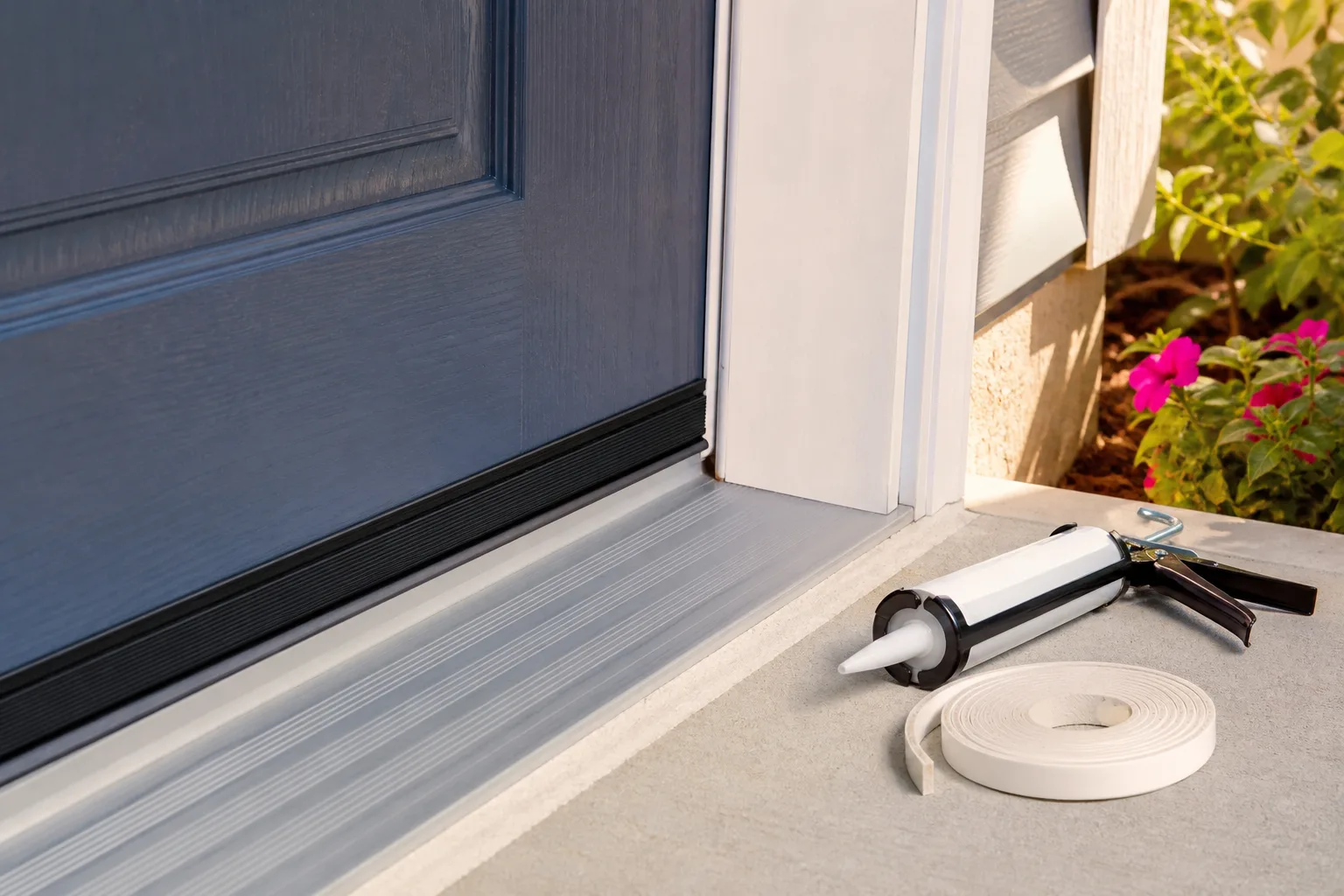
Inspect vents and crawlspace openings for intact screens. Keep sump covers fitted and screened so they do not become open harborage, while preserving safe access and the operation required by the sump manufacturer.
Penn State Extension specifically recommends sealing cracks in concrete or cement-block walls and screening sump covers and basement floor drains. Do not block ventilation, drainage, or combustion-air openings as a shortcut to pest exclusion.
Sealing is a low-risk step, but it cannot prevent every insect from entering and will not remove an animal already indoors. After repairs, keep monitoring the same spots. If activity shifts to a new opening, update the inspection instead of applying sealant indiscriminately around the whole foundation.
Treat drains as a clue, not a pesticide target
A centipede found in a bathtub or beside a drain may have entered the room and become trapped in the smooth basin. The location alone does not show that it came through plumbing.
Look at whether the sink, tub, or floor drain is used regularly, whether a water trap is dry, and whether there is a gap around the drain assembly or nearby pipe. If a floor drain or trap has dried out, restore the water seal according to the plumbing fixture’s instructions or consult a plumber; some drains have designs that need a different solution.
Penn State Extension notes that dry floor drains and dry sumps can provide access or harborages, and recommends screening basement floor drains that lack water traps in its management recommendations. That is a targeted building check, not a reason to pour pesticide, bleach, or another cleaner into plumbing.
Do not mix cleaning products. If centipedes repeatedly appear at a drain despite restoring a trap or fitting a safe screen, ask a plumber or pest professional to inspect the opening and surrounding structure.
Use traps to map activity, not as the whole solution
Sticky boards can help show whether activity repeats and what other small arthropods share the room. Place them flat along a wall or behind an appliance, out of reach of children and pets, and away from places where they can catch non-target animals.
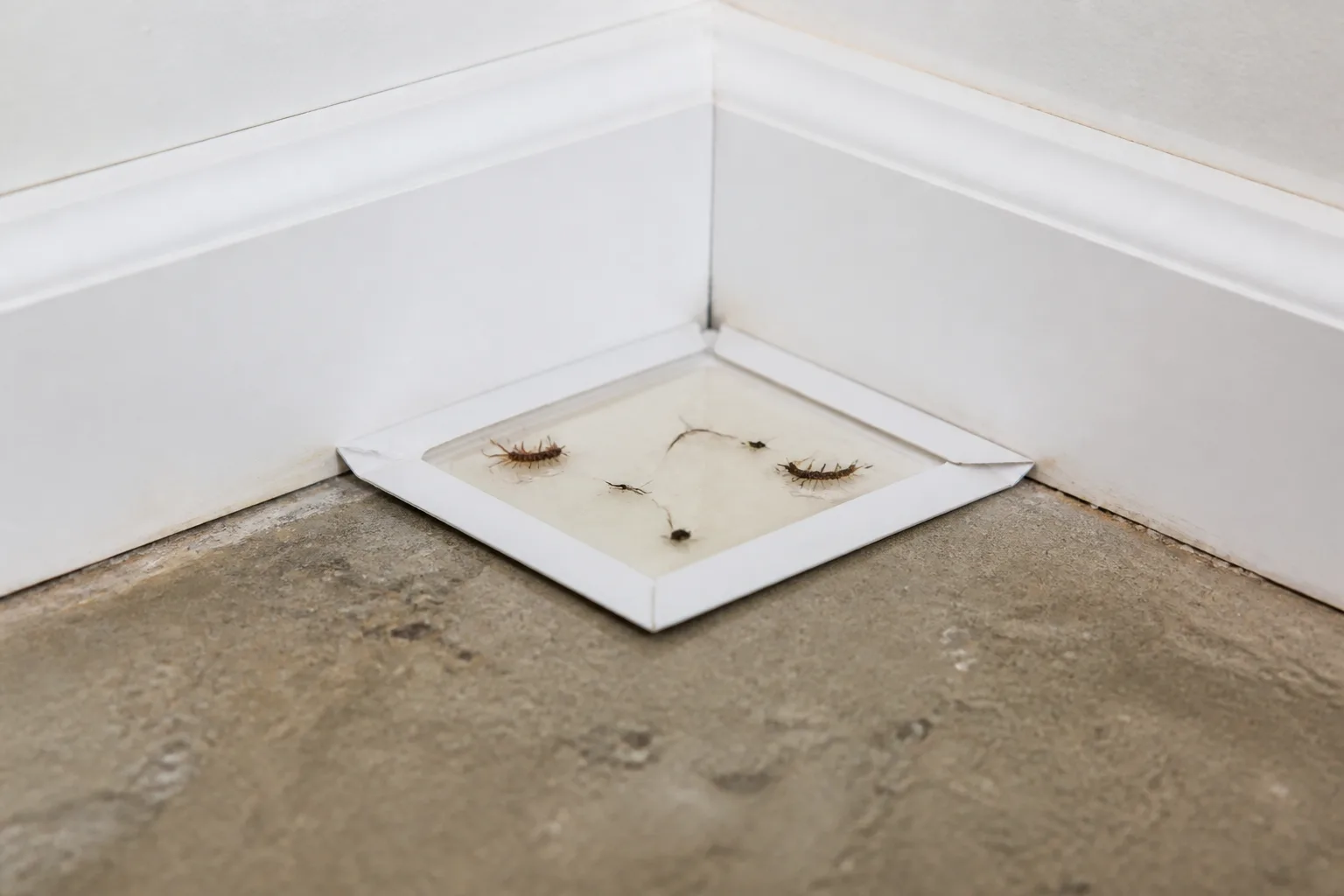
Check them on a regular schedule, photograph captures before discarding them, and record the room and date. A trap is a monitor as much as a control tool; it offers a sample, not a complete census.
If traps catch a house centipede near the same wall each time, inspect that edge for moisture, clutter, prey, and openings. If only other insects appear, identify those captures first.
Move a monitor only when you can compare locations fairly; changing its position every day makes a week-to-week pattern harder to interpret. Follow the product’s directions for placement and disposal, and do not use sticky boards where pets could become stuck.
Traps will not dry a basement, repair a leak, seal a sump, or solve an insect problem hidden in stored food. Think of the result as information that guides the next action. Remove the condition or route you found, then leave a monitor in place long enough to see whether sightings decline.
Skip fixes that sound natural but miss the source
Online advice often promotes essential oils, mothballs, vinegar, diatomaceous earth, or broad insecticide sprays as universal centipede repellents. A strong smell is not evidence that a route or prey source has been corrected.
Mothballs are pesticides intended for specific labeled uses, not loose indoor repellents; never scatter them around a room. Essential oils can irritate people or harm pets depending on the substance and exposure, so “natural” is not a guarantee of safety.
Diatomaceous earth deserves particular care. It is a dust that can affect insects when they contact it, but dust can also become airborne and irritate eyes or airways.
The National Pesticide Information Center’s general fact sheet explains that food-grade status does not mean a product is safe for every pesticide use; use only a registered product according to its label and avoid creating airborne dust. A powder spread across a basement floor is not a substitute for fixing water or sealing a crack.
For pesticides, read the label before purchase and again before use. The label identifies allowed sites, application directions, hazards, and precautions; use the product only as directed for the stated pest and location. Keep products away from children and pets, and do not apply indoor treatments simply because you saw one centipede.
NPIC’s label guidance explains why label directions determine how a pesticide may be used. If you believe a targeted treatment is necessary, ask a licensed professional to identify the pest and explain nonchemical options first.
When to call a pest professional
Consider professional help when sightings continue after you have corrected visible dampness and sealed obvious gaps, when sticky monitors show activity in several rooms, or when you find other pest evidence you cannot identify. Also get help if the likely source is inside a wall, crawlspace, sump, or inaccessible mechanical area. A qualified professional can inspect those spaces, identify prey, and explain whether control is needed rather than selling a treatment based on one sighting.
Ask what the inspection found, which pest was identified, what the treatment is intended to control, and which nonchemical steps should accompany it. If a pesticide is proposed, ask to see the product label and how the planned use follows it. You should understand where the product will be applied, what preparation is needed, and what precautions apply to people and pets. Colorado State University Extension says interior insecticide applications are generally not recommended for centipedes and other occasional household arthropods; that supports moisture management and targeted assessment before routine indoor spraying.
If a service recommends broad treatment without locating moisture, prey, or an entry point, ask for the evidence behind that recommendation and whether monitoring or exclusion can address the issue. There may be cases where a professional treatment is appropriate, but an inspection should lead to a specific plan with a clear target and follow-up—not a promise that every arthropod can be kept out forever.
Follow a two-week prevention plan
For a practical first pass, start with the room where you found the centipede. On day one, remove it safely or leave it alone, take a photo if identification is uncertain, and write down the location.
Place one or two sticky monitors where children and pets cannot reach them. Check for obvious leaks, condensation, wet cardboard, an open sump cover, or a dry floor drain.
During the next few days, fix the clearest moisture issue and move storage off the floor. Inspect the foundation-side wall, pipe gaps, screen, and nearest exterior door; seal only openings you can identify and safely repair. If the room is damp throughout, track whether the dehumidifier is collecting water and whether the area dries, but investigate ongoing seepage instead of relying on the appliance alone.
At the end of the first week, review what the monitors caught. Identify other insects before acting on them, and look for a route near repeated captures.
Continue to check traps at the same interval and location through the second week. A decline in captures after a repair is useful evidence that the action helped, though it does not prove the route is permanently closed.
If the same room continues to produce centipedes or multiple monitors show activity across the home, gather your dated notes and photos and arrange a targeted inspection. If there are no further sightings and the room is dry, no additional intervention may be needed. Keep the fixes that prevent water entry and reduce hiding places; you do not need to maintain pesticide treatment as a routine precaution.
Conclusion
To control house centipedes, remove an individual without touching it, then look for the conditions that make repeat visits more likely: damp shelter, other small arthropods, and an opening into the home. Dry persistent wet areas, correct leaks, reduce clutter near foundation walls, seal appropriate gaps, and use sticky monitors to learn where activity continues. Treat a bathroom or basement sighting as a starting clue rather than proof of a drain infestation.
One centipede usually calls for a calm removal and a quick check, not a whole-house spray. If sightings persist or the source is hidden, use your notes and trap evidence to guide an extension office or licensed pest professional toward a specific inspection. That gives you a proportionate plan while leaving beneficial centipedes outdoors to do their work.