How to Grow and Care for Eastern Prickly Pear Cactus
Grow eastern prickly pear cactus in a rock garden or pot. Get practical guidance for drainage, watering, winter dormancy, flowering, and pad cuttings.
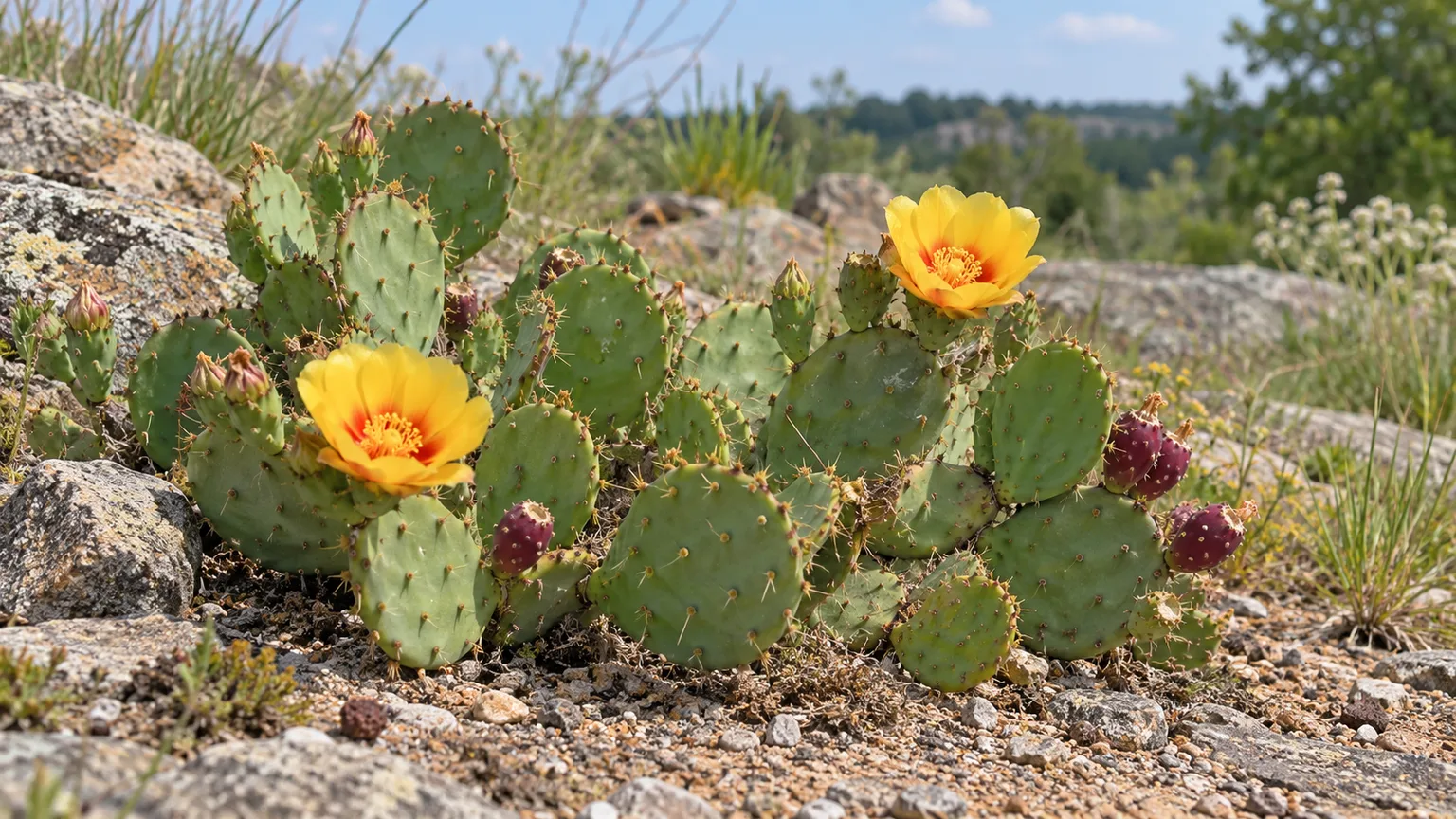
Eastern prickly pear looks like a desert cactus, but it is a native perennial of eastern and central North America that can handle cold winters when its roots stay well drained. Its compact, spreading pads, bright flowers, and edible fruit make it an unusual rock-garden plant; its nearly invisible glochids make placement and handling decisions just as important as watering. The reliable formula is straightforward: give Opuntia humifusa direct sun, mineral soil that sheds water quickly, and less routine irrigation than most garden plants.
The part that catches gardeners off guard is winter. A healthy plant may deflate, flatten, and turn bronze or purplish in cold weather, then firm up again in spring. That seasonal change is not a cue to water it; persistent dampness around the roots is a greater threat than a dry dormant pad.
Know what makes eastern prickly pear different
Eastern prickly pear (Opuntia humifusa) is a low, clump-forming cactus with flattened oval pads rather than a tall trunk. A mature clump commonly reaches about 6 to 12 inches high and 12 to 18 inches wide, though growing conditions and local plant populations can change its size.
The name “eastern” matters: this species’ cold tolerance should not be assumed for every cactus sold as prickly pear. NC State Extension describes it as native to eastern parts of the United States and Mexico and lists it for USDA Zones 4a through 9b; treat those zones as a broad guide, not a guarantee for every cultivar or wet microclimate. (NC State Extension Plant Toolbox)
The flat pads are photosynthetic stems, not ordinary leaves. Small barbed bristles called glochids cluster on the pad surfaces, and they can lodge in skin even when the plant appears spineless. Eastern prickly pear is often described as having few or no long spines compared with other Opuntia, but the fine bristles alone are enough reason to keep it away from narrow paths and to use tools when moving it. (Penn State Extension)
The cactus is slow to establish and often forms a wider colony as pads root where they touch the soil. It works best as a deliberate feature in a rock garden, dry slope, raised bed, or large outdoor container rather than as a soft edging plant. Before planting, decide whether you can keep the spreading pads and their glochids clear of foot traffic, play areas, and pets.
Choose a site that handles both sun and winter weather
Look for an open spot with direct sun and soil that does not stay wet after rain. In its natural range, eastern prickly pear is associated with sunny sandy or rocky places; NC State Extension also notes its intolerance of shade and poorly drained soil. A south-facing slope or raised rock garden often solves two problems at once: it receives strong light and allows excess water to move away from the shallow roots. (NC State Extension Plant Toolbox; Purdue University Arboretum)
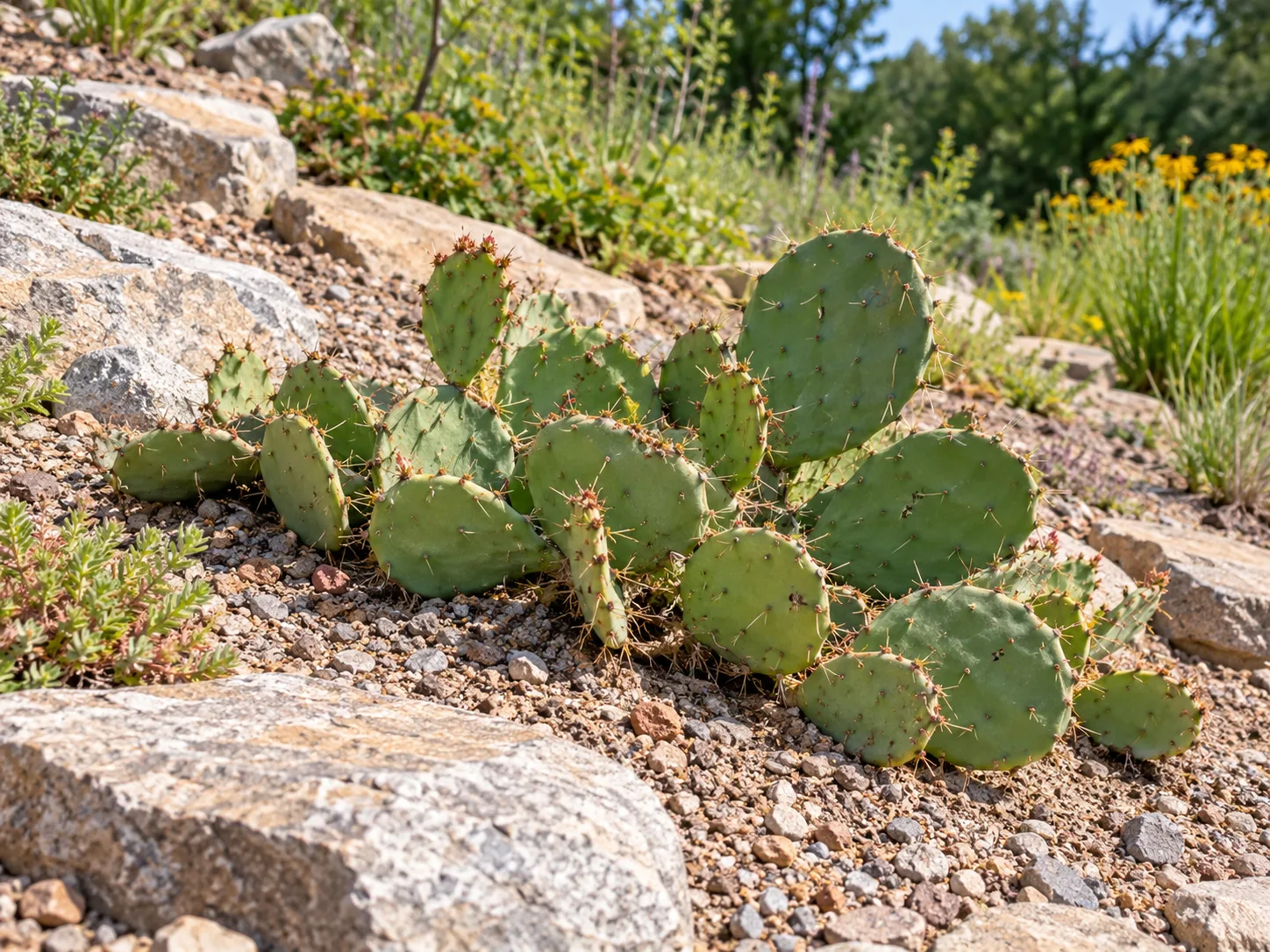
Rainfall and winter exposure deserve more attention than a hardiness-zone number by itself. An in-ground plant may survive freezing weather but still fail in a level bed where snowmelt and rain pool around the crown for days. If your garden has heavy clay, a low spot, or a long rainy winter, use a raised bed, a mound, or a container rather than trying to “fix” a wet planting hole with a handful of gravel.
Also leave room for the plant’s edges to grow outward. A broad gravel strip around it is easier to maintain than turf that needs mowing close to glochid-covered pads. Avoid putting it beside a frequently used gate, walkway, or kneeling area where someone may brush against a fallen pad without seeing it.
Give the cactus enough direct light
Choose a location that receives at least six hours of direct sun each day; more sun generally supports compact pads and flowering. NC State Extension classifies eastern prickly pear as a full-sun plant, while the Purdue Arboretum likewise describes a dry, sunny exposure. In very hot regions, a little late-afternoon protection may help a recently planted or container-grown specimen settle in, but routine deep shade is not a good substitute for the open habitat this cactus prefers. (NC State Extension Plant Toolbox; Purdue University Arboretum)
Give nursery plants time to adjust if they were grown under shade cloth or in a greenhouse. Move a potted plant outdoors into brighter conditions in stages over a week or two, then plant it where it can receive full sun. This brief transition reduces the chance that a suddenly exposed pad becomes scorched; it does not mean the cactus should remain indoors or under shade through the growing season.
Indoors, the light problem is more severe. A bright room can still be far dimmer than an outdoor site, and an east-facing window may not provide the sustained direct light this species needs.
If you are growing it as a houseplant, use the sunniest unobstructed window available, rotate the container periodically, and watch for stretched, pale new pads. For a full indoor setup, see the site’s prickly pear cactus indoor guide; outdoor planting remains the easier fit for this hardy native.
Build drainage into the soil before planting
Use a gritty, fast-draining soil that does not remain saturated after a storm. Sandy soil, shallow rocky soil, and a mineral-rich cactus mix are all suitable starting points.
The Purdue Arboretum lists dry, well-drained sandy or gravelly soil, and NC State Extension specifically warns against wet, poorly drained ground. Organic matter should be modest: a rich, moisture-holding mix may work for thirsty perennials but can keep this cactus’s roots wet for too long. (Purdue University Arboretum; NC State Extension Plant Toolbox)
Test the site before planting. After a soaking rain, check whether water runs off or disappears into the ground within a reasonable period. If the hole remains shiny or muddy the next day, do not set the cactus at the bottom of that hole.
Build a raised mound from a mineral soil blend, place it on a slope, or select a container with open drainage holes. A gravel layer at the bottom of a pot does not repair compacted soil above it and may leave the root zone wetter, not drier.
For a garden bed, blend coarse mineral material through the planting area rather than creating a small pocket of loose soil inside dense clay. The goal is a continuous route for water to drain away from the roots. A shallow covering of gravel can keep pads from resting on wet organic mulch, but it is not a replacement for correcting the bed’s drainage.
Plant carefully and leave room for the colony to spread
Plant in spring or early summer, when the soil is workable and the growing season gives roots time to settle before winter. Choose a nursery specimen with firm pads and no mushy dark patches at the base.
If you are transplanting a cactus, handle it with long tongs, a folded piece of cardboard, or another stable barrier; thick gloves may help, but small glochids can penetrate some fabrics. Penn State Extension recommends protective gloves and eye protection and cautions that even leather gloves are not infallible. (Penn State Extension)
Dig a hole only as deep as the root ball and about twice as wide. Set the plant at the same level it grew in its nursery pot, backfill without burying the lower pads, and firm soil gently so the plant does not rock.
If the pad cluster is unsteady, brace it with stones around the root ball rather than pushing a stake through the cactus. Keep the site dry while any damaged roots or pad joints heal.
Plan for mature width instead of crowding it into a tiny gap. NC State Extension gives a typical spread of roughly 1 to 1.5 feet, and pads that touch soil can root and expand the colony beyond the original root ball. A gravel or rock border makes that growth easier to see and keeps mowing, weeding, and foot traffic away from the plant.
Water by establishment and soil condition
An established eastern prickly pear in the ground usually needs little supplemental water once its roots are growing. Natural rainfall may be enough in many regions, while containers and prolonged hot, dry spells can need occasional watering.
Do not follow a fixed weekly schedule: first check the soil below the surface and consider recent rain, temperature, wind, and whether the plant is newly rooted. Penn State Extension describes it as a plant for sunny, dry, rocky soil; Plants for a Future notes that it can use more moisture during active growth while needing winter dryness. (Penn State Extension; Plants for a Future)
For a newly planted nursery cactus, water enough to settle the soil around the roots, then let the planting area dry before watering again. Avoid daily sips that keep the crown damp.
Once the plant is established, water only when the root zone has dried and conditions are unusually dry for long enough that pads remain limp during the active growing season. A slight wrinkle during a hot afternoon is not proof of thirst; check again in the cooler morning and inspect the soil first.
Containers dry faster than ground beds, but that does not mean the cactus wants frequent small drinks. Water thoroughly so the whole root ball is moistened, then allow excess to drain and wait for the mix to dry before repeating.
In cool weather and winter dormancy, reduce watering sharply or stop, especially where the container is sheltered from rain. If pads are soft and translucent, with dark tissue at the base, suspect rot rather than underwatering.
Grow eastern prickly pear in a pot
A pot is useful when your yard has heavy soil, winter rain, limited space, or a need to keep the plant away from paths. Choose a sturdy container with several unobstructed drainage holes and a diameter only modestly wider than the root ball. A porous clay pot dries faster than plastic, while plastic is lighter and holds moisture longer; either can work if you adjust watering to the mix rather than the material alone.
Use a commercial cactus mix or make a loose blend with a substantial mineral fraction such as pumice, coarse sand, or small gravel. Do not rely on a layer of stones at the bottom to create drainage. Penn State Extension specifically warns against filling the base with pebbles because water can remain near the roots; the mix itself and the open drainage holes must do the work. (Penn State Extension)
Set the pot outdoors in full sun once nights and weather suit the plant, and keep it where heavy rain will not leave the mix saturated for days. Check the drainage holes before a storm season and empty any saucer after watering.
Repot only when the clump is genuinely crowded or the soil has broken down, not simply because one new pad appears. Use tongs and a stable work surface, and keep the plant upright while roots recover in fresh dry mix.
In a cold-winter region, container roots are more exposed to freezing than roots in the ground. A sheltered, unheated garage or cold frame can protect the pot from repeated wet-freeze cycles while keeping the plant cool and dormant. Avoid moving it into a warm dim room for months; that can encourage weak growth without providing enough direct light.
Let the cactus rest through winter
Cold weather can make eastern prickly pear pads flatten, wrinkle, turn dull green or purplish, and lie close to the ground. Penn State Extension describes this as a seasonal response: the pads gradually plump and stand upright again as warmer weather returns. That change alone does not mean the plant needs water, and watering a dormant cactus in cold soil can make a minor seasonal appearance turn into root rot. (Penn State Extension)
The key distinction is texture and drainage. A firm, deflated pad with intact skin is consistent with dormancy.
A pad that becomes soft, dark, wet-looking, or collapses from the base in a poorly drained site is more concerning. In a wet-winter climate, improve the planting position before the next cold season: lift the plant onto a raised bed, give it a rain-protected but ventilated site, or move its container beneath an overhang where air still circulates.
This species is listed across cold hardiness zones by regional plant references, but zone ratings describe average annual minimum temperatures rather than soil moisture, snow cover, or the exact origin of a nursery plant. NC State and Purdue include Zone 4 in their profiles, while horticultural references may use slightly different endpoints. Use local extension guidance for your location and treat winter drainage as a separate requirement from cold tolerance. (NC State Extension Plant Toolbox; Purdue University Arboretum; Grow Paradise)
Skip routine fertilizer in a garden bed
An in-ground eastern prickly pear growing in ordinary mineral soil generally does not need regular fertilizer. Heavy feeding can encourage soft, fast pad growth that is less compact and may be more vulnerable to winter moisture or breakage. If the plant is healthy but not flowering yet, first check age, direct sun, and the length of its growing season rather than assuming it needs a fertilizer boost.
Container plants have a smaller reserve of nutrients, but still do not need aggressive feeding. If growth is pale or has stalled after checking for rot, pests, and adequate light, use a diluted balanced fertilizer labeled for cacti during active spring or summer growth.
Follow the label and skip feeding in fall and winter. Avoid pushing a mature cactus to bloom by applying a high-phosphorus product on a rigid monthly schedule; flowering depends on maturity, light, and seasonal growth conditions as well as nutrition.
Repotting into fresh, free-draining mix may be more useful than fertilizer when an old container has compacted soil or a clogged drain. If the plant is established outdoors, minimal intervention is usually safer than trying to make it grow faster.
Encourage flowers and fruit without forcing growth
Mature eastern prickly pear produces showy yellow to gold flowers, sometimes with reddish centers, in late spring or early summer depending on climate. Flowers appear at pad edges and are followed by fleshy fruit that ripens from green toward red or purple.
The NC State Plant Toolbox notes that flowers attract bees and that birds and box turtles use the fruit; Purdue also describes yellow blooms and red fruit. Flowering can vary by age, weather, and site, so a young or newly transplanted cactus may take time to bloom. (NC State Extension Plant Toolbox; Purdue University Arboretum)
Full sun and good drainage are the main conditions you can control. Let the plant establish instead of cutting it back to shape or forcing new pads with extra water.
Removing healthy pads can reduce the plant’s ability to build energy, and pruning away flowers prevents fruit from forming. If you want fruit, leave the blooms in place and give the cactus the sunny growing season it needs; pollination and fruit set are not guaranteed in every setting.
The fruits are described as edible in plant references, but their small bristles can cause injury and harvesting requires accurate identification and careful preparation. You do not need to harvest them for the plant to remain healthy or ornamental.
Leave fruit for wildlife if that suits the garden, or ask a knowledgeable local source about safe handling before attempting to eat it. Do not assume that preparation instructions for a larger cultivated prickly pear species apply exactly to this one.
Prune and handle pads without touching glochids
Pruning is rarely necessary except to remove a damaged pad, control spread, or create a safer boundary. Plan the cut before approaching the cactus.
Use long-handled tongs to steady the pad and a sharp, clean knife or lopper to sever the joint; keep your face and hands out of the pad’s path. Wear eye protection and sturdy gloves, but treat the tools and cardboard barrier as the main protection because glochids can work through some gloves. (Penn State Extension)
Cut at the narrow joint where the pad connects to the next segment, and avoid crushing the tissue. If you are removing a diseased or rotting pad, clean the blade between cuts and remove the affected material from the planting area. For simple size control, remove only a few pads at a time and avoid taking so much green growth that the remaining plant is left with little photosynthetic surface.
Do not sweep fallen pieces with bare hands or place them where children or pets can investigate them. Collect them with tongs and put them in a sturdy container; pads can root when they land in suitable soil, so leaving scraps on the bed may start unwanted plants.
After pruning, keep the wound dry while it heals. If you need to repot or divide a larger clump, see the site’s cactus transplanting guide for general handling and root-care steps.
Propagate from a pad cutting
Pad cuttings are the quickest practical way to make another eastern prickly pear. Choose a firm, healthy pad and remove it at the joint with a clean sharp tool while holding it with tongs or a folded piece of cardboard.
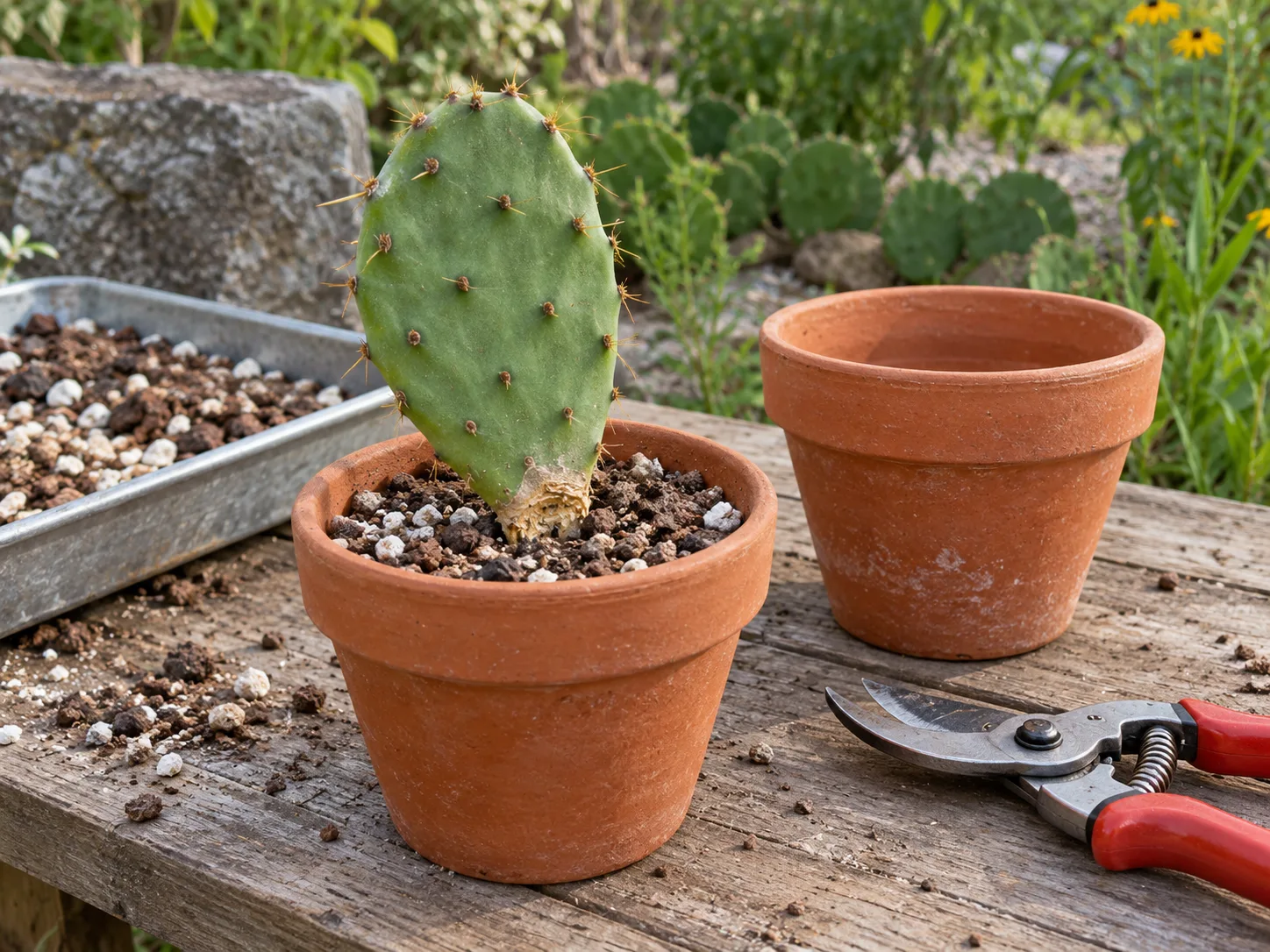
Do not twist the pad by hand; a clean cut is easier to callus and reduces the chance of tearing tissue or brushing against glochids. Penn State Extension describes pad propagation as straightforward once the cut end has dried. (Penn State Extension)
Set the cutting in a dry, shaded, airy place until the cut surface is fully callused. Depending on pad size, temperature, and humidity, this can take several days or longer; the important sign is a dry, sealed surface, not an exact number on the calendar.
Plant the callused base shallowly in a small pot of dry cactus mix, just deep enough to stand upright. If necessary, brace the pad with clean stones around the outside of the base instead of burying more of it.
Keep the pot warm and bright, but out of harsh midday sun while it forms roots. Hold off on watering at first; a fresh cut in wet mix is more likely to rot than to root faster.
After the pad resists a very gentle tug or shows new growth, begin watering lightly and allow the mix to dry between drinks. Once roots and new growth are established, gradually acclimate it to outdoor sun and plant it in its permanent well-drained spot.
Start eastern prickly pear from seed
Growing from seed is possible, but it takes patience and the young seedlings are more vulnerable to overwatering and cold than an established plant. Seed-grown cacti also vary genetically, so they may not match the parent plant exactly in pad shape, size, flower color, or growth habit. Choose this method if you enjoy raising native plants from the beginning; choose a pad cutting if you want a faster, more predictable clone.
Use ripe fruit from a correctly identified plant or obtain seed from a reputable native-plant supplier. Clean away pulp, then sow the seed in a clean, very free-draining medium during spring. Keep the medium lightly moist enough for germination, never waterlogged, and provide warmth and bright light.
Plants for a Future recommends starting seed in a greenhouse and growing young plants under protection through their first winters before planting outdoors; the time needed will vary with conditions. (Plants for a Future)
Do not move small seedlings straight into a harsh exposed bed after a few weeks of growth. Let them develop a stronger root system in containers and gradually expose them to outdoor conditions.
Keep pots well drained through winter and avoid letting seedlings remain waterlogged. The slower route can be rewarding, but it is not the best choice when you need quick ground cover or want flowers soon.
Diagnose rot, pests, and weak growth
When a pad looks wrong, check the soil and texture before reaching for water or fertilizer. A seasonal wrinkle in cold weather may be normal, while soft, water-soaked, yellowing tissue near the base points toward excessive moisture or rot. If only one pad is affected, remove it carefully with clean tools and improve airflow and drainage; if the base of the whole plant is mushy, the root system may already be seriously damaged.
Dark, dry spots can follow injury or fungal disease, especially after prolonged wet weather. Isolate the plant from nearby cacti if lesions are expanding, avoid overhead irrigation that leaves pads wet, and remove severely affected tissue with disinfected tools. There is no universal treatment for every black spot: a firm corky scar is different from a growing wet lesion, so use local extension identification before applying a fungicide.
Inspect pads for scale or mealybugs if you see cottony clusters, sticky residue, or an unusual decline. NC State lists both scale insects and mealybugs among possible pests.
Use a magnifier and confirm the insect before treating, because white fibers or dried plant material can look like pests. For a small infestation, isolate the plant and ask an extension office for a labeled, plant-safe treatment; avoid coating a sunlit cactus in oil or household alcohol without checking product directions and testing for injury. (NC State Extension Plant Toolbox)
Weak, stretched pads point to insufficient light more often than hunger. Lack of flowers can reflect a young plant, shade, a short growing season, or damage to flower-bearing pads; it does not automatically mean the cactus is unhealthy. Fix one likely cause at a time: move the plant toward brighter light, confirm the soil drains, and then wait through a full growing season before judging the change.
Conclusion
Grow eastern prickly pear in full sun and fast-draining soil, then adjust watering to whether it is newly planted, established, or growing in a pot. The species can tolerate cold better than many familiar cacti, but winter waterlogged soil, compacted clay, and careless handling of glochids can still cause problems. Give it a dry site, room to spread, and a careful barrier between the pads and people, and let its seasonal winter flattening happen without trying to plump it up with water.