How to Transplant a Cactus Safely in a Pot or Garden
Repotting or moving a cactus outdoors? Choose a season by plant type and climate, lift it safely, preserve roots, and time the first watering.
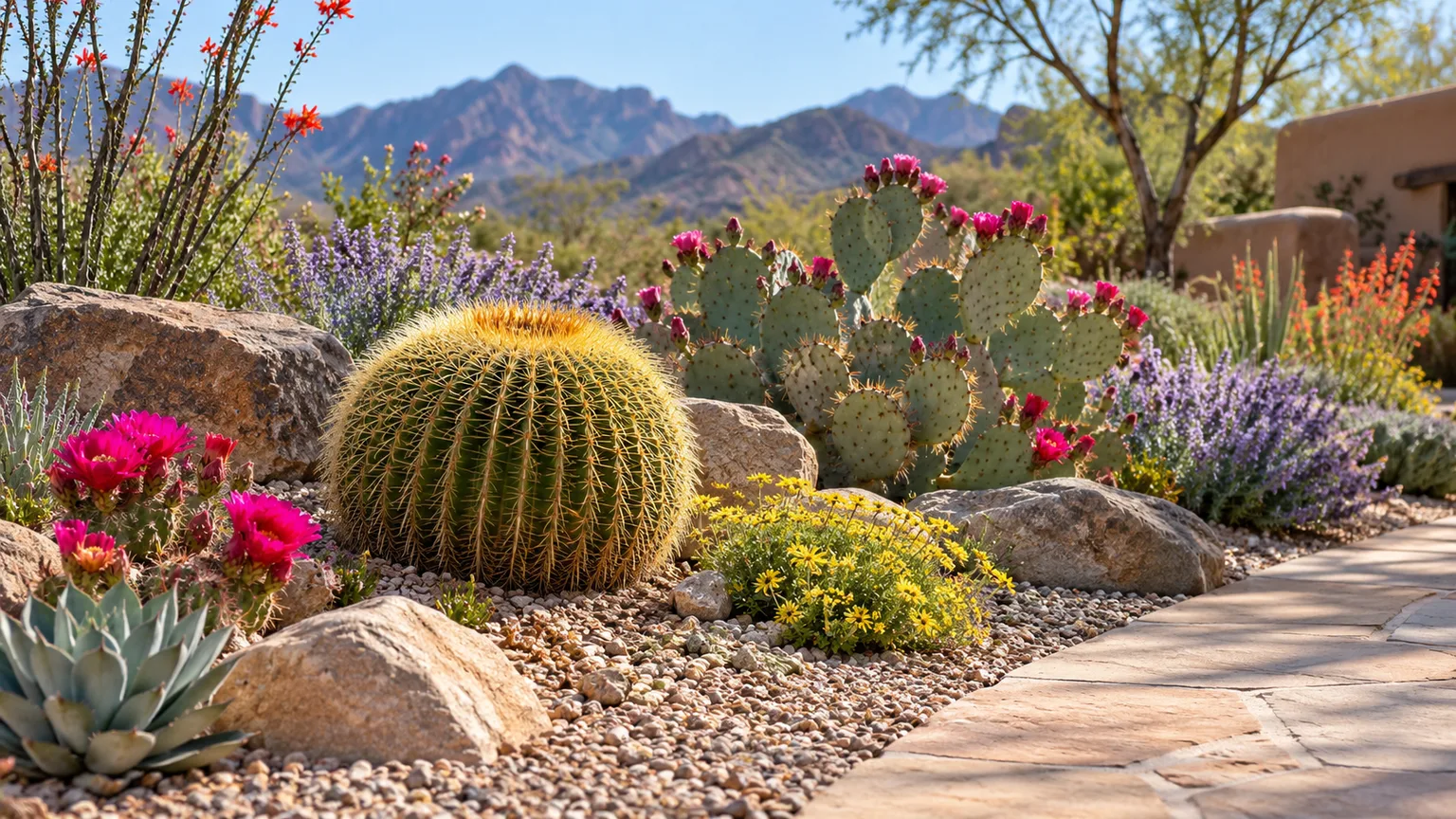
The safest cactus transplant is the one you plan before touching the plant. Decide first whether it is growing in a pot or rooted in a garden bed; those jobs share the same priorities—protect the spines, preserve healthy roots, and keep the stem at its original depth—but the lifting and watering steps differ.
In brief: Move a healthy potted desert cactus as active growth begins, usually in spring, using a pot with drainage and only a little extra room. Move an outdoor cactus only when a better site or an urgent problem justifies disturbing it. Use a broad barrier instead of gripping the stem, keep the root zone as intact as practical, replant at the former soil line, and delay watering if roots were cut. A large or awkward specimen is a job for experienced help.
Decide whether the cactus needs a move
A cactus does not need a larger pot just because a year has passed. Many grow slowly and tolerate a snug container. Roots appearing through drainage holes, a root ball that has displaced most of its mix, water that runs through immediately, a cracked pot, or a plant that repeatedly tips over are better reasons to inspect it. If the medium still drains and the plant is stable, leave it alone.
For a cactus already in the ground, relocation is justified when construction, a persistently wet site, inadequate light, or a genuine safety conflict threatens the plant or people. A cactus that is merely leaning may be responding to light, shallow roots, or an unstable planting site; digging it up without diagnosing the cause can add stress without fixing the problem. Correct a drainage or light issue in place when that can be done safely.
There are two different tasks hidden in “transplant a cactus.” Moving a nursery cactus from its pot into a garden bed means establishing it in a new site; moving a mature landscape cactus means excavating roots that may extend far beyond the visible stem. Repotting a houseplant is usually smaller, but a pot-bound root mass can still be fragile. If your question is specifically about routine container repotting, our cactus repotting guide covers that job in greater detail.
Choose timing for cactus type and local climate
The useful target is a period when the plant can resume root growth without facing a second stress immediately afterward. For many desert cacti in containers, that means the start of active growth after winter rest. For an outdoor move, it means warm, workable soil and a forecast without frost, prolonged rain, or extreme heat. These are conditions, not universal calendar dates.
Container-grown cacti
For an arid-climate cactus kept indoors, look for fresh growth and lengthening days, then repot before the main growing season is well underway. University guidance varies by region: UF/IFAS points to spring and gives January or February as a Florida example, while Clemson Extension describes April as a useful window in South Carolina. The difference is a reminder to use local conditions rather than copying a month from another climate. Avoid routine repotting during winter dormancy or while the plant is flowering if the pot is not causing an urgent problem.
Holiday and other forest cacti are exceptions to desert timing and care. Christmas, Thanksgiving, and Easter cacti have flatter, segmented stems and prefer filtered light and a more organic, moisture-retentive mix than a barrel cactus. Clemson Extension’s indoor cactus guidance distinguishes these rain-forest cacti from desert types. If one needs repotting, wait until flowering is over and use a mix and watering rhythm suited to its roots; do not apply a dry-desert schedule just because the plant’s common name includes cactus.
An outdoor specimen should be moved in the plant’s favorable growth window, but that window differs by species and region. UC ANR describes late spring or summer as a planting period for cacti in its California context, while Arizona Cooperative Extension’s transplant guide gives more specific advice for desert landscape specimens and stresses dry planting. In a very hot climate, avoid the most punishing heat if a milder warm period is available; in a frost-prone climate, wait until freezing weather has passed and the selected species is suited to the site. If timing is poor and the cactus is not in danger, wait.
When leaving a cactus in place is safer
Do not repot or dig up a healthy cactus simply to refresh its appearance. A plant that is stable, growing normally, and draining well can remain slightly pot-bound. Similarly, a landscape cactus with an established root system may handle its present position better than a new one, even if it is not perfectly centered in the bed.
Postpone a nonurgent move if the cactus is dormant, blooming, dehydrated, sunburned, or already weakened by pests or rot. The University of Arizona Cooperative Extension notes that transplanting is more successful with a healthy plant and recommends addressing disease or desiccation where the cactus is before moving it. If an outdoor cactus has severe root or stem rot, moving it may be part of rescue work, but it is not a routine relocation: remove the cause of wetness and assess whether sound tissue remains.
Leave large, mature, heavily armed, clustered, or top-heavy plants to professionals when you cannot control their weight and direction. A cactus can be far heavier than it looks, and a fall can injure the handler while snapping ribs, arms, or spines. A good rule is simple: if you cannot move it without putting your hands, face, back, or another person in the fall path, do not lift it yourself.
Prepare tools and a spine-safe work area
Stage the destination, soil, tools, and a clear route before loosening the plant. Wear long sleeves, long pants, closed-toe shoes, sturdy gloves, and eye protection when the cactus has fine or numerous spines. Gloves reduce contact but are not puncture-proof; plan to keep your hands away from the plant body even when they are on.
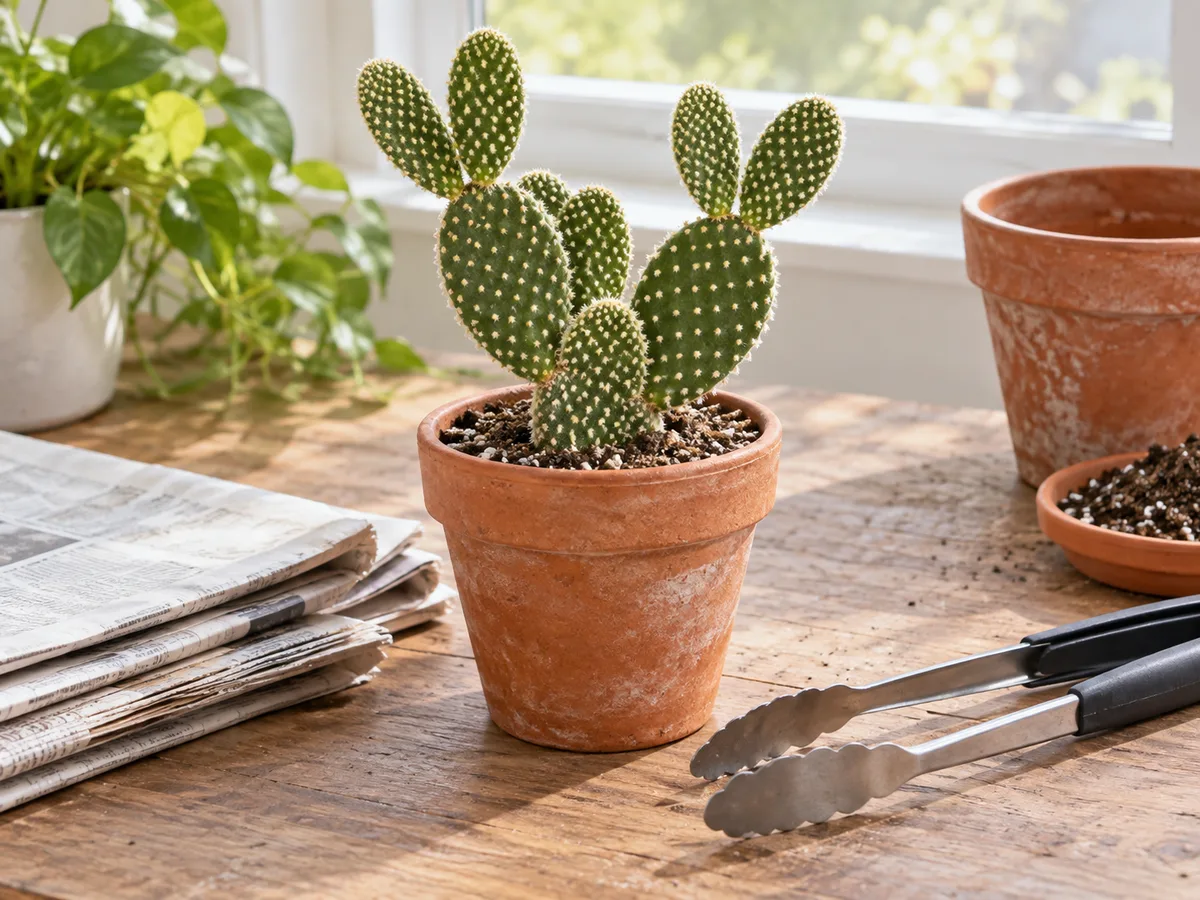
For a small, sturdy specimen, use a folded band of newspaper or corrugated cardboard as a collar. A thick towel or carpet strip can distribute weight on a larger cactus, but it can also collect detached spines, so treat it as contaminated after use. A wide sling or section of hose can help control a heavy plant without pinching a stem. Use tongs only for small plants that they can support gently; pressure from metal jaws can bruise pads or break ribs.
Set a pot on a stable, low surface or put a large garden specimen on a padded tarp, not on a narrow bench. Keep children and pets out of the work zone, and do not carry the cactus through a room where loose spines could land on upholstery. Have a helper, hand cart, and lifting route ready before you start with any plant too large to control alone. Never lift a cactus by its crown, a fragile arm, or its roots alone.
Handle ordinary spines and glochids differently
Some cacti have long, visible spines; prickly pears and bunny-ear cacti may also carry tiny, barbed bristles called glochids. Glochids detach easily and can be hard to see, so a towel or ordinary fabric glove is not a dependable barrier. For an Opuntia, use a disposable paper or cardboard shield, avoid brushing the pads, and keep sleeves and reusable fabric away from contact. Do not shake or blow off a contaminated wrap.
After the move, set disposable barriers directly into a closed waste bag. Inspect tools, shoes, and the work surface under bright light, and clean them before bringing them indoors. If spines or glochids enter an eye or another sensitive area, or you cannot remove them without digging into skin, seek medical care rather than continuing to handle the plant. The safest strategy is to prevent contact and keep any detached bristles contained.
Prepare the receiving pot or planting site
Prepare the destination before unpotting or digging. The cactus should spend as little time as possible with exposed roots, especially in sun, wind, or hot dry air. Match the new location to the species’ mature size, light needs, hardiness, and drainage; moving a cactus into another unsuitable spot only repeats the problem.
For a container
Choose a pot with an open drainage hole, only modestly larger than the root ball. A pot one size up is usually enough; a large volume of unused mix dries slowly and can keep roots wet. A heavy pot may stabilize a columnar or top-heavy plant, while a wider, shallower container can suit a low clumping form. Unglazed terracotta dries faster than plastic, so the material should fit both your room and watering habits.
Use a free-draining cactus mix appropriate to the plant. Desert types generally need a more mineral, airy medium than forest cacti, which tolerate more organic material while still requiring drainage. Do not try to compensate for a pot without a drainage hole by adding rocks at the bottom. The Chicago Botanic Garden’s repotting guidance recommends a pot with adequate drainage and a cactus mix; the hole and the mix work together to let excess water escape.
For an outdoor bed
Choose a sunny site only if that matches the cactus’s current exposure and species. Mark the plant’s south-facing side before moving it; Arizona Cooperative Extension explains that preserving compass orientation can reduce sunburn risk on a specimen accustomed to its former exposure. If the new site is brighter, introduce extra sun gradually with temporary shade rather than expecting a suddenly exposed side to tolerate it.

Check drainage before digging. Cacti need a site where water does not collect around the roots. If the native ground is heavy clay or stays wet after rain, consider a raised mound or a different location instead of creating a deep amended pocket that holds water. UC ANR’s landscape guidance recommends a planting hole roughly one and a half times the root ball’s width and no deeper than the original root zone; Arizona Extension likewise emphasizes a shallow hole that accommodates roots without setting the cactus lower.
Lift the cactus with its roots supported
The lifting principle is the same for every cactus: move the container or support the root ball; do not pull on the stem. Protect the work area from loose spines and avoid rushing once the roots are exposed.
Remove a cactus from a pot
Let the old mix dry before an ordinary repot. Dry medium is lighter and releases more cleanly from the pot than wet, sticky soil. Put on protective clothing, wrap the cactus with a broad barrier, and lay the pot on its side. Squeeze a flexible nursery pot or work a blunt tool around the inner edge of a rigid pot to loosen the root ball. Then slide the pot away while supporting the plant and soil mass.

If the root ball sticks, stop and loosen more of the rim instead of yanking the cactus upward. With a cheap or cracked pot, cutting or breaking the container may be safer than twisting the plant. Keep the root mass cradled; do not grab a tall cactus by its top or support it by a thin branch. The method shown by Fine Gardening’s cactus repotting demonstration uses a wrap and a tilted pot so the container does the moving.
Lift an established garden cactus
Before digging, tie a loose marker on the south side and estimate how broadly the roots may spread. Many landscape cacti have shallow, brittle roots extending well beyond the stem, so start digging outside the immediate base and widen the hole as needed rather than stabbing close to the plant. Work around the root zone with a shovel, then undercut gradually once the cactus begins to loosen.
For a small-to-moderate specimen, wrap a padded sling around the body low enough to control its weight without crushing the growing tip. A second person should guide the plant and watch the root ball; use a cart or dolly for a heavy cactus. Set it on padded ground in shade while you prepare the new hole. Arizona Extension’s transplant instructions caution against lifting large cacti by their roots alone and recommend professional movers for very large specimens, including large saguaros.
Inspect roots and let damaged tissue dry
Brush or shake away loose soil gently so you can see the roots; do not scrub healthy fine roots clean just for the sake of a bare-root transplant. Keep sound roots whenever possible. Trim only roots that are broken, frayed, or clearly soft and rotten, using a clean sharp tool. Dark color alone is not enough to diagnose rot; texture, odor, and whether the root collapses are more useful clues.
If roots were cut, leave the cactus in a dry, shaded, ventilated place until the damaged ends are dry. The wait depends on the size of the cuts, temperature, humidity, and species; a few hours may not be enough for substantial root damage. Arizona Cooperative Extension says allowing cut roots to dry before planting can reduce infection risk and advises keeping the cactus dry and shaded during that interval. Do not leave it exposed for weeks without a reason, because a plant can become stressed and shade-grown tissue can sunburn when returned outdoors.
Healthy nursery plants with a root ball that remains mostly intact need less drying time than a cactus whose roots were severed during a landscape move. Do not apply fungicide or sulfur automatically. Extension sources mention treatments in specific contexts, but routine use is not a substitute for clean cuts, dry planting conditions, correct drainage, and a suitable watering pause.
Replant at the original depth and orientation
Set the cactus at the depth it had before moving. The base of the stem should meet the soil at the same line as the former potting mix or garden surface; burying green stem to stop a lean creates a damp, vulnerable zone and can invite decay. If the plant rocks, stabilize the root zone with a stake, temporary brace, or firm backfill instead of covering more stem.
In a pot, center the root ball and fill around it with fresh mix. In a garden bed, spread roots naturally within the shallow hole and place the cactus so the south-facing marker points south again when practical. The University of Arizona Cooperative Extension transplant guide specifically recommends keeping the previous compass orientation and original planting depth for transplanted landscape cacti. These details matter most when a plant has spent years adjusting its surface to the sun.
If the cactus will not stand upright at the old depth, check whether the hole is too deep, the roots are tangled or damaged, or the plant needs temporary support. Do not pile a cone of soil against the stem. For a pot, a small layer of coarse grit on the surface can help keep the plant upright, but it must not bury the stem or block water from reaching the root zone.
Settle the soil without compacting roots
Backfill in small amounts and guide soil into visible gaps with a blunt stick or gloved fingertips. The goal is close root-to-soil contact without crushing the roots or packing the mix into a dense plug. Tap the side of a pot gently; for an outdoor plant, use a tool handle to settle loose soil beneath the root area while keeping pressure away from the stem.
Arizona Extension recommends backfilling a landscape cactus and firming soil beneath it so the plant does not settle into a cavity later. That does not mean stomping hard around the roots. A firm, stable surface with open drainage is more useful than compacted ground. If the cactus leans after the soil settles, correct the support now while the root zone is accessible rather than repeatedly tugging the plant later.
Water according to root damage and climate
There is no single first-watering interval for every cactus transplant. A root-pruned outdoor specimen in dry soil needs time for the cut ends to dry; a potted cactus with intact roots follows a shorter, container-specific pause. In both cases, water should be able to drain away, and the mix should not stay saturated.
For an ordinary container repot with no major root cuts, wait several days before watering, then soak the mix and let it drain fully. UF/IFAS and Clemson Extension both advise a short post-repot pause for arid cacti. If you cut away rot or damaged roots, wait until the wounds are dry before the first thorough watering; a calendar alone cannot tell you that a cut has healed. Forest cacti need a more moisture-retentive regime than desert species, so resume their usual care gradually rather than forcing them through a long desert-cactus drought.
For an outdoor cactus with cut roots, Arizona Extension recommends planting dry, waiting about a week before watering, and then adjusting irrigation to nighttime temperature and local rainfall. UC ANR’s broader landscape guidance, by contrast, recommends watering a newly planted cactus enough to moisten the soil and then waiting until the upper soil dries. Those approaches address different planting conditions and should not be collapsed into a universal instruction. When roots have been exposed or cut, use dry soil and give the wounds time to dry; with an intact nursery root ball in a warm, well-drained setting, follow local cactus-specific guidance and never leave the root zone soggy.
After that first watering, judge the next one by the soil, not by a weekly schedule. A pot in cool indoor light can remain damp much longer than one in warm sun. Outdoor soil, rainfall, humidity, and species all change the drying rate. If water is still present around the roots, wait; if the cactus begins to wrinkle while its mix is fully dry during active growth, it may need water sooner than a dormant plant.
Protect the cactus during recovery
Keep the plant in stable conditions while it rebuilds roots. A potted cactus can return to its usual bright location if the light is unchanged and gentle; if it was moved from shade to stronger sun, acclimate it over several days or use temporary filtered shade. For a landscape cactus, a shade cloth can reduce abrupt exposure after a move from a nursery house or shaded site, but do not leave a desert cactus in deep shade for weeks.
Skip fertilizer until the cactus has resumed growth. Fertilizer does not repair broken roots and can add salt stress when the plant is not yet taking up water normally. Do not keep checking for establishment by tugging on the stem. Look instead for steady posture, firm tissue, and eventually new growth; many cacti recover slowly, so a quiet month is not automatically failure.
Watch for changes that indicate a problem. A soft, dark base, sour smell, or mix that remains wet points toward excess moisture or rot; stop watering and inspect only if the symptoms continue or worsen. A pale or yellow patch on the sun-facing side after a move may be sunburn, so increase shade and future exposure more gradually. A little temporary wrinkling can follow root loss, but increasing collapse, soft tissue, or a plant that cannot anchor itself deserves a closer inspection.
Conclusion
Transplant a cactus only when its pot, roots, site, or safety makes a move worthwhile. Choose a favorable growth and weather window, protect yourself with a barrier rather than relying on gloves alone, and move the pot or root ball instead of pulling the plant by its stem.
Preserve healthy roots, let significant cuts dry, and set the cactus at its original soil depth; an outdoor specimen should also keep its former sun-facing orientation when possible. Then adjust watering to the amount of root disturbance, the cactus type, and how quickly the soil drains. If the cactus is healthy and stable—or too large for you to control safely—leave it where it is or bring in an experienced cactus mover.



