How to Grow and Care for Jasmine Indoors
Learn how to grow jasmine indoors with the right species, bright light, careful watering, a suitable winter rest, pruning, and clear fixes for bud drop.
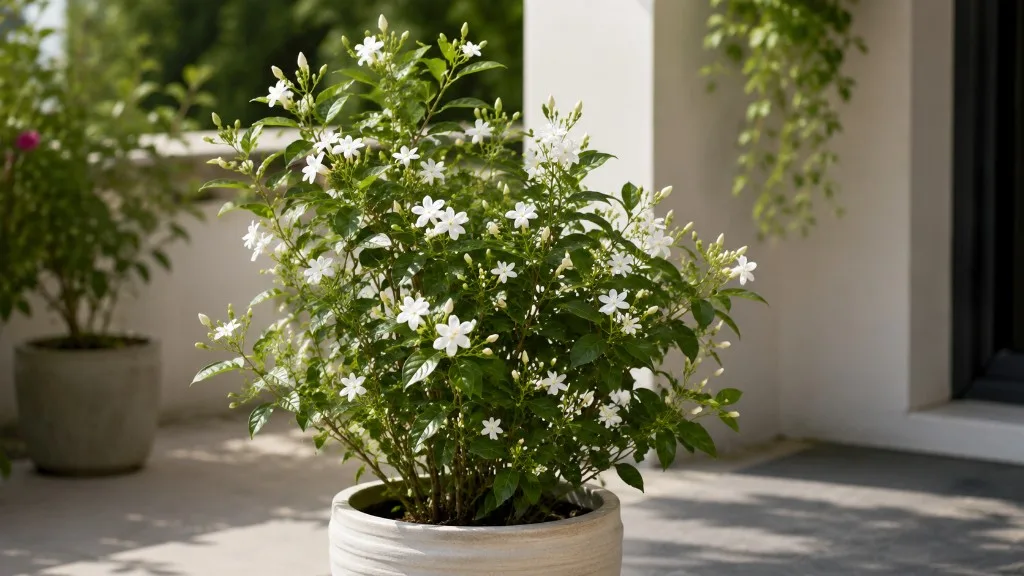
Indoor jasmine can give you glossy foliage, a living climbing plant, and intensely fragrant flowers, but it is not a low-light vine that blooms on demand. The first step is to identify the species on the nursery tag. A pink jasmine that flowers after cool nights has different needs from a warm-growing Arabian jasmine, and a plant sold under a “jasmine” common name may not belong to the genus Jasminum at all.
For most true jasmine grown in pots, aim for a bright window, a container that drains freely, and soil that is moist during active growth but never waterlogged. Then adjust temperature, pruning, and seasonal placement to the name on the label. If your plant grows well but does not bloom, diagnose its species and light first; feeding it more is rarely the best first move.
Start with the botanical name, not “jasmine”
The genus Jasminum contains the true jasmines. Labels may also say “jessamine,” “star jasmine,” “night-blooming jasmine,” or “Madagascar jasmine,” but those familiar names do not guarantee the plant is a Jasminum. The common name is a useful clue, not a reliable care plan.
This distinction matters because common names link unrelated plant groups with different habits and bloom cycles. North Carolina State Extension’s Star Jasmine profile explains that Trachelospermum jasminoides belongs to the dogbane family, even though its flowers smell like jasmine. Portland Nursery’s jasmine plant reference separates true Jasminum from night-blooming and Madagascar jasmine, so check the Latin name before applying a care routine.
True Jasminum types for indoor pots
Pink jasmine (Jasminum polyanthum) is a vigorous twining vine with rosy buds that open into white, fragrant flowers. It can be trained indoors, but it quickly outgrows a small windowsill without pruning or a hoop trellis. Its winter-to-spring flowering pattern makes it a strong choice if you can provide a bright spot and a cool, frost-free seasonal period.
Arabian jasmine (Jasminum sambac) has a more upright, shrub-like habit and is often easier to keep in a container. It is a better match for a warm, very bright room and can flower in repeated flushes when it is actively growing. It still needs strong light; “more compact” does not mean that it will bloom happily in a dim corner.
Common jasmine (Jasminum officinale) is a true jasmine too, but its fast, climbing growth can be inconvenient in an ordinary room. Choose it if you have space for a substantial support and are willing to prune after its main flowering period. When the species label is missing, compare the leaves, growth habit, and flower buds with reliable botanical descriptions rather than assuming every white-flowered vine is the same plant.
Common-name lookalikes and what they mean
Star or Confederate jasmine usually refers to Trachelospermum jasminoides. It is a fragrant, evergreen vine that can be grown in a very bright indoor room or sunroom, but its care information should not be substituted automatically for Jasminum. North Carolina State Extension identifies the difference directly: the flowers are jasmine-like in scent, while the plant belongs to a separate genus and family.
“Night-blooming jasmine” commonly refers to Cestrum nocturnum, a shrub in the nightshade family, and “Madagascar jasmine” refers to Stephanotis floribunda, a different evergreen vine. Neither is a true Jasminum. Portland Nursery’s jasmine guide lists these plants separately, a useful reminder to check the botanical label before using advice about winter flowering, pruning, or indoor temperature. A shop listing that gives only a common name is incomplete; ask for the species name before purchase.
Choose a jasmine that fits your room and bloom goals
Match the plant to the conditions you can provide, not only to its fragrance or flower photo. Pink jasmine suits a bright, cooler room and an owner who can manage a fast vine. Arabian jasmine is a better candidate for a warm sunny window and a more compact container plant. Common jasmine and star jasmine need more space or very bright conditions to stay attractive indoors.
A useful quick comparison is:
| Plant name on the label | Growth habit | Better indoor fit |
|---|---|---|
| Jasminum polyanthum | Fast twining vine; pink buds, white flowers | Bright room with room for a hoop or trellis and cooler fall or winter nights |
| Jasminum sambac | Upright, shrub-like true jasmine | Warm, very bright window and regular shaping |
| Jasminum officinale | Vigorous climbing vine | Large bright window, sunroom, or a home with space for support |
| Trachelospermum jasminoides | Evergreen twining vine, not Jasminum | Very bright sunroom or seasonal container; identify it separately |
A newly purchased jasmine may already carry buds because it was raised in bright commercial conditions and sold at a particular stage of its seasonal cycle. It may pause while it adjusts to your home. Give it stable light and water for several weeks before concluding that it is failing; do not compensate for missing buds with extra fertilizer or repeated moves.
Give indoor jasmine the brightest practical window
Jasmine generally needs more light than a typical foliage houseplant. Start at an unobstructed east, south, or west window, then watch the plant rather than relying on the phrase “bright indirect light.” A vine that stretches toward glass, develops long gaps between leaves, and produces few buds is telling you that its current location is too dim.

A sunny window can provide useful light, especially in winter, but heat concentrated against glass can stress a plant and shorten the display of open flowers. If leaves develop bleached or dry patches on the window side, move the pot back slightly or filter the harshest afternoon rays. Turn the pot a quarter turn every week or two if growth is leaning strongly toward the glass, but avoid moving a plant with open buds from room to room.
When natural light is weak, a grow light can supplement it. Place the light according to the manufacturer’s distance guidance and maintain a normal dark period overnight. Artificial lighting may help a plant make stronger growth, but it does not replace the cool seasonal cues some winter-flowering jasmine needs.
Acclimate it before stronger sun or outdoor summer
Many jasmines grow more vigorously outdoors during warm weather, where they receive brighter light and better airflow. Move the plant outside only after frost danger has passed for your location and nighttime temperatures suit that species. Start it in bright shade or gentle morning sun, then increase exposure gradually over a week or two; a plant accustomed to indoor glass can scorch if it goes straight into hot midday sun.
Before bringing it back inside, inspect stems, leaf undersides, and the pot rim for aphids, scale, mites, and other hitchhikers. Rinse foliage and wipe the outside of the pot, then keep the plant apart from other houseplants for a short observation period. Bring it indoors before cold stress, not after leaves or buds have already been damaged.
Match temperature to the species and bloom cycle
Most jasmine can grow in ordinary comfortable room temperatures while actively growing, provided it gets enough light and is not placed beside a heater or cold draft. The exact temperature that encourages flowering depends on the species. Gardenia’s indoor jasmine guide contrasts warm-growing Arabian jasmine with pink jasmine, for which cooler pre-bloom conditions can help; there is no single “jasmine temperature” that reliably works for every plant sold by that name.
Keep pots away from radiators, forced-air vents, fireplaces, and exterior doors that open frequently in winter. Warm dry air can accelerate moisture loss from leaves and potting mix, while repeated cold drafts can make a plant drop buds. A steady room is usually better than trying to force dramatic day-to-night temperature swings.
When pink jasmine benefits from cool nights
Pink jasmine is the plant most often associated with a cool rest before winter or early spring flowering. The University of Washington’s Elisabeth C. Miller Library describes Jasminum polyanthum as suited to a cool, frost-free conservatory or porch. White Flower Farm recommends several weeks of sunny 40–50°F (4–10°C) nights to encourage its next flowering period, a range to treat as guidance for pink jasmine rather than a universal prescription.
If your home stays warm all winter, pink jasmine may keep growing leaves without setting as many flowers. A bright enclosed porch or unheated but frost-protected room can provide a cooler option if the plant remains safely above freezing. Do not put a tropical or unidentified jasmine outdoors in cold weather just because one source gives a low temperature for pink jasmine; confirm the name and local forecast first.
Arabian jasmine is usually treated differently. It favors warmth and bright light while it grows and flowers, so copying the pink jasmine cool-rest schedule may weaken growth rather than help. If the label says only “jasmine,” resolve the identity before deliberately chilling the plant.
Water when the top layer begins to dry
Jasmine prefers consistent moisture during active growth, but roots need air as well as water. Press a finger into the mix; once the top half inch feels dry, water slowly until excess drains, then empty the saucer. The top layer is a useful starting check, not a calendar rule: a small pot in sun can dry quickly, while a larger pot in cool winter conditions may stay damp for days.
White Flower Farm gives the same practical top-half-inch check for pink jasmine and warns against soggy potting mix. Use room-temperature water, wet the full root ball, and do not give a small splash every day. If water runs down the sides without wetting the center, soak the root ball thoroughly and then let it drain.
Reduce watering when growth slows and days shorten, but do not let the root ball dry until the leaves wilt. If you are unsure whether the plant needs water, lift the pot or check below the surface. A light container and dry mix call for water, while a heavy pot with cool, damp soil means wait; this distinction prevents the cycle of yellow foliage followed by even more watering.
Use an airy mix and a pot with drainage
Choose a container with several unobstructed drainage holes. A nursery pot set inside a decorative cachepot is convenient because you can lift it out to water and drain it; never leave the inner pot standing in water. A heavy pot can stabilize a trained vine, but weight cannot correct a mix that stays saturated.
A general indoor potting mix can work if it drains freely. If it compacts or stays wet, blend in a coarse component such as perlite or fine bark rather than adding a thick gravel layer at the bottom. The goal is a root zone that holds some moisture but lets excess water leave and air return after watering.
Avoid jumping into a very large pot because extra soil around a small root ball takes longer to dry and raises the chance of root problems. When repotting is needed, choose a container only modestly wider than the roots, loosen any circling roots gently, and water once to settle the mix. The new pot should make watering easier, not turn the roots into a permanently wet center.
Balance humidity with fresh air
Jasmine can struggle in the dry air created by winter heating, especially when a pot sits above a radiator or hot-air vent. If leaf edges turn crisp while the mix is drying at a normal pace, move the plant away from the heat source and check the room’s humidity with a small hygrometer. Grouping plants or running a humidifier nearby can raise humidity more consistently than occasional misting.
A pebble tray can add a small amount of local moisture, but it is not a substitute for room humidity and the pot must sit above the waterline. Keep air moving gently around the leaves. Stagnant, humid air and constantly wet foliage are not improvements; they can encourage leaf spotting and other problems.
Do not spray the foliage as a daily ritual to compensate for a dry room. If you mist, it only changes conditions briefly, and water left on leaves in cool air can prolong wetness. A humidifier with regular cleaning, sensible spacing, and a placement away from direct heat is a more dependable approach.
Feed during active growth, then pause
Use a balanced water-soluble houseplant fertilizer at a reduced rate while the plant is actively producing leaves and stems. For pink jasmine, White Flower Farm recommends feeding every two to four weeks during the growing season and pausing in fall and winter. Follow the label and skip feeding when the plant is not growing, because nutrients in a cool, nearly dormant root ball will not make it bloom.
Avoid a strong dose or a bloom-booster product as a quick fix for missing flowers. Too much fertilizer can damage roots and push soft leafy growth that is poorly matched to the plant’s light. If jasmine has pale leaves or weak growth, check light, roots, and watering first, and feed only when the plant is healthy enough to use nutrients.
Train and prune without removing the next flower buds
Give a vining jasmine support early, while stems are flexible. A small hoop, narrow trellis, or freestanding obelisk lets you guide the shoots and keep the plant compact. Tie stems loosely with soft plant ties and leave room for thickening; forcing a woody stem around a tight support can crack it.
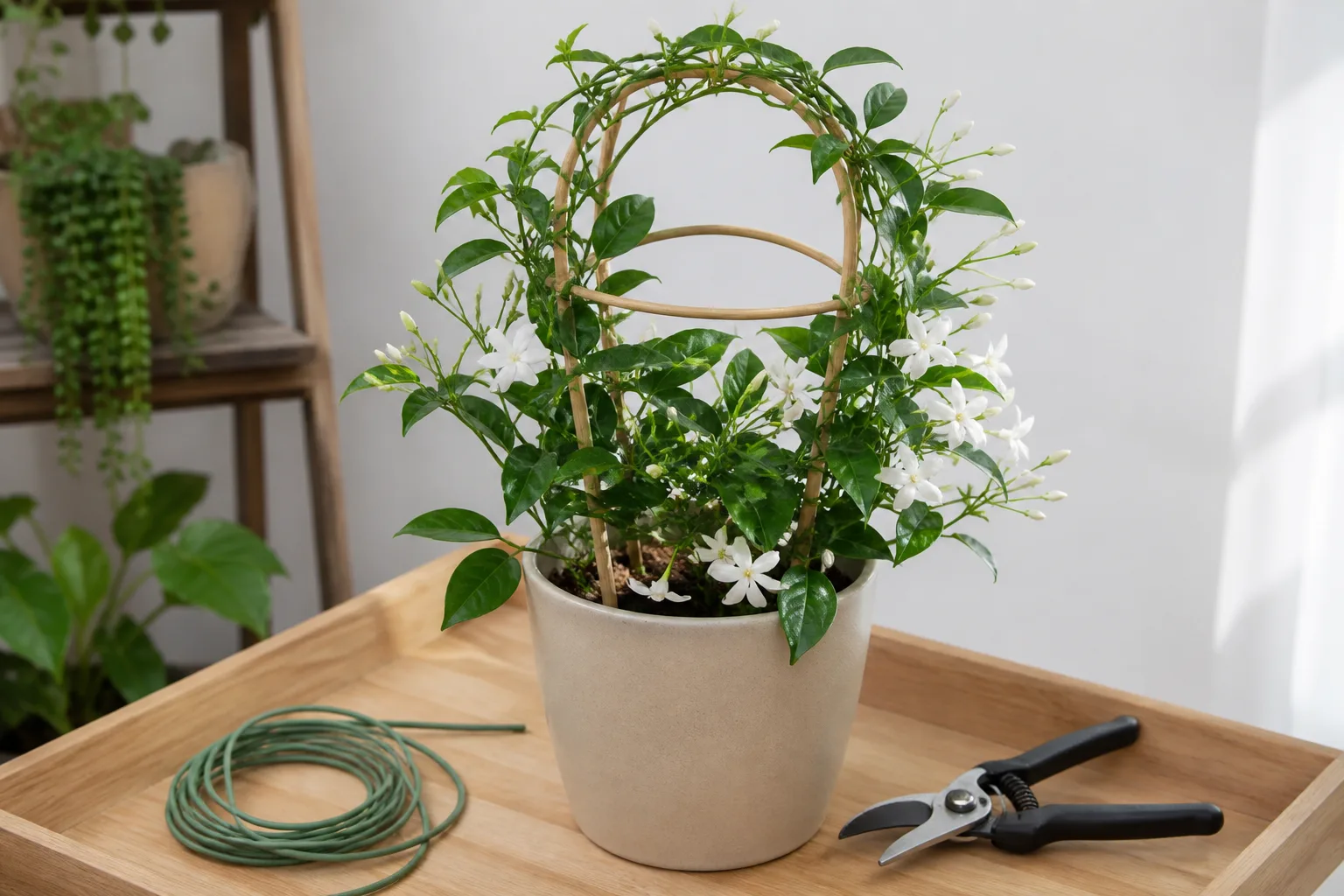
Prune after the main flowering flush, removing dead, tangled, or wayward stems first. Then shorten long shoots enough to fit the available space, cutting just above a healthy leaf node. Flowers form on growth produced at a particular point in the plant’s cycle, so a hard late-season haircut can remove buds before they open. White Flower Farm advises stopping regular pruning of pink jasmine by early August in its growing guidance; your local season may differ, so use the plant’s bloom cycle rather than treating that date as universal.
Arabian jasmine can be shaped more often while it is growing, but avoid continually shearing the tips if you want flowers. Remove faded blooms and pinch a few long shoots if shaping is needed; save major pruning until after a flush. Clean sharp pruners between plants, especially if stems show spots or rot.
Repot when roots and watering behavior signal it
Repot when roots circle densely around the root ball, emerge from drainage holes, or the plant dries unusually fast despite normal conditions. A few visible roots alone do not require an immediate move. A plant that has just arrived, is carrying buds, or is under stress may settle better if you postpone unnecessary root disturbance until after flowering or the start of active growth.
Lift the root ball gently and look for firm pale roots. Trim only dead, mushy, or badly damaged sections with clean shears, and move the plant into fresh, well-draining mix. Keep the new container one size larger, then resume normal light and watering rather than giving repeated extra water to “help” it recover.
Diagnose weak growth, yellow leaves, and dropped buds
When jasmine looks unwell, note the pattern before changing care. Check the plant tag, the light reaching the leaves, the moisture at root depth, and whether the problem began after a move, repot, pruning, or temperature change. Adjust one major factor at a time so you can tell whether the correction helped.
Yellow leaves with wet, heavy mix point toward excess water or poor drainage, while yellow leaves with very dry soil may follow missed watering; older leaves can also drop as a plant adjusts to a new room. If stems are black or the soil smells sour, slide the plant from its pot and inspect for rotting roots. Remove badly damaged roots, refresh the medium, and correct the drainage before watering again.
Long bare internodes and small leaves usually suggest inadequate light. Move the plant closer to a bright window or add a grow light, then wait for new growth to show the result. Existing stretched stems may not shorten on their own; prune them after flowering, once the plant has a stronger light source.
Buds that turn brown or fall before opening often follow a sudden change in light, temperature, or watering. A nursery plant moved from bright, humid conditions into a warm dim room may drop buds even if the basic care is otherwise sound. Keep its environment stable, do not let the root ball dry completely, and avoid moving it repeatedly in search of the perfect spot.
Inspect leaf undersides and young tips for aphids, fine mite webbing, scale bumps, or thrips damage. Isolate an infested plant, wash off visible pests, and repeat inspections because eggs and hidden insects can survive the first cleanup. If you choose a pesticide or insecticidal soap, use a product labeled for that plant and pest, follow its instructions, and test a small area first.
Propagate jasmine from a young stem cutting
Take cuttings from a healthy, nonflowering shoot during active growth, preferably in spring or early summer. Cut a 4- to 6-inch section just below a node, remove leaves from the lower portion, and keep two or three leaf pairs near the tip. Use clean shears; avoid taking many cuttings from a weak or recently stressed plant.
Insert the bare lower stem into a small pot of damp, airy propagation mix. A clear cover can slow moisture loss, but keep it from touching the leaves and open it briefly for fresh air. Place the cutting in bright indirect light and keep the medium lightly moist, never waterlogged. Tug very gently after several weeks; resistance and fresh growth are better signs of rooting than a fixed number of days.
Once roots hold the cutting and new growth continues, gradually expose it to normal room air and pot it into a small draining container. A young jasmine may not flower immediately, even when the parent plant is blooming. Let it establish roots and branches before expecting the same display.
Conclusion
Successful indoor jasmine care starts with the label. A true Jasminum can be a warm-season shrub or a fast vine that needs cooler nights before it flowers; a plant sold as star jasmine may belong to another genus entirely. Confirming the botanical name prevents you from applying the wrong temperature and pruning schedule.
Give jasmine the brightest practical window, water when the mix begins to dry at the surface, and let all excess drain away. Train vines while stems are flexible, prune after bloom, and change light or temperature gradually. If foliage grows but flowers do not appear, check species, light, pruning timing, and seasonal cues before adding fertilizer. The right plant in the right window is far more reliable than a one-size-fits-all care schedule.