How to Grow and Care for Horseradish: Plant to Harvest
Learn how to grow horseradish from root cuttings, choose a contained bed or deep pot, prevent woody roots, and harvest, store, and replant with confidence.
Quick answer: grow roots in a contained, loose bed
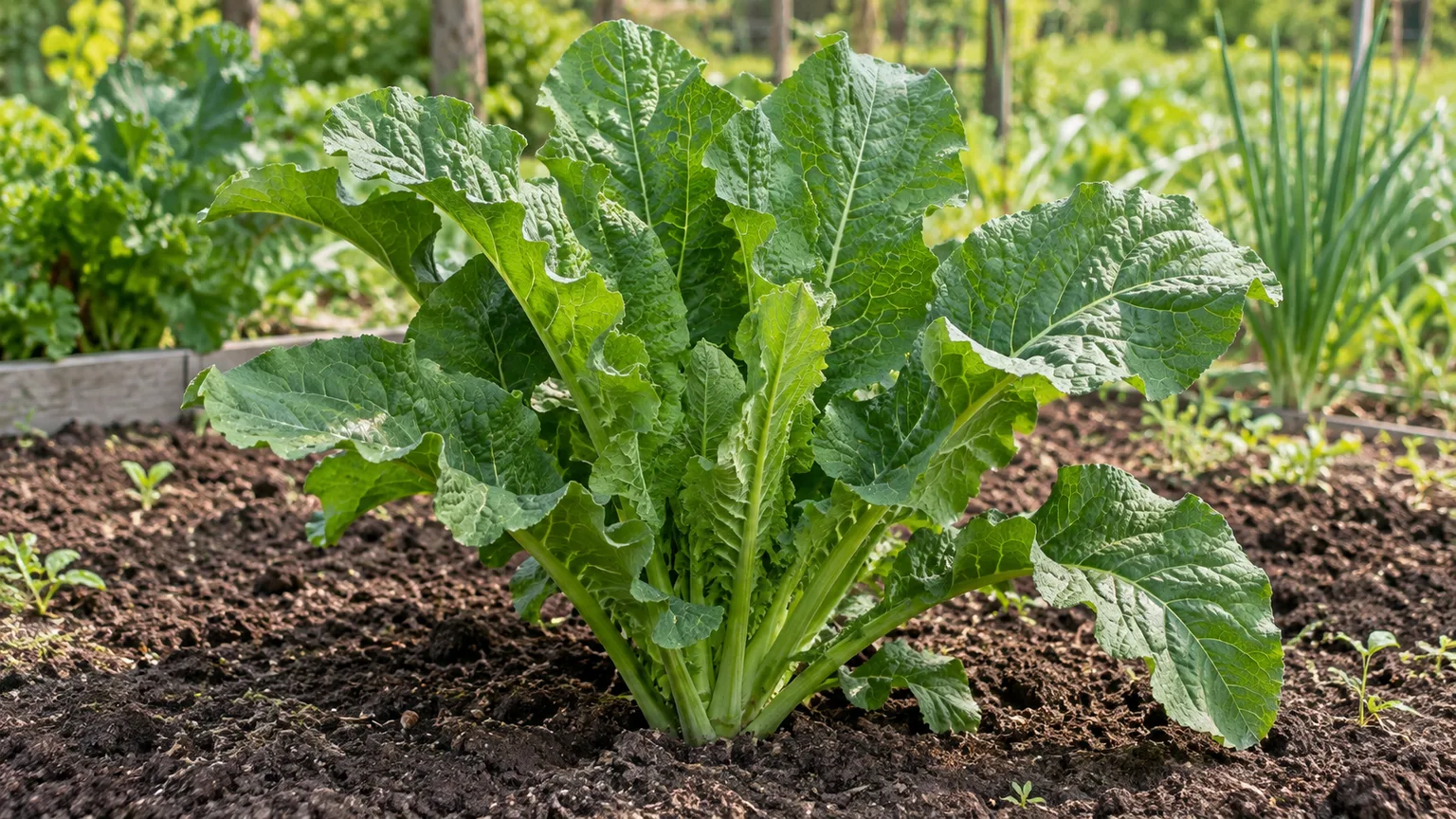
Horseradish (Armoracia rusticana) is a cold-hardy perennial grown for its pungent, tapered roots. Start with a root cutting in spring, give it a sunny position and loose, well-drained soil, and keep moisture even while the plant establishes. The decision that deserves the most thought is where to grow it: pieces of root left behind can make new plants, so a deep container or a dedicated patch is safer than putting it casually among crops you plan to rotate.
For a dependable first attempt, plant one or two root sets in a large, sturdy container with drainage holes, or reserve a clearly bounded bed that you are willing to keep as a horseradish patch. Keep the soil evenly moist rather than saturated, weed while plants are small, and harvest in late fall before the ground freezes. In colder regions, a spring planting may need a full season before the roots are worth lifting. Guidance from Utah State University Extension and University of Minnesota Extension supports this root-cutting, steady-care approach.
Decide whether this vigorous perennial fits your garden
Horseradish is easy to grow in the sense that it tolerates cold, survives neglect, and can produce a crop without elaborate care. It is not necessarily easy to remove. The plant sends roots outward and downward, and small pieces can regrow if they are left after digging. The Royal Horticultural Society warns that roots left in the soil can restart growth; Wisconsin Horticulture likewise notes how difficult an established planting can be to eradicate.
Think of horseradish as a permanent crop with a harvest schedule, even if you intend to treat it like an annual. Choose a spot before buying a root set. If you need a clean vegetable rotation, want to reclaim the bed later, or have limited room, use a container. If you have a utility corner or a stable edge bed you can keep checking, a contained in-ground patch may be practical. The wrong choice is planting it in open soil because one plant seems small at the time; mature leaves hide how far the underground system can travel.
Containment: open bed, barrier, or pot
A freestanding pot gives the clearest boundary and makes lifting the crop straightforward. Use a broad, deep, food-safe container with multiple drainage holes; a depth of roughly 18 to 24 inches and width of 16 to 20 inches is a practical target, though a larger pot gives long roots more room. Harvest to Table recommends this kind of roomy vessel, while the RHS suggests a large container at least 12 inches deep and wide. Bigger is helpful because horseradish forms substantial roots, but drainage matters more than volume alone.
A dedicated bed works when you accept that it may become a long-term patch and can inspect its perimeter. A buried tub or barrier can limit sideways spread, but a bottomless barrier is not a sealed root system: roots can grow beneath it, and any crack, seam, or opening is a possible exit. Raised beds are not automatically contained if roots can pass through joints or drainage holes. For the lowest-maintenance option, grow above ground in a solid-sided pot and set it on a hard surface rather than directly on soil; lift it now and then to look for roots escaping through the holes.
Sunlight, soil texture, and drainage
Aim for at least six hours of sun for the strongest growth, although horseradish tolerates some partial shade. In hotter climates, morning sun with afternoon shade can reduce heat stress; the plant will still grow, but a heavily shaded position usually produces a smaller root harvest. Select a spot with room for a leafy clump about 2 feet tall and at least 18 inches wide, and keep it away from crops you will need to dig or rotate.
Root quality depends more on soil structure than on a fancy fertilizer program. Loose loam or well-prepared garden soil lets roots lengthen and makes the fall harvest less of a wrestling match. Remove rocks and compacted clods before planting; a large obstruction makes a root fork or branch. Blend in mature compost if soil is poor, but avoid a rich, soggy pocket. Roots tolerate ordinary garden soil, yet they can rot in waterlogged conditions, so choose a well-drained bed or use a potting mix that drains freely. A soil test can resolve uncertain pH or nutrient needs better than guesswork.
Start with a healthy root cutting
Horseradish is usually propagated from a crown division or a slender root cutting, often called a set or thong. This is faster and more predictable than starting from seed because the cutting already carries the growing tissue needed to form a leafy crown and edible root. A pencil-thick root section about 8 to 10 inches long is a reliable set size; crown divisions can work too. Nebraska Extension recommends root cuttings in that range. Buy healthy, firm sets from a reputable nursery when possible, and avoid roots that are shriveled, soft, or showing rot. Three or four plants can supply a household, but one vigorous plant is often enough for a first season and easier to contain.
The cut ends may be marked for orientation: a square cut typically indicates the top, while the angled cut indicates the lower end. If the seller labels them differently, follow its planting instructions. The key is to keep the top end higher and the lower end slanting down so the developing crown emerges in the right place. A root piece planted upside down may still sprout in some cases, but it can struggle or form an awkward crown, so orientation is worth getting right.
Why root sets beat seed for most gardeners
Seeds are not the usual home-garden route. Horseradish is most often sold and grown from roots or crowns, and a seed-grown plant takes longer to establish a harvestable root system. Seed may be available, but it is a slower choice when the goal is a usable root before winter; the plant also may not come true to a named cultivar. Homes & Gardens also recommends root cuttings for a quicker, more reliable start and describes starting them under cover when early frost is a concern.
Propagation is also how you decide whether to keep the patch going. At harvest, save healthy side roots long enough to replant—extension guidance commonly uses pieces around 6 to 10 inches. Cut one end flat and the other on a slant, keep the pieces cool and slightly moist if you cannot plant immediately, and label the orientation. Do not save diseased, mushy, or badly damaged roots. If you do not want more horseradish next year, do not leave viable side roots in the bed as an accidental seed bank.
Plant horseradish from set to establishment
Plant outdoors in early spring once the soil is workable and not waterlogged. In a cold climate, planting as soon as the ground can be prepared gives the plant the longest season to build its root system. A mild-winter region can have a wider planting window, but avoid planting into hot, dry soil when a new cutting has no established roots to take up water. The exact calendar date changes by region; soil condition and frost pattern are more useful than copying another gardener’s month.
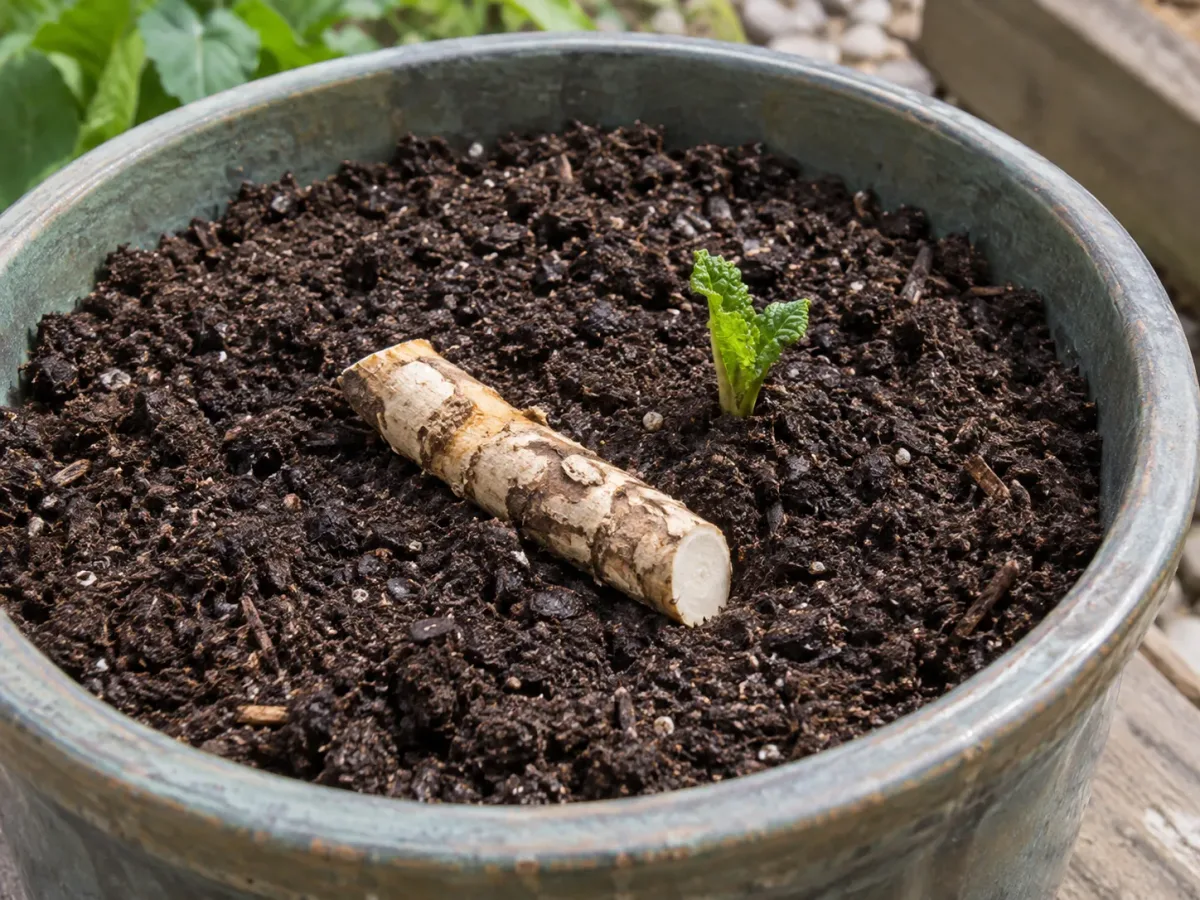
Prepare the final bed or container before opening the root sets. Loosen soil deeply, remove stones, and mix in a modest amount of compost if needed. Place each root at a downward angle of about 45 degrees, with the upper end roughly 2 to 3 inches below the surface, then cover and water thoroughly. Utah State University Extension recommends root pieces about a foot apart; for one container, plant one set in the center or follow the nursery’s spacing guidance if using a wide trough. Mark the spot so you do not later dig through it while the plant is dormant.
Keep the mix damp but not saturated while the cutting roots and sends up leaves. A thin layer of straw, leaves, or finished compost helps moderate soil temperature and slows weeds, but do not pile mulch against the crown. In the first few weeks, remove weeds by hand rather than chopping deeply around the set. Once the leaves expand, they shade much of the ground and compete strongly; the most important weed control happens before that canopy closes.
Water, mulch, weed, and feed with restraint
Horseradish needs dependable moisture while roots are growing, but it is not a bog plant. A dry spell can leave roots small, fibrous, or woody; constant saturation deprives roots of air and increases the chance of rot. Utah State University suggests about 1 to 2 inches of water weekly as a starting point, applied deeply, but rainfall, soil texture, temperature, and container size all change the interval. Check soil several inches down and water when it is beginning to dry, not just because a calendar says it is watering day.
Containers need closer attention than beds because they lose moisture faster, especially in wind and summer heat. Water until excess drains from the bottom, then make sure the pot does not sit in a saucer of water. In heavy clay soil, address drainage or choose a container instead of responding to yellow leaves by adding fertilizer. A mulch layer conserves moisture and suppresses weeds; keep it loose enough that the crown stays ventilated and visible.
Feed based on soil fertility, not a fixed monthly schedule. Mix mature compost into poor soil before planting or add a restrained side-dressing once growth is established. Too much nitrogen encourages an oversized canopy at the expense of a good root and may increase branching; Utah State University Extension specifically cautions against overdoing nitrogen. If leaves are pale or growth is unusually weak, first check drainage, light, weeds, and moisture, then use a soil test to guide any fertilizer. A drooping plant alone is not proof that it needs potassium.
Make fewer, straighter roots with lifting and stripping
Most home gardeners can skip root stripping and still harvest horseradish. It is an optional technique for growers who want a larger, straighter main root rather than a cluster of smaller roots. The tradeoff is practical: trimming lateral roots can improve the central root, but those side roots are also the easiest planting stock for next season. If your priority is a simple harvest, leave the plant undisturbed until fall.
To train the root, wait until the largest leaves are about 8 to 12 inches tall. Carefully pull soil away from the top of the crown, remove extra leaf shoots so one or a few strong crowns remain, and rub or cut away small side roots along the upper portion of the main root. Leave roots at the bottom so the plant can continue to take up water and nutrients. Return the soil and mulch. The University of Minnesota recommends lifting and stripping twice, with a second pass about six weeks after the first; Wisconsin Extension describes the same basic practice for producing a larger, straighter root.
Do this carefully and only when the soil is workable. A torn crown, snapped main root, or unnecessary disturbance can set growth back. If the plant is in a deep container, root pruning may be awkward and can make future harvesting less predictable. Skip the technique if you prefer a heavier cluster of usable side roots, if the plant is stressed, or if you are growing it mainly for its leaves.
When to harvest and how to lift roots cleanly
Horseradish makes much of its root growth late in summer and early fall, so harvesting too early can leave you with thin roots and an undersized crop. In many northern gardens, the practical window is late fall after the foliage has been damaged by frost but before the soil freezes solid. A spring harvest is also possible just as new growth begins. In mild climates, harvest can extend later into winter when the ground remains workable. The calendar shifts with climate, and a spring-planted crop may need to grow through the following season before it produces a substantial main root.
Harvest timing across cold and mild climates
Treat the first autumn as an assessment rather than a guaranteed harvest date. If the crown is established but the main root is still pencil-thin, leave it to bulk up unless you need to move or remove the patch. In colder regions, harvest before the ground freezes; if you need to postpone it, mulch the bed and dig as soon as spring growth starts. The Kansas State University Research and Extension guidance emphasizes timing the dig just before the ground freezes, while Wisconsin Extension gives fall after foliage dieback or early spring before regrowth as useful windows.
Some gardeners prefer roots after frost, but do not let that become a reason to wait until frozen soil makes digging difficult. Frost usually signals that the plant has slowed down; it is not a requirement for every region or every flavorful root. If you want a small kitchen harvest during the season, remove only a few side roots from a mature plant and replace the soil promptly. The main crop is easiest to manage as one planned autumn or early spring lift.
Digging without leaving a new patch behind
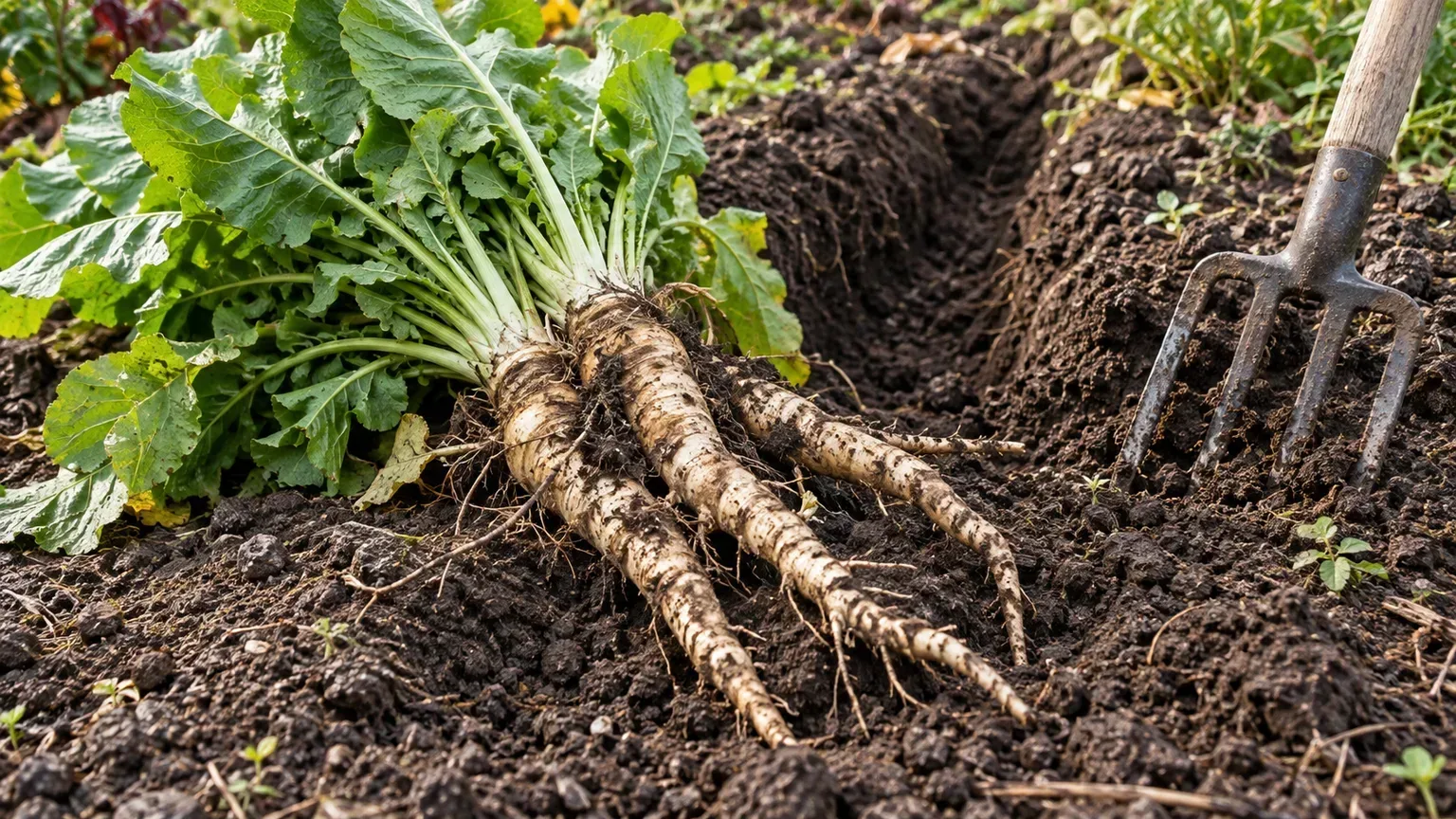
For an in-ground plant, dig a trench along one side of the row or clump so you can loosen the root system from the opposite side. A spading fork can reduce accidental slicing, but a shovel may be needed for compacted soil. Loosen broadly and deeply before pulling; yanking the leaves often snaps the crown and leaves more fragments behind. Lift the crown toward the open trench, then separate the main root and healthy side roots over a tarp or bucket so small pieces are visible.
If you want to keep the patch, trim leaves to about an inch above the crown, clean the main roots, and reserve firm lateral pieces for replanting. If you want the patch gone, remove as much root as practical and revisit the area for regrowth over the next seasons. A single dig rarely guarantees eradication because small remaining sections may sprout. Do not till or rototill the area: chopping roots can distribute more viable fragments. Keep unwanted pieces out of soil you plan to reuse, and dispose of them according to local yard-waste rules rather than assuming a cool home compost pile will destroy them.
Store roots and prepare horseradish safely
Brush off loose soil and trim away leaves and fine roots. Store intact roots cool, dark, and humid: a perforated or loosely closed bag in the refrigerator works for short-term use, while slightly moist sand in a cool root cellar can hold planting stock or a larger harvest. Avoid light, which can turn roots green, and check stored pieces periodically for shriveling or rot. University extension guidance reports that properly stored whole roots can keep for a few months, but quality is best when roots are firm and used before they dry out.
Grate only what you need soon. The fresh root is mild when intact; cutting or grinding damages cells and activates enzymes that form pungent mustard-oil compounds. This is why freshly processed horseradish has a sharp aroma and why the fumes can irritate eyes and sinuses. Work in a well-ventilated kitchen, process a small batch, keep your face back when opening a blender or food processor, and wash hands and utensils after handling. Kansas State University’s guidance specifically cautions about fumes and eye irritation when opening a blender.
For prepared horseradish, peel and grate or blend the root, then add vinegar to slow the reaction and preserve the sharp flavor. Adding vinegar sooner gives a milder result; waiting briefly before adding it produces a stronger bite, though leaving it too long can lead to discoloration and bitterness. Keep homemade prepared horseradish refrigerated or frozen. Do not treat a fresh mixture as shelf-stable unless you are following a tested preservation recipe. Young leaves are edible too, but their flavor is peppery and somewhat bitter; use a small amount in a salad mix or cook them as greens rather than expecting them to taste like mild spinach.
Save planting stock and control regrowth
Horseradish is perennial, so a root left in the ground can return the next spring. Gardeners often call it an annual crop because they lift the plant every fall, but the planting only ends if you remove the crown and every viable root section. A useful compromise is to harvest the main root and replant one or two selected side roots in a controlled spot. This gives you a renewed crop without letting every small fragment become an unplanned successor.
Label saved sets and keep them cool, dark, and slightly moist until planting. Do not leave them exposed to dry air or sunlight. If you cannot store roots at a consistently cool temperature, leaving a chosen crown in the ground and harvesting it in spring may be simpler. Mulch the patch where winter freezes the soil, but avoid keeping a container waterlogged. In a pot, roots may be more vulnerable to a hard freeze because the whole root mass is above ground; move it to an unheated protected place in severe climates or insulate the container while preserving drainage.
After digging, inspect the surrounding soil and the container’s base or sides for escape routes. If a leaf appears beyond the boundary, trace it to its root rather than mowing it and assuming the problem is solved. Repeatedly remove new shoots and the attached root fragments you can reach. A patch in open ground can be managed, but management means checking it each season, not simply harvesting one large root and forgetting the site.
Cultivars, flowers, leaves, and common problems
Most home gardeners encounter common green-leaved horseradish, which is valued for its roots. Nebraska Extension describes Bohemian types as narrower-leaved and generally more disease resistant, while the ornamental ‘Variegata’ has cream-marked foliage and may establish more slowly. Availability varies, and the decorative form is not a dependable way to solve spread: choose the cultivar for its plant traits, then contain it the same way you would any horseradish.
Small white flowers can appear in early summer, followed by seed pods. Flowering is a normal part of the plant’s life cycle, and you do not need to cut flower stalks to protect the root harvest. The more important variables are the age of the root, soil drainage, and whether the patch is being managed. Leaves can show flea beetle or caterpillar feeding, but modest chewing rarely justifies treating the plant. Use a floating row cover early in the season if leaf damage is severe, and inspect leaves before reaching for a pesticide. For any product, use only one labeled for the crop and follow its label exactly.
Yellow leaves near the end of the season can simply be normal dieback. Yellowing or collapse while the soil remains wet can point to root trouble; improve drainage and reduce watering before adding fertilizer. Root rot is associated with saturated conditions, and University of Minnesota Extension recommends disease-free planting stock and rotating the planting site every three to four years where practical. Thin or woody roots can follow drought stress, poor root development, or leaving a root in place too long. Correct the growing condition instead of assuming a leaf symptom reveals one specific nutrient deficiency.
Conclusion
Horseradish is a rewarding crop when you decide on containment before planting. Give a root set loose soil, enough sun, even moisture, and a deep pot or a dedicated bed you can monitor. Then choose whether you want a simple cluster harvest or a carefully trained central root, and lift it before frozen ground prevents a clean dig.
Keep the main root for the kitchen, save only the side roots you want to replant, and watch the site for regrowth. That small bit of discipline turns horseradish from an unpredictable garden guest into a reliable source of fresh, pungent roots.