How to Grow and Care for Firepower Nandina
Learn how to grow Firepower Nandina with the right light, drainage, watering, pruning, and winter care, plus clear notes on pet safety and regional spread.
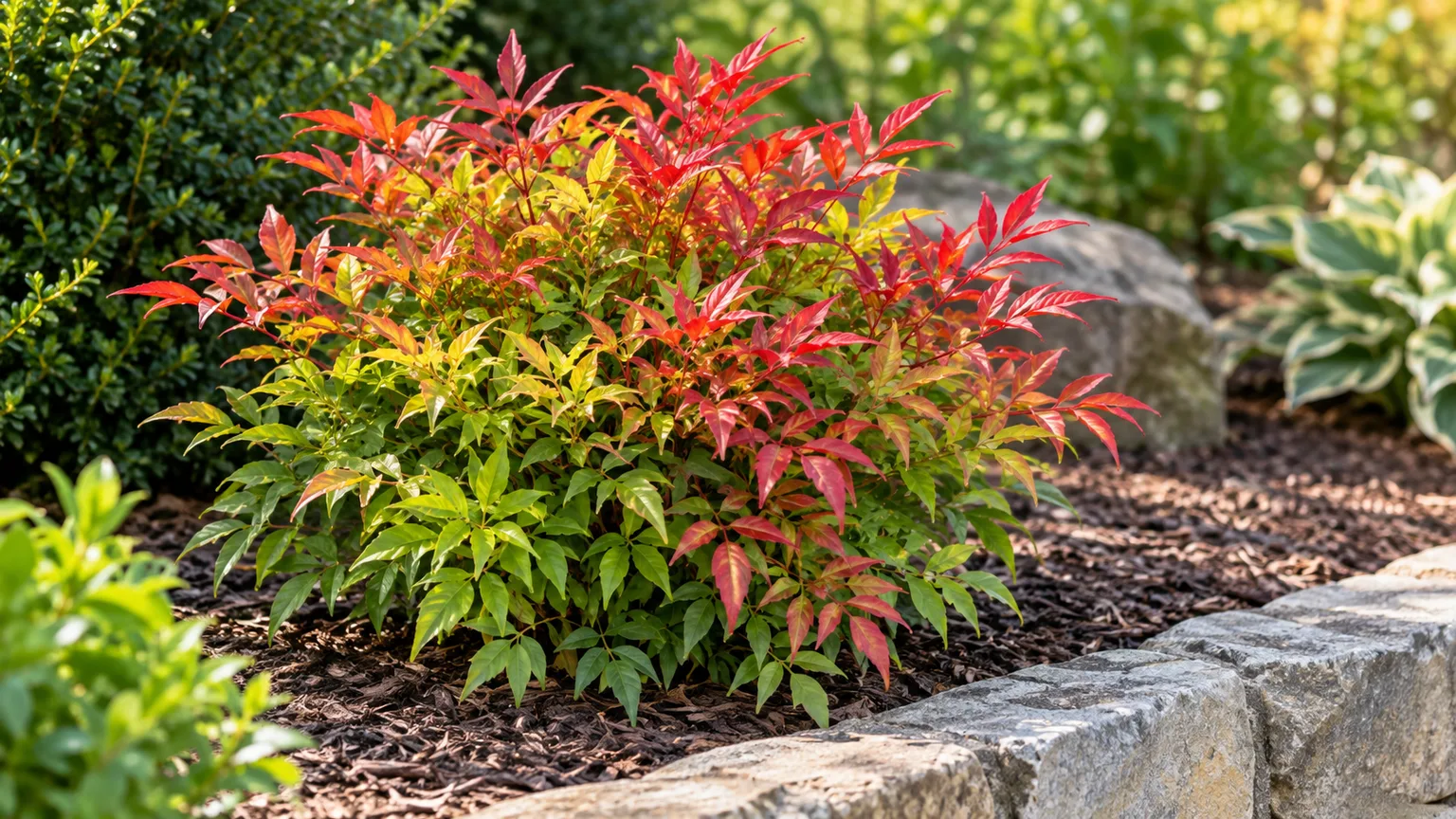
Firepower Nandina is a compact, rounded shrub grown for fine-textured leaves that move from lime green in warm weather to red-orange in fall and winter. It is a cultivar of heavenly bamboo, not a true bamboo, and most plants stay around 1 to 2 feet tall and wide. Good drainage and enough light do more for its color than a strict fertilizer schedule.
This cultivar also deserves a more careful introduction than a generic “low-maintenance shrub” label suggests. North Carolina State Extension’s Fire Power profile describes ‘Fire Power’ as essentially sterile and almost fruitless, which lowers its seed-spread risk compared with berry-producing Nandina; it still lists poison characteristics for the plant itself. Check local invasive-plant guidance and decide whether the shrub’s foliage, pet access, and winter color suit the site before planting.
Firepower Nandina at a Glance
| Care question | Practical answer |
|---|---|
| Mature size | About 1 to 2 feet tall and wide; allow a little more room if it suckers |
| Light | Full sun to partial shade; brighter light usually brings stronger seasonal color |
| Soil | Ordinary garden soil is fine if it drains; avoid a persistently wet root zone |
| Water | Keep a new plant evenly moist through establishment; water an established shrub during prolonged dry weather |
| Hardiness | North Carolina State Extension lists zones 6a–9b; container roots need extra winter protection |
| Fruit | Usually little to none; do not assume every plant will be completely fruitless |
| Main caution | Nandina is toxic to pets if eaten, and species-level invasive status varies by region |
The name “heavenly bamboo” describes the narrow, cane-like stems, not the plant’s botanical family. Nandina belongs to Berberidaceae, the barberry family, and its leaves are compound, with many small leaflets arranged along a central stem. Those leaflets and the rounded, low mound help distinguish Firepower from taller, berrying Nandina cultivars.
NC State Extension lists the cultivar in hardiness zones 6a through 9b and gives a mature size of roughly 1 to 2 feet in both height and spread. The NC State Fire Power profile describes it as a dwarf, essentially sterile cultivar with few flowers and fruits; the Royal Horticultural Society profile also describes a compact shrub that can grow in a container. Treat the listed size as a planning range rather than a guarantee, since age, growing conditions, and occasional suckers affect the outline.
Firepower is often sold for winter color, but it is not a berry shrub. Its main display is foliage that turns red or orange as days shorten and temperatures cool. If you specifically want berries, choose a different plant only after checking the local ecological and pet-safety implications; this cultivar’s low fruit set is one of its useful differences.
Choose a Site for Strong Color
A bright outdoor position usually gives Firepower Nandina its best red foliage. Full sun is a reliable choice in a mild-summer garden, while partial shade is acceptable when the site receives direct light for part of the day. North Carolina State Extension lists full sun, partial shade, and dappled light as suitable exposures; the RHS recommends sun or light shade in a sheltered spot.
Sun and summer heat
Use the climate to decide which side of the house or garden bed is best. In cooler regions, more direct sun can support stronger red color and a dense mound. In a hot-summer climate, give the plant morning sun or bright light with relief from the fiercest late-afternoon heat; a little shade at the hottest time can reduce stress without placing the shrub in deep shade.
Deep shade is not an automatic death sentence, but it is a poor choice if your main reason for buying Firepower is winter color. A shaded plant may stay greener and grow more loosely, while a sunnier plant often colors more strongly. Do not move a healthy shrub solely because it is not scarlet: the cultivar and the season both influence the color, and red-orange foliage is a realistic target rather than a guaranteed uniform finish.
Plant it where the shrub has room to form a low mound without blocking a path or being repeatedly clipped by a mower. Because the foliage is attractive at close range, it works well near a walkway, in a small foundation bed, or in a container on a patio. Keep it away from children’s play areas and pet runs if someone or an animal might chew the leaves.
Hardiness and winter leaf behavior
The NC State cultivar profile lists Fire Power for USDA zones 6a–9b. That range helps with in-ground planning, but it does not mean every branch remains evergreen in every winter. A hard freeze can dull, brown, or drop leaves, especially on young shrubs or plants exposed to drying winds; in warmer winters, the red foliage may persist much longer.
A pot changes the risk calculation because roots have less soil around them to buffer cold. If your winter is near the lower end of the shrub’s listed range, choose a sheltered position for a container, group it against a wall, and insulate the pot when a severe cold spell is forecast. You can also plant the shrub in the ground and let the local soil provide more protection than a container can.
Do not interpret a few dropped leaves after cold as certain death. Wait until the worst cold has passed, check whether stems remain firm, and look for new growth before cutting living canes. If stems are blackened or brittle all the way to the base, prune only the damaged portion once the plant begins to show which wood is alive.
Plant in Soil That Drains Between Waterings
Firepower Nandina is adaptable to a range of garden soils, but it does not need to sit in saturated ground. The useful target is soil that holds enough moisture for roots to establish and then drains so air can reach them. NC State lists clay, loam, sand, and organic soils for the cultivar, while the RHS gives a moist-but-well-drained condition; that breadth does not mean a waterlogged planting hole is safe.
Check the bed before you dig. If water remains in a test hole for hours after rain or the soil is packed hard and airless, use a raised bed, improve the broader planting area with organic matter, or choose a container with open drainage holes. Avoid “fixing” a heavy clay planting hole by filling just the hole with loose potting mix; the surrounding clay can trap water and make the root ball behave like a basin.
Plant at the same depth the shrub grew in its nursery pot. Loosen circling roots gently, set the top of the root ball level with the surrounding soil, backfill with the soil you removed, and water thoroughly to settle it. A hole about twice as wide as the root ball gives roots room to move, but it should not be deeper than the root ball; this approach matches Better Homes & Gardens’ general planting guidance for heavenly bamboo.
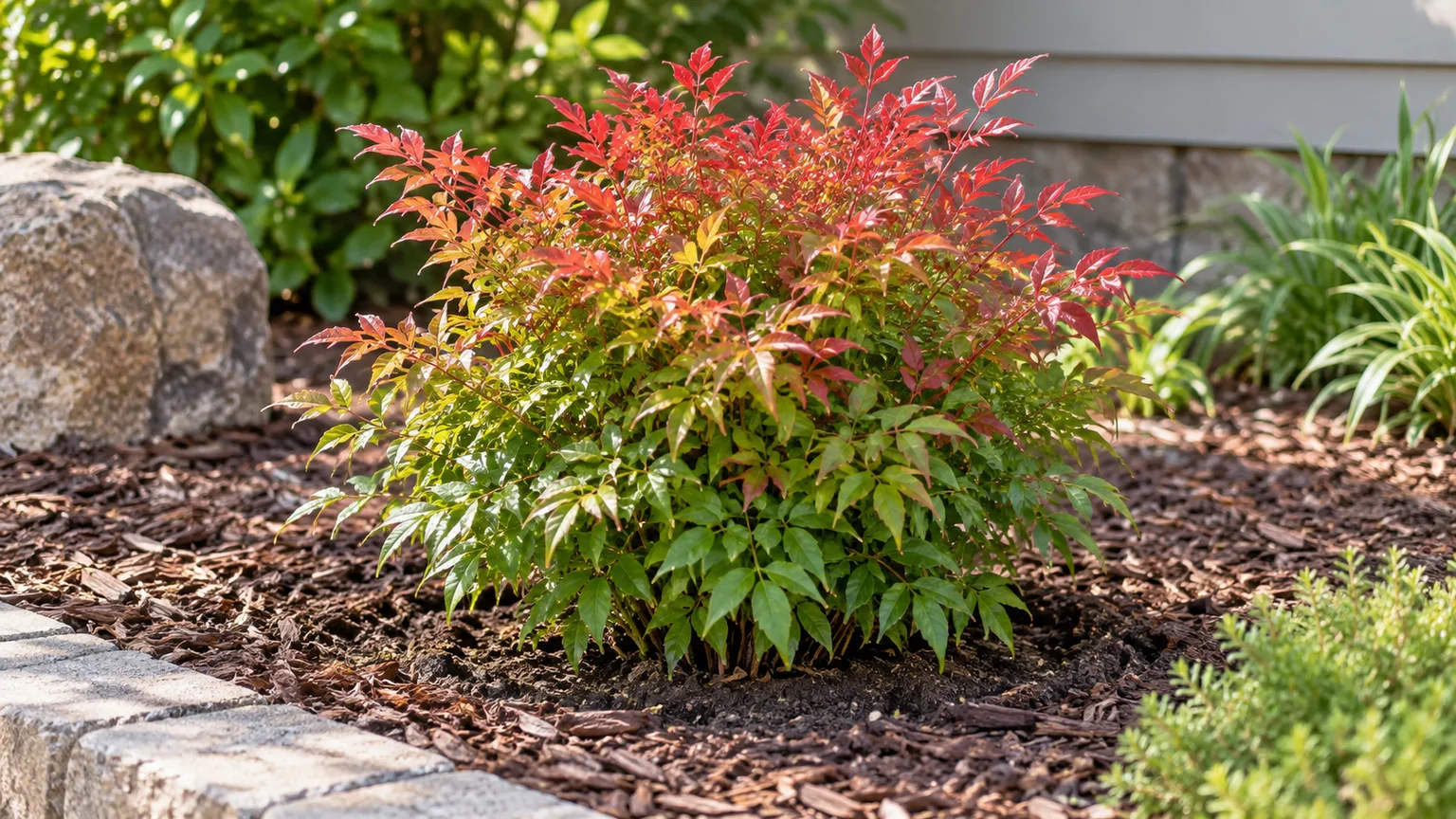
Keep the root ball at soil level and leave a clear ring around the stems when mulching.
In a mass planting, use the cultivar’s 1- to 2-foot mature spread as a starting point for spacing rather than crowding plants into a solid hedge immediately. Air and access between young shrubs make it easier to weed, water, and inspect the base. Add 2 to 3 inches of mulch to reduce moisture swings, but keep it pulled back from the stems so the base does not stay wet.
Water by Root-Zone Moisture
A newly planted Firepower Nandina needs regular attention until its roots grow into the surrounding soil. Water deeply when the top few inches of soil begin to dry, then let excess drain instead of giving small daily sips. The first growing season is the period when supplemental watering matters most; established plants can tolerate short dry spells but still benefit from a deep soak during prolonged summer drought.
Use the soil as your watering gauge. If the root zone is cool and damp several inches down, wait; if it is dry through the root ball, water slowly enough to wet that whole volume. A small shrub can wilt in a dry root ball, but leaves that look limp over wet soil point to a different problem: roots may lack oxygen or have begun to rot, so adding more water can make matters worse.
Container plants dry faster than in-ground shrubs because sun and wind reach the potting mix from more sides. Check the pot more often during warm weather and water until it drains from the bottom, then empty any saucer. In winter, water less often but do not let an evergreen plant remain bone dry for weeks when the soil is unfrozen and the plant is still losing moisture through leaves.
Feed Only When the Shrub Needs It
Firepower Nandina is not a heavy feeder, and automatic fertilizer is not a reliable route to redder foliage. A shrub growing in reasonably fertile garden soil often needs no extra food in its first year beyond the nutrients already present. Heavy nitrogen can push soft green growth and does not correct poor light, waterlogged roots, cold injury, or the normal color of a particular cultivar.
If growth is weak after the plant has had a season to establish, first check light, drainage, root competition, and water. If those are reasonable, use a soil test to see whether a nutrient is actually low. Apply a labeled shrub fertilizer in early spring only if the test or local extension recommendation supports it, and follow the product rate; do not add repeated high doses or feed late in the season, when tender growth may be more vulnerable to cold.
Pale leaves are not proof that the plant needs fertilizer or acid. The RHS accepts a broad pH range for this cultivar, while NC State notes that chlorosis can appear in alkaline soils. If veins stay green while the tissue between them turns pale, test the soil before adding sulfur or iron; unnecessary amendments can damage roots or create new nutrient imbalances.
Keep Pruning Light and Selective
Firepower is bred to stay compact, so routine clipping is optional. Remove dead, broken, or crossing stems with clean pruners, cutting them back to a healthy branch or to the base when a whole cane is spent. If one side is crowding a path, take out a few of the longest canes at the ground rather than shearing the whole mound into a tight ball.
The reason is visual as much as horticultural: the fine leaves and red new growth look best when stems keep a natural, layered outline. Shearing every tip can leave blunt edges and repeatedly remove the fresh foliage that carries the color. Better Homes & Gardens notes that heavenly bamboo does not need pruning for appearance, while the RHS includes the plant in its shrub pruning guidance; for this compact cultivar, a light touch is usually enough.
Prune after the coldest part of winter has passed or just before new growth begins, especially if you are removing winter-damaged wood. If you need to reduce a mature plant, remove no more than about one-third of its oldest canes in a season and reassess the shape the following year. A more drastic cut may be appropriate for a badly neglected shrub, but it trades an immediate bare look for time to regrow and is rarely needed on a young Firepower plant.
Wear gloves, collect the clippings promptly, and keep them out of reach of pets and children. The plant’s low fruit production does not make its leaves and stems edible, and leaving cut foliage beside a path defeats the point of careful placement. Do not compost plant material where pets can rummage through it before it breaks down.
Grow Firepower Nandina in a Container
A pot is a good option for a patio, balcony, or a cold-winter garden where you want to move the shrub to shelter. Choose a stable container with several drainage holes and enough room for the root ball plus a few inches of growth. Better Homes & Gardens recommends compact heavenly bamboo for containers and stresses that container-grown shrubs need more frequent watering than plants in the ground.
Use a quality outdoor potting mix that drains freely; garden soil packed into a container usually becomes too dense. Set the root ball at the same depth as before, water until the mix is evenly moist, and keep the pot out of standing water. A larger pot dries more slowly and buffers temperature swings better than a tiny decorative planter, but it should still be sized sensibly so the mix does not stay wet for days.
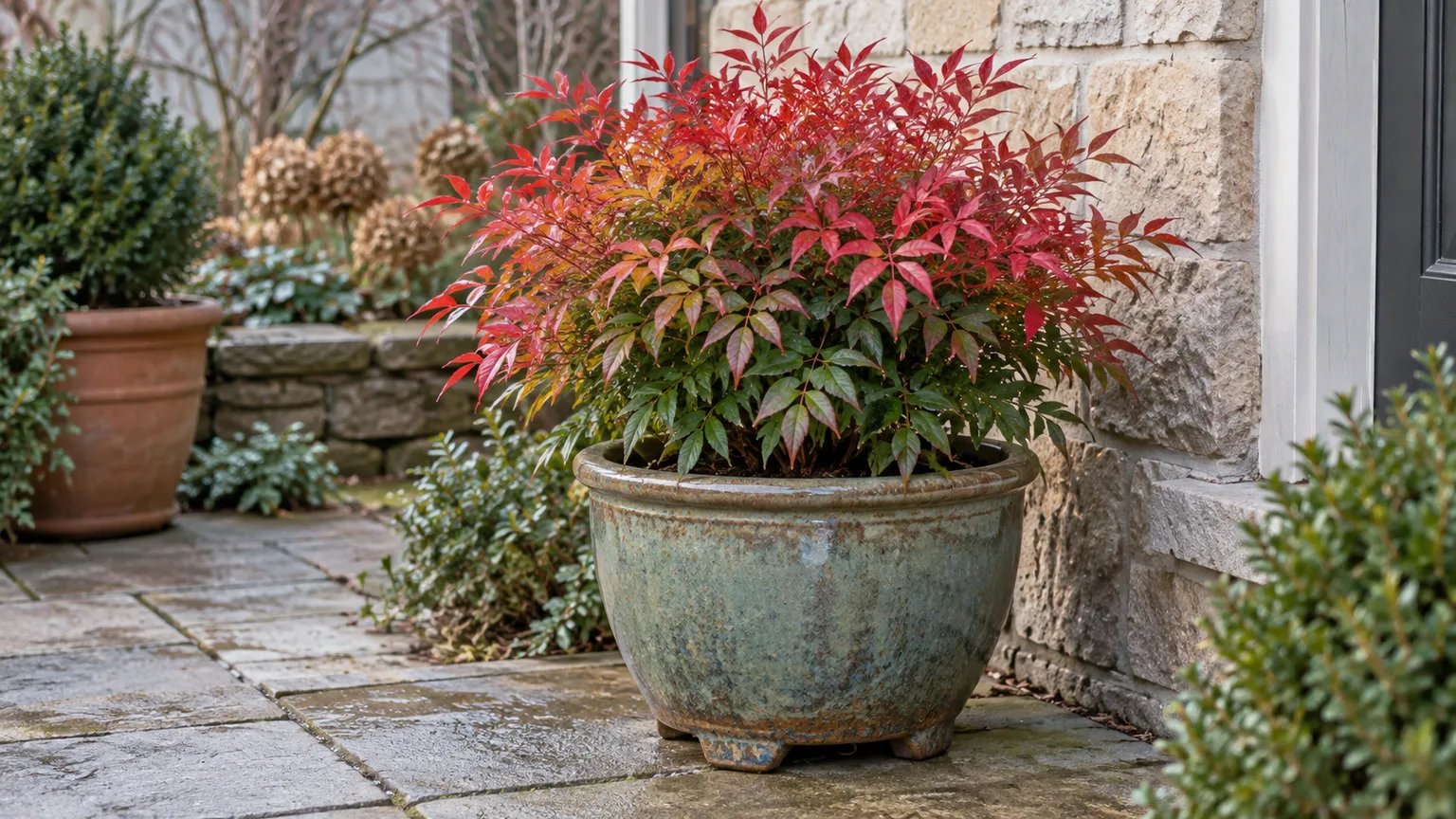
Pot feet keep the planter’s drainage area clear while the patio wall offers some shelter from winter wind.
Expect to water more often in summer and less often during cool weather. In a cold climate, move the pot to a protected spot before a hard freeze, cluster it with other containers, or insulate the sides of the pot; do not bring it into a heated living room for winter. Firepower is an outdoor shrub, and warm indoor air does not provide the seasonal conditions that produce its natural winter color.
Repot when roots fill the container, water runs straight through without wetting the mix, or the plant dries unusually fast even after a thorough soak. Slide it out in spring, loosen a dense root mat, and move it to a pot only one size larger with fresh mix. A rootbound shrub is not a reason to add fertilizer; it is a reason to give roots a little more space.
Propagate a Matching Plant with Semi-Hardwood Cuttings
A cutting is the practical way to make another plant that matches Firepower’s compact habit and foliage. Seed-grown plants may not reproduce a named cultivar, and ‘Fire Power’ produces very little fruit in the first place. The RHS recommends semi-hardwood cuttings for this cultivar; Better Homes & Gardens describes semi-hardwood stems as current growth that has partly firmed but is not fully woody.
Take cuttings in summer or early fall, when a new stem is flexible near the tip but firmer at its base. With clean pruners, cut a 4- to 6-inch section just below a leaf node, remove the lower leaflets, and leave a small tuft at the top. Avoid taking so many stems that the parent shrub loses its rounded shape, and wear gloves while handling cuttings.
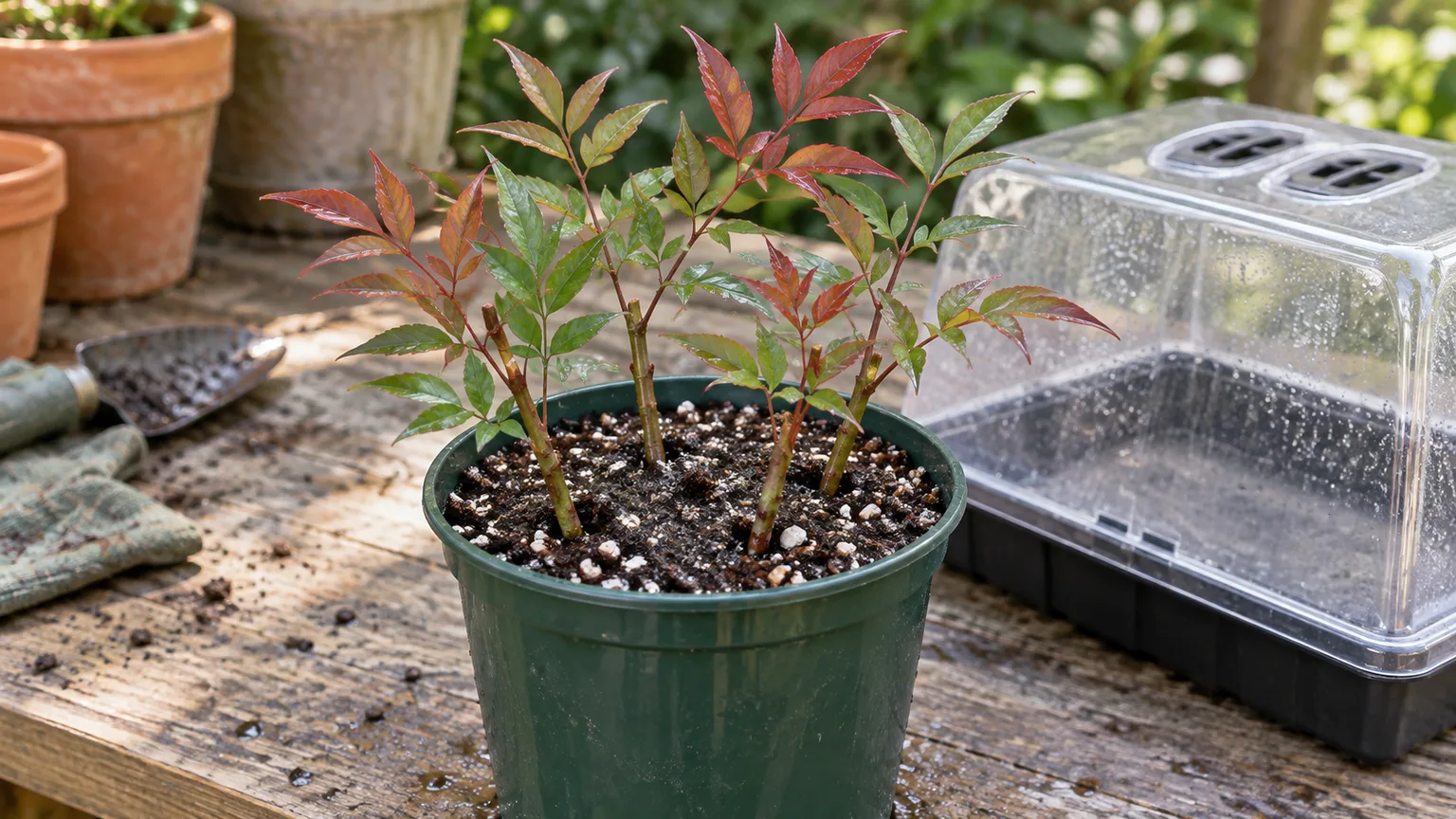
Keep the mix lightly moist and the covered cuttings in bright shade while roots develop.
Insert the lower end into a small pot of clean, airy propagation mix, water to settle it, and cover the pot with a clear dome or loosely fitted plastic with some ventilation. Place it in bright indirect light rather than direct sun, which can overheat the covered pot. Keep the medium slightly moist, not waterlogged, and remove the cover gradually after new roots and sustained growth show that the cutting can support itself.
Propagation is slower and less certain than buying a nursery plant. If the cutting stays limp, turns black at the base, or develops mold, remove it, let the remaining medium drain, and try again with a firmer stem and better airflow. Check the plant label for cultivar propagation restrictions before multiplying a patented selection; do not sell propagated stock unless you have confirmed the rights that apply.
Diagnose Common Firepower Nandina Problems
Use the pattern and the soil together before reaching for a remedy. One browned leaf after a freeze is different from a whole plant yellowing in wet ground, and a small pale patch is different from a steady decline across several canes. Start with moisture, drainage, light, and recent weather; only then consider pests or disease.
Brown edges, scorch, or leaf drop
Brown edges can follow a cold snap, dry wind, a root ball that dried out, or roots sitting in water. Check the soil several inches below the surface: dry soil calls for a slow, deep watering, while saturated soil calls for better drainage and a pause in watering. If browning is limited to the side exposed to afternoon sun, heat and wind are more likely than a whole-plant nutrient issue.
Firepower may lose leaves after sustained cold, and some seasonal leaf turnover is normal. Do not strip every brown leaf or cut every cane as soon as color fades; wait until spring growth shows where the plant is alive. If one branch is dead back to its base, remove that cane cleanly, but do not diagnose bacterial leaf scorch from brown margins alone.
Bacterial leaf scorch is one possible disease reported on Nandina, but a visual symptom is not a laboratory diagnosis. If the browned areas continue to spread across several stems despite appropriate moisture and drainage, take clear photos or a sample to a local Extension diagnostic service before removing the shrub or applying a treatment. A diagnosis matters because watering changes will not cure a bacterial disease, while unnecessary removal will not fix a site problem affecting other plants.
Yellow or pale foliage
Yellowing can come from wet roots, dry roots, cold stress, or chlorosis in alkaline soil. Look at the pattern: older lower leaves that yellow evenly may be natural turnover, while green veins against pale tissue suggest an iron-availability problem. Check root-zone moisture and drainage, then test soil pH before trying to acidify the bed or apply iron.
Do not add sulfur just because the leaves are pale. Firepower tolerates a range of soils, and a pH adjustment is useful only if a soil test confirms the cause and the adjustment is appropriate for the site. If new growth remains pale after moisture is corrected and the pH test points to high alkalinity, ask a local Extension office for a treatment recommendation suited to that soil.
Pests and disease
Nandina is usually not a high-maintenance pest target, but scale insects, mealybugs, and whiteflies can appear. Inspect the undersides of leaflets and cane joints for clusters, sticky residue, cottony material, or tiny white insects that lift when disturbed. If the infestation is limited, prune off the worst stem or rinse the shrub with water; use a pesticide only when the label identifies the pest and ornamental shrub, and follow the label exactly.
A heavily infested or declining plant deserves a closer look before treatment. Improve air movement by thinning nearby plants, remove fallen debris, and avoid leaving foliage wet overnight. NC State Extension’s Fire Power profile reports no serious insect or disease problems for the cultivar, while Better Homes & Gardens lists possible problems for heavenly bamboo as a species, including powdery mildew, phytophthora, leaf blotches, bacterial scorch, and viruses. That difference is a reminder to look at the pattern and severity on your own plant; persistent symptoms deserve a site check or local diagnosis rather than routine spraying.
Is Firepower Nandina Invasive?
The answer depends on which Nandina and where you garden. The full species, Nandina domestica, can produce red berries that birds disperse; the Invasive Plant Atlas describes it escaping old plantings and invading forest edges and interiors across the Southeast. North Carolina State Extension considers the species invasive in North Carolina and specifically notes the wild type’s problem in the state’s mountains and southern Piedmont.
‘Fire Power’ has a lower spread risk than a berrying species plant because it is described as essentially sterile, with very few or almost no fruits. NC State Extension says that this cultivar can be considered a non-invasive variety and is much less likely to escape, while its species profile recommends non-fruiting cultivars or alternatives. These statements describe a meaningful reduction in seed spread, not a guarantee that every Firepower plant is sterile under every garden condition or that every local authority treats all cultivars the same.
Before buying, search your state or county invasive-plant list and ask local Extension if the bed borders woodland, a stream, or a natural area. State and county lists may use different categories from a regional atlas, and appearing in an invasive database does not automatically mean a plant is legally banned in every jurisdiction. Homes & Gardens advises checking state guidance rather than relying on a nursery label. If you prefer to avoid the issue, NC State suggests native shrubs such as dwarf fothergilla or inkberry holly for a similar compact landscape role.
Firepower is not a running bamboo, but an established clump can broaden from the base. Check around the plant for shoots each spring and remove unwanted suckers while they are small. This simple annual check is easier than allowing a low mound to spill into a narrow path or neighboring bed.
The fruit distinction also matters for wildlife. A peer-reviewed report documented Cedar Waxwing deaths after birds consumed large amounts of Nandina domestica fruit in Georgia. Firepower’s low fruit set reduces that specific berry pathway, but if your plant produces fruit, remove the clusters before birds can gorge on them and dispose of them where pets cannot reach them.
Is Firepower Nandina Toxic to Pets or People?
Treat Firepower as a plant that should not be chewed. NC State’s cultivar profile lists high-severity poison characteristics for ‘Fire Power’; the ASPCA lists Nandina domestica as toxic to dogs, cats, and horses, with cyanogenic glycosides as the toxic principle. A low-fruiting cultivar reduces berry exposure, but it does not make the leaves, stems, or any fruit safe to eat.
Human guidance is less uniform. NC State’s species profile notes that Nandina can be toxic if ingested in quantity, while America’s Poison Centers’ Poison Control says Nandina is considered nontoxic to humans, although mild gastrointestinal upset is possible and uncommon. Those sources do not support treating a casual touch as poisoning or telling someone that all ingestion is harmless; if a child has chewed or swallowed plant material, remove any remaining pieces, identify the plant, and contact Poison Control at 1-800-222-1222 for situation-specific advice.
For a pet, call a veterinarian or animal poison service promptly if you see chewing or suspect ingestion; do not wait for symptoms to become severe. The ASPCA Animal Poison Control number is (888) 426-4435, and a consultation fee may apply. Keep the plant out of dog runs and areas where cats chew greenery, clear pruned material promptly, and teach children not to taste berries or leaves from ornamental shrubs.
If a family member or animal repeatedly explores the bed by mouth, choose another shrub instead of relying on a “nearly fruitless” label. In the Southeast, NC State lists native alternatives including Fothergilla gardenii and Ilex glabra; confirm the mature size and site conditions of any replacement before planting. A compact plant is only a low-risk fit when its access and local ecology make sense too.
Conclusion
Firepower Nandina is a useful small shrub when you want a low mound of fine green foliage that shifts toward red-orange in cooler seasons. Give it bright light suited to your climate, soil that drains, deep watering during establishment, and only occasional selective pruning; skip fertilizer and soil amendments unless the plant or a soil test gives you a reason.
Before planting, check local invasive guidance and place it where pets and children will not chew it. Its low fruit production distinguishes Firepower from berrying Nandina and lowers seed-spread concerns, but neither that cultivar trait nor a nursery label removes the plant’s toxicity warnings. With a well-chosen site and a clear plan for safety, Firepower can stay a compact, color-focused part of a small bed or patio.