Why Gardenia Leaves Turn Yellow and What to Do
Diagnose yellow gardenia leaves by age, pattern, soil moisture, pH, and pests. Find the safest next step before adding fertilizer or changing your watering.
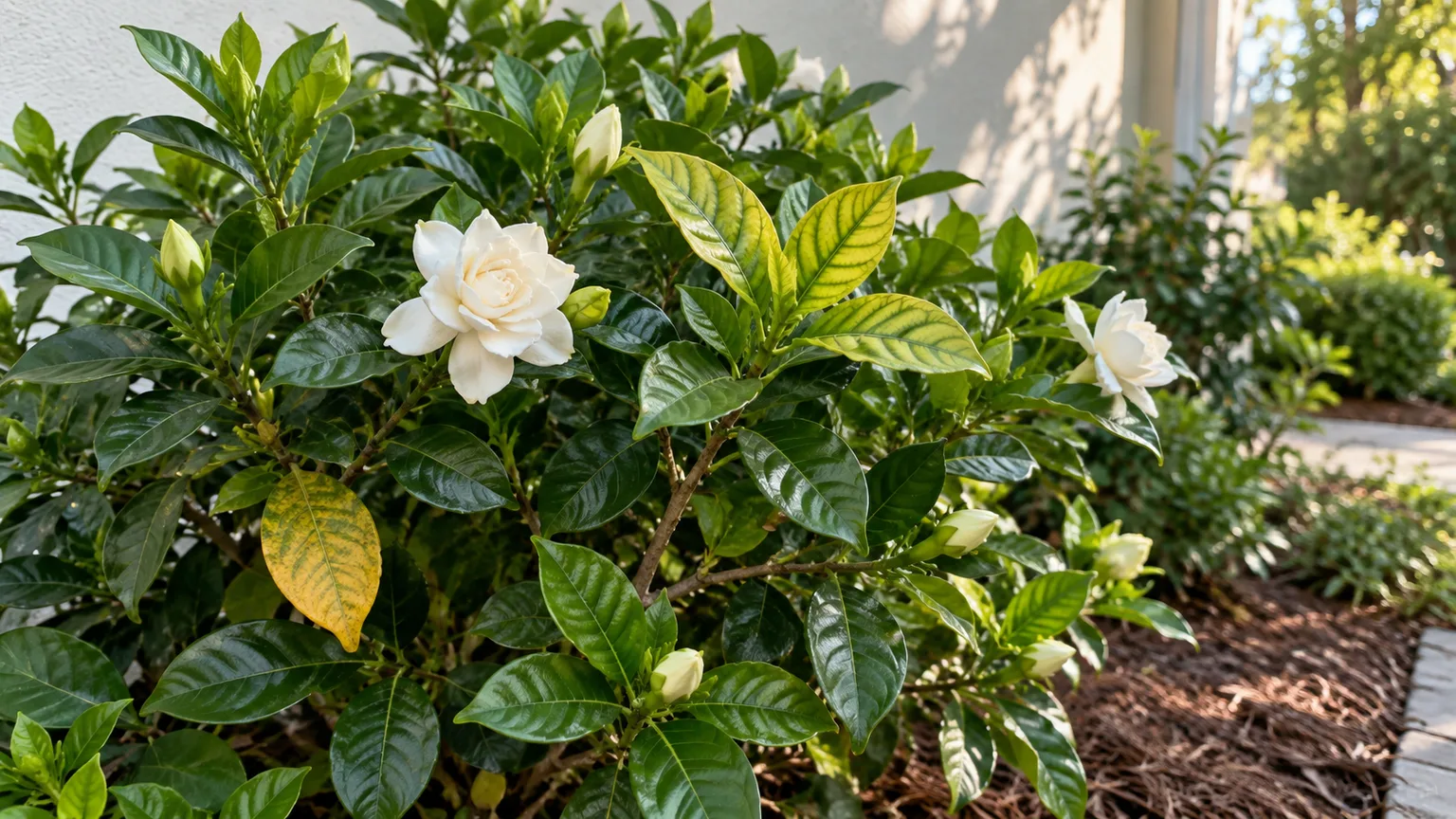
Yellow leaves are a symptom, not a diagnosis. A gardenia can yellow because old leaves are being shed, its roots are too wet or too dry, iron is unavailable at the current soil pH, pests are feeding, or a sudden change in temperature or light has stressed it. The clue that narrows the cause is the pattern: which leaves yellowed first, whether the veins stay green, whether the soil is wet, and whether you can see insects or lesions.
Do not respond by watering, fertilizing, or acidifying the soil until you have checked those clues. Gardenias prefer acidic, moist but well-drained soil, and their foliage can yellow when pH is outside the useful range; the same color change can also follow root injury, seasonal leaf turnover, pests, and weather shifts. UF/IFAS Extension notes that older leaves may yellow and drop normally in early spring and fall, while yellowing new growth more often points to iron availability or a root problem.
Start with a quick diagnosis before changing care
First, look at the whole plant from a few feet away. Note whether the yellow leaves are mostly at the base, on the newest tips, on one sun-exposed side, or scattered across the canopy; also note whether the pattern appeared gradually or after a cold night, repotting, move indoors, heat wave, or change in watering.
Next, check moisture below the surface rather than judging by the top inch alone. Push a finger or a narrow wooden skewer several inches into the root zone, and compare the soil there with the drainage holes or the edge of the root ball; damp surface mulch can hide dry soil, while a dry crust can sit above saturated roots.
Then inspect the leaf undersides, young shoots, stems, and soil surface. Look for fine stippling, curled new growth, sticky honeydew, black soot-like film, cottony or waxy bumps, webbing, distinct spots, and soft or sour-smelling roots; these signs change the diagnosis more than leaf color by itself.
| What you notice first | Most useful next check | What it may point toward |
|---|---|---|
| One or two older leaves yellow near the base | Season and whether new growth is healthy | Normal turnover, especially in spring or fall |
| New leaves pale between green veins | Root-zone pH, drainage, and root health | Iron chlorosis or another nutrient-uptake problem |
| Several leaves yellow with limp growth while soil stays wet | Drainage and roots | Waterlogging or root damage |
| Dry, crispy edges with a light or shrunken root ball | Moisture several inches down | Drought or a root ball that is not being rewetted |
| Fine speckling, sticky leaves, black film, or visible insects | Undersides of leaves and stems | Mites, scale, aphids, or whiteflies |
Treat the table as a triage tool, not a lab result. More than one stress can occur at once: for example, roots damaged by standing water may be unable to take up iron even when the soil contains enough of it.
Before making a change, take one close photo of new growth and one of the oldest affected leaves, and write down the date, recent weather, and last watering. That small record helps you tell whether yellowing is spreading or whether an older leaf simply finished its life; it also gives an extension diagnostician more context than a fertilizer label or a single close-up can provide.
Read the yellowing pattern, not color alone
Leaf age and vein color make a useful first distinction, but neither can diagnose a gardenia on its own. Compare several leaves at different stages and pair the pattern with soil moisture, recent weather, and root condition before deciding what to change.
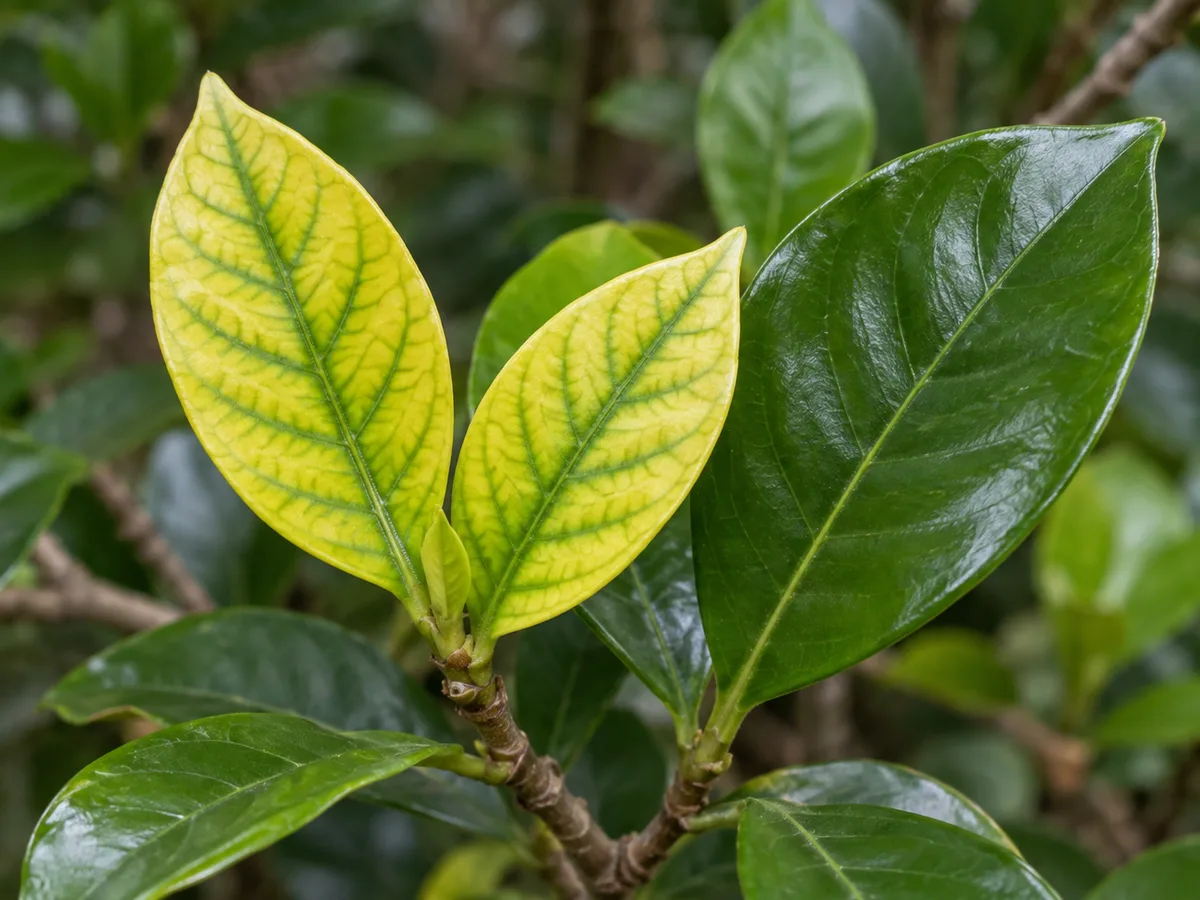
Pale new tissue with green veins is a useful iron-chlorosis clue, but check pH and root health before treating.
New leaves yellow while veins stay green
Pale new growth with green veins is a classic clue for iron chlorosis, especially when older leaves remain greener. Gardenias are adapted to acidic soil; as soil becomes too alkaline, iron can be present but less available to roots, so the plant cannot use it normally to build chlorophyll. UF/IFAS places the preferred soil pH for gardenias at about 5.0 to 6.5, and NC State Extension’s Plant Toolbox likewise flags chlorosis in alkaline soil.
That pattern raises suspicion; it does not prove that iron is missing. Root rot, compacted soil, nematode injury, or other root dysfunction can also interfere with nutrient uptake, so applying iron without checking pH and drainage can mask the symptom while leaving its cause in place. If only the newest leaves are affected and the plant is still firm, test soil pH and, when possible, use a laboratory soil test before amending a landscape bed.
Older leaves yellow evenly and drop
If the lowest, oldest leaves are the only ones fading and the tips keep producing healthy green growth, the shrub may be shedding older evergreen foliage rather than failing. UF/IFAS reports that older gardenia leaves can yellow and fall in early spring and fall; one or a few leaves over time are less concerning than a sudden wave of yellowing across several branches.
Older foliage can also show stress from dry soil, prolonged wetness, salt accumulation, or a confirmed shortage of a mobile nutrient such as nitrogen or magnesium. The pattern overlaps, so do not assume “old leaves equals nitrogen” or add Epsom salt for every yellow lower leaf; check moisture and root health first, then ask a soil lab or extension office which nutrient, if any, is actually low.
Yellowing spreads across the plant or appears in spots
Broad yellowing across multiple ages of leaves is more likely to involve a whole-root-zone or environmental stress than a single isolated leaf. Check for water extremes, poor drainage, recent temperature changes, salt exposure, and a sudden shift in light before choosing a nutrient treatment.
Small yellow dots, irregular lesions with darker margins, distorted shoots, or one-sided damage call for a closer inspection. Pest feeding and leaf disease often leave texture, residue, insects, or a distinctive edge to the damaged area; uniform yellowing without those signs is less suggestive of a leaf-spot disease, though it still does not identify a nutrient by itself.
Check soil moisture and drainage at the roots
Gardenias need consistent moisture, but “keep moist” does not mean keep saturated. Their fine roots need both water and oxygen, so the same yellow leaves can follow a root ball that stays waterlogged or one that repeatedly dries hard; what the soil feels like several inches down helps distinguish the two.
The root zone stays wet
If soil remains glossy-wet or muddy days after watering, water collects in a saucer, or a garden bed stays puddled after rain, stop adding water until you understand why it is not draining. Yellowing with limp leaves, premature leaf drop, stalled growth, or a sour smell is more concerning than yellowing alone because persistent saturation can deprive roots of oxygen and invite root rot.
For a container, confirm that drainage holes are open and the pot is not sitting in runoff; a decorative cachepot can trap water even when the nursery pot drains. If the plant is badly wilted while the mix is wet, ease it from the pot only if you can do so without tearing a healthy root system, then look for firm pale roots versus soft, dark, decaying sections; avoid repeatedly unpotting a mildly stressed plant just to inspect it.
For an outdoor shrub, check whether the planting hole sits in compacted clay, a low spot, or a downspout’s path. Do not dig a moat around the trunk or bury the root flare with soil; redirect runoff or improve the wider bed’s drainage, and seek local advice if an established shrub is declining because a landscape drainage problem may affect more than one plant.
If a container was recently repotted, moved into a larger cachepot, or set outside during a rainy stretch, check whether runoff can actually escape. A larger pot can hold a much bigger volume of wet mix around a small root system, and a nursery pot hidden inside a watertight decorative pot can leave the bottom submerged without making the soil surface look flooded.
The root ball dries too far between waterings
If the soil several inches down is dry and crumbly, the pot feels unusually light, or the root ball has shrunk from the sides of its container, underwatering is plausible. A dry gardenia may droop before it yellows, and the leaf margins can turn brown and crisp; water slowly over the root ball so the full profile rewets rather than letting one fast pour run down a gap at the pot’s edge.
Do not follow a fixed “one inch every week” rule without accounting for pot size, rainfall, heat, wind, soil texture, and root growth. Check again after watering: if water immediately runs through without wetting the center, rewet the root ball in several passes or use a brief soak for a container, then let excess drain fully; if the soil remains damp, wait rather than adding more.

Test soil pH before treating for iron chlorosis
Gardenias perform best in a well-drained, acidic root zone. UF/IFAS’s gardenia growing guide recommends pH 5.0–6.5 and suggests having soil analyzed through a local Extension office; its Gardenias at a Glance fact sheet also notes that foliage can yellow when pH rises too high. A home pH meter can help flag a problem, but an extension or soil-lab test is more useful when the reading will determine whether you add sulfur, iron, or fertilizer.
Sample the soil where the active roots grow, not from a pile of mulch or a spot next to a concrete foundation. For a landscape plant, follow your lab’s instructions for several representative scoops from the bed; for a potted gardenia, test the growing mix and check the irrigation water history separately, because a soil test for field mineral soil may not interpret a soilless potting mix the same way.
Use a county or regional lab if pH has been persistently high, if several acid-loving plants are struggling in the same bed, or if you plan to make a large amendment. Tell the lab that the crop is gardenia and mention recent fertilizer, lime, sulfur, or iron applications; interpretation is more useful when the lab knows what is planted and what has already been added. A result for the lawn beside the shrub is not a substitute for a sample from the gardenia’s root zone.
Why iron can be present but unavailable
Iron chlorosis is often a problem of availability rather than an empty soil. Alkaline conditions can make iron less soluble, and roots struggling in saturated, compacted, saline, or diseased media may not take up nutrients efficiently; this is why new leaves can show interveinal yellowing even after someone has applied a fertilizer containing iron.
If a soil test shows pH above the range for gardenias, use the lab’s recommendation for that soil and bed size instead of guessing at an acidifier dose. Sulfur and other acidifying products act over time and can overshoot or injure roots when misapplied; repeated vinegar drenches and coffee grounds do not provide a measured, dependable pH correction.
In containers, a series of small, repeated fertilizer doses or high-mineral irrigation water can also leave soluble salts behind as water evaporates. A white crust on the mix or pot rim is a clue to review water quality and fertilizer history, not a signal to add another nutrient; only leach a container if its drainage is free and the plant is not sitting in the runoff. For outdoor soil, do not try to acidify a large bed based on a strip test from one handful.
When a nutrient test should guide fertilizer
Fertilizer is appropriate when the plant is actively growing and a soil test, a clear established care need, or an extension diagnosis supports it. UF/IFAS notes that established gardenias are commonly fertilized on a regional schedule, but that is routine maintenance guidance—not evidence that yellow leaves need feeding today; timing and rates vary with climate, formulation, and whether the shrub is in a pot or bed.
If a confirmed shortage calls for feeding, choose a product suited to gardenias or acid-loving landscape plants and follow its label for the plant’s setting and size. Do not combine a general fertilizer, iron product, sulfur, and magnesium “just in case,” and do not apply fertilizer to a drought-stressed, waterlogged, heat-stressed, or newly root-damaged plant; salts can add another stress before roots recover.
Inspect leaves and stems for pests or disease
Check the undersides of several yellow leaves and the newest shoots in good light. NC State Extension’s gardenia pest key describes whiteflies associated with honeydew and sooty mold, wax scale as pale waxy bumps on stems, aphids as small insects on distorted new growth, and spider mites as fine chlorotic stippling with mites or eggs beneath leaves.
Sticky leaves or a black film may be honeydew and sooty mold rather than a fungal leaf spot. Sooty mold grows on sugary honeydew produced by sap-feeding insects; wipe a small area gently and then look above and below that leaf for scale, aphids, mealybugs, or whiteflies instead of treating the dark coating as the root problem. NC State’s gardenia pest guide explains these signs and why heavy feeding can contribute to premature leaf drop.
The clues differ by pest: whiteflies tend to flutter up when foliage is disturbed, scale insects sit like fixed bumps on leaves or stems, aphids cluster on soft tips, and spider mites leave many fine pale stipples rather than one broad yellow field. Use a hand lens or tap a branch over white paper if the insects are too small to see clearly; identify the culprit before selecting a control because a spray that misses the pest adds stress without solving the problem.
If you find pests, identify them before reaching for a spray. Rinse small populations from sturdy foliage or remove heavily infested leaves where practical, preserve beneficial insects, and use only a treatment labeled for gardenias and the target pest if further control is needed; soaps and oils can injure foliage in heat or on sensitive plants, so follow the label and test a small area first.
Distinct brown or black spots, expanding lesions, twig dieback, or a problem that spreads after repeated leaf wetting suggests that disease or a root problem deserves closer assessment. Remove fallen diseased debris, water at the soil line, improve air movement without hard pruning, and send clear photos or a sample to your local extension office rather than guessing at a fungicide.
Consider season, temperature, light, and growing setup
Gardenias are evergreen, but evergreen does not mean every leaf lasts indefinitely. A few older leaves yellowing and dropping in early spring or fall can be normal; extensive loss, yellowing new growth, or a plant that declines faster than it replaces foliage is not explained by routine turnover alone. Gardening Know How and Better Homes & Gardens Australia both note that rapid weather or temperature shifts may precede yellowing, a useful clue when the change follows a cool spell rather than proof that cold is the only cause.
Check the timing against cold nights, a move between indoors and outdoors, a hot dry spell, recent repotting, or a sudden change in sun exposure. Gardenias generally prefer bright light or partial shade and moist, acidic soil; NC State describes them as challenging outside their native conditions, and UF/IFAS notes substantial cultivar variation in plant size and growth form. A cultivar’s cold tolerance and the local climate affect how well the same shrub handles a site.
An indoor gardenia can yellow after a transition from a humid nursery or greenhouse to a dry, heated room, but the fix still begins with light, temperature, and root moisture—not automatic misting or a larger watering dose. If yours lives indoors, compare its conditions with this indoor gardenia growing guide; avoid moving it repeatedly while it is adjusting, and keep it away from cold drafts and hot air vents.
The plant’s growing setup changes what “normal” looks like. A recently purchased shrub may shed a few older leaves as it adjusts to different light, temperature, and watering, while a mature outdoor plant can show a little seasonal leaf replacement; neither explanation fits a plant whose newest shoots are progressively pale, whose roots remain wet, or whose leaves carry pest residue. If the same cultivar is healthy in a nearby bed, compare drainage, exposure, and water source before assuming the cultivar itself is defective.
Also consider irrigation-water quality and salts. UF/IFAS cautions that gardenias do not tolerate high-salt water, including some softened or reclaimed sources; if yellowing follows a water-source change or a white crust forms on the pot or soil, pause fertilizer and ask your extension office about water quality and safe leaching for that planting medium.
Follow a safe correction sequence and watch new growth
Make one evidence-based change at a time so you can tell whether it helped. A practical order is: record which leaves are affected; inspect pests and lesions; check root-zone moisture and drainage; review recent weather or moves; then test pH and nutrients if the pattern points to a soil issue. This sequence prevents a common spiral in which a gardener waters a wet plant, feeds damaged roots, and then adds acidifier when the extra stress makes more foliage yellow.
What to do this week
If the soil is saturated, improve drainage and stop watering until the root zone begins to dry; if it is truly dry, rewet it thoroughly and then reassess before setting a schedule. If new leaves show green-veined yellow tissue, obtain a pH test before using iron or sulfur, while a visible pest should be identified and managed directly rather than treated as a nutrient shortage.
Leave most yellow leaves attached until they loosen naturally unless they are diseased, badly damaged, or hiding pests; removing every yellow leaf will not cure the cause and can reduce the plant’s remaining photosynthetic surface. If you remove a leaf for appearance or sanitation, use clean hands or clean snips, and dispose of diseased material rather than composting it in a home pile that may not heat adequately.
What to monitor over the next growth flush
Existing yellow tissue often stays yellow even after the underlying stress is corrected. Measure success by the next leaves: are new leaves a healthy green, are shoots firm, and has the yellowing stopped spreading? A healthy flush may take weeks or longer depending on season and growing conditions, so avoid repeating a treatment after only a few days because one old leaf has not regained color.
If yellowing continues despite a measured pH correction, a dry root zone corrected once, or visible pests being controlled, revisit the diagnosis rather than escalating the same treatment. Bring photographs of old and new leaves, a note of watering and weather, and soil or water test results to a local extension office; for an outdoor shrub with widespread wilt or root decay, an on-site diagnosis can distinguish root disease, drainage, and nematode issues that photographs cannot confirm.
Conclusion
Start with the leaf pattern and the roots. A few older leaves dropping in spring or fall may be routine; yellow new leaves with green veins make iron chlorosis more plausible; wet, poorly drained soil, a dry root ball, pest residue, or a recent temperature change each points to a different next check.
Do not fertilize or acidify a gardenia simply because it looks yellow. Confirm moisture and drainage first, inspect for pests, test pH when new growth suggests iron lockout, and use lab or extension guidance before applying targeted amendments; healthy new growth—not a quick color change in old leaves—is the clearest sign that the correction is working.