Feather Reed Grass Care: Planting, Water, and Pruning
Learn to grow feather reed grass with a cultivar guide, planting depth, watering cues, pruning timing, division steps, and fixes for weak plumes or floppy stems.
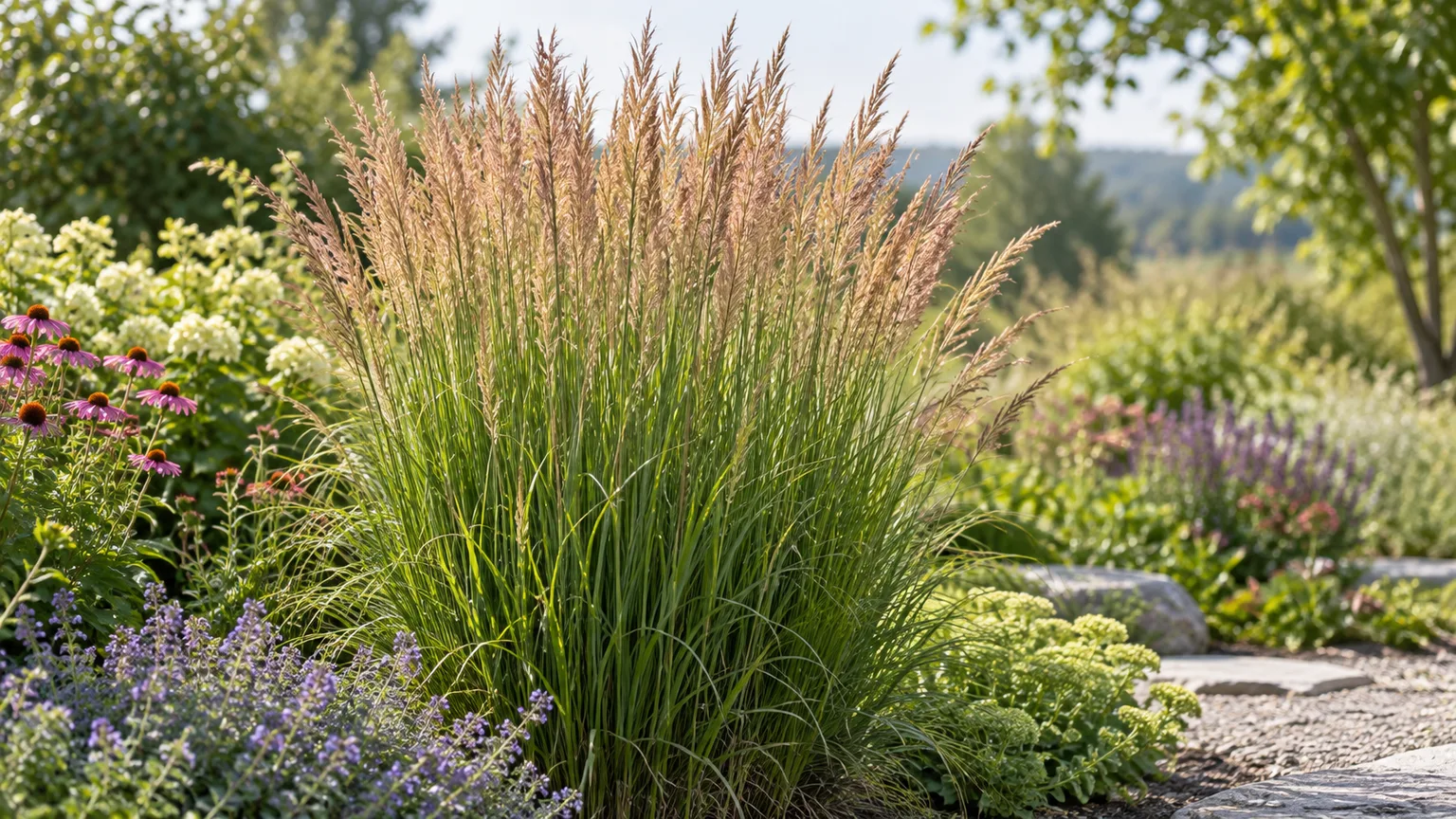
Feather reed grass is valued for a shape that is hard to find in a perennial border: a dense, narrow base of green leaves with flower stems that rise straight above it. The plumes appear in early summer, mature from green or pinkish bronze to tan, and often hold their form into winter. That upright habit makes it a strong accent, but the plant still needs the right amount of sun and moisture to keep flowering rather than turning into a leafy clump.
The name usually refers to Calamagrostis × acutiflora, a cool-season hybrid sold most often as ‘Karl Foerster’ and, in smaller or variegated forms, as ‘Overdam’ and ‘Avalanche.’ Before buying, check the cultivar and its mature spread: the word “feather reed” on a label does not tell you whether the plant will fit a tight walkway, pot, or mixed border. Once established, it needs little routine feeding, one annual cutback, and occasional division only when the clump loses vigor.
Feather reed grass at a glance
Feather reed grass is a clump-forming perennial in the grass family, Poaceae. Its foliage commonly reaches roughly 18 to 36 inches, while mature flower stalks can rise to about 5 feet or higher depending on the cultivar and conditions; its footprint is generally narrower than its bloom height. The North Carolina State Extension Plant Toolbox describes the hybrid’s narrow leaves and early-summer plumes, while the Missouri Botanical Garden Plant Finder lists ‘Karl Foerster’ at about 3 to 5 feet tall and 1.5 to 2.5 feet wide.
| Growing factor | Practical starting point |
|---|---|
| Light | Full sun for the strongest flowering; light or afternoon shade can help in hot regions |
| Soil | Average to fertile soil that holds some moisture but drains |
| Water | Keep evenly moist during establishment; water established plants during extended dry spells |
| Mature size | Often 3 to 5 feet, with flower stalks rising above the leaves; cultivar size varies |
| Pruning | Cut old stems back in late winter or very early spring, before shoots emerge |
| Propagation | Divide a healthy mature clump; named hybrid cultivars are not reliably grown from seed |
Hardiness ranges differ among references and cultivars, so do not treat one number as a guarantee for every plant sold under this common name. For example, Wisconsin Extension lists ‘Karl Foerster’ for Zones 3–9, while Fine Gardening lists Zones 5–9 for feather reed grass. Check the tag for the named selection, compare it with guidance from a local nursery or extension service, and consider winter exposure if you are growing it in a pot.
Choose a cultivar for the space
Cultivar choice changes the look and scale more than the basic care. The most familiar form is a tall, green, upright selection; variegated forms brighten foliage but may have a different height or a less forceful visual presence. Use the mature width on the plant tag to set spacing instead of planting by the size of a nursery pot.
‘Karl Foerster’ for a narrow vertical accent
‘Karl Foerster’ is the classic choice when you want a strong vertical line without a wide, arching fountain of leaves. Its narrow, glossy green foliage forms a tidy clump, and its stiff flower stems rise well above that foliage before the plumes turn bronze and tan. Both Wisconsin Extension and the Missouri Botanical Garden describe the cultivar as upright and useful in borders, mass plantings, or as a narrow screen.
Expect the flowering stems to be taller than the leafy mound. That distinction matters beside windows, low shrubs, or a path: the plant may occupy little ground space while still blocking a view or brushing passersby when it is in bloom. Leave enough room for the clump to expand and for air to move around it.
‘Overdam’ and ‘Avalanche’ for variegated foliage
‘Overdam’ is a more compact selection with pale edging or striping, while ‘Avalanche’ has a stronger white-variegated look. Their light foliage can stand out in a mixed border, but the exact height, stripe pattern, and vigor can vary with the nursery stock and growing conditions. Compare plants in person or check the supplier’s cultivar description rather than relying on a generic species size.
If you want a dramatic green screen, choose an upright, taller cultivar and repeat it at measured intervals. If the planting is close to a patio or container, a smaller named selection is easier to keep proportionate. Do not buy seed packets expecting a true copy of a named cultivar; use a labeled nursery plant or divide an existing clump.
Choose sun, soil, and drainage before planting
The site determines whether feather reed grass produces a stable display or a leafy mound with few flower stems. A useful first check is to watch the bed after a heavy rain: soil may stay moist without puddles lasting for days. This hybrid is more tolerant of clay and wetter ground than many ornamental grasses, but “tolerates wet soil” is not the same as “wants its crown underwater.”
How much sun does it need?
Choose a location with several hours of direct light, ideally most of the day, if reliable flowering and rigid stems are the goal. Light shade is acceptable, and in hot-summer climates afternoon shade can reduce heat stress. As shade deepens, however, the plant may flower less and the foliage can loosen or lean; North Carolina State and Missouri Botanical Garden both note the trade-off between shade tolerance and a strong, upright bloom.
If an established clump has healthy green foliage but no plumes, track how much direct sun reaches it in early summer before adding fertilizer. A tree that leafs out after the grass begins spring growth can change the light the plant receives later, so a site that was sunny when you planted may become too shaded for good flowering.
Moist soil is useful; a submerged crown is not
Feather reed grass grows in average to moist soil and can handle heavier clay and occasional wetness. It still performs best where excess water can move away from the crown. The Royal Horticultural Society’s plant profile recommends moist but well-drained or well-drained soil, while the Missouri Botanical Garden notes tolerance of wet soil; together, those descriptions support a practical distinction between damp ground and persistently stagnant water.
For clay, improve the whole planting area rather than creating a small pocket of very loose potting mix inside dense soil. A sharply different pocket can hold water like a basin. If the area stays saturated long after rain, select a better-drained part of the bed or build the planting slightly higher; do not try to solve standing water with extra fertilizer or frequent irrigation. A rain-garden edge with episodic moisture is a better fit than a permanently flooded low spot.
Planting for a stable, upright clump
Plant in spring or early fall when soil is workable and the plant can establish before extreme heat or hard freezes. Set the rootball at the same depth it grew in its nursery pot, keeping the crown level with the surrounding soil. Planting too deep buries the crown; planting too high exposes roots and makes the clump dry faster.
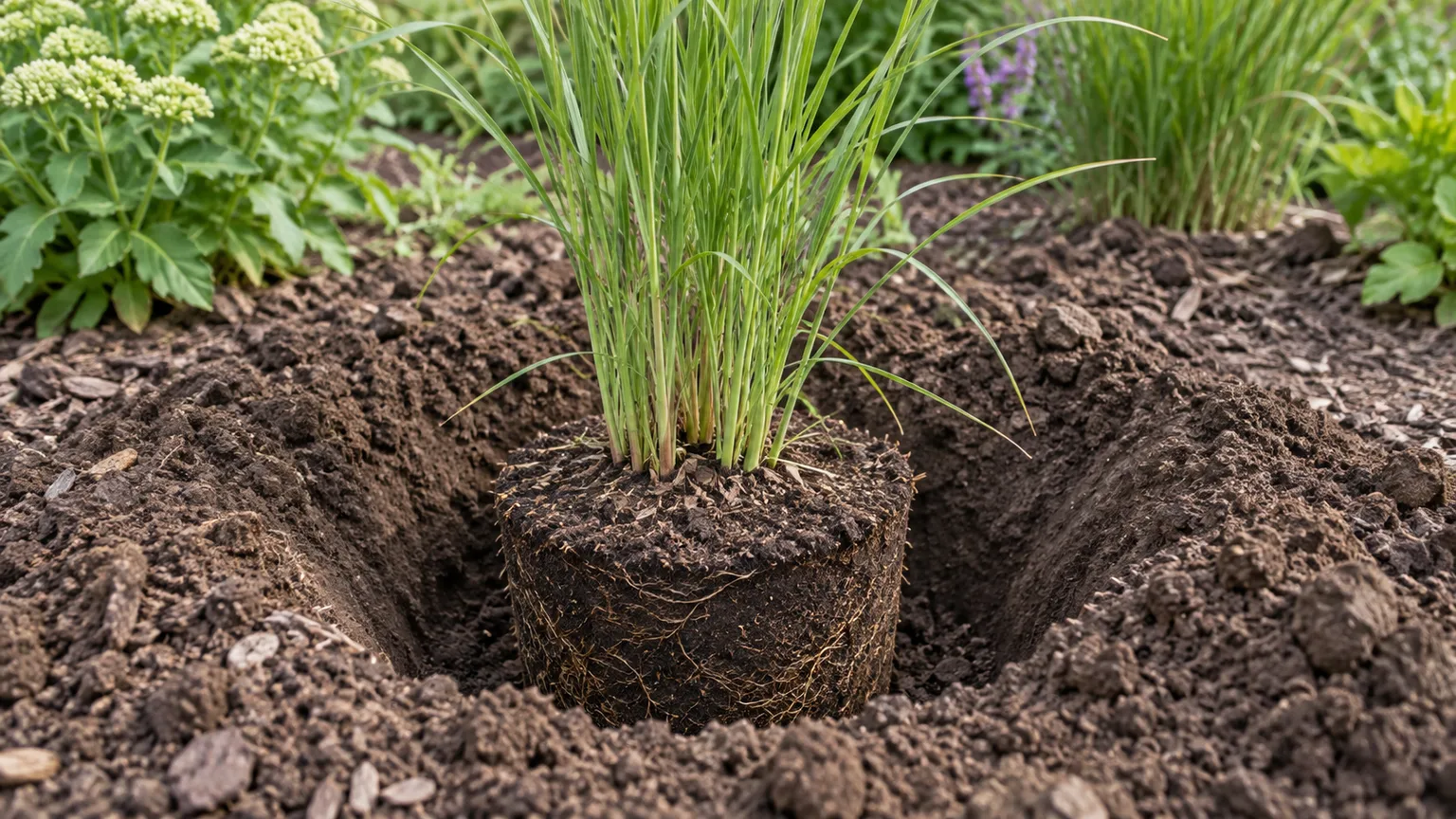
Water the nursery pot before planting, slide the rootball out, and loosen only roots circling tightly around the outside. Set it into a hole about as wide as the rootball, backfill with the soil you removed, and firm gently to remove large air gaps without compacting the bed. Water thoroughly to settle the soil, then add a light mulch layer while keeping it clear of the crown.
Space plants according to the cultivar’s mature width. For a repeating screen, allow the clumps to grow together only if you want a continuous mass; closer planting can make the display read as a hedge sooner but makes it harder to reach the interior for division. In a mixed border, leave a little breathing room on all sides so the foliage can hold its shape and the neighbor plants do not hide the lower leaves.
Water and feed according to growth stage
During the first growing season, check soil moisture regularly and water deeply when the root zone begins to dry rather than following a fixed weekly schedule. A new rootball can dry faster than the surrounding bed, especially in sun, wind, or sandy soil. Water near the base so moisture reaches the roots, then wait for the soil to use some of that water before repeating.
After the plant is established, normal rainfall may be enough in a climate with even summer moisture. During a prolonged hot or dry spell, a deep watering can preserve leaf quality and plume development; containers and very sandy beds need more frequent checks because their root zones dry quickly. Wisconsin Extension describes the cultivar as relatively drought tolerant once established, but tolerance means survival is more likely than peak size or flowering under long, dry conditions.
Feather reed grass usually needs little fertilizer in ordinary garden soil. If growth is weak across the whole bed, first check light, water, crown depth, and whether the plant is newly established; then use a soil test if nutrient deficiency is plausible. A thin layer of compost in spring is often enough for poor soil. Avoid high-nitrogen feeding as a shortcut to plumes: lush leaves can come at the expense of sturdier stems, and extra fertilizer will not correct shade or waterlogged roots.
Diagnose sparse plumes and leaning stems
When a clump is not flowering, work through the likely causes in order. First check whether it receives enough sun in late spring and early summer; then ask whether it is still establishing, repeatedly dry during active growth, or cut back after new shoots started. Excess nitrogen is another possibility, especially if foliage is unusually lush and soft. Do not add phosphorus or bone meal automatically—only correct a soil-test deficiency.
Leaning can have several causes. Too much shade and overfeeding can produce less rigid growth, while a young clump may need a season to fill out. Wisconsin Extension notes that heavy rain or wind can temporarily push stems over and that they may return upright as they dry; if yours rebounds, it may not need staking or division. If stems remain splayed in calm weather, check light, fertilizer history, and crowding before deciding the cultivar is failing.
Sparse growth at the center is a different clue from a uniformly small new plant. When the outside keeps growing but the middle turns thin or dead, the clump may be old or congested and ready to divide. Browning at the tips can follow drought, winter wear, or poor drainage; diagnose the whole pattern and soil condition before changing the watering routine.
Prune through the seasons
Leave the dried flower stems standing through fall and winter if you like their color, texture, and movement. They give a dormant bed structure and can be cut for dried arrangements. The Missouri Botanical Garden Plant Finder and Fine Gardening’s Calamagrostis guide both recommend cutting old foliage in spring, which preserves winter interest while making room for the next season’s growth.
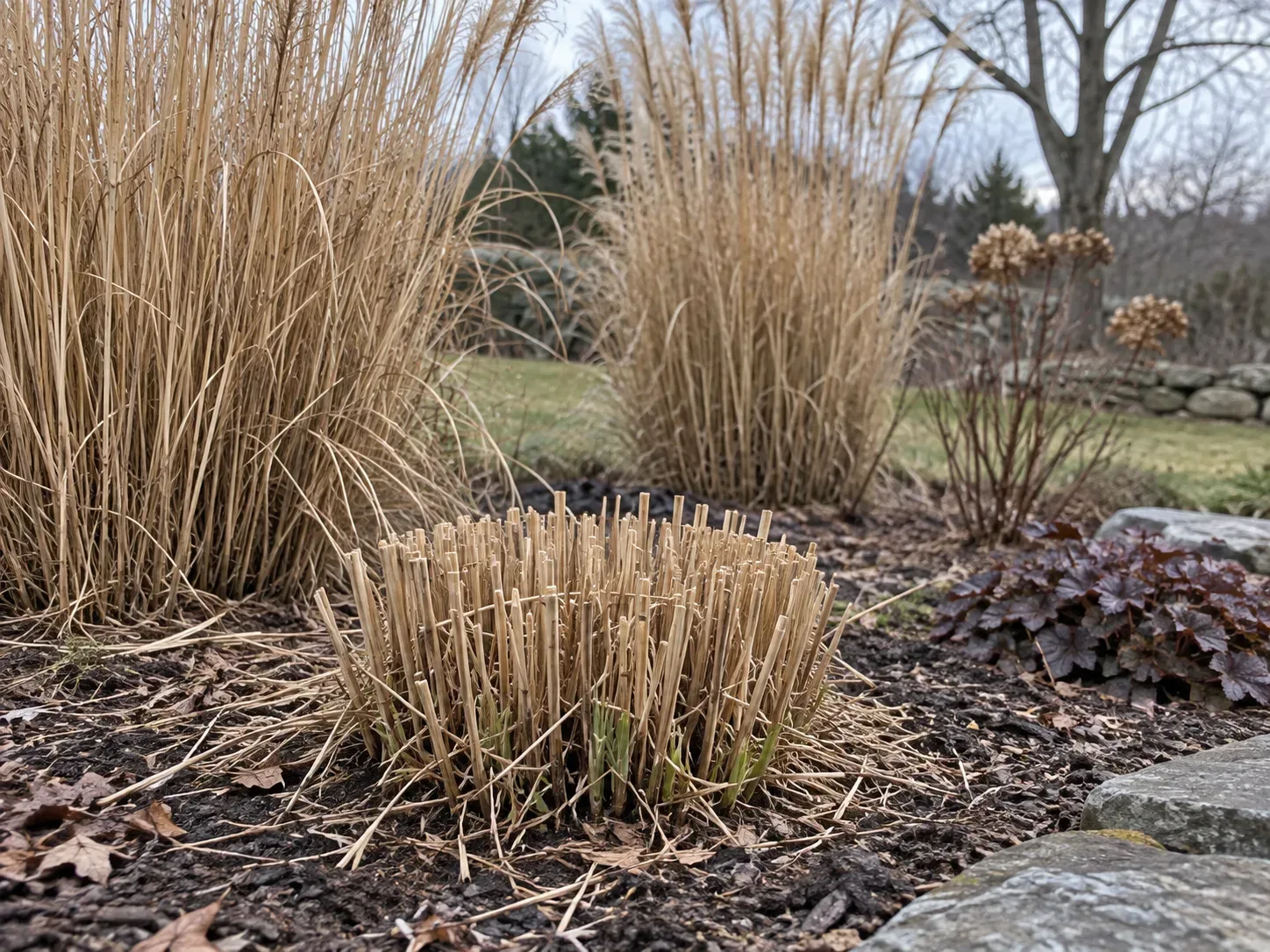
In late winter or very early spring, bundle the old stems with twine and cut the bundle back to roughly 4 to 6 inches above the crown. Time the work before new green shoots rise; in mild regions that window can arrive earlier than expected. If you see fresh shoots already extending above the crown, cut around them rather than shearing blindly across the whole clump.
Use sharp shears, gloves, and long sleeves, especially when working through dry blades. Remove the cut material from the bed, then check that mulch has not built up over the crown. Avoid cutting the clump to the ground in fall unless you have a specific cleanup reason: you lose winter structure and do not gain better flowering by removing the stems early.
Divide a crowded or hollow clump
Divide feather reed grass when its center dies out, the clump has outgrown its allotted space, or flowering and vigor decline despite suitable light and water. A calendar interval of a few years is only a prompt to inspect; a healthy, contained clump does not need routine disruption. Mid-spring is a dependable time in many climates, when new shoots are visible but still short; early fall can also work where there is enough mild weather for roots to settle. Fine Gardening lists mid-spring division, and Wisconsin Extension allows spring or fall for this cultivar.
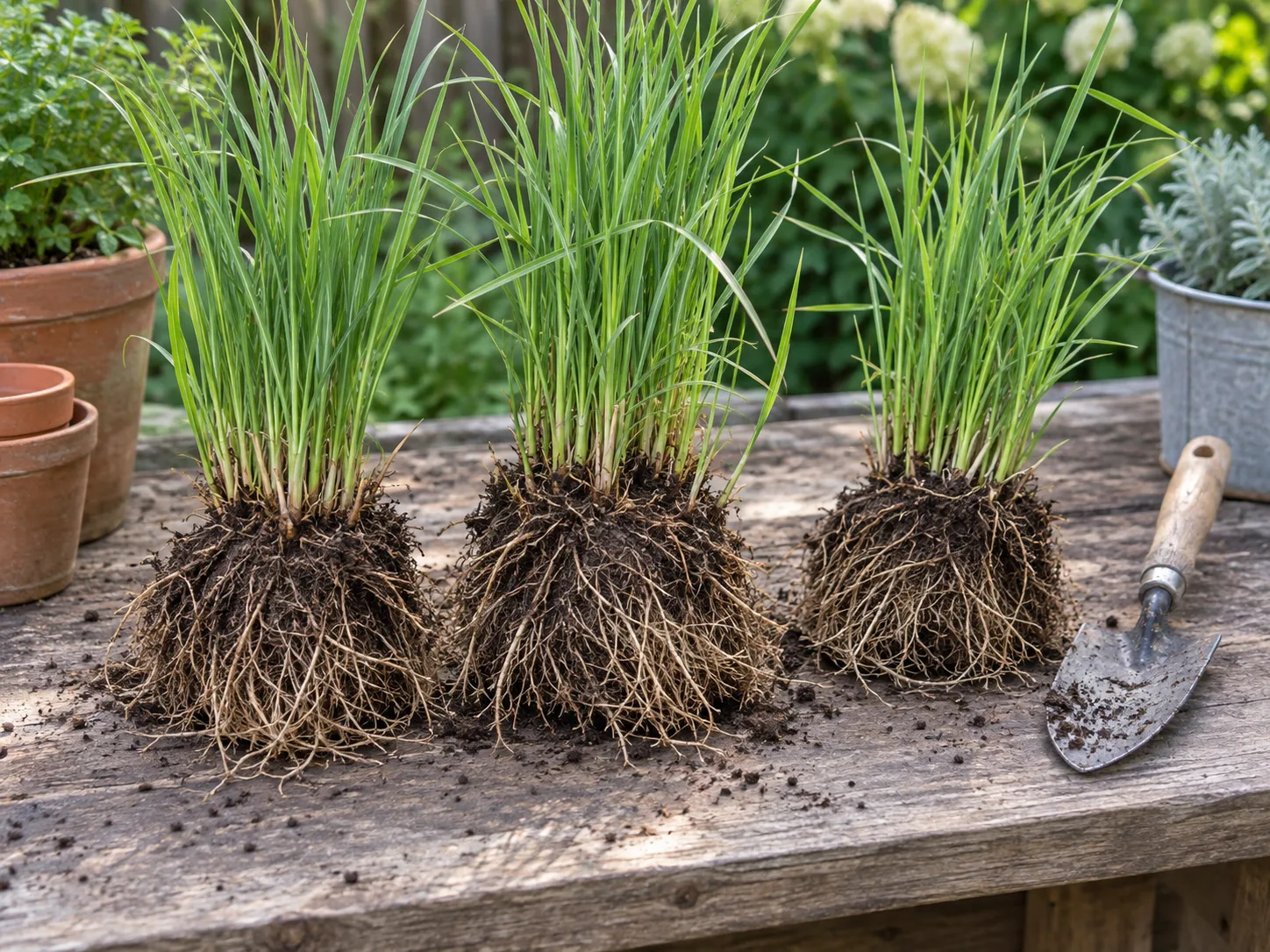
Water the parent clump the day before if the soil is dry. Dig a circle around it, lift as much of the root mass as you can, and use a sharp spade or pruning saw to split it into sections with healthy roots and several shoots. Discard the dead, woody center instead of planting it again; small divisions with very little root may survive but take longer to become full plants.
Replant divisions promptly at the same crown depth, spacing them for their mature width. Backfill, water deeply, and keep the soil evenly moist while new roots establish. If the weather turns hot, provide temporary afternoon shade or postpone the work; a freshly divided root system is less able to replace water than a mature clump. Do not leave divisions drying in the sun while you prepare the new bed.
Named feather reed grass cultivars are usually propagated by division because seed from the hybrid is not a reliable way to reproduce them. North Carolina State Extension describes the hybrid as not producing viable seed, and Fine Gardening lists division as the propagation method for the genus. Buy a named cultivar when you need a predictable size or variegation rather than sowing an unlabeled seed mix.
Grow feather reed grass in a container
Feather reed grass can anchor a patio pot, but container culture magnifies both drying and winter cold. Choose a sturdy pot with drainage holes, enough width for the cultivar’s mature root system, and enough weight to resist wind as the tall stems catch it. Use a quality outdoor potting mix rather than dense garden soil, and never leave the container standing in a water-filled saucer.
Water when the top layer begins to dry and continue until excess water drains from the base. In warm, windy weather, a pot may need checking daily even though an in-ground clump does not. Feed sparingly; nutrients wash out of containers more readily, but frequent high-nitrogen fertilizer still encourages softer foliage rather than a stronger vertical silhouette.
In a cold climate, roots in a pot are more exposed than roots in the ground. Select a hardy cultivar for your area, place the container in a sheltered spot, and insulate the pot or move it to a protected unheated location if local winters routinely threaten container-grown perennials. A large, heavy pot is easier to protect than a small container that freezes through quickly.
Pests, rust, and other problems
Feather reed grass is generally low maintenance, and serious insect problems are uncommon. Inspect for aphids or mites only when leaves look stippled, sticky, or distorted; a few insects on otherwise vigorous ornamental grass do not justify broad pesticide use. First rinse or remove a small affected area and reassess. Use any pesticide only when the product is labeled for the site and pest, following its directions.
Rust is the disease most often mentioned for this grass. It can appear as orange, reddish, or brown powdery pustules on leaves, especially after prolonged wet weather or where airflow is poor. The RHS lists rust as a possible issue, while North Carolina State Extension and the Missouri Botanical Garden characterize serious disease problems as uncommon. Give clumps enough space, avoid repeatedly wetting foliage late in the day, and remove heavily affected leaves rather than treating every brown tip as a fungal infection.
Read browning and rust before treating
Uniformly dry tips after a hot spell point first to water stress; yellowing and soft growth in constantly wet soil suggest drainage or root trouble. Scattered orange-brown pustules are more consistent with rust than simple drought, while natural tan color in late fall is normal aging. Check several leaves and the crown, not just the most damaged blade, before you choose a response.
If the crown is firm and the plant is pushing healthy shoots, correct the site or care condition and remove only the damaged material. If the crown smells sour, stays wet, or has mushy tissue, improve drainage and consider moving or replacing the plant; a fungicide cannot repair a crown buried in saturated soil. Keep the response proportional to the diagnosis.
Design with its height and winter structure
Use feather reed grass where a slim, upright form is useful: the back of a border, a repeated row beside an open path, a rain-garden edge that drains between storms, or a patio pot with room above it. A small group creates rhythm more naturally than a tight wall of plants, while a single clump can punctuate a bed. Account for the mature flower-stem height so it does not block a window, obscure a low planting, or crowd a narrow walk.
Pair it with plants that prefer similar light and moisture. Coneflowers, black-eyed Susans, asters, and salvias can contrast with its vertical seed heads, but check the requirements of each companion; a dry-garden perennial may not appreciate a consistently moist bed. Gardenia’s cultivar guide describes the grass as a structural border and screen plant and suggests pairing it with flowering perennials, while Fine Gardening highlights its vertical form and winter interest.
Feather reed grass is wind-pollinated, so it is a structural plant rather than a nectar source for pollinators. Use it alongside flowering plants if you want both architecture and nectar. In winter, the tan stems catch low light and remain visible when many perennials have disappeared; leave them in place until the late-winter cutback if the garden benefits from that texture.
Conclusion
For the most dependable feather reed grass display, choose a named cultivar that fits the site, give it sun or light afternoon shade, and plant it in soil that stays moderately moist but does not remain waterlogged. Water a new clump as its rootball establishes, then respond to actual drought rather than a calendar, and resist heavy feeding when plumes are sparse. Leave the stems for winter, cut them back before spring shoots rise, and divide only when the clump is crowded or hollowing; those few decisions preserve the upright form with little annual work.