Do Hydrangeas Need Full Sun? Light by Hydrangea Type
Do hydrangeas need full sun? Compare panicle, smooth, bigleaf, and oakleaf types, then use four practical tips to choose a safer planting spot for your garden.

Some hydrangeas can grow in full sun, but the whole genus does not share one light requirement. Panicle hydrangeas are the most dependable choice for a sunny bed; smooth hydrangeas can also take substantial sun if their roots stay evenly moist. Bigleaf and mountain hydrangeas are safer with morning sun and afternoon protection, while oakleaf hydrangeas tolerate a range of exposures that shifts with climate. The practical answer depends on the plant’s identity, the heat of the site, and how quickly its soil dries.
Use the four tips below to decide whether a sunny spot is suitable before you plant—or to work out whether light is behind an existing shrub’s scorched leaves, repeated wilting, or sparse flowers. A common “four to six hours” guideline can be a useful starting point, but it is not a universal prescription: six cool morning hours are different from six hours that include blazing western sun.
The short answer: hydrangea type matters more than a universal sun rule
A hydrangea in full sun receives at least six hours of direct sunlight on a typical day, the common horticultural definition used by the NC State Extension Gardener Plant Toolbox for ‘Limelight’ panicle hydrangea. That benchmark describes exposure; it does not promise that every hydrangea will thrive under those conditions. Species, cultivar, latitude, summer temperature, humidity, soil drainage, and watering all affect how much sun the shrub can use without stress.
As a quick starting point, choose a panicle hydrangea for the sunniest part of the yard, then consider a smooth hydrangea if you can keep the root zone from drying. For bigleaf and mountain hydrangeas, start with morning sun and shade during the hottest afternoon hours. Oakleaf hydrangeas often suit woodland edges and partial shade, but they can tolerate more sun in some cooler, moist gardens. Even a plant sold as “shade-loving” needs enough usable light to make a satisfying display of flowers.
Those are starting positions, not hard species boundaries. Extension guidance sometimes differs because it reflects local climates: a plant that can handle full sun in a cool region may wilt or scorch in a hot, dry summer. Match a nursery label to your local conditions and observe the actual site rather than treating the label’s light category as a guarantee.
Tip 1: Identify the hydrangea before choosing its exposure
“Hydrangea” can refer to shrubs with different leaf sizes, flower shapes, bud habits, and environmental tolerances. If the plant is already in your garden, the bloom shape and leaves often narrow down its type; a cultivar label is even better. When the label is missing, photograph the flowers and leaves and compare them with a local extension profile before relocating or pruning the shrub.
| Hydrangea type | Useful light starting point | What changes the recommendation |
|---|---|---|
| Panicle (H. paniculata) | Full sun to partial shade; often best in a sunny site | Water availability and extreme heat |
| Smooth (H. arborescens) | Partial shade; can handle sun with adequate soil moisture | Heat, drought, and cultivar |
| Bigleaf (H. macrophylla) | Morning sun, dappled light, or partial shade | Hot afternoon exposure and local climate |
| Mountain (H. serrata) | Morning sun and afternoon shade | Cultivar and summer heat |
| Oakleaf (H. quercifolia) | Partial shade to sun, depending on site | Hot climates and how dry the soil becomes |
Panicle hydrangeas handle the most direct sun
Panicle hydrangeas (Hydrangea paniculata) are usually the first type to consider for an open, sunny border. Their cone-shaped clusters distinguish them from the rounded mopheads many people picture. Cultivars such as ‘Limelight’ and ‘Bobo’ bloom on new growth, and NC State lists ‘Limelight’ for full sun to light shade while noting its preference for moist, well-drained soil and morning sun with afternoon shade as a favorable arrangement (NC State Extension Gardener Plant Toolbox).
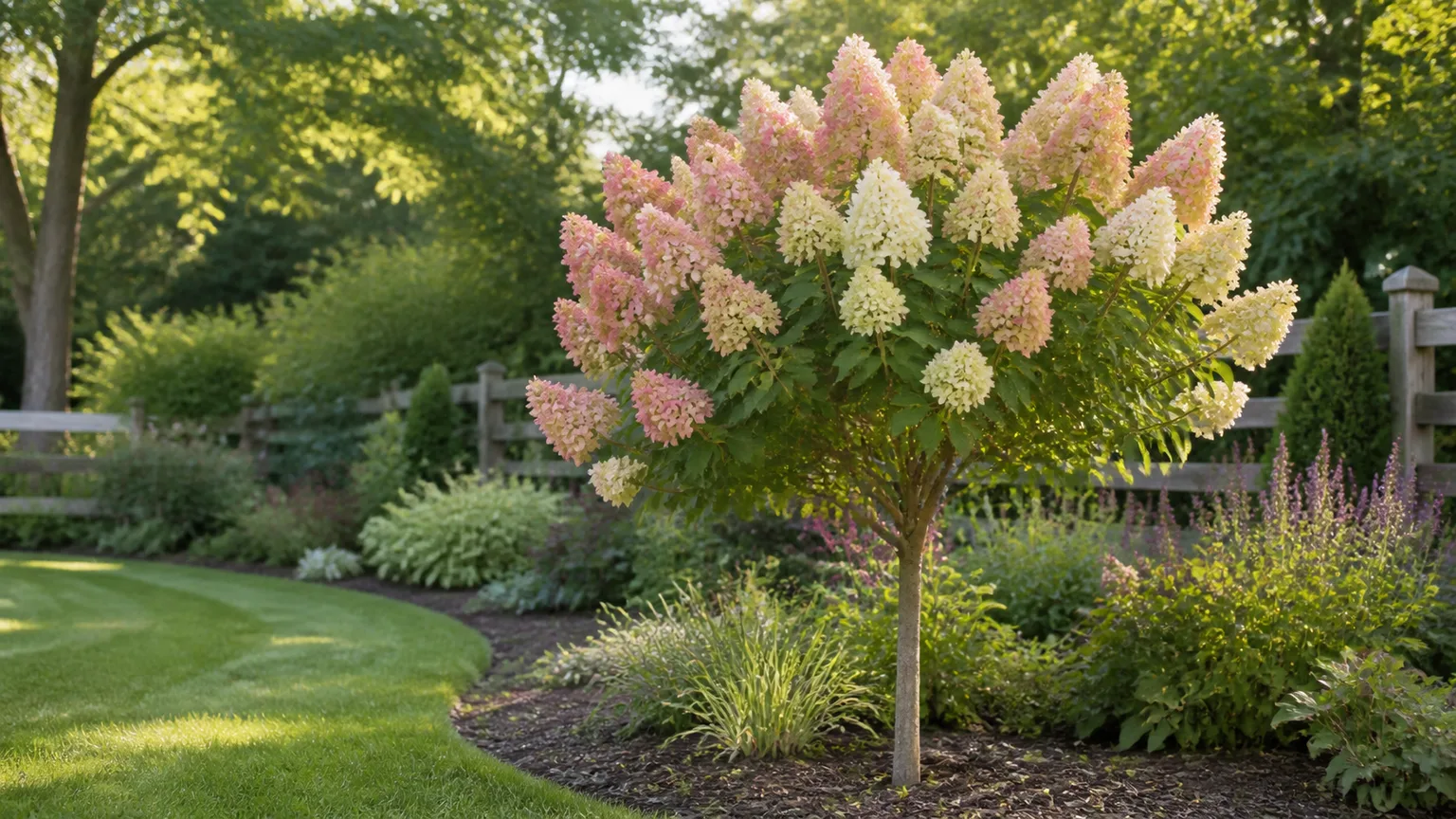
“Sun tolerant” does not mean indifferent to water. Alabama Cooperative Extension describes panicle hydrangea as a sun lover that can tolerate all-day sunlight with adequate moisture, while still preferring morning sun and afternoon shade (Alabama Cooperative Extension System). In hot, dry regions, a little afternoon relief can reduce stress even for a sun-tolerant cultivar. Avoid assuming that a recently planted shrub can handle the same exposure as a well-rooted specimen.
Smooth hydrangeas can take sun when soil moisture is steady
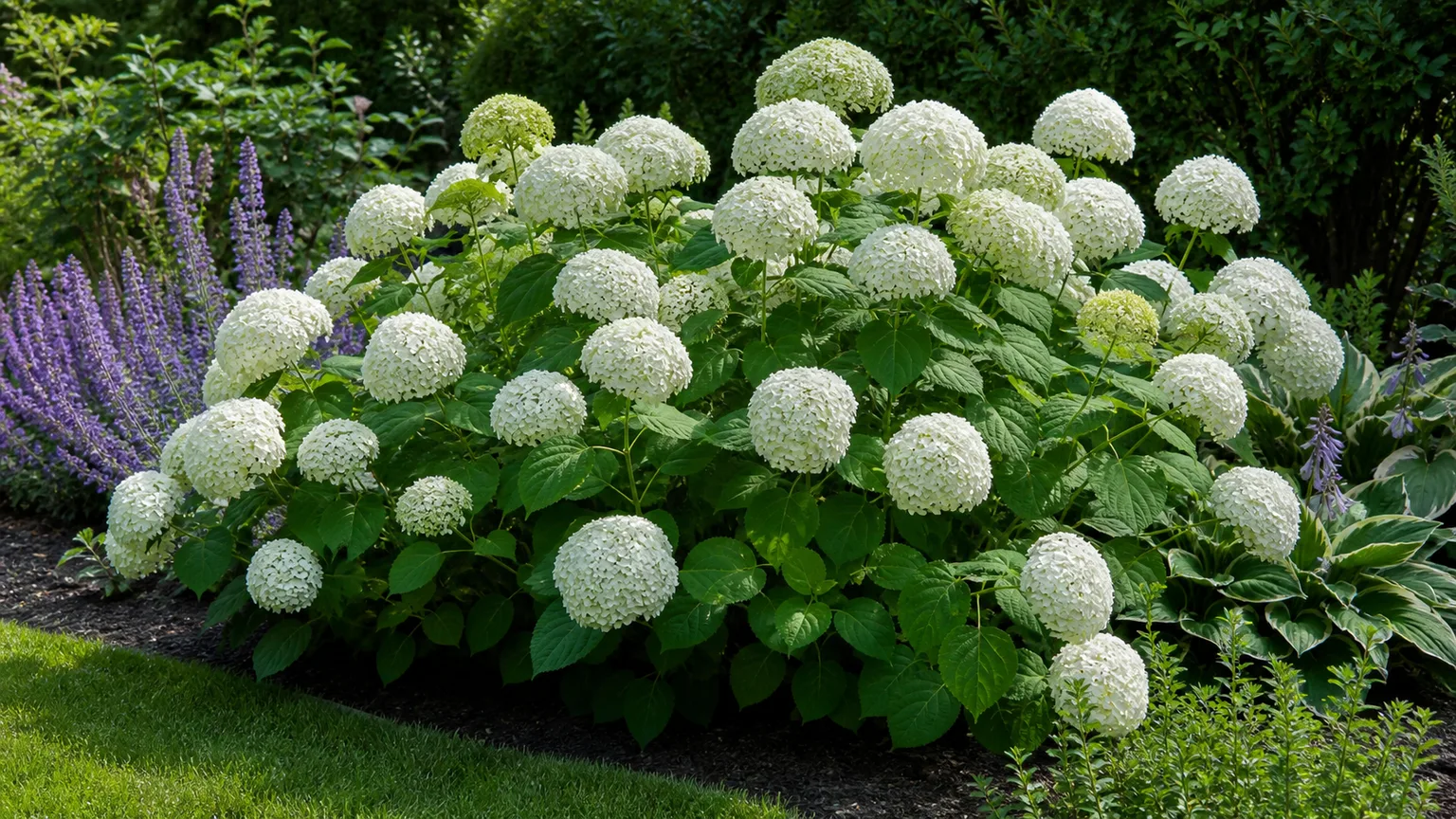
Smooth hydrangeas (Hydrangea arborescens) include ‘Annabelle’ and related selections with rounded flower clusters. They are adaptable: Illinois Extension says smooth hydrangea prefers partial shade but also grows in full sun when soil moisture is sufficient (University of Illinois Extension). In a mild climate with moisture-retentive soil, that flexibility can make ‘Annabelle’ a reasonable choice for a brighter bed.
In a hot yard, however, an “adequate moisture” site is not the same as a constantly wet one. A smooth hydrangea in exposed sun may lose water from its broad leaves faster than the roots can replace it during the hottest part of the day. Use partial shade in warm regions, especially for a new planting, and check the soil before increasing irrigation. Wet, poorly drained soil can injure roots even while the leaves look thirsty.
Bigleaf and mountain hydrangeas need afternoon protection
Bigleaf hydrangeas (H. macrophylla) produce familiar mophead or lacecap flowers. NC State recommends protecting bigleaf hydrangeas from afternoon sun and places them in dappled sunlight or partial shade (NC State Extension Gardener Plant Toolbox). A site with a few hours of gentle morning sun followed by bright shade is often a better fit than an exposed west-facing bed, particularly in areas with hot summers.
Mountain hydrangeas (H. serrata) resemble smaller lacecap bigleaf types and often share the morning-sun, afternoon-shade preference. A horticulturalist’s regional account in Fine Gardening notes that exposure requirements shift across climates: in hot regions the protection from midday and afternoon heat matters, while in cooler northern locations bigleaf hydrangeas may tolerate little or no shade (Fine Gardening). Treat that as a reminder to check cultivar and regional guidance, not as permission to plant every bigleaf cultivar in full sun.

Oakleaf hydrangeas are adaptable, with climate-dependent limits
Oakleaf hydrangea (H. quercifolia) has unmistakable lobed leaves, elongated flower clusters, and often striking autumn foliage. Its tolerance is sometimes described broadly as sun-to-shade, but performance depends on the local climate. NC State lists oakleaf hydrangea for full sun to partial shade and notes that summer mulch helps preserve soil moisture (NC State Extension Gardener Plant Toolbox). University of Georgia Extension’s guidance for warm Georgia gardens, by contrast, favors partial to nearly full shade for oakleaf hydrangea and cautions that shade selection should be matched to the landscape (UGA Extension Forsyth County).
Both can be true in context. A well-rooted oakleaf shrub in a cooler garden with moist soil may grow and flower in more sun; in a hot southern yard, relief from afternoon heat can help it hold attractive foliage and flowers. Dense shade can still reduce flowering or create weak growth, so aim for bright shade or dappled light rather than assuming “woodland plant” means deep darkness.

Climbing hydrangea is a separate, shade-tolerant vine and is not a useful proxy for the shrub types above. Its ability to grow on a north-facing wall does not mean a mophead or panicle shrub will flower well in the same near-dark position.
Tip 2: Measure both the hours and timing of direct sunlight
A spot that looks sunny at noon may be shaded most of the day, while a bed that seems shady in the morning may receive intense late-day sun reflected from a wall or paving. Before planting, look at the area on at least two clear days during the growing season. Note when direct rays hit the leaves and when a building, fence, or canopy blocks them; repeat the check after deciduous trees leaf out if they cast the main shade.
Do not count bright ambient light as direct sun. A hydrangea under an open tree canopy may receive strong dappled light for much of the day without accumulating six uninterrupted hours of direct rays. That can suit bigleaf types well, but it is different from the exposure meant by “full sun” on a nursery label.
What “full sun” means in a garden label
For most garden labels, full sun means roughly six or more hours of direct sunlight daily. Part sun and part shade labels are less consistent: some sources use the terms interchangeably for about four to six hours, while others emphasize when those hours occur. The exact number should be treated as a practical category, not a biological switch that turns at a particular minute.
Record the sequence, not only the total. Four hours of direct light before lunch, then bright shade, can be easier for a hydrangea than four hours from 1 p.m. to 5 p.m. in a hot summer climate. Where the cultivar tag lists a range such as full sun to part shade, use your site’s heat, moisture, and afternoon exposure to decide where it fits inside that range.
Why morning sun and hot afternoon sun are not interchangeable
Morning sunlight arrives when air and leaf temperatures are usually lower and plants have not yet lost as much water to evaporation. Late-day sun, particularly from the west, lands during the warmer portion of the day; pavement, a light-colored wall, or a fence can hold and radiate heat after direct sunlight shifts. This is why “four hours of sun” alone can fail as a planting description.
A house’s east side often gets morning sun and afternoon shade, while the west side receives the reverse pattern. These are clues, not guarantees: neighboring trees, rooflines, seasonal sun angle, and reflected heat change the pattern. Watch the plant at the hottest part of a summer day rather than judging the site only in spring, when the sun is weaker and deciduous shade is not yet fully developed.
Tip 3: Adjust the light target for heat, humidity, and water
Light fuels growth and flowering, but heat affects how quickly a hydrangea loses water. In humid weather, broad leaves may cool themselves more effectively; in hot, dry, windy weather, water loss can outpace root uptake even if the soil is not completely dry. This is one reason a plant can wilt briefly on a sunny afternoon and recover after temperatures fall.
Cool gardens and hot-summer gardens have different margins
Gardeners in cooler regions may find that a bigleaf hydrangea accepts more sun than a gardener in the humid Southeast or a dry inland climate can provide. Fine Gardening describes panicle hydrangeas as the most sun-tolerant type for hot southern plains while recommending moisture and, during the hottest hours, some shade; the same regional article positions smooth hydrangeas in morning sun with afternoon shade and oakleaf hydrangeas in partial to full shade (Fine Gardening). The useful principle is climate-sensitive placement, not a universal zone number.
USDA hardiness zones describe average annual extreme winter temperatures, not summer heat, humidity, or afternoon intensity. Two gardens in the same hardiness zone can have very different hydrangea light conditions if one sits near a cool lake and the other beside a south- or west-facing masonry wall. Use local summer behavior and species guidance alongside the zone on the plant tag.
If your summer regularly brings heat waves, a sunny garden is not automatically off limits. Choose a type and cultivar suited to the exposure, build organic matter into the root zone when planting, mulch lightly, and establish a reliable way to water deeply during dry spells. If that level of watering would be impractical, select a more sheltered position or choose another shrub for the hottest patch rather than forcing a high-maintenance match.
Tip 4: Choose a site by mapping its real microclimate
Once you know the hydrangea type and have logged its sun, check the surroundings. A tree can provide useful afternoon shade while also competing for water through its roots. A south-facing wall can reflect heat; a west-facing patio can remain hot after the sun drops; a roof overhang can leave the soil dry even when the shrub receives some rain.
Check seasonal shade, reflected heat, and competition from trees
Stand where the shrub would grow and note what will shade it in June and July, not just in early spring. Deciduous trees cast deeper shade after leaves emerge, and the sun’s path shifts across the season. If the garden is under a mature tree, remember that the hydrangea competes with established roots for water; the spot may be bright enough but still dry too quickly for a new plant.
A simple site map can prevent costly guesswork: draw the bed, mark north, and note the time direct sun reaches each side. Then add surfaces that heat up, likely runoff, and any nearby hose or irrigation coverage. For a bigleaf hydrangea, favor the east or north side of a building when that yields bright morning light and protection later; for a panicle type, a more open position can work if drainage and watering are adequate.
Do not plant merely because the site is shady. If a location receives little direct sun and dense shade all day, ask whether the chosen cultivar will flower enough there. A brighter position with filtered afternoon protection may be the better compromise. Conversely, if the only available site gets harsh western sun and you want a bigleaf hydrangea, consider a container that can be moved during heat or choose a more sun-tolerant species instead.
Water to support a sunny hydrangea without keeping it soggy
More sun usually increases moisture demand, but that does not mean watering every time leaves droop. Check the soil around the root zone several inches below the surface, not just the dry crust or mulch. If the soil is moist and cool, the plant may be reacting to midday heat; adding water repeatedly can create poorly aerated soil and root problems.
When the root zone is genuinely dry, apply water slowly at the base so it reaches beyond the nursery root ball. Newly planted hydrangeas need closer monitoring because their roots have not yet spread into surrounding soil. Established shrubs are more resilient, but a prolonged hot, dry spell can still require a deep soak; containers need even more frequent checks because their limited mix dries and heats faster.
A 2- to 3-inch layer of organic mulch can moderate soil temperature and slow evaporation. Keep it a few inches away from stems and do not use mulch to compensate for chronic poor drainage. The goal is evenly moist soil with oxygen around the roots, not a permanently saturated planting hole.
For watering in summer, use the soil as your decision point and water in the morning when practical. Avoid a fixed routine based only on the calendar; rainfall, soil type, plant age, wind, and exposure can make one bed dry while another bed nearby remains wet. If the shrub repeatedly needs emergency watering on hot afternoons, the site may simply be too exposed for that type.
Diagnose too much sun versus too little light
A single wilted afternoon does not diagnose a hydrangea’s long-term light needs. Look for repeated patterns over several days and compare leaves on the sunny edge of the plant with leaves inside the canopy. Also rule out dry soil, waterlogged roots, recent transplant stress, and disease before moving a shrub.
Sun and heat stress: exposed leaves scorch or droop
Too much heat and sun may show up as pale, bleached, papery, or brown patches on leaf surfaces that face the strongest afternoon light. The edges may crisp first. Hydrangea flower clusters can also fade or brown early when they are exposed to heat, although flowers naturally age and some cultivars shift color as they mature; a color change alone is not proof of scorch.
If leaves droop during the afternoon but recover by evening or early morning while the root zone is still moist, temporary heat stress is more likely than a simple lack of water. Give the plant shade during the hottest hours if possible, mulch the root zone, and check whether reflected heat or wind is intensifying the exposure. Avoid heavy pruning or fertilizer as an immediate response; neither solves an overheated site.
Too little light: lush leaves but weak flowering
Too much shade can produce a leafy shrub with few blooms, especially when direct light is blocked by a dense canopy or building. Weak, elongated shoots that lean toward an opening can also suggest inadequate light, though cultivar habit and recent pruning can cause similar growth. A light-starved hydrangea may survive for years but disappoint if flowers are the reason you planted it.
Before transplanting, identify the type and rule out other common causes of poor bloom: late frost, browsing, pruning at the wrong time, age, or a cultivar that has not established. The North Carolina Extension plant profiles distinguish bigleaf hydrangea, which usually blooms on the previous season’s stems, from panicle and smooth types that bloom on new growth; removing those older buds can mimic a light problem even when exposure is suitable (NC State Extension on bigleaf hydrangea, UGA Extension hydrangea identification).
Separate sunlight effects from flower color and bloom failure
Sunlight can influence how strongly a plant grows and flowers, and excess heat can damage foliage or shorten the display. It does not directly turn a blue bigleaf hydrangea pink or a pink one blue. On cultivars with responsive pigments, flower color depends chiefly on soil chemistry and aluminum availability; white-flowering cultivars generally do not become blue from stronger shade or additional sun. UGA Extension identifies bigleaf hydrangeas as the type whose color may be affected by aluminum and soil pH (UGA Extension: Bigleaf Hydrangea Blooms Color the Summer Landscape).
Likewise, moving a shrub into more sun will not necessarily restore flowers next month. A sunny site may increase bloom potential for a plant that was genuinely light-starved, but the shrub also needs healthy roots, enough time to establish, and intact flower buds. For bigleaf and oakleaf types, pruning or winter injury to old-wood buds can erase the display even when the amount of sunlight is ideal.
If the plant is healthy but bloom is sparse, change one likely factor at a time. Confirm species and pruning history, observe exposure in summer, then adjust water or shade only when evidence points that way. Do not add a high-nitrogen fertilizer to chase flowers: lush new leaves do not replace lost buds or solve shade, drought, or heat stress.
Conclusion
Hydrangeas do not all need full sun. Panicle varieties are the strongest candidates for an open sunny bed, smooth types can tolerate more sun when soil moisture stays steady, bigleaf and mountain types usually benefit from afternoon shade, and oakleaf hydrangeas adapt to a range of light when the climate and soil moisture suit them.
Start by identifying the species, then record both direct-sun hours and the time of day those hours fall. Match that light pattern to local summer heat, check that the root zone drains while staying evenly moist, and watch how the plant responds before making a drastic change. A hydrangea in the right light for its type will usually need less rescue watering and has a better chance of flowering reliably.