How to Control Ants in the Flower Garden
Ants in flowers are not always a problem. Diagnose honeydew pests, protect beneficial insects, and choose a measured control for recurring trouble.
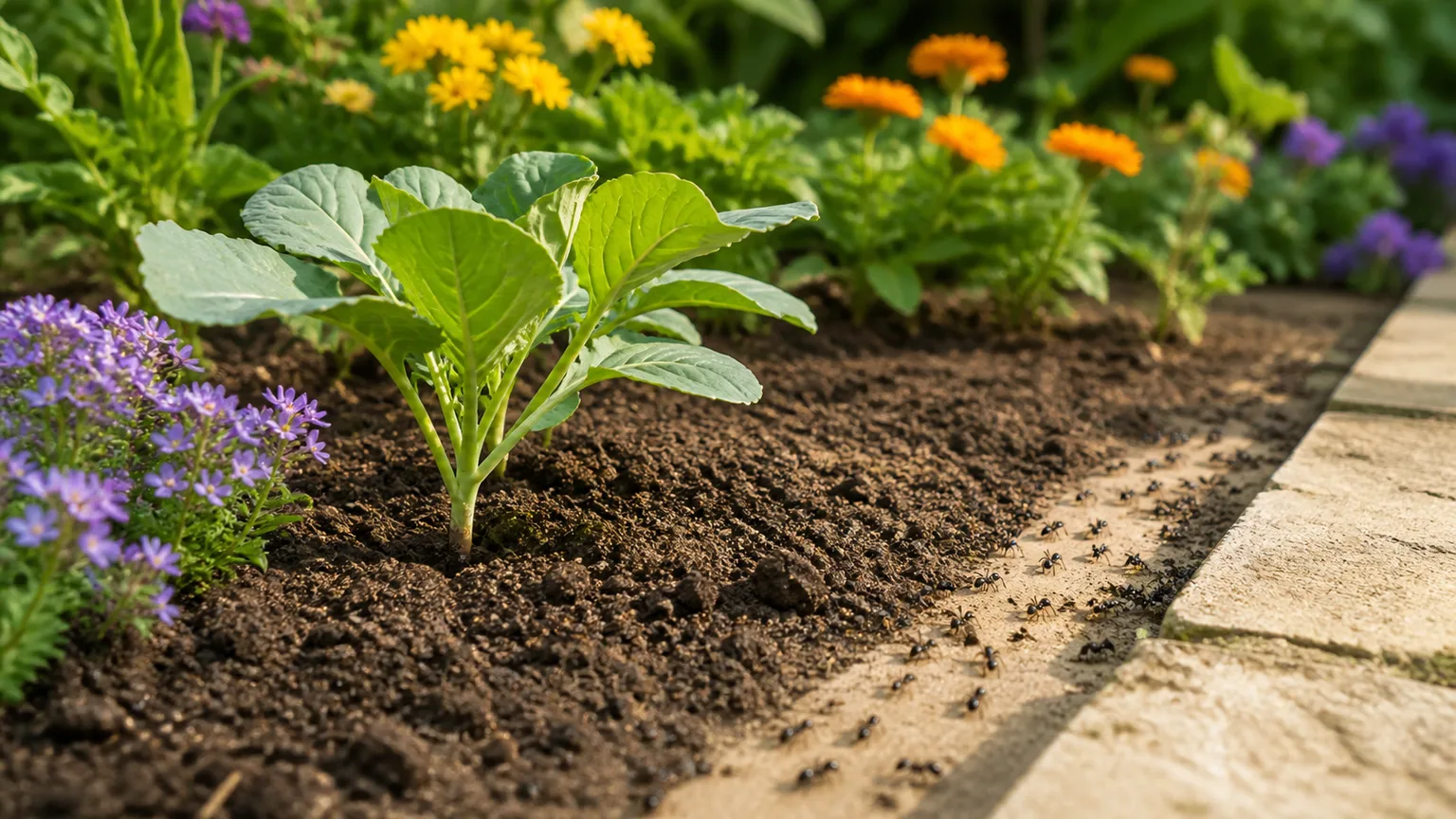
Ants marching through a flower bed can look like an urgent pest problem, but their presence alone does not tell you that a plant is in danger. Many ants forage without harming flowers, and some prey on other insects or turn over soil as they nest. A trail climbing a stem, however, can point to aphids or another sap-feeding insect whose sugary honeydew is attracting and feeding the ants. A mound in a high-traffic spot, a plant that wilts after its roots are disturbed, or a colony of stinging ants presents a different concern.
The most reliable way to control ants in a flower garden is to work out which of those situations you have before treating. Follow a trail, inspect the plant and soil, identify the source of damage, and decide whether it warrants intervention. If you do need a control, begin with the least disruptive measure that addresses the cause. Avoid blanket sprays and homemade mixtures around blooms; they can expose pollinators and other beneficial insects while leaving the colony or its food source in place.
Should You Control Ants in a Flower Garden?
Usually, no treatment is needed just because you see ants. A few workers visiting a flower, crossing mulch, or disappearing into a crack in the soil are not proof that they are eating the plant. Many ants feed on other insects, dead material, seeds, or plant sugars. Their underground galleries can loosen compacted soil, although a large nest may also shift soil around shallow roots. The Royal Horticultural Society’s guidance on ants recommends tolerating them where possible and judging the specific problem rather than treating every colony as a pest.
A better reason to intervene is a clear, continuing effect: ants are tending aphids that are damaging a prized plant, a nest repeatedly undermines roots or containers, or a locally identified stinging species is established where people or pets must work. Even then, the target may be the aphids, the conditions attracting foragers, or a specific unsafe nest—not every ant in the bed.
This distinction matters because wiping out visible workers often gives only a short-lived result. A colony can continue producing foragers, and neighboring colonies may move into a cleared area. Broad insecticide use also affects insects that visit the same flowers. Before choosing a control, record what you observed: which plant is involved, what damage is present, where the trail leads, whether a mound is active, and whether anyone is at risk of a sting. That simple description makes the next step much clearer.
Diagnose What the Ants Are Doing
Watch an active trail for a few minutes before disturbing it. Ants may be moving between the soil and a plant, carrying food, tending insects, or simply crossing the bed. Note whether they repeatedly climb the same stems, gather under leaves, enter a nest opening, or converge on fallen fruit or sticky plant residue. Then inspect the plant and the ground around its base. A hand lens helps with tiny pests, but careful observation is often enough to separate a food-seeking trail from a plant problem.

A useful quick check is to look at both sides of leaves and the tender growth near flower buds. If you find no damaged tissue, no sap-feeding insects, and no troublesome nest, leave the colony alone and recheck the bed later. If you find plant symptoms, identify their cause independently instead of assuming the ants created them.
Look for Honeydew-Producing Pests
Ants often visit plants because aphids, soft scales, whiteflies, or mealybugs feed on sap and excrete honeydew, a sugary liquid. Some ants collect it and protect the sap feeders from predators. That relationship can make an infestation harder to manage: ants may chase away lady beetles, lacewing larvae, or other insects that feed on aphids. The UC Statewide IPM Program’s ant guidance describes this association and recommends managing the source of the attraction as part of ant control.
Look for clusters of soft-bodied insects on young stems, flower stalks, and leaf undersides. Aphids may be green, black, yellow, or pink; color alone is not a reliable identification. Other clues include curled or distorted new leaves, sticky residue on foliage, and dark sooty growth on honeydew-coated surfaces. Those signs can have other causes, so check closely rather than treating a plant by symptom alone.
If you find a small aphid colony on a sturdy plant, a firm stream of water can dislodge many insects without leaving a long-lasting residue. Repeat inspections, because survivors and newly arrived aphids can rebuild a population. Prune a heavily infested tip only if removing it will not sacrifice needed buds or weaken the plant. Avoid spraying a flowering plant indiscriminately; even a product sold for garden use can harm non-target insects if it contacts them or their forage. Once the honeydew source declines, ant traffic may also decrease, though ants will not disappear instantly.
Separate Root Disturbance From Other Damage
Ant nests can move loose soil and create small openings around roots. In a large or repeatedly disturbed nest, soil may mound over low foliage, a plant in a pot may become unstable, or fine roots may dry more quickly. But ordinary ant tunnels are not automatically a sign of root injury. Wilting can also come from dry soil, waterlogged roots, transplant stress, heat, or disease. Check soil moisture and inspect the plant before blaming the colony.
If a nest is in a container and has loosened the root ball, move the pot away from the flower bed and assess whether the plant needs repotting. Do not drown the pot with an improvised pesticide mixture. For a small soil mound in an otherwise healthy bed, brushing loose soil away from crowns and monitoring is often enough. Where disturbance continues to expose roots, first determine which ant you have and seek regional advice on management options; a nest’s size or color is not a dependable measure of risk.
Identify Ants Safely and Accurately
Ants are a large, varied group, and garden species differ in nesting habits, food preferences, sting risk, and response to bait. A red ant is not automatically a fire ant, and a black ant is not automatically harmless. Regions also have different species and regulations. The UC IPM resource, for example, covers a range of ants found in California; its recommendations are useful for general principles, but an identification and control method should fit the local species and product label where you garden.
You do not need to collect ants by hand. Take a sharp photo beside a ruler or another size reference, note the date and location, and photograph the nest or trail without disturbing it. If the insects are aggressive or may be fire ants, keep people and pets away and do not handle the mound. Your county cooperative extension, state agriculture department, or municipal pest program may offer identification help or a local fire-ant protocol.
Follow Trails, Nests, and Behavior
Observe where workers travel and what they are doing. A trail that repeatedly ends at aphid-covered stems suggests honeydew; a line to fallen fruit points to a food source on the soil; ants emerging from a crack or mound indicate a nest nearby. Record whether the ants bite or sting, whether the mound is in a lawn or flower border, and whether plants show actual injury. These details are more useful to an adviser than a vague description such as “tiny red ants.”
Large ants in garden beds may simply forage from a nest elsewhere. Carpenter ants, for instance, are associated with wood nesting rather than feeding on flowers; if you see them near a structure with damp or damaged wood, treat that as a separate building inspection question. A species identification should guide the response, but you do not need perfect taxonomy before doing low-risk steps such as washing off aphids, removing fallen fruit, or protecting a child from a known mound.
Choose a Proportionate IPM Response
Integrated pest management (IPM) starts with monitoring and prevention, then adds the most selective effective treatment only if the problem justifies it. That approach fits a flower garden especially well because each bed can include bees, butterflies, predators, soil organisms, pets, and people. The Pollinator Partnership’s IPM guidance explains why pest management should not default to chemicals and why prevention and context matter. Move toward more intensive controls only as needed.
Start by defining success. Do you need fewer aphids on one rose, a clear path beside a patio, or relief from a confirmed stinging colony? “No ants anywhere” is rarely a practical or useful goal for a garden. A contained response to one recurring problem can protect the plant and the wider bed with less collateral impact.
Remove Easy Food and Shelter
Pick up fallen fruit, discarded sweet drinks, and dead insects if they are feeding a concentrated trail. Secure compost scraps and keep food waste covered; do not eliminate a healthy compost pile simply because ants forage there. Check for irrigation leaks and standing water, which can make the area attractive to many insects. If ants are nesting in a loose pile of debris or a pot that can be moved safely, relocate the material or container after checking that it will not spread a stinging colony.
You do not need to strip a bed of mulch or replace organic material with fabric or rock. Mulch benefits soil and plants, and ants under it are not necessarily causing harm. If a particular nest repeatedly creates a problem, adjust only the affected spot: move a log or loose edging, keep mulch from touching a building foundation, or improve drainage if the soil stays waterlogged. Do not disturb a mound by digging before you know whether the ants sting.
Manage Aphids and Other Sap Feeders First
When ants are guarding sap-feeding insects, treat the plant pest rather than trying to poison every forager. Begin with the least disruptive method that suits the plant and the size of the infestation: rinse aphids from robust foliage, remove a badly infested expendable tip, or ask a local extension service to confirm a recurring scale or whitefly problem. Preserve lady beetles, hoverfly larvae, lacewings, and other natural enemies you find in the bed. The USDA Agricultural Research Service’s work on flowering habitat and natural enemies, including its flower-power research on attracting beneficial insects, supports the value of conserving those allies rather than reflexively spraying the whole plant.
Reinspect in a few days and again the following week. A single rinse may knock down visible aphids but will not stop new ones from arriving. If the plant is blooming, avoid treating open flowers and follow the directions for any product that is specifically labeled for that plant and pest. Do not combine products or increase a label rate to compensate for poor coverage. The goal is a manageable pest level and healthy growth, not sterile foliage.
Reserve Bait for a Confirmed, Recurring Problem
If ants continue to create a specific problem after you address the attraction, a commercially prepared bait may be more targeted than spraying the bed. Worker ants carry an attractive bait back toward the nest; the active ingredient must act slowly enough for that transfer. UC IPM notes that bait preference can vary and that it can take several days to see a change. Follow the product label, which controls whether the bait may be used outdoors, in a flower bed, for the ant species or target listed, and under the conditions at your site.
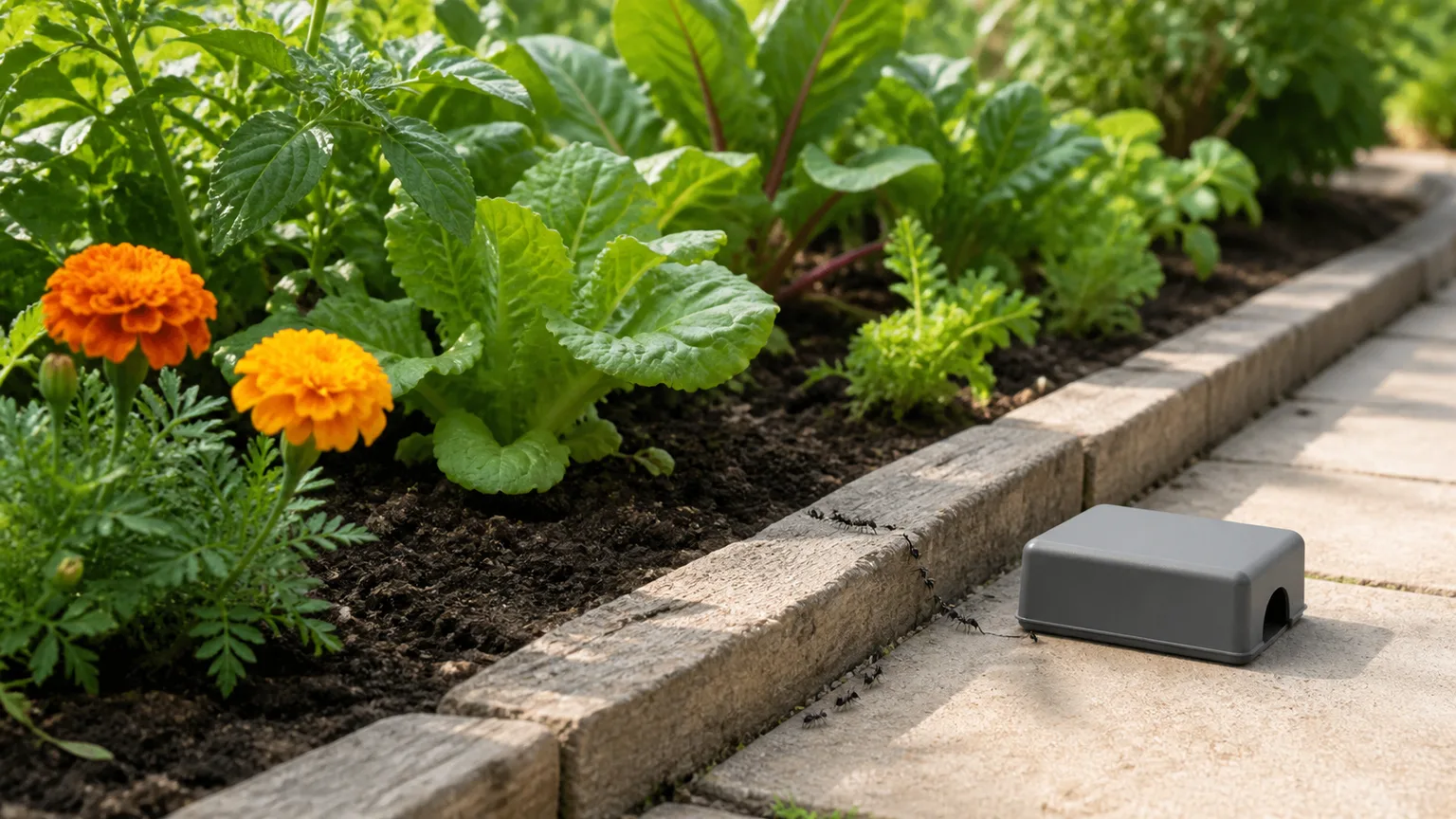
Read the full label before opening the package. Use only the amount, placement, and type of station the directions specify; place it near the active trail or nest opening only if the label allows that site. Keep bait contained and secured from children, pets, wildlife, and water, and away from flowering parts where pollinators forage. Never pour loose bait into a flower bed or make a homemade borax-and-sugar mixture. A home recipe has no product label to establish legal uses, safe placement, or handling instructions.
Check the station as directed and replace or reposition it only if the label permits. If workers ignore the bait, do not compensate by scattering more material or spraying over the trail. The colony may prefer another food, the station may be in the wrong location, or the identification may be wrong. Stop and consult local extension guidance or a licensed IPM professional if the problem persists, the target is uncertain, or the label does not clearly cover the setting.
Protect Pollinators During Any Pesticide Use
Flower beds attract bees and other pollinators by design. Avoid applying insecticide to open flowers or to foliage where pollinators are actively foraging unless a product label explicitly permits the use and all required precautions can be met. The University of Georgia Cooperative Extension’s pollinator guidance explains that bees can be exposed by direct contact and by carrying contaminated pollen or nectar back to a colony. The Pollinator Partnership’s pesticide guidance likewise advises using pesticides only when a demonstrated need exists and considering application method, timing, conditions, and bloom season.
“Apply in the evening” is not a universal permission to spray. Residues may remain after bees return, and a product label may prohibit treatment of flowering plants or restrict when and where it can be used. If a label requires avoiding bloom or protecting pollinators, follow that requirement exactly. Never use a product outdoors if its label does not authorize that location and target. Favor contained, directed applications over broadcast treatments, prevent drift, and never let spray, rinse water, or bait reach a pond, drain, or stream.
Handle Ants Around Peony Buds and Cut Flowers
Ants sometimes visit peony buds to feed on sugary secretions. Their presence does not by itself mean they are chewing the bud or preventing it from opening. If the plant is healthy and you do not need a spotless display, leaving them alone is reasonable. If you want to bring a flower indoors, inspect it before cutting and gently shake or rinse the open bloom outdoors where appropriate; avoid coating a living flower with sticky barriers or insecticide just to remove a few visitors.
For an indoor bouquet, cut flowers when they have opened enough for your preferred display and check between the petals and around the stem. If you see ants, a gentle rinse or careful hand removal is usually better than spraying. Do not refrigerate garden flowers alongside food or use a pesticide on cut stems unless the product is specifically labeled for that purpose. The plant’s buds and foliage do not need treatment simply because ants appear during bloom.
Avoid Risky Home Remedies
A remedy is not safe simply because it comes from a pantry or is described as natural. Vinegar, boiling water, salt, essential oils, and concentrated soap can injure flowers, roots, soil organisms, or insects that are not the target. Boiling water can scorch roots and create a burn hazard; vinegar can damage foliage and alter the soil around the application point. Essential oils and home-made sprays do not have standardized directions for a flower bed, and contact with bees or other insects can still cause harm.
Avoid scattering borax, baking soda, diatomaceous earth, or sugar mixtures in the bed. A powder or bait that is accessible to wildlife or beneficial insects can expose them, and a homemade mixture has no label specifying where it can be used or how to handle it. Sticky bands around stems can trap non-target insects and may damage tender bark or stems. Fragrant plants such as mint or lavender can be lovely garden choices, but they are not a dependable ant barrier; do not plant them as a substitute for identifying the source of an infestation.
Broad-spectrum sprays usually kill the workers they hit and may also harm predators, pollinators, and other insects, while leaving a hidden nest intact. A perimeter insecticide around paths or foundations is not a flower-garden solution and can move off target. UC IPM specifically warns that outdoor pyrethroid use on hard surfaces can pollute waterways. If a commercial treatment is truly needed, select it only for a label-approved use and apply it to the stated target, not across the entire flower bed.
Manage Stinging Colonies Safely
If you suspect fire ants or another aggressive, stinging species, keep children and pets away and mark the area from a safe distance. Do not touch, dig into, flood, or pour boiling water on an unfamiliar mound. Those actions can trigger defensive behavior, injure nearby plants, and fail to reach the colony. Fire-ant distribution, recommended treatment, and rules vary by region, so first seek an identification and current instructions from your county extension service or local public agency.
If a person or animal is stung, follow local medical or veterinary advice, especially if there is a severe reaction. For a nest near a doorway, play area, or path that cannot be avoided, ask a qualified pest-management professional to use an IPM approach and explain the product, placement, and non-target precautions. A specialist can distinguish a fire-ant mound from other soil-nesting ants and select a method that is lawful and suited to the site. Do not use a garden article as a substitute for emergency or medical guidance.
Check Results and Prevent a Return
After any action, check the same plant and trail again rather than assuming a quieter afternoon means the problem is solved. Count whether ant traffic has changed, look for new aphids or sticky residue, and check whether the plant is producing healthy growth. If you used a bait station, follow its label’s monitoring and disposal instructions; do not leave it in place indefinitely or discard bait where wildlife can reach it. If the ants move to another stem, look for another food source before repeating a treatment.
Keep notes and take a photo if the issue returns. Record the plant, date, weather, damage, ant behavior, and what you tried. That history helps local extension staff or an IPM professional make a more specific recommendation and avoids cycling through ineffective products. Maintain healthy watering and soil conditions, remove fallen fruit and waste, and retain habitat for natural enemies. Do not try to make the garden ant-free; protect the flowers and people by managing the particular, verified problem with the smallest effective intervention.
Conclusion
To control ants in the flower garden, begin by finding out why they are there. If the plants are healthy and the ants pose no safety issue, tolerance is often the best choice. If a trail leads to aphids or another honeydew-producing pest, manage that source and preserve beneficial insects. Reserve a contained, properly labeled ant bait or professional treatment for a confirmed recurring problem, and keep it away from pollinators, children, pets, and water as directed. Avoid broad sprays and improvised remedies, especially around open blooms. A little observation can prevent unnecessary treatment and help you protect the flowers and the life around them.