Blood Meal Fertilizer: When to Use It and When to Skip
Learn what blood meal adds to soil, how to confirm a nitrogen need, when and how to apply it, and how to prevent overfeeding, pest problems, and pet exposure.
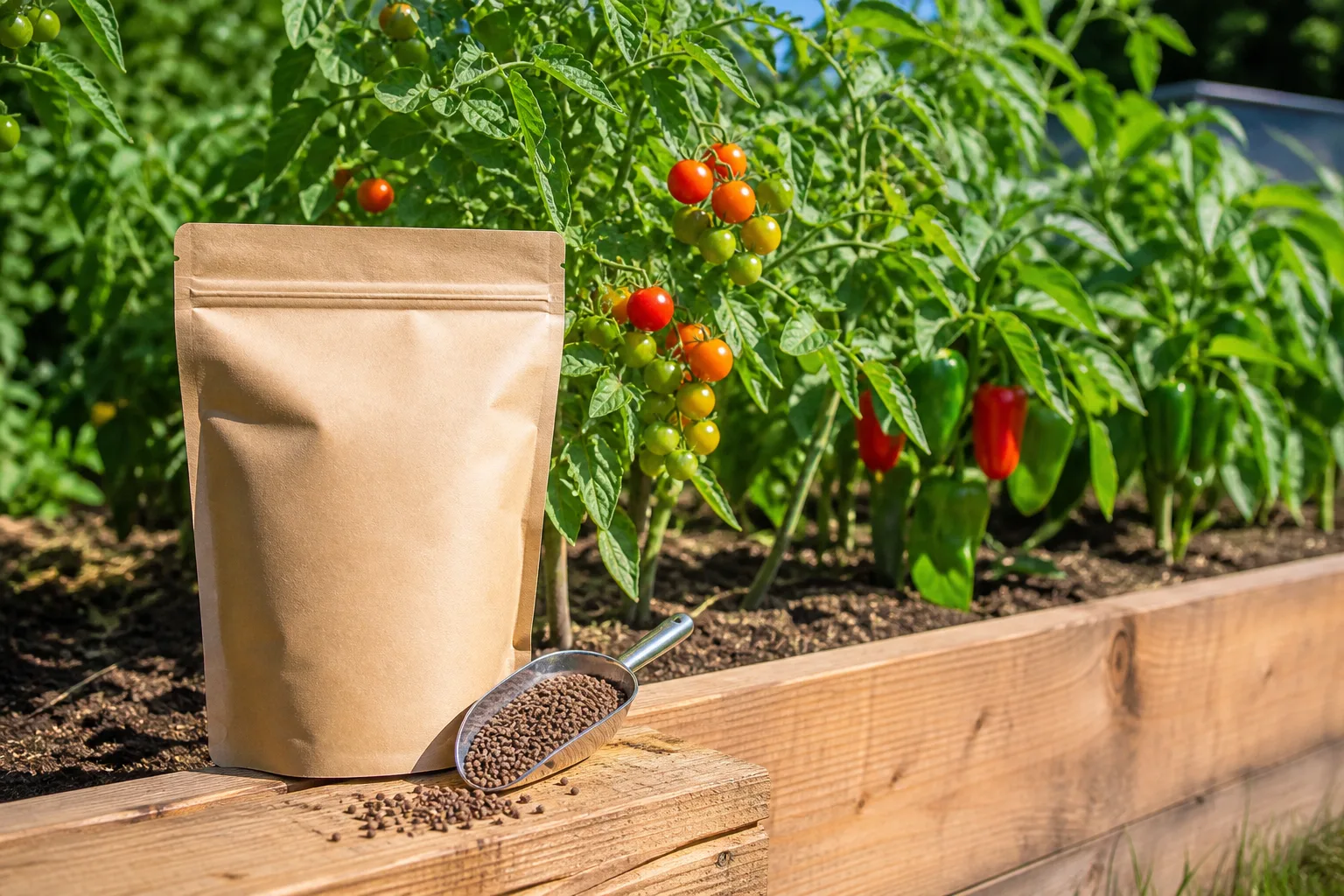
Blood meal is a concentrated nitrogen fertilizer made from dried animal blood. It can be useful when a garden genuinely needs nitrogen, especially during active leafy growth, but it is not a general-purpose soil booster: it supplies far more nitrogen than phosphorus or potassium, and extra nitrogen can delay flowers and fruit, burn roots, or wash out of the root zone.
The useful first question is not “Which plants like blood meal?” It is “What is limiting this bed, and would this product correct it?” If the answer is not clearly nitrogen, choose a different response. That small pause prevents the most common blood-meal problems: treating the wrong symptom, applying a rate meant for another product, and expecting a fertilizer to repel animals.
What Blood Meal Is and What Is in the Bag
Blood meal is dried, ground animal blood, usually a by-product of meat processing. It is sold as a dry granular or powdery soil fertilizer. Product color and texture vary, but the key information is the guaranteed analysis on the label, not the appearance or the word “organic.”
The fertilizer grade shows percentages by weight of nitrogen, phosphate, and potash. Colorado State University Extension lists a typical blood-meal analysis of 12-0-0; Rutgers NJAES lists products around 12 to 15 percent nitrogen, with small amounts of phosphorus and potassium. Extension fertilizer-grade guidance explains that label numbers are percentages by weight. Retail products also vary, so check the exact bag before doing any math. A “12” in the first position means 12 percent nitrogen by weight; it does not mean that the whole product is nitrogen.
“Organic” can describe the source of a fertilizer, but it does not mean the material is automatically approved for every certified-organic operation, harmless in any dose, or safe for pets to eat. If certification matters to your garden or farm, check the specific product’s review status and ask your certifier. If a label includes other ingredients or a pesticide claim, read those instructions separately; a blend is not the same as plain blood meal.
What Blood Meal Does in Soil—and How Quickly It Works
Nitrogen is part of chlorophyll and proteins that plants need to build leaves and stems. When nitrogen is truly short, adding an appropriate source can restore growth; blood meal’s appeal is that it concentrates this nutrient in a small amount of product. It is especially relevant when a soil or crop recommendation calls for nitrogen without also calling for much phosphorus or potassium.
It is not an instant rescue treatment. Soil organisms must transform organic nitrogen into forms roots can absorb, so the release rate depends on microbial activity, temperature, and moisture. Colorado State University Extension’s organic fertilizer table describes blood meal as a one-to-four-month source and notes that organic-fertilizer activity is delayed when soil is cool or dry. Rutgers classifies blood meal as medium to rapid among organic fertilizers, which is compatible with a useful distinction: it can be quicker than some meals, but it is still not the same as a soluble feed that plants can use right away.
The time window is not a promise that every garden will receive a steady dose for exactly the same number of weeks. In cold spring soil, dry beds, heavy rain, sandy soil, or a container with frequent leaching, nitrogen availability can differ. Use the crop’s schedule and the product label, then observe new growth instead of automatically repeating an application because a calendar says two months have passed.
When Blood Meal Makes Sense
Blood meal fits best when three conditions line up: the crop can use additional nitrogen at this stage, the bed or crop plan indicates a nitrogen need, and the product’s other nutrient contributions are acceptable. Leafy vegetables such as kale or cabbage may use nitrogen to build productive foliage, while established heavy-feeding crops can have a planned nitrogen side-dressing. Even then, the crop’s local recommendations matter more than a generic list of “nitrogen-loving” plants.
A plant’s appetite does not prove the soil is deficient. Some gardeners feed brassicas, onions, corn, or leafy greens routinely, but a crop can grow well in fertile soil without an extra input. If compost, manure, a starter fertilizer, or a previous granular feed has already supplied nitrogen, another dose may create excess rather than solve a shortage.
The product may also be considered when a grower wants an animal-derived organic nitrogen source. That preference is not universal. Blood meal is not vegan, its smell can draw curious animals, and it is a poor choice where a pet or wildlife is likely to eat or dig through treated soil. Feather meal, alfalfa meal, compost, or a labeled plant-based fertilizer may better fit the same garden.
How to Tell If Nitrogen Is the Problem
Nitrogen deficiency often appears first on older leaves because the plant can move nitrogen from older tissue to new growth. A plant may look generally pale, grow slowly, and develop smaller leaves. Rutgers NJAES describes stunted growth and small, pale-yellow foliage, with older leaves affected first. That pattern is a clue, not a diagnosis: watering stress, damaged roots, compacted soil, low light, pests, disease, or pH-related nutrient lockout can also cause weak or yellow growth.
Look at the pattern and the growing conditions before reaching for fertilizer. Are only the oldest leaves yellow while the new growth remains green? Has the plant been waterlogged or allowed to dry hard? Is there a clear history of heavy harvests without compost or fertilizer? Are symptoms isolated to one plant, one container, or the whole bed? A whole bed with similar older-leaf paling after repeated cropping points more toward a shared fertility issue than a single yellow leaf on one stressed transplant.
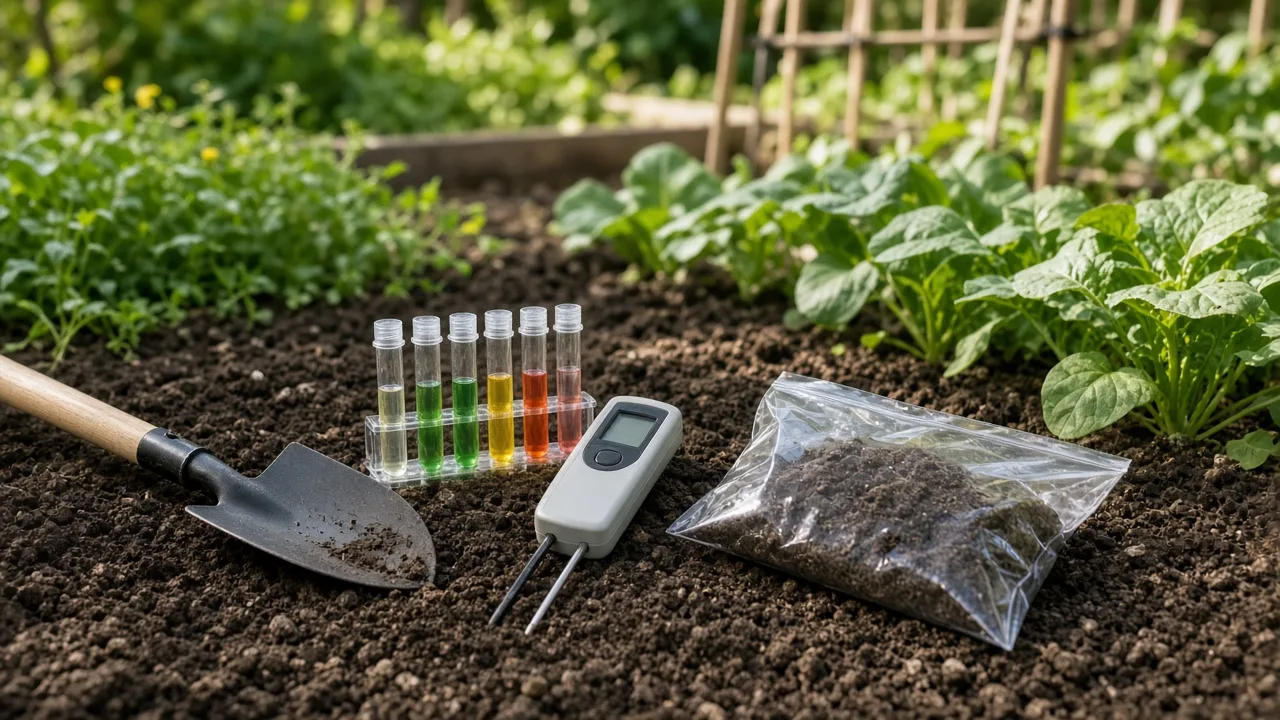
A soil test helps establish pH, salts, phosphorus, potassium, and organic matter and can identify whether a bed has been receiving too much of another nutrient. Nitrogen readings are more time-sensitive: Colorado State’s soil-testing guidance cautions that soil-test nitrogen can change with organic matter, microbial activity, temperature, water, leaching, and plant uptake. Treat the test as a baseline, follow your regional extension’s crop recommendations, and do not expect one lab number to diagnose every yellow leaf or every ornamental planting.
When to Add Blood Meal
Apply it when the crop is actively growing and can use the nitrogen, with soil warm and moist enough for microbes to work. Spring is common for a preplant application in vegetable beds, but “spring” is not a universal rate or deadline. A warm-climate garden may have several planting windows; a cold-climate bed may still be too cold for rapid organic-nutrient release when the first seedlings go in.
For a crop with a published side-dressing schedule, use that timing instead of an across-the-board repeat interval. For example, Rutgers NJAES vegetable recommendations place supplemental nitrogen at crop-specific growth stages, not every two or three months for every plant. The listed amounts assume the fertilizer grade and regional growing system named in the publication; they are a model for why timing follows crop demand, not a blood-meal calendar to copy everywhere.
Avoid a late dose that is unlikely to be used before growth slows, and do not fertilize drought-stressed or waterlogged roots as a substitute for fixing the stress. Nitrogen applied ahead of heavy rain can move away from the root zone; in sandy soil, repeated small applications may be more appropriate than one large one when local crop guidance calls for nitrogen. Use the product label and regional extension timing rather than trying to make the fertilizer release on demand.
How to Apply Blood Meal to a Garden Bed
Measure the area you intend to treat, read the full label, and apply only the amount specified for that crop and use. Wear the protective equipment listed on the package, avoid breathing dust, and keep the product off edible leaves, stems, and flowers unless the label specifically directs otherwise. The point is controlled placement around the root zone, not a visible coating across the plant.
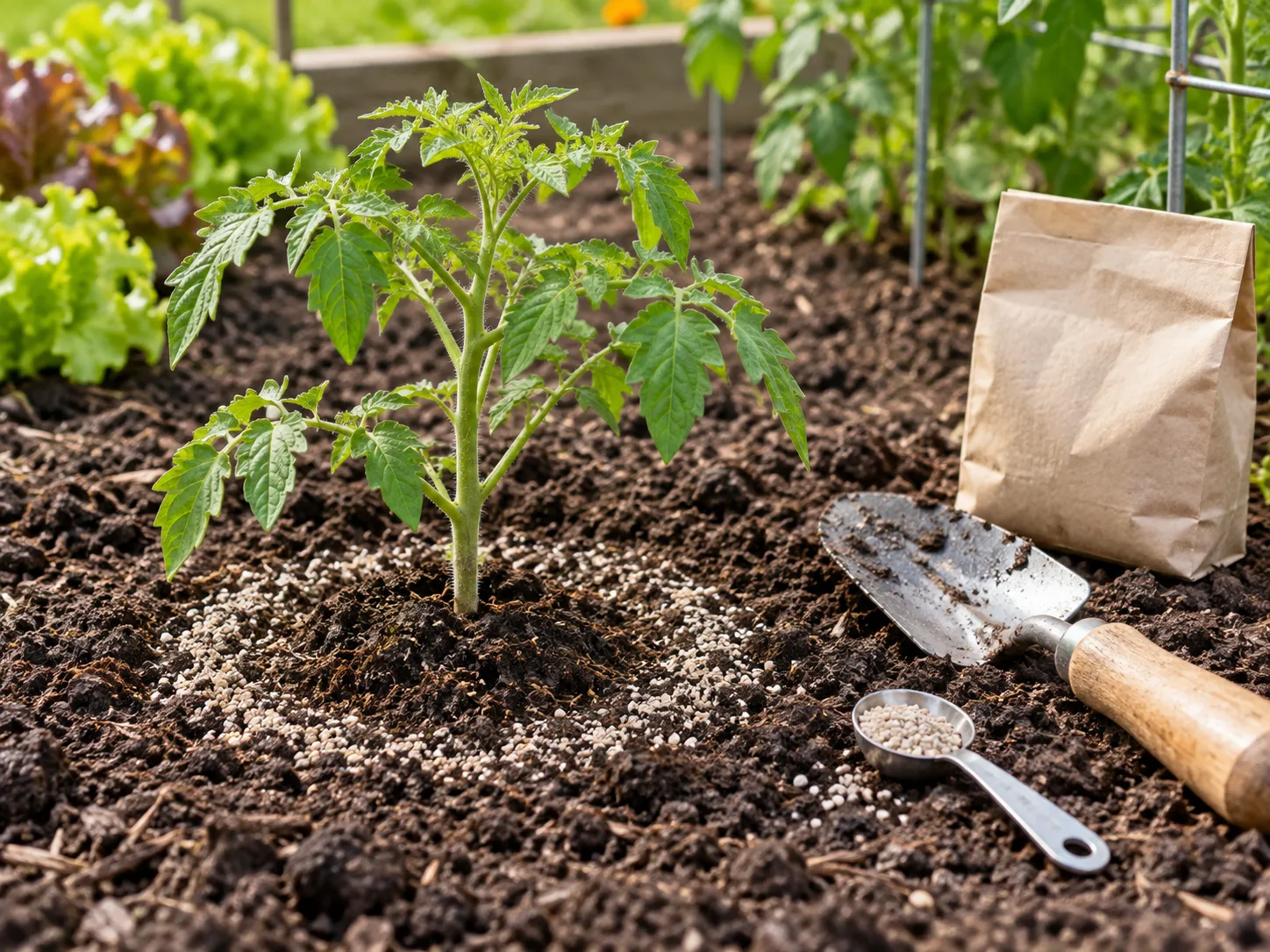
Before Planting
For a preplant bed application, distribute the label rate evenly over the area and incorporate it only as deeply as the label or local guidance recommends. Mixing fertilizer into the root zone reduces the chance that a concentrated patch will sit directly against new roots, and it helps prevent a gust or irrigation stream from leaving one strip heavily dosed and another untreated. Water according to the label and planting schedule; do not bury a handful in each planting hole unless the product explicitly permits that method.
Blood meal is dense in nitrogen, so “a little by eye” is unreliable. Use a scale or a clearly marked measuring cup if the label provides that measure, and calculate by bed area rather than guessing from how many plants seem hungry. A 4-by-8-foot bed is 32 square feet; if the label rate is expressed per 100 square feet, multiply it by 0.32 to get the amount for that bed. The result is a label conversion, not permission to exceed the crop’s nutrient recommendation.
Side-Dressing Existing Plants
For an established crop, keep the fertilizer away from stems and crowns and place it beside the row in the band or ring the label describes. Do not pile it against a stem, expose roots while scratching it in, or scatter dry meal over wet foliage. After application, water it into the soil if the label says to do so; rain is not a dependable substitute if a storm could wash material off the bed.
If you are not sure whether a side-dressing is needed, wait for the crop-stage guidance or ask your local extension office. A plant that has slowed because it is shaded, root-bound, cold, or short of water will not recover just because nitrogen is added. Fix the actual limiting condition first; then make a fertilizer decision based on the crop’s remaining growth window.
How Much to Use: Start With the Label and the Math

There is no safe universal blood-meal amount “per plant.” Product strength, crop, bed area, soil fertility, and whether you are incorporating or side-dressing all change the appropriate dose. Colorado State Extension’s generalized table lists 5 to 10 pounds per 100 square feet for a particular typical analysis, while Rutgers crop recommendations use a 14-1-1 product for specific crops and stages. Those differences are exactly why a broad rule such as “one teaspoon per plant” should not replace the instructions on your bag or your local crop plan.
If an extension recommendation gives a nitrogen target, you can translate that target into a product amount with one division:
Pounds of product = pounds of nitrogen recommended ÷ nitrogen fraction on the label.
As a math example, a hypothetical recommendation of 0.24 pound of nitrogen for an area and a 12-0-0 product gives 0.24 ÷ 0.12 = 2 pounds of product. This example is not a recommendation for your bed; the 0.24-pound target must come from a real crop recommendation for the right area and growth stage. If a soil-test report specifies a different nutrient rate, do not apply this calculation to a unit you have not converted correctly.
Keep a simple record of the product grade, amount, date, crop, bed area, and weather. That makes it possible to avoid accidentally counting a prior compost, manure, or starter-fertilizer contribution twice. It also gives you something concrete to share with an extension educator if a crop responds poorly.
Blood Meal vs. Bone Meal
Blood meal and bone meal are both animal-derived soil fertilizers, but they are not interchangeable. Blood meal is primarily a nitrogen source; bone meal is typically chosen for phosphorus. Colorado State Extension lists typical analyses around 12-0-0 for blood meal and 3-15-0 for bone meal, while exact commercial grades vary. The second and third label numbers matter: choosing a product based only on the word “meal” can supply the wrong nutrient.
| Product | Main nutrient emphasis | A better reason to choose it | Main caution |
|---|---|---|---|
| Blood meal | Nitrogen | A crop plan calls for added N and little or no additional phosphorus | Concentrated N can burn plants or push leafy growth at the expense of flowers and fruit |
| Bone meal | Phosphorus | A soil test or crop recommendation calls for phosphorus | Extra P is unnecessary when soil is already adequate and may not be available equally at every pH |
Do not combine the two just to create “complete” fertilizer. A garden does not need every nutrient in equal amounts, and a phosphorus-heavy input can accumulate if the soil does not need it. The soil test and label guidance from Rutgers NJAES explains why soil-test phosphorus and potassium recommendations should guide those nutrients rather than a routine meal mix. A soil test can also flag pH conditions that affect nutrient availability, so bone meal is not a substitute for a pH correction plan.
Plants and Situations Where You Should Skip It
Skip blood meal if the bed already has enough nitrogen, if the product’s phosphorus or potassium contribution conflicts with the soil plan, or if the crop is near flowering or fruit development and does not have a stage-specific nitrogen need. Too much nitrogen can produce lush foliage with fewer flowers or delayed fruit, which is particularly frustrating in tomatoes, peppers, and many ornamentals. More leaf area is not the same as a better harvest.
Do not use it as a quick fix for chlorosis, transplant shock, root damage, or poor drainage without identifying the cause. If new leaves are yellow but older ones stay green, or the leaves show interveinal patterns, nitrogen may not be the issue. A test and a basic inspection of the root zone are more useful than applying a concentrated fertilizer to “see what happens.”
Choose another option if you need a plant-based input, garden in a small pet-accessible pot, or cannot keep wildlife from digging. Also skip a home remedy application to lawns, paths, or leaves unless the label includes that site and use. A soil fertilizer should be used as a fertilizer; its smell does not make it a reliably dosed animal-control product.
Does Blood Meal Repel Deer or Rabbits?
Some gardeners use blood meal’s odor in hopes of deterring deer or rabbits, and Gardening Know How describes this as a reported use. That does not make blood meal dependable wildlife control. Rain, irrigation, temperature, animal pressure, and the availability of other food can change the smell and its effect, while some animals may ignore it or investigate it.
There is a trade-off: a scent intended to deter one animal may attract a dog, raccoon, fox, or other opportunistic feeder that is curious about animal-derived material. Gardening Know How also warns that blood meal may draw dogs, raccoons, opossums, and other omnivores. If browsing is the actual problem, use a barrier or a repellent labeled for the target animal and site, and rotate tactics as needed; do not keep adding nitrogen to the soil every time the odor fades.
Pet Safety and Handling
Treat a bag of blood meal as something pets must not eat. Pet Poison Helpline’s blood- and bone-meal guidance says ingestion of organic fertilizers containing blood meal can cause gastrointestinal distress; larger amounts may form a blockage or trigger pancreatitis. A veterinary toxicology review developed with the ASPCA Animal Poison Control Center likewise notes that very large ingestions of blood, bone, or fish meal can trigger pancreatitis in predisposed dogs.
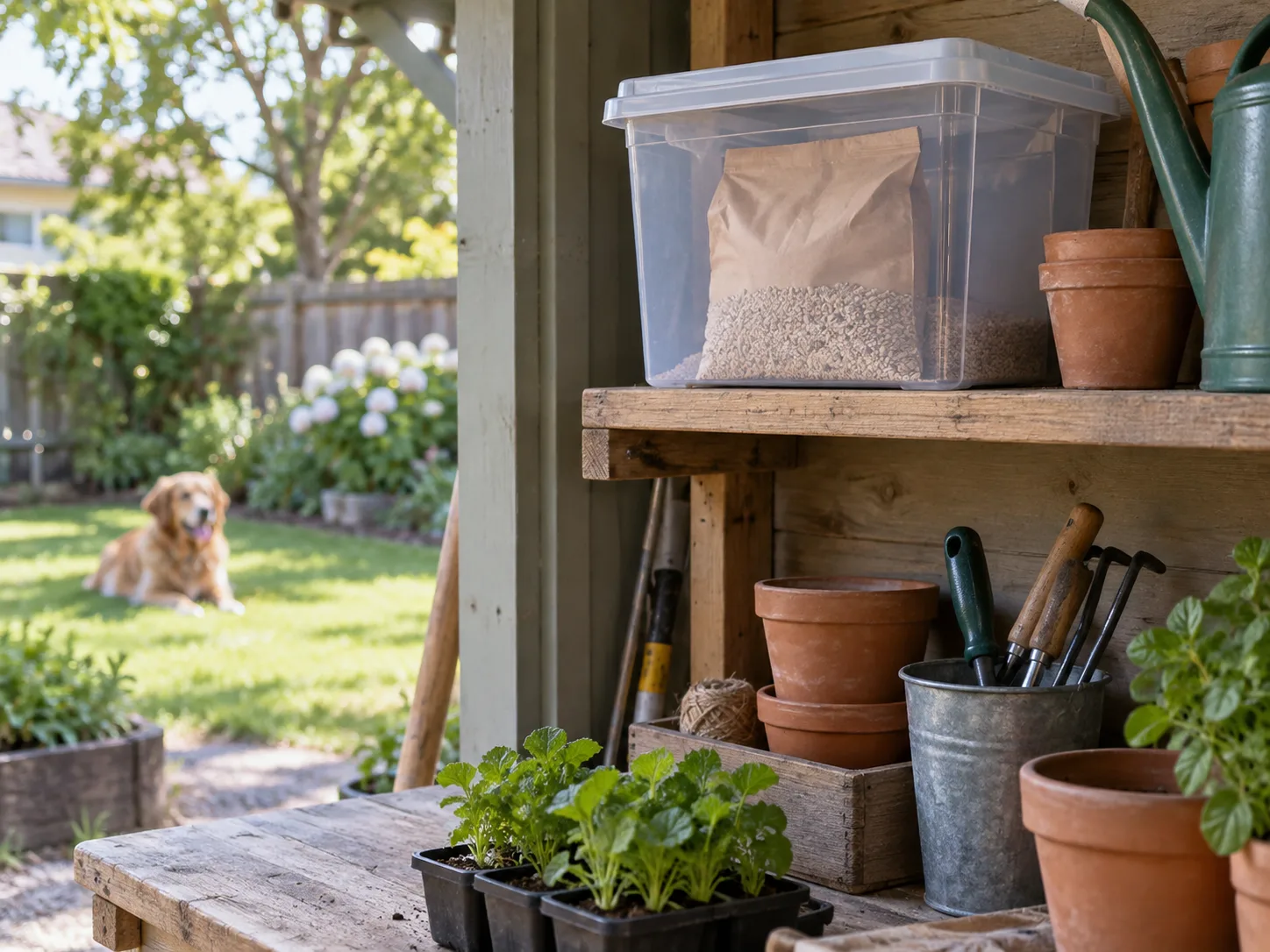
Store the closed bag in a dry, secure container that a pet cannot open, and clean up spilled granules before letting animals into the area. During application, keep pets out of the bed, prevent them from digging or licking, and follow the product label for when the treated space can be re-entered. If a pet eats the product, save the package and call your veterinarian or an animal poison service for case-specific advice; do not try to induce vomiting unless a professional tells you to.
This is a practical risk-management step, not a claim that every trace contact causes poisoning. The risk depends on the product, the amount, the animal, and whether the fertilizer contains additional ingredients. Check the entire label, especially if the product is blended with a pesticide or other amendment.
Alternatives to Blood Meal
Choose the alternative by nutrient goal and timing rather than by whether it sounds natural. If you need slow, broad soil improvement, finished compost can add organic matter and modest nutrients, though its analysis is variable. If you want a concentrated organic nitrogen source but not blood-derived material, feather meal or alfalfa meal may fit; Colorado State Extension’s comparison of organic fertilizers lists both as nitrogen-containing products, with different nutrient analyses and release times.
If a crop needs a quick, measured nitrogen top-up, use a fertilizer whose label and regional crop schedule match the job. Fish-based fertilizers are another option, but their grade and use instructions vary and they are still animal-derived. A legume cover crop may contribute nitrogen over a longer soil-building cycle, but it does not work as an immediate correction for a hungry crop already in the ground.
The Epic Gardening guide to blood meal compares blood meal with bone meal and notes the distinction between nitrogen-focused foliage support and phosphorus-oriented use. For choosing a source, the practical sequence is simple: identify the missing nutrient, check the crop’s timing, decide whether you want a fast or gradual source, then compare label analyses. If you cannot identify a nutrient need, add compost for soil structure only when it is appropriate, or wait for a soil test instead of stacking fertilizers.
What to Do If You Applied Too Much
Stop adding nitrogen and do not try to counteract blood meal with lime, bone meal, wood ash, or another amendment. Those materials solve different problems and can create a new imbalance. If the product is still visible on foliage or as a heavy surface pile, follow the label’s spill or cleanup directions and remove excess granules without spreading them farther.
Do not try to flush the bed with extra water: blood meal releases through soil processes, and flooding can carry available nutrients into drains or waterways without removing the remaining meal. If plants show burn, stop fertilizing, keep moisture even without waterlogging, and contact a local extension office with the product grade, amount, bed size, and symptoms.
Watch new growth rather than expecting damaged leaves to turn green again. If the plant remains lush and produces few flowers or fruit, give it time and follow crop-specific feeding guidance before the next application. In a pot, where the root volume and drainage are limited, ask a horticultural educator or local extension service for advice before repeated flushing or repotting; an aggressive correction can injure roots as much as the original mistake.
Conclusion
Blood meal is useful when a growing crop needs nitrogen and a concentrated, animal-derived source fits the soil plan. It is a poor “just in case” amendment, a weak substitute for diagnosing yellow leaves, and an unreliable deer or rabbit repellent.
Before opening the bag, check the crop stage, bed history, product grade, and label rate. Apply only a measured amount to the soil, keep pets away from the bag and treated bed, and record what you used. If those checks do not show a clear nitrogen need, blood meal can wait.