How to Grow and Care for Becky Shasta Daisy Plants
Learn how to grow Becky Shasta daisy with the right sun, drainage, spacing, watering, deadheading, division, winter care, and fixes for common problems.
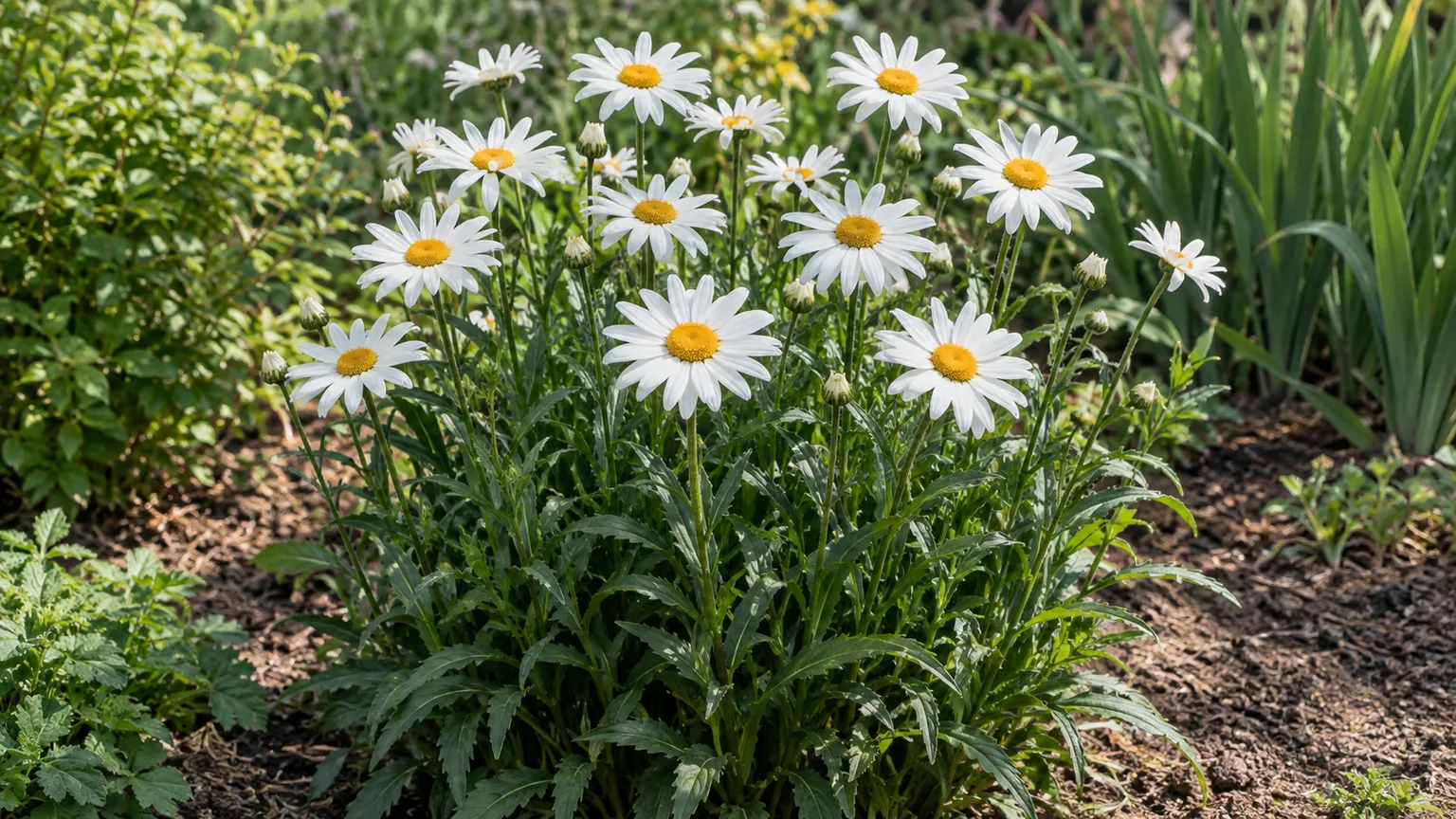
‘Becky’ Shasta daisy (Leucanthemum × superbum ‘Becky’) is a tall, clump-forming perennial with single white flowers, golden-yellow centers, and stems that are sturdier than those of many older Shasta daisies. Give it a sunny position, soil that drains promptly in winter, and room for a clump roughly 2 to 3 feet wide; it can then provide a long run of summer flowers with modest routine care. Its best qualities—height, bright blooms, and strong stems—depend more on the site than on frequent feeding or elaborate pruning.
| Growing detail | Practical range |
|---|---|
| Botanical name | Leucanthemum × superbum ‘Becky’ |
| Habit and mature size | Upright, clump-forming perennial; usually about 3 feet tall and 2 to 3 feet wide, sometimes taller in favorable conditions |
| Commonly listed hardiness | USDA Zones 5–9; local drainage and heat can shift performance at the edges |
| Light | Full sun for the strongest flowering; light afternoon shade can help in very hot climates |
| Soil | Average garden soil that is moist but well-drained, especially through winter |
| Flowering | Summer into early fall in many gardens; timing varies by climate and deadheading |
These ranges synthesize cultivar listings from the University of Illinois Extension and Fine Gardening. Treat the hardiness zone as a starting point, not a guarantee: a plant in the listed zone can still fail in a low, waterlogged bed, while a well-drained site can improve its odds.
Is ‘Becky’ the right Shasta daisy for your garden?
Choose ‘Becky’ when you want a substantial mid- or back-border plant, white flowers for cutting, or a daisy that can rise above shorter perennials. Its flower stems commonly reach about 3 feet and may run to 4 feet, while its clump expands gradually. It is a better fit for an open bed than a narrow path edge where the foliage and stems will crowd the walkway.
The cultivar was recognized as a strong garden performer, but it is still a perennial that benefits from the right soil and periodic renewal. It does not behave like every plant sold as “daisy”: English daisy, oxeye daisy, and annual bedding daisies are different plants with different growth habits. The named hybrid is Leucanthemum × superbum; confirming the label helps avoid buying an unrelated daisy when height, flower form, or spread matters.
‘Becky’ also works as a cut flower and can supply open-centered blooms that are useful to bees and butterflies. If your priority is a compact container plant, look for a dwarf Shasta daisy instead. A full-size ‘Becky’ can be grown in a pot, but its height makes it easier to tip and its root zone needs more room than a small nursery pot suggests.
Choose a sunny site where tall stems can breathe
Aim for at least six hours of direct sun. A full-sun position encourages a fuller plant and more flower stems; light shade is a reasonable compromise in a hot region, especially where harsh afternoon sun stresses the foliage. Deep shade is a poor trade: the plant may stay alive but stretch toward light, flower less, and lean more readily.
Watch the site for a full day before planting. A bed can look sunny at noon but sit under a tree canopy for most of the morning and afternoon. If nearby shrubs or perennials will shade the mature plant, move ‘Becky’ toward the brighter edge and leave space for air to move through the foliage. North Carolina State Extension and the Royal Horticultural Society both place Shasta daisies in sunny, well-drained settings, while noting that light shade is tolerated.
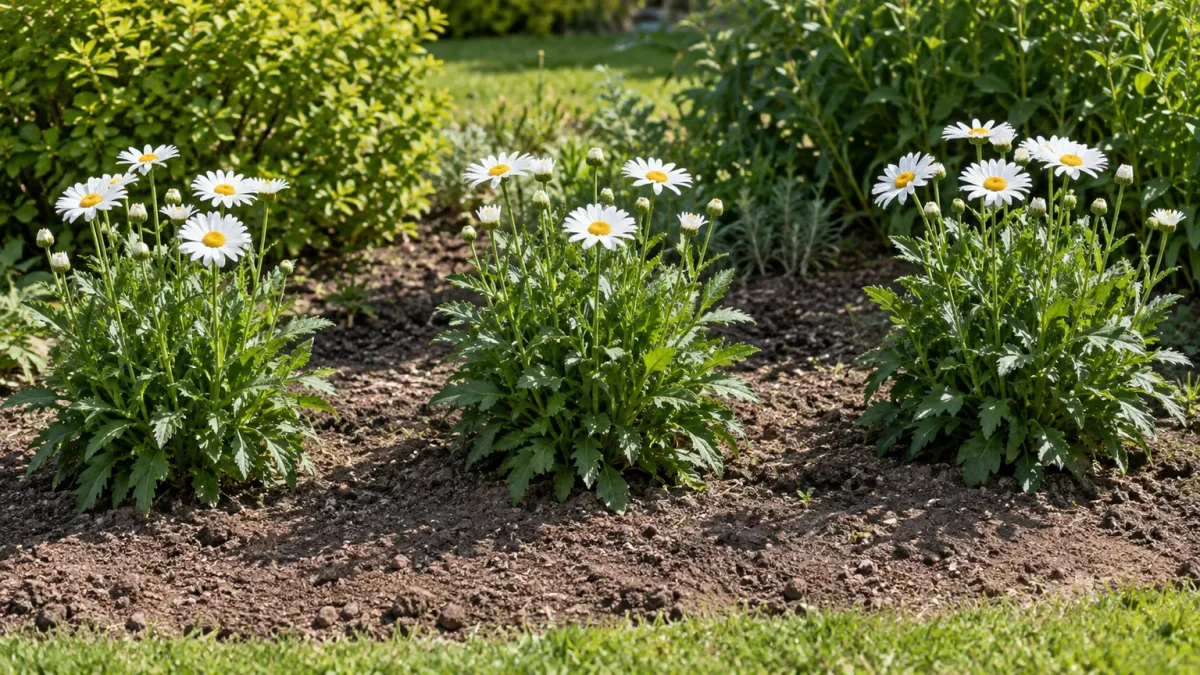
A sunny, open border gives tall Shasta daisy stems room to flower and dry after rain.
In places with long, hot summers, prioritize morning and midday sun with a little late-day relief rather than planting in dense shade. If a plant that used to bloom well becomes leggy after nearby trees fill in, more fertilizer will not solve the underlying light shortage. Relocate it during a cool period or divide it and place a healthy division where it will receive stronger light.
Make winter drainage the soil priority
‘Becky’ tolerates a range of garden soils, but it does not thrive with roots sitting in cold, saturated ground. Winter drainage matters as much as summer moisture because a wet crown and root zone can decline even when the plant appeared vigorous the previous season. Illinois Extension specifically cautions that poorly drained winter soil shortens the life of Shasta daisies; the RHS likewise warns against permanently wet ground.
Before planting, notice where water pools after rain and how long it remains. If a shallow puddle is still present the next day, choose a raised bed, a broad mound, or another location that sheds water. In compacted clay, loosen a wide planting area rather than making a small, richly amended pocket; a pocket can hold water like a basin. Incorporate a modest amount of finished compost through the wider bed if the soil is very poor, but do not turn the planting hole into a soft, fertile container surrounded by dense soil.
Average fertility is usually enough. A thick layer of compost or high-nitrogen fertilizer can produce abundant leaves and soft stems instead of better flowers. If the soil is generally healthy and the plant has normal foliage, avoid trying to correct a presumed nutrient problem with repeated feeding. If growth is poor across the entire bed, test the soil and address a measured deficiency rather than guessing.
Plant at the right depth and spacing
Spring and early fall are practical planting windows because moderate temperatures give roots time to settle before summer heat or winter freezes. Plant during a mild stretch when the soil is workable, not while it is saturated or frozen. In hot climates, favor a cooler period and water the new plant carefully until it is established; BBC Gardeners’ World similarly recommends planting in autumn or early spring and keeping plants watered as they establish.
Space individual ‘Becky’ plants about 24 to 30 inches apart as a starting point. Use the wider end if the bed is humid, the soil is fertile, or you want a loose natural outline; closer planting creates a faster mass but can reduce airflow and make later division more difficult. If you are combining it with other tall perennials, measure from the center of each plant rather than from the edge of the nursery pot.
Dig a hole roughly as deep as the root ball and wider than it. Loosen tightly circling roots at the edges, set the top of the root ball level with the surrounding soil, backfill, and water thoroughly to settle air pockets. Planting too deeply buries the crown; planting much too high leaves roots exposed to drying. Spread mulch over the root zone to conserve moisture, but keep it a few inches away from the crown so the base does not remain damp.
Do not expect a freshly divided or newly planted clump to look like a mature border immediately. Give it a full growing season to establish, and keep the label or a garden marker so you can tell which cultivar is settling in if you have other daisies nearby.
Water by establishment stage, not by calendar
During the first growing season, check the root ball and nearby soil every few days in warm or windy weather. Water deeply when the upper inch or two of soil begins to dry; the goal is to wet the root zone and then let excess drain, not to keep the bed constantly soggy. A short daily sprinkle often wets only the surface and encourages shallow roots.
Once established, ‘Becky’ can handle brief dry spells, but consistent moisture during bud formation and flowering reduces stress. Use rainfall and soil feel to decide when to water instead of following a fixed weekly schedule. Sandy beds and containers dry sooner than a moisture-retentive loam; cool weather and mulch slow drying. In a hot spell, check the plant in the morning. If the foliage is limp while the soil is dry below the surface, water at the base and reassess later. If leaves wilt while the bed is wet, adding more water is likely to worsen the problem.
Aim water at the soil rather than routinely wetting the leaves. That keeps the root zone supplied while reducing splash that can move leaf-spot spores. Avoid both extremes: repeated drought during establishment can stall growth, while chronically wet soil deprives roots of air and promotes crown or root problems.
Feed lightly and only when the soil needs it
In ordinary garden soil, ‘Becky’ does not need a heavy feeding program. A thin top-dressing of finished compost in spring is enough for many beds. If a soil test or consistently weak growth points to a nutrient shortage, use a balanced slow-release fertilizer at the label rate; do not add a second dose just because flowers have not opened yet.
Too much nitrogen can make the plant taller and leafier without improving flower production, and soft growth is more likely to bend under rain or wind. This is especially relevant in a bed that already receives lawn fertilizer or rich manure. If plants are lush but produce few buds, review the light and fertilizer history before adding more food. Full sun, drainage, and a healthy root system are more reliable foundations than frequent fertilizer.
Container plants are a separate case because their limited potting mix is watered and leached more often. A light spring feed may be useful, but follow the product label and watch stem strength. If you need to fertilize repeatedly to keep a container plant green, the pot may be too small, the mix may have collapsed, or the plant may need dividing or fresh potting mix.
Keep ‘Becky’ upright without forcing it
‘Becky’ is selected for relatively strong stems, so staking is not automatically required. A plant grown in full sun with average fertility and room to branch often holds itself upright. A few outer stems leaning after a thunderstorm do not necessarily mean the cultivar needs permanent support.
If stems routinely flop, look for the cause before installing a cage. Shade encourages weak, elongated growth; excessive nitrogen and rich soil can push soft foliage; a crowded clump can become top-heavy; and a wind tunnel can bend even sturdy stems. Correct the site or feeding pattern where possible. For a tall plant in an exposed border, install a discreet grow-through support early in spring, before stems elongate and buds appear. Late staking through a mature clump can damage roots and create an awkward frame around the flowers.
You can also pinch or shear a portion of the new growth in late spring to encourage a shorter, branched habit. The trade-off is later flowering because the plant needs time to make side shoots. Try this only on a vigorous clump and on a few stems first; do not cut back a stressed or newly planted plant in an attempt to force compact growth. The University of Florida IFAS notes that taller Shasta daisy varieties can be pinched before flower development to encourage fuller growth.
Extend the bloom period with selective deadheading
Shasta daisies typically flower through summer, with ‘Becky’ often continuing into early fall when conditions suit it. Local heat, day length, plant age, and the first frost all affect the timing, so “all summer” should not be treated as a guaranteed schedule. A mature plant in a sunny, well-drained bed generally produces more flowering stems than a shaded or waterlogged one.
When a flower fades, follow its stem down to the first healthy leaf or basal foliage and cut it there with clean pruners. Removing the spent flower tidies the plant and can encourage another flush. Avoid shaving every stem to the same height while green foliage remains; those leaves are still feeding the crown. If you are cutting flowers for a vase, use the same opportunity to remove a few stems without stripping the whole clump.
Deadheading is optional if you prefer a natural look or want to leave flower heads for seasonal interest. The named cultivar ‘Becky’ is described as sterile by the University of Saskatchewan, but seed behavior can vary among plants sold under generic Shasta daisy labels. The reliable reason to deadhead is to remove spent stems and support repeat flowering, not to assume every plant will spread invasively by seed. The University of Illinois Extension also recommends deadheading to prolong bloom.
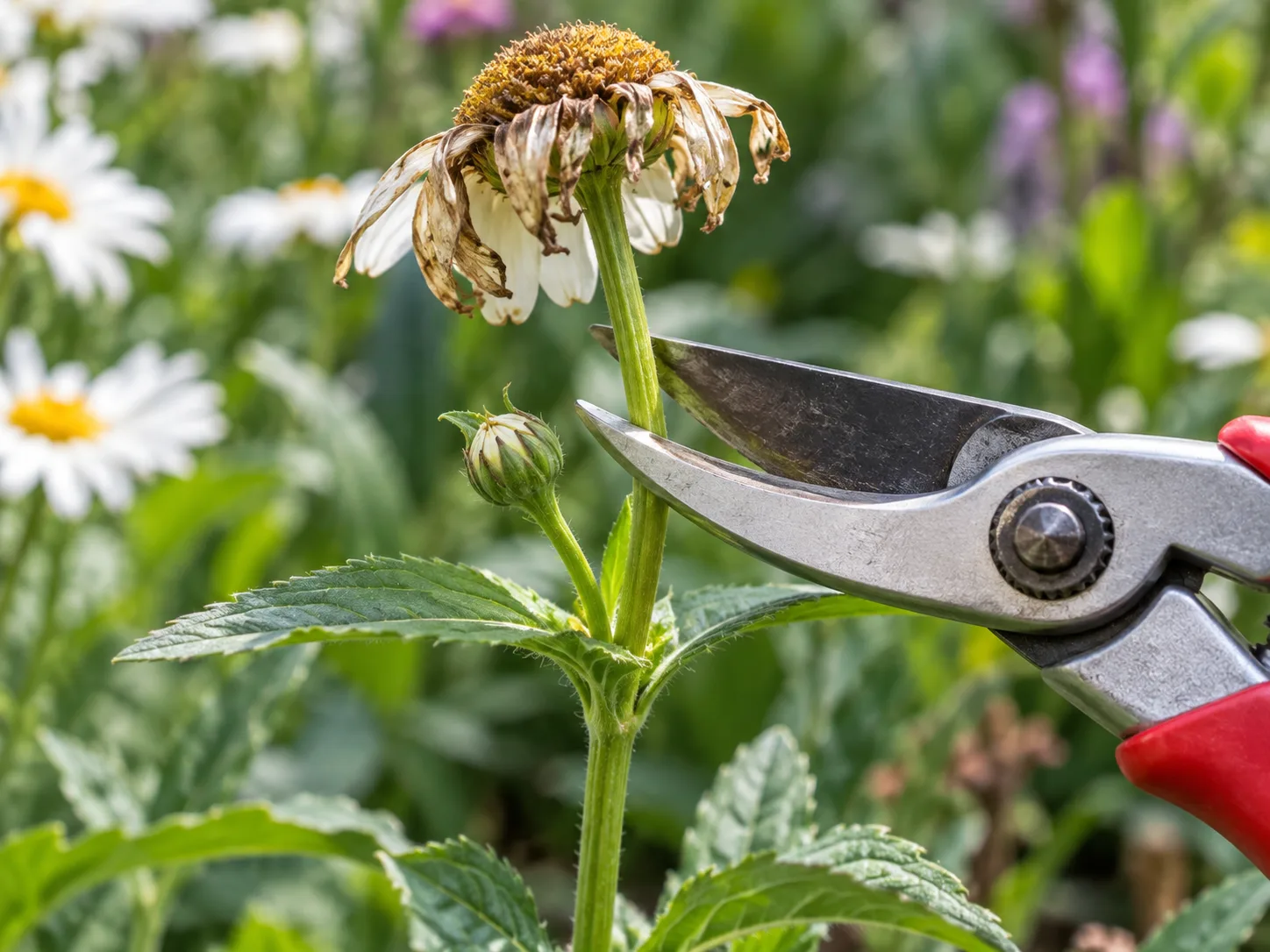
Cut a spent flower stem back to healthy foliage rather than removing green leaves indiscriminately.
After the final bloom, leave healthy foliage until it yellows or is killed by frost. In a tidy bed, cut dead stems near the base in late fall or early spring. If winter stems provide cover or seedheads for wildlife, leave them standing and clean them up before new growth becomes crowded.
Divide crowded clumps before flowering declines
Plan to divide ‘Becky’ when the center thins or dies, flowering drops, stems crowd one another, or the clump has outgrown its allotted space. Many references suggest division every two or three years, but that is a checkpoint rather than a strict deadline. A healthy, well-spaced clump does not need to be dug up just because a calendar says so. The RHS, Fine Gardening, and NC State Extension all recommend periodic division to maintain vigor and prevent crowding.
Spring, as new shoots begin to emerge, is a dependable time to divide. Early fall after flowering can also work if there is enough mild weather for roots to re-establish before the ground freezes. Do not divide while the plant is blooming or during a hot, dry spell. Water the bed beforehand if it is dry, and prepare the new planting spots before lifting the old clump so roots spend less time exposed.
A careful division sequence
- Cut old stems back enough to see the crown and work safely; leave a few inches of healthy new growth if dividing in spring.
- Dig around the clump with a spade or garden fork, keeping a generous root ball and lifting from underneath rather than pulling on stems.
- Shake off loose soil and inspect the crown. Discard dead, mushy, or woody material from the center.
- Separate the healthy outer sections by hand or with a clean, sharp knife. Keep several shoots and a solid portion of roots with each division instead of making tiny fragments.
- Replant each piece promptly at the same depth it grew before, with space around it. Firm soil lightly and water thoroughly.
- Keep the new divisions evenly moist while they establish, but do not leave them in standing water.
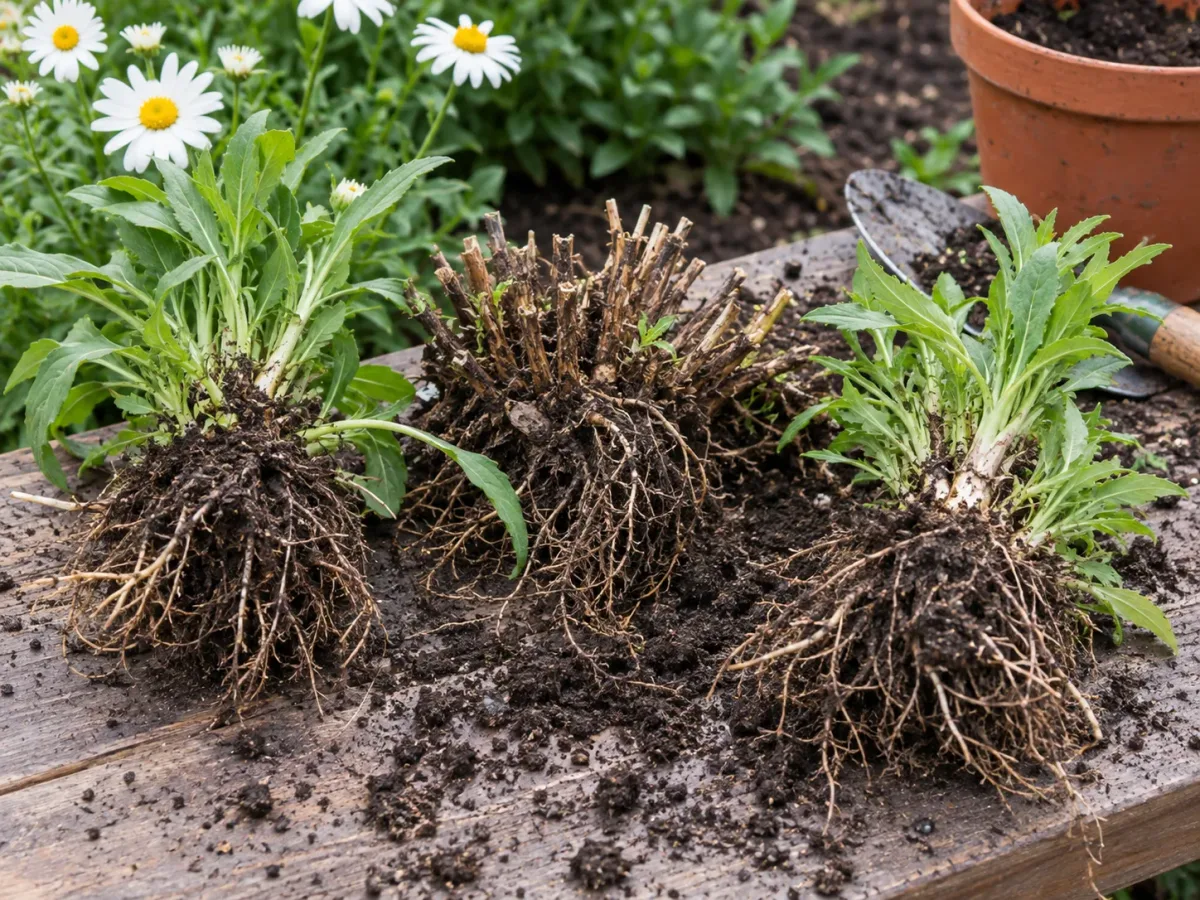
Replant vigorous outer divisions and discard a declining center rather than trying to save every piece.
The Oregon State University Extension advises dividing summer- and fall-blooming perennials in spring, avoiding division during flowering, and replanting with crowns level to the soil surface. It also cautions gardeners in Oregon against moving soil or plants between locations where pests such as jumping worms or Japanese beetles may be present. Follow local plant-health rules before sharing divisions, and do not transport soil from a regulated area.
Grow from seed only if cultivar identity is not essential
If you want the same plant you bought, divide an established clump or purchase a labeled nursery plant. Seedlings from hybrid Shasta daisies may not match the parent in height, flower form, or vigor, and the University of Saskatchewan describes modern cultivars such as ‘Becky’ as sterile. If a plant sold as ‘Becky’ produces seedlings, do not assume the seedlings will be identical or even correctly named; plants can be mislabeled, and related daisies can volunteer nearby.
Seed is still an option when variation is acceptable. Use seed from a reputable supplier that identifies the strain, follow its sowing instructions, and keep young seedlings moist but not waterlogged. Expect the time to flowering and final size to vary. Seed is not the best shortcut for recreating a particularly upright ‘Becky’ border or replacing a plant whose exact cultivar characteristics matter.
There is also a useful identification distinction: oxeye daisy (Leucanthemum vulgare) is not the same as the Shasta daisy hybrid. Oxeye daisy can self-seed aggressively and is invasive in some regions; the University of Saskatchewan’s gardening guidance recommends named Shasta cultivars and explicitly separates the two. If you see numerous seedlings, identify them before deciding that the original ‘Becky’ is spreading by seed.
Decide whether a container suits a tall cultivar
Shasta daisies can grow in containers, but a compact cultivar is often easier to manage. A full-size ‘Becky’ needs a broad, heavy pot with multiple drainage holes so the top growth does not make it unstable. A pot around 16 to 18 inches across is a practical starting point for one plant, not a guarantee; use a larger container if the mature root ball fills it quickly or the pot dries within a day.
Fill the pot with a quality outdoor potting mix that drains freely; do not use dense garden soil or put the container in a cachepot that traps water. Place it in full sun and water when the upper layer of mix begins to dry, then let excess water drain away. Containers heat and dry faster than beds, so check them more often during hot or windy weather. Avoid leaving the pot standing in a full saucer.
Container growing also changes winter risk. Roots in a pot experience colder temperature swings than roots in the ground. Use a frost-tolerant container, move it to a sheltered spot in cold weather, or sink the pot into the soil where appropriate. If this level of monitoring is inconvenient, plant ‘Becky’ in a bed and use a shorter cultivar for the patio.
Adjust winter care to drainage and local climate
In cold-winter areas, let the plant slow down naturally after flowering. Once the foliage dies back, remove diseased or collapsed material and leave healthy stems until late fall or early spring if they add structure or shelter. In a very exposed site, a loose layer of mulch after the soil cools can reduce freeze-thaw heaving; keep the crown from being packed under soggy material.
In milder areas, the foliage may remain partly green through winter. Remove only dead or diseased leaves and keep the crown open to air. Do not water on a calendar when rain is frequent. If the bed stays wet for weeks, drainage improvement or relocation is more effective than extra winter mulch.
| Season | Useful care |
|---|---|
| Early spring | Remove dead stems, check emerging shoots, add a light compost top-dressing if needed, and set supports before growth gets tall. |
| Late spring to summer | Water new plants when the root zone begins to dry, deadhead fading flowers, and monitor for crowding or leaf problems. |
| Early fall | Plant or divide after flowering if the season remains mild; keep new divisions watered as they root. |
| Winter | Protect container roots from severe exposure, keep garden crowns out of standing water, and postpone cleanup if stems are providing useful cover. |
Hardiness ratings describe expected cold tolerance, not immunity to heat, humidity, or poor drainage. Shasta daisies are commonly listed around Zones 5–9, though cultivar catalogs may differ at the edges. In hot, humid regions, afternoon shade and generous airflow can help; in cold, wet regions, a raised or naturally draining bed is the more important adjustment.
Troubleshoot weak growth, spots, and wilting
Start with the soil and the pattern of damage. A plant wilting in dry soil may need a deep drink, especially during its first season. A plant wilting in wet soil may have damaged roots or a saturated crown; adding water is the wrong first response. Check moisture several inches below the surface, then inspect the crown and roots if the plant continues to collapse.
Few flowers or long, weak stems: Check for less than a half-day of direct sun, crowding, or excessive nitrogen. Move or divide a healthy clump if shade is the problem; do not try to fix low light with more fertilizer. If buds formed but dried during a heat wave, maintain even moisture and expect flowering to recover when conditions improve rather than cutting the whole plant down.
Brown or black leaf spots: Shasta daisy leaf spot often appears as brown, round or irregular lesions; heavily affected leaves may yellow and die. Remove badly infected foliage, collect fallen debris, water at the soil line, and improve spacing so leaves dry more quickly. The UC Statewide IPM Program notes that leaf-spot spores can spread by splashing water and advises avoiding overhead irrigation and work on wet foliage.
White powder on leaves: A powdery coating can be mildew, especially in crowded or shaded conditions. Confirm the symptom before treating; do not assume a household baking-soda spray is a cure. Thin nearby growth, improve airflow, and avoid unnecessary leaf wetness. If the white material does not brush or wipe like mildew, or the plant continues to decline, ask a local Extension office or diagnostic clinic to identify it.
Yellowing and collapse: Overwatering, root or stem rot, drought, and vascular disease can look similar from a distance. Compare soil moisture across the bed, check whether the problem begins on one stem or the whole clump, and look for soft or discolored tissue at the base. Remove a plant that is clearly rotting or severely diseased rather than moving its soil or composting suspect tissue. For recurring problems, a local lab diagnosis is more useful than applying a fungicide without knowing the cause.
Manage pests, pollinators, and pet-safety questions
Aphids, leaf miners, spider mites, and occasional caterpillars may appear, but a small population on a vigorous plant rarely requires a broad insecticide. Inspect the undersides of leaves and the newest growth. If aphids are clustered on buds, dislodge them with a firm stream of water and repeat the inspection a few days later. Remove a few mined or badly damaged leaves rather than spraying every visiting insect.
Shasta daisy flowers provide accessible pollen and nectar for pollinators, and ‘Becky’ also makes a useful cut flower. For a diverse pollinator planting, combine it with plants that flower at other times and include locally native species; one ornamental perennial should not be expected to supply all habitat needs. NC State Extension notes that Shasta daisy flowers attract bees, butterflies, and other pollinating insects.
Use gloves if you have sensitive skin. NC State Extension lists Shasta daisy as mildly toxic to people and pets if ingested and cautions about contact dermatitis. Do not let children or pets chew the plant, and identify the exact plant before seeking help if ingestion occurs; common names such as “daisy” cover many unrelated species. Contact a veterinarian or a poison-control service promptly if a pet eats an unknown amount or develops symptoms.
Pair it with plants that complement its bloom window
Use ‘Becky’ as a middle- or back-border anchor, with shorter foliage plants in front and branching companions around it. Its white petals and yellow centers are an easy match for purple coneflower, black-eyed Susan, salvia, and ornamental grasses. Those combinations balance the daisy’s flat flower face with spires, darker centers, or fine-textured foliage; the University of Florida IFAS recommends similar sun-loving companions for Shasta daisy borders.
Leave enough space for each plant’s mature width instead of packing new plants tightly for an instant effect. Airflow helps foliage dry after rain, and open spacing makes it easier to reach stems for cutting and deadheading. If you want flowers from spring through fall, pair ‘Becky’ with earlier spring perennials and later asters rather than expecting one daisy to cover the entire season.
Conclusion
For the most reliable Becky Shasta daisy care, plant it in a bright spot with winter drainage, give each clump about 2 feet or more to expand, and water by checking the soil rather than following a fixed calendar. Deadhead if you want a tidier plant and another flush, support only stems that truly need it, and divide when the center declines or the clump becomes crowded. If it repeatedly flops, wilts, or develops spots, correct the site or identify the problem before reaching for fertilizer or a spray.
‘Becky’ earns its place through height, strong stems, and a long summer display, but it is not the best choice for every bed or pot. Choose a compact cultivar for a small container, prioritize drainage in wet-winter climates, and use a division when you want to preserve the named plant’s characteristics.



