Why Your Basil Plant Is Wilting and How to Revive It
Don't guess from drooping leaves. Diagnose basil wilting with soil, drainage, root, stem, heat, and pest clues, then make the right first move for recovery.
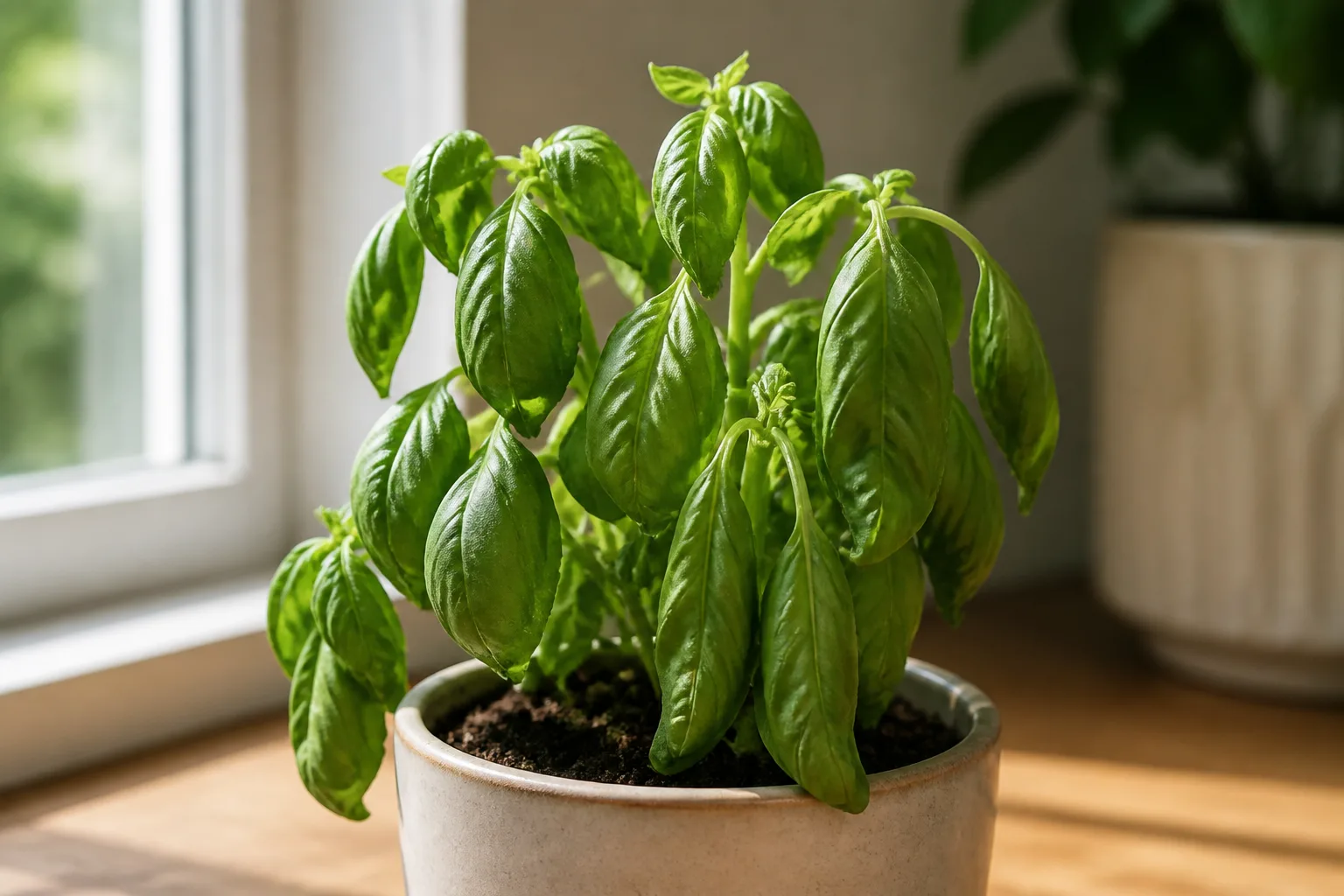
A basil plant can droop because its roots are too dry, but the same limp leaves can follow heat strain, waterlogged soil, damaged roots, disease, or sap-feeding pests. The leaf posture is a warning, not a diagnosis. Before pouring on water, note when the wilt appeared and check the soil below the surface.
Quick answer: Water basil only when the root zone is actually drying. If the soil is wet, check drainage and roots instead; if the plant droops only during peak heat and perks up later, reduce heat exposure and reassess when the air cools. Utah State University Extension describes basil as a warm-weather herb that needs regular moisture and well-drained soil, while horticultural editors also document heat, root disease, and pests as causes of similar symptoms (Utah State University Extension, Gardeners’ Path).
Start with the pattern, not the droop
A fast diagnosis begins with four observations: when the leaves sag, how wet the root zone is, whether water can escape, and what is happening on stems and leaves. Make those checks before changing several care conditions at once; otherwise, you may fix one issue while making another worse.
| What you notice | What it can point to | Check first |
|---|---|---|
| Basil droops during the hottest hours, then firms up later | Temporary heat strain | Soil moisture and afternoon exposure |
| Soil is dry well below the surface and the pot feels light | Underwatering or a root ball that dries too fast | Re-wet the full root zone and confirm water drains |
| Soil is wet for days, the pot stays heavy, or the saucer holds water | Poor drainage, waterlogging, or root injury | Drainage holes, saucer, and root condition |
| One stem or one side declines while other growth looks normal | Stem damage, vascular disease, or a localized root problem | Lower stem and internal tissue, without relying on leaves alone |
| New leaves distort, leaves develop expanding spots, or pests are visible | Disease or sap-feeding insects | Leaf undersides, tender tips, and stem joints |
These patterns narrow the possibilities; they do not prove a pathogen. If wilt persists through cool mornings, spreads despite a corrected watering problem, or appears with dark stem tissue, move from routine care to close inspection.
Note when the wilt appears
Wilt that appears only during a hot afternoon has a different starting point from a plant that is limp at sunrise. At the warmest part of the day, leaves can lose water faster than roots replace it, especially in a small container in direct sun; a plant that recovers as the temperature falls may be signaling temporary heat strain rather than an empty pot.
By contrast, basil that stays limp overnight, keeps losing leaves, or declines steadily over several days needs a root-zone and stem check. A sudden collapse after moving a plant outdoors, repotting it, or bringing it home can also reflect a change in light, wind, temperature, or root disturbance. Timing is a clue to choose the next test, not a reason to skip the test.
Feel the root zone and test drainage
Push a finger about an inch into the mix, then compare that reading with the pot’s weight. A dry, light container supports a thirst diagnosis; a cool, wet mix in a heavy pot makes extra water a poor first move. The surface can look dry while the lower root ball is still saturated, so check below the top crust rather than judging by appearance alone.
If the basil is in a pot, confirm that the container has open drainage holes and that water can leave the saucer. After a normal watering, the mix should become evenly moist and excess water should run out; it should not remain submerged or swampy. In a garden bed, check the soil around the roots instead of applying a container schedule: soil texture and weather change how quickly moisture drains.
Inspect stems, leaves, and pests
Look at both sides of several leaves and along the newest growth. Sticky residue, clusters of tiny insects, fine webbing, pale stippling, or holes point toward a pest or leaf problem rather than a simple thirst signal. Aphids and spider mites can feed on basil and contribute to distortion and droop, but an insect sighting still does not explain every wilted plant (Gardeners’ Path, Gardening Know How).
Check the lower stems for dark streaks, water-soaked tissue, or a soft area at the soil line. If the soil is persistently wet and the plant is easy to lift from a container, inspect a small portion of the root ball: healthy roots are firm, while roots affected by rot can be soft and brown. Do not unpot a basil plant just because it droops once; disturbing healthy roots can add stress without improving the diagnosis.
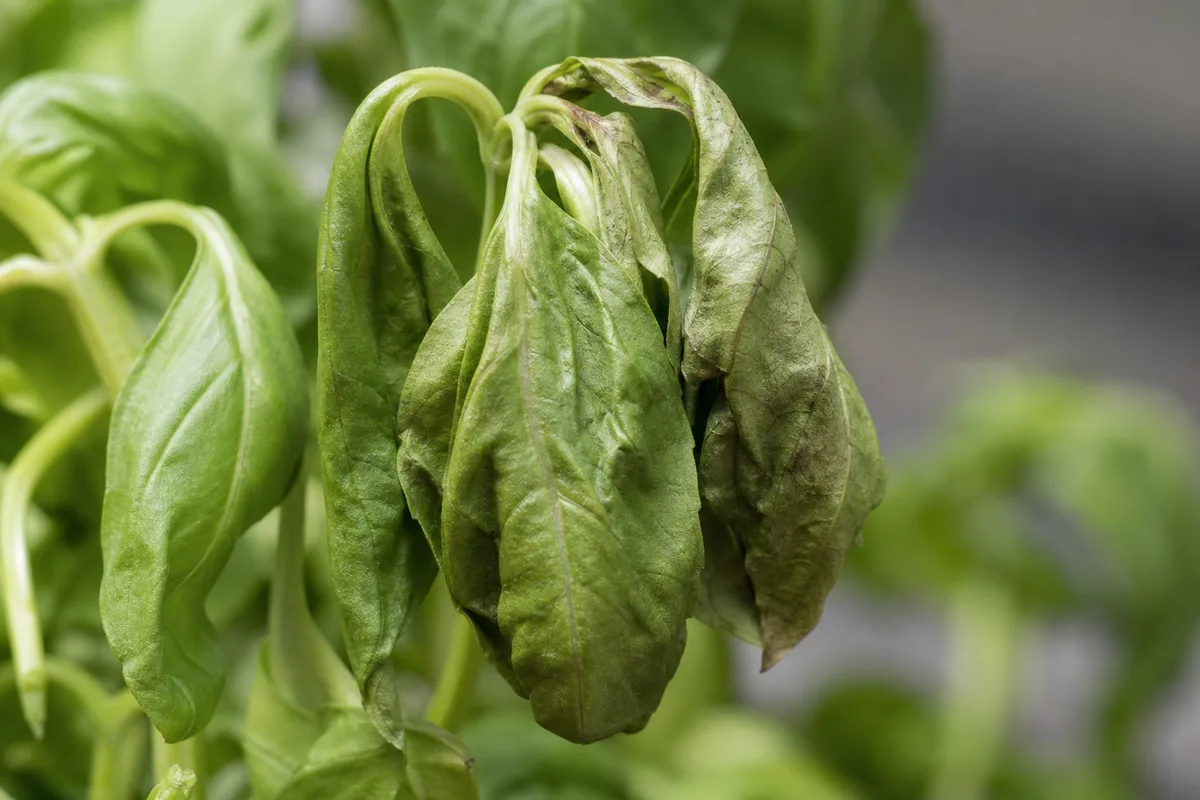
Drooping basil leaves confirm stress, but soil, roots, stems, and the timing of the wilt help distinguish the cause.
Match the clues to a likely cause
Use the strongest evidence you have, not the most dramatic leaf. A plant can be both thirsty and heat-stressed, and a plant with damaged roots can wilt even while the mix feels wet because impaired roots cannot move enough water into the stems.
Dry root ball: underwatering or a pot that dries too fast
When the root zone is dry, a basil plant may wilt across several stems at once. The pot often feels light, soil can pull away from the edges, and leaves may become limp before they turn crispy. Small pots, crowded grocery-store herb clumps, terracotta containers, wind, and heat can all make the root ball dry faster than a deeper garden bed.
A dry surface is not enough evidence on its own. If the middle of the pot still feels cool and moist, watering again may push the lower mix into a persistently wet state. Check more than one spot, especially when a dense nursery root mass sits inside a looser outer potting mix.
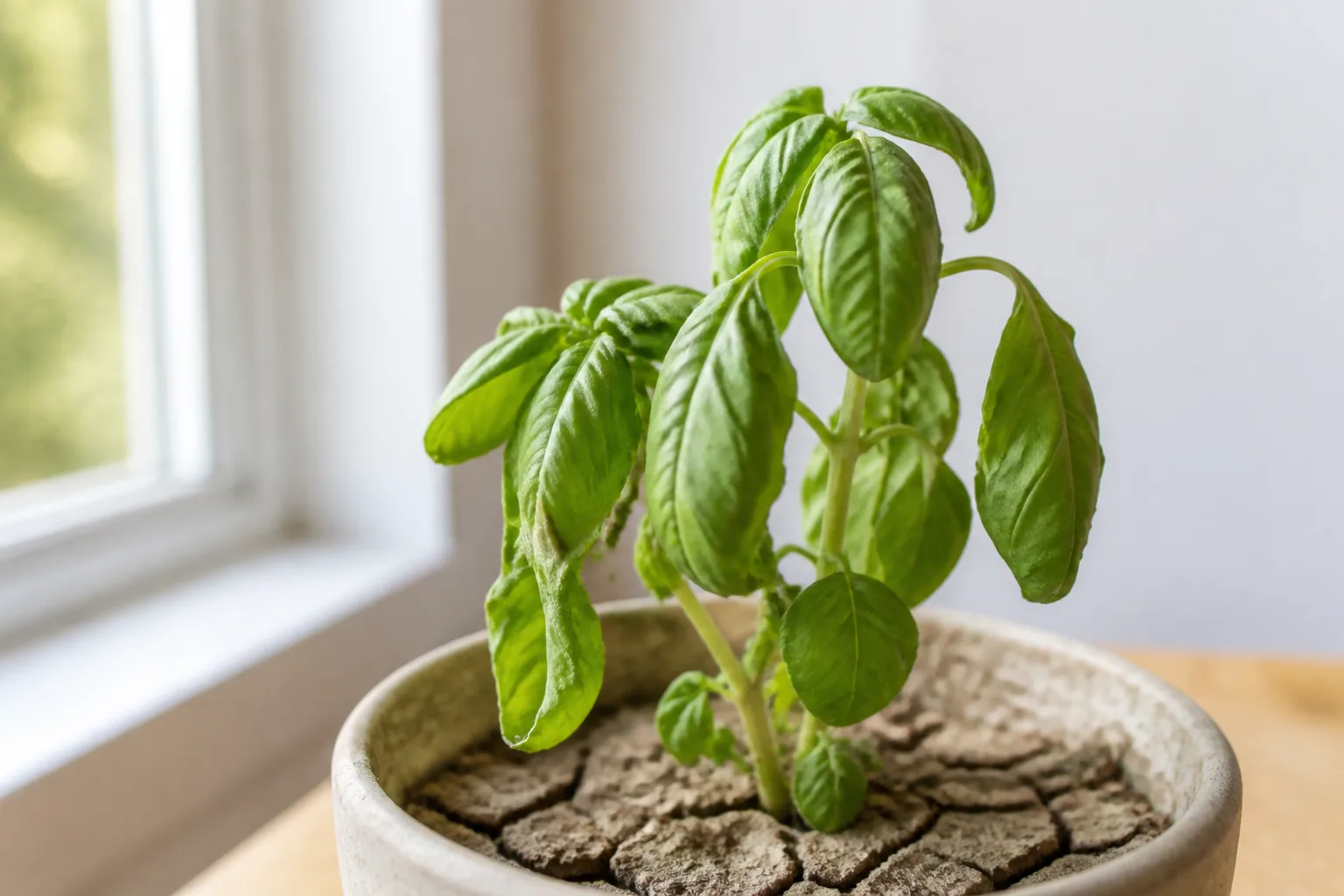
Dry soil and a light pot support a thirst diagnosis; water the whole root ball, not just the surface.
Moist soil on a hot day: temporary heat stress
Basil likes warmth and sun, but a container can heat up and lose moisture quickly on a hot patio, against a reflective wall, or on concrete. The plant may look limp in the afternoon even when the root zone is damp enough. If it perks up in the evening or early morning, heat exposure is more plausible than a need for another soak.
Move a container temporarily into bright shade during the hottest hours, or use light shade cloth outdoors. Keep it in a bright position once the heat eases; leaving basil in deep shade for days weakens growth and does not solve an underlying root problem. A hot day can also accelerate soil drying, so repeat the moisture check instead of assuming every wilt episode has the same cause. Gardeners’ Path describes basil wilting in extreme heat despite adequate moisture and recommends temporary afternoon relief, while Utah State notes that temperature and soil conditions both affect irrigation needs (Gardeners’ Path, Utah State University Extension).
Wet soil: waterlogging, root rot, or salt injury
Wet soil plus wilt means the root system may be short of oxygen or damaged, not that the plant needs more water. Waterlogged potting mix limits air around roots; root and crown rot can also produce wilt, slow growth, or collapse. The Connecticut Agricultural Experiment Station describes basil root and crown rot with brown, water-soaked roots and sometimes a water-soaked lesion at the stem base. University of Wisconsin–Madison Extension notes that root-rot-affected plants can wilt and that soft brown roots are a reason to investigate belowground (Connecticut Agricultural Experiment Station, University of Wisconsin–Madison Extension).
Overwatering and root rot are related but not identical. A recent excess watering in a pot with sound roots may resolve as the mix drains and then dries appropriately; a plant with a long-wet root ball, soft brown roots, yellowing, or a mushy lower stem has more serious root injury. If you unpot it, compare the roots: firm cream or tan roots are different from soft, dark tissue that slips apart. Eye inspection can raise suspicion, but it cannot identify which organism is present.
White crust on the pot rim or soil surface adds another possibility: excess soluble salts from repeated fertilizer or mineral buildup can injure basil roots and resemble root rot. The Connecticut Agricultural Experiment Station notes that salt injury can look similar and that white crystals are a clue. Do not add fertilizer to a wilted plant as a rescue; first correct moisture and drainage, and if the root zone is badly affected, replace the mix rather than guessing at a treatment.
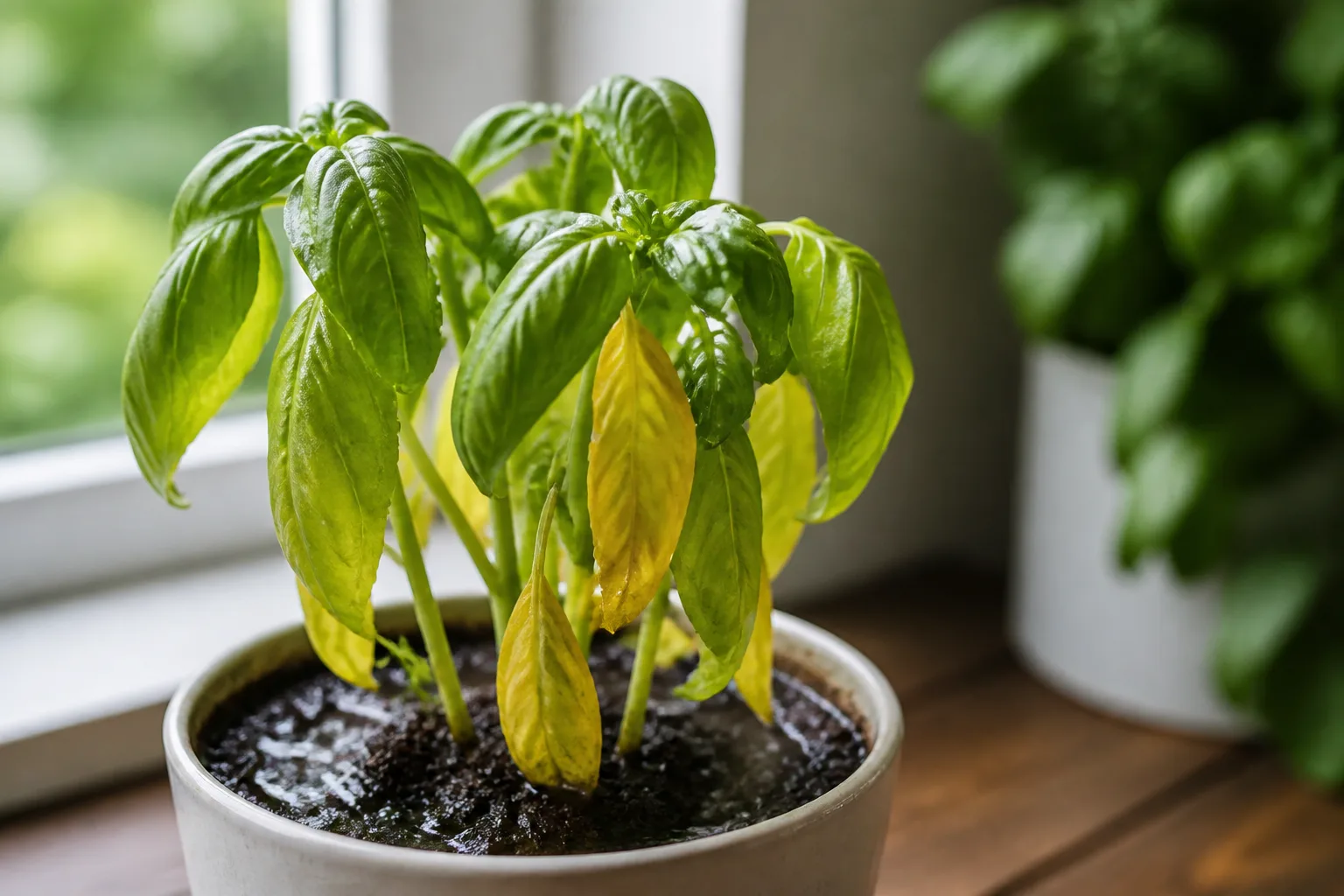
Persistent wetness and yellowing justify a drainage check before another watering.
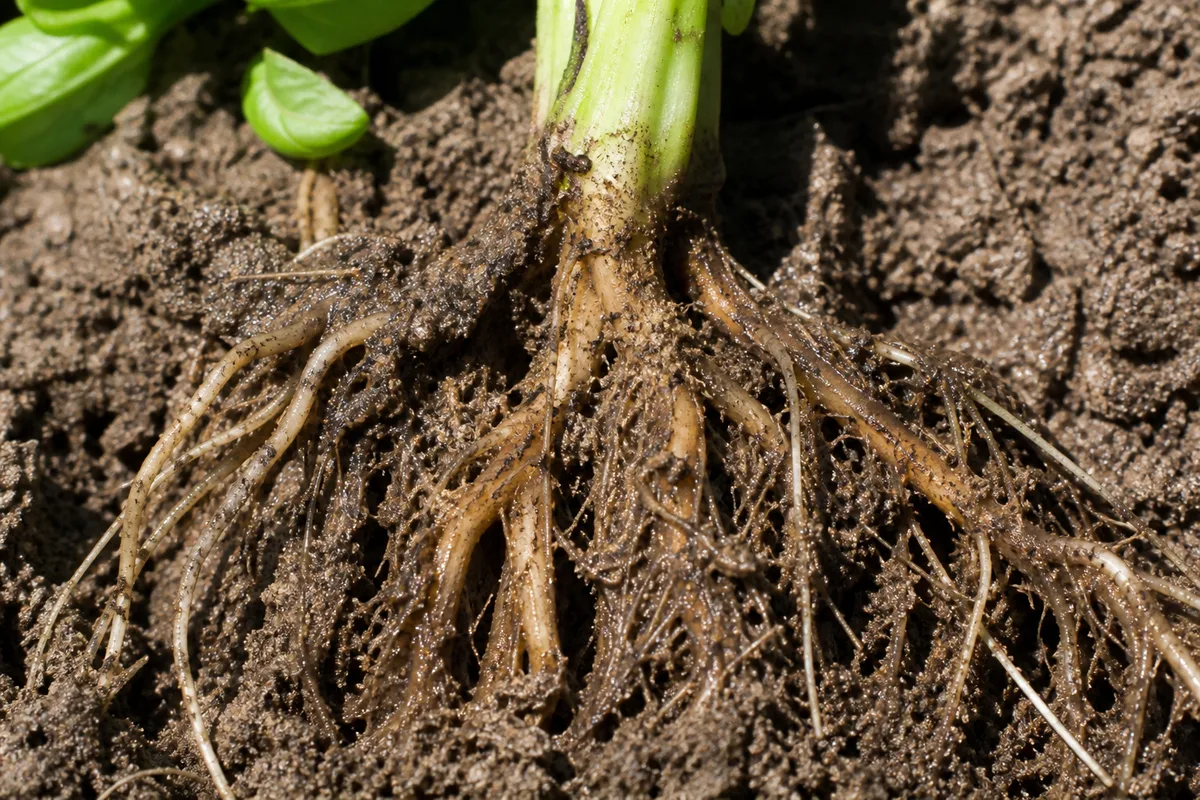
Soft, brown roots or a water-soaked lower stem increase concern for root or crown rot.
Progressive wilt and dark stem tissue: suspect Fusarium
Fusarium wilt is a soil-borne disease of sweet basil caused by Fusarium oxysporum f. sp. basilicum. It can be mistaken for thirst because the plant droops, but progressive stunting, yellow or curled leaves, and brown streaks or discoloration inside the lower stem are more concerning than leaf droop alone. University of Delaware Cooperative Extension describes sweet basil that grows normally at first and then becomes stunted and wilted; the Connecticut Agricultural Experiment Station also notes darkened, water-soaked tissue and discolored water-conducting tubes (University of Delaware Cooperative Extension, Connecticut Agricultural Experiment Station).
Do not try to correct this pattern by repeatedly watering or feeding. If the plant is progressively failing and the lower stem shows discoloration, isolate it from healthy basil, remove it, and discard the affected plant and growing mix rather than moving that soil to another pot. The pathogen can persist in soil for years; the University of Delaware report gives an 8-to-12-year persistence range for infested field soil, so treat a suspected bed infection cautiously and seek local extension advice before replanting basil there. A garden diagnostic clinic can help when the diagnosis would change what you plant next.
Leaf spots, stippling, or webbing: disease or pests
Aphids usually gather around tender tips and leaf undersides; heavy feeding can distort new leaves, leave sticky honeydew, and weaken growth. Spider mites are tiny, so look for pale stippling and fine webbing instead of waiting to see the insects clearly. A few holes without droop are more likely chewing damage than a cause of whole-plant wilt.
Dark, water-soaked spots or blackened shoot tips suggest a foliar disease may be involved, especially if the plant is crowded and leaves stay wet. Remove badly affected foliage, keep the plant separated from neighboring herbs while you watch it, and water at soil level so leaves can dry. Avoid coating edible basil with improvised soap or applying a pesticide without confirming that its label permits use on edible herbs; leaf damage and residue are not useful trade-offs for an unverified diagnosis. Gardeners’ Path and Gardening Know How both recommend checking for visible pests and disease signs instead of treating droop as a watering problem by default (Gardeners’ Path, Gardening Know How).
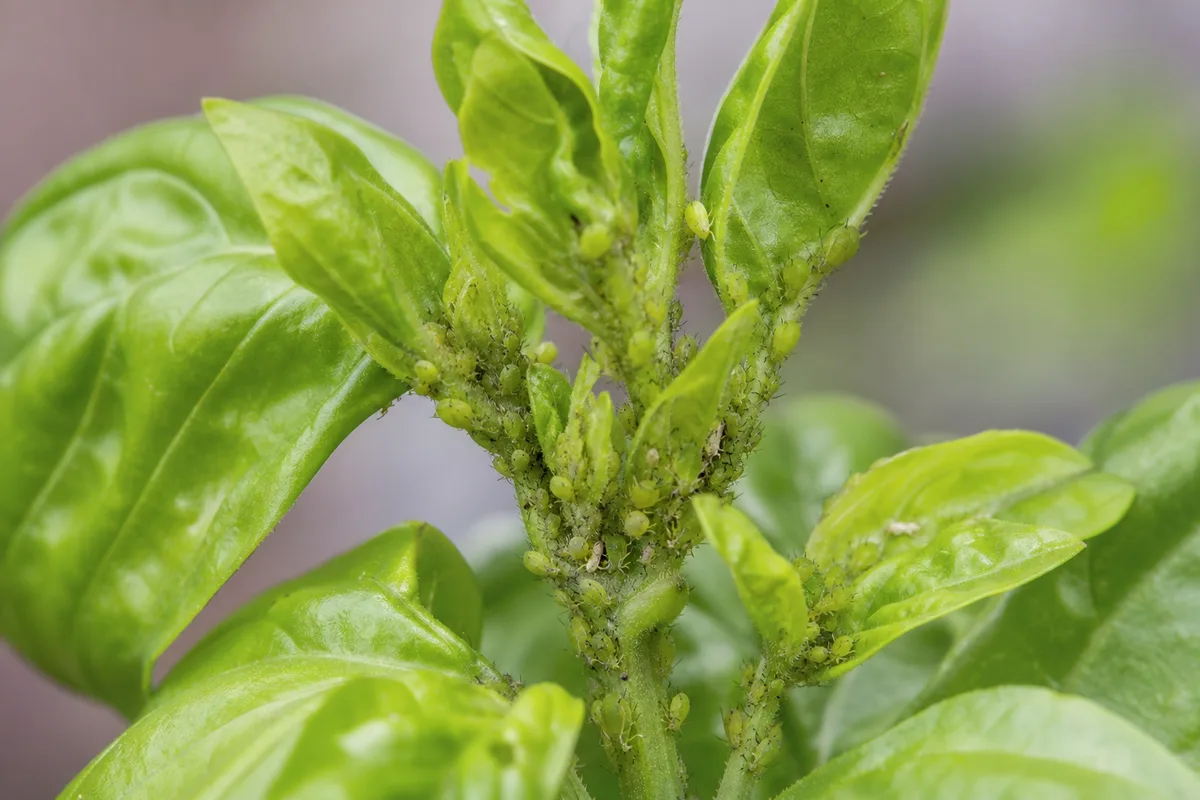
Clusters on tender growth are more actionable evidence than drooping leaves by themselves.
Newly bought or replanted basil: crowding and transplant stress
The small basil pots sold for cooking often contain several seedlings packed together. Their leaves create a full-looking plant, but the roots share a small amount of mix and can dry quickly after purchase; the change from a sheltered shop to wind, sun, or a new room can add stress. A basil plant may also droop for a short period after root disturbance or a sudden light change, even when watering is reasonable.
Stabilize the plant before splitting or repotting it. If the mix is dry, water it through and let it drain; if it is hot, give it a cooler bright spot. Once it is no longer collapsing, divide an overcrowded clump gently into smaller rooted portions and give each a container with drainage and room for the roots. Do not tear apart roots that are already mushy or diseased; remove failing tissue or start over with clean material instead. Basil also needs warm conditions, so avoid setting a recently transplanted plant outside before nights are reliably mild; Utah State University Extension advises planting after the last frost (Utah State University Extension, Gardeners’ Path).
Revive basil with the smallest correction
Choose one response that fits what you found, then watch how the plant behaves over the next cool part of the day. Combining a heavy soak, pruning, repotting, fertilizer, and a move into deep shade makes it hard to tell which problem remains—and can add damage.
If the soil is dry, water through the root ball
Water slowly at the soil line until the full root ball is moist and excess water runs from the drainage holes. If very dry mix sends water straight down the pot wall, apply a little water, pause, then water again so the center has time to absorb it. Empty the saucer once the flow stops; do not leave basil standing in runoff.
Give a hot, wilted container temporary afternoon shade while the root zone recovers. Remove leaves that are fully crisp or blackened, but keep sound green growth so the plant can photosynthesize. Recheck the soil later rather than scheduling another drink in advance. If the leaves are still limp when the weather cools and the pot remains moist, return to the root and stem clues rather than repeating the same watering.
If the soil is wet, improve drainage before the next watering
Stop watering while the mix is saturated and empty standing water from any cachepot or saucer. Check that the drainage holes are open; if the pot has none, move the basil to a container that does. Keep it somewhere bright with gentle airflow while the mix loses excess moisture, not in a dark corner where drying and growth both stall.
If roots are soft and brown, remove the plant carefully, trim only clearly rotten tissue with clean snips, and repot salvageable firm roots in fresh, well-drained potting mix. Clean the pot before reusing it. Basil with widespread root collapse, a soft stem base, or progressive stem discoloration may not recover; discard it and the contaminated mix rather than trying stronger fertilizer or a fungicide guessed from appearance. The University of Wisconsin–Madison Extension cautions that root-rot treatment depends on the pathogen, and the Connecticut Agricultural Experiment Station recommends discarding affected basil for several disease problems; a sample diagnosis is more reliable than broad treatment (University of Wisconsin–Madison Extension, Connecticut Agricultural Experiment Station).
Prevent wilt from returning
After the plant steadies, make the conditions less variable. The goal is an evenly moist root zone with air around the roots, suitable light, and enough space for basil to grow—not a fixed watering interval or constant dampness at the soil surface.
Build a weather-aware watering rhythm
Water when the top inch of potting mix is beginning to dry, then water thoroughly and let the container drain. Check more often during hot, windy weather and less often when it is cool, cloudy, or the plant is growing slowly. Basil grown in the ground may need a different interval from basil in a small pot because soil depth, texture, mulch, and rainfall all affect moisture loss.
Utah State University Extension gives about 1½ inches of water per week as a garden starting point, but it also says water needs depend on temperature and soil type. Treat that amount as regional guidance, not a universal container schedule. In a pot, the check is the root zone and drainage, not “every two or three days”; a calendar cannot account for pot size, sun, wind, rainfall, or the plant’s current growth (Utah State University Extension).
Balance sun, heat, and protection
Give basil a bright position that receives several hours of direct light, then protect a container from unusually harsh afternoon heat when it keeps wilting despite adequate moisture. A pot on a dark surface can heat faster than a garden bed; moving it to a cooler bright location or raising it off hot paving can protect the root zone without sacrificing all-day light. For outdoor plants, light shade cloth during a heat spike can help, but permanent dense shade reduces the energy basil needs for strong leaf growth.
Avoid abrupt changes in exposure. A plant grown under cover may need a gradual transition to outdoor sun and wind; placing it directly into intense afternoon sun can stress leaves and roots at once. Likewise, cold nights can interrupt growth and leave tender basil looking damaged, so bring container plants under shelter when temperatures drop instead of compensating with extra water.
Keep basil vigorous without adding more stress
Use a loose, well-drained potting mix and a container with drainage holes. Do not add garden soil to a pot or use a container vastly larger than the root system; dense, poorly draining media can stay wet, while a very small pot dries too quickly. If a grocery-store clump is crowded, divide it after it has stabilized rather than during the first episode of collapse.
Harvest by pinching or cutting just above a leaf pair once the plant is growing steadily, and remove flower spikes if you want more leafy growth. Flowering is not by itself a diagnosis for sudden wilt: summer heat and water stress can encourage basil to flower and reduce leaf production, so correct those stresses first. Avoid feeding a plant with damaged roots; resume a restrained, label-directed fertilizer routine only after it has begun making healthy new growth. White crust or a history of frequent feeding is a reason to suspect salt buildup, not to add another dose (Utah State University Extension, Connecticut Agricultural Experiment Station).
Conclusion
A drooping basil plant can be thirsty, overheated, waterlogged, diseased, or weakened by pests, and the leaves alone cannot tell you which. Check the timing, feel the soil below the surface, confirm that water drains, and inspect stems, roots, and leaf undersides before you make a change. Water a dry root ball, relieve heat when the soil is already moist, and treat persistently wet soil or progressive stem discoloration as a reason to look for root or disease damage. One evidence-based adjustment gives recoverable basil a better chance—and helps you recognize when starting with clean soil is the sensible choice.