Autumn Fern Care: How to Grow and Maintain It
Autumn fern care is easiest in bright shade and evenly moist, drained soil. Learn where to plant, how to water, when to divide, and what brown fronds mean.
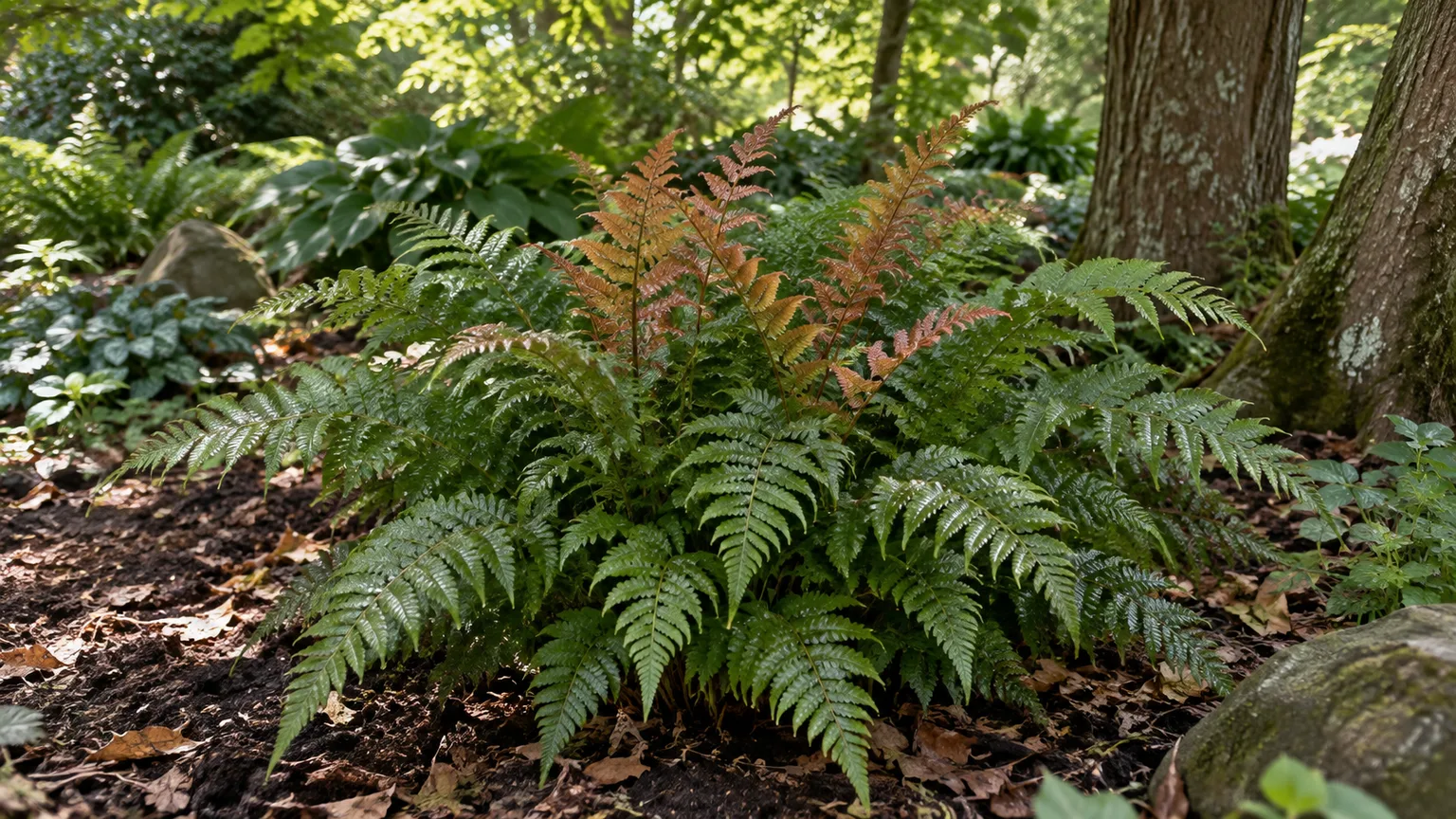
Autumn fern (Dryopteris erythrosora) is a compact, shade-loving fern whose newest fronds emerge coppery pink or bronze-red in spring, then mature to glossy green. That color show is why gardeners notice it, but the plant earns its keep with a tidy, arching clump that adds texture under trees and shrubs for the rest of the season.
The simplest care formula is a sheltered spot with bright or dappled shade, humus-rich soil that drains, and steady moisture while roots establish. Autumn fern grows slowly, so think of it as a long-lived accent or gradually filling groundcover—not a fast way to cover bare soil.
Meet Autumn Fern and Set the Right Expectations
Autumn fern is also sold as Japanese shield fern or copper shield fern. Its botanical name, Dryopteris erythrosora, refers to the reddish sori on the undersides of mature fronds. The fern is native to eastern Asia, forms a vase-shaped clump, and spreads gradually by short creeping rhizomes rather than runners that race across a bed. NC State Extension Missouri Botanical Garden Plant Finder
Expect roughly 18 to 24 inches of height; mature spread is less predictable, with references ranging from about 18 inches to 3 feet depending on the plant, site, and measurement method. Its growth is slow enough that a young nursery plant may take several seasons to become a substantial clump. That is useful near a path or at the front of a shade border, but it is a poor choice if you need immediate, dense coverage.
The word “autumn” can mislead new growers. The most reliable copper-pink color arrives on fresh spring fronds; they turn bronze and then green as they harden. Some references note that reddish tones can return in fall, particularly in the ‘Brilliance’ selection after a frost, but do not expect the whole plant to behave like a fall-color shrub. Missouri Botanical Garden Plant Finder Fine Gardening’s autumn fern profile
‘Brilliance’ is a commonly offered selection prized for especially bright, persistent copper-red new growth. The species and cultivar have similar basic care needs, so choose ‘Brilliance’ when spring color is the priority and the tag clearly identifies it; plant labels sometimes omit cultivar names or use the common name alone. NC State Extension Fine Gardening’s ‘Brilliance’ profile
Choose a Site That Balances Shade and Moisture
Use Shade as the Default, Then Adjust for Climate
Start with partial to full shade, ideally beneath high-branched trees or at the north or east side of a building where light is filtered and the soil does not bake. Deep shade is usually survivable, though growth may be slower; a few hours of mild morning sun can work in a cool climate if the root zone remains moist. In hot-summer regions, avoid afternoon sun, bright reflected heat, and exposed sites where wind dries the fronds. NC State Extension UF/IFAS Gardening Solutions Royal Horticultural Society’s Dryopteris growing guide
Sun tolerance is not a fixed number of hours. UF/IFAS notes that autumn fern can withstand an hour or two of direct sun, while NC State Extension and Missouri Botanical Garden emphasize dappled to full shade; the RHS says some Dryopteris can grow in sun when moisture is reliable. Read these together as a climate rule: mild exposure may be fine in cool, moist conditions, but full afternoon sun in heat is a high-risk placement. A newly installed fern is particularly easy to scorch before its roots reach into the surrounding soil.
Build Humusy Soil That Holds Water Without Staying Soggy
Autumn fern performs best in soil rich in organic matter that stays evenly moist but lets excess water drain. Incorporate finished compost or leaf mold across the planting area—not just into a small planting hole—to improve a sandy bed’s water retention or loosen compacted soil. A slightly acidic soil is suitable, but you do not need to acidify a bed or chase a precise pH unless a soil test or nearby plants show a broader problem. NC State Extension Missouri Botanical Garden Plant Finder Fine Gardening’s autumn fern profile
If water remains pooled long after rain, plant on a slight mound or choose another spot; a constantly saturated crown is more likely to decline than a bed that dries briefly between rains. At the other extreme, a narrow strip under a thirsty tree can be dry even when the rest of the garden is moist. Check the soil where the fern’s roots will grow, not just the surface mulch.
Plant Autumn Fern Without Burying the Crown
Choose Planting Time and Spacing
Plant in spring or early fall, when temperatures are moderate and rainfall can help keep the root ball from drying as it settles in. In a hot climate, spring planting gives the fern time to establish before the toughest summer weather; in a mild climate, fall works well while soil remains workable. If you buy a plant in summer, it can still be planted, but water it more closely and provide temporary shade if the site is exposed. The RHS recommends planting Dryopteris in spring or autumn and watering summer purchases regularly. Royal Horticultural Society’s Dryopteris growing guide
Space plants about 18 to 24 inches apart for a gradually connected planting, or wider when you want distinct clumps with room to mature. UF/IFAS suggests 18- to 24-inch spacing; NC State Extension lists a mature width of 2 to 3 feet, so closer spacing can create a fuller bed sooner but also means more competition for water. Where local guidance recommends against planting this nonnative fern, choose a regionally appropriate native woodland fern instead. UF/IFAS Gardening Solutions NC State Extension
Set the Root Ball at Its Original Depth
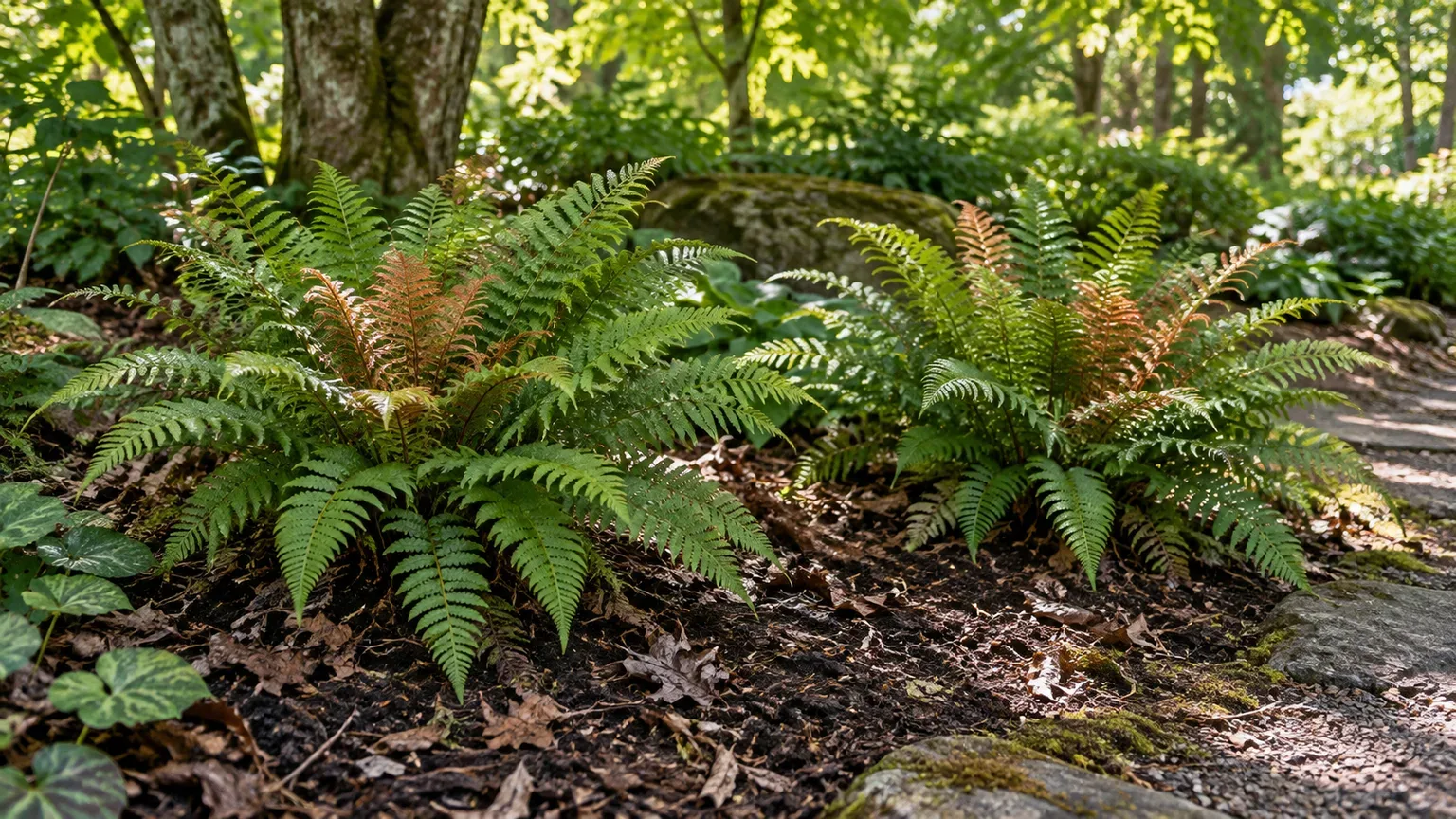
Dig a hole slightly wider than the root ball and about as deep as the nursery pot. Loosen circling roots gently, set the crown—the point where fronds emerge—level with the surrounding soil, then backfill and water thoroughly to settle the soil around roots. Do not bury the crown under compost or mulch: keeping that center at grade reduces the chance it stays wet and soft.
Spread mulch over the root zone in a thin layer, leaving a small open ring around the crown. A freshly planted fern may look no larger after planting than it did in its pot; that is normal while roots establish. Avoid cutting or pulling apart a small nursery plant just to make more plants, since a division needs both healthy roots and a growing point to recover.
Water Through Establishment and Dry Spells
Water a new autumn fern deeply after planting, then keep checking the root ball during its first growing season. In warm, windy weather or very free-draining soil, that may mean watering more than once a week; during cool, rainy spells, it may mean not watering at all. The aim is to keep the root zone lightly moist, not to follow a fixed calendar. NC State Extension Royal Horticultural Society’s Dryopteris growing guide
Push a finger or trowel a few inches into the soil just outside the crown. If that depth feels dry, soak slowly around the plant so water reaches the whole root ball; if it still feels cool and damp, wait and check again later. Watering at the base also keeps the crown from staying wet for long periods. A quick surface sprinkle often wets the mulch but not the roots, while frequent watering of already-wet ground can deprive roots of oxygen.
Once established, the fern tolerates a brief dry spell better than a newly planted one, especially in shade. It is not truly drought-proof: prolonged heat, dry wind, or competing tree roots can brown the fronds or reduce new growth. During extended dry weather, give it one thorough soak and let the soil begin to dry slightly before watering again. NC State Extension Royal Horticultural Society’s Dryopteris growing guide
Mulch and Feed Lightly
A 1- to 2-inch layer of shredded leaves, leaf mold, or finished compost works as a moisture buffer and slowly adds organic matter. Refresh it when it thins or mats down, but keep it pulled back from the crown. The objective is a cool, moisture-retentive root zone, not a deep wet blanket over the plant’s center. Royal Horticultural Society’s Dryopteris growing guide
A garden-grown autumn fern usually does not need a regular fertilizer program in soil that already contains compost or leaf mold. The RHS says Dryopteris do not usually need feeding in the garden; a surface mulch is a gentler way to maintain soil structure and fertility. If a soil test shows a nutrient deficiency, follow the test rather than applying a high-nitrogen lawn product or fertilizer directly to the crown. Royal Horticultural Society’s Dryopteris growing guide UF/IFAS Gardening Solutions
Grow Autumn Fern in a Container
Autumn fern can grow in an outdoor container, but it needs more frequent attention than a fern in a shaded garden bed because potting mix warms and dries faster. Choose a pot with several open drainage holes and enough width for the clump to expand. Use a quality, moisture-retentive potting mix amended with a modest amount of compost; do not fill the pot with dense garden soil, which can compact and drain poorly in a container. NC State Extension lists autumn fern as suitable for container growing, and the RHS recommends containers as one option for Dryopteris. NC State Extension Royal Horticultural Society’s Dryopteris growing guide
Set the pot in bright shade or filtered light, out of hot afternoon sun and drying wind. Check the mix more often during summer, watering when the upper layer begins to dry while allowing excess water to escape; never leave the pot standing in a full saucer. A container that dries every day may be too small, too exposed, or too root-bound, so consider a larger pot or a shadier location before simply watering more often.
Although some plant references list indoor culture as possible, this hardy woodland fern is generally easier outdoors in a cool, shaded setting. If you keep one inside, use a bright room away from heating vents and hot windows, and watch closely for dry air and fast-drying mix. It is not a tropical fern that wants a warm, dry living room year-round; if the plant declines indoors, returning it to a sheltered outdoor shade position may solve more than adding fertilizer. NC State Extension
Container roots experience more temperature swings than roots planted in the ground. In cold regions, move the pot to a protected location beside a sheltered wall or insulate around the container before a hard freeze, while keeping drainage holes open. In-ground plants generally need little winter intervention; container care is the main exception because the root ball is exposed on all sides. The RHS advises choosing a sheltered site for Dryopteris and protecting them from strong winds. Royal Horticultural Society’s Dryopteris growing guide
Prune and Protect the Plant Through Winter
Autumn fern needs little routine pruning. Remove fronds that are fully brown, badly damaged, or lying against the crown, but leave healthy green fronds in place; they are still supporting the plant and provide some cover for the center. Cut close to the base with clean pruners without nicking the emerging fiddleheads. Royal Horticultural Society’s autumn fern profile
In early spring, clear away dead or collapsed foliage just before or as new fronds begin to unfurl. If an old frond turns brown in winter, that alone does not mean the plant has died: autumn fern can be semi-evergreen, and frond retention depends on climate and exposure. A sheltered plant in a mild winter may stay leafy, while a colder, windier site may leave it looking sparse until spring growth returns. Missouri Botanical Garden Plant Finder Royal Horticultural Society’s autumn fern profile
Hardiness-zone references vary: several U.S. horticultural profiles place autumn fern in zones 5 through 8 or 9, while other regional references list a wider range. Use the lower end as a reason to provide a sheltered, well-drained site rather than a guarantee that every exposed plant will overwinter. If your garden falls outside a locally supported range, grow it in a container you can protect or select a fern recommended by a regional extension service. Missouri Botanical Garden Plant Finder Fine Gardening’s autumn fern profile Gardenia’s autumn fern profile
Divide Autumn Fern When It Has Enough Growing Points
Division is the most practical way to propagate a garden clump and keep the new plants true to a named selection. Do it in early spring as fresh growth starts, when the crown and new growing points are easy to see. A clump does not need a bare center before it can be divided; wait until it is established and large enough to spare sections without leaving the parent weak. Royal Horticultural Society’s autumn fern profile Fine Gardening’s Dryopteris profile
Lift, Separate, and Replant Divisions
Water the plant the day before if the soil is dry, then lift around the clump far enough out to keep a generous amount of roots. Shake away only enough soil to see how the short rhizomes and crowns connect. Use a clean, sharp knife or spade to separate sections; each piece should have roots and at least one firm crown or visible growing point. A lone frond without crown tissue and roots is not a viable division.
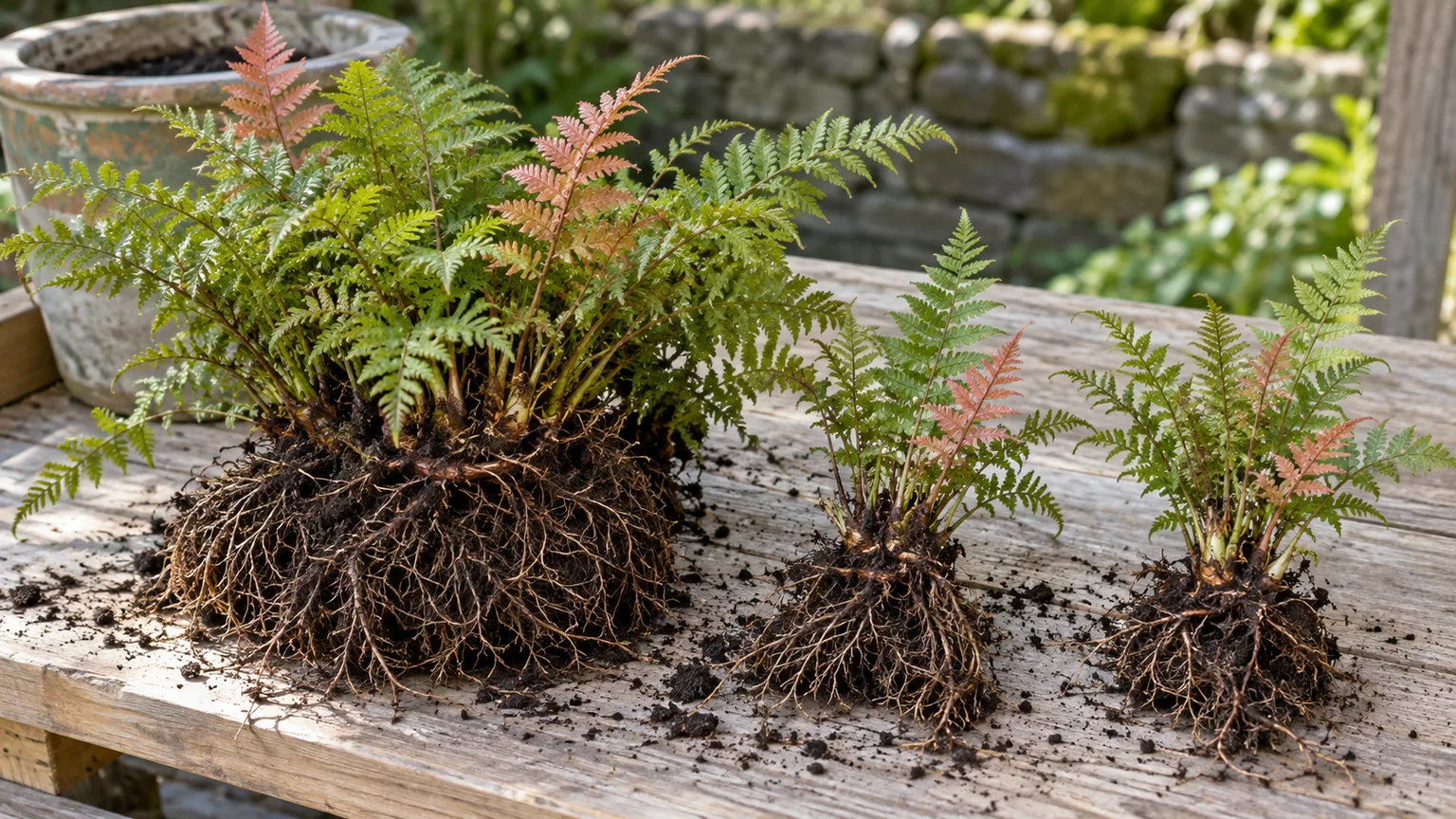
Replant the divisions promptly at the same depth they were growing, water them in, and keep the soil evenly moist while they settle. Give new divisions shade from harsh midday or afternoon sun during their first weeks, especially if spring turns warm and dry. Some foliage may wilt or decline after the disturbance; focus on whether the crown stays firm and whether new fronds appear later rather than repeatedly lifting the plant to check. The RHS recommends spring division for this species and for Dryopteris generally. Royal Horticultural Society’s autumn fern profile Fine Gardening’s Dryopteris profile
Growing from spores is possible, but it is slow and requires careful, clean conditions for germination and young fern development. For most home gardeners, it is less predictable and less convenient than dividing an established clump. Choose spores when you want the process itself or need many plants and can wait; choose division when you want a straightforward garden-size copy of the plant you already have. Royal Horticultural Society’s Dryopteris growing guide
Troubleshoot Browning, Yellowing, and Red Spots
When a fern changes color, inspect the whole plant and the soil before reaching for fertilizer or pesticide. A single old outer frond fading as new growth appears is different from multiple fronds turning brown at once. Check the root-zone moisture, recent sun exposure, airflow, and crown firmness in that order; changing one condition at a time makes the cause easier to identify.
Diagnose Brown or Scorched Fronds
Crisp, pale, or brown patches on the side facing sun usually point to direct heat or drying exposure, especially after a tree is pruned or a plant is moved from shade. Brown tips that appear throughout the clump can also follow a dry spell, hot wind, or a root ball that never became fully wet after quick surface watering. Move a potted fern or newly planted specimen into bright shade, then check moisture several inches down before watering. NC State Extension UF/IFAS Gardening Solutions
If soil at root depth is dry, water slowly and deeply; if it is already wet, do not add more water. For an established fern under a tree, look for competition from nearby roots and consider a leaf-mold mulch to reduce moisture loss. Damaged fronds will not turn green again, so judge the fix by new growth and the condition of the crown rather than expecting brown tissue to recover. Fine Gardening’s autumn fern profile
Separate Normal Aging From a Wet Crown
One or two old fronds may yellow or brown as the season changes, particularly on a semi-evergreen plant. Several fronds yellowing together, a limp center, or a soft, dark crown suggests a root-zone problem: verify that drainage is open, pull wet mulch away from the crown, and stop watering until the surrounding soil is no longer soggy. Replant a container fern in a fresh, draining mix if its old potting medium has collapsed into a dense, waterlogged mass. Royal Horticultural Society’s autumn fern profile Missouri Botanical Garden Plant Finder
Autumn fern is generally reported as having few serious pest or disease problems, so inspect before treating. Look along the undersides of fronds and at the crown for scale-like bumps, sticky residue, or visible insects; isolate a container plant with an active infestation and remove pests only with a product labeled for that plant and use. Do not apply a pesticide simply because new fronds are bronze or red. UF/IFAS Gardening Solutions Royal Horticultural Society’s autumn fern profile
Recognize Red Sori as Normal Fern Reproduction
Small reddish dots or patches arranged in rows beneath mature fronds are usually sori—the spore-producing structures—covered when young by a red indusium. They are part of normal fern reproduction, stay attached to the leaf, and do not move like insects. This feature is also reflected in the species name erythrosora, meaning “red sori”; leave the frond alone unless it is otherwise declining. NC State Extension Missouri Botanical Garden Plant Finder
Conclusion
For a healthy autumn fern, start with shade, shelter from drying wind, and soil that stays moist without becoming waterlogged. Water a new plant through its first season, use leaf mold or compost as a light mulch, and keep the crown at the soil surface. Established plants need little feeding and little pruning.
Give the clump time to spread, divide it only when it has healthy rooted growing points to spare, and judge its evergreen habit by your climate rather than by the name on the tag. If fronds brown, check sun and soil moisture first; if red spots appear in orderly clusters underneath leaves, they are likely normal sori. That routine gives the fern the conditions it needs to return with a copper flush each spring.