20 Above-Ground Pool Landscaping Ideas
Explore 20 above-ground pool landscaping ideas, from a clean gravel border to a lush privacy garden, with practical guidance on access, drainage and upkeep.
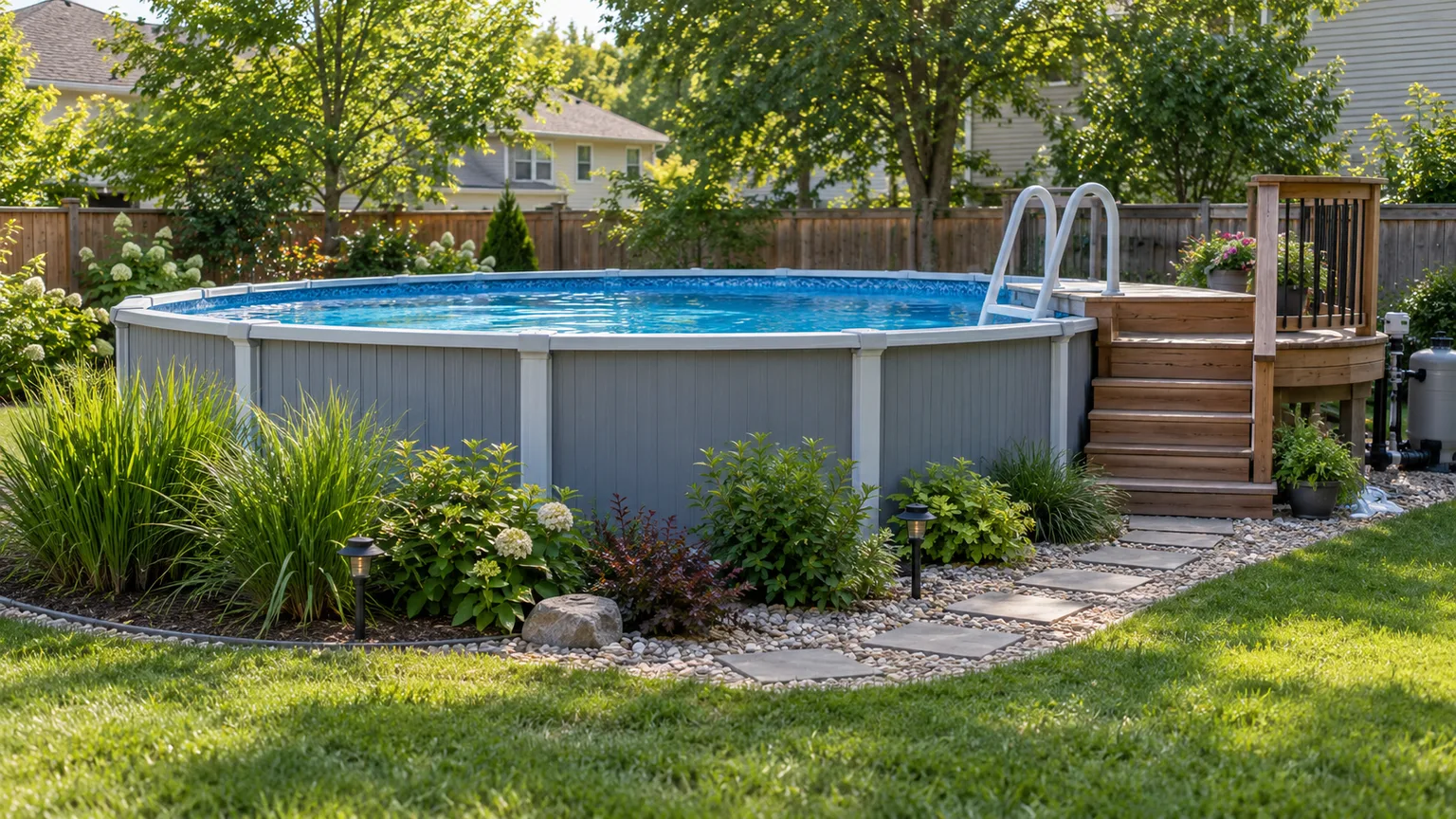
An above-ground pool does not need a full wraparound deck or a hedge wall to feel intentional. A defined path, a tidy border and one well-placed planting group can make it read as part of the yard while keeping the ladder and filter easy to reach. The best design works with the pool’s support system and the way people actually move through the space.
Before buying plants or pavers, identify the pool model, its support legs, pump and filter location, ladder, and any required safety barrier. Manufacturer instructions and local rules take priority over landscaping inspiration. Once those fixed points are marked, choose one or two ideas below that fit the yard; repeating a few materials usually looks more finished than surrounding the pool with every possible feature.
Let Pool Safety and Equipment Access Set the Boundaries
Protect the pool wall, base, liner and service area
The pool’s wall and base are functional parts of a loaded structure, not a blank surface to bury or lean against. Avoid piling soil, mulch, gravel, or a retaining wall against the exterior unless the pool maker’s instructions specifically allow it. Do not dig around support legs or change the level, compaction, drainage, or base beneath a filled pool to create a planting bed. If water consistently pools at the base, correct the drainage problem without undermining the pool; ask a pool installer or qualified drainage professional when the fix requires excavation.
Keep a usable working gap around the skimmer, pump, filter, hoses, drains and wall seams. The width varies by pool model and equipment layout, so use the manufacturer’s manual rather than a generic number. A border can look close from the patio while still leaving a removable container or open gravel strip where a technician needs to stand. Avoid planting trees with aggressive or broad roots next to a pool; roots can complicate the base, nearby paving and utility lines as they mature.
Keep ladders, barriers and sightlines clear
A pretty screen or trellis must never become a substitute for a required pool barrier, or an easy step that lets a child climb over one. Check local requirements before adding a deck, fence, gate, raised planter, furniture or slatted screen. The CPSC Pool Safely campaign emphasizes barriers, safety devices and active supervision; a hedge does not provide those protections. The CPSC also advises that above-ground pool steps and ladders be secured and locked, or removed when the pool is not in use (CPSC guidance).
Design an unobstructed route from the house to the pool entry and keep the entry visible from the places adults supervise. Avoid loose stones, cords, hoses, sharp edging or tall plants beside the ladder, where wet feet need firm footing. If local code requires a fence or self-closing gate, landscape around that system without hiding the gate, blocking its swing, or creating a climbable object beside it. Plants and decor should soften a pool area, not make the safe route harder to see or use.
Read the Yard Before Choosing a Style
Map traffic, drainage, sun and utilities
Walk the yard at the times the pool is used. Note where people enter, where towels and chairs go, where the pump sits, and where roof or patio runoff travels during a storm. A pool border should not funnel water toward the house, dump concentrated runoff at a neighbor’s property, or turn the only route to the ladder into a muddy shortcut. A professional poolside landscape practice describes planning walking clearances, splash drainage, planting and equipment access together rather than adding one feature at a time (Peabody Landscape). That sequence is especially useful in a small yard, where one misplaced bed can block several functions.
Mark underground utilities before digging, and check whether a proposed deck, fence or retaining feature needs a permit or engineered footing. Track sun and wind for a few days: reflected heat can dry containers quickly, while gusts can tip tall pots, umbrellas and lightweight screens. If the ground slopes, do not “solve” it by burying one side of a pool or building up soil against the wall. Pool installation on a slope involves structural decisions; landscaping should follow the pool installer’s approved grade and drainage plan.
Decide how much maintenance you want
A close planting bed can make the pool blend in quickly, but it adds pruning, irrigation, leaf cleanup and access decisions. A gravel border and a couple of sturdy pots take less space and can be changed without digging; a lush cottage edge needs more care and may drop petals, pollen, seed heads or insects into the water. Decide whether the goal is privacy, hiding the wall, a comfortable place to sit, or simply a finished edge. Choose one dominant goal, then let the other elements support it.
The safest visual boundary is often a separate landscape bed, not a bed packed tight against the pool. Make the gap wide enough for the pool supports and for a person to inspect the wall. Use a low, clear edging material to keep soil and mulch in the bed, and keep garden chemicals, fertilizer, loose debris and irrigation spray from routinely reaching the pool. The ideal layout is one you can clean and service without moving a jungle of containers every week.
Twenty Above-Ground Pool Landscaping Ideas
The ideas below move from low-cost, minimal changes to more layered designs. The first four define the ground; the next four improve movement and lounging; the middle eight soften or screen the pool; and the final four set a stronger style. Adapt the materials and plant choices to your region and your pool manual.
Define the ground around the pool
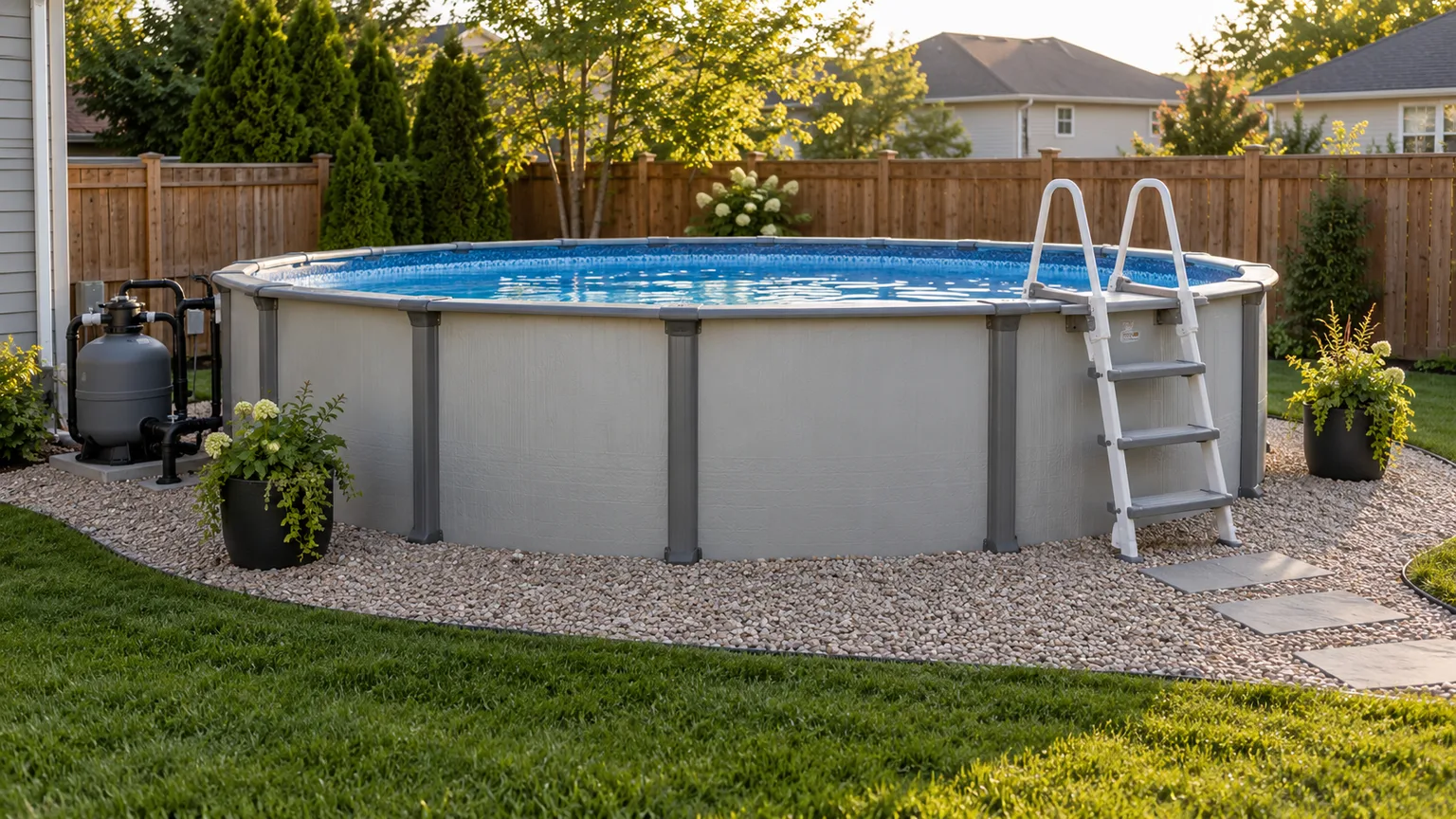
1. Create a clean gravel service ring. A narrow strip of washed gravel can separate the pool from lawn, reduce mud splashed onto the wall and make routine checks easier. Use edging that keeps stones from migrating into grass or under the pool, and do not pile gravel against the wall or supports. Pea gravel is comfortable enough for some bare feet but shifts underfoot, so choose a stable surface at the ladder and any route used in wet conditions.
2. Add a direct stepping-stone path. Set a short run of broad, stable pavers between the house or patio and the entry ladder. A defined route keeps foot traffic from wearing a muddy line through the lawn and gives guests an obvious way to the pool. Keep stones level with their surroundings, with no rocking corners or gaps that catch toes; use a continuous hard surface if children or anyone with mobility limits needs a smoother approach.
3. Make a crescent-shaped planting island. A curved bed opposite the entry can soften the pool’s circular outline without enclosing it. Repeat two or three plants in groups rather than mixing many single specimens, and stop the bed well short of supports, equipment and the pool’s required access zone. A crescent uses less material than a full ring and leaves an open side for maintenance; it also helps the pool feel anchored in the yard rather than dropped onto a blank lawn.
4. Give the lawn a crisp edge. If you like a simple green backdrop, use a clearly defined curve between grass and the pool’s gravel or paver border. A restrained edge makes even a small above-ground pool look considered, while preserving open space for chairs and service access. Keep mower wheels and string trimmers away from the pool wall and hoses; a low edging strip can make the boundary easy to see, but it should not create a trip hazard near the ladder.
Build a better route to the water
5. Add a small entry landing instead of a full deck. A compact, properly supported landing at the ladder gives swimmers a dry place to leave shoes or set down a towel. It uses less lumber and yard space than a wraparound deck and can be enough for a family that mainly wants easier entry. Have the platform designed for the pool and site rather than fastening it to the wall by guesswork, and confirm how its rails or stairs affect the barrier and gate requirements.
6. Use a partial deck on the busy side. A straight or L-shaped deck can connect the pool to an existing patio, back door or dining area without covering every side. Keep the pump and filter side open, include a clear route around furniture, and follow the deck and pool manufacturers’ attachment details. HGTV’s pool-design gallery shows how decks, paths and planted borders can define separate zones; on a smaller above-ground pool, a partial deck captures that structure without forcing a large build (HGTV).
7. Make a freestanding lounge pad. Instead of connecting a deck to the pool, build a separate level patio nearby with pavers or an appropriate outdoor surface. A physical gap reduces the chance that a deck will interfere with the pool wall, and the pad can hold two loungers without obstructing entry. Leave room to carry chairs and supplies along the path. Choose a surface with a texture suitable for wet feet, and consider the local climate: dark materials may become uncomfortable in strong sun.
8. Break a long route into a path and a pause. In a narrow yard, run pavers along the shortest safe route and widen one end into a bench or towel-drop spot. This is more useful than sprinkling stones everywhere because it tells people where to walk and where to stop. Use a bench that stays outside the barrier zone and cannot become a climbing step. If there is no space for a sitting area, keep the path generous and let the pool itself remain the focal point.
Soften the pool wall with movable and planted layers
9. Repeat large containers in pairs. Two or three weather-resistant pots near the deck or at the ends of a path give a pool area height and color without digging around the pool base. Use heavy, stable containers that will not tip in wind, but keep them movable enough for pump service and winter storage. Grouping pots looks deliberate; scattering many small pots creates clutter and adds more watering. Place saucers so they do not hold stagnant water, and do not set planters where they narrow the ladder approach.
10. Use a tiered planter grouping. Combine a low bowl, a medium pot and one taller container at a seating corner to echo the pool’s scale. A thriller-filler-spiller composition can work, but choose plants for the pot’s actual sun and water exposure and trim anything that reaches the walkway. HGTV’s gardening coverage uses layered containers and contrasting plant heights to give poolside spaces structure; translate that idea with fewer, sturdier pots and a clear service gap around an above-ground pool.
11. Plant a low band of ornamental grasses. A small sweep of clumping grass can blur a plain pool wall and move softly in the breeze. Choose a non-invasive variety suited to your climate, and confirm its mature width before planting; a label’s small nursery size is not its eventual footprint. Keep foliage out of the ladder path and away from filter intakes, and plan to cut back seed heads when they start shedding. Grasses that stay compact are easier to manage than fast-growing runners that creep under edging.
12. Screen the wall with a spaced evergreen row. A few shrubs at deliberate intervals can give year-round structure without making a solid, hard-to-reach hedge. Set them far enough from the pool to reach the back of the plant and inspect the exterior wall. Select a locally hardy shrub with a manageable mature size and relatively low litter; even “evergreen” plants shed needles and leaves at some point. A staggered group is usually softer and easier to prune than an unbroken row packed against the pool.
Add privacy, shade and a sense of enclosure
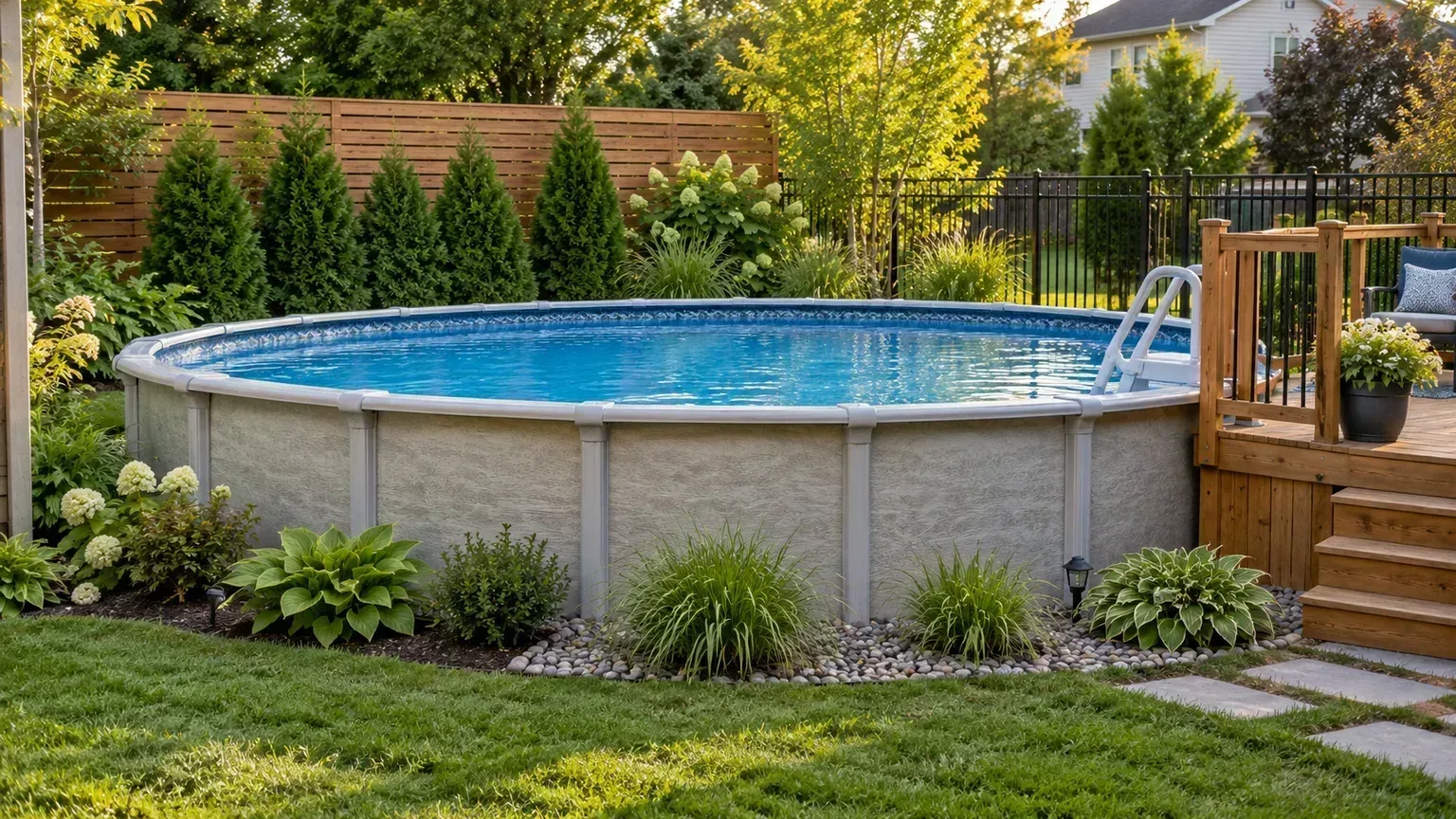
13. Put a slatted screen behind the seating area. A freestanding screen can block a neighbor’s view of the loungers and make the pool feel like an outdoor room. It can also cast shade or catch wind, so anchor it according to its design and local conditions. Place it where it does not hide the entry, gate, equipment or children from supervision. Do not treat the screen as a pool barrier, and avoid using the fence itself as a structure for climbing vines or hanging heavy planters.
14. Build privacy with layered planting, not a wall of shrubs. Combine one taller evergreen or screen with lower grasses and a few flowering plants farther from the water. The varied heights create depth and often use less space than a dense hedge. A poolside landscape should account for heat, splash and maintenance access, not just privacy; HGTV’s pool landscaping ideas illustrate how layered greenery can frame a pool while leaving hardscape open. Check mature widths and keep branches from overhanging the water if falling leaves would become a daily chore.
15. Create a small shade corner with an umbrella or pergola. A shade feature gives people a comfortable place to cool down between swims, but the base must be stable and its footprint should not block the walkway or gate. A freestanding umbrella is easier to move as sun angles change; a pergola is a larger permanent project and may need permits or professional construction. Keep overhead branches and structures away from the pool unless the pool maker and local rules allow them. Shade plants can add softness, but do not put them where roots or irrigation will disturb the pool base.
16. Frame the entry with matching pots and a low light. A pair of repeated containers at the start of the path, plus low-voltage path lighting where appropriate, can make the pool feel like a destination after dusk. Use outdoor-rated fixtures and keep electrical work away from the water unless installed by a qualified professional under applicable code. The light should reveal the walking surface without shining into swimmers’ eyes. Keep pots clear of the gate and ladder so the visual frame does not become an obstacle when people carry towels or enter the pool.
Choose a style that fits the house and climate
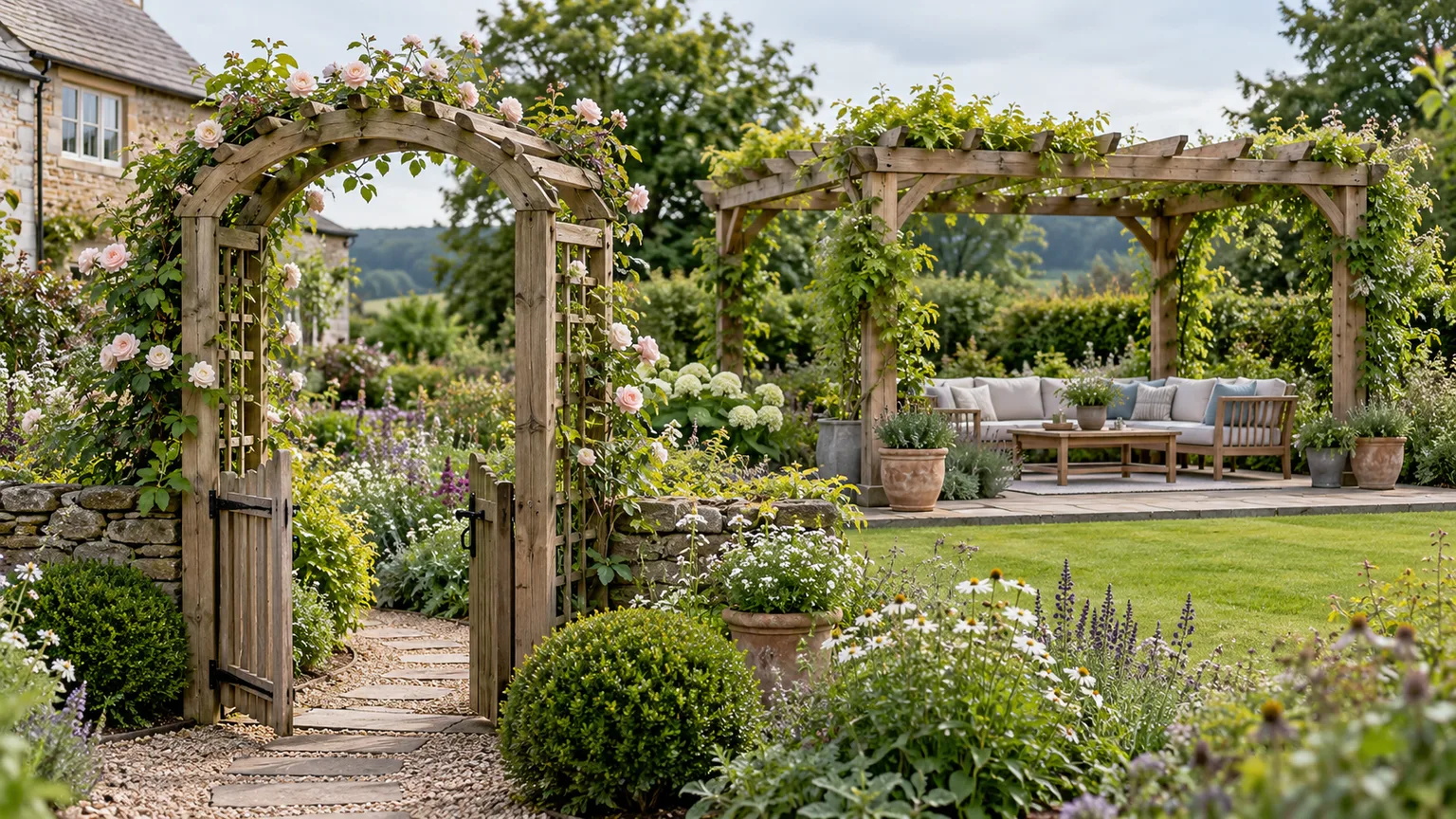
17. Borrow the English-garden look at the far edge. For a romantic border, mix a few long-blooming perennials with a clipped low hedge or a simple path, but reserve the thickest planting for the far side of the pool. Country Living describes English-garden design as a blend of lush beds, paths and defined structure; around a pool, keeping that contrast away from the ladder lets the garden feel generous without crowding the working edge (Country Living). Choose flowers with manageable litter and avoid fragrant blooms directly beside a busy swim entry if pollinators make guests uneasy.
18. Make a desert-inspired gravel garden. In a hot, dry region, use a restrained palette of gravel, sculptural rocks and locally appropriate drought-tolerant plants in a bed set back from the pool. This approach can reduce routine watering, but it is not maintenance-free: weeds still appear, stones can get hot, and spiny plants are a poor choice beside bare feet. Keep loose rock out of the walking path and never place a sharp-edged specimen where a swimmer may brush against it while entering or leaving.
19. Go modern with one material and two planting shapes. Pair a dark or natural-tone pool exterior with a simple paver path, a clean-edged gravel bed and two repeated plant forms. Repetition makes a small yard feel calmer than a collection of unrelated colors and hardscape samples. Test material colors in full sun before buying; some surfaces reflect glare or heat more than expected. A modern look is particularly forgiving when the pool wall remains visible, because the path and planting make that visibility feel intentional rather than unfinished.
20. Let an existing meadow or tree line do the work. If the yard already has a good natural backdrop, preserve it and add only a direct path, a tidy mowing edge and a clear entry landing. Existing trees can provide shade and privacy, but branches may drop leaves, fruit or sap, and roots can complicate paving or pool support zones. Keep large trees at a distance appropriate to their mature size and the pool manufacturer’s installation guidance. A simple landscape can be the most convincing choice when the view beyond the pool is already attractive.
Turn the Inspiration Into a Practical Plan
Choose materials and plants for wet, sunny conditions
For the walking route, prioritize stability, drainage and barefoot comfort over a material’s appearance in a product photo. A paver path is easy to sweep but can settle if its base is poorly prepared; gravel drains but migrates; mulch is soft but can blow or wash into the pool and needs replenishing. Pool-adjacent decking needs appropriate structure, slip resistance and code compliance. A professional landscape source notes the importance of planning deck width, splash drainage and equipment access together; these are practical checks even when the project is a modest DIY border (Peabody Landscape).
Pick plants by mature size, local hardiness, sun exposure, litter and water needs—not by the fact that a photo shows them beside a pool. Avoid planting that requires frequent fertilizer or spraying next to water, and follow product labels and local rules if you do use lawn or garden treatments. Containers give flexibility if the first location proves too sunny, windy or messy. Before digging, locate utilities and confirm that excavation, electrical lighting, deck work and barrier changes comply with local requirements.
Install in phases and reassess after a season
A phased plan is easier to budget and less likely to lock you into a poor layout. Start with the safe walking route and drainage, then add edging and one or two containers. Use the pool for a few weeks before committing to a privacy screen or dense planting bed; you may discover that the pump needs more room, the ladder is on the wrong side for traffic, or the prevailing wind blows debris into a proposed seating area. Temporary planters let you test scale before plants go into the ground.
When the first season ends, note what became muddy, overheated, difficult to mow or hard to clean. Move pots, widen a path or thin a border before adding more features. Keep the pool’s service clearances and safety equipment usable year-round, including when the pool is closed. For families with young children, landscaping is never a replacement for active supervision and a compliant barrier; design choices should support those protections rather than compete with them.
Conclusion
The most successful above-ground pool landscaping makes the transition from lawn to pool feel deliberate while leaving the structure, equipment and safe entry accessible. You can do that with a narrow gravel edge and a clear path, or build toward a more layered space with partial decking, repeated containers and a distant privacy garden. Start with the pool manual, local safety rules, drainage and traffic flow; then choose a small number of materials and plants that fit your climate and upkeep budget. A design that is easy to inspect, walk through and clean will look good longer than one that hides every inch of the pool wall.