Faded Leaves on Monstera Deliciosa: Causes, Checks & Fixes
Quick answer
Faded leaves on Monstera Deliciosa usually mean too little light washing out the deep green, or too much direct sun bleaching pale patches. Check whether stems stretch toward a dim window or show crispy brown on the sun-facing side. First step: move to bright indirect light if the spot is dim; pull back from harsh rays if leaves look bleached.
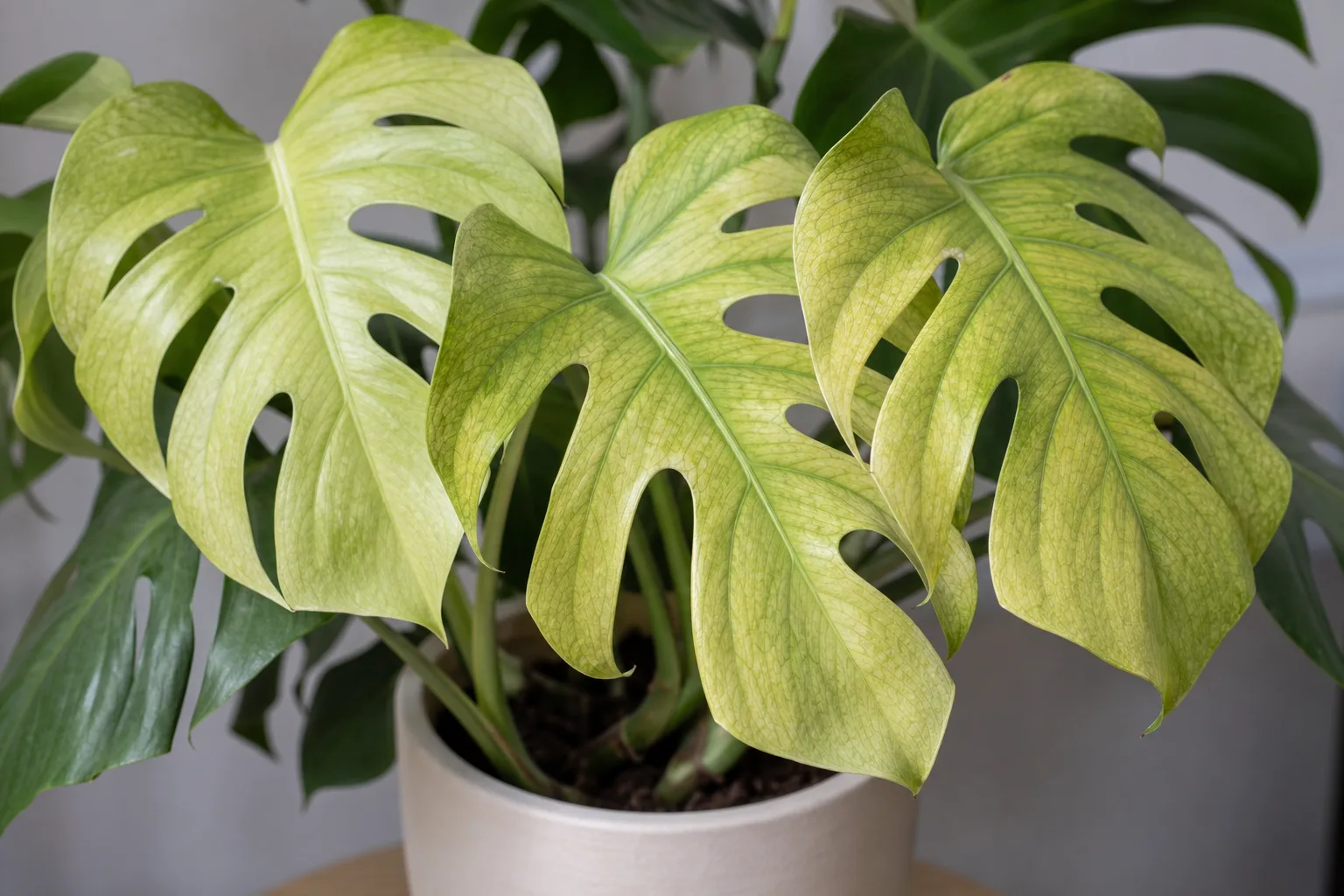
Faded Leaves on Monstera Deliciosa: Causes, Checks & Fixes
This guide covers faded leaves on Monstera Deliciosa. See also the general Faded Leaves guide, watering, and light pages for this plant.
Faded Leaves on Monstera Deliciosa: Causes, Checks & Fixes
Quick answer
Faded leaves on Monstera Deliciosa (Monstera deliciosa) mean the large split leaves have lost their characteristic deep, glossy green-they look dull, washed out, or bleached instead of vibrant. On this floor-sized aroid, fade almost always traces to light at the wrong intensity, not random aging. Insufficient light reduces chlorophyll production and vigor in foliage houseplants; harsh direct sun bleaches tissue that lacks protective shade.
First step: read the window. If stems stretch toward glass with long bare gaps and new leaves open small and solid without fenestrations, move the pot to Monstera Deliciosa light guide within about 1–3 feet of an east window or a filtered south window. If pale patches on the window-facing side look papery or crisp brown, pull the plant back from direct rays or add a sheer curtain. Do not fertilize, repot, or prune every leaf until you know which light problem you have.
What faded leaves look like on Monstera Deliciosa
Healthy Monstera Deliciosa foliage shows broad, dark green leaves-mature blades can span 60 cm or more-with splits and holes as the plant climbs and ages. Faded leaves break that pattern in ways you can separate from yellowing or brown tips:
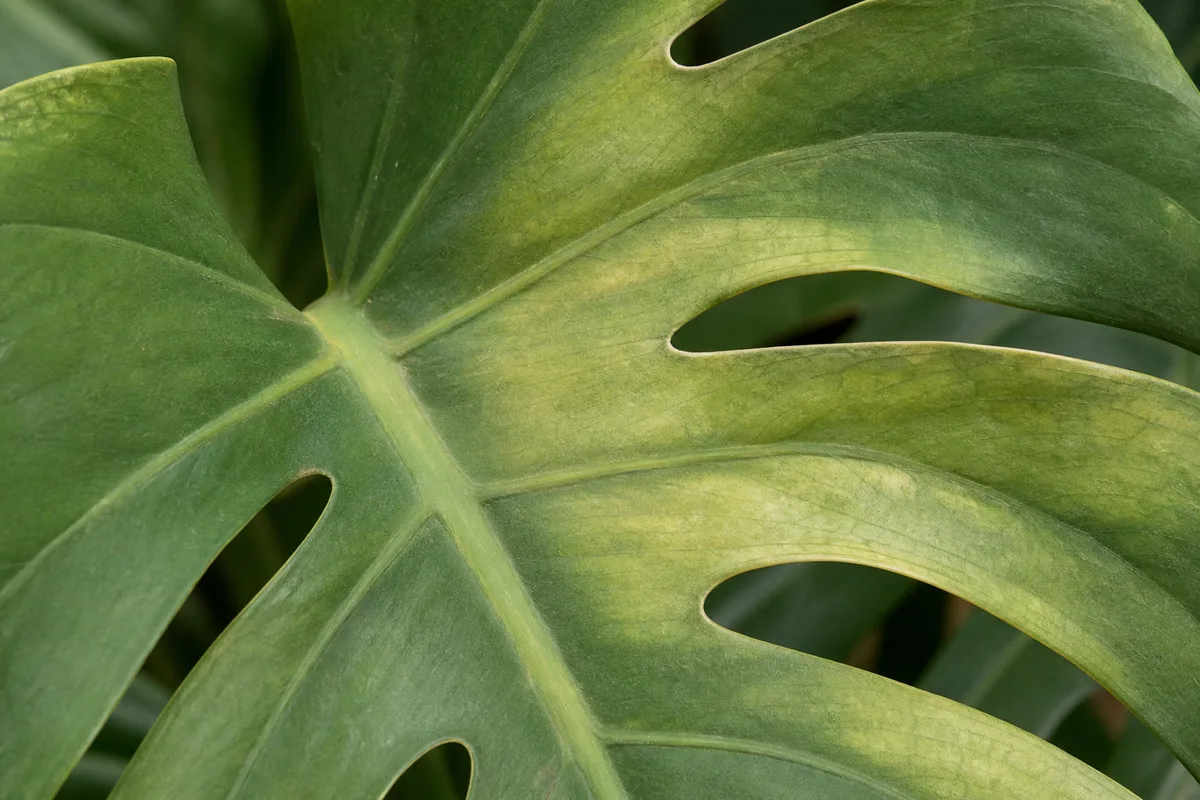
Faded Leaves symptoms on Monstera Deliciosa - compare with healthy tissue on the same plant.
Low-light fade
- Older leaves look dull and uniformly washed out-the deep green reads as pale gray-green or olive instead of rich forest green
- New leaves open small, thin, and mostly solid without the splits and fenestrations mature Monstera is known for
- Internodes stretch into long gaps between leaves; the vine leans toward the brightest window
- Growth slows; unfurling leaves may stay smaller than older foliage on the same stem
Too-much-sun fade
- Pale or bleached patches on the window-facing side look papery, translucent, or chalky-not merely dull
- Brown crispy patches or scorch marks appear within hours to days of a sudden move into direct sun
- Green portions may look fine while only the sun-struck zones wash out-unlike low-light fade, which dulls the whole leaf more evenly
What fade is not
- Uniform yellowing on lower leaves with wet soil points to overwatering more than light fade alone
- Dry crispy tips without overall dull color often mean low humidity or inconsistent watering
- New unfurling leaves are naturally lighter green and darken as they mature-that is normal, not fade
- Natural aging drops the oldest leaf occasionally; fade affects color and vigor across multiple leaves at once
Why Monstera Deliciosa gets faded leaves
Monstera Deliciosa is a climbing tropical aroid adapted to bright filtered light under a forest canopy. It needs strong ambient light to produce chlorophyll, build large leaf area, and develop fenestrations as it matures. Monstera performs best in bright indirect light but not direct sunlight indoors; inadequate light leads to smaller leaves, slower growth, and poor perforation development.
In dim corners, the plant compensates by stretching toward windows and producing smaller, greener new foliage to capture more energy. Existing leaves dull as photosynthesis slows. Because Deliciosa is a slower, architectural grower than smaller Monsteras, fade can creep in for weeks before you notice-especially if the pot still looks “fine” from across the room. Low-light plants also use water slowly, so mix stays damp while metabolism stalls; fade and soggy soil often overlap.
Too much light causes a different fade. Unfiltered midday sun through a south or west window can bleach leaf tissue before chlorophyll damage shows across the whole blade. Place Monstera near a sunny window where it receives bright light but not direct sun-large Deliciosa leaves scorch faster than owners expect after a sudden move from a dim shelf.
Secondary factors that make fade worse:
- Seasonal daylight drop in winter, when a summer placement becomes too dim without the pot moving
- Display placement where upper leaves get light but lower nodes on the same stem sit in shade
- Slow water use in dim light, leaving mix damp while growth stalls
- Dirty glass, heavy sheers, or tinted windows that cut usable light more than owners expect
- Nutrient stress when light and watering are corrected but the plant has not been fed during active growth-pale upper leaves with adequate light may need fertilizer, not another move
How to confirm the cause
Work through these checks in order before you change watering or reach for fertilizer:
- Shadow test at the pot. At midday, hold your hand between the window and the foliage. A sharp shadow means usable light; a faint blur with stretched stems strongly suggests low-light fade.
- Window-facing leaf inspection. Bleached or papery pale patches only on the side toward glass confirm sun stress. Even dulling on all sides of the plant points to insufficient light.
- New growth size and fenestrations. Compare the last three leaves on the longest stem. Small solid new foliage with faded older leaves confirms low light. Bold splits on new leaves with bleached window-side patches confirms too much direct sun.
- Soil dry-down. Probe 3–5 cm into the mix. Damp soil for 10–14 days without recent watering pairs with low-light fade and slow photosynthesis-not a sun-only problem.
- Distance from glass. Light intensity decreases rapidly with distance from the source. A bright living room can still deliver low light if the pot sits more than 6–8 feet from the window.
- Recent moves. Fade after shifting closer to a south window within days suggests sun bleach; gradual dulling over months in the same spot suggests creeping low light.
If both damp soil and bleached patches appear, address the more acute issue first-pull back from scorching sun before moving a sun-stressed plant deeper into a room.
First fix for Monstera Deliciosa
Make one placement correction based on what you confirmed:
For low-light fade: Move the entire pot to bright indirect light-within roughly 1–3 feet of an east-facing window, or a south- or west-facing window with sheer curtain. Leave watering, fertilizer, and major pruning alone for one week while the plant adjusts.
For sun-bleach fade: Shift the pot back from direct rays immediately-several feet from the glass or behind filtered curtain. Do not compensate by moving into a dim corner; aim for bright indirect light, not shade.
After seven days, check whether the top 3–5 cm of mix dries on a normal schedule. Brighter indirect light increases water use; pulling back from scorching sun stops further bleaching on new unfurling leaves.
Step-by-step recovery
Once placement is corrected, work in this order:
- Wait two to four weeks. Watch new leaves, not old ones. Existing faded or bleached tissue will not regain deep green.
- Adjust watering to the new light level. Allow the top 3–5 cm to dry before watering again. Brighter spots dry faster; do not keep the old calendar from a dim corner.
- Rotate the pot weekly. Turn the container so all sides receive similar exposure and fade does not return on the shaded face.
- Provide climbing support. A moss pole or trellis helps Deliciosa anchor aerial roots and produce larger leaves once light improves-fenestrations depend on age, light, and climbing habit together.
- Add grow light if windows are insufficient. Full-spectrum LED 30–45 cm above foliage for 12–14 hours daily supports Deliciosa in north rooms or offices. Monstera can grow under fluorescent light but will not develop leaf perforations without adequate intensity.
- Hold fertilizer until growth looks steady. Feed monthly at half strength only after new leaves show stronger color for two to three weeks during spring and summer. Fertilizer does not restore green on a light-starved plant.
Recovery timeline
| Phase | What to expect |
|---|---|
| Week 1 | No visible change on old faded leaves. Sun-bleached patches stop spreading if the plant is pulled back from direct rays. Mix may dry faster in brighter indirect light. |
| Weeks 2–4 | First new leaf after correction shows the real response-deeper green and larger blade if light is adequate; still dull or small if the spot remains too dim. |
| Weeks 4–8 | Several new leaves with improved color and size; fenestrations may begin on mature stems. Leggy sections fill in slowly. |
| 2–3 months | Plant looks noticeably more vibrant if light stays consistent. Old faded leaves remain dull unless you remove them for aesthetics. |
If new leaves stay washed out after four weeks in what you believe is bright indirect light, the spot is still too dim-move closer to the window or add supplemental light rather than increasing fertilizer.
Lookalike symptoms
Not enough light overlaps heavily with low-light fade-leggy stretch and small solid leaves are the same root cause. Faded leaves emphasizes dull, washed-out color on existing foliage; the fix path is identical: brighter indirect light.
Yellow leaves often involve wet soil and chartreuse-to-yellow lower foliage. Fade keeps leaves green but loses depth and gloss; yellowing is a separate water or aging signal unless both appear together.
Pale leaves from nutrient deficiency can lighten overall color, but Monstera normally keeps a deep green tone even when slightly hungry. Uniform paleness without stretch toward a window points to feeding or root issues more than light fade alone.
Brown tips affect margins from low humidity or water quality; they do not dull the entire leaf blade the way light fade does.
Spider mites cause stippling and webbing, often in hot dry bright conditions. Inspect undersides before assuming fade is only a light problem.
Mistakes to avoid
- Moving Monstera into direct sun to “fix” dull leaves quickly. Large leaves bleach and scorch; increase indirect light gradually over one to two weeks.
- Accepting fade as normal winter behavior without a light plan. Seasonal dimming is predictable-add a grow light or move closer to glass rather than waiting for spring.
- Fertilizing to bring back deep green. Leaf color is a light response first; nitrogen does not fix a plant sitting in a dim corner.
- Pruning all faded leaves before correcting light. Leaves still photosynthesize while the plant adjusts; remove only fully scorched sections after new growth improves.
- Watering on the old schedule after a light upgrade. Faster drying in brighter light needs a new check rhythm, not the same volume on a fixed calendar.
- Expecting old leaves to re-green. Only new growth reflects corrected light.
How to prevent faded leaves next time
Place Monstera Deliciosa where it receives bright indirect light for most of the day-close enough to maintain deep green color and fenestrations, far enough from glass to avoid scorching large leaves. Rotate weekly and clean windows seasonally.
In dark rooms, run supplemental LEDs on a timer rather than accepting slow dulling as inevitable. Match watering to how fast the top 3–5 cm dries at that light level. When buying, choose plants with firm new growth and rich green on the newest unfurling leaves, not only on older foliage from a bright grow bench.
When to worry
Cosmetic dulling without rot is not an emergency-correct placement and patience restore new leaf color over weeks. Escalate when:
- Bleached or faded patches spread to most new leaves within days despite moving the plant
- Stems soften at the base while soil stays wet for many days
- Yellow leaves climb multiple stems within a week
- Sour smell from the pot or mushy roots when you inspect
Those signs mean light stress may have overlapped with moisture problems threatening roots. Improve placement and reduce watering frequency; unpot only if roots are mushy.
Conclusion
Faded leaves on Monstera Deliciosa are readable light signals, not mysterious decline. Dull, washed-out green with small solid new growth means brighter indirect light; papery bleached patches on the window side mean less direct sun. Confirm with shadow, new-leaf size, and distance from glass, adjust placement once, then judge recovery by the color and size of leaves that unfurl after the fix-not by hoping old foliage will brighten again.
When to use this page vs other Monstera Deliciosa guides
- Monstera Deliciosa watering guide - Use for routine moisture checks before assuming faded leaves is the main issue.
- Monstera Deliciosa problems hub - Browse all 18 common issues on this species.