Root Rot on Glacier Pothos: Causes, Checks & Fixes
Quick answer
Glacier Pothos root rot follows soil that stays wet too long—this slow, compact cultivar drinks less than Golden Pothos. Stop watering, unpot, trim mushy roots, repot in perlite-rich mix, and wait until the top 3–5 cm dries before the next drink.
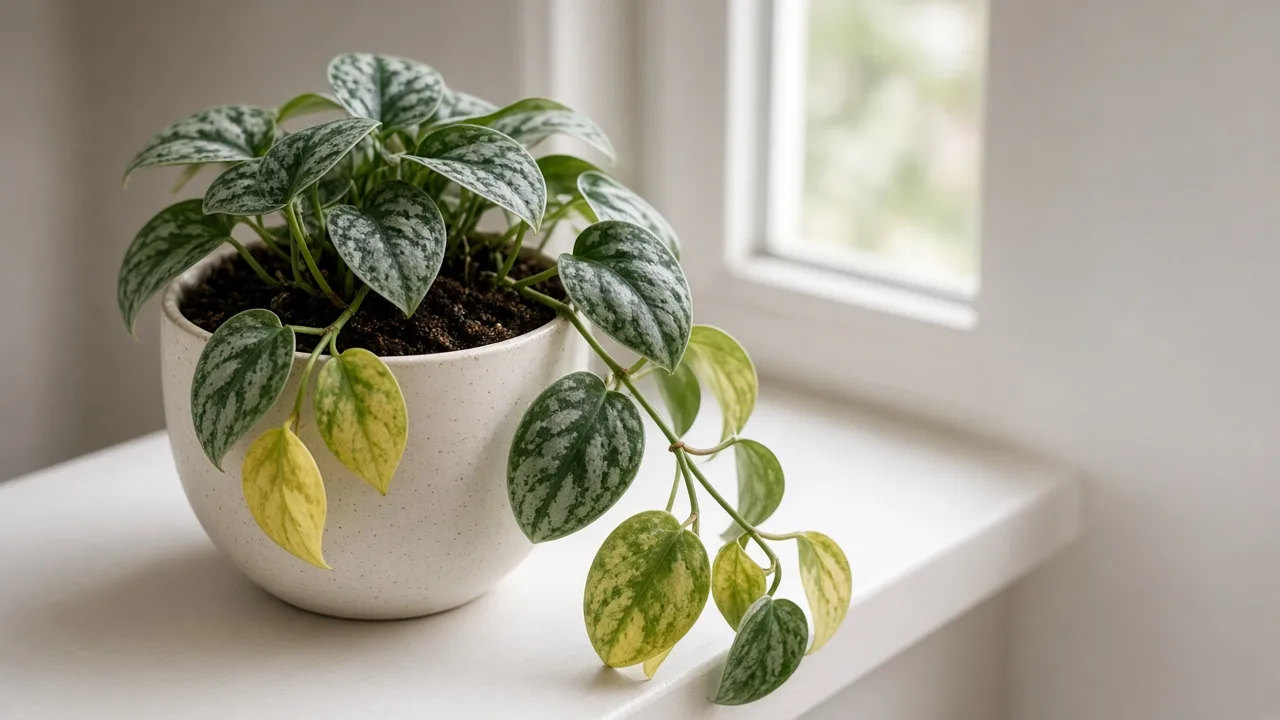
Root Rot on Glacier Pothos: Causes, Checks & Fixes
This guide covers root rot on Glacier Pothos. See also the general Root Rot guide, watering, and light pages for this plant.
Root Rot on Glacier Pothos: Causes, Checks & Fixes
Quick answer
Root rot on Glacier Pothos (Epipremnum aureum ‘Glacier’) almost always starts with mix that stays wet too long. This compact cultivar has smaller leaves and slower growth than Golden Pothos, so it uses less water on the same calendar schedule. For how chronic wet soil kills roots in general, see our root rot guide—on Glacier, the warning signs often show up as yellow lower leaves, wilting on a heavy pot, and fading silver streaks on new growth.
First step: stop watering and unpot to inspect roots. If tissue is mushy or the mix smells sour, trim decay, repot in fresh perlite-enhanced potting mix, and do not water again until the top 3–5 cm of soil is dry.
When to use this page vs other Glacier Pothos guides
This page is for confirmed or strongly suspected root failure—sour soil, mushy roots, or wilting with wet mix.
- Overwatering on Glacier Pothos — use when the pot stays heavy but roots are still firm and you have not unpot yet
- Yellow leaves — use when color change is the main symptom and you need to separate rot from light stress or normal aging
- Wilting — use when vines droop but you are not sure whether roots or drought are responsible
- Fungus gnats — use when small flies appear alongside constantly damp surface soil
- Glacier Pothos watering — use for long-term dry-down rhythm after recovery
- Glacier Pothos problems hub — browse all common issues on this species
What root rot looks like on Glacier Pothos
Glacier shows rot through small leaves and short vines, so symptoms can look mild until roots are badly damaged. Above ground you may see:
- Lower leaves turning yellow while the pot still feels heavy
- Compact vines wilting or feeling limp even though soil is damp
- New leaves smaller than usual, with silver-green streaks washing out to plain green
- Soft, dark tissue at nodes where vines meet the soil line
- A sour or swampy smell when you lift the plant or probe the mix
Below ground, healthy pothos roots are firm and pale. Rotting roots are brown, slimy, or hollow and break away when rinsed. NC State notes that root rot and leaf-margin blackening can occur with overwatering on Epipremnum aureum.
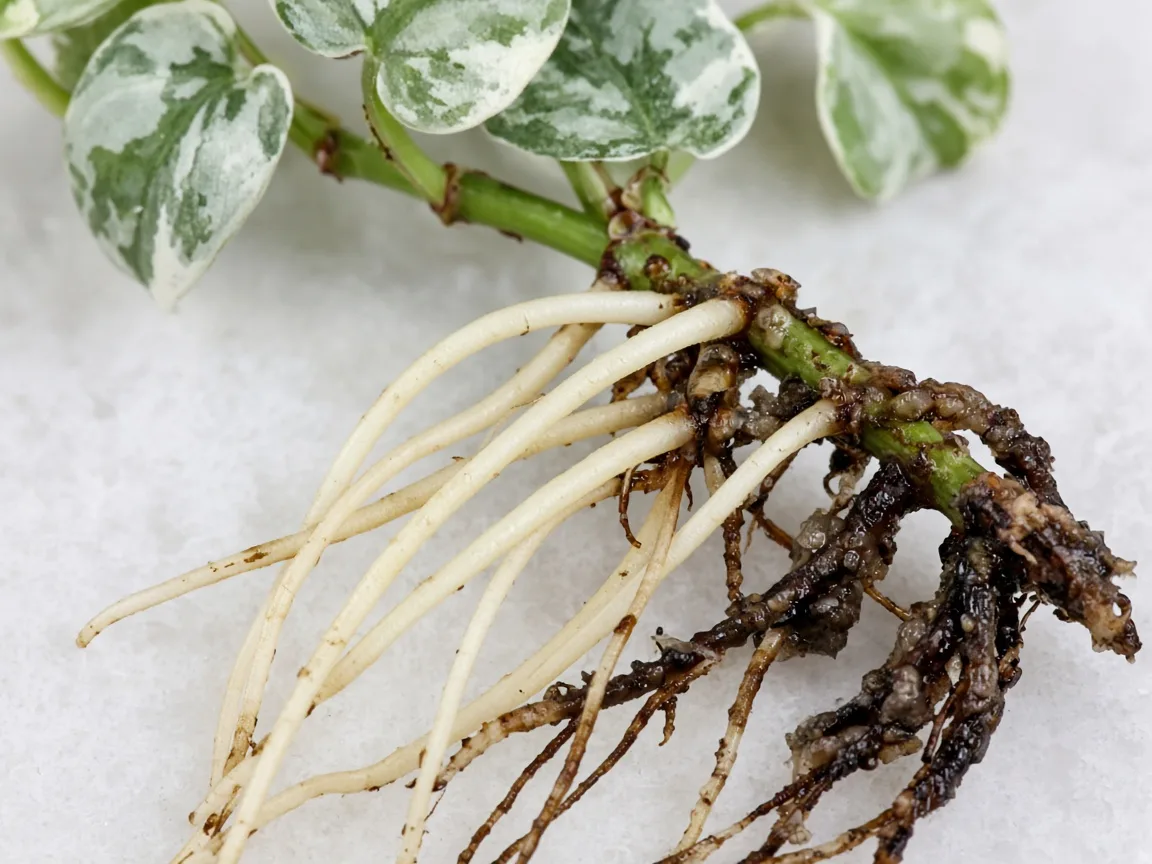
Root rot symptoms on Glacier Pothos—compare mushy dark roots with firm pale roots on the same plant.
When silver streaks fade on new Glacier leaves
Glacier is sold for its streaky silver-and-green blotches on small oval leaves—not the cream-centered look of N’Joy. When new leaves emerge mostly green while soil stays wet, treat that as a stress signal alongside yellowing. Low light alone can dull variegation, but green reversion plus a heavy pot and limp vines usually means roots are failing, not that the cultivar is “reverting” permanently. Fixing drainage and light together matters: Glacier needs bright indirect light to hold pattern and to help the mix dry on schedule—see the Glacier Pothos light guide before blaming genetics.
Why Glacier Pothos gets root rot
Pothos is forgiving, but Glacier sits in a risky middle ground: owners often water it like fast-growing Golden Pothos while it behaves like a slow, compact variegated vine.
Slower water use in dim or cool rooms. Glacier’s smaller leaf area and moderate growth mean less transpiration. In a north-facing corner or winter room below about 18°C (65°F), the same weekly watering that worked in summer keeps the root zone saturated.
Why Glacier pots dry slower than Golden Pothos. Less biomass and shorter vines mean less pull on soil moisture. A 12 cm Glacier hanging basket can stay wet five to seven days after one drink while a vigorous golden pothos in the same mix dries in three—yet both get watered on the same day. That mismatch is a common Glacier-specific trigger.
Peaty mix without enough perlite. Glacier needs airy, well-draining substrate—standard indoor mix with added perlite per Clemson Extension. Dense peat holds water around nodes where aerial roots try to breathe.
Oversized pots after nursery upsizing. Glacier is often sold in small pots; moving it into a much larger container “for growth” surrounds roots with wet soil. The repotting guide covers sizing to root mass, not vine length.
Calendar watering. Penn State Extension warns that too much water will lead to root rot on pothos. Glacier’s watering guide targets top 3–5 cm dry—not a fixed weekday schedule.
How to confirm the cause
Work through these checks before repotting into an even bigger pot or adding fertilizer:
- Moisture vs. weight — Has the top 3–5 cm stayed wet for five or more days? Does the pot feel heavy while leaves wilt?
- Light context — Is the plant in bright indirect light, or a dim shelf where variegation already faded? Pair low light with wet soil is high risk.
- Wilting pattern — Wilting with wet soil points to root dysfunction; wilting with a light pot and crispy edges suggests underwatering.
- Root inspection — Slide the plant out. Compare firm white-cream roots with mushy brown tissue at the base of vines.
- Smell — Sour odor from mix supports rot over simple drought stress.
| What you see | Likely cause | First action |
|---|---|---|
| Heavy wet pot, firm roots, no smell | Early overwatering | Stop water; dry-down test |
| Mushy roots, sour smell, yellow lower leaves | Root rot | Trim, repot, reduce water |
| Light pot, limp leaves perk after soak | Underwatering | Deep soak; adjust schedule |
| Wet surface, fungus gnats | Same damp habitat | Dry pot; see fungus gnats |
First fix for Glacier Pothos
Stop watering, unpot, trim all mushy roots, and repot into fresh draining mix sized to the remaining root ball.
Hold the base and slide the plant out. Shake or rinse away saturated soil. With clean scissors, cut back to firm tissue—healthy pothos roots feel like thick strings, not cooked noodles. If more than half the root mass is gone, take node cuttings from healthy vines as backup before the base fails completely.
Repot into a clean pot only slightly larger than the trimmed root mass. Use perlite-enhanced potting mix and the same planting depth as before. Water once lightly so the mix settles, then wait until the top 3–5 cm dries—container soil should stay moist between drinks, not soggy. Move the plant to bright indirect light while it recovers; a dark corner slows drying and stalls new silver streaks.
Do not fertilize until new growth looks stable for two weeks.
Saving Glacier from nodes if the base rots
Glacier roots easily from stem cuttings—use that when nodes at the soil line turn soft but upper vines still look firm. Cut sections with one or two nodes each, including leaves with visible silver variegation. Root in water or moist mix per the propagation guide. Keep only cuttings from vines that were not sitting in sour soil. This rescue path is specific to climbing aroids with adventitious roots at every node; it is not the primary fix for succulents or rosette plants that rot from the crown.
Step-by-step recovery
- Unpot; discard saturated soil—do not reuse wet peat.
- Trim slimy roots; optionally rinse roots in lukewarm water to see firm tissue.
- Choose a pot matched to roots, not trailing vine length.
- Repot; one light watering, then dry-down before the next drink.
- Remove badly yellowed leaves only if they pull away easily—do not strip the plant bare.
- Start node cuttings if base tissue is questionable.
Recovery timeline
Mild rot with firm upper nodes may show new small leaves with silver streaks within two to four weeks in warm bright conditions. Judge success by fresh growth and firm nodes, not immediate trailing length. Advanced blackening at the soil line often means continuing from cuttings while discarding the base.
Lookalike symptoms
- Underwatering — light pot, dry top 3–5 cm, leaves perk after one thorough soak; roots firm when checked.
- Overwatering without advanced decay — heavy pot and yellowing but roots still mostly firm after inspection.
- Drooping leaves from heat or draft — soil moisture normal; roots white when sampled.
- Normal aging — one or two old yellow leaves on a long vine with firm nodes and predictable dry-down.
What not to do
Do not pour water onto wilting Glacier vines without checking roots first. Do not repot into oversized decorative pots or heavy garden soil. Do not leave runoff sitting in saucers. Avoid fertilizer on stressed roots. Wear gloves if sap irritates skin, and keep trimmings away from pets—golden pothos is toxic to cats and dogs, and Glacier shares the same calcium oxalate crystals.
How to prevent root rot next time
Match each drink to how fast your Glacier pot dries in your light, not how often you water a faster golden pothos in another room. Use the soil guide mix with 20–30 % perlite, empty saucers after watering, and stretch intervals in winter when growth slows. When variegation fades on new leaves, increase light before increasing water. Inspect nodes when you check moisture at the top 3–5 cm.
Glacier Pothos care cross-check
Root rot prevention on Glacier aligns with bright indirect light, airy mix, and dry-down watering from the overview. A compact variegated pothos in a dim corner on a summer daily watering habit will stay wet and rot even in “good” mix—move it to an east- or filtered west window before adding more water.
When to worry
Escalate immediately if stems blacken from soil upward, several nodes soften within days, or the plant collapses after wilting on wet mix. Early brown root tips with firm silver-streaked stems still allow trim-and-repot rescue; take cuttings early if base tissue fails.
Conclusion
Glacier Pothos root rot is a moisture-and-light problem, not a mysterious wilt. Confirm with root inspection and smell, trim decay, repot into fresh draining mix, and water only after the top 3–5 cm dries. Prevent recurrence with perlite-rich soil, right-sized pots, and a lighter watering hand than you use on faster-growing pothos cultivars.
Related Glacier Pothos guides
- Glacier Pothos overview — hub for care basics and growth habit
- Glacier Pothos watering — dry-down rhythm after rot recovery
- Glacier Pothos light — holding silver variegation while soil dries predictably
- Glacier Pothos soil — perlite mix that protects compact roots
- Overwatering on Glacier Pothos — when rot has not reached roots yet
- Yellow leaves on Glacier Pothos — color change without confirmed mushy roots
- Glacier Pothos repotting — pot sizing without accidental overwatering
- Glacier Pothos propagation — node backup when bases fail
Related tool
Use the Root Rot Risk Checker to narrow causes for root rot on this plant before changing multiple variables at once.