How to Water Dill: Soil Checks, Pots and Hot Weather
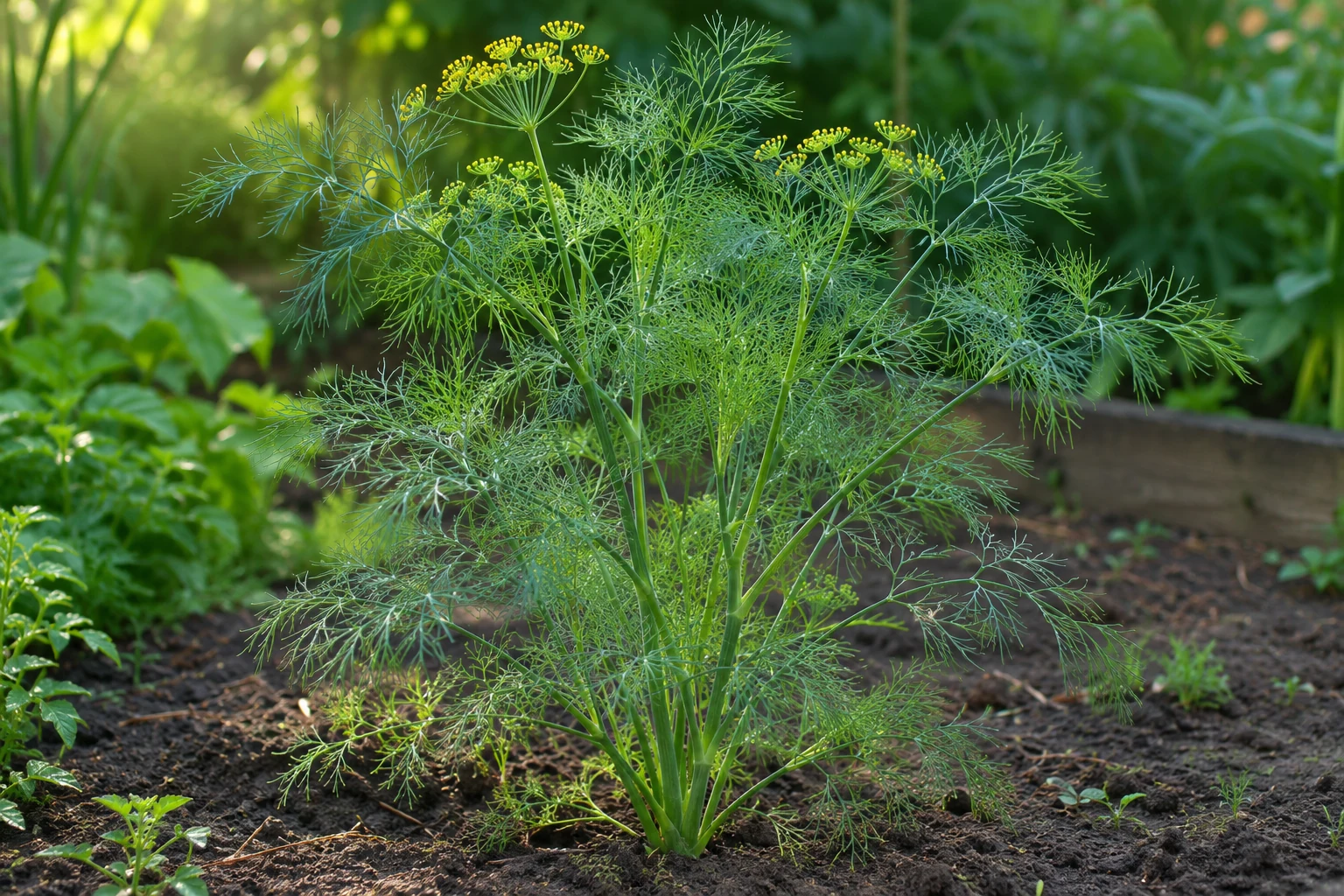
How to Water Dill: Soil Checks, Pots and Hot Weather
How to Water Dill: Soil Checks, Pots and Hot Weather
First, feel the soil about 2–3 cm below the surface near the plant. If that layer is dry and the deeper root zone is only lightly moist, water slowly at the base until the bed is evenly damp or excess drains from the pot. If the soil still feels cool and moist, wait and check again later. This quick check is more reliable than watering every dill plant on the same calendar day.
Dill (Anethum graveolens) does best with moist but well-drained soil. It does not need a constantly saturated root zone, and established plants tolerate some drying better than seedlings. Utah State University Extension says established dill is not a heavy water user and may need one or two irrigations per week under its local conditions, with more during drought-like weather (USU Extension). Treat that frequency as a regional reference, not a fixed rule for every garden or container.
The first watering check for dill
Touch the soil before picking up the hose. In a bed, check a few centimetres down beside the root zone; in a pot, feel the mix near the edge and compare how heavy the container is. Dry surface crust alone does not always mean the whole root area needs water, especially after a brief warm afternoon. If the deeper mix is still cool and slightly damp, wait.
When watering is needed, apply enough to wet the root zone rather than sprinkling the foliage lightly. In a container, water until a little drains from the holes, then empty any saucer. In a bed, water slowly enough that it soaks in rather than running off compacted ground. The Dill soil guide helps if water pools on the surface or rushes down the pot edges without wetting the mix.
What moisture dill prefers
Dill grows best in soil that holds some moisture but also drains freely. Penn State Extension describes the preferred soil as rich and moist but not constantly wet (Penn State Extension). The distinction matters: roots need air as well as water. A bed that remains saturated after rain or a pot left in standing water can cause weak growth even when the gardener believes the plant is well watered.
A slight drying between waterings is usually safer than keeping the root zone perpetually wet. Avoid letting seedlings repeatedly dry to a crisp, but do not treat mature dill like a bog plant. The University of Minnesota Extension likewise emphasizes well-drained soil for dill and direct sowing in the place where it will grow (UMN Extension).
Water newly sown dill and seedlings
Keep the seed zone evenly damp until germination. Dill seeds are sown shallowly, so the surface can dry quickly in sun or wind; use a gentle watering can or fine spray to avoid washing them into a clump. Check daily during warm, dry weather, but reduce watering after rain. Once seedlings are established, water less often but more deeply so the root zone is reached.
Young dill is especially vulnerable to a combination of drying and heat because it has little root volume. If you started it indoors, keep the mix moist rather than soaked and acclimate seedlings gradually before moving them outside. The Royal Horticultural Society recommends watering dill during dry spells and paying particular attention to container compost because it can dry quickly in warm weather (RHS: How to grow dill).
Water established dill by soil condition
Once plants have developed several stems and roots, water when the soil begins to dry below the surface. A deep soak followed by a reasonable dry-down encourages roots to explore the soil rather than staying in a shallow, frequently wet layer. In the ground, established dill can tolerate a short dry interval, especially once seed heads are forming; Utah State Extension notes greater tolerance of drier soil after seed set (USU Extension).
Do not infer a watering need from a single drooping leaf. Feathery foliage can look soft on a hot afternoon and recover later when temperatures fall. Check soil moisture and the whole plant before watering. If the bed is dry several centimetres down and the plant remains limp in the morning, give it a thorough soak and observe the next new growth.
How container watering differs
Pots lose water more quickly than garden beds because their sides are exposed to warm air and sun. A small terracotta pot can dry far faster than a large plastic or glazed container, while a deep pot with fresh compost may hold moisture longer. Check container dill more frequently in hot, windy weather, but do not water automatically each time you look at it.
Use a container with several open drainage holes and a deep enough profile for dill’s taproot. If water drains immediately while the centre stays dry, the compost may have become hydrophobic; water in two or three slow passes, allowing each to soak in. If water remains in a saucer, empty it so the lower roots are not left submerged. Epic Gardening’s dill growing guide also advises keeping soil moist while ensuring the pot drains freely (Epic Gardening).
Adjust watering in hot or windy weather
Hot, dry weather increases evaporation from both soil and foliage. Check containers each day during a heat wave and inspect garden beds more often if they are sandy or exposed. Water early enough that the root zone can absorb moisture before the strongest heat, and add a thin organic mulch to a bed if the surface repeatedly dries. Keep mulch away from the stem base so air can circulate.
Dill is a cool-season herb, and heat can accelerate flowering; dry soil adds another stress. The RHS notes that hot, dry conditions can cause premature bolting and that containers need close attention in warm weather (RHS: How to grow dill). A trusted practical guide from Get Busy Gardening also recommends steady watering while avoiding soggy soil (Get Busy Gardening). Do not respond to heat by flooding a pot that is already wet; offer afternoon shade if the container is overheating and correct the drainage first.
What to do during monsoon rain
Rainfall counts as watering only if it reaches the root zone. A roof overhang can leave a balcony pot dry while the rest of the garden is soaked; meanwhile a pot exposed to repeated heavy rain may stay saturated for days. Feel the compost, check the drainage holes, and empty saucers rather than following a “rainy day” rule.
If dill sits in waterlogged soil, pause irrigation, clear blocked holes, and move a container under open shelter until the mix begins to drain and dry. In a garden bed that holds water, do not dig aggressively around established roots while the soil is saturated. Improve the bed’s drainage before the next sowing. The NC State Extension profile lists root rot among potential problems in excessively wet conditions, so persistent saturation deserves attention (NC State Extension).
Water in the morning and at the soil line
Aim water at the soil, not the fine foliage. A watering can with a narrow spout or a low-flow hose helps direct water around the base and reduces splashing. Morning watering gives the root zone time to absorb moisture before daytime heat, and leaves that are accidentally wetted can dry during the day. Avoid frequent evening sprinkling that leaves a dense planting damp overnight.
Watering at the soil line will not prevent every disease, but it avoids needlessly wetting foliage. If leaves are already crowded or a bed stays humid, space plants adequately and provide airflow. Utah State Extension cautions against overwatering dill and notes a risk of powdery mildew when it is overwatered (USU Extension).
Recognize drought stress without overreacting
A dry root zone, a pot that feels unusually light, and foliage that stays limp after the coolest part of the day suggest a genuine water shortage. The soil may also pull away from the container wall. Water slowly until the mix is rewetted; do not pour a large amount onto bone-dry compost all at once, because much of it may run down the sides without soaking in.
If the plant revives, resume soil checks and increase the frequency of inspection during similar weather. Do not increase water volume indefinitely if the soil is already damp. Yellow leaves or weak stems can have causes other than drought, including natural aging, low light, or root stress. Review the Dill overview and Dill light guide before changing several care factors at once.
Recognize overwatering and drainage trouble
Persistent wetness is more meaningful than one heavy watering. Warning signs include soil that remains cold and saturated, a sour smell, algae or mold at the surface, and stems that weaken while the pot stays wet. Yellow lower leaves alone do not prove overwatering; compare them with soil moisture and check whether drainage holes are open.
Stop watering while the mix remains wet. Move a container out of prolonged rain, empty standing water, and improve drainage before the next sowing. Do not add fertilizer to roots that are already stressed by saturated soil. For established dill in a heavy bed, a raised or better-drained planting site is more dependable than repeated attempts to dry the same waterlogged patch.
Why dry spells can trigger early flowering
Dill’s transition to flowers is normal, but hot and dry conditions can bring it forward. The University of Wisconsin’s dill profile notes that hot or dry weather is associated with flowering stems (Wisconsin Horticulture); Penn State Extension also associates hot weather and dry spells with bolting (Penn State Extension). This does not mean every plant that flowers needs more water: age, day length, and variety also matter.
To extend a leafy harvest, maintain even moisture, harvest foliage before the plant flowers, and sow new batches while the season is suitable. A flowering plant will not return to a juvenile leafy stage just because watering increases. The Dill propagation guide explains how to keep a new crop coming.
Watering changes as dill matures
During germination, avoid letting the shallow seed layer dry out. As seedlings grow, shift to fewer, deeper waterings. Mature plants can tolerate more drying between irrigations than seedlings, while flowering plants set on seed need less frequent watering unless weather is severely dry. Containers remain the exception because their smaller soil volume changes quickly.
After harvesting leaves, do not automatically water more to replace what was cut. Check soil first and give the plant the same conditions it needed before harvesting. If the central flower stalk has formed and foliage quality is declining, a fresh sowing is often more useful than trying to extend the old plant with extra water and fertilizer.
Check the soil and pot before acting
Use the same short routine when a plant looks wilted: touch the soil several centimetres down; lift the pot if possible; inspect drainage; and check whether the plant is in strong heat. If soil is dry, water thoroughly. If it is wet, improve airflow and drainage rather than adding more water. If moisture is reasonable, consider light, heat, crowding, or normal flowering.
The Dill soil guide helps resolve slow drainage, while Dill repotting covers a container that has become too small. If an indoor plant is drying unevenly, the Dill light guide can help you assess window heat and exposure.
When to use this page vs other Dill guides
Use this page to decide when and how much to water. Read Dill soil when water fails to drain, Dill light when leaves stretch or pots overheat, and Dill fertilizer before feeding a plant that looks weak. The Dill overview gives the full sowing-to-seed cycle.
Related Dill guides
- Dill overview covers the annual growing cycle and basic care.
- Dill light explains heat and sun exposure.
- Dill soil covers drainage and moisture retention.
- Dill fertilizer explains when feeding is warranted.
- Dill repotting covers root disturbance and container problems.
- Dill propagation covers seed starts and succession sowing.
Conclusion
Water dill by checking the root zone, not by following a universal weekly schedule. Keep seedlings evenly damp, water established plants deeply when the soil begins to dry, and inspect pots more often during heat. Let rain reduce irrigation only when it actually wets the root zone, and do not leave dill standing in saturated compost. If dryness and heat bring flowering forward, a new sowing is usually the practical path to more tender leaves.